Results by title
4155 books match the query 'State & Local' and 196 start with w
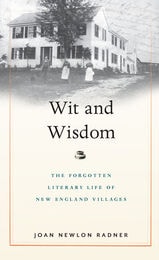
Wit and Wisdom
The Forgotten Literary Life of New England VillagesJoan Newlon Radner
University of Massachusetts Press, 2023
The lyceum movement gained momentum in the decades preceding the Civil War, presenting members with the opportunity to participate in literary life and engage with the issues of the day. While urban lyceums played host to a who’s who of nineteenth-century intellectual life, literary societies also cropped up in thousands of villages across the nation, acting as influential sites of learning, creativity, and community engagement. In rural New England, ordinary men and women, farmers and intelligentsia, selectmen and schoolchildren came together to write and perform poetry and witty parodies and debate a wide range of topics, from women’s rights and temperance to slavery, migration, and more.
Wit and Wisdom takes readers inside this long-forgotten tradition, providing new access to the vibrant voices, surprising talents, and understated humor on display on many a cold winter’s night. Having uncovered dozens of handwritten newspapers produced by village lyceums across Maine, New Hampshire, Vermont, and Massachusetts, Joan Newlon Radner proves that these close-knit groups offered a vital expression of the beliefs, ambitions, and resilience of rural New Englanders.
With Blood in Their Eyes
Thomas Cobb
University of Arizona Press, 2013
Winner, Spur Award for Best Western Long Novel (Western Writers of America) and Southwest Book Award (Border Regional Library Association)
On February 10, 1918, John Power woke to the sound of bells and horses’ hooves. He was sharing a cabin near the family mine with his brother Tom and their father Jeff; hired man Tom Sisson was also nearby. Then gunfire erupted, and so began the day when the Power brothers engaged the Graham County Sheriff’s Department in the bloodiest shootout in Arizona history.
Now Thomas Cobb, author of Crazy Heart and Shavetail, has taken up the story in this powerful and meticulously researched nonfiction novel. What seems at first a simple tale of crime and pursuit takes on much greater meaning and complexity as the story traces the past lives of the main characters and interconnects them—all leading back to the deadly confrontation that begins the book. Cobb cunningly weaves the story of the Power brothers’ escape with flashbacks of the boys’ father’s life and his struggle to make a living ranching, logging, and mining in the West around the turn of the century. Deftly drawn characters and cleverly concealed motivations work seamlessly to blend a compelling family history with a desperate story of the brothers as they attempt to escape.
Grappling with themes of loyalty, masculinity, technology, and honor, this sweeping saga reveals the passion and brutality of frontier life in Arizona a hundred years ago. Richly authentic and beautifully written, With Blood in Their Eyes breathes dramatic new life into this nearly forgotten episode of the American West.
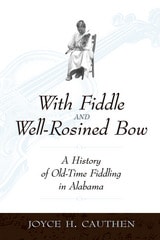
With Fiddle and Well-Rosined Bow
A History of Old-Time Fiddling In AlabamaJoyce H. Cauthen
University of Alabama Press, 2001
Relying on extensive archival research and on sixty interviews with fiddlers and their families and friends, Cauthen tells the rich, full story of old-time fiddling in Alabama.
Writing of life in the Alabama Territory in the late 1700s, A. J. Pickett, the state's first historian, noted that the country abounded in fiddlers, of high and low degree. After the defeat of the Creek Indians at the Battle of Horseshoe Bend in 1813, the number of fiddlers swelled as settlers from the southern states surrounding Alabama claimed the land. The music they played was based on tunes brought from Ireland, Scotland, and England, but in Alabama they developed their own southern accent as their songs became the music of celebration and relaxation for the state's pioneers. Early in the 20th century such music began to be called "old-time fiddling," to distinguish it from the popular music of the day, and the term is still used to distinguish that style from more modern bluegrass and country fiddle styles.
In With Fiddle and Well-Rosined Bow, Cauthen focuses on old-time fiddling in Alabama from the settlement of the state through World War II. Cauthen shows the effects of events, inventions, ethnic groups, and individuals upon fiddlers' styles and what they played. Cauthen gives due weight to the "modest masters of fiddle and bow" who were stars only to their families and communities. The fiddlers themselves tell why they play, how they learned without formal instruction and written music, and how they acquired their instruments and repertoires. Cauthen also tells the stories of "brag" fiddlers such as D.Dix Hollis, Y. Z. Hamilton, Charlie Stripling, "Fiddling" Tom Freeman,"Monkey" Brown, and the Johnson Brothers whose reputations spread beyond their communities through commercial recordings and fiddling contests. Described in vivid detail are the old-style square dances, Fourth of July barbeques and other celebrations, and fiddlers' conventions that fiddler shave reigned over throughout the state's history.
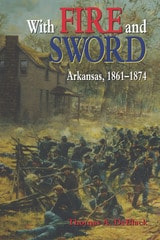
With Fire and Sword
Arkansas, 1861-1874Thomas A. Deblack
University of Arkansas Press, 2003
When Arkansas seceded from the Union in 1861, it was a thriving state. But the Civil War and Reconstruction left it reeling, impoverished, and so deeply divided that it never regained the level of prosperity it had previously enjoyed. Although most of the major battles of the war occurred elsewhere, Arkansas was critical to the Confederate war effort in the vast Trans-Mississippi region, and Arkansas soldiers served—some for the Union and more for the Confederacy—in every major theater of the war. And the war within the state was devastating. Union troops occupied various areas, citizens suffered greatly from the war’s economic disruption, and guerilla conflict and factional tensions left a bitter legacy. Reconstruction was in many ways a continuation of the war as the prewar elite fought to regain economic and political power.
In this, the fourth volume in the Histories of Arkansas series, Thomas DeBlack not only describes the major players and events in this dramatic and painful story, but also explores the experiences of ordinary people. Although the historical evidence is complex—and much of the secondary literature is extraordinarily partisan—DeBlack offers a balanced, vivid overview of the state’s most tumultuous period.

With Music and Justice for All
Some Southerners and Their PassionsFrye Gaillard
Vanderbilt University Press, 2008
But Gaillard examines the South from other angles as well--the religious heritage, for example, that once led Flannery O'Connor to write about a "Christ-haunted" South. We meet Billy Graham, the greatest evangelist of his time, who admitted in the course of interviews with Gaillard that his ministry represented a "very narrow gift." There are profiles here of the Southern Baptist renegade Will Campbell and former President Jimmy Carter, whose commitment to his own understanding of Christianity has sometimes led him into controversy. Gaillard writes also about the revealing power of Southern music--how the great Johnny Cash, for example, became a force for reconciliation in America. In the final section of the book we meet some of the characters Gaillard has covered through the years, including John T. Scopes, whose final public appearance Gaillard wrote about as a young reporter in Nashville.

With the Bark Off
A Journalist’s Memories of LBJ and a Life in the News MediaNeal Spelce with Thomas Zigal
University of Texas Press, 2021
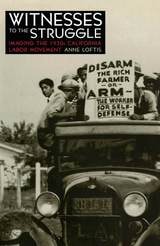
Witnesses to the Struggle
Imaging the 1930s California Labor MovementAnne Loftis
University of Nevada Press, 2014
In this groundbreaking interdisciplinary study, Loftis examines the artists who put a human face on the farmworkers’ plight in California during the Great Depression, focusing on writer John Steinbeck, photographer Dorothea Lange, sociologist and author Paul Taylor, and journalist Carey McWilliams. Loftis probes the interplay between journalism and art in the 1930s, when both academics and artists felt an urgent need to be relevant in the face of enormous misery. The power of their work grew out of their personal involvement in both the labor struggles and the hardships endured by workers and their families. Steinbeck, Lange, and the other artists and intellectuals in their circles created the public images of their times. Works such as The Grapes of Wrath or Lange’s Migrant Mother actually helped mold public opinion and form government policies. Even today these works remain icons in our shared perception of that era. Loftis helps us understand why this art still seems the truest representation of those desperate times, three-quarters of a century later.

Wizards
David Duke, America's Wildest Election, and the Rise of the Far RightBrian Fairbanks
Vanderbilt University Press, 2022
A surging Republican populist.
The Democrat, hounded by corruption allegations; the Republican, dogged by business failures and ties to white supremacists.
The Republican turned out thousands of screaming supporters for speeches blaming illegal immigrants and crime on the Democrats, and the Democrat plummeted in the polls.
Sound familiar?
The '91 Louisiana Governor's race was supposed to be forgettable. But when former KKK Grand Wizard David Duke shocked the nation by ousting incumbent Republican Governor Buddy Roemer in the primary, the world took notice. Democrat Edwin Edwards, a former three-term governor and two-time corruption defendant, was left alone to face Duke in the general election—and he was going to lose.
Then a little-known state committeewoman stepped in with evidence of Duke's nefarious past. Could her evidence be enough to sway the minds of fired-up voters, or would Louisiana welcome a far-right radical into the highest office in the state?
Journalist Brian Fairbanks explores how the final showdown between Duke and Edwards in November 1991 led to a major shift in our national politics, as well as the rise of the radical right and white supremacist groups, and how history repeated itself in the 2016 presidential election. The story of these political "wizards," almost forgotten by history, remains eerily prescient and disturbingly relevant, and a compulsive page-turner.

Woman Of The Boundary Waters
Canoeing, Guiding, Mushing, and SurvivingJustine Kerfoot
University of Minnesota Press, 1994
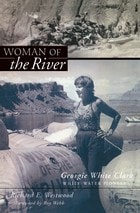
Woman Of The River
Georgie White Clark, Whitewater PioneerRichard Westwood
Utah State University Press, 1997
Georgie White Clark-adventurer, raconteur, eccentric--first came to know the canyons of the Colorado River by swimming portions of them with a single companion. She subsequently hiked and rafted portions of the canyons, increasingly sharing her love of the Colorado River with friends and acquaintances. At first establishing a part-time guide service as a way to support her own river trips, she went on to become perhaps the canyons' best-known river guide, introducing their rapids to many others-on the river, via her large-capacity rubber rafts, and across the nation, via magazine articles and movies. Georgie Clark saw the river and her sport change with the building of Glen Canyon Dam, enormous increases in the popularity of river running, and increased National Park Service regulation of rafting and river guides. Adjusting, though not always easily, to the changes, she helped transform an elite adventure sport into a major tourist activity.
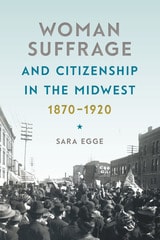
Woman Suffrage and Citizenship in the Midwest, 1870-1920
Sara Egge
University of Iowa Press, 2018
Winner of the 2019 Gita Chaudhuri Prize
Winner of the 2019 Benjamin F. Shambaugh Award
Historian Sara Egge offers critical insights into the woman suffrage movement by exploring how it emerged in small Midwestern communities—in Clay County, Iowa; Lyon County, Minnesota; and Yankton County, South Dakota. Examining this grassroots activism offers a new approach that uncovers the sophisticated ways Midwestern suffragists understood citizenship as obligation.
These suffragists, mostly Yankees who migrated from the Northeast after the Civil War, participated enthusiastically in settling the region and developing communal institutions such as libraries, schools, churches, and parks. Meanwhile, as Egge’s detailed local study also shows, the efforts of the National American Women’s Suffrage Association did not always succeed in promoting the movement’s goals. Instead, it gained support among Midwesterners only when local rural women claimed the right to vote on the basis of their well-established civic roles and public service.
By investigating civic responsibility, Egge reorients scholarship on woman suffrage and brings attention to the Midwest, a region overlooked by most historians of the movement. In doing so, she sheds new light onto the ways suffragists rejuvenated the cause in the twentieth century.
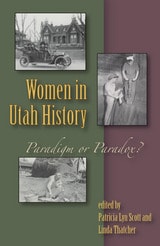
Women In Utah History
Paradigm Or Paradox?Patricia Lyn Scott & Linda Thatcher
Utah State University Press, 2005
A Comparison of Utah Mormon Polygamous and Monogamous Women Jessie L. Embry and Lois Kelley
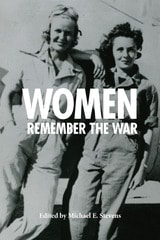
Women Remember the War, 1941-1945
Michael E. Stevens
Wisconsin Historical Society Press, 1993
Women Remember the War, 1941-1945 offers a brief introduction to the experiences of Wisconsin women in World War II through selections from oral history interviews in which women addressed issues concerning their wartime lives.
In this volume, more than 30 women describe how they balanced their more traditional roles in the home with new demands placed on them by the biggest global conflict in history. This book provides a rich mix of insights, incorporating the perspectives of workers in factories, in offices, and on farms as well as those of wives and mothers who found their work in the home. In addition, the volume contains accounts by women who served overseas in the military and the Red Cross. These accounts provide readers with a vivid picture of how women coped with the stresses created by their daily lives and by the additional burden of worrying about loved ones fighting overseas.
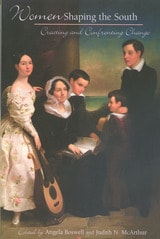
Women Shaping the South
Creating and Confronting ChangeEdited by Angela Boswell & Judith N. McArthur
University of Missouri Press, 2006
Shifting the focus to the local level, the authors demonstrate how women participated in creating change, even as they confronted conditions over which they had little power. In addition to exploring southern women’s lives, this collection shows how women shaped southern history. Using new and extensive primary research, each of these authors presents a new perspective on the important roles that women of different races and classes have played in transforming the South at some of its most crucial turning points, including post-Revolution, Civil War, Jim Crow era, World War I, and the civil rights movement.
Expanded from papers presented at the Sixth Southern Conference on Women’s History in Athens, Georgia, these essays reflect the depth and breadth of current vibrant research in southern women’s history and contribute exciting and important new scholarship to the field. Just as significant, the volume highlights the trends in southern women’s historical scholarship and points toward new directions for future scholars.
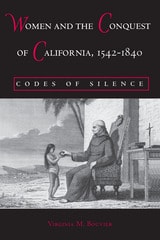
Women and the Conquest of California, 1542-1840
Codes of SilenceVirginia M. Bouvier
University of Arizona Press, 2001
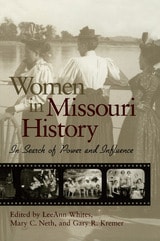
Women in Missouri History
In Search of Power and InfluenceEdited by LeeAnn Whites, Mary C. Neth, & Gary R. Kremer
University of Missouri Press, 2004
Women in Missouri History is an exceptional collection of essays surveying the history of women in the state of Missouri from the period of colonial settlement through the mid-twentieth century. The women featured in these essays come from various ethnic, economic, and racial groups, from both urban and rural areas, and from all over the state. The authors effectively tell these women’s stories through biographies and through techniques of social history, allowing the reader to learn not only about the women’s lives individually, but also about how groups of “ordinary” women shaped the history of the state.
The essays in this collection address questions that are at the center of current developments in the field of women’s history but are written in a manner that makes them accessible to general readers. Providing an excellent general overview of the history of women in Missouri, this collection makes a valuable contribution to a better understanding of the state’s past.
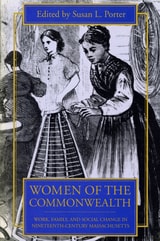
Women of the Commonwealth
Work, Family, and Social Change in Ninteenth-Century MassachusettsSusan L. Porter
University of Massachusetts Press, 1996
These essays reflect the complexity and richness of current scholarship in women's history. Informed by a variety of source materials and methodologies, the ten chapters break down a generalized construct of “womanhood” to explore the dynamics between gender, race, ethnicity, and class.
The first section of the book focuses on women's work, paid and unpaid, and the effects of class, ethnicity, and gender on the structure of the job market and on power relations within the family. The second section revisits the concept of “sisterhood” by looking at women in relation to their families, social and cultural networks, and civic and private institutions. The editor's introduction sets the essays in the current historiographical context of women's studies and provides a bibliographical essay for the nonspecialist reader.
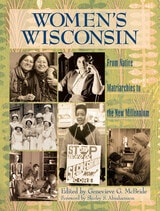
Women's Wisconsin
From Native Matriarchies to the New MillenniumEdited by Genevieve G. McBride
Wisconsin Historical Society Press, 2005
Women's Wisconsin: From Native Matriarchies to the New Millennium, a women's history anthology published on Women's Equality Day 2005, made history as the first single-source history of Wisconsin women. This unique tome features dozens of excerpts of articles as well as primary sources, such as women's letters, reminiscences, and oral histories, previously published over many decades in the Wisconsin Magazine of History and other Wisconsin Historical Society Press publications.
Editor and historian Genevieve G. McBride provides the contextual commentary and overarching analysis to make the history of Wisconsin women accessible to students, scholars, and lifelong learners.
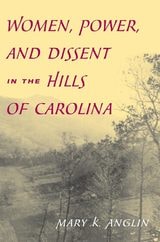
Women, Power, and Dissent in the Hills of Carolina
Mary K. Anglin
University of Illinois Press, 2002
Women, Power, and Dissent in the Hills of Carolina is a unique and impassioned exploration of gender, labor, and resistance in western North Carolina. Based on eight months of field research in a mica manufacturing plant and the surrounding rural community, as well as oral histories of women who worked in mica houses in the early twentieth century, this landmark study canvasses the history of the mica industry and the ways it came to be organized around women's labor.
Mary K. Anglin's investigation of working women's lives in the plant she calls "Moth Hill Mica Company" reveals the ways women have contributed to household and regional economies for more than a century. Without union support or recognition as skilled laborers, these women developed alternate strategies for challenging the poor working conditions, paltry wages, and corporate rhetoric of Moth Hill. Utilizing the power of memory and strong family and community ties, as well as their own interpretations of gender and culture, the women have found ways to "boss themselves."
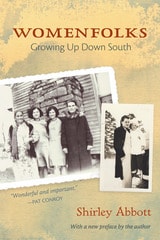
Womenfolks
Growing Up Down SouthShirley Abbott
University of Arkansas Press, 2017
Wonders of Sand and Stone
A History of Utah's National Parks and MonumentsFrederick H. Swanson
University of Utah Press, 2020
Drawing on extensive historical research, Swanson presents little-known accounts of people who saw in these sculptured landscapes something worth protecting. Readers are introduced to the region’s early explorers, scientists, artists, and travelers as well as the local residents and tourism promoters who worked with the National Park Service to build the system of parks and monuments we know today, when Utah’s national parks and monuments face multiple challenges from increased human use and from development outside their borders. As scientists continue to uncover the astonishing diversity of life in these desert and mountain landscapes, and archaeologists and Native Americans document their rich cultural resources, the management of these federal lands remains critically important. Swanson provides us with a detailed and timely background to advance and inform discussions about what form that management should take.

Wood Works
Edwin Bingham
Oregon State University Press, 1997
Words Marked by a Place
Local Histories in Central OregonJarold Ramsey
Oregon State University Press, 2018
While telling these local stories, Jarold Ramsey explores alternative ways of engaging history in the act of writing, breaking new ground by discovering and exploring primary sources that bear on the region’s colorful but little-known past. Throughout the collection, he interrogates “local history” as a subject. What is local history? How is it related to mainstream academic history? What are legitimate ways of doing it? How do the details of what we call local history inform “history-at-large,” and vice-versa?
From the opening narrative concerning Lieutenant Henry Larcom Abbot’s “Railroad Survey” of the region in 1855 to the concluding account of Lieutenant Robert Cranston’s last months and dramatic death, when his “Airacobra” fighter plane crashed near Madras in 1944, Words Marked by a Place sheds new light on the ongoing story of central Oregon by illuminating forgotten corners of its past. Through both theory and example, it represents an important contribution to the history of the region and the endeavors of local historians, wherever they happen to work.

Words That Make New Jersey History
A Primary Source Reader, revised and expanded editionEdited by Howard L. Green
Rutgers University Press, 2006
New to this expanded edition is the text of James McGreevey's "I am a Gay American" speech, as well as entries about the Abbott v. Burke court ruling mandating that New Jersey equalize funding of urban and suburban schools districts, sprawl and its effects on water supply, and the state's economic boom in the 1990s.
A balanced survey of New Jersey's history presented in the context of a changing nation, this volume is well suited to general readers who want to explore the primary sources of the state's past, and to U.S. history students at the high school and college levels.

Words, Works, and Ways of Knowing
The Breakdown of Moral Philosophy in New England before the Civil WarSara Paretsky
University of Chicago Press, 2016
What’s less well-known is that before Paretsky began her writing career, she earned a PhD in history from the University of Chicago with a dissertation on moral philosophy and religion in New England in the early and mid-nineteenth century. Now, for the first time, fans of Paretsky can read that earliest work, Words, Works, and Ways of Knowing.
Paretsky here analyzes attempts by theologians at Andover Seminary, near Boston, to square and secure Calvinist religious beliefs with emerging knowledge from history and the sciences. She carefully shows how the open-minded scholasticism of these theologians paradoxically led to the weakening of their intellectual credibility as conventional religious belief structures became discredited, and how this failure then incited reactionary forces within Calvinism. That conflict between science and religion in the American past is of interest on its face, but it also sheds light on contemporary intellectual battles.
Rounding out the book, leading religious scholar Amanda Porterfield provides an afterword discussing where Paretsky’s work fits into the contemporary study of religion. And in a sobering—sometimes shocking—preface, Paretsky paints a picture of what it was like to be a female graduate student at the University of Chicago in the 1970s. A treat for Paretsky’s many fans, this book offers a glimpse of the development of the mind behind the mysteries.
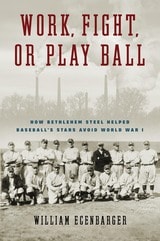
Work, Fight, or Play Ball
How Bethlehem Steel Helped Baseball's Stars Avoid World War IEcenbarger, William
Temple University Press, 2024
Some players used the steel mill and shipyard leagues to avoid wartime military duty, irking Major League owners, who saw their rosters dwindling. Bethlehem Steel President Charles Schwab (no relation to the financier) saw the league as a means to stave off employee and union organizing. Most fans loudly criticized the ballplayers, but nevertheless showed up to watch the action on the diamond.
Ecenbarger traces the 1918 Steel League’s season and compares the fates of the players who defected to industry or continued to play stateside with the travails of the Major Leaguers, such as Christy Mathewson, Ty Cobb, and Grover Cleveland Alexander, who served during the war.
Work, Fight, or Play Ball reveals the home field advantage brought on by the war, which allowed companies to profit from Major League players.
Workers and Unions in Wisconsin
A Labor History AnthologyDarryl Holter
Wisconsin Historical Society Press, 1999
Wisconsin accounts for about two percent of the nation's total population, but its contribution to the history of working people and social reform extends far beyond these numbers. In the early years of the twentieth century, Wisconsin became a veritable laboratory for social and political reform, producing such landmark legislation as workers' compensation, unemployment insurance, and other laws that became models for several states and helped shape federal labor policies. The study of the history of labor also began in Wisconsin when University of Wisconsin economics professor John R. Commons started to document the history of work and labor in America.
Workers and Unions in Wisconsin includes nearly one hundred selections covering the period from 1850 to 1990, illustrated by scores of historic photos, most of which have never before been reprinted. Editor Darryl Holter has included accounts of episodes that took place in more than twenty-five cities and towns in Wisconsin, including labor activities at such nationally known companies as Oscar Mayer, Kohler, Case, Allis-Chalmers, and Ray-O-Vac and workers as diverse as dairy farmers and university teaching assistants, lumberjacks and hosiery makers, municipal employees and paper mill workers. The result is a book that will fascinate and inform anyone interested in American labor history and economics, as well as in the personal stories that are part of any great societal change.

Working Class Radicals
The Socialist Party in West Virginia, 1898-1920Frederick A. Barkey
West Virginia University Press, 2012
Working Class Radicals: The Socialist Party in West Virginia, 1898-1920 examines the rise and fall of organized socialism in West Virginia through an exploration of the demographics of membership, oral interview material gathered in the 1960s from party members, and the collapse of the party in the wake of the Paint Creek-Cabin Creek coal-mining strike of 1912. The first local branch of the West Virginia Socialist Party was established in Wheeling in 1901 and by 1914 several thousand West Virginians were dues-paying members of local branches. By 1910 local Socialists began to elect candidates to office and in 1912 more than 15,000 West Virginian voters cast their ballots for Socialist presidential candidate Eugene Debs. The progress that West Virginia socialists achieved on the electoral front was a reflection of the party’s strategy of increasing class-consciousness by working with existing unions to build the power of the labor movement. The party appealed to a fairly broad cross section of wage earners and its steady growth also owed much to the fact that many members of the middle class were attracted to the cause. Several factors combined to send the party into rapid decline, most importantly deep fissures between class and craft factions of the party and 1915 legislation making third party political participation difficult. Working Class Radicals offers insight into the various internal and external forces that doomed the party and serves as a cautionary tale to contemporary political leaders and organizers.
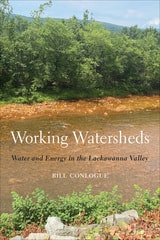
Working Watersheds
Water and Energy in the Lackawanna ValleyWilliam Conlogue
Temple University Press, 2025
Offering a fresh way to think about the Anthropocene, this distinctive history of water and coal in the Lackawanna Valley discusses how both water abundance and scarcity might play out as global temperatures rise. Working Watersheds is designed to trigger debates about the nature of history, the significance of literature, and the importance of linking person, place, and planet in an era of climate change.
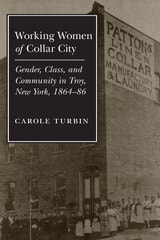
Working Women of Collar City
Gender, Class, and Community in Troy, 1864-86Carole Turbin
University of Illinois Press, 1992
Why have some working women succeeded at organizing in spite of obstacles to labor activity? Under what circumstances were they able to form alliances with male workers?
Carole Turbin explores these and other questions by examining the case of Troy, New York. In the 1860s, Troy produced nearly all the nation's detachable shirt collars and cuffs. The city's collar laundresses were largely Irish immigrants. Their union was officially the nation's first women's labor organization, and one of the best organized. Turbin provides a new perspective on gender and shows that women's family ties are not necessarily a conservative influence but may encourage women's and men's collective action.
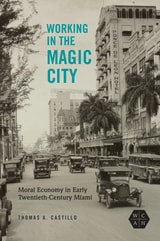
Working in the Magic City
Moral Economy in Early Twentieth-Century MiamiThomas A. Castillo
University of Illinois Press, 2022
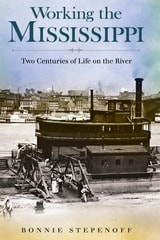
Working the Mississippi
Two Centuries of Life on the RiverBonnie Stepenoff
University of Missouri Press, 2015
The Mississippi River occupies a sacred place in American culture and mythology. Often called The Father of Rivers, it winds through American life in equal measure as a symbol and as a topographic feature. To the people who know it best, the river is life and a livelihood. River boatmen working the wide Mississippi are never far from land. Even in the dark, they can smell plants and animals and hear people on the banks and wharves.
Bonnie Stepenoff takes readers on a cruise through history, showing how workers from St. Louis to Memphis changed the river and were in turn changed by it. Each chapter of this fast-moving narrative focuses on representative workers: captains and pilots, gamblers and musicians, cooks and craftsmen. Readers will find workers who are themselves part of the country’s mythology from Mark Twain and anti-slavery crusader William Wells Brown to musicians Fate Marable and Louis Armstrong.
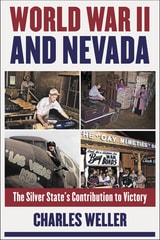
World War II and Nevada
The Silver State's Contribution to VictoryCharles Weller
University of Nevada Press, 2024
World War II and Nevada is an in-depth examination of the state’s role in the war. Nevada’s geographic location, land, sky, mineral resources, and the sacrifices of its people were crucial to victory—and transformed the state. The war brought the first significant development of the gaming industry; the introduction of a huge, permanent military presence; the diversification of its population; and a shift in political and economic power within the region.
Nevada’s previously unexamined role in the internment of Japanese Americans is explored, and so too is the role of women and minority groups in support of the war. The book concludes with a comprehensive list of those killed, wounded, or made prisoners of war during the conflict.
Weller provides the most thorough analysis of Nevada’s war effort to date and historians will find the book a valuable addition to their World War II history collections.

Worlds at the End
Los Angeles, Infrastructure, and the Apocalyptic ImaginationPacharee Sudhinaraset
Temple University Press, 2024
Worlds at the End analyzes destruction, rupture, and continuance through texts ranging from Karen Tei Yamashita’s Tropic of Orange, which considers racial colonial infrastructure, to the work of Diné poet Esther Belin, which illuminates how the separation between the Indian reservation and LA is part of a broader infrastructural network of termination. And she unpacks Octavia Butler’s post-apocalyptic novel, Parable of the Sower, where LA’s freeways and roadways are routes of forced migration, colonization, and flight.
Tearing down existing institutions that marginalize people of color and moving past them, Worlds at the End highlights the imaginaries of those subjugated, racialized, and made other, for whom modernity, freedom, and progress meant violence, brutality, and relegation to the status of devalued surplus populations. As Sudhinaraset deftly shows, the apocalypse marks moments of historical and spatial transition, offering stories of doomsdays that will give rise to resurgence and regeneration.
Worse than the Devil
Anarchists, Clarence Darrow, and Justice in a Time of TerrorDean A. Strang
University of Wisconsin Press, 2013
Largely overlooked for almost a century, the compelling story of this case emerges vividly in this meticulously researched book by Dean A. Strang. In its focus on a moment when patriotism, nativism, and terror swept the nation, Worse than the Devil exposes broad concerns that persist even today as the United States continues to struggle with administering criminal justice to newcomers and outsiders.
Worse than the Devil
Anarchists, Clarence Darrow, and Justice in a Time of TerrorDean A. Strang
University of Wisconsin Press, 2016

Worth Their Salt
Colleen Whitley
Utah State University Press, 1996

Wrangling Pelicans
Military Life in Texas PresidiosTim Seiter
University of Texas Press, 2025
2026 Excellence in Historic Preservation Award, Daughters of the American Revolution
2026 Summerlee Book Prize, Center for History and Culture of Southeast Texas and the Upper Gulf Coast
2026 Tejano Book Prize, Tejano Genealogy Society of Austin (TGSA)
A richly detailed history of daily life for colonial Spanish soldiers surviving on the eighteenth-century Texas Gulf Coast.
In 1775, Spanish King Carlos III ordered the capture of American pelicans for his wildlife park in Madrid. The command went to the only Spanish fort on the Texas coast—Presidio Nuestra Señora de Loreto de la Bahía in present-day Goliad. But the overworked soldiers stationed at the fort had little interest indulging a king an ocean away. Their days were consumed with guarding their community against powerful Indigenous peoples and managing the demands of frontier life. The royal order went ignored.
Wrangling Pelicans brings to life the world of Presidio La Bahía’s Hispano soldiers, whose duties ranged from heated warfare to high-stakes diplomacy, while their leisure pursuits included courtship, card playing, and cockfighting. It highlights the lives of presidio women and reveals the ways the Spanish legal system was used by and against the soldiers as they continually negotiated their roles within the empire and their community. Although they were agents of the Spanish crown, soldiers at times defied their king and even their captain as they found ways to assert their autonomy. Offering a fresh perspective on colonial Texas, Wrangling Pelicans recreates the complexities of life at the empire’s edge, where survival mattered more than royal decrees.
Wrecks of Human Ambition
A History of Utah's Canyon Country to 1936Nelson, Paul T.
University of Utah Press, 0
Most of the previous works regarding the history of this unique region have focused on either early exploration or twentieth-century controversies that erupted over mineral and water development and the creation of national parks and wilderness areas. This volume fills a gap in existing histories by focusing on early historical themes from the confrontation between Euro-Christian ideals and this challenging landscape. It centers on three interconnected interpretations of the area that unfolded when visitors from green, well-watered, productive lands approached this desert. The Judeo-Christian obligation to “make the desert bloom,” encompassed ideas of millenarianism and of Indian conversion and acculturation as well as the Old Testament symbolism of the “garden” and the “desert.” It was embodied in the efforts of Spanish missionaries who came to the canyon country from the 1500s to the 1700s, and in the experiences of Mormon settlers from about 1850 to 1909. Another conflicting sentiment saw the region simply as bad land to avoid, an idea strongly held by U.S. government explorers in the 1850s. This conclusion too was reinforced by the experiences of those who attempted to settle and exploit this country. Finally, though, the rise of tourism brought new ideas of wilderness reverence to the canyon country. The bad lands became valuable precisely because they were so distinct from traditionally settled landscapes.
In pursuing the conflict between Euro-Christian ideals and an arid, rugged, resistant landscape of deserts and canyons, Paul Nelson provides in clear, engaging language the most detailed examination yet published of colonial Spain’s encounter with the region and lays out some of Mormonism’s rare failures in settling the arid West.
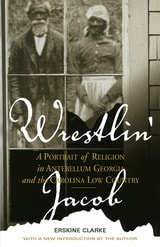
Wrestlin' Jacob
A Portrait of Religion in Antebellum Georgia and the Carolina Low CountryErskine Clarke
University of Alabama Press, 2000
Wrestling with God, scripture, and conscience in the nineteenth‑century South
First published in 1979, Wrestlin’ Jacob offers important insights into the intersection of black and white religious history in the South. Erskine Clarke provides two arenas—one urban and one rural—that show what happened when white ministers tried to bring black slaves into the fold of Christianity. Clarke illustrates how the good intentions—and vain illusions—of the white preachers, coupled with the degradation and cultural strength of the slaves, played a significant role in the development of black churches in the South.
From 1833 to 1847, Reverend Charles Colcock Jones served as an itinerant minister to slaves on the rice and cotton plantations in Liberty County, Georgia. The aim of Jones, and of the largely Puritan-descended slave owners, was to harvest not only good Christians but also obedient and hard-working slaves. At the same time, similar efforts were under way in cosmopolitan Charleston, South Carolina. Charleston permitted blacks to worship only under the supervision of whites, and partially as a result, whites and blacks worshiped together in ways that would be unheard of later in the segregated South.
Clarke examines not only the white ministers’ motivation in their missionary work but also the slaves’ reasons for becoming a part of the church. He addresses the important issue of the continuity of African traditions with the religious life of slaves and provides a significant introduction to the larger issues of slavery and religion in the South.
Writing Violence on the Northern Frontier
The Historiography of Sixteenth-Century New Mexico and Florida and the Legacy of ConquestJosé Rabasa
Duke University Press, 2000
To advance his argument Rabasa analyzes visual and verbal representations, colonialist programs, and the theories of colonization that informed the historiography of sixteenth-century New Mexico and Florida, which includes the territory from the Pacific coast to Kansas, and from present-day Florida to Tennessee and Arkansas. Using little-known materials from the northern borderlands of Spanish imperial expansion, Rabasa works to complicate notions of violence and their relationship to writing. Understood in juxtaposition with modern texts on postcolonial theory, his description of the dual function of these colonial texts—to represent material acts of violence and to act as violence itself—also emphasizes the lingering effects of this phenomenon in contemporary intellectual work and everyday life. In this way Writing Violence on the Northern Frontier serves not only as an explanation of what colonialist texts do but also instigates new ways of thinking about colonial discourse.
This book will interest scholars of colonial studies and early North American history, as well as a broader audience interested in interdisciplinary perspectives on the topic of racial, ethnic, and literary violences.
Writing Western History
Essays on Major Western HistoriansRichard W. Etulain
University of Nevada Press, 2002
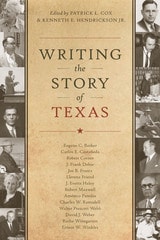
Writing the Story of Texas
Edited by Patrick L. Cox and Kenneth E. Hendrickson Jr.
University of Texas Press, 2013
The history of the Lone Star state is a narrative dominated by larger-than-life personalities and often-contentious legends, presenting interesting challenges for historians. Perhaps for this reason, Texas has produced a cadre of revered historians who have had a significant impact on the preservation (some would argue creation) of our state’s past. An anthology of biographical essays, Writing the Story of Texas pays tribute to the scholars who shaped our understanding of Texas’s past and, ultimately, the Texan identity.
Edited by esteemed historians Patrick Cox and Kenneth Hendrickson, this collection includes insightful, cross-generational examinations of pivotal individuals who interpreted our history. On these pages, the contributors chart the progression from Eugene C. Barker’s groundbreaking research to his public confrontations with Texas political leaders and his fellow historians. They look at Walter Prescott Webb’s fundamental, innovative vision as a promoter of the past and Ruthe Winegarten’s efforts to shine the spotlight on minorities and women who made history across the state. Other essayists explore Llerena Friend delving into an ambitious study of Sam Houston, Charles Ramsdell courageously addressing delicate issues such as racism and launching his controversial examination of Reconstruction in Texas, Robert Cotner—an Ohio-born product of the Ivy League—bringing a fresh perspective to the field, and Robert Maxwell engaged in early work in environmental history.
Writing the Trail
Five Women's Frontier NarrativesDeborah Lawrence
University of Iowa Press, 2006
Wyoming Revisited
Rephotographing the Scenes of Joseph E. StimsonMichael A. Amundson
University Press of Colorado, 2014
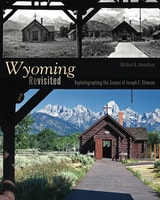
The 117 locations feature street views of Wyoming towns and cities, as well as views from the state's famous natural landmarks like Yellowstone National Park, Grand Teton National Park, Devil's Tower National Monument, Hot Springs State Park, and Big Horn and Shoshone National Forests. In addition, Amundson provides six in-depth essays that explore the life of Joseph E. Stimson, the rephotographic process and how it has evolved, and how repeat photography can be used to understand history, landscape, historic preservation, and globalization.
Wyoming Revisited highlights the historic evolution of the American West over the past century and showcases the significant changes that have occurred over the past twenty-five years. This book will appeal to photographers, historians of the American West, and anyone interested in Wyoming's history or landscape.
The publication of this book is supported in part by the Wyoming Cultural Trust Fund.