Results by title
8113 books match the query 'Literary Criticism' and 363 start with w
Women Warriors in Romantic Drama
Wendy C. Nielsen
University of Delaware Press, 2013
Women Warriors in Romantic Drama examines a recurring figure that appears in French, British, and German drama between 1789 and 1830: the woman warrior. The term itself, “woman warrior,” refers to quasi-historical female soldiers or assassins. Women have long contributed to military campaigns as canteen women. Camp followers ranged from local citizenry to spouses and prostitutes, and on occasion, women assisted men in combat. However, the woman warrior is a romantic figure, meaning a fanciful ideal, despite the reality of women’s participation in select scenes of the French Revolution and the Napoleonic Wars. The central claim of this book is the woman warrior is a way for some women writers (Olympe de Gouges, Christine Westphalen, Karoline von Günderrode, and Mary Robinson) to explore the case for extending citizenship to women. This project focuses primarily on theater for the reason that the stage simulates the public world that female dramatists and their warriors seek to inhabit. Novels and poetry clearly belong to the realm of fiction, but when audiences see women fighting onstage, they confront concrete visions of impossible women. I examine dramas in the context of their performance and production histories in order to answer why so many serious dramas featuring women warriors fail to find applause, or fail to be staged at all. Dramas about women warriors seem to sometimes contribute to the argument for female citizenship when they take the form of tragedy, because the deaths of female protagonists in such plays often provoke consideration about women’s place in society.
Consequently, where we find women playing soldiers in various entertainment venues, farce and satire often seem to dominate, although this book points to some exceptions. Censorship and audience demand for comedies made producing tragedies difficult for female playwrights, who battled additional obstacles to fashioning their careers. I compare male (Edmund Eyre, Heinrich von Kleist) and female writers’ dramatizations of the woman warrior. This analysis shows that the difficult project of getting audiences to take women warriors seriously resembles women writers’ struggles to enter the ostensibly male domains of tragedy and the public sphere.
Published by University of Delaware Press. Distributed worldwide by Rutgers University Press.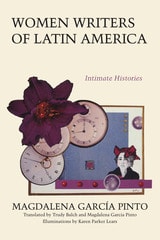
Women Writers of Latin America
Intimate HistoriesBy Magdalena García Pinto
University of Texas Press, 1991
What does it take for a woman to succeed as a writer? In these revealing interviews, first published in 1988 as Historias íntimas, ten of Latin America's most important women writers explore this question with scholar Magdalena García Pinto, discussing the personal, social, and political factors that have shaped their writing careers.
The authors interviewed are Isabel Allende, Albalucía Angel, Rosario Ferré, Margo Glantz, Sylvia Molloy, Elvira Orphée, Elena Poniatowska, Marta Traba, Luisa Valenzuela, and Ida Vitale. In intimate dialogues with each author, García Pinto draws out the formative experiences of her youth, tracing the pilgrimage that led each to a distinguished writing career.
The writers also reflect on their published writings, discussing the creative process in general and the motivating force behind individual works. They candidly discuss the problems they have faced in writing and the strategies that enabled them to reach their goals.
While obviously of interest to readers of Latin American literature, this book has important insights for students of women's literature and cultural studies, as well as for aspiring writers.

Women Writers of the American West, 1833-1927
Nina Baym
University of Illinois Press, 2012
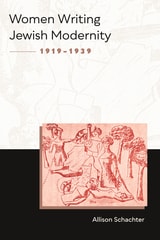
Women Writing Jewish Modernity, 1919–1939
Allison Schachter
Northwestern University Press, 2022
In Women Writing Jewish Modernity, 1919–1939, Allison Schachter rewrites Jewish literary modernity from the point of view of women. Focusing on works by interwar Hebrew and Yiddish writers, Schachter illuminates how women writers embraced the transgressive potential of prose fiction to challenge the patriarchal norms of Jewish textual authority and reconceptualize Jewish cultural belonging.
Born in the former Russian and Austro‑Hungarian Empires and writing from their homes in New York, Poland, and Mandatory Palestine, the authors central to this book—Fradl Shtok, Dvora Baron, Elisheva Bikhovsky, Leah Goldberg, and Debora Vogel—seized on the freedoms of social revolution to reimagine Jewish culture beyond the traditionally male world of Jewish letters. The societies they lived in devalued women’s labor and denied them support for their work. In response, their writing challenged the social hierarchies that excluded them as women and as Jews. As she reads these women, Schachter upends the idea that literary modernity was a conversation among men about women, with a few women writers listening in. Women writers revolutionized the very terms of Jewish fiction at a pivotal moment in Jewish history, transcending the boundaries of Jewish minority identities. Schachter tells their story and in so doing calls for a new way of thinking about Jewish cultural modernity.
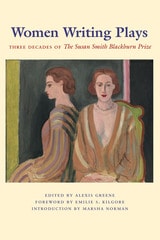
Women Writing Plays
Three Decades of the Susan Smith Blackburn PrizeEdited by Alexis Greene
University of Texas Press, 2006
Women's playwriting burgeoned in the United States and the United Kingdom as part of the feminist movement of the 1970s. Ever since, playwriting women have been embracing new subjects, experimenting with form, and devising new ways of looking at the world. To honor their achievements and inspire future endeavors, the Susan Smith Blackburn Prize was established in memory of an American actor, journalist, and feminist who died of breast cancer. In the nearly three decades of the award's existence, more than three hundred English-speaking women playwrights have been finalists for the Blackburn Prize in recognition of their work, including such prominent writers as Marsha Norman, Cheryl L. West, Wendy Wasserstein, Caryl Churchill, Paula Vogel, and Suzan-Lori Parks.
This volume offers a comprehensive overview of women's playwriting, as well as a celebration of the Susan Smith Blackburn Prize. It combines critical essays, playwrights' memoirs, and conversations and interviews with playwrights to explore how women's playwriting evolved in relation to the women's movement and how it continues to map new territory and find fresh modes of expression. The majority of contributors to this volume—playwrights, arts journalists, and theater critics—have had some connection to the Blackburn Prize, either as award recipients, play readers, or judges. The memoirs, conversations, and interviews come from some of the finest women playwrights of the last three decades. These dramatists offer fascinating insight into the playwriting art, theatrical careers, and women's goals in writing for the theater.
Women and Comedy
Rewriting the British Theatrical TraditionSusan Carlson
University of Michigan Press, 1991
Women and Communal Worship
Shaping the Early Modern Christian LiturgyMicheline White
University of Delaware Press, 2027
Women and Communal Worship advances our understanding of early modern women by uncovering and analyzing Christian women’s engagement with liturgical and communal worship between 1500 and 1750. The Protestant attack on the medieval liturgy was at the heart of the Reformation and Counter-Reformation, but women’s contributions to those momentous changes have been largely overlooked as scholars have focused on women’s private devotional practices and texts. This collection of essays demonstrates that communal worship was vital to women of all confessional stripes. Although they could not generally lead the liturgy, women shaped public devotion in important ways, whether at the level of the local congregation, the household chapel, the convent, the court, or the national church. Communal worship is thus a key site for examining women’s textual, literary, social, and political agency.
Women and Discourse in the Fiction of Marguerite Duras
Love, Legends, LanguageSusan D. Cohen
University of Massachusetts Press, 1993
One of the most famous living French writers, Marguerite Duras is renowned for her provocative and hauntingly beautiful works of fiction, drama, and cinema. This book offers the first comprehensive study of the narrative and stylistic characteristics of Duras's fiction. Susan D. Cohen examines the entire range of Duras's works, combining close textual analyses with a more general discussion of narrativity and its connections with gender, class, and race. The focus throughout is on language, representation, and difference, which Duras explores on every structural level.
Cohen shows how Duras's writings, even the controversial “erotic” works, expose and subvert the repression of women in traditional, dominant discourse and at the same time present an alternative, nonrepressive discursive model. She formulates a concept of creative “ignorance,” which she identifies as the generative principle of Duras's textual production and the approach to language it proposes. Cohen also explores the distinctive features of Duras's prose, describing how the writer achieves the ritual, legendary aura that characterizes her work.
Women and Knowledge in Mesoamerica
From East L.A. to AnahuacPaloma Martinez-Cruz
University of Arizona Press, 2011
The few works looking at the knowledge of women in Mesoamerica generally examine only the written—even academic—world, accessible only to the most elite segments of (customarily male) society. These works have consistently excluded the essential repertoire and performed knowledge of women who think and work in ways other than the textual. And while two of the book’s chapters critique contemporary novels, Martinez-Cruz also calls for the exploration of non-textual knowledge transmission. In this regard, the book's goals and methods are close to those of performance scholarship and anthropology, and these methods reveal Mesoamerican women to be public intellectuals. In Women and Knowledge in Mesoamerica, fieldwork and ethnography combine to reveal women healers as models of agency.
Her multidisciplinary approach allows Martinez-Cruz to disrupt Euro-based intellectual hegemony and to make a case for the epistemic authority of Native women. Written from a Chicana perspective, this study is learned, personal, and engaging for anyone who is interested in the wisdom that prevailing analytical cultures have deemed “unintelligible.” As it turns out, those who are unacquainted with the sometimes surprising extent and depth of wisdom of indigenous women healers simply haven’t been looking in the right places—outside the texts from which they have been consistently excluded.
Women and Laughter in Medieval Comic Literature
Lisa Perfetti
University of Michigan Press, 2003
This study is the first to investigate women's laughter as a particular kind of "talking back" to medieval discourse on women, the subject of recent feminist medievalist studies. Female characters openly embrace women's laughter, associated with the body and castigated for its unruliness in conduct literature. Acknowledging that comic works were grounded in antifeminist traditions and that their female characters were in fact targets of laughter for male authors, this study argues that female characters who laugh and tell jokes also offer traces of how women might have used their laughter to respond to negative pronouncements about women in medieval culture. Both laughable and laughing, the female protagonists studied in this book will engage modern readers with their witty, sometimes bawdy jokes, allowing us to imagine the pleasures that medieval comic literature, so often labeled misogynous, offered to women as well as to men.
Lisa Perfetti is Assistant Professor of French, Muhlenberg College.
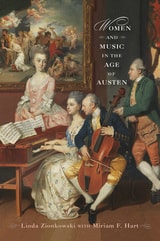
Women and Music in the Age of Austen
Linda Zionkowski
Bucknell University Press, 2024
Published by Bucknell University Press. Distributed worldwide by Rutgers University Press.
Women and Power in Argentine Literature
Stories, Interviews, and Critical EssaysBy Gwendolyn Díaz
University of Texas Press, 2007
The astonishing talent of Argentine women writers belies the struggles they have faced—not merely as overlooked authors, but as women of conviction facing oppression. The patriarchal pressures of the Perón years, the terror of the Dirty War, and, more recently, the economic collapse that gripped the nation in 2001 created such repressive conditions that some writers, such as Luisa Valenzuela, left the country for long periods. Not surprisingly, power has become an inescapable theme in Argentine women's fiction, and this collection shows how the dynamics of power capture not only the political world but also the personal one. Whether their characters are politicians and peasants, torturers and victims, parents and children, or lovers male and female, each writer explores the effects of power as it is exercised by or against women.
The fifteen writers chosen for Women and Power in Argentine Literature include famous names such as Valenzuela, as well as authors anthologized for the first time, most notably María Kodama, widow of Jorge Luis Borges. Each chapter begins with a "verbal portrait," editor Gwendolyn Díaz's personal impression of the author at ease, formed through hours of conversation and interviews. A biographical essay and critical commentary follow, with emphasis on the work included in this anthology. Díaz's interviews, translated from Spanish, and finally the stories themselves—only three of which have been previously published in English—complete the chapters. The extraordinary depth of these chapters reflects the nuanced, often controversial portrayals of power observed by Argentine women writers. Inspiring as well as insightful, Women and Power in Argentine Literature is ultimately about women who, in Díaz's words, "choose to speak their truth regardless of the consequences."
Women and Weasels
Mythologies of Birth in Ancient Greece and RomeMaurizio Bettini
University of Chicago Press, 2013
Women as Translators in Early Modern England
Deborah Uman
University of Delaware Press, 2012
Women as Translators in Early Modern England offers a feminist theory of translation that considers both the practice and representation of translation in works penned by early modern women. It argues for the importance of such a theory in changing how we value women’s work. Because of England’s formal split from the Catholic Church and the concomitant elevation of the written vernacular, the early modern period presents a rich case study for such a theory. This era witnessed not only a keen interest in reviving the literary glories of the past, but also a growing commitment to humanist education, increasing literacy rates among women and laypeople, and emerging articulations of national sentiment. Moreover, the period saw a shift in views of authorship, in what it might mean for individuals to seek fame or profit through writing. Until relatively recently in early modern scholarship, women were understood as excluded from achieving authorial status for a number of reasons—their limited education, the belief that public writing was particularly scandalous for women, and the implicit rule that they should adhere to the holy trinity of “chastity, silence, and obedience.”
While this view has changed significantly, women writers are still understood, however grudgingly, as marginal to the literary culture of the time. Fewer women than men wrote, they wrote less, and their “choice” of genres seems somewhat impoverished; add to this the debate over translation as a potential vehicle of literary expression and we can see why early modern women’s writings are still undervalued. This book looks at how female translators represent themselves and their work, revealing a general pattern in which translation reflects the limitations women faced as writers while simultaneously giving them the opportunity to transcend these limitations. Indeed, translation gave women the chance to assume an authorial role, a role that by legal and cultural standards should have been denied to them, a role that gave them ownership of their words and the chance to achieve profit, fame, status and influence.
Published by University of Delaware Press. Distributed worldwide by Rutgers University Press.
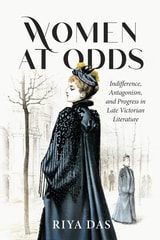
Women at Odds
Indifference, Antagonism, and Progress in Late Victorian LiteratureRiya Das
The Ohio State University Press, 2024
In Women at Odds, Riya Das demonstrates the limitations of female solidarity for the New Woman in Victorian society. On the one hand, feminist antagonism disrupts the status quo in unanticipated ways, and it helps open new domestic and professional pathways for women. On the other hand, the urban professional New Woman’s rhetoric recycles distinctly sexist, racist, and classist conventions, thereby bringing middle-class Englishwomen dialectically—what Das terms “retro-progressively”—into the labor pool of the British empire.
While foregrounding the figure of the New Woman as a white imperialist reformer, Das illustrates how the New Woman movement detaches itself from the domestic politics of female friendship. In works by George Eliot, George Gissing, Olive Schreiner, Bram Stoker, and others, antagonism and indifference enable the fin de siècle New Woman to transcend traditionally defined roles and fashion social progress for herself at the expense of femininities she excludes as “other.” By contesting the critical notion of solidarity as the only force that brings Victorian women’s narratives to fruition, Women at Odds reveals the troubled but effective role of antagonistic and indifferent reformist politics in loosening rigid social structures for privileged populations.
Women in American Journalism
A New HistoryJan Whitt
University of Illinois Press, 2007
Whitt explores the lives of women reporters who achieved significant historical recognition, such as Ida Tarbell and Ida Wells-Barnett. Investigating the often blurry boundary between journalism and literature, she explains how this fluid distinction has actually limited how many scholars perceive the contributions of authors such as Joan Didion and Susan Orlean. Whitt also highlights the work of important novelists, including Willa Cather, Katherine Anne Porter, and Eudora Welty, to shed light on how their work as journalists informed their highly successful fiction.
This study also offers a survey of contributions women have made to the alternative presses, including the environmental press and civil rights activism. Whitt examines important figures in the early feminist press such as Caroline Churchill, editor and reporter for Denver’s Queen Bee, and Betty Wilkins of Kansas City’s Call. Finally, through newsletters, newspapers, magazines, and journals, she traces the history of the lesbian press and points out the ways in which it indicates that the alternative press is thriving.
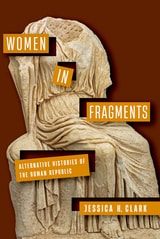
Women in Fragments
Alternative Histories of the Roman RepublicJessica H. Clark
University of Wisconsin Press, 2026
Our sources of knowledge about women in the ancient Roman Republic are flawed. Roman historians were uniformly male, as were most historians of ancient Rome until quite recently. In the historiography handed down by Enlightenment-era scholars, women generally played marginal and often sexualized roles, relegated to the footnotes by historians who assumed the Roman Republic to be fully androcentric. The evidence, however, suggests otherwise. In this detailed and insightful volume, Jessica H. Clark returns to the source material to gain insight into how Roman men understood the lives, roles, and contributions of the women they wrote about.
Reexamining the puzzle pieces of ancient literature, Clark proposes that the earliest Roman historians represented women in complex ways, revealing their appreciation of women’s communities and women’s engagement in the project of the Republic, in contrast to the attitudes assumed by scholars in the eighteenth and nineteenth centuries. She attributes those scholars’ assumptions to the social and political circumstances of their own times and demonstrates how these assumptions have continued to inform our own perceptions of Roman women and therefore Roman society more generally. This study ultimately uncovers not only the women of the Roman Republic but also how modern preconceptions have distorted their image and the stories we tell about ancient Rome.
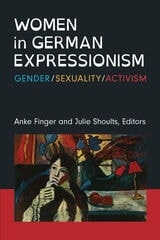
Women in German Expressionism
Gender, Sexuality, ActivismAnke Finger and Julie Shoults, Editors
University of Michigan Press, 2023
Women in Print
Essays on the Print Culture of American Women from the Nineteenth and Twentieth CenturiesEdited by James P. Danky and Wayne A. Wiegand
University of Wisconsin Press, 2006
Women readers, editors, librarians, authors, journalists, booksellers, and others are the subjects in this stimulating new collection on modern print culture. The essays feature women like Marie Mason Potts, editor of Smoke Signals, a mid-twentieth century periodical of the Federated Indians of California; Lois Waisbrooker, publisher of books and journals on female sexuality and women's rights in the decades after the Civil War; and Elizabeth Jordan, author of two novels and editor of Harper's Bazaar from 1900 to 1913. The volume presents a complex and engaging picture of print culture and of the forces that affected women's lives in the nineteenth and twentieth centuries.
Published in collaboration among the University of Wisconsin Press, the Center for the History of Print Culture in Modern America (a joint program of the University of Wisconsin–Madison and the Wisconsin Historical Society), and the University of Wisconsin–Madison General Library System Office of Scholarly Communication.
Women in Roman Republican Drama
Edited by Dorota Dutsch, Sharon L. James, and David Konstan
University of Wisconsin Press, 2015
Women of Color
Mother-Daughter Relationships in 20th-Century LiteratureEdited by Elizabeth Brown-Guillory
University of Texas Press, 1996
Interest in the mother-daughter relationship has never been greater, yet there are few books specifically devoted to the relationships between daughters and mothers of color. To fill that gap, this collection of original essays explores the mother-daughter relationship as it appears in the works of African, African American, Asian American, Mexican American, Native American, Indian, and Australian Aboriginal women writers.
Prominent among the writers considered here are Toni Morrison, Alice Walker, Maxine Hong Kingston, Cherrie Moraga, Leslie Marmon Silko, and Amy Tan. Elizabeth Brown-Guillory and the other essayists examine the myths and reality surrounding the mother-daughter relationship in these writers' works. They show how women writers of color often portray the mother-daughter dyad as a love/hate relationship, in which the mother painstakingly tries to convey knowledge of how to survive in a racist, sexist, and classist world while the daughter rejects her mother's experiences as invalid in changing social times.
This book represents a further opening of the literary canon to twentieth-century women of color. Like the writings it surveys, it celebrates the joys of breaking silence and moving toward reconciliation and growth.
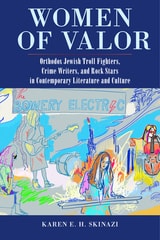
Women of Valor
Orthodox Jewish Troll Fighters, Crime Writers, and Rock Stars in Contemporary Literature and CultureKaren E. H. Skinazi
Rutgers University Press, 2018
Media portrayals of Orthodox Jewish women frequently depict powerless, silent individuals who are at best naive to live an Orthodox lifestyle, and who are at worst, coerced into it. Karen E. H. Skinazi delves beyond this stereotype in Women of Valor to identify a powerful tradition of feminist literary portrayals of Orthodox women, often created by Orthodox women themselves. She examines Orthodox women as they appear in memoirs, comics, novels, and movies, and speaks with the authors, filmmakers, and musicians who create these representations. Throughout the work, Skinazi threads lines from the poem “Eshes Chayil,” the Biblical description of an Orthodox “Woman of Valor.” This proverb unites Orthodoxy and feminism in a complex relationship, where Orthodox women continuously question, challenge, and negotiate Orthodox and feminist values. Ultimately, these women create paths that unite their work, passions, and families under the framework of an “Eshes Chayil,” a woman who situates religious conviction within her own power.
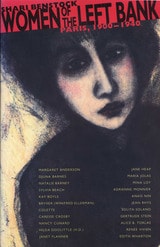
Women of the Left Bank
Paris, 1900-1940By Shari Benstock
University of Texas Press, 1986
Now available in a durable paperback edition, Shari Benstock's critically acclaimed, best-selling Women of the Left Bank is a fascinating exploration of the lives and works of some two dozen American, English, and French women whose talent shaped the Paris expatriate experience in the century's early years.
This ambitious historical, biographical, and critical study has taken its place among the foremost works of literary criticism. Maurice Beebe calls it "a distinguished contribution to modern literary history." Jane Marcus hails it as "the first serious literary history of the period and its women writers, making along the way no small contribution to our understanding of the relationships between women artists and their male counterparts, from Henry James to Hemingway, Joyce, Picasso, and Pound."
Women with a Thirst for Destruction
The Bad Mother in Russian CultureJenny Kaminer
Northwestern University Press, 2014
Winner, 2014 AWSS Best Book in Slavic/East European/Eurasian Women's Studies
In Russian culture, the archetypal mother is noble and self-sacrificing. In Women with a Thirst for Destruction, however, Jenny Kaminer shows how this image is destabilized during periods of dramatic rupture in Russian society, examining in detail the aftermath of three key moments in the country’s history: the emancipation of the serfs in 1861, the Russian Revolution of 1917, and the fall of the Communist regime in 1991. She explores works both familiar and relatively unexamined: Leo Tolstoy’s Anna Karenina, Mikhail Saltykov-Shchedrin’s The Golovlev Family, Fyodor Gladkov’s Cement, and Liudmila Petrushevskaia’s The Time: Night, as well as a late Soviet film (Vyacheslav Krishtofovich’s Adam’s Rib, 1990) and media coverage of the Chechen conflict. Kaminer’s book speaks broadly to the mutability of seemingly established cultural norms in the face of political and social upheaval.
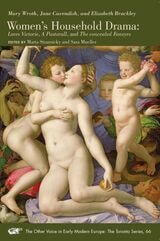
Women's Household Drama
Loves Victorie, A Pastorall, and The concealed FansyesMary Wroth, Jane Cavendish, and Elizabeth Brackley
Iter Press, 2018
Volume 66 in the Other Voice in Early Modern Europe - The Chicago Series
Women's Literary Networks and Media Cultures in the Long Eighteenth Century
Leith Davis
Bucknell University Press, 2027
This pathbreaking collection features original essays by leading scholars working at the intersections of women’s literary history, book history, and media cultures. Drawing on underexplored archives and innovative methodologies—from feminist bibliography to digital humanities—the contributors generate new narratives about the long eighteenth century and the centrality of gender to its literary production. Moving beyond a narrow focus on authorship, the chapters recover women as writers and readers, editors and curators, printers and book owners, scholars, preachers, and political actors. Across print, manuscript, and oral cultures, they illuminate the collaborative networks and material conditions shaping cultural production and circulation. Organized into sections on print histories, manuscript cultures, and new methodological approaches, this collection reshapes eighteenth-century studies while modeling ethically engaged archival research. Accessible and wide-ranging, it will appeal to scholars and students in literary studies, women’s and gender studies, and book history alike.
Published by Bucknell University Press. Distributed worldwide by Rutgers University Press.
Women's Professional Lives in Rhetoric and Composition
Choice, Chance, and SerendipityEdited by Elizabeth A. Flynn and Tiffany Bourelle
The Ohio State University Press, 2018
This collection, edited by Elizabeth A. Flynn and Tiffany Bourelle, contributes to the valuable work of chronicling the professional and personal lives of women in academia. Through its line-up of contributors from diverse backgrounds, locations, and career paths, Women’s Professional Lives in Rhetoric and Composition showcases the voices of multiple scholars occupying a multitude of different roles in the profession: from prestigious professors emeritae and endowed chairs to assistant professors starting their careers to an independent scholar to part-time faculty.
The collection sets itself apart from other volumes not just in its diversity of perspectives but also by speaking against linear stories of success in the profession—sharing moments of shame and failure, showing how the personal and professional often intertwine and influence one another, and ultimately revealing how choice, chance, serendipity, and kairos have all played a role in the lives of its contributors. In focusing on this convergence, Women’s Professional Lives in Rhetoric and Composition offers a more nuanced picture of the professional and intellectual trajectories of women in rhetoric and composition.
Women's Speaking Justified and Other Pamphlets
Margaret Fell
Iter Press, 2018
The Other Voice in Early Modern Europe - The Toronto Series, volume 65
Women's Wit on the Early Modern Stage
Beth Cortese
University of Delaware Press, 2027
Women's Wit on the Early Modern Stage explores the overlooked, gendered challenge posed by heroines and villainesses in comedies, tragedies, and tragicomedies through who displayed their wit through repartee, plotting, and disguise, combining verbal skill with physical action to produce a feminized perspective. The chapters showcase the portrayal of women’s wit in the works of Frances Boothby, Aphra Behn, Elizabeth Polwhele, Mary Pix, Catharine Trotter, Delarivier Manley, and Susanna Centlivre, in which female characters criticize authority and address female spectators in the theater, including them as part of an emerging critical discourse on the public stage. As the first-ever scholarly monograph about women’s wit in drama before the twentieth century, this book draws attention to the cultural and social role that wit played in the public sphere as a mode of critique, empowerment, and play for women both on and offstage.
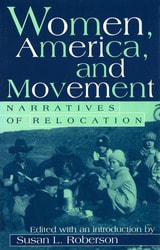
Women, America, and Movement
Narratives of RelocationEdited & Intro by Susan L. Roberson
University of Missouri Press, 1998
Since the colonial days, American women have traveled, migrated, and relocated, always faced with the challenge of reconstructing their homes for themselves and their families. Women, America, and Movement offers a journey through largely unexplored territory—the experiences of migrating American women. These narratives, both real and imagined, represent a range of personal and critical perspectives; some of the women describe their travels as expansive and freeing, while others relate the dreadful costs and sacrifices of relocating.
Despite the range of essays featured in this study, the writings all coalesce around the issues of politics, poetry, and self- identity described by Adrienne Rich as the elements of the "politics of location," treated here as the politics of relocation. The narratives featured in this book explore the impact of race, class, and sexual economics on migratory women, their self-identity, and their roles in family and social life. These issues demonstrate that in addition to geographic place, ideology is itself a space to be traversed.
By examining the writings of such women as Louise Erdrich, Zora Neale Hurston, and Gertrude Stein, the essayists included in this volume offer a variety of experiences. The book confronts such issues as racist politicking against Native Americans, African Americans, and Asian immigrants; sexist attitudes that limit women to the roles of wife, mother, and sexual object; and exploitation of migrants from Appalachia and of women newly arrived in America.
These essays also delve into the writings themselves by looking at what happens to narrative structure as authors or their characters cross geographic boundaries. The reader sees how women writers negotiate relocation in their texts and how the written word becomes a place where one finds oneself.
Women, Celebrity, and Literary Culture between the Wars
By Faye Hammill
University of Texas Press, 2007
As mass media burgeoned in the years between the first and second world wars, so did another phenomenon—celebrity. Beginning in Hollywood with the studio-orchestrated transformation of uncredited actors into brand-name stars, celebrity also spread to writers, whose personal appearances and private lives came to fascinate readers as much as their work. Women, Celebrity, and Literary Culture between the Wars profiles seven American, Canadian, and British women writers—Dorothy Parker, Anita Loos, Mae West, L. M. Montgomery, Margaret Kennedy, Stella Gibbons, and E. M. Delafield—who achieved literary celebrity in the 1920s and 1930s and whose work remains popular even today.
Faye Hammill investigates how the fame and commercial success of these writers—as well as their gender—affected the literary reception of their work. She explores how women writers sought to fashion their own celebrity images through various kinds of public performance and how the media appropriated these writers for particular cultural discourses. She also reassesses the relationship between celebrity culture and literary culture, demonstrating how the commercial success of these writers caused literary elites to denigrate their writing as "middlebrow," despite the fact that their work often challenged middle-class ideals of marriage, home, and family and complicated class categories and lines of social discrimination.
The first comparative study of North American and British literary celebrity, Women, Celebrity, and Literary Culture between the Wars offers a nuanced appreciation of the middlebrow in relation to modernism and popular culture.
Women, Compulsion, Modernity
The Moment of American NaturalismJennifer L. Fleissner
University of Chicago Press, 2004
Fleissner shows that this era's expanding opportunities for women were inseparable from the same modern developments—industrialization, consumerism—typically believed to constrain human freedom. With Women, Compulsion, and Modernity, Fleissner creates a new language for the strange way the writings of the time both broaden and question individual agency.
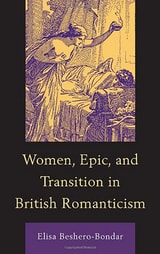
Women, Epic, and Transition in British Romanticism
Elisa Beshero-Bondar
University of Delaware Press, 2011
Women, Epic, and Transition in British Romanticism argues that early nineteenth-century women poets contributed some of the most daring work in modernizing the epic genre. The book examines several long poems to provide perspective on women poets working with and against men in related efforts, contributing together to a Romantic movement of large-scale genre revision. Women poets challenged longstanding categorical approaches to gender and nation in the epic tradition, and they raised politically charged questions about women’s importance in moments of historical crisis.
While Romantic epics did not all engage in radical questioning or undermining of authority, this study calls attention to some of the more provocative poems in their approach to gender, culture, and history. This study prioritizes long poems written by and about women during the Romantic era, and does so in context with influential epics by male contemporaries. The book takes its cue from a dramatic increase in the publication of epics in the early nineteenth-century. At their most innovative, Romantic epics provoked questions about the construction of ideological meaning and historical memory, and they centralized women’s experiences in entirely new ways to reflect on defeat, loss, and inevitable transition. For the first time the epic became an attractive genre for ambitious women poets.
The book offers a timely response to recent groundbreaking scholarship on nineteenth-century epic by Herbert Tucker and Simon Dentith, and should be of interest to Romanticists and scholars of 18th- and 19th-century literature and history, gender and genre, and women’s studies.
Published by University of Delaware Press. Distributed worldwide by Rutgers University Press.
Women, Jews and Muslims in the Texts of Reconquest Castile
Louise Mirrer
University of Michigan Press, 1996
This volume is the first in the field of medieval Hispanic studies to reexamine the canon in the light of recent critical work on language, gender, power, and the effects of domination. It shows how the texts imaginarily liberate Christian women from the authority of their husbands, in order to demonstrate how women's access to the discourses of power leads to tragedy and ruin for the men who fail to silence them.
Women, Jews, and Muslims in the Texts of Reconquest Castile makes the argument that dominant-"other" struggle, waged on the terrains of gender, religion, and war, is the most appropriate paradigm for discussing literary texts produced in the last centuries of reconquest. More than any other culture, medieval Spain reminds us of the provisional nature of national, religious, and sexual identity.
Exploring the gendering of subjects in society, the volume will be of interest to those in cultural and gender studies, Hispanic studies, medieval studies, and Middle Eastern studies. All texts are translated, and maps and illustrations help orient the reader.
Louise Mirrer is Professor and Chair, Department of Spanish and Portuguese, University of Minnesota.
Women, Money, and the Law
Nineteenth-Century Fiction, Gender, and the CourtsJoyce W. Warren
University of Iowa Press, 2005

Women, Work, and Representation
Needlewomen in Victorian Art and LiteratureLynn M. Alexander
Ohio University Press, 2003
In Victorian England, virtually all women were taught to sew; needlework was allied with images of domestic economy and with traditional female roles of wife and mother- with home rather than factory. The professional seamstress, however, labored long hours for very small wages creating gowns for the upper and middle classes. In her isolation and helplessness, she provided social reformers with a powerful image of working-class suffering that appealed to the sensibilities of the upper classes and helped galvanize public opinion around the need for reform.
Women, Work, and Representation addresses the use of that image in the reform movement, underscoring the shock to the Victorian public when reports revealed that the profession of needlework was extremely hazardous, even deadly.
Author Lynn M. Alexander traces the development of the symbol of the seamstress through a variety of presentations, drawing from the writings of Charles Dickens, Elizabeth Gaskell, Charlotte Elizabeth Tonna, and George W. M. Reynolds, and on visual representations by Richard Redgrave, Thomas Benjamin Kennington, John Everett Millais, John Leech, John Tenniel, and Hubert von Herkomer.
Written to appeal to Victorian scholars, women's studies scholars, and those interested in semiotics and aestheticism, Women, Work, and Representation includes twenty illustrations, most from periodicals of the day, providing new insights into the lives of working women throughout the Victorian era.
Women, the New York School, and Other True Abstractions
Maggie Nelson
University of Iowa Press, 2007
Women’s Bookscapes in Early Modern Britain
Reading, Ownership, CirculationLeah Knight, Micheline White, and Elizabeth Sauer, Editors
University of Michigan Press, 2018
Women in 16th- and 17th-century Britain read, annotated, circulated, inventoried, cherished, criticized, prescribed, and proscribed books in various historically distinctive ways. Yet, unlike that of their male counterparts, the study of women’s reading practices and book ownership has been an elusive and largely overlooked field.
In thirteen probing essays, Women’s Bookscapesin Early Modern Britain brings together the work of internationally renowned scholars investigating key questions about early modern British women’s figurative, material, and cultural relationships with books. What constitutes evidence of women’s readerly engagement? How did women use books to achieve personal, political, religious, literary, economic, social, familial, or communal goals? How does new evidence of women’s libraries and book usage challenge received ideas about gender in relation to knowledge, education, confessional affiliations, family ties, and sociability? How do digital tools offer new possibilities for the recovery of information on early modern women readers?
The volume’s three-part structure highlights case studies of individual readers and their libraries; analyses of readers and readership in the context of their interpretive communities; and new types of scholarly evidence—lists of confiscated books and convent rules, for example—as well as new methodologies and technologies for ongoing research. These essays dismantle binaries of private and public; reading and writing; female and male literary engagement and production; and ownership and authorship.
Interdisciplinary, timely, cohesive, and concise, this collection’s fresh, revisionary approaches represent substantial contributions to scholarship in early modern material culture; book history and print culture; women’s literary and cultural history; library studies; and reading and collecting practices more generally.
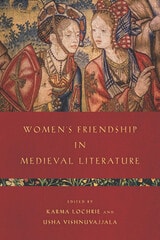
Women’s Friendship in Medieval Literature
Edited by Karma Lochrie and Usha Vishnuvajjala
The Ohio State University Press, 2022
Contributors:
Penelope Anderson, Andrea Boffa, Jennifer N. Brown, Christine Chism, Melissa Ridley Elmes, Laurie Finke, Carissa M. Harris, Lydia Yaitsky Kertz, Clare A. Lees, Karma Lochrie, Gillian R. Overing, Alexandra Verini, Usha Vishnuvajjala, Stella Wang
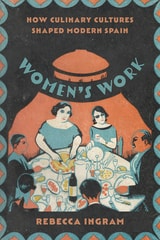
Women’s Work
How Culinary Cultures Shaped Modern SpainRebecca Ingram
Vanderbilt University Press, 2022
We are living in a moment in which famous chefs, Michelin stars, culinary techniques, and gastronomical accolades attract moneyed tourists to Spain from all over the world. This has prompted the Spanish government to declare its cuisine as part of Spanish patrimony. Even with this widespread global attention, we know little about how Spanish cooking became a litmus test for demonstrating Spain's modernity and, relatedly, the roles ascribed to the modern Spanish women responsible for daily cooking.
Efforts to articulate a new, modern Spain infiltrated writing in multiple genres and media. Women's Work offers a sharp reading of diverse sources, placed in their historical context, that yields a better understanding of the roles of food within an inherently uneven modernization process. Further, author Rebecca Ingram's perceptive critique reveals the paradoxical messages women have navigated, even in texts about a daily practice that shaped their domestic and work lives. Women's Work posits that this is significant because of the degree to which domestic activities, including cooking, occupied women's daily lives, even while issues like their fitness as citizens and participation in the public sphere were hotly debated. At the same time, progressive intellectuals from diverse backgrounds began to invoke Spanish cooking and eating as one measure of Spanish modernity.
Women's Work shows how culinary writing engaged these debates and reached women at the site of much of their daily labor—the kitchen—and, in this way, shaped their thinking about their roles in modernizing Spain.
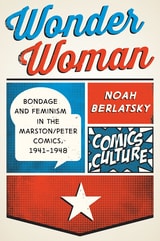
Wonder Woman
Bondage and Feminism in the Marston/Peter Comics, 1941-1948Berlatsky, Noah
Rutgers University Press, 2015
Comics expert Noah Berlatsky takes us on a wild ride through the Wonder Woman comics of the 1940s, vividly illustrating how Marston’s many quirks and contradictions, along with the odd disproportionate composition created by illustrator Harry Peter, produced a comic that was radically ahead of its time in terms of its bold presentation of female power and sexuality. Himself a committed polyamorist, Marston created a universe that was friendly to queer sexualities and lifestyles, from kink to lesbianism to cross-dressing. Written with a deep affection for the fantastically pulpy elements of the early Wonder Womancomics, from invisible jets to giant multi-lunged space kangaroos, the book also reveals how the comic addressed serious, even taboo issues like rape and incest.
Wonder Woman
New edition with full color illustrationsBerlatsky, Noah
Rutgers University Press, 2017
Comics expert Noah Berlatsky takes us on a wild ride through the Wonder Woman comics of the 1940s, vividly illustrating how Marston’s many quirks and contradictions, along with the odd disproportionate composition created by illustrator Harry Peter, produced a comic that was radically ahead of its time in terms of its bold presentation of female power and sexuality. Himself a committed polyamorist, Marston created a universe that was friendly to queer sexualities and lifestyles, from kink to lesbianism to cross-dressing. Written with a deep affection for the fantastically pulpy elements of the early Wonder Woman comics, from invisible jets to giant multi-lunged space kangaroos, the book also reveals how the comic addressed serious, even taboo issues like rape and incest.
Wonder Woman: Bondage and Feminism in the Marston/Peter Comics 1941-1948 reveals how illustrator and writer came together to create a unique, visionary work of art, filled with bizarre ambition, revolutionary fervor, and love, far different from the action hero symbol of the feminist movement many of us recall from television.
Wonderful Words, Silent Truth
Essays on Poetry and a MemoirCharles Simic
University of Michigan Press, 1990
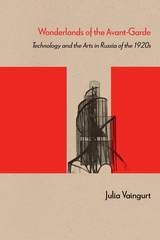
Wonderlands of the Avant-Garde
Technology and the Arts in Russia of the 1920sJulia Vaingurt
Northwestern University Press, 2013
In postrevolutionary Russia, as the Soviet government pursued rapid industrialization, avant-garde artists declared their intent to serve the nascent state and to transform life in accordance with their aesthetic designs. Despite their utilitarian intentions, however, most avant-gardists rarely created works regarded as practical instruments of societal transformation. Exploring this paradox, Vaingurt claims that the artists’ fusion of technology and aesthetics prevented their creations from being fully conscripted into the arsenal of political hegemony. The purposes of avant-garde technologies, she contends, are contemplative rather than constructive. Looking at Meyerhold’s theater, Tatlin’s and Khlebnikov’s architectural designs, Mayakovsky’s writings, and other works from the period, Vaingurt offers an innovative reading of an exceptionally complex moment in the formation of Soviet culture.
Word Crimes
Blasphemy, Culture, and Literature in Nineteenth-Century EnglandJoss Marsh
University of Chicago Press, 1998
From extensive archival and literary research, Joss Marsh reconstructs a unified and particular account of blasphemy in Victorian England. Rewriting English history from the bottom up, she tells the forgotten stories of more than two hundred working-class "blasphemers," like Foote, whose stubborn refusal to silence their "hooligan" voices helped secure our rights to speak and write freely today. The new standards of criminality used to judge their "word crimes" rewrote the terms of literary judgment, demoting the Bible to literary masterpiece and raising Literature as the primary standard of Victorian cultural value.
Word Cultures
Radical Theory and Practice in William S. Burroughs' FictionRobin Lydenberg
University of Illinois Press, 1987
Lydenberg focuses upon the stylistic accomplishments of this controversial and
experimental writer. In doing so, she skillfully demonstrates that the ideas
we now recognize as characteristic of post-structuralism and deconstruction
were being developed independently by Burroughs long ago.
Word Images
New Perspectives on Canícula and Other Works by Norma Elia CantúEdited by Gabriella Gutiérrez y Muhs; Foreword by María Herrera-Sobek
University of Arizona Press, 2017
Contributors:
Steven W. Bender
Aurora Chang
Vanessa Fonseca
Gabriella Gutiérrez y Muhs
María Herrera-Sobek
Ellen McCracken
María Esther Quintana Millamoto
Aldo Ulisses Reséndiz Ramírez
Rose Rodríguez-Rabin
Jesús Rosales
Carlos Sibaja García
María Socorro Tabuenca
Juan Velasco
Word Play
Experimental Poetry and Soviet Children’s LiteratureAinsley Morse
Northwestern University Press, 2021
Word Play traces the history of the relationship between experimental aesthetics and Soviet children’s books, a relationship that persisted over the seventy years of the Soviet Union’s existence. From the earliest days of the Soviet project, children’s literature was taken unusually seriously—its quality and subject matter were issues of grave political significance. Yet, it was often written and illustrated by experimental writers and artists who found the childlike aesthetic congenial to their experiments in primitivism, minimalism, and other avant‑garde trends. In the more repressive environment following Stalin’s rise to power, experimental aesthetics were largely relegated to unofficial and underground literature, but unofficial writers continued to author children’s books, which were often more appealing than adult literature of the time.
Word Play focuses on poetry as the primary genre for both children’s and unofficial literature throughout the Soviet period. Five case studies feature poets‑cum‑children’s writers—Leonid Aronzon, Oleg Grigoriev, Igor Kholin, Vsevolod Nekrasov, and Dmitri Prigov—whose unpublished work was not written for children but features lexical and formal elements, abundant humor, and childlike lyric speakers that are aspects of the childlike aesthetic. The book concludes with an exploration of the legacy of this aesthetic in Russian poetry today. Drawing on rich primary sources, Word Play joins a growing literature on Russian children’s books, connecting them to avant-garde poetics in fresh, surprising ways.
Word Rides Again
Rereading The Frontier In American FictionJ. David Stevens
Ohio University Press, 2001
With much recent scholarship polarizing frontier novels into “popular” and “literary” camps, The Word Rides Again challenges the critical orthodoxy that such works have little in common, arguing instead that formulaic Western fictions can subtly (and even subversively) share cultural concerns with more highbrow brethren. Each chapter focuses on a writer who has traditionally been classified as either popular or artistic, reading a representative fictional work against prevailing scholarly trends. In this manner, Bret Harte’s sentimental stories become gender-bending experiments in which women assume male roles and even enjoy lesbian relationships. Owen Wister’s The Virginian is transmuted from a misogynistic diatribe into a complex meditation on the peculiarly American relation of violence to male identity. And even Willa Cather’s Death Comes for the Archbishop, rather than the apotheosis of a religious leader, becomes a somewhat standard version of the popular frontier story.
The Word Rides Again represents a significant departure from more traditional studies of frontier literature. It reaffirms the continuum between popular and literary texts and explores the ways that frontier novels have echoed, endorsed, and extended each other from the inception of the genre.
Word Space Multiplicities, Openings, Andings
Jim Rosenberg
West Virginia University Press, 2015
Word Space, Multiplicities, Openings, Andings will change your understanding of digital writing. The book offers the first comprehensive collection of Jim Rosenberg’s essays, gathering what may be the most significant and overarching single exploration of hypertext. It includes historically significant texts such as “The Interactive Diagram Sentence” as well as Rosenberg’s most recent essays. This book is required reading for digital humanists, electronic writers, and new media scholars.