Results by title
4743 books match the query 'Religion' and 8 start with y
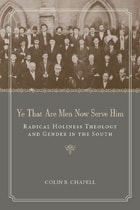
Ye That Are Men Now Serve Him
Radical Holiness Theology and Gender in the SouthColin B. Chapell
University of Alabama Press, 2016
Examines how religious belief reshaped concepts of gender during the New South period that took place from 1877 to 1915 in ways that continue to manifest today
Modernity remade much of the world in the late nineteenth and early twentieth centuries and was nowhere more transformational than in the American South. In the wake of the Civil War, the region not only formed new legal, financial, and social structures, but citizens of the South also faced disorienting uncertainty about personal identity and even gender itself. Ye That Are Men Now Serve Him traces the changes in southern gender roles during the New South period of 1877–1915 and demonstrates that religion is the key to perceiving how constructions of gender changed.
The Civil War cleaved southerners from the culture they had developed organically during antebellum decades, raising questions that went to the very heart of selfhood: What does it mean to be a man? How does a good woman behave? Unmoored from traditional anchors of gender, family, and race, southerners sought guidance from familiar sources: scripture and their churches. In Ye That Are Men Now Serve Him, Colin Chapell traces how concepts of gender evolved within the majority Baptist and Methodist denominations as compared to the more fluid and innovative Holiness movement.
Grounded in expansive research into the archives of the Southern Baptist Convention; Methodist Episcopal Church, South; and the Holiness movement, Chapell’s writing is also enlivened by a rich trove of primary sources: diaries, sermons, personal correspondence, published works, and unpublished memoirs. Chapell artfully contrasts the majority Baptist and Methodist view of gender with the relatively radical approaches of the emerging Holiness movement, thereby bringing into focus how subtle differences in belief gave rise to significantly different ideas of gender roles.
Scholars have explored class, race, and politics as factors that contributed to contemporary southern identity, and Chapell restores theology to its intuitive place at the center of southern identity. Probing and illuminating, Ye That Are Men Now Serve Him offers much of interest to scholars and readers of the South, southern history, and religion.
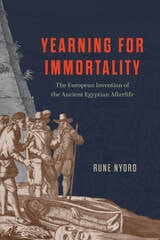
Yearning for Immortality
The European Invention of the Ancient Egyptian AfterlifeRune Nyord
University of Chicago Press, 2025
Many of us are familiar with the ancient Egyptians’ obsession with immortality and the great efforts they made to secure the quality of their afterlife. But, as Rune Nyord shows, even today, our understanding of the Egyptian afterlife has been formulated to a striking extent in Christian terms. Nyord argues that this is no accident, but rather the result of a long history of Europeans systematically retelling the religion of ancient Egypt to fit the framework of Christianity. The idea of ancient Egyptians believing in postmortem judgment with rewards and punishments in the afterlife was developed during the early modern period through biased interpretations that were construed without any detailed knowledge of ancient Egyptian religion, hieroglyphs, and sources.
As a growing number of Egyptian images and texts became available through the nineteenth century, these materials tended to be incorporated into existing narratives rather than being used to question them. Against this historical background, Nyord argues that we need to return to the indigenous sources and shake off the Christian expectations that continue to shape scholarly and popular thinking about the ancient Egyptian afterlife.
Yearnings of the Soul
Psychological Thought in Modern KabbalahJonathan Garb
University of Chicago Press, 2015
Garb follows the gradual disappearance of the soul from modern philosophy while drawing attention to its continued persistence as a topic in literature and popular culture. He pays close attention to James Hillman’s “archetypal psychology,” using it to engage critically with the psychoanalytic tradition and reflect anew on the cultural and political implications of the return of the soul to contemporary psychology. Comparing Kabbalistic thought to adjacent developments in Catholic, Protestant, and other popular expressions of mysticism, Garb ultimately offers a thought-provoking argument for the continued relevance of religion to the study of psychology.
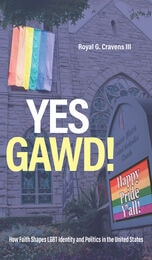
Yes Gawd!
How Faith Shapes LGBT Identity and Politics in the United StatesCravens III, Royal G.
Temple University Press, 2024
Cravens also demonstrates the mobilizing power of faith for LGBT people by contrasting the effects of participation in faith and secular communities on political activism. He explores how factors such as coming out, race, and LGBT-affirming churches influence political attitudes and behavior and explains how the development of LGBT politico-religious activism provides opportunities for LGBT people to organize politically.
Ultimately, Cravens provides a cohesive account of how religion acts as a catalyst for and facilitator in the political development of LGBT people in the United States. In the process, he shows that there is room for both religion in LGBT communities and LGBT people in religious communities.
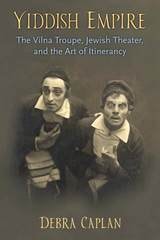
Yiddish Empire
The Vilna Troupe, Jewish Theater, and the Art of ItinerancyDebra Caplan
University of Michigan Press, 2018

Yoga and the Hindu Tradition
Jean Varenne
University of Chicago Press, 1977
This excellent translation, including line drawings and charts, a glossary of technical terms, and a complete translation of the Yoga Darshana Upanishad, begins with a brief description of the metaphysical and religious history on which Yoga is based. Varenne discusses the theoretical conception of Yoga as the search for liberating knowledge, concluding with a brief indication of the physical practices and extra Yogic themes such as Kundalini and Tantrism. It is the author's hope that "those who read [this book] will come to realize that it is in fact dishonest to reduce Yoga to some sort of physical training, or to just an occult doctrine; it is a 'world view' a Weltanschauung that comprehends reality in its totality."
"The straightforward, well-organized presentation makes the book itself a microcosm of what Varenne singles out as a dominant feature of classical Hindu thought—a bringing of the complex and multitudinous into a unity."—Judith Guttman, Yoga Journal

Yoga
A Theological InvestigationEzra Sullivan
Catholic University of America Press, 2026
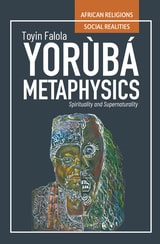
Yorùbá Metaphysics
Spirituality and SupernaturalityToyin Falola
Ohio University Press, 2025
Yorùbá Metaphysics challenges Western dominance in the field of epistemology and sheds light on the sophisticated realm of indigenous African knowledge systems and metaphysical thought. Toyin Falola comprehensively explores the complex interplay between the physical and spiritual worlds as understood by the Yorùbá people, offering a fresh perspective on metaphysics, spirituality, and the societal roles these elements play in African communities. The book contributes to the fields of philosophy, religious studies, and African studies by revealing how indigenous epistemologies can inform broader discussions of metaphysics, ethics, and societal development that are outside the Western frame of thought. Each of the book’s fifteen chapters focuses on a distinct aspect of Yorùbá life and cosmology. Topics encompass the everyday consequences of spiritual beliefs on social interactions and community living as well as the philosophical foundations that inform these practices. Noteworthy discussions include the function of language in conveying metaphysical knowledge, the societal impact of esoteric beliefs, and the application of these traditional understandings to contemporary life challenges. This work not only elucidates the nuances of Yorùbá metaphysical thought but also promotes the integration of this knowledge into broader academic and practical settings to advance societal development and sustainability. As global discourse increasingly seeks to acknowledge and incorporate diverse viewpoints, this book provides essential insights into the workings of an African metaphysical philosophy and its relevance to both regional and international concerns. Falola urges the academic community to reconsider the value and role of indigenous knowledge systems in present-day education and policy formation. This work is vital for scholars, policymakers, and practitioners interested in cultural studies, philosophy, religious studies, and African studies. It is not merely a scholarly work; it is an appeal for a reassessment of the methods by which indigenous knowledge is viewed and applied on an international scale.