Results by title
18284 books match the query 'United States' and 68 start with y
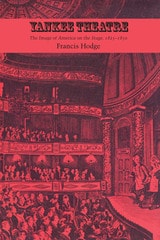
Yankee Theatre
The Image of America on the Stage, 1825–1850By Francis Hodge
University of Texas Press, 1964
The famous "Stage Yankees," with their eccentric New England dialect comedy, entertained audiences from Boston to New Orleans, from New York to London in the years between 1825 and 1850. They provided the creative energy for the development of an American-type character in early plays of native authorship. This book examines the full range of their theatre activity, not only as actors, but also as playmakers, and re-evaluates their contribution to the growth of the American stage.
Yankee theatre was not an oddity, a passing fad, or an accident of entertainment; it was an honest exploitation of the materials of American life for an audience in search of its own identification. The delineation of the American character—a full-length realistic portrait in the context of stage comedy—was its projected goal; and though not the only method for such delineation, the theatre form was the most popular and extensive way of disseminating the American image.
The Yankee actors openly borrowed from what literary sources were available to them, but because of their special position as actors, who were required to give flesh-and-blood imitations of people for the believable acceptance of others viewing the same people about them, they were forced to draw extensively on their actors' imaginations and to present the American as they saw him. If the image was too often an external one, it still revealed the Yankee as a hardy individual whose independence was a primary assumption; as a bargainer, whose techniques were more clever than England's sharpest penny-pincher; as a country person, more intelligent, sharper and keener in dealings than the city-bred type; as an American freewheeler who always landed on top, not out of naive honesty but out of a simple perception of other human beings and their gullibility.
Much new evidence in this study is based on London productions, where the view of English audiences and critics was sharply focused on what Americans thought about themselves and the new culture of democracy emerging around them. The shift from America, the borrower, to America, the original doer, can be clearly seen in this stager activity.
Yankee theatre, then, is an epitome of the emerging American after the Second War for Independence. Emerging nationalism meant emerging national definition. Yankee theatre thus led to the first cohesive body of American plays, the first American actors seen in London, and to a new realistic interpretation of the American in the "character" plays of the 1870s and 1880s.
Yankee Twang
Country and Western Music in New EnglandClifford R. Murphy
University of Illinois Press, 2014
As Murphy shows, an extraordinary multiculturalism sets New England country and western music apart from other regional and national forms. Once segregated at work and worship, members of different ethnic groups used the country and western popularized on the radio and by barnstorming artists to come together at social events, united by a love of the music. Musicians, meanwhile, drew from the wide variety of ethnic musical traditions to create the New England style.
But the music also gave--and gives--voice to working-class feeling. Murphy explores how the Yankee love of country and western emphasizes the western, reflecting the longing of many blue collar workers for the mythical cowboy's life of rugged but fulfilling individualism. Indeed, many New Englanders use country and western to comment on economic disenfranchisement and express their resentment of a mass media, government, and Nashville music establishment that they believe neither reflects their experiences nor considers them equal participants in American life.
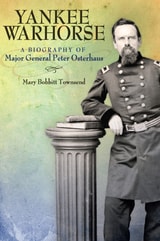
Yankee Warhorse
A Biography of Major General Peter OsterhausMary Bobbit Townsend
University of Missouri Press, 2021
Yankees in Michigan
Brian C. Wilson
Michigan State University Press, 2008
As Brian C. Wilson describes them in this highly readable and entertaining book, Yankees—defined by their shared culture and sense of identity—had a number of distinctive traits and sought to impose their ideas across the state of Michigan.
After the ethnic label of "Yankee" fell out of use, the offspring of Yankees appropriated the term "Midwesterner." So fused did the identities of Yankee and Midwesterner become that understanding the larger story of America's Midwestern regional identity begins with the Yankees in Michigan.
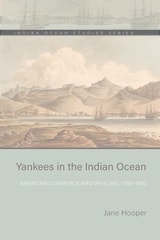
Yankees in the Indian Ocean
American Commerce and Whaling, 1786–1860Jane Hooper
Ohio University Press, 2022
The history of US imperialism remains incomplete without this consideration of long-overlooked nineteenth-century American commercial and whaling ventures in the Indian Ocean.
Yankees in the Indian Ocean shows how nineteenth-century American merchant and whaler activity in the Indian Ocean shaped the imperial future of the United States, influenced the region’s commerce, encouraged illegal slaving, and contributed to environmental degradation. For a brief time, Americans outnumbered other Western visitors to Mauritius, Madagascar, Zanzibar, and the East African littoral. In a relentless search for commodities and provisions, American whaleships landed at islands throughout the ocean and stripped them of resources. Yet Americans failed to develop a permanent foothold in the region and operated instead from a position of weakness relative to other major colonizing powers, thus discouraging the development of American imperial holdings there.
The history of American concerns in the Indian Ocean world remains largely unwritten. Scholars who focus on the region have mostly ignored American involvement, despite arguments for the ocean’s importance in powering global connections during the late eighteenth and early nineteenth centuries. Historians of the United States likewise have failed to examine the western Indian Ocean because of a preoccupation with US interests in Asia and the Pacific. Failing to understand the scale of American trade in the Indian Ocean has led to a fixation on European commercial strength to the exclusion of other maritime networks. Instead, this book reveals how the people of Madagascar and East Africa helped the United States briefly dominate commerce and whaling.
This book investigates how and why Americans were drawn to the western Indian Ocean years before the United States established a formal overseas empire in the late nineteenth century. Ship logs, sailor journals, and travel narratives reveal how American men transformed foreign land- and seascapes into knowable spaces that confirmed American conceptions of people and natural resources; these sources also provide insight into the complex social and ecological worlds of the Indian Ocean during this critical time.
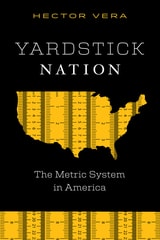
Yardstick Nation
The Metric System in AmericaHector Vera
Vanderbilt University Press, 2025
Honorable Mention, Robert K. Merton Book Award, American Sociological Association’s Science, Knowledge, and Technology (SKAT) Section, 2026
Why is there no metric system in the United States? Why is it that a country known for its openness to the future, its scientific innovations, and its preference for practicality has not adopted the most practical, scientific, and innovative system of measurement? Yardstick Nation answers these questions by analyzing the political, economic, and international factors that determined the trajectory of the United States as a nation self-excluded from one of the most successful global technical languages.
Using a historical-comparative approach and qualitative analysis of archival material, the book examines the trajectories of American scientists, engineers, politicians, and industrialists from 1787 to 1982, to detail what they wanted to attain and to explain what was actually possible to achieve given the political and economic conditions in which they lived. Yardstick Nation argues that in order to understand the unbreached distance between the United States and the metric system, we must consider the interaction between three structural elements: historical timing, state infrastructural power, and international economic integration.
Author Hector Vera’s systematic look at when and why countries have adopted the metric system shows that its introduction is never casual. In the countries that voluntarily embraced the metric system, this was the result of either deep internal political transformations or momentous changes in the international economy. When the adoption of the metric system is politically driven, it comes as the result of a social revolution, independence war, national unification, or the draft of a new constitution. When it is propelled by economic factors, metrication is part of the efforts of economically stagnant countries to integrate into international markets.
Yaya's Story
The Quest for Well-Being in the WorldPaul Stoller
University of Chicago Press, 2014
Harouna and Stoller would meet in Harlem, at a bustling African market where Harouna built a life as an African art trader and Stoller was conducting research. Moving from Belayara in Niger to Silver Spring, Maryland, and from the Peace Corps to fieldwork to New York, Stoller recounts their separate lives and how the threat posed by cancer brought them a new, profound, and shared sense of meaning. Combining memoir, ethnography, and philosophy through a series of interconnected narratives, he tells a story of remarkable friendship and the quest for well-being. It’s a story of difference and unity, of illness and health, a lyrical reflection on human resiliency and the shoulders we lean on.
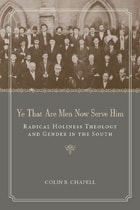
Ye That Are Men Now Serve Him
Radical Holiness Theology and Gender in the SouthColin B. Chapell
University of Alabama Press, 2016
Examines how religious belief reshaped concepts of gender during the New South period that took place from 1877 to 1915 in ways that continue to manifest today
Modernity remade much of the world in the late nineteenth and early twentieth centuries and was nowhere more transformational than in the American South. In the wake of the Civil War, the region not only formed new legal, financial, and social structures, but citizens of the South also faced disorienting uncertainty about personal identity and even gender itself. Ye That Are Men Now Serve Him traces the changes in southern gender roles during the New South period of 1877–1915 and demonstrates that religion is the key to perceiving how constructions of gender changed.
The Civil War cleaved southerners from the culture they had developed organically during antebellum decades, raising questions that went to the very heart of selfhood: What does it mean to be a man? How does a good woman behave? Unmoored from traditional anchors of gender, family, and race, southerners sought guidance from familiar sources: scripture and their churches. In Ye That Are Men Now Serve Him, Colin Chapell traces how concepts of gender evolved within the majority Baptist and Methodist denominations as compared to the more fluid and innovative Holiness movement.
Grounded in expansive research into the archives of the Southern Baptist Convention; Methodist Episcopal Church, South; and the Holiness movement, Chapell’s writing is also enlivened by a rich trove of primary sources: diaries, sermons, personal correspondence, published works, and unpublished memoirs. Chapell artfully contrasts the majority Baptist and Methodist view of gender with the relatively radical approaches of the emerging Holiness movement, thereby bringing into focus how subtle differences in belief gave rise to significantly different ideas of gender roles.
Scholars have explored class, race, and politics as factors that contributed to contemporary southern identity, and Chapell restores theology to its intuitive place at the center of southern identity. Probing and illuminating, Ye That Are Men Now Serve Him offers much of interest to scholars and readers of the South, southern history, and religion.
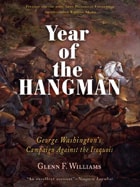
Year of the Hangman
George Washington's Campaign Against the IroquoisGlenn F. Williams
Westholme Publishing, 2007
Winner of the 2005 Thomas Fleming Award for the Best Book in American Revolutionary War History
Finalist for the Army Historical Foundation Distinguished Writing Award
After two years of fighting, Great Britain felt confident that the American rebellion would be crushed in 1777, the "Year of the Hangman." Britain devised a bold new strategy. Turning its attention to the colonial frontiers, especially those of western New York, Pennsylvania, and Virginia, Britain enlisted its provincial rangers, Tories, and allied warriors, principally from the Iroquois Confederacy, to wage a brutal backwoods war in support of General John Burgoyne's offensive as it swept southward from Canada in an attempt to cut the colonies in half, divert the Continental Army, and weaken its presence around British-occupied New York City and Philadelphia.
Burgoyne's defeat at Saratoga sent shock waves through the British command. But the efforts along the frontier under the direction of Sir John Johnson, Colonel John Butler, and the charismatic Mohawk leader, Joseph Brant, appeared to be impairing the American ability to conduct the war. Destroying Patriot settlements and farms across hundreds of miles of frontier, the British and Indian forces threatened to reduce Continental army enlistment, and more importantly, precious food supplies. Following the massacres at the well-established colonial settlements of Wyoming, Pennsylvania, and Cherry Valley, New York, the Continental Congress persuaded General George Washington to conduct a decisive offensive to end the threat once and for all. Brewing for years, the conflict between the Iroquois and colonists would now reach its deadly climax.
Charging his troops "to not merely overrun, but destroy," Washington devised a two-prong attack to exact American revenge. The largest coordinated American military action against American Indians in the war, the campaign shifted the power in the east, ending the political and military influence of the Iroquois, forcing large numbers of loyalist to flee to Canada, and sealing Britain's fateful decision to seek victory in the south. In Year of the Hangman: George Washington's Campaign Against the Iroquois, historian Glenn F. Williams recreates the riveting events surrounding the action, including the checkered story of European and Indian alliances, the bitter frontier wars, and the bloody battles of Oriskany and Newtown.
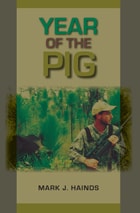
Year of the Pig
Hunting Feral HogsMark J. Hainds
University of Alabama Press, 2011
Exploring the ecology, culture, and challenge of America’s most controversial wild hogs.
What happens when a conservation-minded forester decides to spend an entire year hunting feral hogs across ten states? You get a book that’s equal parts adventure, ecology, and laugh-out-loud grit. In Year of the Pig, Mark J. Hainds straps on rifles, bows, and even a knife (yes, really) to tackle one of North America’s most destructive invasive species. Along the way, he delivers unforgettable stories from Alabama swamps to Hawaiian volcanoes, mixing adrenaline with insight into why pigs are an ecological nightmare and a hunter’s dream.
In it real-world and armchair hunters will find:
• Authentic Adventures: Belly-crawling through privet thickets, stalking pigs in palmetto jungles, and chasing razorbacks in the Ozarks.
• Ecological Wisdom: Learn how hogs impact forests, farms, and fragile ecosystems—and why hunting them matters.
• Humor & Humanity: From near-misses to triumphs, Hainds’ candid storytelling will keep you grinning (and maybe craving barbecue).
Hunters seeking real-world thrills, conservationists fighting invasive species, outdoor enthusiasts who savor gritty tales, and anyone who enjoys a good laugh with their environmental education. Perfect for reading—or gifting to that friend who thinks “hog hunting” is just a Southern stereotype. Spoiler: It’s not.

Yellow Future
Oriental Style in Hollywood CinemaJane Chi Hyun Park
University of Minnesota Press, 2010
Park provides a genealogy of oriental style through contextualized readings of popular films-from the multicultural city in Blade Runner and the Japanese American mentor in The Karate Kid to the Afro-Asian reworking of the buddy genre in Rush Hour and the mixed-race hero in The Matrix. Throughout these analyses Park shows how references to the Orient have marked important changes in American popular attitudes toward East Asia in the past thirty years, from abjection to celebration, invisibility to hypervisibility.
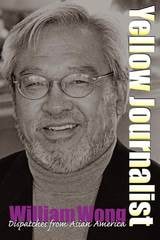
Yellow Journalist
Dispatches from Asian AmericaWilliam Wong
Temple University Press, 2001

Yellow Steel
The Story of the Earthmoving Equipment IndustryWilliam R. Haycraft
University of Illinois Press, 2000
Haycraft traces the efforts of manufacturers such as Caterpillar, Allis-Chalmers, International Harvester, J. I. Case, Deere, and Massey-Ferguson to diversify from farm equipment to specialized earthmoving equipment and the important contributions of LeTourneau, Euclid, and others in meeting the needs of the construction and mining industries. He shows how postwar economic and political events, especially the creation of the interstate highway system, spurred the development of more powerful and more agile machines. He also relates the precipitous fall of several major American earthmoving machine companies and the rise of Japanese competitors in the early 1980s.
Extensively illustrated and packed with detailed information on both manufacturers and machines, Yellow Steel knits together the diverse stories of the many companies that created the earthmoving equipment industry—how they began, expanded, retooled, merged, succeeded, and sometimes failed. Their history, a step-by-step linking of need and invention, provides the foundation for virtually all modern transportation, construction, commerce, and industry.
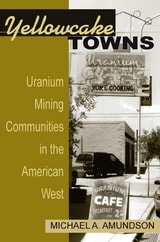
Yellowcake Towns
Uranium Mining Communities in the American WestMichael A. Amundson
University Press of Colorado, 2002
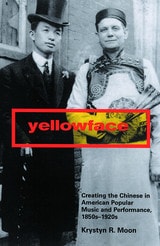
Yellowface
Creating the Chinese in American Popular Music and Performance, 1850s-1920sMoon, Krystyn R.
Rutgers University Press, 2004
Music and performance provide a unique window into the ways that cultural information is circulated and perceptions are constructed. Because they both require listening, are inherently ephemeral, and most often involve collaboration between disparate groups, they inform cultural perceptions differently from literary or visual art forms, which tend to be more tangible and stable.
In Yellowface, Krystyn R. Moon explores the contributions of writers, performers, producers, and consumers in order to demonstrate how popular music and performance has played an important role in constructing Chinese and Chinese American stereotypes. The book brings to life the rich musical period of the late nineteenth and early twentieth centuries. During this time, Chinese and Chinese American musicians and performers appeared in a variety of venues, including museums, community theaters, and world’s fairs, where they displayed their cultural heritage and contested anti-Chinese attitudes. A smaller number crossed over into vaudeville and performed non-Chinese materials. Moon shows how these performers carefully navigated between racist attitudes and their own artistic desires.
While many scholars have studied both African American music and blackface minstrelsy, little attention has been given to Chinese and Chinese American music. This book provides a rare look at the way that immigrants actively participated in the creation, circulation, and, at times, subversion of Chinese stereotypes through their musical and performance work.

Yellowstone National Park
Through the Lens of TimeBradly J. Boner
University Press of Colorado, 2017
Pioneer photographer William Henry Jackson’s photographs from the 1871 Hayden Survey were instrumental in persuading Congress to designate Yellowstone as a national park—America’s first and greatest experiment in the preservation of an extraordinary landscape. Yellowstone National Park: Through the Lens of Time is an extended visual essay presenting Jackson’s images paired with breathtaking color rephotographs of each view from photojournalist Bradly J. Boner. These contemporary comparisons to Jackson’s originals reveal just how well that experiment has stood the test of time.
Yellowstone is always changing. The Grand Canyon is getting deeper and wider as the Yellowstone River carves a chasm into the earth. The flows of the great hot springs at Mammoth are creating new layers of delicate, colorful cascades and leaving the old terraces to crumble in decay. Roads, bridges, and pathways wind through the park, and there are restaurants, campgrounds, and hotels. Yet even with the impact of humanity, Yellowstone remains remarkably intact, evidence that the effort to preserve and sustain the park for future generations has been a success.
Combining more than 100 gorgeous “then and now” sets of photographs—the first complete published collection of Jackson’s images from the 1871 Hayden Survey and a result of Boner's three years of work rephotographing them—with history, extensive notes, and personal tales, Yellowstone National Park: Through the Lens of Time pays homage to the park’s early history and its present state, and offers a glimpse into the future. The great experiment of Yellowstone—which captivates millions of visitors from all corners of the globe each year—has transcended generations and should be maintained for generations to come.
The University Press of Colorado and the author gratefully acknowledge the generous contributions of the many donors to the Kickstarter campaign supporting the publication of this book.
Yellowstone Story, Revised Edition, Volume I
A History of Our First National ParkAubrey L. Haines
University Press of Colorado, 1996
The Yellowstone Park Act
Approved March 1, 1872
Be it enacted by the Senate and House of Representatives of the United States of America in Congress assembled, That the tract of land in the Territories of Montana and Wyoming, lying near the headwaters of the Yellowstone river . . . is hereby reserved and withdrawn from settlement, occupancy, or sale under the laws of the United States, and dedicated and set apart as a public park or pleasuring-ground for the benefit and enjoyment of the people.
Yellowstone Story, Revised Edition, Volume II
A History of Our First National ParkAubrey L. Haines
University Press of Colorado, 1996
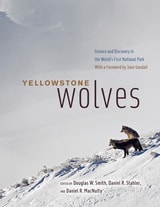
Yellowstone Wolves
Science and Discovery in the World's First National ParkEdited by Douglas W. Smith, Daniel R. Stahler, and Daniel R. MacNulty
University of Chicago Press, 2020
Here, for the first time in a single book, is the incredible story of the wolves’ return to Yellowstone National Park as told by the very people responsible for their reintroduction, study, and management. Anchored in what we have learned from Yellowstone, highlighting the unique blend of research techniques that have given us this knowledge, and addressing the major issues that wolves still face today, this book is as wide-ranging and awe-inspiring as the Yellowstone restoration effort itself. We learn about individual wolves, population dynamics, wolf-prey relationships, genetics, disease, management and policy, newly studied behaviors and interactions with other species, and the rippling ecosystem effects wolves have had on Yellowstone’s wild and rare landscape. Perhaps most importantly of all, the book also offers solutions to ongoing controversies and debates.
Featuring a foreword by Jane Goodall, beautiful images, a companion online documentary by celebrated filmmaker Bob Landis, and contributions from more than seventy wolf and wildlife conservation luminaries from Yellowstone and around the world, Yellowstone Wolves is a gripping, accessible celebration of the extraordinary Yellowstone Wolf Project—and of the park through which these majestic and important creatures once again roam.
Yes Gawd!
How Faith Shapes LGBT Identity and Politics in the United StatesCravens III, Royal G.
Temple University Press, 2024
Cravens also demonstrates the mobilizing power of faith for LGBT people by contrasting the effects of participation in faith and secular communities on political activism. He explores how factors such as coming out, race, and LGBT-affirming churches influence political attitudes and behavior and explains how the development of LGBT politico-religious activism provides opportunities for LGBT people to organize politically.
Ultimately, Cravens provides a cohesive account of how religion acts as a catalyst for and facilitator in the political development of LGBT people in the United States. In the process, he shows that there is room for both religion in LGBT communities and LGBT people in religious communities.

Yesterday There Was Glory
With the 4th Division, A.E.F., in World War IGerald Andrew Howell
University of North Texas Press, 2018
Yesterday Today
Life in the OzarksCatherine S. Barker
University of Arkansas Press, 2020
Catherine S. Barker's 1941 book Yesterday Today: Life in the Ozarks sought to illuminate another side of these “remnants of eighteenth-century life and culture”: poverty and despair. Drawing on her encounters and experiences as a federal social worker in the backwoods of the Ozarks in the 1930s, Barker described the mountaineers as “lovable and pathetic and needy and self-satisfied and valiant,” declaring that the virtuous and independent people of the hills deserved a better way and a more abundant life. Barker was also convinced that there were just as many contemptible facets of life in the Ozarks that needed to be replaced as there were virtues that needed to be preserved.
This reprinting of Yesterday Today—edited and introduced by historian J. Blake Perkins—situates this account among the Great Depression-era chronicles of the Ozarks.
Yiddish & English
The Story of Yiddish in AmericaSol Steinmetz
University of Alabama Press, 2001
This is the only book to seriously treat the intriguing linguistic and cultural phenomenon of the intimate contact between Yiddish and English over the past 120 years.
Yiddish arrived in America as the mother tongue of millions of Jewish immigrants from eastern Europe. Not only did this language without a homeland survive in the great American melting pot, it infiltrated the majority language, English, with a wide variety of new words and expressions and helped to establish a new ethnic language called "Jewish English." New Yorkers, in particular, have adopted a long list of Yiddish words, including the well-known "kosher," "chutzpah," "klutz," "yenta," "nosh," "mavin," "schlep," and "shmo."
Yiddish had first developed from language sharing as Jews of northern France and northern Italy migrated into the German-speaking region of the Rhine Valley in the Middle Ages. Sol Steinmetz traces the development of such words as bonhomme from the Old French meaning "good man" to the Yiddish of bonim, or shul for synagogue derived from the German schuol, meaning "school," which had come originally from the Latin schola, for example. With a rich collection of quotations from literature and the press, Steinmetz documents the unusually high lexical, semantic, and intonational exchanges between Yiddish and English in America. He offers more than 1,200 Yiddish words, expressions, idioms, and phrases that have melted into the English vernacular.
Yiddish and English is important for Judaica collections with its two appendixes-one on the romanization of Yiddish and another of Yiddish-origin words, a Jewish-English glossary, a selected bibliography, and an index. But this slim volume is so entertaining and informative for the general reader that it is recommended for anyone who delights in word derivations and language.
Yo Soy
From a Migrant Field Worker to a University ProfessorRoberto E. Villarreal
University of North Texas Press, 2025
Yolqui, a Warrior Summoned from the Spirit World
Testimonios on ViolenceRoberto Cintli Rodríguez; Foreword by Patrisia Gonzales
University of Arizona Press, 2019
Framed by Rodríguez’s personal testimony of police violence, this book offers a historia profunda of the culture of extralegal violence against Red-Black-Brown communities in the United States. In addition to Rodríguez’s story, this book includes several short essays from victims and survivors that bring together personal accounts of police brutality and state-sponsored violence. This wide-ranging work touches on historical and current events, including the Watts rebellion, the Zoot Suit Riots, Operation Streamline, Standing Rock, and much more.
From the eyewitness accounts of Bartolomé de las Casas to the protestors and allies at Standing Rock, this book makes evident the links between colonial violence against Red-Black-Brown bodies to police violence in our communities today. Grounded in the stories of the lives of victims and survivors of police violence, Yolqui, a Warrior Summoned from the Spirit World illuminates the physical, spiritual, and epistemic depths and consequences of racialized dehumanization.
Rodríguez offers us an urgent, poignant, and personal call to end violence and the philosophies that permit such violence to flourish. Like the Nahuatl yolqui, this book is intended as a means of healing, offering a footprint going back to the origins of violence, and, more important, a way forward.
With contributions by Raúl Alcaraz-Ochoa, Citalli Álvarez, Tanya Alvarez, Rebekah Barber, Juvenal Caporale, David Cid, Arianna Martinez Reyna, Carlos Montes, Travis Morales, Simon Moya Smith, Cesar Noriega, Kimberly Phillips, Christian Ramirez, Michelle Rascon Canales, Carolyn Torres, Jerry Tello, Tara Trudell, and Laurie Valdez.
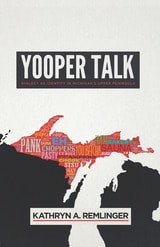
Yooper Talk
Dialect as Identity in Michigan's Upper PeninsulaKathryn A. Remlinger
University of Wisconsin Press, 2019
Drawing on sixteen years of fieldwork, including interviews with seventy-five lifelong residents of the UP, Kathryn Remlinger examines how the idea of a unique Yooper dialect emerged. Considering UP English in relation to other regional dialects and their speakers, she looks at local identity, literacy practices, media representations, language attitudes, notions of authenticity, economic factors, tourism, and contact with immigrant and Native American languages. The book also explores how a dialect becomes a recognizable and valuable commodity: Yooper talk (or "Yoopanese") is emblazoned on t-shirts, flags, postcards, coffee mugs, and bumper stickers.
Yooper Talk explains linguistic concepts with entertaining examples for general readers and also contributes to interdisciplinary discussions of dialect and identity in sociolinguistics, anthropology, dialectology, and folklore.
York's Ride
A Novel of Old CaliforniaMichael Dennis Cassity
University of Nevada Press, 2025
Jim, an orphan, has moved to the West to live on his Uncle Martin and Aunt Hanna’s ranch in the small, post-Gold Rush town of Taylorsville where the Sierra Nevada meets the Cascades. Mostly, Jim doesn’t miss his family farm in Missouri, and when he’s not doing ranch chores, he spends his time fly-fishing on nearby Indian Creek. This is where he first encounters York, a local boy from the Maidu tribe, and the two become fast friends. Jim and York soon meet up with Blind Charlie, a famous Maidu elder storyteller, who fills their heads with ancestral myths and legends.
After the untimely death of York, Meshuga’s caretaker, Jim is suddenly moved to take responsibility for the great black mustang and become part of Blind Charlie’s prophecies. With York gone, Jim must fulfill what his friend knew all along—that he and Meshuga would learn to conquer the challenge of the race of the century. A romantic novel of the Old West imbued with rich historical details, York’s Ride is a complex and beautiful tale about family relationships and coming-of-age in early twentieth-century California.
You Are Not a Kinesthetic Learner
The Troubled History of the Learning Style IdeaThomas Fallace
University of Chicago Press, 2025
The widely embraced notion that we all process information in one of three distinct modes—visual, auditory, or kinesthetic—has informed educational practices for decades. In recent years, however, numerous studies have questioned the effectiveness of aligning instruction with the alleged learning styles of individual students. So, why is it still commonplace in the literature on beneficial teaching at all levels of education?
In You Are Not a Kinesthetic Learner: The Troubled History of a Dangerous Idea, historian Thomas Fallace traces the origins, evolution, and history of the learning style idea, demonstrating its relationship to a legacy of unequal education for children of color. Fallace argues that the research supporting the learning style idea was problematic from its inception in the 1910s and that it was used to label and justify a diminished curriculum for many Black and Latine students, whose cultural differences were perceived as weaknesses. In recent years, numerous empirical studies have not found the approach to be effective. This fascinating history clearly shows the danger of sorting and labeling students with permanent style identities and makes a strong case for removing learning styles as the basis for any educators’ instructional toolkit.
The first book-length history of learning styles, You Are Not a Kinesthetic Learner encourages us all to consider the research, be open to future developments and updates, and question even our most intuitive assumptions.
You Are Not a Kinesthetic Learner
The Troubled History of the Learning Style IdeaThomas Fallace
University of Chicago Press, 2025
A compelling history of the learning style concept and how it was shaped by shifting ideas in psychology, anthropology, and education.
The widely embraced notion that we all process information in one of three distinct modes—visual, auditory, or kinesthetic—has informed educational practices for decades. In recent years, however, numerous studies have questioned the effectiveness of aligning instruction with the alleged learning styles of individual students. So, why is it still commonplace in the literature on beneficial teaching at all levels of education?
In You Are Not a Kinesthetic Learner: The Troubled History of a Dangerous Idea, historian Thomas Fallace traces the origins, evolution, and history of the learning style idea, demonstrating its relationship to a legacy of unequal education for children of color. Fallace argues that the research supporting the learning style idea was problematic from its inception in the 1910s and that it was used to label and justify a diminished curriculum for many Black and Latine students, whose cultural differences were perceived as weaknesses. In recent years, numerous empirical studies have not found the approach to be effective. This fascinating history clearly shows the danger of sorting and labeling students with permanent style identities and makes a strong case for removing learning styles as the basis for any educators’ instructional toolkit.
The first book-length history of learning styles, You Are Not a Kinesthetic Learner encourages us all to consider the research, be open to future developments and updates, and question even our most intuitive assumptions.
You Had a Job for Life
Story of a Company TownJamie Sayen
University Press of New England, 2017
You Had a Job for Life
Story of a Company TownJamie Sayen
Brandeis University Press, 2023
Absentee owners. Single-minded concern for the bottom line. Friction between workers and management. Hostile takeovers at the hands of avaricious and unaccountable multinational interests. The story of America’s industrial decline is all too familiar—and yet, somehow, still hard to fathom. Jamie Sayen spent years interviewing residents of Groveton, New Hampshire, about the century-long saga of their company town. The community’s paper mill had been its economic engine since the early twentieth century. Purchased and revived by local owners in the postwar decades, the mill merged with Diamond International in 1968. It fell victim to Anglo-French financier James Goldsmith’s hostile takeover in 1982, then suffered through a series of owners with no roots in the community until its eventual demise in 2007. Drawing on conversations with scores of former mill workers, Sayen reconstructs the mill’s human history: the smells of pulp and wood, the injuries and deaths, the struggles of women for equal pay and fair treatment, and the devastating impact of global capitalism on a small New England town. This is a heartbreaking story of the decimation of industrial America.
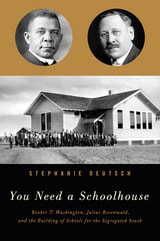
You Need a Schoolhouse
Booker T. Washington, Julius Rosenwald, and the Building of Schools for the Segregated SouthStephanie Deutsch
Northwestern University Press, 2011
Washington, though widely admired, had weathered severe crises both public and private in his fifty-six years. He had dined with President Theodore Roosevelt and drunk tea with Queen Victoria, but he had also been assaulted on a street in New York City. He had suffered personal heartbreak, years of overwork, and the discouraging knowledge that, despite his optimism and considerable success, conditions for African Americans were not improving as he had assumed they would. From within his own community, Washington faced the bitter charge of accommodationism that haunts his legacy to this day. Despite their differences, the two men would work together well and their collaboration would lead to the building of five thousand schoolhouses. By the time segregation ended, the “Rosenwald Schools” that sprang from this unlikely partnership were educating one third of the South’s African American children. These schoolhouses represent a significant step in the ongoing endeavor to bring high quality education to every child in the United States—an ideal that remains to be realized even today.
You Shook Me All Campaign Long
Music in the 2016 Presidential Election and BeyondEric T. Kasper
University of North Texas Press, 2018
You Were Never in Chicago
Neil Steinberg
University of Chicago Press, 2012
In 1952 the New Yorker published a three-part essay by A. J. Liebling in which he dubbed Chicago the "Second City." From garbage collection to the skyline, nothing escaped Liebling's withering gaze. Among the outraged responses from Chicago residents was one that Liebling described as the apotheosis of such criticism: a postcard that read, simply, "You were never in Chicago."
Neil Steinberg has lived in and around Chicago for more than three decades—ever since he left his hometown of Berea, Ohio, to attend Northwestern—yet he remains fascinated by the dynamics captured in Liebling's anecdote. In You Were Never in Chicago Steinberg weaves the story of his own coming-of-age as a young outsider who made his way into the inner circles and upper levels of Chicago journalism with a nuanced portrait of the city that would surprise even lifelong residents.
Steinberg takes readers through Chicago's vanishing industrial past and explores the city from the quaint skybridge between the towers of the Wrigley Building, to the depths of the vast Deep Tunnel system below the streets. He deftly explains the city's complex web of political favoritism and carefully profiles the characters he meets along the way, from greats of jazz and journalism to small-business owners just getting by. Throughout, Steinberg never loses the curiosity and close observation of an outsider, while thoughtfully considering how this perspective has shaped the city, and what it really means to belong. Intimate and layered, You Were Never in Chicago will be a welcome addition to the bookshelves of all Chicagoans, be they born in the city or forever transplanted.
You and Your Deaf Child
A Self-Help Guide for Parents of Deaf and Hard of Hearing ChildrenJohn Adams
Gallaudet University Press, 1997
You and Your Deaf Child is a guide for parents of deaf or hard of hearing children that explores how parents and their children interact. It examines the special impact of having a deaf child in the family.
Eleven chapters focus on such topics as feelings about hearing loss, the importance of communication in the family, and effective behavior management. Many chapters contain practice activities and questions to help parents retain skills taught in the chapter and check their grasp of the material. Four appendices provide references, general resources, and guidelines for evaluating educational programs.
Once parents have worked through You and Your Deaf Child, this friendly guide can be referred to for specific information and advice as different situations arise.
You're Dead—So What?
Media, Police, and the Invisibility of Black Women as Victims of HomicideCheryl L. Neely
Michigan State University Press, 2015
You're Not from Around Here, Are You?
A Lesbian in Small-Town AmericaLouise A. Blum
University of Wisconsin Press, 2001
This is a funny, moving story about life in a small town, from the point of view of a pregnant lesbian. Louise A. Blum, author of the critically acclaimed novel Amnesty, now tells the story of her own life and her decision to be out, loud, and pregnant. Mixing humor with memorable prose, Blum recounts how a quiet, conservative town in an impoverished stretch of Appalachia reacts as she and a local woman, Connie, fall in love, move in together, and determine to live their life together openly and truthfully.
The town responds in radically different ways to the couple’s presence, from prayer vigils on the village green to a feature article in the family section of the local newspaper. This is a cautionary, wise, and celebratory tale about what it’s like to be different in America—both the good and the bad. A depiction of small town life with all its comforts and its terrors, this memoir speaks to anyone who has ever felt like an outsider in America. Blum tells her story with a razor wit and deft precision, a story about two "girls with grit," and the child they decide to raise, right where they are, in small town America.
You've Always Been There for Me
Understanding the Lives of Grandchildren Raised by GrandparentsDunifon, Rachel E
Rutgers University Press, 2018
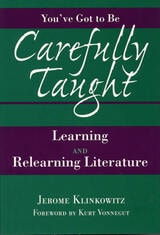
You've Got to Be Carefully Taught
Learning and Relearning LiteratureJerome Klinkowitz. Foreword by Kurt Vonnegut
Southern Illinois University Press, 2001
Drawing on his own experience in the profession, veteran English professor and internationally renowned scholar Jerome Klinkowitz sorts out the wrong ways of teaching literature before devising a new, successful method. Specifically, he concludes that a historically based “story of English” is precisely the wrong narrative approach to making sense of what literature does. Instead, Klinkowitz proposes a new method focused not on the product of literary writing but on the process of writing. Long involved with the making of contemporary literature, Klinkowitz shows how his classroom approach draws on the same strengths and inspirations writers use in the creation of literature. He involves students in the literary work as production.
Despite almost universal agreement that literary studies fail both writers and students, solutions have been limited to suggestions by superstar theorists teaching cream-of-the-crop students at elite universities. Klinkowitz aims not at the elite but at the ordinary student in an introduction to literature class. His goal is to introduce teachers to a new philosophy of teaching literature and to further deepen students’ natural love for the subject. He also seeks to revive the love of fine writing in those whose joy in the subject fell victim to obtuse teaching methods. Uniquely, his is not an esoteric theory developed by the best academics for elite students but a commonsense approach that works well in the kind of schools most students attend.
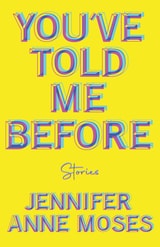
You've Told Me Before
Jennifer Anne Moses
University of Wisconsin Press, 2025
A professor of Jewish literature buys a lake house in the countryside with the aim of enjoying it with her husband, dogs, and grown sons, only to discover that her new neighbor is a sexist, dog-hating, and deeply antisemitic bully. The editor of a magazine devoted to lost languages resents the popularity of a younger, less sophisticated novelist, who happens to have been her student. A young woman tries to find her way after her fiancé calls off their wedding. With the contradictions, yearnings, imperfections, and longing for grace that beset all of us, these characters reach their own epiphanies—with results that are by turns breathtaking and heartbreaking.

Young Activists and the Public Library
Facilitating DemocracyVirginia A. Walter
American Library Association, 2020
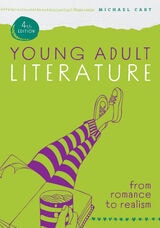
Young Adult Literature, Fourth Edition
From Romance to RealismMichael Cart
American Library Association, 2022
Editorial Advisory Board: Sarah Park Dahlen, Associate Professor, School of Information Sciences, University of Illinois Urbana-Champaign; Marianne Martens, Associate Professor, School of Information, Kent State University; Amy Pattee, Associate Professor and Co-coordinator of Dual-Degree MS LIS/MA Children’s Literature, School of Library and Information Science, Children’s Literature, Simmons University
“Comprehensive and substantial … a highly recommended resource," raved VOYA about the third edition. Now, to keep pace with changes in the field of publishing and realign itself to the newest generation of young adults, Cart returns with a sweeping update of his classic text. Relied upon by educators, LIS instructors and students, and practitioners for its insight and thoroughness, his book
- surveys the landscape of YA lit both past and present, sketching out its origins and showing how it has evolved to deal with subjects every bit as complex as its audience;
- closely examines teen demographics, literacy, audiobooks, the future of print, the role of literary criticism, and other key topics;
- provides updated coverage of perennially popular genre fiction, including horror, sci fi, and dystopian fiction;
- delves deeply into multicultural and LGBTQIA+ literature, substantially updated in this edition;
- features expansive interviews with best-selling authors like Eric Shanower, Jackie Woodson, and Bill Konigsberg as well as several publishers and leaders in the field;
- discusses the impact of the Printz Award, ALAN’s Walden Award, the National Book Award, The Los Angeles Times Book Award, and other honors; and
- features abundant bibliographic material to aid in readers' advisory and collection development.
Young Adult Literature
From Romance to RealismMichael Cart
American Library Association, 2016
Young Adult Literature
From Romance to RealismMichael Cart
American Library Association, 2010
Young Adults Deserve the Best
YALSA's Competencies in ActionSarah Flowers
American Library Association, 2010
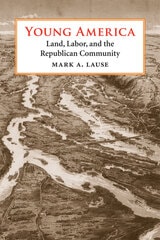
Young America
Land, Labor, and the Republican CommunityMark A. Lause
University of Illinois Press, 2005
Rooting the movement in contemporary economic structures and social ideology, Young America examines this urban and working-class "agrarianism," demonstrating how the political preoccupations of this movement transformed socialism by drawing its adherents from communitarian preoccupations into political action. The alliance of the NRA's land reformers and radical abolitionists led unprecedented numbers to petition Congress and established the foundations of what became the new Republican Party, promising "Free Soil, Free Labor, Free Men."
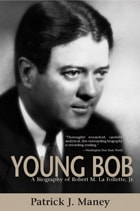
Young Bob
A Biography of Robert M. La Follette, Jr.Patrick J. Maney
Wisconsin Historical Society Press, 2002
United States senator "Young Bob" La Follette entered politics as a young reformer in the shadow of his legendary father, "Fighting Bob" La Follette. He made his own mark as a key architect of Roosevelt’s New Deal and as a champion of labor rights and civil liberties. But in 1946 he was unexpectedly unseated by Joseph McCarthy, whose rise to Cold War notoriety foreshadowed La Follette’s despair and suicide in 1953. This new edition updates the only full scale biography of La Follette,Jr., the first to exploit his voluminous collection of personal papers. Patrick J. Maney makes clear that Young Bob’s story is as relevant today as it was when he died. His life stands as dramatic evidence of how one of the most respected politicians of his time bridged the political spectrum and was admired by both liberals like FDR and Harry Truman and conservatives like Robert Taft and Richard Nixon.
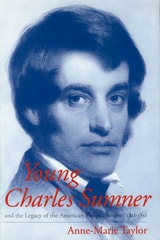
Young Charles Sumner and the Legacy of the American Enlightenment, 1811-1851
Anne-Marie Taylor
University of Massachusetts Press, 2001
In this book, Anne-Marie Taylor challenges that long-standing view, offering in its stead the portrait of a man animated more by principle than by impulse or ambition. According to Taylor, Sumner's reform-minded politics, including his fervent commitment to put an end to slavery, must be understood in the context of a young nation still struggling to live up to the Enlightenment ideals embraced by its founders and embodied in its Constitution.
Focusing on the first forty years of Sumner's life, before he took public office, Taylor traces the evolution of his character and thought among Boston's cultural elite. His belief in the virtues of cosmopolitanism, in the dignity of the human intellect and conscience, and in the possibility of a cultivated and just society, all find their roots in an education steeped in Enlightenment principles. At the same time, as a child of New England Puritanism and Revolutionary republicanism, Sumner was raised to believe in the moral obligation of the individual to work for the common good.
As Taylor shows in this richly drawn biography, much of the triumph and tragedy of Sumner's story—the energy of his idealism as well as the poignancy of his eventual disappointment— derives from the overpowering sense of duty and national destiny imbued by his upbringing.
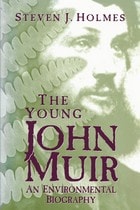
Young John Muir
An Environmental BiographySteven J. Holmes
University of Wisconsin Press, 1999
From his childhood in Scotland and Wisconsin through his young adulthood in the Midwest and Canada, Muir struggled—often without success—to find a place for himself both in nature and in society. Far from granting comfort, the natural world confronted the young Muir with a full range of practical, emotional, and religious conflicts. Only with the help of his family, his religion, and the extraordinary power of nature itself could Muir in his late twenties find a welcoming vision of nature as home—a vision that would shape his lifelong environmental experience, most immediately in his transformative travels through the South and to the Yosemite Valley.
More than a biography, The Young John Muir is a remarkable exploration of the human relationship with wilderness. Accessible and engaging, the book will appeal to anyone interested in the individual struggle to come to terms with the power of nature.
Young Lions
How Jewish Authors Reinvented the American War NovelLeah Garrett
Northwestern University Press, 2015
Finalist, 2015 National Jewish Book Awards in the American Jewish Studies category
Winner, 2017 AJS Jordan Schnitzer Book Award in the category of Modern Jewish History and Culture: Africa, Americas, Asia, and Oceania
Young Lions: How Jewish Authors Reinvented the American War Novel shows how Jews, traditionally castigated as weak and cowardly, for the first time became the popular literary representatives of what it meant to be a soldier and what it meant to be an American. Revisiting best-selling works ranging from Norman Mailer’s The Naked and the Dead to Joseph Heller’s Catch-22, and uncovering a range of unknown archival material, Leah Garrett shows how Jewish writers used the theme of World War II to reshape the American public’s ideas about war, the Holocaust, and the role of Jews in postwar life. In contrast to most previous war fiction these new “Jewish” war novels were often ironic, funny, and irreverent and sought to teach the reading public broader lessons about liberalism, masculinity, and pluralism.