Results by title
39 books match the query 'Aesthetics, Modern'
1650-1850
Ideas, Aesthetics, and Inquiries in the Early Modern Era (Volume 27)Kevin L. Cope
Bucknell University Press, 2022
ISSN 1065-3112
A Theory of Parody
The Teachings of Twentieth-Century Art FormsLinda Hutcheon
University of Illinois Press, 1985
Hutcheon identifies parody as one of the major forms of modern self-reflexivity, one that marks the intersection of invention and critique and offers an important mode of coming to terms with the texts and discourses of the past. Looking at works as diverse as Tom Stoppard's Rosenkrantz and Guildenstern Are Dead, Brian de Palma's Dressed to Kill, Woody Allen's Zelig, Karlheinz Stockhausen's Hymnen, James Joyce's Ulysses, and Magritte's This Is Not a Pipe, Hutcheon discusses the remarkable range of intent in modern parody while distinguishing it from pastiche, burlesque, travesty, and satire. She shows how parody, through ironic playing with multiple conventions, combines creative expression with critical commentary. Its productive-creative approach to tradition results in a modern recoding that establishes difference at the heart of similarity.
In a new introduction, Hutcheon discusses why parody continues to fascinate her and why it is commonly viewed as suspect-–for being either too ideologically shifty or too much of a threat to the ownership of intellectual and creative property.
Aesthetics of Self-Invention
Oscar Wilde To David BowieShelton Waldrep
University of Minnesota Press, 2004
Traces the influence of Oscar Wilde as the precursor of twentieth-century artists of self-performance
By printing the title “Professor of Aesthetics” on his visiting cards, Oscar Wilde announced yet another transformation—and perhaps the most significant of his career, proclaiming his belief that he could redesign not just his image but his very self. Shelton Waldrep explores the cultural influences at play in Wilde’s life and work and his influence on the writing and performance of the twentieth century, particularly on the lives and careers of some of its most aestheticized performers: Truman Capote, Andy Warhol, David Hockney, and David Bowie. As Waldrep reveals, Wilde’s fusing of art with commerce foresaw the coming century’s cultural producers who would blend works of both “high art” and mass-market appeal.
Whether as a gay man or as a postmodern performance artist ahead of his time, Wilde ultimately emerges here as the embodiment of the twentieth-century media-savvy artist who is both subject and object of the aesthetic and economic systems in which he is enmeshed.
Art as Information Ecology
Artworks, Artworlds, and Complex Systems AestheticsJason Hoelscher
Duke University Press, 2021
Art beyond Itself
Anthropology for a Society without a Story LineNéstor García Canclini
Duke University Press, 2014
Black Paper
Writing in a Dark TimeTeju Cole
University of Chicago Press, 2021
“Darkness is not empty,” writes Teju Cole in Black Paper, a book that meditates on what it means to sustain our humanity—and witness the humanity of others—in a time of darkness. One of the most celebrated essayists of his generation, Cole here plays variations on the essay form, modeling ways to attend to experience—not just to take in but to think critically about what we sense and what we don’t.
Wide-ranging but thematically unified, the essays address ethical questions about what it means to be human and what it means to bear witness, recognizing how our individual present is informed by a collective past. Cole’s writings in Black Paper approach the fractured moment of our history through a constellation of interrelated concerns: confrontation with unsettling art, elegies both public and private, the defense of writing in a time of political upheaval, the role of the color black in the visual arts, the use of shadow in photography, and the links between literature and activism. Throughout, Cole gives us intriguing new ways of thinking about blackness and its numerous connotations. As he describes the carbon-copy process in his epilogue: “Writing on the top white sheet would transfer the carbon from the black paper onto the bottom white sheet. Black transported the meaning.”
Chinese Surplus
Biopolitical Aesthetics and the Medically Commodified BodyAri Larissa Heinrich
Duke University Press, 2018
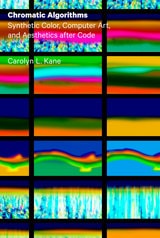
Chromatic Algorithms
Synthetic Color, Computer Art, and Aesthetics after CodeCarolyn L. Kane
University of Chicago Press, 2014
Chromatic Algorithms reveals the fascinating history behind digital color, tracing it from the work of a few brilliant computer scientists and experimentally minded artists in the late 1960s and early ‘70s through to its appearance in commercial software in the early 1990s. Mixing philosophy of technology, aesthetics, and media analysis, Carolyn Kane shows how revolutionary the earliest computer-generated colors were—built with the massive postwar number-crunching machines, these first examples of “computer art” were so fantastic that artists and computer scientists regarded them as psychedelic, even revolutionary, harbingers of a better future for humans and machines. But, Kane shows, the explosive growth of personal computing and its accompanying need for off-the-shelf software led to standardization and the gradual closing of the experimental field in which computer artists had thrived.
Even so, the gap between the bright, bold presence of color onscreen and the increasing abstraction of its underlying code continues to lure artists and designers from a wide range of fields, and Kane draws on their work to pose fascinating questions about the relationships among art, code, science, and media in the twenty-first century.
Communities of Sense
Rethinking Aesthetics and PoliticsBeth Hinderliter, William Kaizen, Vered Maimon, Jaleh Mansoor, and Seth McCormick, eds.
Duke University Press, 2009
The first of the collection’s three sections explicitly examines the links between aesthetics and social and political experience. Here a new essay by Rancière posits art as a key site where disagreement can be staged in order to produce new communities of sense. In the second section, contributors investigate how sense was constructed in the past by the European avant-garde and how it is mobilized in today’s global visual and political culture. Exploring the viability of various models of artistic and political critique in the context of globalization, the authors of the essays in the volume’s final section suggest a shift from identity politics and preconstituted collectivities toward processes of identification and disidentification. Topics discussed in the volume vary from digital architecture to a makeshift museum in a Paris suburb, and from romantic art theory in the wake of Hegel to the history of the group-subject in political art and performance since 1968. An interview with Étienne Balibar rounds out the collection.
Contributors. Emily Apter, Étienne Balibar, Carlos Basualdo, T. J. Demos, Rachel Haidu, Beth Hinderliter, David Joselit, William Kaizen, Ranjanna Khanna, Reinaldo Laddaga, Vered Maimon, Jaleh Mansoor, Reinhold Martin, Seth McCormick, Yates McKee, Alexander Potts, Jacques Rancière, Toni Ross
Divine Beauty
The Aesthetics of Charles HartshorneDaniel A. Dombrowski
Vanderbilt University Press, 2004
As Daniel A. Dombrowski explains, Hartshorne advanced a neoclassical or process theism that contrasted with the "classical" theism defended by traditionalist Jews, Christians, and Muslim believers. His conception of God was dipolar, which could attribute to God certain qualities that traditionalists would exclude. For example, in Hartshorne's view, God can embrace excellent aspects of both activity and passivity, or of permanence and change; classical theists, on the other hand, exclude passivity and change from their conceptions.
Dombrowski goes on to explain the ramifications of Hartshorne's view of God for aesthetics, which for him had both broad and narrow meanings: all sensory feeling or sensation, in the broad sense, and a disciplined feeling for beauty, in the narrow sense. Included are discussions on Hartshorne's famous appreciation for the aesthetics of bird song; his view of beauty as a mean between two sets of extremes; his idea of the aesthetic attitude, which concentrates on values that are intrinsic and immediately felt; and the place of death in his aesthetics, in which the value of our lives consists in the beauty or intensity of experience that we contribute to the divine life.
Filling an important gap in our understanding of Hartshorne, Divine Beauty also makes a persuasive case for the superiority of his neoclassical theism over classical theism.
Free Women
Ethics and Aesthetics in Twentieth-Century Women's FictionKate Fullbrook
Temple University Press, 1990
Hegel and the Arts
Stephen Houlgate
Northwestern University Press, 2007
Addressing a range of important topics, the essays examine the conceptual bases of Hegel's organization of his aesthetics, his treatment of various specific arts (architecture, sculpture, painting, music, and tragedy), and several of the most famous issues in the literature--including the "end of art" thesis, the relation between art and religion, and the vexed relationship between Hegel and the romantics. Together they shed light on the profound reflections on art contained in Hegel's philosophy and also suggest ways in which his aesthetics might resonate well beyond the field of philosophical aesthetics, perhaps beyond philosophy itself.
Henry van de Velde
Selected Essays, 1889–1914Henry van de Velde
J. Paul Getty Trust, The, 2022
Belgian artist, architect, designer, and theorist Henry van de Velde (1863–1957) was a highly original and influential figure in Europe beginning in the 1890s. A founding member of the Art Nouveau and Jugendstil movements, he also directed the Grand-Ducal Saxon School of Arts and Crafts in Weimar, Germany, which eventually became the Bauhaus under Walter Gropius.
This selection of twenty-six essays, translated from French and German, includes van de Velde’s writings on William Morris and the English Arts and Crafts movement, Neo-Impressionist painting, and relationships between ornament, line, and abstraction in German aesthetics. The texts trace the evolution of van de Velde’s thoughts during his most productive period as a theorist in the artistic debates in France, Germany, Belgium, and the Netherlands. Katherine M. Kuenzli expertly guides readers to see how van de Velde’s writings reconcile themes of aesthetics and function, and expression and reason, throughout the artistic periods and regions represented by these texts. With introductory discussions of each essay and full annotations, this is an essential volume for a broad range of scholars and students of the history of fine and applied arts and ideas.

Herbert Marcuse
An Aesthetics of LiberationMalcolm Miles
Pluto Press, 2012
When capitalism is clearly catastrophically out of control and its excesses cannot be sustained socially or ecologically, the ideas of Herbert Marcuse become as relevant as they were in the 1960s. This is the first English introduction to Marcuse to be published for decades, and deals specifically with his aesthetic theories and their relation to a critical theory of society.
Although Marcuse is best known as a critic of consumer society, epitomised in the classic One-Dimensional Man, Malcolm Miles provides an insight into how Marcuse's aesthetic theories evolved within his broader attitudes, from his anxiety at the rise of fascism in the 1930s through heady optimism of the 1960s, to acceptance in the 1970s that radical art becomes an invaluable progressive force when political change has become deadlocked.
Marcuse's aesthetics of liberation, in which art assumes a primary role in interrupting the operation of capitalism, made him a key figure for the student movement in the 1960s. As diverse forms of resistance rise once more, a new generation of students, scholars and activists will find Marcuse’s radical theory essential to their struggle.
Homo Aestheticus
The Invention of Taste in the Democratic AgeLuc Ferry
University of Chicago Press, 1993
Ferry's treatise begins in the mid-1600s with the simultaneous invention of the notions of taste (the essence of art as subjective pleasure) and modern democracy (the idea of the State as a consensus among individuals). He explores the differences between subjectivity and individuality by examining aesthetic theory as developed first by Kant's predecessors and then by Kant, Hegel, Nietzsche, and proponents of the avant-garde. Ferry discerns two "moments" of the avant-garde aesthetic: the hyperindividualistic iconoclasm of creating something entirely new, and the hyperrealistic striving to achieve an extraordinary truth. The tension between these two, Ferry argues, preserves an essential element of the Enlightenment concern for reconciling the subjective and the objective—a problem that is at once aesthetic, ethical, and political.
Rejecting postmodern proposals for either a radical break with or return to tradition, Ferry embraces a postmodernism that recasts Enlightenment notions of value as a new intersubjectivity. His original analysis of the growth and decline of the twentieth-century avant-garde movement sheds new light on the connections between aesthetics, ethics, and political theory.
Impossible Presence
Surface and Screen in the Photogenic EraEdited by Terry Smith
University of Chicago Press, 2001
Framed by Terry Smith's introduction, the essays focus on two kinds of strangeness involved in experiencing visual images in the modern era. The first, explored in the book's first half, involves the appearance of oddities or phantasmagoria in early photographs and cinema. The second type of strangeness involves art from marginalized groups and indigenous peoples, and the communicative formations that result from the trafficking of images between people from vastly different cultures. With a stellar list of contributors, Impossible Presence offers a wide-ranging look at the fate of the visual image in modernity, modern art, and popular culture.
Contributors:
Jean Baudrillard
Marshall Berman
Jeremy Gilbert-Rolfe
Elizabeth Grosz
Tom Gunning
Peter Hutchings
Fred R. Myers
Javier Sanjines
Richard Shiff
Hugh J. Silverman
Terry Smith
Inquiry into the Picturesque
Sidney K. Robinson
University of Chicago Press, 1991
Kierkegaard
Construction of the AestheticTheodor Adorno
University of Minnesota Press, 1989
Making Sense in Life and Literature
Hans Ulrich Gumbrecht
University of Minnesota Press, 1992
“The translation of these essays by Gumbrecht on literary theory and history marks the appearance in English of one of Europe’s most learned, productive, and inventive scholars. Their range is extraordinary. They show that Gumbrecht is not only a sophisticated theorist and historian of literature, but a master practitioner of cultural studies.” --Hayden White, University of California, Santa Cruz

Manifesto of Artistic Research
Silvia Henke, Dieter Mersch, Nicolaj van der Meulen, Thomas Strässle, and Jörg Wiesel
Diaphanes, 2020

Modernism and Hegemony
A Materialist Critique of Aesthetic AgenciesNeil LarsenForeword by Jaime Concha
University of Minnesota Press, 1990
Modernism and Hegemony was first published in 1990. Minnesota Archive Editions uses digital technology to make long-unavailable books once again accessible, and are published unaltered from the original University of Minnesota Press editions.
In Modernism and Hegemony, Neil Larsen exposes the underlying political narratives of modernist aesthetic theory and practice. Unlike earlier Marxist critics, Larsen insists that modernist ideology be approached as a "displaced politics" and not simply as an aesthetic phenomenon. In this view, modernism is broadly ideological project comprising not only the literary-artist canon but also a wide array of theoretical discourses from aesthetics to philosophy, culture, and politics. Larsen gives postmodernism some credit for the apparent breakup of modernism, and for exposing the philosophical and political nature of its aesthetic stance. But he parts company with its ideological and epistemological notions, proposing to change the terms, and thus the framework, of the debate.
For Larsen, modernism is intimately linked to a crisis of representation that affected all aspects of life in the late nineteenth century - a period when capitalism itself was undergoing transformation from its "classical" free market phase into a more abstract, monopolistic and imperialistic stage. Larsen finds the resultant loosening of ties between individuals and society - the breakdown of social and historical agency - behind the growth of modernism. He employs speculative cross-readings of key texts by Marx and Adorno, an examination of Manet's "The Execution of Maximilian," and an analysis of modernism in a Third World setting to explain why modernism made special claims upon the aesthetic, and how it ultimately ascribed historical agency to "works of art."
Native Intelligence
Aesthetics, Politics, and Postcolonial LiteratureDeepika Bahri
University of Minnesota Press, 2003
A compelling reclamation of the place of aesthetics in postcolonial literature
Literature though it may be, postcolonial literature is studied and understood largely—and often solely—in social and political terms. In neglecting its aesthetic dimension, as this book forcefully demonstrates, we are overlooking not only an essential aspect of this literature but even a critical perspective on its sociopolitical function and value. In Native Intelligence, Deepika Bahri focuses on postcolonial literature’s formal and aesthetic negotiations with sociopolitical concerns.
How, Bahri asks, do aesthetic considerations contest the social function of postcolonial literature? In answering, her book takes on two tasks: First, it identifies the burden of representation borne by postcolonial literature through its progressive politicization. Second, it draws on Frankfurt School critical theory to reclaim a place for aesthetics in literary representation by closely engaging works of Rohinton Mistry, Salman Rushdie, and Arundhati Roy. Throughout, Bahri shows how attention to the aesthetic innovations and utopian impulses of postcolonial works uncovers their complex and uneven relationship to ideology, reanimating their potential to make novel contributions to the larger project of social liberation.
Omnicompetent Modernists
Poetry, Politics, and the Public SphereMatthew Hofer
University of Alabama Press, 2022
An innovative exploration of early twentieth-century avant-garde poetry’s relationship to the public sphere
“It is difficult / to get the news from poems / yet men die miserably every day / for lack / of what is found there,” as the poet William Carlos Williams memorably declared. In Omnicompetent Modernists: Poetry, Politics, and the Public Sphere, Matthew Hofer examines, through a multilayered literary critique of interwar modernist poetry, what it might mean to get the news, and more, from a poet.
Using pragmatist ideas about the public sphere as a tool, Hofer reveals how Langston Hughes, Ezra Pound, and Mina Loy sought to use literature to both express and enable thought. In Hughes, Pound, and Loy, Hofer attends to poets whose work vigorously imagined possible new relationships between language, thinking, and public society. Each poet had different goals and used different methods, but all found both inspiration and encouragement in popular political theory. Hughes advocated for a more just vision of color and class in the United States. Pound sought to condemn those whom he associated with public harm, linguistically, socially, economically, and politically. Loy championed the “psycho-democratic” representation of women, in both public and private life.
Although Hughes, Pound, and Loy are rarely considered together, what unites these three writers is how each reconceived the public realm, and revolutionized aesthetic form to articulate those visions. Hofer combines sharp intellectual historiography with rigorous literary criticism and the result is a study that reinvigorates both the poems and poets under consideration and speaks to the immense power of language in manipulating public opinion—with pertinent implications for the politics of the present.
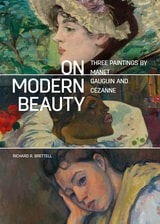
On Modern Beauty
Three Paintings by Manet, Gauguin, and CézanneRichard R. Brettell
J. Paul Getty Trust, The, 2019
Brettell shapes his manifesto around three masterworks from the collection of the J. Paul Getty Museum: Édouard Manet’s Jeanne (Spring), Paul Gauguin’s Arii Matamoe (The Royal End), and Paul Cézanne’s Young Italian Woman at a Table. The provocative discussion reveals how each of these exceptional paintings, though depicting very different subjects—a fashionable actress, a preserved head, and a weary working woman—enacts a revolutionary, yet enduring, icon of beauty.
Politics, Religion, and Art
Hegelian DebatesDouglas Moggach
Northwestern University Press, 2011

Postmodern Sophistications
Philosophy, Architecture, and TraditionDavid Kolb
University of Chicago Press, 1990
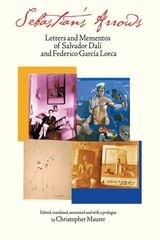
Sebastian's Arrows
Letters and Mementos of Salvador Dali and Federico Garcia LorcaSalvador Dali and Federico Garcia Lorca
Swan Isle Press, 2005
“In my ‘Saint Sebastian’ I remember you,” Salvador Dali replied to Garcia Lorca, referring to the essay on aesthetics that Dali had just written, “. . . and sometimes I think he is you. Let’s see whether Saint Sebastian turns out to be you.”
This exchange is but a glimpse into the complex relationship between two renowned and highly influential twentieth-century artists. On the centennial of Dali's birth, Sebastian’s Arrows presents a never-before-published collection of their letters, lectures, and mementos.
Written between 1925 and 1936, the letters and lectures bring to life a passionate friendship marked by a thoughtful dialogue on aesthetics and the constant interaction between poetry and painting. From their student days in Madrid's Residencia de Estudiantes, where the two waged war against cultural “putrefaction” and mocked the sacred cows of Spanish art, Dali and Garcia Lorca exchanged thoughts on the act of creation, modernity, and the meaning of their art. The volume chronicles how in their poetic skirmishes they sharpened and shaped each other’s work—Garcia Lorca defending his verses of absence and elegy and his love of tradition while Dali argued for his theories of “Clarity” and “Holy Objectivity” and the unsettling logic of Surrealism.
Christopher Maurer’s masterful prologue and selection of letters, texts, and images (many generously provided by the Fundacion Gala-Salvador Dali and Fundacion Federico Garcia Lorca), offer compelling and intimate insights into the lives and work of two iconic artists. The two men had a “tragic, passionate relationship,” Dali once wrote—a friendship pierced by the arrows of Saint Sebastian.
Sidney's Poetics
Imitating CreationMichael Mack
Catholic University of America Press, 2005
Soliciting Interpretation
Literary Theory and Seventeenth-Century English PoetryEdited by Elizabeth D. Harvey and Katharine Eisaman Maus
University of Chicago Press, 1990
In the first group of essays, David Norbrook, Annabel Patterson, John Guillory, Rosemary Kegl, and Stephen Orgel explore the various ways in which a text can be "political." Next, Arthur Marotti, Jane Tylus, and Jonathan Goldberg consider the circumstances of textual production and reception in the seventeenth century. Finally, Stanley Fish, Gordon Braden, Michael C. Schoenfeldt, and Maureen Quilligan discuss the particular forms of anxiety that result when seventeenth-century poets modify the traditional rhetoric of sexual desire to serve what seem to be erotic or religious purposes.
These essays, accompanied by an extensive editors' introduction, intersect less in their shared enthusiasm for particular authors or interpretative methods than in a common interest in particular critical issues. They present the most exciting work by critics redefining Renaissance studies.
The Cultural Origins of the Socialist Realist Aesthetic
1890-1934Irina Gutkin
Northwestern University Press, 1999
In The Cultural Origins of the Socialist Realist Aesthetic, Irina Gutkin brings together the best work written on the subject to argue that socialist realism encompassed a philosophical worldview that marked thinking in the USSR on all levels: political, social, and linguistic. Using a wealth of diverse cultural material, Gutkin traces the emergence of the central tenants of socialist realist theory from Symbolism and Futurism through the 1920s and 1930s.
The Demon and the Damozel
Dynamics of Desire in the Works of Christina Rossetti and Dante Gabriel RossettiSuzanne M. Waldman
Ohio University Press, 2008
The Gadamer Reader
A Bouquet of the Later WritingsHans-Georg Gadamer
Northwestern University Press, 2007
The Madness of Vision
On Baroque AestheticsChristine Buci-Glucksmann
Ohio University Press, 2013
Christine Buci-Glucksmann’s The Madness of Vision is one of the most influential studies in phenomenological aesthetics of the baroque. Integrating the work of Merleau-Ponty with Lacanian psychoanalysis, Renaissance studies in optics, and twentieth-century mathematics, the author asserts the materiality of the body and world in her aesthetic theory. All vision is embodied vision, with the body and the emotions continually at play on the visual field. Thus vision, once considered a clear, uniform, and totalizing way of understanding the material world, actually dazzles and distorts the perception of reality.
In each of the nine essays that form The Madness of Vision Buci-Glucksmann develops her theoretical argument via a study of a major painting, sculpture, or influential visual image—Arabic script, Bettini’s “The Eye of Cardinal Colonna,” Bernini’s Saint Teresa and his 1661 fireworks display to celebrate the birth of the French dauphin, Caravaggio’s Judith Beheading Holofernes, the Paris arcades, and Arnulf Rainer’s self-portrait, among others—and deftly crosses historical, national, and artistic boundaries to address Gracián’s El Criticón; Monteverdi’s opera Orfeo; the poetry of Hafiz, John Donne, and Baudelaire; as well as baroque architecture and Anselm Kiefer’s Holocaust paintings. In doing so, Buci-Glucksmann makes the case for the pervasive influence of the baroque throughout history and the continuing importance of the baroque in contemporary arts.
The Orient of Style
Modernist Allegories of ConversionBeryl Schlossman
Duke University Press, 1991
Toward the end of Remembrance of Things Past, the narrator describes the act of creating a work of art as a conversion of sensation into a spiritual equivalent. By means of such allegories of “conversion,” Schlossman shows, the modernist artist disappeared within the work of art and left behind the trace of his sublime vocation, a vocation in which he was transformed, in Schlossman’s words, “into a kind of priest kneeling at the altar of beauty before the masked divinity of representation.”
The author shows how allegory—the representation of the symbolic as something real—was adapted by modernist writers to reflect subjectivity while masking an authorial origin. She reveals how modernist allegory arose, as Walter Benjamin suggests, at the crossroads of history, sociology, economics, urban architecture, and art—providing a kind of map of capitalism—and was produced through the eyes of a melancholic gazing at a “monument of absence.”
The Poetics of Political Thinking
Davide Panagia
Duke University Press, 2006
Panagia not only illuminates the structure of much contemporary political theory but also shows why understanding the poetics of political thinking is vital to contemporary society. Drawing on Gilles Deleuze’s critique of negation and his privileging of paradox as the source of political thought, Panagia suggests that a non-teleological concept of difference might generate insight into pressing questions about foreignness and citizenship. Turning to the liberal/poststructural debate that dominates contemporary political theory, he compares John Rawls’s concept of justice to Rancière’s ideas about political disagreement in order to demonstrate how, despite their differences, both thinkers comprehend aesthetic and moral reasoning as part and parcel of political writing. Considering the writings of William Hazlitt and Jürgen Habermas, he describes how the essay has become the exemplary genre of what is considered rational political argument. The Poetics of Political Thinking is a compelling reappraisal of the role of representation within political thought.
The Scandal of Pleasure
Art in an Age of FundamentalismWendy Steiner
University of Chicago Press, 1995
"Stimulating. . . . A splendid rebuttal of those on the left and right who think that the pleasures induced by art are trivial or dangerous. . . . One of the most powerful defenses of the potentiality of art."—Andrew Delbanco, New York Times Book Review
"A concise and . . . readable account of recent contretemps that have galvanized the debate over the role and purposes of art. . . . [Steiner] writes passionately about what she believes in."—Michiko Kakutani, New York Times
"This is one of the few works of cultural criticism that is actually intelligible to the nonspecialist reader. . . . Steiner's perspective is fresh and her perceptions invariably shrewd, far-ranging, and reasonable. A welcome association of sense and sensibility."—Kirkus Reviews, starred review
"Steiner has succeeded so well in [the] task she has undertaken. The Scandal of Pleasure is itself characterized by many of the qualities Steiner demans of art, among them, complexity, tolerance and the pleasures of unfettered thought."—Eleanor Heartly, Art in America
"Steiner . . . provides the best and clearest short presentation of each of [the] debates."—Alexander Nehamas, Boston Book Review
"Steiner has done a fine job as a historian/reporter and as a writer of sophisticated, very clear, cultural criticism. Her reportage alone would be enough to make this a distinguished book."—Mark Edmundson, Lingua Franca
Towards an Aesthetics of Production
Sebastian Egenhofer
Diaphanes, 2017
After laying out his argument for a new aesthetics of production in introductory chapters that discuss the work of Spinoza, Nietzsche, and Bergson, as well as Heidegger and Kant, Egenhofer applies this theoretical framework to case studies on Michael Asher, Marcel Duchamp, Thomas Hirschhorn, and Piet Mondrian. An aesthetics of production does not, he argues, imply a nostalgia for the artisanal or for a work of art’s singularity, but a way to bring together elements of critical materialism with a thorough reevaluation of the modern art and abstraction.
Van Gogh on Demand
China and the ReadymadeWinnie Won Yin Wong
University of Chicago Press, 2014
What Is Contemporary Art?
Terry Smith
University of Chicago Press, 2009
Who gets to say what counts as contemporary art? Artists, critics, curators, gallerists, auctioneers, collectors, or the public? Revealing how all of these groups have shaped today’s multifaceted definition, Terry Smith brilliantly shows that an historical approach offers the best answer to the question: What is Contemporary Art?
Smith argues that the most recognizable kind is characterized by a return to mainstream modernism in the work of such artists as Richard Serra and Gerhard Richter, as well as the retro-sensationalism of figures like Damien Hirst and Takashi Murakami. At the same time, Smith reveals, postcolonial artists are engaged in a different kind of practice: one that builds on local concerns and tackles questions of identity, history, and globalization. A younger generation embodies yet a third approach to contemporaneity by investigating time, place, mediation, and ethics through small-scale, closely connective art making. Inviting readers into these diverse yet overlapping art worlds, Smith offers a behind-the-scenes introduction to the institutions, the personalities, the biennials, and of course the works that together are defining the contemporary. The resulting map of where art is now illuminates not only where it has been but also where it is going.