Results by title
932 books match the query 'Ancient' and 108 start with a
A Casebook on Roman Water Law
Cynthia Jordan Bannon
University of Michigan Press, 2020
This casebook aims to cross historical and disciplinary boundaries by making the primary evidence for Roman water rights accessible to students and researchers. Cases are presented in both original Latin and English translation. To prepare for study of the cases, each chapter opens with an overview of its topic while the introduction presents the evidence for water rights and contextualizes them within historical and conceptual frameworks.
A Catalogue of Greek Manuscripts at the University of Michigan, Ann Arbor, Volume 1
Nadezhda Kavrus-Hoffmann with the collaboration of Pablo Alvarez
University of Michigan Press, 2021
A Catalogue of Greek Manuscripts at the University of Michigan, Ann Arbor is a comprehensive, fully illustrated catalogue of the largest collection of Greek manuscripts in America, including 110 codices and fragments ranging from the fourth to the nineteenth century. The collection, held in the Special Collections Research Center of the University of Michigan Library, contains many manuscripts from Epirus and the Meteora monasteries built on high pinnacles of rocks in Thessaly. Nadezhda Kavrus-Hoffmann has based the manuscript descriptions on the latest developments in the fields of paleography and codicology, including the newest recommendations of the Institute for Research and History of Texts in Paris. The catalogue includes high-resolution plates of all the manuscripts, allowing researchers to compare the entries with other Greek manuscripts around the world. This catalogue contains a trove of fascinating information related to Byzantine culture that will be available for the first time to scholars working on various disciplines of the humanities such as Classical and Byzantine Studies, Art History, Medieval Studies, Theology, and History.
This is the first volume of a projected two-volume set. Volume 2, also by Nadezhda Kavrus-Hoffmann, will contain descriptions of remaining Greek manuscripts in the Library’s collection, starting with Mich. Ms. 59 and ending with Mich. Ms. 238, for a total of 53 manuscripts and 8 fragments. Both volumes will have the same format – catalogue entries for each manuscript together with extensive illustrations. The publication date for Volume 2 has not been established.
A Catalogue of Greek Manuscripts at the University of Michigan, Ann Arbor, Volume 2
Nadezhda Kavrus-Hoffmann with the collaboration of Pablo Alvarez and Julia Miller
University of Michigan Press, 2026
A Catalogue of Greek Manuscripts at the University of Michigan, Ann Arbor, Volume II unveils the rich diversity and enduring legacy of the Greek manuscript tradition preserved in one of North America's largest collections. Building on the acclaimed first volume, this second and concluding volume offers comprehensive illustrated descriptions of eighty-four manuscripts and fragments housed in the University of Michigan Library's Special Collections Research Center. The discovery of twenty-three previously unknown manuscripts and fragments significantly expands our understanding of Byzantine and post-Byzantine book culture, illuminating the remarkable continuity of Greek scholarly, liturgical, and artistic traditions from the ninth through the nineteenth centuries.
Each entry integrates codicological features, handwriting analysis, textual content, decoration, binding, provenance, and references to earlier scholarship as well as high-quality color plates to illustrate representative pages, script types, and illuminations. Among the exceptional highlights are a fragment of The Great Calculation According to the Indians by Maximos Planoudes, preserving portions of this rare mathematical treatise otherwise lost; an illuminated 1371 copy of The Heavenly Ladder by John Klimax, created by the renowned scribe Joasaph II of the Hodegon Monastery in Constantinople; and a newly identified manuscript containing rare patristic homilies linked to the sixteenth-century Choniates scriptorium in Venice.
A Commentary on Aristophanes' Knights
Carl Arne Anderson and T. Keith Dix
University of Michigan Press, 2020
In addition to the complete Greek text and commentary, this volume includes a substantial introduction to the playwright’s career and to the historical and political background of the play. It includes advice for students on grammar and syntax, meter, festivals and staging, as well as topical and literary references and allusions that will help guide students to a mature appreciation of the comedy’s humor, seriousness, and artistic quality. Priced and sized for classroom use, this is the first full commentary on Knights since 1901 and will be widely welcomed.
A Commentary on Cicero, De Divinatione I
Celia E. Schultz
University of Michigan Press, 2014
A Commentary on Cicero, De Divinatione II
Andrew R. Dyck
University of Michigan Press, 2020
Celia Schultz’s earlier volume in this series presented the text and commentary for De Divinatione I. With Andrew Dyck’s companion volume on the second book of De Divinatione, students and teachers are well served with crucial texts from one of Rome’s most famous philosophers, as he considers important Roman practices and beliefs.
A Commentary on Cicero, De Legibus
Andrew R. Dyck
University of Michigan Press, 2004
Surprisingly, de Legibus has been one of Cicero's most neglected works. Andrew R. Dyck's commentary is the first to appear on the complete work in well over one hundred years. Dyck provides a detailed interpretation and sets the essay into the context of the politics and philosophical thought of its time. While previous commentaries focused primarily on grammar and textual criticism, this one also seeks to relate Cicero's text to the political, philosophical, and religious trends of his day. The author identifies the influences on Cicero's thinking and analyzes the relation of this theoretical treatise to his other works. This commentary is based on a new text, worked out in consultations between the author and Jonathan Powell of Royal Holloway, London.
Andrew Dyck is Professor of Classics, University of California at Los Angeles.
A Commentary on Cicero, De Natura Deorum II
Andrew R. Dyck
University of Michigan Press, 2025
A Commentary on Cicero, De Officiis
Andrew R. Dyck
University of Michigan Press, 1997
Composed in haste shortly before Cicero's death, de Officiis has exercised enormous influence over the centuries. It is all the more surprising that Andrew R. Dyck's volume is the first detailed English commentary on the work written in this century. It deals with the problems of the Latin text (taking account of Michael Winterbottom's new edition), it delineates the work's structure and sometimes elusive train of thought, clarifies the underlying Greek and Latin concepts, and provides starting points for approaching the philosophical and historical problems that de Officiis raises.
A work of major importance for classicists, philosophers, and ancient historians, this Commentary will be an invaluable companion to all readers of Cicero's last philosophical work.
Andrew R. Dyck is Professor of Classics, University of California, Los Angeles.
Publication of this volume is supported by a grant from the National Endowment for the Humanities.
A Commentary on Plautus' Curculio
T. H. M. Gellar-Goad
University of Michigan Press, 2024
This up-to-date, authoritative commentary on the play will prove useful to directors and actors and will readily introduce students to the joys of Roman comedy.
A Companion to Apollonius of Rhodes
Ruth Scodel
University of Michigan Press, 2025
A Companion to Apollonius of Rhodes aims to help contemporary readers appreciate what is most characteristic of Apollonius’ epic—its fascination with ritual and myth, gods who act without the direction of Zeus, frequent distanced narration, the portrayal of characters in situations where there are no good choices. It includes thorough analyses of the poem’s relationship to contemporary art with illustrations and treats familiar topics, such as Jason’s leadership, with nuance. Contributors include Benjamin Acosta-Hughes, Annemarie Ambühl, Anja Bettenworth, Keyne Cheshire, Christopher Chinn, James Clauss, Adele Teresa Cozzoli, Kristopher Fletcher, Alexander Hollmann, Regina Höschele, Niklas Holzberg, Alison Keith, Adolf Köhnken†, Anatole Mori, William H. Race, Norman Sandridge, Selina Stewart, Stefanie Stürner, and Graham Zanker.
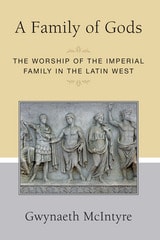
A Family of Gods
The Worship of the Imperial Family in the Latin WestGwynaeth McIntyre
University of Michigan Press, 2016
Roman politics and religion were inherently linked as the Romans attempted to explain the world and their place within it. As Roman territory expanded and power became consolidated into the hands of one man, people throughout the empire sought to define their relationship with the emperor by granting honors to him. This collection of practices has been labeled “emperor worship” or “ruler cult,” but this tells only half the story: imperial family members also became an important part of this construction of power and almost half of the individuals deified in Rome were wives, sisters, children, and other family members of the emperor.
In A Family of Gods, Gwynaeth McIntyre expands current “ruler cult” discussions by including other deified individuals, and by looking at how communities in the period 44 BCE to 337 CE sought to connect themselves with the imperial power structure through establishing priesthoods and cult practices. This work focuses on the priests dedicated to the worship of the imperial family in order to contextualize their role in how imperial power was perceived in the provincial communities and the ways in which communities chose to employ religious practices. Special emphasis is given to the provinces in Gaul, Spain, and North Africa.
This book draws on epigraphic evidence but incorporates literary, numismatic, and archaeological evidence where applicable. It will be of interest to scholars of Roman imperial cult as well as Roman imperialism, and religious and political history.

A Grammar of Epigraphic Hebrew
Sandra Landis Gogel
SBL Press, 1998
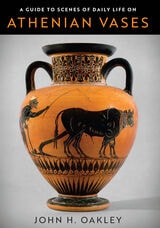
A Guide to Scenes of Daily Life on Athenian Vases
John H. Oakley
University of Wisconsin Press, 2020
John H. Oakley's clear, accessible writing provides sound information with just the right amount of detail. Specialists of Greek art will welcome this book for its text and illustrations. This guide is an essential and much-needed reference for scholars and an ideal sourcebook for classics and art history.
A Historical Archaeology of Jerusalem
Bronze and Iron AgesYuval Gadot
SBL Press, 2026
A Historical Commentary on Thucydides
A Companion to Rex Warner's Penguin TranslationDavid Cartwright
University of Michigan Press, 1997

A History of Argos to 500 B.C
Thomas Kelly
University of Minnesota Press, 1977
A History of Argos to 500 B.C was first published in 1977. Minnesota Archive Editions uses digital technology to make long-unavailable books once again accessible, and are published unaltered from the original University of Minnesota Press editions.
Specialists in ancient history will find some long-held beliefs challenged by this study. Professor Kelly reconstructs and discusses the history of the ancient Greek city of Argos, which was located in the northeastern Peloponnese, from the Bronze Age through the Archaic period. He relies primarily on the archeological evidence and considers the literary evidence in the context of the physical remains. In determining the broad pattern of historical development, his findings and conclusions frequently contradict previous conceptions about the city and its role in history.
The study shows that Argos existed in the shadow of Mycenae in the Bronze Age but that throughout the Dark Age it was one of the most progressive centers in Greece, though not a wealthy or powerful community. Its contacts with other areas were limited and it had no influence beyond its own village and fields. By the end of the Dark Age the city was growing and extending its influence throughout the Argive plain, but its external contacts remained limited. Contrary to theories of earlier historians, Professor Kelly finds that Argive foreign policy was not dominated by a rivalry with Sparta, and reports that the two states fought on numerous occasions, the Battle of Hysiae included, are erroneous. The present study also indicates that the tyrant Pheidon of Argos fits more logically into the early decades of the sixth century B.C.E. rather than the seventh century as had been thought. The fragmentary nature of the evidence does not make possible an assessment of the long-range impact of Pheidon's policies on the history of Argos, but it is clear that his reign was followed by important political changes in the city.
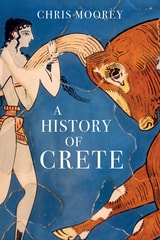
A History of Crete
Chris Moorey
Haus Publishing, 2019
To guide us through this spectacular history, Chris Moorey, who has lived in Crete for over twenty years, provides an engaging and lively account of the island spanning from the Stone Age to the present day. A History of Crete steps in to fill a gap in scholarship on this fascinating island, providing the first complete history of Crete to be published for over twenty years, and the first ever that is written with a wide readership in mind.

A History of Earliest Italy
Massimo Pallottino
University of Michigan Press, 1991
A History of Education in Antiquity
H.I. Marrou
University of Wisconsin Press, 1982
A History of Trust in Ancient Greece
Steven Johnstone
University of Chicago Press, 2011
A History of the Alans in the West
From Their First Appearance in the Sources of Classical Antiquity through the Early Middle AgesBernard S. Bachrach
University of Minnesota Press, 1973
A History of the Alans in the West was first published in 1973. Minnesota Archive Editions uses digital technology to make long-unavailable books once again accessible, and are published unaltered from the original University of Minnesota Press editions.
The Alans, a nomadic people from the steppe lands of south Russia, were among the many invaders of the Roman empire who helped to bring about its fall. Unlike the majority of the invaders, they were not Germans — they were Indo-Iranians—and they were not, like most barbarians, organized in agricultural communities. This history traces their westward movement from the time of their first mention in sources of classical antiquity through the early Middle Ages.
Professor Bachrach discusses the social and religious institutions of the Alans and especially their military customs. As he shows, they contributed much to the military repertoire of the West, especially the feigned retreat tactic and the role of the cavalry as the primary part of the army. In their westward movement the Alans were assimilated by people in Gaul and Italy and served the empire in a military capacity during the fourth and fifth centuries. IN addition to their military and political impact in several areas, the Alans also influenced early medieval artistic styles, literary developments, place names, and personal names.
A number of illustrations provide examples of the artistic influence of the Alans, and there are maps pertinent to the history.
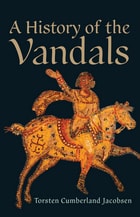
A History of the Vandals
Torsten Cumberland Jacobsen
Westholme Publishing, 2012
The First General History in English of the Germanic People Who Sacked Rome in the Fifth Century AD and Established a Kingdom in North Africa
The fifth century AD was a time of great changes in the Mediterranean world. In the early 400s, the Roman Empire ranged from the lowlands of Scotland to the Upper Nile and from Portugal to the Caucasus. It was almost at its widest extent, and although ruled by two emperors—one in the West and one in the East—it was still a single empire. One hundred years later, Roman control of Western Europe and Western North Africa had been lost. In its place, a number of Germanic kingdoms had been established in these regions, with hundreds of thousands of Germanic and other peoples settling permanently inside the former borders of the Western Roman Empire.
One of the most fascinating of these tribes of late antiquity were the Vandals, who over a period of six hundred years had migrated from the woodland regions of Scandinavia across Europe and ended in the deserts of North Africa. In A History of the Vandals, the first general account in English covering the entire story of the Vandals from their emergence to the end of their kingdom, historian Torsten Cumberland Jacobsen pieces together what we know about the Vandals, sifting fact from fiction. In the middle of the fifth century the Vandals, who professed Arianism, a form of Christianity considered heretical by the Roman emperor, created the first permanent Germanic successor state in the West and were one of the deciding factors in the downfall of the Western Roman Empire. Later Christian historians described their sack of Rome in 455 and their vehement persecution of Catholics in their kingdom, accounts that were sensationalized and gave birth to the term “vandalism.”
In the mid-sixth century, the Vandals and their North African kingdom were the first target of Byzantine Emperor Justinian’s ambitious plan to reconquer the lost territories of the fallen Western Empire. In less than four months, what had been considered one of the strongest Germanic kingdoms had been defeated by a small Roman army led by the general Belisarius. Despite later rebellions, this was the end of the Germanic presence in North Africa, and in many ways the end of the Arian heresy of Christianity. For the Romans it was the incredibly successful start of the reconquest of the lost lands of the Western Empire.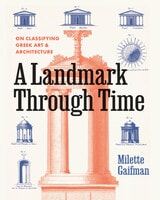
A Landmark Through Time
On Classifying Greek Art and ArchitectureMilette Gaifman
University of Chicago Press, 0
What representations of a monument across centuries can tell us about how we engage with, study, and understand the past.
In a square in the heart of Athens, a cylindrical structure rests on a platform made up of large stone blocks. Semi-columns encircle it, and a slanted roof sits on top, with a plantlike feature at its highest point. Focusing on this well-documented remnant of classical Greece, the so-called Choregic Monument of Lysikrates, Milette Gaifman considers the history of engagement with this ancient landmark, looking at how names, scholarly classifications, and illustrations have shaped our understanding of it from the fourth century BCE to the modern era.
Studying the landmark’s representation through centuries of scholarship and illustrations, she examines how modes of engagement with the past often impose their own baggage, interpretive forces, and inaccuracies. By being aware of their histories, advantages, and limitations, Gaifman argues that we should treat them as helpful tools and flexible guidelines rather than as strict or unmoving criteria. A Landmark Through Time reveals how adapting and expanding traditional frameworks of classification and technologies can open fresh vantage points for appreciating the complexity and ingenuity of ancient Greek art and architecture.
A Life Worthy of the Gods
The Materialist Psychology of EpicurusDavid Konstan
Parmenides Publishing, 2008
A Most Reliable Witness
Essays in Honor of Ross Shepard KraemerSusan Ashbrook Harvey
SBL Press, 2015
Celebrate a trailblazer in the areas of women and re
Celebrate a trailblazer in the areas of women and religion, Jews and Judaism, and earliest Christianity in the ancient Mediterranean
Ross Kraemer is Professor Emerita in the Department of Religious Studies at Brown University. This volume of essays, conceived and produced by students, colleagues, and friends bears witness to the breadth of her own scholarly interests. Contributors include Theodore A. Bergren, Debra Bucher, Lynn Cohick, Mary Rose D’Angelo, Nathaniel P. DesRosiers, Robert Doran, Jennifer Eyl, Paula Fredriksen, John G. Gager, Maxine Grossman, Kim Haines-Eitzen, Susan Ashbrook Harvey, Jordan Kraemer, Robert A. Kraft, Shira L. Lander, Amy-Jill Levine, Susan Marks, E. Ann Matter, Renee Levine Melammed, Susan Niditch, Elaine Pagels, Adele Reinhartz, Jordan Rosenblum, Sarah Schwarz, Karen B. Stern, Stanley K. Stowers, Daniel Ullucci, Arthur Urbano, Heidi Wendt, and Benjamin G. Wright.Features:
- Articles that examine both ancient and modern texts in cross-cultural and trans-historical perspective
- Twenty-eight original essays on ancient Judaism, Christianity, and women in the Greco-Roman world
A Political History of the Arameans
From Their Origins to the End of Their PolitiesK. Lawson Younger Jr.
SBL Press, 2016
K. Lawson Younger Jr. presents a political history of the Arameans from their earliest origins to the demise of their independent entities. The book investigates their tribal structures, the development of their polities, and their interactions with other groups in the ancient Near East. Younger utilizes all of the available sources to develop a comprehensive picture of this complex, yet highly important, people whose influence and presence spanned the Fertile Cresent.
Features:
- The best, recent understanding of tribal political structures, aspects of mobile pastoralism, and models of migration
- A regional rather than a monolithic approach to the rise of Aramean polities
- Thorough integration of the complex relationships and interactions of the Arameans with the Luwians, the Assyrians, the Israelites, and others
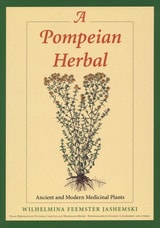
A Pompeian Herbal
Ancient and Modern Medicinal PlantsBy Wilhelmina Feemster Jashemski,
University of Texas Press, 1999
When workmen excavating the ruins of Pompeii eagerly gathered the native medicinal plants growing there, Wilhelmina Jashemski discovered that this was another example of the continuity of life in the shadow of Vesuvius. Many of the plants used for herbal medicine around Pompeii today are the same ones that ancient authorities such as Pliny the Elder and Dioscorides recommended for treating the same types of disorders.
In this book, Jashemski presents an herbal of thirty-six medicinal plants, most of them known to the ancients and still employed today. She describes each plant's contemporary medicinal uses and compares them to ancient practices as recorded in literary sources. Scientific, English, and Italian names and the plant's mythological associations complete the entries, while elegant, full-page portraits depict each plant visually.
A Student Commentary on Pausanias Book 1
Patrick Paul Hogan
University of Michigan Press, 2014
A Taste of Ancient Rome
Ilaria Gozzini Giacosa
University of Chicago Press, 1992
Accustomed to Obedience?
Classical Ionia and the Aegean World, 480–294 BCEJoshua P. Nudell
University of Michigan Press, 2023
This book offers a clear and accessible narrative of the period between the Persian Wars and the wars of the early Hellenistic period, two nominal liberations of the region. The volume complements existing histories of Classical Greece. Close inspection reveals that the Ionians were active partners in the imperial endeavor, even as imperial competition constrained local decision-making and exacerbated local and regional tensions. At the same time, the book offers interventions on critical issues related to Ionia such as the Athenian conquest of Samos, rhetoric about the freedom of the Greeks, the relationship between Ionian temple construction and economic activity, the status of the Panionion, Ionian poleis and their relationship with local communities beyond the circle of the dodecapolis, and the importance of historical memory to our understanding of ancient Greece. The result is a picture of an Aegean world that is more complex and less beholden narratives that give primacy to the imperial actors at the expense of local developments.
Acting Egyptian
Theater, Identity, and Political Culture in Cairo, 1869–1930By Carmen M. K. Gitre
University of Texas Press, 2019
In the late nineteenth and early twentieth centuries, during the “protectorate” period of British occupation in Egypt—theaters and other performance sites were vital for imagining, mirroring, debating, and shaping competing conceptions of modern Egyptian identity. Central figures in this diverse spectrum were the effendis, an emerging class of urban, male, anticolonial professionals whose role would ultimately become dominant. Acting Egyptian argues that performance themes, spaces, actors, and audiences allowed pluralism to take center stage while simultaneously consolidating effendi voices.
From the world premiere of Verdi’s Aida at Cairo’s Khedivial Opera House in 1871 to the theatrical rhetoric surrounding the revolution of 1919, which gave women an opportunity to link their visibility to the well-being of the nation, Acting Egyptian examines the ways in which elites and effendis, men and women, used newly built performance spaces to debate morality, politics, and the implications of modernity. Drawing on scripts, playbills, ads, and numerous other sources, the book brings to life provocative debates that fostered a new image of national culture and performances that echoed the events of urban life in the struggle for independence.
Acting Like Men
Gender, Drama, and Nostalgia in Ancient GreeceKaren Bassi
University of Michigan Press, 1999
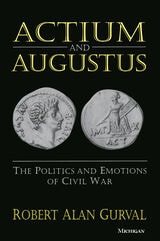
Actium and Augustus
The Politics and Emotions of Civil WarRobert Alan Gurval
University of Michigan Press, 1998
Actium and Augustus marks a turning point as well. Robert Alan Gurval's unusual approach is to examine contemporary views of the battle and its immediate political and social consequences. He starts with a consideration of the official celebration and public commemoration of the Actian victory and then moves on to other questions. What were the "Actian" monuments that Octavian erected on the battle site and later in Rome? What role did the Actian victory play in the political formation of the Principate and its public ideology? What was the response of contemporary poetry? Throughout, this volume concentrates on contemporary views of Actium and its results.
Written to include the general reader, Actium and Augustus presents a thoughtful examination of a complex period. All Greek and Latin quotations are translated, and extensive illustrations present graphic evidence about the issues Romans faced.
Robert Alan Gurval is Associate Professor of Classics, University of California, Los Angeles, and has been a recipient of the Rome Prize awarded by the American Academy in Rome.
Adam and Eve in the Armenian Tradition, Fifth through Seventeenth Centuries
Michael E. Stone
SBL Press, 2013

Adoption, Memory, and Cold War Greece
Kid pro quo?Gonda Van Steen
University of Michigan Press, 2019
This book presents a committed quest to unravel and document the postwar adoption networks that placed more than 3,000 Greek children in the United States, in a movement accelerated by the aftermath of the Greek Civil War and by the new conditions of the global Cold War. Greek-to-American adoptions and, regrettably, also their transactions and transgressions, provided the blueprint for the first large-scale international adoptions, well before these became a mass phenomenon typically associated with Asian children. The story of these Greek postwar and Cold War adoptions, whose procedures ranged from legal to highly irregular, has never been told or analyzed before. Adoption, Memory, and Cold War Greece answers the important questions: How did these adoptions from Greece happen? Was there any money involved? Humanitarian rescue or kid pro quo? Or both? With sympathy and perseverance, Gonda Van Steen has filled a decades-long gap in our understanding, and provided essential information to the hundreds of adoptees and their descendants whose lives are still affected today.
Aesop's Human Zoo
Roman Stories about Our BodiesPhaedrus
University of Chicago Press, 2004
Providing unusual insights into the heart of Roman culture, these clever poems open up odd avenues of ancient lore and life as they explore social types and physical aspects of the body, regularly mocking the limitations of human nature and offering vulgar or promiscuous interpretations of the stuff of social life.
Featuring folksy proverbs and satirical anecdotes, filled with saucy naughtiness and awful puns, Aesop's Human Zoo will amuse you with its eccentricities and hit home with its shrewdly candid and red raw messages. The entertainment offered in this volume of impeccably accurate translations is truly a novelty—a good-hearted and knowing laugh courtesy of classical poetry. Beginning to advanced classicists and Latin scholars will appreciate the original Latin text provided in this bilingual edition. The splash of classic Thomas Bewick wood engravings to accompany the fables renders the collection complete.
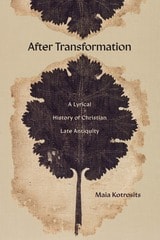
After Transformation
A Lyrical History of Christian Late AntiquityMaia Kotrosits
Duke University Press, 2025

After the Nobel Prize 1989-1994
The Non-fiction Writing of Naguib Mahfouz, Volume IVNaguib Mahfouz
Gingko, 2015
In carefully crafted short texts, his social conscience is revealed as he highlights political shortcomings, economic injustice, and corruption in Egypt and the wider Arab world. His philosophical sensitivity comes to the fore as he contemplates the meaning of a historic events, contributions of an influential people, and what is required to lead a good life. The collapse of the Soviet Union, the Oslo peace accords, the spread of terrorism, the Cairo earthquake, the passing of Louis Awad, Yusuf Idris, Yahya Hakki, the third term of Hosni Mubarak, climate change, and more come under Naguib Mahfouz’s fine scrutiny. For any fan of Mahfouz’s fiction, this collection opens a window on a different side of his intellect, and it offers insights from one of the region’s greatest modern minds.
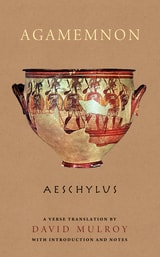
Agamemnon
Aeschylus, A verse translation by David Mulroy, with introduction and notes
University of Wisconsin Press, 2015
Aeschylus (525/4–456/5 B.C.E.) was the first of the three great tragic dramatists of ancient Greece, a forerunner of Sophocles and Euripides. His early tragedies were largely choral pageants with minimal plots. In Agamemnon, choral songs still predominate, but Aeschylus infuses them with such dramatic feeling that the spectator or reader is constantly spellbound.
Translator David Mulroy brings this ancient tragedy to life for modern readers and audiences. Using end rhyme and strict metrics, he combines the buoyant lyricism of the Greek text with a faithful rendering of its meaning in lucid English.
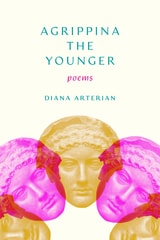
Agrippina the Younger
PoemsDiana Arterian
Northwestern University Press, 2025
A poetic journey through the past of the Roman Empress Agrippina looks toward the future
Agrippina the Younger follows one woman’s study of another, separated by thousands of miles and two millennia but bound by a shared sense of powerlessness. Agrippina was a daughter in a golden political family, destined for greatness—but she hungered for more power than women were allowed. Exhausted by the misogyny of the present, Diana Arterian reaches into the past to try to understand the patriarchal systems of today. In lyric verse and prose poems, she traces Agrippina’s rise, interrogating a life studded with intrigue, sex, murder, and manipulation. Arterian eagerly pursues Agrippina through texts, ruins, and films, exhuming the hidden details of the ancient noblewoman’s life. These poems consider the valences of patriarchy, power, and the archive to try to answer the question: How do we recover a woman erased by history?
Akkadian Grammar
Arthur Ungnad
SBL Press, 1992
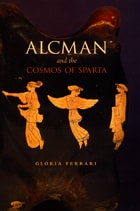
Alcman and the Cosmos of Sparta
Gloria Ferrari
University of Chicago Press, 2008

Alexander the Great
A NovelNikos Kazantzakis
Ohio University Press, 2025
Newly translated, this classic novel is sure to delight readers of all ages as it explores the legendary conqueror’s life, ambitions, and humanity.
Nikos Kazantzakis’s Alexander the Great is a biographical novel about one of antiquity’s greatest political and military leaders. In Kazantzakis’s story, Alexander of Macedonia does not conquer for conquest’s sake; instead, he seeks to spread the light of Hellenism to the known world, unite humanity through Greek ideals and culture, and bring together East and West.
The story begins in Pella, the lavish capital of Macedonia, in the fourth century BCE. A teenager named Stefanos rushes to the royal stadium for a remarkable event that has drawn every male citizen of this capital city: the taming of a wild and uniquely powerful horse named Bucephalus. Relying on raw strength and force, even seasoned generals fail to subdue Bucephalus; but through skill, kindness, and insight, the fifteen-year-old Alexander is able to befriend the beast. Alexander’s symbolic taming of chaos foretells his rise to power and demonstrates the qualities he will carry with him throughout his lifelong campaign of conquest.
Through the eyes of Stefanos, who becomes Alexander’s personal attendant and most trusted companion, Kazantzakis follows the Macedonian army through triumphant campaigns across Persia, Egypt, and India, greatly expanding the boundaries of the ancient Hellenic world. Kazantzakis presents Alexander not only as an ingenious military strategist but also as a reflective human being. Alexander oscillates between the human and the divine but will ultimately be betrayed by the former. Kazantzakis narrates Alexander’s struggles and conquests all the way to Babylon, where he meets his untimely death at just thirty-three years of age.
This iconic novel also explores Alexander’s profound relationship with his mentor, Aristotle, who instills in him a lifelong thirst for knowledge. Alexander the Great offers a compelling blend of history, myth, and philosophy and will appeal to readers fascinated by ancient Greece, epic heroes, and humanity’s timeless quest for the meaning of life.
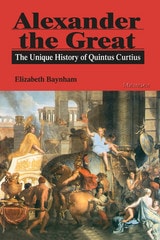
Alexander the Great
The Unique History of Quintus CurtiusElizabeth Baynham
University of Michigan Press, 2004
The reign and personality of Alexander the Great---one of the most romantic and powerful kings in history---have remained a source of fascination from antiquity to the present. But because the ancient information surrounding the conqueror is rich, contradictory, and complex, every historian of this near-mythical ruler-whether ancient or modern-invariably creates his or her own Alexander.
The unique work of one such ancient historian, Quintus Curtius, is the subject of Elizabeth Baynham's book. She mines Curtius' study of power for his contemporary perspective, historical methodology, and his portrait of the famous king and presents us with a brilliant, multifaceted study of this unique account regarding one of the most fascinating rulers in history.
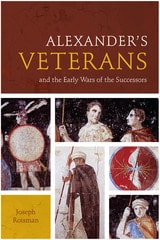
Alexander’s Veterans and the Early Wars of the Successors
By Joseph Roisman
University of Texas Press, 2012
This first focused analysis of veterans’ experiences in ancient Greece offers a fresh, “bottom-up” perspective on important military and political aspects of early Hellenistic history.
Runner-up, PROSE Award, Classics and Ancient History, 2013
From antiquity until now, most writers who have chronicled the events following the death of Alexander the Great have viewed this history through the careers, ambitions, and perspectives of Alexander’s elite successors. Few historians have probed the experiences and attitudes of the ordinary soldiers who followed Alexander on his campaigns and who were divided among his successors as they fought for control of his empire after his death. Yet the veterans played an important role in helping to shape the character and contours of the Hellenistic world.
This pathfinding book offers the first in-depth investigation of the Macedonian veterans’ experience during a crucial turning point in Greek history (323–316 BCE). Joseph Roisman discusses the military, social, and political circumstances that shaped the history of Alexander’s veterans, giving special attention to issues such as the soldiers’ conduct on and off the battlefield, the army assemblies, the volatile relationship between the troops and their generals, and other related themes, all from the perspective of the rank-and-file. Roisman also reexamines the biases of the ancient sources and how they affected ancient and modern depictions of Alexander’s veterans, as well as Alexander’s conflicts with his army, the veterans’ motives and goals, and their political contributions to Hellenistic history. He pays special attention to the Silver Shields, a group of Macedonian veterans famous for their invincibility and martial prowess, and assesses whether or not they deserved their formidable reputation.
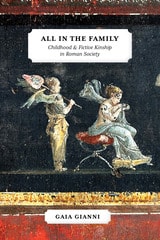
All in the Family
Childhood and Fictive Kinship in Roman SocietyGaia Gianni
University of Michigan Press, 2025

Allusive Soundplay in the Hebrew Bible
Jonathan G. Kline
SBL Press, 2016
The first study to focus exclusively on the use in the Hebrew Bible of soundplay to allude to and interpret earlier literary traditions
This book focuses on the way the biblical writers used allusive soundplay to construct theological discourse, that is, in service of their efforts to describe the nature of God and God's relationship to humanity. By showing that a variety of biblical books contain examples of allusive soundplay employed for this purpose, Kline demonstrates that this literary device played an important role in the growth of the biblical text as a whole and in the development of ancient Israelite and early Jewish theological traditions.
Features:- Demonstrates that allusive soundplay was a productive compositional technique in ancient Israel
- Identifies examples of innerbiblical allusion that have not been identified before
- A robust methodology for identifying soundplay in innerbiblical allusions
Amenhotep III
Perspectives on His ReignDavid O'Connor and Eric H. Cline, Editors
University of Michigan Press, 2001
Amenhotep III: Perspectives on His Reign, edited by David O'Connor and Eric H. Cline consists of a series of essays on this complex individual and his reign. In addition to offering several provocative and ground-breaking essays, this volume serves as a compendium and sourcebook for hard-to-obtain details about the reign of Amenhotep III.
The volume begins with an overview of the pharaoh by Larry Berman: his life, his family, and the history of his reign. Betsy Bryan describes the historical antecedents of Amenhotep's reign. Ray Johnson deals first with the building activities of Amen-hotep III and then presents a study of his carved relief decoration, with particular emphasis on the tendencies towards "Atenism." Arielle Kozloff discusses a variety of small objects including cosmetic spoons, glass vessels, jewelry, and funerary equipment. David O'Connor discusses city planning, building functions, and aspects of religion in light of the contemporary Egyptian worldview. Bill Murnane's chapter on government is a fascinating glimpse of the system of government in place at the time. Extensive documentation is provided on the activities of Amenhotep in the Aegean and Anatolia, Mesopotamia, Nubia, and Syro-Palestine. The volume concludes with John Baines's chapter on the Amarna Age.
Amenhotep III: Perspectives on His Reign is a valuable contribution to pharaonic studies. It will be of interest to a wide range of scholars interested in Mediterranean literatures and cultures. It draws on literary, archaeological, and historical material to form an interdisciplinary study of a complex figure in pharaonic Egypt.
David O'Connor is Lila Acheson Wallace Professor of Ancient Egyptian Art, Institute of Fine Arts, New York University. Eric H. Cline is Assistant Professor of History, Xavier University.
American Egyptologist
The Life of James Henry Breasted and the Creation of His Oriental InstituteJeffrey Abt
University of Chicago Press, 2011
James Henry Breasted (1865–1935) had a career that epitomizes our popular image of the archaeologist. Daring, handsome, and charismatic, he traveled on expeditions to remote and politically unstable corners of the Middle East, helped identify the tomb of King Tut, and was on the cover of Time magazine. But Breasted was more than an Indiana Jones—he was an accomplished scholar, academic entrepreneur, and talented author who brought ancient history to life not just for students but for such notables as Teddy Roosevelt and Sigmund Freud.