Results by title

24 books match the query 'Child development'
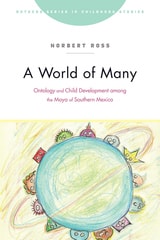
cover of A World of Many: Ontology and Child Development among the Maya of Southern Mexico

A World of Many

Ontology and Child Development among the Maya of Southern Mexico

Norbert Ross

Rutgers University Press, 2023

A World of Many explores the world-making efforts of Tzotzil Maya children from two different localities within the municipality of Chenalhó, Chiapas. The research demonstrates children’s agency in creating their worlds, while also investigating the role played by the surrounding social and physical environment. Different experiences with schooling, parenting, goals and values, but also with climate change, water scarcity, as well as racism and settler colonialism form part of the reason children create their emerging worlds. These worlds are not make believe or anything less than the ontological products of their parents. Instead, Norbert Ross argues that by creating different worlds, the children ultimately fashion themselves into different human beings - quite literally being different in the world. A World of Many combines experimental research from the cognitive sciences with critical theory, exploring children’s agency in devising their own ontologies. Rather than treating children as somewhat incomplete humans, it understands children as tinkerers and thinkers, makers of their worlds amidst complex relations. It regards being as a constant ontological production, where life and living constitutes activism. Using experimental paradigms, the book shows that children locate themselves differently in these emerging worlds they create, becoming different human beings in the process.
[more]
cover of At A Loss For Words: How America Is Failing Our Children

At A Loss For Words

How America Is Failing Our Children

Betty Bardige, foreword by T. Berry Brazelton, M.D.

Temple University Press, 2005
Drawing on the latest research on development among toddlers and preschoolers, At a Loss for Words lays out the importance of getting parents, policy makers, and child care providers to recognize the role of early literacy skills in reducing the achievement gap that begins before three years of age. Readers are guided through home and classroom settings that promote language, contrasting them with the "merely mediocre" child care settings in which more and more young children spend increasing amounts of time. Too many of our young children are not receiving the level of input and practice that will enable them to acquire language skills—the key to success in school and life. Bardige explains how to build better community support systems for children, and better public education, in order to ensure that toddlers learn the power of language from their families and teachers.
[more]
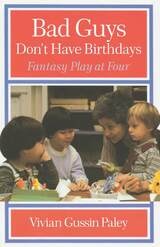
cover of Bad Guys Don't Have Birthdays: Fantasy Play at Four

Bad Guys Don't Have Birthdays

Fantasy Play at Four

Vivian Gussin Paley

University of Chicago Press, 1991

Bad guys are not allowed to have birthdays, pick blueberries, or disturb the baby. So say the four-year-olds who announce life's risks and dangers as they play out the school year in Vivian Paley's classroom.

Their play is filled with warnings. They invent chaos in order to show that everything is under control. They portray fear to prove that it can be conquered. No theme is too large or too small for their intense scrutiny. Fantasy play is their ever dependable pathway to knowledge and certainty.

" It . . . takes a special teacher to value the young child's communications sufficiently, enter into a meaningful dialogue with the youngster, and thereby stimulate more productivity without overwhelming the child with her own ideas. Vivian Paley is such a teacher."—Maria W. Piers, in the American Journal of Education

"[Mrs. Paley's books] should be required reading wherever children are growing. Mrs. Paley does not presume to understand preschool children, or to theorize. Her strength lies equally in knowing that she does not know and in trying to learn. When she cannot help children—because she can neither anticipate nor follow their thinking—she strives not to hinder them. She avoids the arrogance of adult to small child; of teacher to student; or writer to reader."—Penelope Leach, author of Your Baby & Child in the New York Times Book Review

"[Paley's] stories and interpretation argue for a new type of early childhood education . . . a form of teaching that builds upon the considerable knowledge children already have and grapple with daily in fantasy play."—Alex Raskin, Los Angeles Times Book Review

"Through the 'intuitive language' of fantasy play, Paley believes, children express their deepest concerns. They act out different roles and invent imaginative scenarios to better understand the real world. Fantasy play helps them cope with uncomfortable feelings. . . . In fantasy, any device may be used to draw safe boundaries."—Ruth J. Moss, Psychology Today
[more]
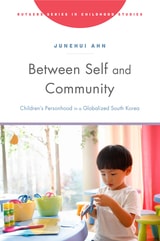
cover of Between Self and Community: Children’s Personhood in a Globalized South Korea

Between Self and Community

Children’s Personhood in a Globalized South Korea

Junehui Ahn

Rutgers University Press, 2023
Between Self and Community investigates the early childhood socialization process in a rapidly changing, globalizing South Korea. Based on long-term ethnographic fieldwork in a South Korean preschool, it shows how both children and teachers interactively navigate, construct, and reconstruct their own multifaceted and sometimes conflicting models of what makes “a good child” amid Korea’s shifting educational and social contexts. Junehui Ahn details the conflicting and competing ways in which the ideologies of new personhood are enacted in actual everyday socialization contexts and reveals the confusions, dilemmas, and ruptures that occur when globally dominant ideals of childhood development are superimposed onto local experiences. Between Self and Community pays special attention to the way children, as active agents of socialization, create, construe, and sustain their own meanings of their personhood, thereby highlighting the dynamism children and their culturally rich peer world create in South Korea’s shifting socialization terrain.  
[more]
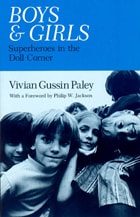
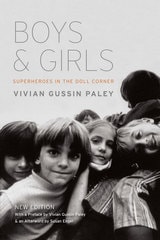
cover of Boys and Girls: Superheroes in the Doll Corner

Boys and Girls

Superheroes in the Doll Corner

Vivian Gussin Paley

University of Chicago Press, 1984

"Paley has a sharp ear for the rhythm and inflections of childhood. Her vignettes give us a revealing glimpse into children's inner lives, and her discussion of her own discomfort with boy's play and approval of that of girls raises and important issue."—Carole Wade, Psychology Today

"I will admit my biases up front: having a three-year old daughter of my own made it impossible for this book to be anything but fun to read. I dare anyone who enjoys children not to enjoy this story about stories, this narrative about narratives."—Jerry Powell, Winterthur Portfolio
[more]
cover of Boys and Girls: Superheroes in the Doll Corner

Boys and Girls

Superheroes in the Doll Corner

Vivian Gussin Paley

University of Chicago Press, 2014

The classic work that revealed the complicated world of children's play, and what we can learn from it for education

For more than forty years, Boys and Girls has a classic account of the little-known world that young children create together when they play. Vivian Gussin Paley takes readers inside a kindergarten classroom to show them in detail how boys and girls play—and how, by playing and fantasizing in different ways, they work through complicated notions of gender roles and identity. The children’s own conversations, stories, playacting, and scuffles are interwoven with Paley’s observations and accounts of her vain attempts to alter their stereotyped play. In the decades since the book's original publication, play in kindergarten and early years of school has lost ground to structured teaching and even testing, which makes Paley's book, updated for a new era, more important than ever. To teach kids successfully, we must make space for play.
[more]
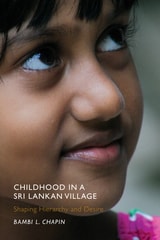
cover of Childhood in a Sri Lankan Village: Shaping Hierarchy and Desire

Childhood in a Sri Lankan Village

Shaping Hierarchy and Desire

Chapin, Bambi L

Rutgers University Press, 2014

Like toddlers all over the world, Sri Lankan children go through a period that in the U.S. is referred to as the “terrible twos.” Yet once they reach elementary school age, they appear uncannily passive, compliant, and undemanding compared to their Western counterparts. Clearly, these children have undergone some process of socialization, but what?

Over ten years ago, anthropologist Bambi Chapin traveled to a rural Sri Lankan village to begin answering this question, getting to know the toddlers in the village, then returning to track their development over the course of the following decade. Childhood in a Sri Lankan Village offers an intimate look at how these children, raised on the tenets of Buddhism, are trained to set aside selfish desires for the good of their families and the community. Chapin reveals how this cultural conditioning is carried out through small everyday practices, including eating and sleeping arrangements, yet she also explores how the village’s attitudes and customs continue to evolve with each new generation.

Combining penetrating psychological insights with a rigorous observation of larger social structures, Chapin enables us to see the world through the eyes of Sri Lankan children searching for a place within their families and communities. Childhood in a Sri Lankan Village offers a fresh, global perspective on child development and the transmission of culture.    
[more]
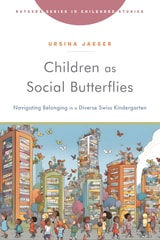
cover of Children as Social Butterflies: Navigating Belonging in a Diverse Swiss Kindergarten

Children as Social Butterflies

Navigating Belonging in a Diverse Swiss Kindergarten

Ursina Jaeger

Rutgers University Press, 2025

Children as Social Butterflies examines how kindergarten children experience, negotiate, and claim belonging in a diverse and stigmatized Swiss neighborhood. Schools as formative instances of social belonging are particularly important where children with different migration histories are educated together. Childhood scholar Ursina Jaeger followed individual children in a kindergarten class from day one of their school enrollment and accompanied them to extracurricular activities, to ballet classes, to their children's rooms, to the social welfare office, or on family visits abroad. Based on data from several years of this child-centered and multisited research, Children as Social Butterflies offers a vivid ethnography with unique insights into the everyday lives of young children in a diverse neighborhood. The book provides an analytical language informed by theories of social differentiation to grasp complex configurations of social belonging and shows the full potential of ethnographic research with young children. Jaeger thus offers a dynamic reading of migration, schooling, and childhood that is strongly informed by the experience of working with young children. The book provides educators, childhood scholars, and parents alike with suggestions for dealing with (migration-related) social differentiation. 

This book is also freely available online as an open-access digital edition, published with the support of the Swiss National Science Foundation.
[more]
cover of Context, Cognition, and Deafness

Context, Cognition, and Deafness

M. Diane Clark

Gallaudet University Press, 2001

In past studies of the effect of environment and social settings upon the cognitive development of deaf children, results frequently were confounded by conflicting conclusions related to the particpants' varying degrees of hearing loss. Context, Cognition, and Deafness: An Introduction takes an interdisciplinary approach that clarifies these disparate findings by analyzing many methodologies. Editors M. Diane Clark, Marc Marschark, and Michael Karchmer, widely respected scholars in their own right, have assembled work by a varying cast of renowned researchers to elucidate the effects of family, peers, and schools on deaf children. To integrate the often contrasting approaches of clinical and cultural researchers, this sharply focused volume has called upon experts in anthropology, psychology, linguistics, basic visual sensory processes, education, cognition, and neurophysiology to share complementary observations. One of William C. Stokoe's last contributions, "Deafness, Cognition, and Language" leads fluidly into Jeffrey P. Praden's analysis of clinical assessments of deaf people's cognitive abilities. Margaret Wilson expands on the impace of sign language expertise on visual perception. Context, Cognition, and Deafness also shows that theory can intersect practice, as displayed by editor Marschark and Jennifer Lukomski in their research on literacy, cognition, and education. Amy R. Lederberg and Patricia E. Spencer have combined sequential designs in their study of vocabulary learning. Ethan Remmel, Jeffrey G. Bettger, and Amy M. Weinberg explore the theory of mind development. The emotional development of deaf children also received detailed consideration by Colin D. Gray, Judith A. Hosie, Phil A. Russell, and Ellen A. Ormel. Kathryn P. Meadow-Orlans delineates her perspective on the coming of age of deaf children in relation to their education and development. Marschark concludes with insightful impressions on the future of theory and application, an appropriate close to this exceptional, coherent volume. M. Diane Clark is Professor in the Department of Psychology at Shippensburg University in Shippensburg, PA. Marc Marschark is Professor in the Department of Research at the National Technical Institute for the Deaf in Rochester, NY. Michael Karchmer is Professor in the Department of Education Foundations and Research and Director of the Gallaudet Research Institute at Gallaudet University.
[more]
cover of Developmental Programming for Infants and Young Children: Volume 1. Assessment and Application

Developmental Programming for Infants and Young Children

Volume 1. Assessment and Application

D. Sue Schafer and Martha S. Moersch, Editors

University of Michigan Press, 1981

Developmental Programming for Infants and Young Children: Volume 1 provides detailed instructions for the use of Volume 2: Early Intervention Developmental Profile, including administration and evaluation techniques, scoring and interpretation of results, validity and reliability of findings, and complete item descriptions. To be used with children functioning in the 0-to-36-month developmental age range. Volume 1 includes the scoring sheet (Volume 2).

Developmental Programming for Infants and Young Children has proven to be an invaluable tool for teachers, therapists, and other professionals who assess and facilitate the development of children functioning primarily in the 0-to-60 month range. The authors address six areas of development: perceptual/fine motor, cognition, language, social/emotional, self-care, and gross motor. Volumes 1, 2, and 3 are designed for use with children functioning in the 0-to-36-month developmental age range, while Volumes 4 and 5 extend assessment and programming guidelines to 5-year (preschool) levels.

Carefully designed and tested by the University of Michigan's Institute for the Study of Mental Retardation and Related Disabilities, all volumes bridge the gap between assessment and program implementation.
[more]
cover of Discovering Successful Pathways in Children's Development: Mixed Methods in the Study of Childhood and Family Life

Discovering Successful Pathways in Children's Development

Mixed Methods in the Study of Childhood and Family Life

Edited by Thomas S. Weisner

University of Chicago Press, 2005

Discovering Successful Pathways in Children's Development provides a new perspective on the study of childhood and family life. Successful development is enhanced when communities provide meaningful life pathways that children can seek out and engage.  Successful pathways include both a culturally valued direction for development and competence in skills that matter for a child's subsequent success as a person as well as a student, parent, worker, or citizen. To understand successful pathways requires a mix of qualitative, quantitative, and ethnographic methods—the state of the art for research practice among developmentalists, educators, and policymakers alike.

This volume includes new studies of minority and immigrant families, school achievement, culture, race and gender, poverty, identity, and experiments and interventions meant to improve family and child contexts. Discovering Successful Pathways in Children's Development will be of enormous value to everyone interested in the issues of human development, education, and social welfare, and among professionals charged with the task of improving the lives of children in our communities.
[more]
cover of Making It Work: Low-Wage Employment, Family Life, and Child Development

Making It Work

Low-Wage Employment, Family Life, and Child Development

Hirokazu Yoshikawa

Russell Sage Foundation, 2006
Low-skilled women in the 1990s took widely different paths in trying to support their children. Some held good jobs with growth potential, some cycled in and out of low-paying jobs, some worked part time, and others stayed out of the labor force entirely. Scholars have closely analyzed the economic consequences of these varied trajectories, but little research has focused on the consequences of a mother's career path on her children's development. Making It Work, edited by Hirokazu Yoshikawa, Thomas Weisner, and Edward Lowe, looks past the economic statistics to illustrate how different employment trajectories affect the social and emotional lives of poor women and their children. Making It Work examines Milwaukee's New Hope program, an experiment testing the effectiveness of an anti-poverty initiative that provided health and child care subsidies, wage supplements, and other services to full-time low-wage workers. Employing parent surveys, teacher reports, child assessment measures, ethnographic studies, and state administrative records, Making It Work provides a detailed picture of how a mother's work trajectory affects her, her family, and her children's school performance, social behavior, and expectations for the future. Rashmita Mistry and Edward D. Lowe find that increases in a mother's income were linked to higher school performance in her children. Without large financial worries, mothers gained extra confidence in their ability to parent, which translated into better test scores and higher teacher appraisals for their children. JoAnn Hsueh finds that the children of women with erratic work schedules and non-standard hours—conditions endemic to the low-skilled labor market—exhibited higher levels of anxiety and depression. Conversely, Noemi Enchautegui-de-Jesus, Hirokazu Yoshikawa, and Vonnie McLoyd discover that better job quality predicted lower levels of acting-out and withdrawal among children. Perhaps most surprisingly, Anna Gassman-Pines, Hirokazu Yoshikawa, and Sandra Nay note that as wages for these workers rose, so did their marriage rates, suggesting that those worried about family values should also be concerned with alleviating poverty in America. It is too simplistic to say that parental work is either "good" or "bad" for children. Making It Work gives a nuanced view of how job quality, flexibility, and wages are of the utmost importance for the well-being of low-income parents and children.
[more]
cover of Messages From Home: The Parent-Child Home Program For Overcoming Educational Disadvantage

Messages From Home

The Parent-Child Home Program For Overcoming Educational Disadvantage

Phyllis Levenstein and Susan Levenstein

Temple University Press, 2008

The Parent-Child Home Program, a pre-preschool home visiting program, has grown greatly since the first edition of Messages from Home was published in 1988. This expanded and updated edition shows the continued success of this program-spearheaded by the late Phyllis Levenstein-which prepares at-risk children for school success, overcoming educational disadvantage.

Since The Parent-Child Home Program was founded in the 1960s, it has enriched the cognitive, social, and emotional school readiness of tens of thousands of children. The Program's methods, its theoretical underpinnings, and its impressive results are presented in detail. The success stories of both parents and children make inspiring reading. The combination of lively writing and data-driven scientific rigor give it both broad appeal and academic relevance.
[more]
cover of Mollie Is Three: Growing Up in School

Mollie Is Three

Growing Up in School

Vivian Gussin Paley

University of Chicago Press, 1986

A classic work by an educator the New York Times said "should be required reading wherever children are growing"

Mollie Is Three describes a year in the life of a little girl and her preschool classmates in a nursery school classroom run by Vivian Gussin Paley, whose groundbreaking ideas about the best way to teach young children continue to be influential today. We first encounter Mollie on the first day of school, just before her third birthday, and we follow her and her classmates for the next year. Alongside her, we go from confusion and uncertainty in new surroundings to growing understanding and confidence, as patterns emerge and Mollie begins to grasp their significance--and her teacher begins to understand how to track her growth and development.

Rather than offer an account of an idealized, all but imaginary child, Paley presents us with one actual kid, in all their complexity and confusion. The result is a landmark contribution to our understanding of child development and the role early education can play in fostering it.

[more]
cover of Parents and Peers in Social Development: A Sullivan-Piaget Perspective

Parents and Peers in Social Development

A Sullivan-Piaget Perspective

James Youniss

University of Chicago Press, 1980

Most studies of social development in children have relied on the assumption that adults' instructions to children pass on knowledge of the rules of behavior which govern and preserve society. In this volume, James Youniss argues that the child's relations with his or her friends and peers make a distinctive and critically important contribution to social development. While the child's relations with parents and other adults provide a sense of order and authority, peer relations are a source of sensitivity, self-understanding, and interpersonal cooperation.

Following a discussion of the views of Harry Stack Sullivan and Jean Piaget, whose theories are synthesized in Youniss's perspective, Youniss presents a wealth of empirical data from studies in which children describe their own views of their two social worlds.
[more]
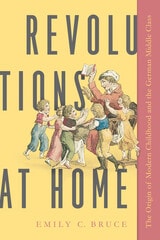
cover of Revolutions at Home: The Origin of Modern Childhood and the German Middle Class

Revolutions at Home

The Origin of Modern Childhood and the German Middle Class

Emily C. Bruce

University of Massachusetts Press, 2021

How did we come to imagine what "ideal childhood" requires? Beginning in the late eighteenth century, German child-rearing radically transformed, and as these innovations in ideology and educational practice spread from middle-class families across European society, childhood came to be seen as a life stage critical to self-formation. This new approach was in part a process that adults imposed on youth, one that hinged on motivating children's behavior through affection and cultivating internal discipline. But this is not just a story about parents' and pedagogues' efforts to shape childhood. Offering rare glimpses of young students' diaries, letters, and marginalia, Emily C. Bruce reveals how children themselves negotiated these changes.

Revolutions at Home analyzes a rich set of documents created for and by young Germans to show that children were central to reinventing their own education between 1770 and 1850. Through their reading and writing, they helped construct the modern child subject. The active child who emerged at this time was not simply a consequence of expanding literacy but, in fact, a key participant in defining modern life.
[more]
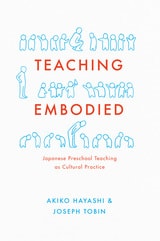
cover of Teaching Embodied: Cultural Practice in Japanese Preschools

Teaching Embodied

Cultural Practice in Japanese Preschools

Akiko Hayashi and Joseph Tobin

University of Chicago Press, 2015

When we look beyond lesson planning and curricula—those explicit facets that comprise so much of our discussion about education—we remember that teaching is an inherently social activity, shaped by a rich array of implicit habits, comportments, and ways of communicating. This is as true in the United States as it is in Japan, where Akiko Hayashi and Joseph Tobin have long studied early education from a cross-cultural perspective. Taking readers inside the classrooms of Japanese preschools, Teaching Embodied explores the everyday, implicit behaviors that form a crucially important—but grossly understudied—aspect of educational practice.
           
Akiko Hayashi and Joseph Tobin embed themselves in the classrooms of three different teachers at three different schools to examine how teachers act, think, and talk. Drawing on extended interviews, their own real-time observations, and hours of video footage, they focus on how teachers embody their lessons: how they use their hands to gesture, comfort, or discipline; how they direct their posture, gaze, or physical location to indicate degrees of attention; and how they use the tone of their voice to communicate empathy, frustration, disapproval, or enthusiasm. Comparing teachers across schools and over time, they offer an illuminating analysis of the gestures that comprise a total body language, something that, while hardly ever explicitly discussed, the teachers all share to a remarkable degree. Showcasing the tremendous importance of—and dearth of attention to—this body language, they offer a powerful new inroad into educational study and practice, a deeper understanding of how teaching actually works, no matter what culture or country it is being practiced in. 
[more]
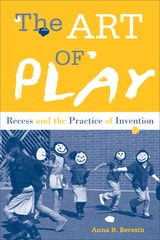
cover of The Art of Play: Recess and the Practice of Invention

The Art of Play

Recess and the Practice of Invention

Anna Beresin

Temple University Press, 2013

What can the art of play teach us about the art of play? Showcasing the paintings of more than one hundred Philadelphia public elementary school children, folklorist Anna Beresin’s innovative book,  The Art of Play, presents images and stories that illustrate what children do at recess, and how it makes them feel.

Beresin provides a nuanced, child-centered discussion of the intersections of play, art, and learning. She describes a widespread institutionalized fear of play and expressive art, and the transformative power of simple materials like chalk and paint. Featuring more than 150 paintings and a dozen surreal photographs of masked children enjoying recess, The Art of Play weaves together the diverse voices of kids and working artists with play scholarship.

This book emerged from Recess Access, a service-learning project that donated chalk, ropes, balls, and hoops to nine schools in different sections of Philadelphia. A portion of the proceeds of The Art of Play will support recess advocacy.

[more]
cover of The Enduring Effects of Prenatal Alcohol Exposure on Child Development: Birth Through Seven Years, a Partial Least Squares Solution

The Enduring Effects of Prenatal Alcohol Exposure on Child Development

Birth Through Seven Years, a Partial Least Squares Solution

Ann P. Streissguth, Helen M. Barr, Fred L. Bookstein, and Paul D. Sampson

University of Michigan Press, 1993

Counseling on the dangers of consuming alcohol in pregnancy is now embedded in clinical practice. However, it took foundational research such as the 1974/75 Seattle Longitudinal Prospective Study on Alcohol and Pregnancy, analyzed in this book, to demonstrate the negative effects. This Seattle study interviewed 1,529 women in their fifth month of pregnancy regarding their alcohol consumption and many other pregnancy risk factors. A subsample of 500 of these women was selected, of whom half represented an oversampling of heavier drinkers and smokers from the 1,529, and their offspring were studied intensively as neonates and at ages 8 and 18 months and 4 and 7 years. This monograph is a summary of the effects of prenatal alcohol exposure upon a total of 474 outcome measures spanning those ages. The authors show that the effects of prenatal alcohol exposure manifest at all ages, from birth to seven years, that they appear on a variety of behavioral measures, and that they do not attenuate with time. They also show that binge drinking has more serious consequences than the same amount of heavy drinking, and drinking in early pregnancy has more serious consequences than the same reported pattern of drinking in mid-pregnancy. The book concludes that there is no statistical evidence for a “risk-free” or threshold level of prenatal drinking.

[more]
cover of The Protestant Temperament: Patterns of Child-Rearing, Religious Experience, and the Self in Early America

The Protestant Temperament

Patterns of Child-Rearing, Religious Experience, and the Self in Early America

Philip Greven

University of Chicago Press, 1988
Bringing together an extraordinary richness of evidence—from letters, diaries, and other intimate family records of the seventeenth and eighteenth centuries—Philip Greven explores the strikingly distinctive ways in which Protestant children were reared in America. In tracing the hidden continuities of religious experience, of attitudes toward God, children, the self, sexuality, pleasure, virtue, and achievement, Greven identifies three distinct Protestant temperaments prevailing among Americans at the time: the Evangelical, the Moderate, and the General. The Protestant Temperament is a powerful reassessment of the role of child-rearing and religion in early American life.
[more]
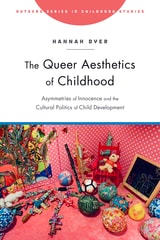
cover of The Queer Aesthetics of Childhood: Asymmetries of Innocence and the Cultural Politics of Child Development

The Queer Aesthetics of Childhood

Asymmetries of Innocence and the Cultural Politics of Child Development

Hannah Dyer

Rutgers University Press, 2020

2020 Choice​ Outstanding Academic Title

In The Queer Aesthetics of Childhood, Hannah Dyer offers a study of how children’s art and art about childhood can forecast new models of social life that redistribute care, belonging, and political value. Dyer suggests that childhood’s cultural expressions offer insight into the persisting residues of colonial history, nation building, homophobia, and related violence. Drawing from queer and feminist theory, psychoanalysis, settler-colonial studies, and cultural studies, this book helps to explain how some theories of childhood can hurt children. Dyer’s analysis moves between diverse sites and scales, including photographs and an art installation, children’s drawings after experiencing war in Gaza, a novel about gay love and childhood trauma, and debates in sex-education. In the cultural formations of art, she finds new theories of childhood that attend to the knowledge, trauma, fortitude and experience that children might possess. In addressing aggressions against children, ambivalences towards child protection, and the vital contributions children make to transnational politics, she seeks new and queer theories of childhood.
 
[more]
cover of The School and Society and The Child and the Curriculum

The School and Society and The Child and the Curriculum

John Dewey

University of Chicago Press, 1990
This edition brings Dewey's educational theory into sharp focus, framing his two classic works by frank assessments, past and present, of the practical applications of Dewey's ideas. In addition to a substantial introduction in which Philip W. Jackson explains why more of Dewey's ideas haven't been put into practice, this edition restores a "lost" chapter, dropped from the book by Dewey in 1915.
[more]
cover of The Science of Play: How to Build Playgrounds That Enhance Children's Development

The Science of Play

How to Build Playgrounds That Enhance Children's Development

Susan G. Solomon

University Press of New England, 2014

Poor design and wasted funding characterize today’s American playgrounds. A range of factors—including a litigious culture, overzealous safety guidelines, and an ethos of risk aversion—have created uniform and unimaginative playgrounds. These spaces fail to nurture the development of children or promote playgrounds as an active component in enlivening community space. Solomon’s book demonstrates how to alter the status quo by allying data with design. Recent information from the behavioral sciences indicates that kids need to take risks; experience failure but also have a chance to succeed and master difficult tasks; learn to plan and solve problems; exercise self-control; and develop friendships. Solomon illustrates how architects and landscape architects (most of whom work in Europe and Japan) have already addressed these needs with strong, successful playground designs. These innovative spaces, many of which are more multifunctional and cost effective than traditional playgrounds, are both sustainable and welcoming. Having become vibrant hubs within their neighborhoods, these play sites are models for anyone designing or commissioning an urban area for children and their families. The Science of Play, a clarion call to use playground design to deepen the American commitment to public space, will interest architects, landscape architects, urban policy makers, city managers, local politicians, and parents.
[more]
cover of The Vulnerable Age Phenomenon

The Vulnerable Age Phenomenon

Michael Inbar

Russell Sage Foundation, 1976

A volume in the Social Science Frontiers series, which are occasional publications reviewing new fields for social science development. These occasional publications seek to summarize recent work being done in particular areas of social research, to review new developments in the field, and to indicate issues needing further investigation. The publications are intended to help orient those concerned with developing current research programs and broadening the use of social science in the policy-making process. A Volume in the Russell Sage Foundation's Social Science Frontiers Series
[more]