Results by title
21 books match the query 'Civil Rights Movement'
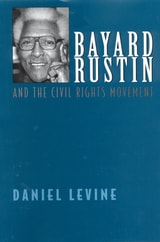
Bayard Rustin and the Civil Rights Movement
Levine, Daniel
Rutgers University Press, 1999
Rustin's long activist career began with his association with A. Phillip Randolph of the Brotherhood of Sleeping Car Porters. Then, as a member of A. J. Muste's Fellowship of Reconciliation, he participated in the "Journey of Reconciliation" (an early version of the "Freedom Rides" of 1961). He was a close associate of Martin Luther King in Montgomery and Atlanta and rose to prominence as organizer of the 1963 March on Washington. Rustin played a key role in applying nonviolent direct action to American race relations while rejecting the separatism of movements like Black Power in the 1960s, even at the risk of his being marginalized by the younger generation of civil rights activists. In his later years he tried to hold the civil rights coalition together and to fight for the economic changes he thought were necessary to decrease racism.
Daniel Levine has written the first scholarly biography that examines Rustin's public as well as private persona in light of his struggles as a gay black man and as an activist who followed his own principles and convictions. The result is a rich portrait of a complex, indomitable advocate for justice in American society.
Black America in the Shadow of the Sixties
Notes on the Civil Rights Movement, Neoliberalism, and PoliticsClarence Lang
University of Michigan Press, 2015
Collective Action and the Civil Rights Movement
Dennis Chong
University of Chicago Press, 1991
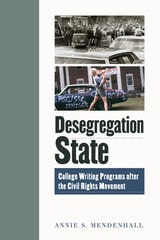
Desegregation State
College Writing Programs after the Civil Rights MovementAnnie S. Mendenhall
Utah State University Press, 2021
Formerly segregated state university systems crafted desegregation plans that gave them more control over policies for admissions, remediation, and retention. These plans created literacy requirements—admissions and graduation tests, remedial classes, and even writing centers and writing across the curriculum programs—that reshaped the landscape of college writing instruction and denied the demands of Black students, civil rights activists, and historically Black colleges and universities for major changes to university systems. This history details the profound influence of desegregation—and resistance to desegregation—on the ways that writing is taught and assessed in colleges today.
Desegregation State provides WPAs and writing teachers with a disciplinary history for understanding racism in writing assessment and writing programs. Mendenhall brings emerging scholarship on the racialization of institutions into the field, showing why writing studies must pay more attention to how writing programs have institutionalized racist literacy ideologies through arguments about student placement, individualized writing instruction, and writing assessment.
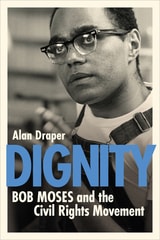
Dignity
Bob Moses and the Civil Rights MovementAlan Draper
University of Illinois Press, 2027
Challenging entrenched accounts, Alan Draper reveals that Moses could pursue either “Freedom Now” or develop local leaders, but not both. Rich with new details, Dignity follows Bob Moses from his early years through his death in 2021, presenting a clear-eyed view of his personality and achievements. Draper describes how Moses pursued Black voter registration in Mississippi and then in a second career devoted himself to math education. Just as dignity for Blacks in the twentieth century required voting rights, so did Moses believe that dignity for Blacks in the next century required math skills.
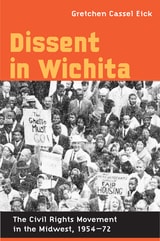
Dissent in Wichita
The Civil Rights Movement in the Midwest, 1954-72Gretchen Cassel Eick
University of Illinois Press, 2001
Winner of the Richard L. Wentworth Prize in American History, Byron Caldwell Smith Book Prize, and the William Rockhill Nelson Award
On a hot summer evening in 1958, a group of African American students in Wichita, Kansas, quietly entered Dockum's Drug Store and sat down at the whites-only lunch counter. This was the beginning of the first sustained, successful student sit-in of the modern civil rights movement, instigated in violation of the national NAACP's instructions.
Dissent in Wichita traces the contours of race relations and black activism in this unexpected locus of the civil rights movement. Based on interviews with more than eighty participants in and observers of Wichita's civil rights struggles, this powerful study hones in on the work of black and white local activists, setting their efforts in the context of anticommunism, FBI operations against black nationalists, and the civil rights policies of administrations from Eisenhower through Nixon.
Through her close study of events in Wichita, Eick reveals the civil rights movement as a national, not a southern, phenomenon. She focuses particularly on Chester I. Lewis, Jr., a key figure in the local as well as the national NAACP. Lewis initiated one of the earliest investigations of de facto school desegregation by the Department of Health, Education, and Welfare and successfully challenged employment discrimination in the nation's largest aircraft industries.
Dissent in Wichita offers a moving account of the efforts of Lewis, Vivian Parks, Anna Jane Michener, and other courageous individuals to fight segregation and discrimination in employment, public accommodations, housing, and schools. This volume also offers the first extended examination of the Young Turks, a radical movement to democratize and broaden the agenda of the NAACP for which Lewis provided critical leadership.
Through a close study of personalities and local politics in Wichita over two decades, Eick demonstrates how the tenor of black activism and white response changed as economic disparities increased and divisions within the black community intensified. Her analysis, enriched by the words and experiences of men and women who were there, offers new insights into the civil rights movement as a whole and into the complex interplay between local and national events.
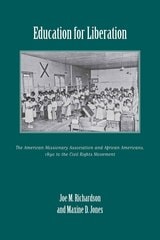
Education for Liberation
The American Missionary Association and African Americans, 1890 to the Civil Rights MovementJoe M. Richardson
University of Alabama Press, 2009
Even after the optimism of Reconstruction was shattered by violence, fraud, and intimidation and the white South relegated African Americans to segregated and disfranchised second-class citizenship, the AMA never abandoned its claim that blacks were equal in God’s sight, that any “backwardness” was the result of circumstance rather than inherent inferiority, and that blacks could and should become equal citizens with other Americans. The organization went farther in recognition of black ability, humanity, and aspirations than much of 19th and 20th century white America by publicly and consistently opposing lynching, segregation, disfranchisement, and discrimination.
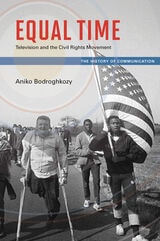
Equal Time
Television and the Civil Rights MovementAniko Bodroghkozy
University of Illinois Press, 2013
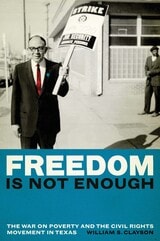
Freedom Is Not Enough
The War on Poverty and the Civil Rights Movement in TexasBy William S. Clayson
University of Texas Press, 2010
Led by the Office of Economic Opportunity, Lyndon Johnson's War on Poverty reflected the president's belief that, just as the civil rights movement and federal law tore down legalized segregation, progressive government and grassroots activism could eradicate poverty in the United States. Yet few have attempted to evaluate the relationship between the OEO and the freedom struggles of the 1960s. Focusing on the unique situation presented by Texas, Freedom Is Not Enough examines how the War on Poverty manifested itself in a state marked by racial division and diversity—and by endemic poverty.
Though the War on Poverty did not eradicate destitution in the United States, the history of the effort provides a unique window to examine the politics of race and social justice in the 1960s. William S. Clayson traces the rise and fall of postwar liberalism in the Lone Star State against a backdrop of dissent among Chicano militants and black nationalists who rejected Johnson's brand of liberalism. The conservative backlash that followed is another result of the dramatic political shifts revealed in the history of the OEO, completing this study of a unique facet in Texas's historical identity.
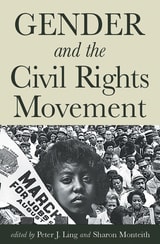
Gender and the Civil Rights Movement
Ling, Peter J
Rutgers University Press, 2004
Graphic Memories of the Civil Rights Movement
Reframing History in ComicsBy Jorge J. Santos, Jr.
University of Texas Press, 2019
Winner, Charles Hatfield Book Prize, Comic Studies Society, 2020
A CHOICE Outstanding Academic Title, 2019
The history of America’s civil rights movement is marked by narratives that we hear retold again and again. This has relegated many key figures and turning points to the margins, but graphic novels and graphic memoirs present an opportunity to push against the consensus and create a more complete history. Graphic Memories of the Civil Rights Movement showcases five vivid examples of this:
Ho Che Anderson's King (2005), which complicates the standard biography of Martin Luther King Jr.; Congressman John Lewis's three-volume memoir, March (2013–2016); Darkroom (2012), by Lila Quintero Weaver, in which the author recalls her Argentinian father’s participation in the movement and her childhood as an immigrant in the South; the bestseller The Silence of Our Friends, by Mark Long, Jim Demonakos, and Nate Powell (2012), set in Houston's Third Ward in 1967; and Howard Cruse's Stuck Rubber Baby (1995), whose protagonist is a closeted gay man involved in the movement.
In choosing these five works, Jorge Santos also explores how this medium allows readers to participate in collective memory making, and what the books reveal about the process by which history is (re)told, (re)produced, and (re)narrativized. Concluding the work is Santos’s interview with Ho Che Anderson.
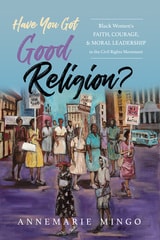
Have You Got Good Religion?
Black Women's Faith, Courage, and Moral Leadership in the Civil Rights MovementAnneMarie Mingo
University of Illinois Press, 2024
A depiction of moral imagination that resonates today, Have You Got Good Religion? reveals how Black Churchwomen’s understanding of God became action and transformed a nation.
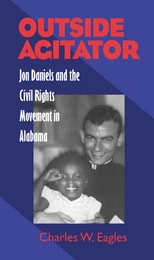
Outside Agitator
Jon Daniels and the Civil Rights Movement in AlabamaCharles Eagles
University of Alabama Press, 2000
WINNER OF THE LILLIAN SMITH BOOK AWARD
The story of faith, sacrifice, and moral courage in Alabama's fight for civil rights.
Outside Agitator tells the powerful, largely forgotten story of Jonathan Daniels—a white Episcopal seminarian from New England who answered the call of the civil rights movement and paid for that commitment with his life. In 1965, Daniels left the safety of Harvard and Cambridge for Selma and Alabama’s Black Belt, where he worked alongside Black activists to challenge segregation, register voters, and confront the moral failures of church and state. His murder by a white segregationist shocked the nation and exposed the deadly cost of racial injustice—and of moral courage.
More than a biography, this book asks urgent questions that still resonate: What does it mean to act on conscience in a society structured by inequality? What responsibilities do faith, citizenship, and privilege impose? Historian Charles W. Eagles places Daniels’s life within the turbulent final phase of the southern civil rights movement, revealing the everyday fears, ethical dilemmas, and racial tensions behind the iconic events of Selma and Lowndes County.
Outside Agitator will appeal to readers interested in civil rights history, religious activism, Southern history, and the moral dimensions of political struggle. It is essential reading for students, scholars, clergy, and general readers seeking to understand how individual lives can illuminate—and challenge—the ongoing fight for justice and equality.
The Art of Protest
Culture and Activism from the Civil Rights Movement to the PresentT.V. Reed
University of Minnesota Press, 2019
A second edition of the classic introduction to arts in social movements, fully updated and now including Black Lives Matter, Occupy Wall Street, and new digital and social media forms of cultural resistance
The Art of Protest, first published in 2006, was hailed as an “essential” introduction to progressive social movements in the United States and praised for its “fluid writing style” and “well-informed and insightful” contribution (Choice Magazine). Now thoroughly revised and updated, this new edition of T. V. Reed’s acclaimed work offers engaging accounts of ten key progressive movements in postwar America, from the African American struggle for civil rights beginning in the 1950s to Occupy Wall Street and Black Lives Matter in the twenty-first century.
Reed focuses on the artistic activities of these movements as a lively way to frame progressive social change and its cultural legacies: civil rights freedom songs, the street drama of the Black Panthers, revolutionary murals of the Chicano movement, poetry in women’s movements, the American Indian Movement’s use of film and video, anti-apartheid rock music, ACT UP’s visual art, digital arts in #Occupy, Black Lives Matter rap videos, and more.
Through the kaleidoscopic lens of artistic expression, Reed reveals how activism profoundly shapes popular cultural forms. For students and scholars of social change and those seeking to counter reactionary efforts to turn back the clock on social equality and justice, the new edition of The Art of Protest will be both informative and inspiring.
The Art of Protest
Culture and Activism from the Civil Rights Movement to the Streets of SeattleT.V. Reed
University of Minnesota Press, 2005
The East Is Black
Cold War China in the Black Radical ImaginationRobeson Taj Frazier
Duke University Press, 2015
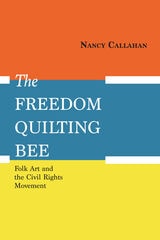
The Freedom Quilting Bee
Folk Art and the Civil Rights MovementNancy Callahan
University of Alabama Press, 2005
The original book on the renowned Freedom quilters of Gee's Bend - stitching justice, one quilt at a time.
In December of 1965, the year of the Selma-to-Montgomery march, a white Episcopal priest driving through a desperately poor, primarily black section of Wilcox County found himself at a great bend of the Alabama River. He noticed a cabin clothesline from which were hanging three magnificent quilts unlike any he had ever seen. They were of strong, bold colors in original, op-art patterns—the same art style then fashionable in New York City and other cultural centers. An idea was born and within weeks took on life, in the form of the Freedom Quilting Bee, a handcraft cooperative of black women artisans who would become acclaimed throughout the nation.
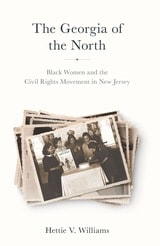
The Georgia of the North
Black Women and the Civil Rights Movement in New JerseyHettie V. Williams
Rutgers University Press, 2024
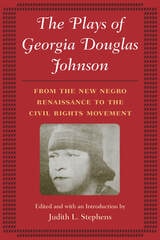
The Plays of Georgia Douglas Johnson
From the New Negro Renaissance to the Civil Rights MovementEdited and with an Introduction by Judith L. Stephens
University of Illinois Press, 2006
Recovering the stage work of one of America's finest black female writers
This volume collects twelve of Georgia Douglas Johnson's one-act plays, including two never-before-published scripts found in the Library of Congress. As an integral part of Washington, D.C.'s, thriving turn-of-the-century literary scene, Johnson hosted regular meetings with Harlem Renaissance writers and other artists, including Countee Cullen, Langston Hughes, May Miller, and Jean Toomer, and was herself considered among the finest writers of the time. Johnson also worked for U.S. government agencies and actively supported women's and minorities' rights.
As a leading authority on Johnson, Judith L. Stephens provides a brief overview of Johnson's career and significance as a playwright; sections on the creative environment in which she worked; her S Street Salon; "The Saturday Nighters," and its significance to the New Negro Theatre; selected photographs; and a discussion of Johnson's genres, themes, and artistic techniques.
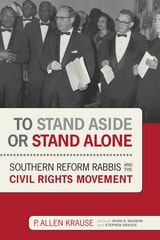
To Stand Aside or Stand Alone
Southern Reform Rabbis and the Civil Rights MovementP. Allen Krause, Edited by Mark K. Bauman with Stephen Krause
University of Alabama Press, 2016
In 1966, a young rabbinical student named P. Allen Krause conducted interviews with twelve Reform rabbis from southern congregations concerning their thoughts, principles, and activities as they related to the civil rights movement. Perhaps because he was a young seminary student or more likely because the interviewees were promised an embargo of twenty-five years before the interviews would be released to the public, the rabbis were extremely candid about their opinions on and their own involvement with what was still an incendiary subject. Now, in To Stand Aside or Stand Alone: Southern Reform Rabbis and the Civil Rights Movement, their stories help elucidate a pivotal moment in time.
After a distinguished rabbinical career, Krause wrote introductions to and annotated the interviews. When Krause succumbed to cancer in 2012, Mark K. Bauman edited the manuscripts further and wrote additional introductions with the assistance of Stephen Krause, the rabbi’s son. The result is a unique volume offering insights into these rabbis’ perceptions and roles in their own words and with more depth and nuance than hitherto available. This exploration into the lives of these teachers and civic leaders is supported by important contextual information on the local communities and other rabbis, with such background information forming the basis of a demographic profile of the Reform rabbis working in the South.
The twelve rabbis whom Krause interviewed served in Alabama, Georgia, Louisiana, Mississippi, Tennessee, and Virginia, and the substance and scope of their discussions cover some of the most crucial periods in the civil rights movement. Although some have provided accounts that appeared elsewhere or have written about their experiences themselves, several new voices appear here, suggesting that more southern rabbis were active than previously thought. These men functioned within a harsh environment: rabbis’ homes, synagogues, and Jewish community centers were bombed; one rabbi, who had been beaten and threatened, carried a pistol to protect himself and his family. The views and actions of these men followed a spectrum from gradualism to activism; while several of the rabbis opposed the evils of the separate and unequal system, others made peace with it or found reasons to justify inaction. Additionally, their approaches differed from their activist colleagues in the North even more than from each other.
Within these pages, readers learn about the attitudes of the rabbis toward each other, toward their congregants, toward national Jewish organizations, and toward local leaders of black and white and Protestant and Catholic groups. Theirs are dramatic stories of frustration, cooperation, and conflict.
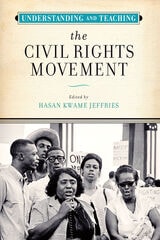
Understanding and Teaching the Civil Rights Movement
Hasan Kwame Jeffries
University of Wisconsin Press, 2019
Books in the popular Harvey Goldberg Series provide high school and introductory college-level instructors with ample resources and strategies for better engaging students in critical, thought-provoking topics. By allowing for the implementation of a more nuanced curriculum, this is history instruction at its best. Understanding and Teaching the Civil Rights Movement will transform how the United States civil rights movement is taught.