Results by title
718 books match the query 'Civil rights' and 57 start with a
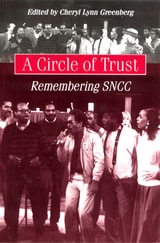
A Circle of Trust
Remembering SNCCGreenberg, Cheryl L
Rutgers University Press, 1998
"The reminiscences and reflections voiced at the SNCC reunion remind us of the remarkable vision and courageous dedication of the civil rights movement of the 1960s. Framed by Cheryl Greenberg's eloquent and probing introduction, the SNCC veterans' comments about the triumphs and limitations of their movement represent a major contribution to the historical literature on race and power in modern America." --Raymond Arsenault, University of South Florida
On the occasion of the SNCC's 25th anniversary, more than 500 people gathered at Trinity College in Connecticut to both celebrate and critique its accomplishments. More than 40 SNCC members tell their stories and reflect on the contributions, limits and legacies of the movement in A Circle of Trust. Engaging in spirited debate with each other, with historians of the movement, and with contemporary political culture more broadly, these former and perpetual activists speak of their vision of a just society and what still remains to be done. With increasing racial tension and the continued debate over integration and separatism in America in the 1990s, the content of this conference is more relevant than ever.
Cheryl Lynn Greenberg begins with an overview of SNCC and introduces each of the chapters of oral history. Participants explore the origins of SNCC, its early adoption of nonviolent protest, its ultimate renunciation of liberal integration and embrace of militant black radicalism, its refusal to repudiate far-left organizations, and controversies over the roles of women in SNCC and society at large. The result is a thoughtful, moving, sometimes acrimonious, sometimes celebratory account of one of the most significant civil rights organizations and its successes and failures.
A City within a City
The Black Freedom Struggle in Grand Rapids, MichiganTodd E Robinson
Temple University Press, 2012
A City within a City cogently argues that the post-war political reform championed by local Republicans transformed the city's racial geography, creating a racialized "city within a city," featuring a system of "managerial racism" designed to keep blacks in declining inner-city areas. As Robinson indicates, this bold, provocative framework for understanding race relations in Grand Rapids has broader implications for illuminating the twentieth-century African American urban experience in secondary cities.
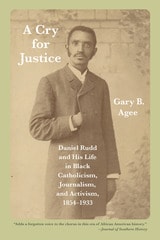
A Cry for Justice
Daniel Rudd and His Life in Black Catholicism, Journalism, and Activism, 1854-1933Gary B. Agee
University of Arkansas Press, 2017
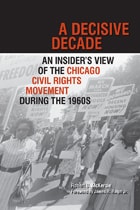
A Decisive Decade
An Insider's View of the Chicago Civil Rights Movement during the 1960sRobert B. McKersie, Foreword by James R. Ralph Jr.
Southern Illinois University Press, 2013
The deeply personal story of a historic time in Chicago, Robert B. McKersie’s A Decisive Decade follows the unfolding action of the Civil Rights Movement as it played out in the Windy City. McKersie’s participation as a white activist for black rights offers a unique, firsthand viewpoint on the debates, boycotts, marches, and negotiations that would forever change the face of race relations in Chicago and the United States at large.
Described within are McKersie’s intimate observations on events as they developed during his participation in such historic occasions as the impassioned marches for open housing in Chicago; the campaign to end school segregation under Chicago Schools Superintendent Benjamin Willis; Operation Breadbasket’s push to develop economic opportunities for black citizens; and dialogs with corporations to provide more jobs for blacks in Chicago. In addition, McKersie provides up close and personal descriptions of the iconic Civil Rights leaders who spearheaded some of the most formative battles of Chicago’s Civil Rights movement, including Dr. Martin Luther King, Jr., Reverend Jesse Jackson, Timuel Black Jr. and W. Alvin Pitcher. The author illumines the tensions experienced by two major institutions in responding to the demands of the civil rights movement: the university and the church. Packed with historical detail and personal anecdotes of these history-making years, A Decisive Decade offers a never-before-seen perspective on one of our nation’s most tumultuous eras.
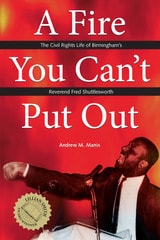
A Fire You Can't Put Out
The Civil Rights Life of Birmingham's Reverend Fred ShuttlesworthAndrew M. Manis
University of Alabama Press, 2001
WINNER, LILLIAN SMITH AWARD
WINNER, JAMES F. SULZBY, JR. AWARD
The fire of freedom that changed Birmingham—and America.
When Fred Shuttlesworth suffered only a bump on the head in the 1956 bombing of his home, members of his church called it a miracle. Shuttlesworth took it as a sign that God would protect him on the mission that had made him a target that night. Standing in front of his demolished home, Shuttlesworth vigorously renewed his commitment to integrate Birmingham's buses, lunch counters, police force, and parks. The incident transformed him, in the eyes of Birmingham's blacks, from an up-and-coming young minister to a virtual folk hero and, in the view of white Birmingham, from obscurity to rabble-rouser extraordinaire.
From his 1956 founding of the Alabama Christian Movement for Human Rights through the historic demonstrations of 1963, driven by a sense of divine mission, Shuttlesworth pressured Jim Crow restrictions in Birmingham with radically confrontational acts of courage. His intensive campaign pitted him against the staunchly segregationist police commissioner Eugene "Bull" Connor and ultimately brought him to the side of Martin Luther King Jr. and to the inner chambers of the Kennedy White House.
First published in 1999, Andrew Manis's award-winning biography of "one of the nation's most courageous freedom fighters" demonstrates compellingly that Shuttleworth's brand of fiery, outspoken confrontation derived from his prophetic understanding of the pastoral role. Civil rights activism was tantamount to salvation in his understanding of the role of Christian minister.
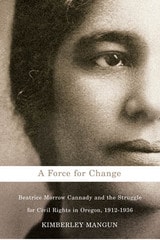
A Force for Change
Beatrice Morrow Cannady and the Struggle for Civil Rights in Oregon, 1912-1936Kimberley Mangun
Oregon State University Press, 2010
A Force for Change is the first full-length study of the life and work of one of Oregon’s most dynamic civil rights activists, African American journalist Beatrice Morrow Cannady. Between 1912 and 1936, Cannady tirelessly promoted interracial goodwill and fought segregation and discrimination.
She gave hundreds of lectures to high school and college students and shared her message with radio listeners across the Pacific Northwest. She was assistant editor, and later publisher, of The Advocate, Oregon’s largest African American newspaper. Cannady was the first black woman to graduate from law school in Oregon, and the first to run for state representative. She held interracial teas in her home in Northeast Portland and protested repeated showings of the racist film The Birth of a Nation. And when the Ku Klux Klan swept into Oregon, she urged the governor to act quickly to protect black Oregonians’ right to live and work without fear. Despite these accomplishments—and many more during her twenty-five-year career—Beatrice Cannady fell into obscurity when she left Oregon in about 1938.
A Force for Change illuminates Cannady’s important role in advocating for better race relations in Oregon in the early decades of the twentieth century. It describes her encounters with the period’s leading black artists, editors, politicians, and intellectuals, including W.E.B. Du Bois, Langston Hughes, A. Philip Randolph, Oscar De Priest, Roland Hayes, and James Weldon Johnson. It dispels the myth that African Americans played little part in Oregon’s history and enriches our understanding of the black experience in Oregon.
A Force for Change is an invaluable resource for students and scholars of women’s history, gender studies, African American history, journalism history, and Pacific Northwest history. It belongs on the shelf of any reader interested in a richer understanding of the civil rights movement in Oregon and across the country.
A Government of Laws
Political Theory, Religion, and the American FoundingEllis Sandoz
University of Missouri Press, 2001
In A Government of Laws, which includes a new preface, Ellis Sandoz re-evaluates the traditional understanding of the philosophic and intellectual background of the American founding. Through an exhaustive assessment of Renaissance, medieval, and ancient political philosophy, he shows that the founding fathers were consciously and explicitly seeking to create a political order that would meet the demands of human nature and society. This rigorous and searching analysis of the sources of political and constitutional theory generates an original and provocative approach to American thought and experience.
A Guide to America's Sex Laws
Richard A. Posner and Katharine B. Silbaugh
University of Chicago Press, 1996
"It takes only a few minutes with A Guide to [America's] Sex to realize that the nation's laws governing what two consenting adults can do with one another are an odd jumble."—Eric Fidler, San Diego Commerce
"Especially noteworthy is how laws governing various sexual activities vary from state to state."—Library Journal
"Fascinating and often surprising facts are concisely documented and conveniently organized in A Guide."—Carlin Meyer, New York Law Journal
A Life In The Struggle
Ivory Perry and the Culture of OppositionGeorge Lipsitz
Temple University Press, 1995
A Long Fight for the Vote
Navajos, Utes, and the Path to Equal Voting RightsDaniel C. McCool
University of Arizona Press, 2027
In A Long Fight for the Vote, Daniel C. McCool offers a deeply researched and compelling account of the fight for equal voting rights in San Juan County, Utah—homeland to the Navajo and Ute peoples and a flashpoint of persistent Anglo–Native conflict.
Centering on landmark voting rights cases that culminated in the historic election of two Navajo county commissioners, McCool situates these legal battles within a broader history of discrimination, shifting federal Indian policy, and the gradual political empowerment of Native communities across the American West. Through meticulous analysis, the book reveals how local elections became a crucible for national debates over citizenship, sovereignty, and democracy.
Drawing on court records, expert testimony, and decades of engagement with voting rights litigation, McCool demonstrates that Native peoples have never been passive victims of disenfranchisement but active protagonists in a sustained struggle for political equality. Richly contextualized and powerfully argued, A Long Fight for the Vote speaks to scholars and students of law, politics, and Western history, as well as legal professionals and engaged readers seeking to understand how race, power, and the ballot box intersect in Indian Country—and why these struggles continue to shape American democracy today.
A Nation of Widening Opportunities
The Civil Rights Act at 50Ellen D. Katz and Samuel R. Bagenstos, editors
Michigan Publishing Services, 2015
A New Civil Right
Telecommunications Equality for Deaf and Hard of Hearing AmericansKaren Peltz Strauss
Gallaudet University Press, 2006
When three deaf men in the 1960s invented and sold TTYs, the first teletypewriting devices that allowed deaf people to communicate by telephone, they started a telecommunications revolution for deaf people throughout America. A New Civil Right: Telecommunications Equality for Deaf and Hard of Hearing Americans chronicles the history of this movement, which lagged behind new technical developments decades after the advent of TTYs.
In this highly original work, Author Karen Peltz Strauss reveals how the paternalism of the hearing-oriented telecommunications industries slowed support for technology for deaf users. Throughout this comprehensive account, she emphasizes the grassroots efforts behind all of the eventual successes. A New Civil Right recounts each advance in turn, such as the pursuit of special customer premises equipment (SCPE) from telephone companies; the Telecommunications Act of 1982 and the Telecommunications Accessibility Enhancement Act of 1988 and the 1990 Americans with Disabilities Act, which required nationwide relay telephone services for deaf and hard of hearing users.
Strauss painstakingly details how all of these advances occurred incrementally, first on local and state levels, and later through federal law. It took exhaustive campaigning to establish 711 for nationwide relay dialing, while universal access to television captioning required diligent legal and legislative work to pass the Decoder Circuitry Act in 1990. The same persistence resulted in the enactment of the Telecommunications Act of 1996, which required all off-the-shelf communications equipment, including new wireless technology, to be readily accessible to deaf users.
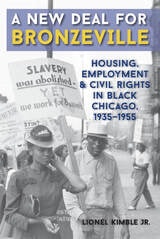
A New Deal for Bronzeville
Housing, Employment, and Civil Rights in Black Chicago, 1935-1955Lionel Kimble Jr.
Southern Illinois University Press, 2015
During the Great Migration of the 1920s and 1930s, southern African Americans flocked to the South Side Chicago community of Bronzeville, the cultural, political, social, and economic hub of African American life in the city, if not the Midwest. The area soon became the epicenter of community activism as working-class African Americans struggled for equality in housing and employment. In this study, Lionel Kimble Jr. demonstrates how these struggles led to much of the civil rights activism that occurred from 1935 to 1955 in Chicago and shows how this working-class activism and culture helped to ground the early civil rights movement. Despite the obstacles posed by the Depression, blue-collar African Americans worked with leftist organizations to counter job discrimination and made strong appeals to New Deal allies for access to public housing. Kimble details how growing federal intervention in local issues during World War II helped African Americans make significant inroads into Chicago’s war economy and how returning African American World War II veterans helped to continue the fight against discrimination in housing and employment after the war. The activism that appeared in Bronzeville was not simply motivated by the “class consciousness” rhetoric of the organized labor movement but instead grew out of everyday struggles for racial justice, citizenship rights, and improved economic and material conditions. With its focus on the role of working-class African Americans—as opposed to the middle-class leaders who have received the most attention from civil rights historians in the past—A New Deal for Bronzeville makes a significant contribution to the study of civil rights work in the Windy City and enriches our understanding of African American life in mid-twentieth-century Chicago.
This publication is partially funded by a grant from Furthermore: a program of the J.M. Kaplan fund.
A Promise And A Way Of Life
White Antiracist ActivismBecky Thompson
University of Minnesota Press, 2001
The first in-depth look at white people’s activism in fighting racism during the past fifty years.
Not since the Civil Rights Movement of the 1950s and 1960s, when many white college students went south to fight against Jim Crow laws, has white antiracist activity held the public’s attention. Yet there have always been white people involved in fighting racism. In this passionate work, Becky Thompson looks at white Americans who have struggled against racism, offering examples of both successes and failures, inspirations, practical philosophies, and a way ahead.
A Promise and a Way of Life weaves an account of the past half-century based on the life histories of thirty-nine people who have placed antiracist activism at the center of their lives. Through a rich and fascinating narrative that links individual experiences with social and political history, Thompson shows the ways, both public and personal, in which whites have opposed racism during several social movements: the Civil Rights and Black Power movements, multiracial feminism, the Central American peace movement, the struggle for antiracist education, and activism against the prison industry. Beginning with the diverse catalysts that started these activists on their journeys, this book demonstrates the contributions and limitations of white antiracism in key social justice movements.
Through these stories, crucial questions are raised: Does antiracist work require a repudiation of one’s whiteness or can that identity be transformed through political commitment and alliances? What do white people need to do to undermine white privilege? What would it take to build a multiracial movement in which white people are responsible for creating antiracist alliances while not co-opting people of color?
Unique in its depth and thoroughness, A Promise and a Way of Life is essential for anyone currently fighting racism or wondering how to do so. Through its demonstration of the extraordinary personal and social transformations ordinary people can make, it provides a new paradigm for movement activity, one that will help to incite and guide future antiracist activism.
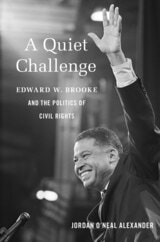
A Quiet Challenge
Edward W. Brooke and the Politics of Civil RightsJordan O'Neal Alexander
University of Massachusetts Press, 2026
The first full-length biography of a consequential figure in twentieth-century American politics
In 1962, Edward W. Brooke (1919–2015) upended political convention by becoming the first popularly elected African American attorney general of Massachusetts. His victory was striking not only because Massachusetts was an overwhelmingly white state with a small Black population, but also because Brooke was a Republican and an Episcopalian in a deeply Democratic, Irish Catholic political culture. Navigating these contradictions, Brooke crafted a distinctive political style—measured, pragmatic, and quietly transformative—that reshaped civil rights politics in the North. In A Quiet Challenge, Jordan O’Neal Alexander offers the first full-length biography of Brooke, revealing him as a Black Republican whose carefully calibrated approach to race, law, and governance won broad white support while often distancing him from Boston’s Black community.
As attorney general, Brooke sought to uphold the rule of law while advancing principles of fairness, equality, and public safety, an approach that reflected both political constraint and moral resolve. Brooke again defied expectations in 1966 when he won election to the United States Senate, becoming the first popularly elected African American senator since Reconstruction. Serving two terms during the height of the civil rights movement, he emerged as a powerful national voice on issues of racial justice. He played a key role in blocking two Supreme Court nominees aligned with President Richard Nixon’s “southern strategy,” even as his support for school desegregation and busing during the Boston Busing Crisis contributed to his eventual political decline. Throughout his career, Brooke remained committed to building a society in which Black Americans—and all Americans—could fully participate and prosper. This volume demonstrates how Brooke’s restrained, yet persistent political strategy helped expand the possibilities for Black leadership within mainstream American politics.
A Quiet Victory for Latino Rights
FDR and the Controversy Over "Whiteness"Patrick D. Lukens
University of Arizona Press, 2012
In 1935 a federal court judge handed down a ruling that could have been disastrous for Mexicans, Mexican Americans, and all Latinos in the United States. However, in an unprecedented move, the Roosevelt administration wielded the power of "administrative law" to neutralize the decision and thereby dealt a severe blow to the nativist movement. A Quiet Victory for Latino Rights recounts this important but little-known story.
To the dismay of some nativist groups, the Immigration Act of 1924, which limited the number of immigrants who could be admitted annually, did not apply to immigrants from Latin America. In response to nativist legal maneuverings, the 1935 decision said that the act could be applied to Mexican immigrants. That decision, which ruled that the Mexican petitioners were not "free white person[s]," might have paved the road to segregation for all Latinos.
The League of United Latin American Citizens (LULAC), founded in 1929, had worked to sensitize the Roosevelt administration to the tenuous position of Latinos in the United States. Advised by LULAC, the Mexican government, and the US State Department, the administration used its authority under administrative law to have all Mexican immigrants—and Mexican Americans—classified as "white." It implemented the policy when the federal judiciary "acquiesced" to the New Deal, which in effect prevented further rulings.
In recounting this story, complete with colorful characters and unlikely bedfellows, Patrick D. Lukens adds a significant chapter to the racial history of the United States.
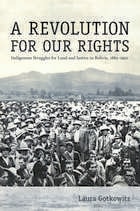
A Revolution for Our Rights
Indigenous Struggles for Land and Justice in Bolivia, 1880-1952Laura Gotkowitz
Duke University Press, 2008
Gotkowitz combines an emphasis on national political debates and congresses with a sharply focused analysis of Indian communities and large estates in the department of Cochabamba. The fragmented nature of Cochabamba’s Indian communities and the pioneering significance of its peasant unions make it a propitious vantage point for exploring contests over competing visions of the nation, justice, and rights. Scrutinizing state authorities’ efforts to impose the law in what was considered a lawless countryside, Gotkowitz shows how, time and again, indigenous activists shrewdly exploited the ambiguous status of the state’s pro-Indian laws to press their demands for land and justice. Bolivian indigenous and social movements have captured worldwide attention during the past several years. By describing indigenous mobilization in the decades preceding the revolution of 1952, A Revolution for Our Rights illuminates a crucial chapter in the long history behind present-day struggles in Bolivia and contributes to an understanding of indigenous politics in modern Latin America more broadly.
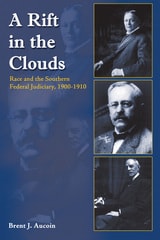
A Rift in the Clouds
Race and the Southern Federal Judiciary, 1900-1910Brent J. Aucoin
University of Arkansas Press, 2007
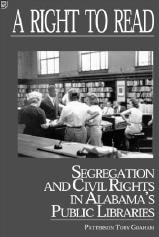
A Right to Read
Segregation and Civil Rights in Alabama's Public Libraries, 1900–1965Patterson Toby Graham
University of Alabama Press, 2006
This original and significant contribution to the historiography of the civil rights movement and education in the South details a dramatic and disturbing chapter in American cultural history.
The tradition of American public libraries is closely tied to the perception that these institutions are open to all without regard to social background. Such was not the case in the segregated South, however, where public libraries barred entry to millions of African Americans and provided tacit support for a culture of white supremacy. A Right to Read is the first book to examine public library segregation from its origins in the late 19th century through its end during the tumultuous years of the 1960s civil rights movement. Graham focuses on Alabama, where African Americans, denied access to white libraries, worked to establish and maintain their own "Negro branches." These libraries-separate but never equal-were always underfunded and inadequately prepared to meet the needs of their constituencies.
By 1960, however, African Americans turned their attention toward desegregating the white public libraries their taxes helped support. They carried out "read-ins" and other protests designed to bring attention and judicial pressure upon the segregationists. Patterson Toby Graham contends that, for librarians, the civil rights movement in their institutions represented a conflict of values that pitted their professional ethics against regional mores. He details how several librarians in Alabama took the dangerous course of opposing segregationists, sometimes with unsettling results.
This groundbreaking work built on primary evidence will have wide cross-disciplinary appeal. Students and scholars of southern and African-American history, civil rights, and social science, as well as academic and public librarians, will appreciate Graham's solid research and astute analysis.
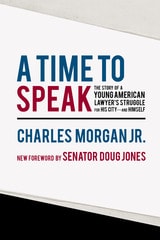
A Time to Speak
The Story of a Young American Lawyer's Struggle for His City—and HimselfCharles Morgan Jr., With a New Foreword by Senator Doug Jones
University of Alabama Press, 2022
Brings back into print a classic account of courage and calamity in the long march toward racial justice in the South, and the nation
On September 15, 1963, a bomb exploded at the Sixteenth Street Baptist Church in Birmingham, Alabama, killing four young Black girls. The very next day, a prominent white lawyer named Charles Morgan Jr. was scheduled to speak at a luncheon held by the Young Men’s Business Club of Birmingham. A well-regarded figure in the city’s legal and business establishment, Morgan had been mentioned frequently as a candidate for political office. To the shock of his longtime friends and associates, Morgan deviated from his planned remarks, instead using his platform to place the blame for the murder of the four young girls squarely on the shoulders of the city’s white middle-class establishment, those seated before him.
As much as his stand was admired nationally, in Birmingham the results were destructive for him personally. Threats against his life and the lives of his family poured in daily by phone and mail, his political career was finished, and he was faced with financial ruin. Within weeks, he moved his family out of the state, and thenceforward committed himself to legal action in the name of racial justice. In 1964, he established the regional office of the ACLU in Atlanta. In the 1964 Supreme Court case Reynolds v. Sims, Morgan successfully argued that districts in state legislatures needed to be of nearly equal size, establishing the principle of “one man, one vote” to effectively end the use of gerrymandering.
A Time to Speak was originally published in 1964, a mere year after Morgan and his family fled Birmingham. The memoir recounts not only his speech, but his entire upbringing and the political, cultural, and social milieus in which he was raised and which gave rise to the cowardice, institutional silence, fear, and hate that those conditions nursed. This new edition features a foreword from US Senator Doug Jones.
A Vindication of Political Virtue
The Political Theory of Mary WollstonecraftVirginia Sapiro
University of Chicago Press, 1992
Drawing on all of Wollstonecraft's works and treating them thematically rather than sequentially, Sapiro shows that Wollstonecraft's ideas about women's rights, feminism, and gender are elements of a broad and fully developed philosophy, one with significant implications for contemporary democratic and liberal theory. The issues raised speak to many current debates in theory, including those surrounding interpretation of the history of feminism, the relationship between liberalism and republicanism in the development of political philosophy, and the debate over the canon. For political scientists, most of whom know little about Wollstonecraft's thought, Sapiro's book is an excellent, nuanced introduction which will cause a reconsideration of her work and her significance both for her time and for today's concerns. For feminist scholars, Sapiro's book offers a rounded and unconventional analysis of Wollstonecraft's thought.
Written with considerable charm and verve, this book will be the starting point for understanding this important writer for years to come.
A Voice for Justice
Writings of David SchumanSharon Schuman
Oregon State University Press, 2021
His friends and associates knew that Oregon Supreme Court Justice Hans Linde convinced Schuman to turn to the Oregon Constitution rather than the federal one to protect individual rights. But even some of Schuman’s closest friends were unaware of his fiction, which provides a window into his deep capacity for empathy and casts new light on his ability to write elegant, sometimes funny, judicial opinions. His legal thinking also had deep roots in literature and political theory.
Schuman’s 672 judicial opinions are not just brilliant, but written so that anyone can understand them. Like Ruth Bader Ginsburg, he knew there was nothing to gain by communicating only to specialists. He wanted citizens to be able to make up their own minds about important issues.
A Voice for Justice brings together for the first time writings that span over fifty years. Lawyers and laypeople alike will appreciate Schuman’s lucid, engaging observations, which are highly relevant to our current anxieties about institutional racism and democracy under stress. The short stories, speeches, op-eds, articles, legal opinions, and dissents selected for this volume constitute a call to action for everyone to become voices for justice.

A Wall Is Just a Wall
The Permeability of the Prison in the Twentieth-Century United StatesReiko Hillyer
Duke University Press, 2024
A. Philip Randolph and the Struggle for Civil Rights
Cornelius L. Bynum
University of Illinois Press, 2010
Aaron Henry of Mississippi
Inside AgitatorMinion K. C. Morrison
University of Arkansas Press, 2015
When Aaron Henry returned home to Mississippi from World War II service in 1946, he was part of wave of black servicemen who challenged the racial status quo. He became a pharmacist through the GI Bill, and as a prominent citizen, he organized a hometown chapter of the NAACP and relatively quickly became leader of the state chapter.
From that launching pad he joined and helped lead an ensemble of activists who fundamentally challenged the system of segregation and the almost total exclusion of African Americans from the political structure. These efforts were most clearly evident in his leadership of the integrated Mississippi Freedom Democratic Party delegation, which, after an unsuccessful effort to unseat the lily-white Democratic delegation at the Democratic National Convention in 1964, won recognition from the national party in 1968.
The man who the New York Times described as being “at the forefront of every significant boycott, sit-in, protest march, rally, voter registration drive and court case” eventually became a rare example of a social-movement leader who successfully moved into political office. Aaron Henry of Mississippi covers the life of this remarkable leader, from his humble beginnings in a sharecropping family to his election to the Mississippi house of representatives in 1979, all the while maintaining the social-change ideology that prompted him to improve his native state, and thereby the nation.
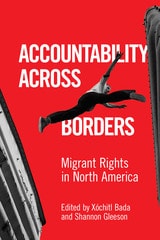
Accountability Across Borders
Migrant Rights in North AmericaEdited by Xóchitl Bada and Shannon Gleeson
University of Texas Press, 2019
Collecting the diverse perspectives of scholars, labor organizers, and human-rights advocates, Accountability across Borders is the first edited collection that connects studies of immigrant integration in host countries to accounts of transnational migrant advocacy efforts, including case studies from the United States, Canada, and Mexico.
Covering the role of federal, state, and local governments in both countries of origin and destinations, as well as nongovernmental organizations (NGOs), these essays range from reflections on labor solidarity among members of the United Food and Commercial Workers in Toronto to explorations of indigenous students from the Maya diaspora living in San Francisco. Case studies in Mexico also discuss the enforcement of the citizenship rights of Mexican American children and the struggle to affirm the human rights of Central American migrants in transit. As policies regarding immigration, citizenship, and enforcement are reaching a flashpoint in North America, this volume provides key insights into the new dynamics of migrant civil society as well as the scope and limitations of directives from governmental agencies.

Achieving the Impossible Dream
HOW JAPANESE AMERICANS OBTAINED REDRESSMitchell T. Maki, Harry H. L. Kitano, and S. Megan Berthold; Foreword by Robert T. Matsui
University of Illinois Press, 1999

Activists and the Surveillance State
Learning from RepressionEdited by Aziz Choudry
Pluto Press, 2018
Drawing on the knowledge of activists and academics from the United States, the United Kingdom, Canada, New Zealand, Australia, South Africa, and Chile, Activists and the Surveillance State delves into the harassment, infiltration, and disruption that has colored state responses to those deemed threats to national security. The book shows that, ultimately, movements can learn from their own repression, developing a critical and complex understanding of the nature of states and capital today that can crucially inform the struggles of tomorrow.
Administrative Implementation of Civil Rights
By Joseph Parker Witherspoon
University of Texas Press, 1968
The civil rights problem of the mid-twentieth century was one of the greatest challenges to the American social fabric since the Civil War. Riots in scores of cities, and serious intergroup tensions and conflicts in thousands more, underlined the seriousness of the problem.
Administrative Implementation of Civil Rights examines the role, operation, and contribution of the device most often relied on by local and state governments for dealing with intergroup problems—the human- relations commission. First used in the early 1940s to deal with discrimination against blacks, this commission was later often charged with implementing the civil rights of other minority groups and of women, the elderly, the handicapped, and the poor. It is Joseph Parker Witherspoon’s thesis that the human-relations commission was not used effectively, that an agency of this type has great strengths that most local and state governments did not utilize, and that its weaknesses are susceptible of remedy and must be eliminated. He explains these weaknesses and develops proposals for correcting them.
Witherspoon examines the roles of the local, state, and federal governments in solving this country’s complicated and serious civil rights problem and demonstrates that a program that carefully coordinates action by the federal government with action by local and state governments could be made to work effectively. As a part of this demonstration he proposes the enactment of a new form of comprehensive civil rights legislation at local, state, and national levels, and presents a series of four model statutes—the Alpha Model Acts—for effectuating his proposals. The approach emphasized in these statutes greatly strengthens the role of the human-relations commission as a law-enforcement agency and, in particular, focuses the operation of federal and state action upon life in the individual community.
The book concludes with a group of appendices listing all state and many local commissions and agencies handling human-relations problems at that time, and summarizing the type of authority, the jurisdiction, the operating budget, and the legislative basis for each. This list will be of interest to those studying the history of civil rights and public policy in the United States.
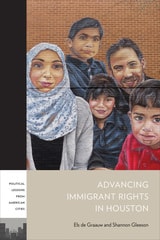
Advancing Immigrant Rights in Houston
Els de Graauw and Shannon Gleeson
Temple University Press, 2024
In Advancing Immigrant Rights in Houston, Els de Graauw and Shannon Gleeson recount how local and multi-level contexts shape the creation, contestation, and implementation of immigrant rights policies and practices in the city. They examine the development of a city immigrant affairs office, interactions between local law enforcement and federal immigration enforcement officials, local public-private partnerships around federal immigration benefits, and collaborations between labor, immigrant rights, faith, and business leaders to combat wage theft.
The case study of Houston provides a bellwether for how other U.S. cities will deal with their growing immigrant populations and underscores the importance of public-private collaborations to advance immigrant rights.
Affirmative Action and the Stalled Quest for Black Progress
W. Avon Drake and Robert D. Holsworth
University of Illinois Press, 1996
Insightful and path-breaking, Affirmative Action and the Stalled Quest for Black Progress examines the accomplishments and limitations of the set-aside programs once at the center of political debates about affirmative action in the United States.
African Americans in U.S. Foreign Policy
From the Era of Frederick Douglass to the Age of ObamaEdited by Linda Heywood, Allison Blakely, Charles Stith, and Joshua C. Yesnowitz
University of Illinois Press, 2015
Groundbreaking and critical, African Americans in U.S. Foreign Policy expands on the scope and themes of recent collections to offer the most up-to-date scholarship to students in a range of disciplines, including U.S. and African American history, Africana studies, political science, and American studies.
African Americans in the Furniture City
The Struggle for Civil Rights in Grand RapidsRandal Maurice Jelks
University of Illinois Press, 2006
Focusing on the intersection of African Americans' nineteenth-century cultural values and the changing social and political conditions in the first half of the twentieth century, Jelks pays particularly close attention to the religious community's influence during their struggle toward a respectable social identity and fair treatment under the law. He explores how these competing values defined the community's politics as it struggled to expand its freedoms and change its status as a subjugated racial minority.

After #Ferguson, After #Baltimore
The Challenge of Black Death and Black Life for Black Political ThoughtBarnor Hesse and Juliet Hooker, special issue editors
Duke University Press, 2017
Topics in this issue include the contemporary politics of black rage; the significance of the Ferguson and Baltimore black protests in circumventing formal electoral politics; the ways in which centering the dead black male body draws attention away from other daily forms of racial and gender violence that particularly affect black women; the problem of white nationalisms motivated by a sense of white grievance; the international and decolonial dimensions of black politics; and the relation between white sovereignty and black life politics.
Contributors. Barnor Hesse, Juliet Hooker, Minkah Makalani, John Márquez, Junaid Rana, Deborah Thompson, Shatema Threadcraft
Against the Deportation Terror
Organizing for Immigrant Rights in the Twentieth CenturyRachel Ida Buff
Temple University Press, 2017
Despite being characterized as a “nation of immigrants,” the United States has seen a long history of immigrant rights struggles. In her timely book Against the Deportation Terror, Rachel Ida Buff uncovers this multiracial history. She traces the story of the American Committee for the Protection of the Foreign Born (ACPFB) from its origins in the 1930s through repression during the early Cold War, to engagement with “new” Latinx and Caribbean immigrants in the 1970s and early 1980s.
Functioning as a hub connecting diverse foreign-born communities and racial justice advocates, the ACPFB responded to various, ongoing crises of what they called “the deportation terror.” Advocates worked against repression, discrimination, detention, and expulsion in migrant communities across the nation at the same time as they supported reform of federal immigration policy. Prevailing in some cases and suffering defeats in others, the story of the ACPFB is characterized by persistence in multiracial organizing even during periods of protracted repression.
By tracing the work of the ACPFB and its allies over half a century, Against the Deportation Terror provides important historical precedent for contemporary immigrant rights organizing. Its lessons continue to resonate today.
Agent of Change
Adela Sloss-Vento, Mexican American Civil Rights Activist and Texas FeministBy Cynthia E. Orozco
University of Texas Press, 2020
Liz Carpenter Award for Research in the History of Women, Texas State Historical Association
The essayist Adela Sloss-Vento (1901–1998) was a powerhouse of activism in South Texas’s Lower Rio Grande Valley throughout the Mexican American civil rights movement beginning in 1920 and the subsequent Chicano movement of the 1960s and 1970s. At last presenting the full story of Sloss-Vento’s achievements, Agent of Change revives a forgotten history of a major female Latina leader.
Bringing to light the economic and political transformations that swept through South Texas in the 1920s as ranching declined and agribusiness proliferated, Cynthia E. Orozco situates Sloss-Vento’s early years within the context of the Jim Crow/Juan Crow era. Recounting Sloss-Vento’s rise to prominence as a public intellectual, Orozco highlights a partnership with Alonso S. Perales, the principal founder of the League of United Latin American Citizens. Agent of Change explores such contradictions as Sloss-Vento’s tolerance of LULAC’s gender-segregated chapters, even though the activist was an outspoken critic of male privilege in the home and a decidedly progressive wife and mother. Inspiring and illuminating, this is a complete portrait of a savvy, brazen critic who demanded reform on both sides of the US-Mexico border.
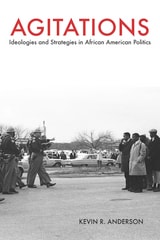
Agitations
Ideologies and Strategies in African American PoliticsKevin R. Anderson
University of Arkansas Press, 2010
Though the activities of the National Association for the Advancement of Colored People (NAACP), the Southern Christian Leadership Conference (SCLC), and the Student Nonviolent Coordinating Committee (SNCC) were unified in their common idea of resistance to oppression, these groups fought their battles on multiple fronts. The NAACP filed lawsuits and aggressively lobbied Congress and state legislatures, while Martin Luther King Jr. and SCLC challenged the racial status quo through nonviolent mass action, and the SNCC focused on community empowerment activities. In Agitations, Kevin Anderson studies these various activities in order to trace the ideological foundations of these groups and to understand how diversity among African Americans created multiple political strategies.
Agitations goes beyond the traditionally acknowledged divide between integrationist and accommodationist wings of African American politics to explore the diverse fundamental ideologies and strategic outcomes among African American activists that still define, influence, and complicate political life today.
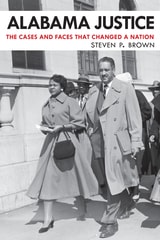
Alabama Justice
The Cases and Faces That Changed a NationSteven P. Brown
University of Alabama Press, 2020
WINNER OF THE ANNE B. & JAMES B. MCMILLAN PRIZE IN SOUTHERN HISTORY
Examines the legacies of eight momentous US Supreme Court decisions that have their origins in Alabama legal disputes.
Unknown to many, Alabama has played a remarkable role in a number of Supreme Court rulings that continue to touch the lives of every American. In Alabama Justice: The Cases and Faces That Changed a Nation, Steven P. Brown has identified eight landmark cases that deal with religion, voting rights, libel, gender discrimination, and other issues, all originating from legal disputes in Alabama.
Written in a concise and accessible manner, each case law chapter begins with the circumstances that created the dispute. Brown then provides historical and constitutional background for the issue followed by a review of the path of litigation. Excerpts from the Court’s ruling in the case are also presented, along with a brief account of the aftermath and significance of the decision. The First Amendment (New York Times v. Sullivan), racial redistricting (Gomillion v. Lightfoot), the Equal Protection Clause of the Fourteenth Amendment (Frontiero v. Richardson), and prayer in public schools (Wallace v. Jaffree) are among the pivotal issues stamped indelibly by disputes with their origins in Alabama legal, political, and cultural landscapes. By examining such landmark twentieth-century milestones and eras such as the Scottsboro Boys trial, the Civil Rights movement, and the fight for women’s rights through a legal lens, Brown sheds new and unexpected light on the ways that events in Alabama have shaped the nation.
In addition to his analysis of cases, Brown discusses the three associate Supreme Court justices from Alabama to the Supreme Court: John McKinley, John Archibald Campbell, and Hugo Black. Their cumulative influence on constitutional interpretation, the institution of the Court, and the day-to-day rights and liberties enjoyed by every American is impossible to measure. A closing chapter examines the careers and contributions of these three Alabamians.
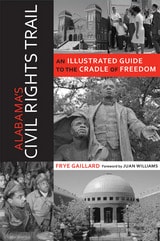
Alabama's Civil Rights Trail
An Illustrated Guide to the Cradle of FreedomFrye Gaillard
University of Alabama Press, 2009
Alabama’s great civil rights events in a compact and accessible narrative, paired with a practical guide to Alabama’s preserved civil rights sites and monuments
No other state has embraced and preserved its civil rights history more thoroughly than Alabama. Nor is there a place where that history is richer. Alabama’s Civil Rights Trail tells of Alabama’s great civil rights events, as well as its lesser-known moments, in a compact and accessible narrative, paired with a practical guide to Alabama’s preserved civil rights sites and monuments.
In this history of Alabama’s civil rights movement, Cradle of Freedom (University of Alabama Press, 2004), Frye Gaillard contends that Alabama played the lead role in a historic movement that made all citizens of the nation, black and white, more free. This book, geared toward the casual traveler and the serious student alike, showcases in a vividly illustrated and compelling manner, valuable and rich details. It provides a user-friendly, graphic tool for the growing number of travelers, students, and civil rights pilgrims who visit the state annually.
The story of the civil rights movement in Alabama is told city by city, region by region, and town by town, with entries on Montgomery, Birmingham, Selma, Tuscaloosa, Tuskegee, and Mobile, as well as chapters on the Black Belt and the Alabama hill country. Smaller but important locales such as Greensboro, Monroeville, and Scottsboro are included, as are more obscure sites like Hale County’s Safe House Black History Museum and the birthplace of the Black Panther Party in Lowndes County.
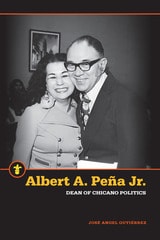
Albert A. Peña Jr.
Dean of Chicano PoliticsJosé Angel Gutiérrez
Michigan State University Press, 2017
Alexander William Doniphan
Portrait of a Missouri ModerateRoger D. Launius
University of Missouri Press, 1997
Alexander William Doniphan (1808-1887)--Missouri attorney, military figure, politician, and businessman--is one of the most significant figures in antebellum Missouri. From the 1830s to the 1880s, Doniphan was active in a variety of affairs in Missouri and held firm to several underlying principles, including loyalty, hard work, the sanctity of the republic, and commitment to Christian charity. However, the key to Doniphan's importance was his persistent moderation on the critical issues of his day.
Doniphan became a household name when he served as the commanding officer of the famed First Missouri Mounted Volunteers during the Mexican-American War. It was during this time that he won two battles, established an Anglo-American-based democracy in New Mexico, and paved the way for the annexation of the territory that became New Mexico and Arizona. He is also recognized by the Mormons for his assistance to their beleaguered church during Missouri's "Mormon War" and for his refusal to execute Joseph Smith when ordered to do so by his commanding officer.
Although Doniphan was a slaveholding unionist, he sought a middle ground to stave off war in the 1850s and early 1860s and served as a delegate to the Washington Peace Conference in 1861. When conflict escalated along the western border of Missouri in 1862, Doniphan moved to St. Louis, where he worked as a lawyer with the Missouri Claims Commission, seeking pensions for refugees.
Doniphan early adopted the Whig ideal of the "positive liberal state" and sought to use the power of government to remake society into something better. Once he saw the heavy-handed use of state power during Reconstruction, however, Doniphan reversed his views on the role of the government in society. For the rest of his life, he resisted government incursions into the lives of the people and sought to restore a healthy Union.
Alexander William Doniphan will be of interest to academic specialists and general readers alike, especially those interested in Mormon studies, Missouri history, military history, and Western history.
Aliens and Dissenters
Federal Suppression of Radicals, 1903-1933William Preston, Jr.
University of Illinois Press, 1994

Allies and Obstacles
Disability Activism and Parents of Children with DisabilitiesAllison C. Carey, Pamela Block, and Richard K. Scotch
Temple University Press, 2020
Parents of children with disabilities often situate their activism as a means of improving the world for their child. However, some disabled activists perceive parental activism as working against the independence and dignity of people with disabilities. This thorny relationship is at the heart of the groundbreaking Allies and Obstacles.
The authors chronicle parents’ path-breaking advocacy in arenas such as the right to education and to liberty via deinstitutionalization as well as how they engaged in legal and political advocacy. Allies and Obstacles provides a macro analysis of parent activism using a social movement perspective to reveal and analyze the complex—and often tense—relationship of parents to disability rights organizations and activism.
The authors look at organizational and individual narratives using four case studies that focus on intellectual disability, psychiatric diagnoses, autism, and a broad range of physical disabilities including cerebral palsy and muscular dystrophy. These cases explore the specific ways in which activism developed among parents and people with disabilities, as well as the points of alliance and the key points of contestation. Ultimately, Allies and Obstacles develops new insights into disability activism, policy, and the family.
America's Peacemakers
The Community Relations Service and Civil RightsBertram Levine
University of Missouri Press, 2020
Covered in this expanded edition are the post–9/11 efforts of the CRS to prevent violence and hate crimes against those perceived as Middle Eastern. Also discussed are the cross-border Elián González custody dispute and the notable tragedies of Trayvon Martin and Michael Brown, both of which brought police interaction with communities of color back into the spotlight.
The 2009 Matthew Shepard and James Byrd, Jr., Hate Crimes Prevention Act substantially altered CRS’s jurisdiction, which began to focus on gender, gender identity, religion, sexual orientation, and disability in addition to race, color, and national origin. Lum’s documentation of this expanded jurisdiction provides insight into the progression of civil rights. The ongoing story of the Community Relations Service is a crucial component of the national narrative on civil rights and conflict resolution. This new edition will be highly informative to all readers and useful to professionals and academics in the civil rights, dispute resolution, domestic and international peacemaking, and law enforcement-community relations fields.
American Atrocity
The Types of Violence in LynchingGuy Lancaster
University of Arkansas Press, 2021
Lynching is often viewed as a narrow form of violence: either the spontaneous act of an angry mob against accused individuals, or a demonstration of white supremacy against an entire population considered subhuman. However, in this new treatise, historian Guy Lancaster exposes the multiple forms of violence hidden beneath the singular label of lynching.
Lancaster, who has written extensively on racial violence, details several lynchings of Blacks by white posses in post-Reconstruction Arkansas. Drawing from the fields of history, philosophy, cognitive science, sociology, and literary theory, and quoting chilling contemporary accounts, he argues that the act of lynching encompasses five distinct but overlapping types of violence. This new framework reveals lynching to be even more of an atrocity than previously understood: that mobs did not disregard the humanity of their victims but rather reveled in it; that they were not simply enacting personal vengeance but manifesting an elite project of subjugation. Lancaster thus clarifies and connects the motives and goals of seemingly isolated lynch mobs, embedding the practice in the ongoing enforcement of white supremacy. By interrogating the substance of lynching, American Atrocity shines new light on both past anti-Black violence and the historical underpinnings of our present moment.

American Pentimento
The Invention of Indians and the Pursuit of RichesPatricia Seed
University of Minnesota Press, 2001
Amid the Fall, Dreaming of Eden
Du Bois, King, Malcolm X, and Emancipatory CompositionBradford T. Stull
Southern Illinois University Press, 1999
Whom, or what, does composition—defined here as an intentional process of study, either oral or written—serve? Bradford T. Stull contends that composition would do well to articulate, in theory and practice, what could be called "emancipatory composition." He argues that emancipatory composition is radically theopolitical: it roots itself in the foundational theological and political language of the American experience while it subverts this language in order to emancipate the oppressed and, thereby, the oppressors.
To articulate this vision, Stull looks to those who compose from an oppressed place, finding in the works of W. E. B. Du Bois, Martin Luther King Jr., and Malcolm X radical theopolitical practices that can serve as a model for emancipatory composition. While Stull acknowledges that there are many sites of oppression, he focuses on what Du Bois has called the problem of the twentieth century: the color line, positing that the unique and foundational nature of the color line provides a fecund place in which, from which, a theory and practice of emancipatory composition might be elucidated.
By focusing on four key theopolitical tropes—The Fall, The Orient, Africa, and Eden—that inform the work of Du Bois, King, and Malcolm X, Stull discovers the ways in which these civil rights leaders root themselves in the vocabulary of the American experience in order to subvert it so that they might promote emancipation for African Americans, and thus all Americans.
In drawing on the work of Paulo Freire, Kenneth Burke, Edward Said, Christopher Miller, Ernst Bloch, and others, Stull also locates this study within the larger cultural context. By reading Du Bois, King, and Malcolm X together in a way that they have never before been read, Stull presents a new vision of composition practice to the African American studies community and a reading of African American emancipatory composition to the rhetoric and composition community, thus extending the question of emancipatory composition into new territory.
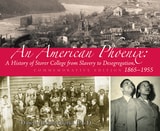
An American Phoenix
A History of Storer College from Slavery to Desegregation 1865-1955, Commemorative EditionDawne Raines Burke
West Virginia University Press, 2015
In the first book-length study of Storer College, Dawne Raines Burke tells the story of the historically black institution from its Reconstruction origins to its demise in 1955. Established by Northern Baptists in the abolitionist flashpoint of Harpers Ferry, Storer was the first college open to African Americans in West Virginia, and it played a central role in regional and national history. In addition to educating generations of students of all races, genders, and creeds, Storer served as the second meeting place (and the first on U.S. soil) for the Niagara Movement, a precursor to the NAACP.
An American Phoenix provides a comprehensive and extensively illustrated history of this historically black college, bringing to life not just the institution but many of the individuals who taught or were educated there. It fills a significant gap in our knowledge of African American history and the struggle for rights in West Virginia and the wider world.
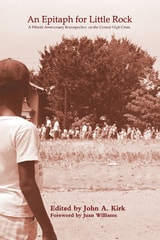
An Epitaph for Little Rock
A Fiftieth Anniversary Retrospective on the Central High CrisisJohn A. Kirk
University of Arkansas Press, 2008
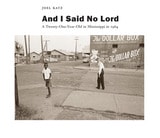
And I Said No Lord
A Twenty-One-Year-Old in Mississippi in 1964Joel Katz
University of Alabama Press, 2014