Results by title
22 books match the query 'Civil-military relations'
A Miracle, A Universe
Settling Accounts with TorturersLawrence Weschler
University of Chicago Press, 1998
"Disturbing and often enthralling."—New York Times Book Review
"Extraordinarily moving. . . . Weschler writes brilliantly."—Newsday
"Implausible, intricate and dazzling."—Times Literary Supplement
"As Weschler's interviewees told their tales, I paced agitatedly, choked back tears. . . . Weschler narrates these two episodes with skill and tact. . . . An inspiring book."—George Scialabba, Los Angeles Weekly
An Imperfect Occupation
Enduring the South African WarJohn Boje
University of Illinois Press, 2015
Between Military Rule and Democracy
Regime Consolidation in Greece, Turkey, and BeyondYaprak Gürsoy
University of Michigan Press, 2017
Based on more than 150 interviews with Greek and Turkish elites, Gürsoy offers a detailed analysis of both countries from the interwar period to recent regime crises. She argues that officers, politicians, and businesspeople prefer democracy, authoritarianism, or short-lived coups depending on the degree of threat they perceive to their interests from each other and the lower classes. The power of elites relative to the opposition, determined in part by the coalitions they establish with each other, affects the success of military interventions and the consolidation of regimes.
With historical and theoretical depth, Between Military Rule and Democracy will interest students of regime change and civil-military relations in Greece, Turkey, Thailand, and Egypt, as well as in countries facing similar challenges to democratization.
Democratizing Communist Militaries
The Cases of the Czech and Russian Armed ForcesMarybeth Peterson Ulrich
University of Michigan Press, 2000
In a groundbreaking study, Marybeth Peterson Ulrich explores the attitudes of the leaders of the armed forces in Russia and the Czech Republic toward the new democratic governments and suggests ways in which we might encourage the development of politically neutral militaries in these states. Building on the work of Samuel Huntington and others on the relationship between the military and the state, the author suggests that norms of military professionalism must change if the armies in countries making a transition from communist rule are to become strong supporters of the democratic state. The Czech Republic and Russia are interesting cases, because they have had very different experiences in the transition; they have different geopolitical goals; and they experienced different military-civilian relationships during the Soviet period. The author also explores American and NATO programs to promote democratization in these militaries and suggests changes in the programs.
Marybeth Peterson Ulrich is Associate Professor of Government, U.S. Army War College.
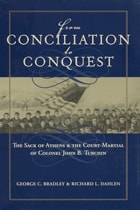
From Conciliation to Conquest
The Sack of Athens and the Court-Martial of Colonel John B. TurchinGeorge C. Bradley and Richard L. Dahlen
University of Alabama Press, 2006
In the summer of 1862, the U.S. Army court martialed Colonel John B. Turchin, a Russian-born Union officer, for "outrages" committed by his troops in Athens, Alabama
In the summer of 1862, the U.S. Army court martialed Colonel John B. Turchin, a Russian-born Union officer, for offenses committed by his troops in Athens, Alabama, including looting, safe cracking, the vandalization of homes, and the rape of young black women. The pillage of Athens violated a government policy of conciliation; it was hoped that if Southern civilians were treated gently as citizens of the United States, they would soon return their allegiance to the federal government.
By examining the volunteers who made up Turchin’s force, the colonel's trial, his subsequent promotion, the policy debate surrounding the incident and the public reaction to the outcome, the authors further illuminate one of the most provocative questions in Civil War studies: how did the policy set forth by President Lincoln evolve from one of conciliation to one far more modern in nature, placing the burden of war on the civilian population of the South?
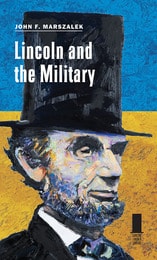
Lincoln and the Military
John F. Marszalek
Southern Illinois University Press, 2014
When Abraham Lincoln was elected president of the United States in 1860, he came into office with practically no experience in military strategy and tactics. Consequently, at the start of the Civil War, he depended on leading military men to teach him how to manage warfare. As the war continued and Lincoln matured as a military leader, however, he no longer relied on the advice of others and became the major military mind of the war. In this brief overview of Lincoln’s military actions and relationships during the war, John F. Marszalek traces the sixteenth president’s evolution from a nonmilitary politician into the commander in chief who won the Civil War, demonstrating why Lincoln remains America’s greatest military president.
As tensions erupted into conflict in 1861, Lincoln turned to his generals, including Winfield Scott, George B. McClellan, and Henry W. Halleck, for guidance in running the war. These men were products of the traditional philosophy of war, which taught that armies alone wage war and the way to win was to maneuver masses of forces against fractions of the enemy at the key point in the strategic area. As Marszalek shows, Lincoln listened at first, and made mistakes along the way, but he increasingly came to realize that these military men should no longer direct him. He developed a different philosophy of war, one that advocated attacks on all parts of the enemy line and war between not just armies but also societies. Warfare had changed, and now the generals had to learn from their commander in chief. It was only when Ulysses S. Grant became commanding general, Marszalek explains, that Lincoln had a leader who agreed with his approach to war. Implementation of this new philosophy, he shows, won the war for the Union forces.
Tying the necessity of emancipation to preservation of the Union, Marszalek considers the many presidential matters Lincoln had to face in order to manage the war effectively and demonstrates how Lincoln’s determination, humility, sense of humor, analytical ability, and knack for quickly learning important information proved instrumental in his military success. Based primarily on Lincoln’s own words, this succinct volume offers an easily-accessible window into a critical period in the life of Abraham Lincoln and the history of the nation.

Military Ascendancy and Political Culture
A Study of Indonesia's GolkarLeo Suryadinata
Ohio University Press, 1989
Leo Suryadinata traces the birth, struggle, and emergence of this party so closely identified with Indonesia’s President Suharto. Yet, to claim that Suharto and the military dominate the party is to view Golkar superficially, for the party is also composed of factions of civil servants and the Minister of Security and Defense, as well as several other governmental agencies. A complex and well-detailed cultural history of Indonesia’s most powerful political party, this case study should have wider implications for the study of military behavior in the Third World.
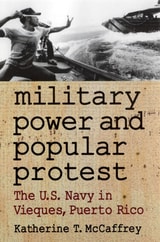
Military Power and Popular Protest
The U.S. Navy in Vieques, Puerto RicoMcCaffrey, Katherine T
Rutgers University Press, 2002
Residents of Vieques, a small island just off the east coast of Puerto Rico, live wedged between an ammunition depot and live bombing range for the U.S. Navy. Since the 1940s when the navy expropriated over two-thirds of the island, residents have struggled to make a life amid the thundering of bombs and rumbling of weaponry fire. Like the armys base in Okinawa, Japan, the facility has drawn vociferous protests from residents who challenged U.S. security interests overseas. In 1999, when a local civilian employee of the base was killed by a stray bomb, Vieques again erupted in protests that have mobilized tens of thousands individuals and transformed this tiny Caribbean Island into the setting for an international cause célèbre.
Katherine T. McCaffrey gives a complete analysis of the troubled relationship between the U.S. Navy and island residents. She explores such topics as the history of U.S. naval involvement in Vieques; a grassroots mobilizationled by fishermenthat began in the 1970s; how the navy promised to improve the lives of the island residentsand failed; and the present-day emergence of a revitalized political activism that has effectively challenged naval hegemony.
The case of Vieques brings to the fore a major concern within U.S. foreign policy that extends well beyond Puerto Rico: military bases overseas act as lightning rods for anti-American sentiment, thus threatening this countrys image and interests abroad. By analyzing this particular, conflicted relationship, the book also explores important lessons about colonialism and postcolonialism and the relationship of the United States to the countries in which it maintains military bases.
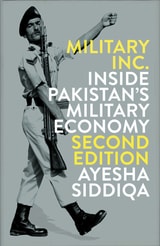
Military, Inc.
Inside Pakistan's Military EconomyAyesha Siddiqa
Pluto Press, 2016
This book offers a close look at what the rise of the military has meant for Pakistani society. Ayesha Siddiqa shows how entrenched the military has become, not just in day-to-day governance, but in the Pakistani corporate sector as well. What are the consequences of this unprecedented merging of the military and corporate sectors? What does it mean for Pakistan’s economic development—let alone for hopes of an eventual return to democracy and de-militarization? This new edition brings Siddiqa’s account fully up to date with a new preface and conclusion that emphasize the changing role of the media.
Panamanian Militarism
A Historical InterpretationCarlos Guevara Mann
Ohio University Press, 1996
Focusing on the causes that generated nineteenth-century predatory militarism, including political illegitimacy and US support, Guevara Mann analyzes the so-called professionalization of the armed forces — institutionalized militarism — and the polices developed by the 1968-89 military regime.
The author cautions that although Panamanian Defense Forces were abolished after the US invasion of December 1989, and although the state’s security apparatus has been placed under civilian direction, Panama’s stability remains threatened. Lack of legitimacy — the characteristic which informs military involvement in politics — still persists, and militarism could well reappear if the Panamanian polity fails to achieve legitimacy.
Reforming Intelligence
Obstacles to Democratic Control and EffectivenessEdited by Thomas C. Bruneau and Steven C. Boraz
University of Texas Press, 2007
These days, it's rare to pick up a newspaper and not see a story related to intelligence. From the investigations of the 9/11 commission, to accusations of illegal wiretapping, to debates on whether it's acceptable to torture prisoners for information, intelligence—both accurate and not—is driving domestic and foreign policy. And yet, in part because of its inherently secretive nature, intelligence has received very little scholarly study. Into this void comes Reforming Intelligence, a timely collection of case studies written by intelligence experts, and sponsored by the Center for Civil-Military Relations (CCMR) at the Naval Postgraduate School, that collectively outline the best practices for intelligence services in the United States and other democratic states.
Reforming Intelligence suggests that intelligence is best conceptualized as a subfield of civil-military relations, and is best compared through institutions. The authors examine intelligence practices in the United States, United Kingdom, and France, as well as such developing democracies as Brazil, Taiwan, Argentina, and Russia. While there is much more data related to established democracies, there are lessons to be learned from states that have created (or re-created) intelligence institutions in the contemporary political climate. In the end, reading about the successes of Brazil and Taiwan, the failures of Argentina and Russia, and the ongoing reforms in the United States yields a handful of hard truths. In the murky world of intelligence, that's an unqualified achievement.
Return Of Guatemala'S Refugees
Clark Taylor
Temple University Press, 1998
Twelve years later, utilizing terms of refugee agreements reached in 1982, villagers from Santa Maria who had fled to Mexico returned to their homes and lands to re-create their community with those who had stayed in Guatemala. Return of Guatemala's Refugees tells the story of that process. In this moving and provocative book, Clark Taylor describes the experiences of the survivors -- both those who stayed behind in conditions of savage repression and those who fled to Mexico where they learned to organize and defend their rights. Their struggle to rebuild is set in the wider drama of efforts by grassroots groups to pressure the government, economic elites, and army to fulfill peace accords signed in December of 1996.
Focusing on the village of Santa Maria Tzeja, Taylor defines the challenges that faced returning refugees and their community. How did the opposing subcultures of fear (generated among those who stayed in Guatemala) and of education and human rights (experienced by those who took refuge in Mexico) coexist? Would the flood of international money sent to settle the refugees and fulfill the peace accords serve to promote participatory development or new forms of social control? How did survivors expand the space for democracy firmly grounded in human rights? How did they get beyond the grief and trauma that remained from the terror of the early eighties? Finally, the ultimate challenge, how did they work within conditions of extreme poverty to create a grassroots democracy in a militarized society?
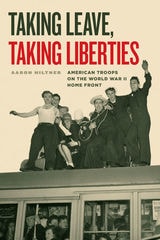
Taking Leave, Taking Liberties
American Troops on the World War II Home FrontAaron Hiltner
University of Chicago Press, 2020
With unsettling clarity, Aaron Hiltner reveals what American troops really did on the home front. While GIs are imagined to have spent much of the war in Europe or the Pacific, before the run-up to D-Day in the spring of 1944 as many as 75% of soldiers were stationed in US port cities, including more than three million who moved through New York City. In these cities, largely uncontrolled soldiers sought and found alcohol and sex, and the civilians living there—women in particular—were not safe from the violence fomented by these de facto occupying armies. Troops brought their pocketbooks and demand for “dangerous fun” to both red-light districts and city centers, creating a new geography of vice that challenged local police, politicians, and civilians. Military authorities, focused above all else on the war effort, invoked written and unwritten legal codes to grant troops near immunity to civil policing and prosecution.
The dangerous reality of life on the home front was well known at the time—even if it has subsequently been buried beneath nostalgia for the “greatest generation.” Drawing on previously unseen military archival records, Hiltner recovers a mostly forgotten chapter of World War II history, demonstrating that the war’s ill effects were felt all over—including by those supposedly safe back home.
The American Warfare State
The Domestic Politics of Military SpendingRebecca U. Thorpe
University of Chicago Press, 2014
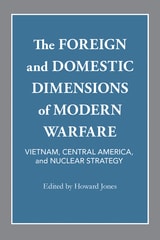
The Foreign and Domestic Dimensions of Modern Warfare
Vietnam, Central America, and Nuclear StrategyHoward Mumford Jones
University of Alabama Press, 1988
An exploration of the nuclear arms race and the dangers arising with the advent of “limited warfare”
After the development of the atomic bomb in 1945, Americans became engaged in a "new kind of war" against totalitarianism. Enemies and objectives slipped out of focus, causing political and military aims to mesh as a struggle to contain communism both at home and abroad encompassed civilians as well as soldiers. In matters relating to Vietnam, Central America, and the nuclear arms race, the domestic and foreign dimensions of each issue became inseparable. Policymakers in Washington had to formulate strategies dictated by "limited war" in their search for peace.
Contributors to this volume demonstrate the multifaceted nature of modern warfare. Robert H. Ferrell establishes the importance of studying military history in understanding the post-World War II era. On Vietnam, Colonel Harry G. Summers, Jr., gives an intriguing argument regarding the U. S. Army; George C. Herring examines how America's decisions in 1954 assured deepened involvement; and Captain Mark Clodfelter uncovers new evidence concerning "Linebacker I." On the home front, Robert F. Burk analyzes the impact of the Cold War on the battle for racial justice; Charles DeBenedetti puts forth a challenging interpretation of the antiwar movement; and James C. Schneider provides perspective on the relationship between the Vietnam War and the Great Society. On Central America, two writers downplay communism in explaining the region's troubles. Ralph Lee Woodward, Jr., fits the Nicaraguan revolution in the long span of history, and Thomas M. Leonard shows how the Reagan administration forced Costa Rica to side with the United States's anti-Sandinista policy. Finally, on nuclear strategy, Donald M. Snow offers a thought-provoking assessment of the "star wars" program, and Daniel S. Papp recommends measures to promote understanding among the superpowers.
These essays demonstrate that the making of foreign policy is immensely complicated, not subject to easy solution or to simple explanation. Despite these complexities, the central objective of policymakers remained clear: to safeguard what was perceived as the national interest.
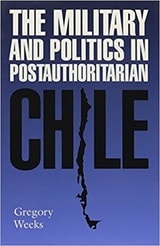
The Military and Politics in Postauthoritarian Chile
Gregory Weeks
University of Alabama Press, 2003
"The Military and Politics in Post-Authoritarian Chile should be read by everyone concerned with the relation between democracy and the armed forces. It is a well-researched, well-written volume that should prove both interesting and useful to scholars and students alike." —Perspectives on Politics
Why have political leaders of developing and authoritarian nations run into so many obstacles as they attempt to establish civilian supremacy over armed forces in the democratization of their countries? This is the question Gregory Weeks poses in his study of Chile from 1990 onward. He explains how the Chilean military has maintained a high level of political influence in the tumultuous aftermath of dictatorial rule by Army General Augusto Pinochet, thus confounding a smooth transition to civilian authority.
Even after the reins of power were officially handed over in 1990, Pinochet continued as commander in chief of the army until 1998, when he took a lifetime seat in the Senate and led the military’s efforts to retain its legal and constitutional prerogatives while limiting civilian oversight of military affairs. This assertion of guardianship by the military has produced a political tug-of-war between it and civilian authorities the two contenders for political primacy in Chile. In addition to recounting the historical background of this situation, Weeks’s study examines where conflict between these two contenders has been most productive and accord has been highest. His findings suggest that formal contacts, conducted through formal institutions, have been the most conducive to civil supremacy and, therefore, the consolidation of democracy.
Based on interviews, government documents, military journals, newspapers, and other archival sources, The Military and Politics in Postauthoritarian Chile describes how presidents, military officers, members of Congress, and judges have interacted since the end of the military regime. With implications for conflict resolution studies, this book will be valuable for Chileanists and policymakers and analysts of Latin American regimes, as well as academic libraries, military historians, social scientists, and students and scholars of Latin American history and politics.
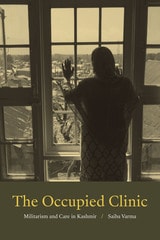
The Occupied Clinic
Militarism and Care in KashmirSaiba Varma
Duke University Press, 2020

The Privatisation of Israeli Security
Shir Hever
Pluto Press, 2017
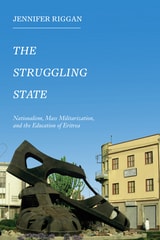
The Struggling State
Nationalism, Mass Militarization, and the Education of EritreaJennifer Riggan
Temple University Press, 2016
In her provocative ethnography, The Struggling State, Jennifer Riggan examines the contradictions of state power as simultaneously oppressive to and enacted by teachers. Riggan, who conducted participant observation with teachers in and out of schools, explores the tenuous hyphen between nation and state under lived conditions of everyday authoritarianism.
The Struggling State shows how the hopes of Eritrean teachers and students for the future of their nation have turned to a hopelessness in which they cannot imagine a future at all.
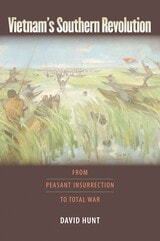
Vietnam's Southern Revolution
From Peasant Insurrection to Total WarDavid Hunt
University of Massachusetts Press, 2009
In Vietnam, the American government vowed to win the “hearts and minds” of the people. On the other side, among those who led and sympathized with the insurgents, the term “people's war” gained a wide currency. Yet while much has been written about those who professed to speak for the Vietnamese population, we know surprisingly little about the everyday life of the peasants who made up the bulk of the country's inhabitants. This book illuminates that subject. Drawing on a wide range of sources, including interviews conducted by the Rand Corporation with informants from My Tho Province in the Mekong Delta, David Hunt brings to light the daily experience of villagers in the midst of war and revolution.
The peasants of southern Vietnam were neither onlookers nor mere victims as fighting raged throughout their country. From the “concerted uprising” in 1959–1960 to the Tet Offensive of 1968, the revolutionary movement they created was in fact the driving force within the war. Known as the “Viet Cong” to their adversaries, the rebels called themselves the “Liberation Front.” They demanded an end to landlordism and an egalitarian distribution of the means of subsistence as well as a democratization of relations between town and countryside, parents and children, men and women. They hoped the Vietnamese people would achieve a fuller sense of their place in the world and of the power they possessed to fashion their own destinies, without reliance on supernatural forces.In the first half of the book, Hunt analyzes this cultural revolution. As fighting spread and became more destructive, especially after the U.S. escalation in 1965, villagers were driven from their homes, the rural infrastructure collapsed, and customary notions of space and time lost purchase on an increasingly chaotic world. In the second half of the book, Hunt shows how peasants, who earlier had aspired to a kind of revolutionary modernism, now found themselves struggling to survive and to cope with the American intruders who poured into My Tho, and how they managed to regroup and spearhead the Tet Offensive that irrevocably altered the course of the war.
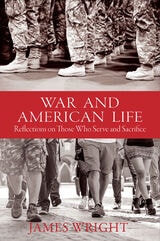
War and American Life
Reflections on Those Who Serve and SacrificeJames Wright
Brandeis University Press, 2022
An engaging collection of essays focusing on American veterans.
War and American Life is a book of essays and reflections by celebrated historian and former marine James Wright, who has been active as an advocate, teacher, and scholar. Featuring both previously published pieces and new essays, the book considers veterans in America and the ways in which our society needs better to understand who they are and what they have done on the nation’s behalf—and the responsibilities that follow this recognition.
Who Guards the Guardians and How
Democratic Civil-Military RelationsEdited by Thomas C. Bruneau and Scott D. Tollefson
University of Texas Press, 2006
The continued spread of democracy into the twenty-first century has seen two-thirds of the almost two hundred independent countries of the world adopting this model. In these newer democracies, one of the biggest challenges has been to establish the proper balance between the civilian and military sectors. A fundamental question of power must be addressed—who guards the guardians and how?
In this volume of essays, contributors associated with the Center for Civil-Military Relations in Monterey, California, offer firsthand observations about civil-military relations in a broad range of regions including Latin America, Africa, Asia, and Eastern Europe. Despite diversity among the consolidating democracies of the world, their civil-military problems and solutions are similar—soldiers and statesmen must achieve a deeper understanding of one another, and be motivated to interact in a mutually beneficial way. The unifying theme of this collection is the creation and development of the institutions whereby democratically elected civilians achieve and exercise power over those who hold a monopoly on the use of force within a society, while ensuring that the state has sufficient and qualified armed forces to defend itself against internal and external aggressors. Although these essays address a wide variety of institutions and situations, they each stress a necessity for balance between democratic civilian control and military effectiveness.