Results by title
32 books match the query 'Conflict management'
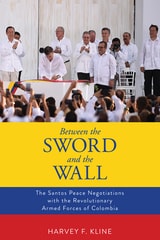
Between the Sword and the Wall
The Santos Peace Negotiations with the Revolutionary Armed Forces of ColombiaHarvey F. Kline
University of Alabama Press, 2020
Chronicles the peace process negotiations between Colombian president Juan Manuel Santos and the Marxist Revolutionary Armed Forces of Colombia
In Between the Sword and the Wall: The Santos Peace Negotiations with the Revolutionary Armed Forces of Colombia, Harvey Kline, a noted expert on contemporary Colombian politics, brings to a close his multivolume chronicle of the incessant violence that has devastated Colombia’s population, politics, and military for decades. This, his newest work on the subject, recounts and analyzes the negotiations between Colombian president Juan Manuel Santos and the Marxist Revolutionary Armed Forces of Colombia (FARC), which ended with a peace agreement in 2016.
The FARC insurgency began in 1964, and every Colombian president after 1980 unsuccessfully tried to negotiate a peace agreement with the group. Kline analyzes how the Santos administration was ultimately able to negotiate peace with the FARC. The agreement failed to receive the approval of the Colombian people in an October 2016 plebiscite, but a renegotiated version was later approved by the congress in the same year. Afterward, more than 7,000 rebels turned over their weapons to the UN mission in Colombia. The former combatants were then to be judged by a special court empowered to punish but not imprison those who had violated human rights. Throughout the book, Kline emphasizes the dual nature of the Santos negotiations, first with the FARC and second with the democratic opposition to the agreement led by former president Álvaro Uribe Vélez.
Kline provides readers with a well-researched analysis based on a variety of resources, including media articles and primary documents from the government, international organizations, and the FARC. He also conducted extensive interviews with twenty-eight government officials and Colombian experts from all ideological persuasions.

Beyond the Wire
Former Prisoners and Conflict Transformation in Northern IrelandPeter Shirlow and Kieran McEvoy
Pluto Press, 2008
This book provides the first detailed examination of the role played by former loyalist and republican prisoners in grass roots conflict transformation work in the Northern Ireland peace process. It challenges the assumed passivity of former prisoners and ex-combatants. Instead, it suggests that such individuals and the groups which they formed have been key agents of conflict transformation. They have provided leadership in challenging cultures of violence, developed practical methods of resolving inter-communal conflict and found ways for communities to explore their troubled past. In analysing this, the authors challenge the sterile demonisation of former prisoners and the processes that maintain their exclusion from normal civic and social life.
The book is a constructive reminder of the need for full participation of both former combatants and victims in post-conflict transformation. It also lays out a new agenda for reconciliation which suggests that conflict transformation can and should begin ‘from the extremes’.
The book will be of interest to students of criminology, peace and conflict studies, law and politics, geography and sociology as well as those with a particular interest in the Northern Ireland conflict.
Chances for Peace
Missed Opportunities in the Arab-Israeli ConflictBy Elie Podeh
University of Texas Press, 2015
Drawing on a newly developed theoretical definition of “missed opportunity,” Chances for Peace uses extensive sources in English, Hebrew, and Arabic to systematically measure the potentiality levels of opportunity across some ninety years of attempted negotiations in the Arab-Israeli conflict. With enlightening revelations that defy conventional wisdom, this study provides a balanced account of the most significant attempts to forge peace, initiated by the world’s superpowers, the Arabs (including the Palestinians), and Israel. From Arab-Zionist negotiations at the end of World War I to the subsequent partition, the aftermath of the 1967 War and the Sadat Initiative, and numerous agreements throughout the 1980s and 1990s, concluding with the Annapolis Conference in 2007 and the Abu Mazen-Olmert talks in 2008, pioneering scholar Elie Podeh uses empirical criteria and diverse secondary sources to assess the protagonists’ roles at more than two dozen key junctures.
A resource that brings together historiography, political science, and the practice of peace negotiation, Podeh’s insightful exploration also showcases opportunities that were not missed. Three agreements in particular (Israeli-Egyptian, 1979; Israeli-Lebanese, 1983; and Israeli-Jordanian, 1994) illuminate important variables for forging new paths to successful negotiation. By applying his framework to a broad range of power brokers and time periods, Podeh also sheds light on numerous incidents that contradict official narratives. This unique approach is poised to reshape the realm of conflict resolution.
Civil Wars, Civil Peace
An Introduction to Conflict ResolutionKumar Rupesinghe and Sanam Naraghi Anderlini
Pluto Press, 1998

Conflict Management for Libraries
Strategies for a Positive, Productive WorkplaceAmerican Library Association, 2005
Conflict Resolution in the Twenty-first Century
Principles, Methods, and ApproachesJacob Bercovitch and Richard Jackson
University of Michigan Press, 2009
Conflict Resolution in the Twenty-first Centuryis not only an essential introduction for students and scholars, it is a must-have guide for the men and women entrusted with creating stability and security in our changing world.
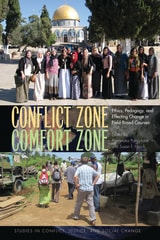
Conflict Zone, Comfort Zone
Ethics, Pedagogy, and Effecting Change in Field-Based CoursesAgnieszka Paczynska
Ohio University Press, 2019
By taking students out of their comfort zone, field-based courses—which are increasingly popular in secondary and postsecondary education—have the potential to be deep, transformative learning experiences. But what happens when the field in question is a site of active or recent conflict? In Conflict Zone, Comfort Zone, editors Agnieszka Paczyńska and Susan F. Hirsch highlight new approaches to field-based learning in conflict zones worldwide. As the contributors demonstrate, instructors must leave the comfort zone of traditional pedagogy to meet the challenges of field-based education.
Drawing on case studies in the United States and abroad, the contributors address the ethical considerations of learning in conflict zones, evaluate the effectiveness of various approaches to teaching these courses, and provide guidelines for effecting change. They also explore how the challenges of field-based classes are magnified in conflict and postconflict settings, and outline the dilemmas faced by those seeking to resolve those challenges. Finally, filling a crucial gap in existing literature, the contributors identify best practices that will assist aspiring instructors in developing successful field-based courses in conflict zones.
Contributors: Daniel R. Brunstetter, Alison Castel, Gina M. Cerasani, Alexander Cromwell, Maryam Z. Deloffre, Sandi DiMola, Leslie Dwyer, Eric Hartman, Pushpa Iyer, Allyson M. Lowe, Patricia A. Maulden, rj nickels, Anthony C. Ogden, Jennifer M. Ramos, Lisa E. Shaw, Daniel Wehrenfennig
Conflict in Organizational Groups
New Directions in Theory and PracticeLeigh Thompson
Northwestern University Press, 2007
The chapters in this book were presented at a conference held at the Kellogg School of Management in June 2005 entitled Conflict in Organizational Groups: New Directions in Theory and Practice. The Kellogg Team and Group Research Center (KTAG) and the Kellogg School of Management cosponsored the conference. The goal of the conference was to bring together both junior and senior scholars from a variety of disciplines to discuss their newest ideas and current trends in group conflict research. The chapters in this book represent perspectives from the fields of business, political science, sociology, and psychology.
The idea to organize a conference about conflict in organizational groups arose from three interrelated and exciting opportunities for theory and practice--both the academic and business press have focused growing attention on the management challenges of organizational groups; the academic community has begun to integrate various disciplinary perspectives, as evidenced by a growing number of cross-disciplinary coauthorships and thematic conferences; and several statistical and methodological advances have allowed scholars to better model variables across levels of analysis.
Taken together, these three reasons inspired the assembling of the interdisciplinary mix of seasoned and newly minted authors who in this volume tackle important and complex questions about group conflict. Their chapters represent cutting-edge advances in theory, methodology, and challenges to dominant perspectives.
Consensual Policy-making in the Nordic World
Peter Munk Christiansen
University of Wisconsin Press, 2023
The preconditions for these policies are strong civil societies, that is, strong capacities for collective mobilization and collective action among groups, relatively strong unitary states, and high levels of generalized trust. The institutional apparatus of these consensual policies has been labeled corporatism. Scandinavian corporatism has implied consent to a norm of affected interests. Groups that are supposedly affected by state policies have access to the processes leading up to political decision-making and are involved in the implementation of policies. This access often has public commissions or committees charged with preparing political decisions and delivering advice, as well as policy implementation committees.
Corporatist and consensual policymaking come at a price. The exchange between interest groups (in pursuit of policy influence) and state actors (in pursuit of information and political support from groups) tends to be time-consuming and confined to solutions that are accepted by all actors. Corporatist policies are consequently not very conducive to more radical reforms. After the heyday of corporatist policymaking in the 1970s, all the Scandinavian countries have loosened their corporatist structures to pave the way for reforms.
Cultivating Civility
Practical Ways to Improve a Dysfunctional LibraryJo Henry
American Library Association, 2020
Like other workplaces, libraries can sometimes be stressful, with library workers bearing the brunt of such problems as uncivil patrons, poor communication, inadequate leadership, and toxic behaviors by fellow employees. But there’s hope. Following up their acclaimed examination of the dysfunctional library ("should be essential reading for library leaders" raves Journal of the Australian Library and Information Association), here the authors present a book of proactive solutions and guidance culled from their own research, including interviews with library administrators and staff. Sharing valuable insights that will stimulate thought and discussion towards the goal of a healthier and more harmonious workplace, this book
- addresses the subject from four viewpoints—individual, team, leader, and organization—focusing on solutions and practical steps in each area;
- shows how self-reflection and self-awareness can be key starting points for exploring workplace issues;
- offers numerous suggestions for wellness and self-care;
- provides tips for improving interpersonal communication and conversations in ways that prevent silos and span boundaries;
- sheds light on forming and sustaining cohesive library teams, then provides solutions for misaligned teams and dissenters;
- discusses why effectively conveying vision, role modeling, and demonstrating empathy are all crucial behaviors of library leaders;
- shares actions library leaders can take to engage employees in the change process;
- examines how organizational structures can either detract or contribute to a library’s success; and
- details types of training that can be utilized to minimize dysfunction, including training for bias, empathy, conflict management, and diversity.
Filled with beneficial advice on every page, this resource will help libraries be better workplaces for everyone.
Defusing the Angry Patron
A How-To-Do-It Manual for LibrariansRhea Joyce Rubin
American Library Association, 2010

Desire and Imitation in International Politics
Jodok Troy
Michigan State University Press, 2021
Domesticating Democracy
The Politics of Conflict Resolution in BoliviaSusan Helen Ellison
Duke University Press, 2018
Effective Difficult Conversations
Catherine B. Soehner
American Library Association, 2017
Environmental Preservation and the Grey Cliffs Conflict
Negotiating Common Narratives, Values, and EthosKristin D. Pickering
Utah State University Press, 2024
Though environmental degradation and unauthorized use threatened the Grey Cliffs recreational lake area to the point that the Corps considered closure, community members valued it highly and wanted to keep it open. The community near this damaged and crime-ridden area needed help rejuvenating its landscape and image, but the Corps and community were sharply divided on how to maintain this beloved geographic space because of the stakeholders’ different cultural backgrounds and values, as well as the narratives used to discuss them. By co-constructing and aligning narratives, values, and ethos over time—a difficult and lengthy process—the Corps and community succeeded, and Grey Cliffs remains open to all. Focusing on field notes, participant interviews, and analysis of various texts created throughout the conflict, Pickering applies rhetorical analysis and a grounded theory approach to regulation, identity, sustainability, and community values to analyze this communication process.
Illustrating the positive change that can occur when governmental organizations and rural communities work together to construct shared values and engage in a rhetoric of relationship that preserves the environment, Environmental Preservation and the Grey Cliffs Conflict provides key recommendations for resolving environmental conflicts within local communities, especially for those working in technical and professional communication, organizational communication, environmental science, and public policy.
Failed States and Fragile Societies
A New World Disorder?Ingo Trauschweizer
Ohio University Press, 2014
Since the end of the Cold War, a new dynamic has arisen within the international system, one that does not conform to established notions of the state’s monopoly on war. In this changing environment, the global community must decide how to respond to the challenges posed to the state by military threats, political and economic decline, and social fragmentation. This insightful work considers the phenomenon of state failure and asks how the international community might better detect signs of state decay at an early stage and devise legally and politically legitimate responses.
This collection of essays brings military and social historians into conversation with political and social scientists and former military officers. In case studies from the former Yugoslavia, Somalia, Iraq, and Colombia, the distinguished contributors argue that early intervention to stabilize social, economic, and political systems offers the greatest promise, whereas military intervention at a later stage is both costlier and less likely to succeed.
Contributors: David Carment, Yiagadeesen Samy, David Curp, Jonathan House, James Carter, Vanda Felbab-Brown, Robert Rotberg, and Ken Menkhaus.
International Political Earthquakes
Michael Brecher
University of Michigan Press, 2008
International Political Earthquakes is the masterwork of the preeminent scholar Michael Brecher. Brecher, who came of age before World War II, has witnessed more than seven decades of conflict and has spent his career studying the dynamics of relations among nations throughout the world.
When terrorism, ethnic conflict, military buildup, or other local tensions spark an international crisis, Brecher argues that the structure of global politics determines its potential to develop into open conflict. That conflict, in turn, may then generate worldwide political upheaval. Comparing international crises to earthquakes, Brecher proposes a scale analogous to the Richter scale to measure the severity and scope of the impact of a crisis on the landscape of international politics.
Brecher's conclusions about the causes of international conflict and its consequences for global stability make a convincing case for gradual, nonviolent approaches to crisis resolution.
Michael Brecher is R. B. Angus Professor of Political Science at McGill University.
Music and Conflict
Edited by John Morgan O'Connell and Salwa El-Shawan Castello-Branco
University of Illinois Press, 2010
Nation-Building
A Key Concept For Peaceful Conflict Transformation?Jochen Hippler
Pluto Press, 2005
Currently the international debate on nation-building is heavily dominated by US actors and authors, especially by writers connected to the Bush administration or its policies. This book presents academic and political alternatives, presenting a critical view from 'Old Europe'.
The book combines academic research and analysis with policy orientation, with contributors from both fields. It clarifies the terminology distinguishing developmental, peace-related, imperial and analytical approaches to nation-building. Highlighting its connections to globalisation, democracy, ethnic and religious minorities, the contributors consider case studies such as Somalia, the Balkans, Afghanistan, Iraq, and Nigeria.
Dr. Jochen Hippler, Political Scientist at the University of Duisburg-Essen and its Institute for Development and Peace (INEF), specialises in regional conflicts and interventionism in the Third World, political identities, and the Middle East. He is the former Director of the Transnational Institute in Amsterdam and the author of numerous books and articles including Pax Americana (Pluto Press 1994), The Democratisation of Disempowerment (Pluto Press 1995) and The Next Threat (Pluto Press 1995).
Philanthropy, Conflict Management and International Law
The 1914 Carnegie Report on the Balkan Wars of 1912/13Stefan Troebst
Central European University Press, 2022
This book centers on the Report of the International Commission to Inquire into the Causes and Conduct of the Balkan Wars, published in Washington in the early summer of 1914 by the Carnegie Endowment for International Peace. The volume was born from the conviction that the full assessment of the significance of the Carnegie Report—one of the first international non-governmental fact-finding missions with the intention to promote peace—requires a deeper exploration of the context of its birth.
The authors examine how the countries involved in the wars handled the inquires of the Carnegie Commission and the role of the report in the remembrance of the wars in the respective states. Although the report considered both the Ottoman Empire and the Balkan nation-states insufficiently civilized to wage wars within the limits of the codes of conduct of international law, this orientalist conclusion can in part be explained by the liberal internationalist strategy of the Carnegie Endowment, and of the commission members’ professional, political, and ethnic background. Overshadowed by the outbreak of World War I, the Carnegie Report’s direct impact on international arbitration or international criminal law was limited, yet—in the authors’ opinion—it ultimately contributed to the further juridification of international relations
Religion and Peace
Global Perspectives and PossibilitiesNukhet A. Sandal
Ohio University Press, 2022
Rethinking War and Peace
Diana Francis
Pluto Press, 2004
The Dysfunctional Library
Challenges and Solutions to Workplace RelationshipsJo Henry
American Library Association, 2017
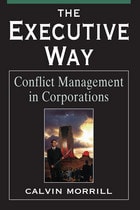
The Executive Way
Conflict Management in CorporationsCalvin Morrill
University of Chicago Press, 1995
Personal and corporate scandals, compensation battles, budget worries, interdepartmental rivalries, personal enmities, and general rancor are among everyday challenges faced by executives. Morrill shows what most influences the way managers handle routine conflicts are the cultures created by their company's organizational structure: whether there is a strong hierarchy, a weak hierarchy, or an absence of any strong central authority. The issues most likely to cause conflict within corporations Morrill identifies as managerial style, competition between departments, and performance evaluations, promotions, and compensation.
Among the people whose day-to-day lives we get to know are Jacobs, a divisional executive whose intuitive understanding of the corporate hierarchy enables him to topple his incompetent superior without direct confrontation; Fuller, who through a mix of brains, guile, and connections rises from staff executive secretary to corporate vice president in a large bank; Green, an old-fashioned accounting partner in a firm being taken over by management consultants; and the "Princess of Power," "Iron Man," and the "Terminator"—executives fighting their way to the top of a successful entertainment company.
Unprecedented in its direct access to top managers, this portrayal of daily life and conflict management among corporate elites will be of interest to professionals, scholars, and practitioners in organizational culture and behavior, managerial decision making, dispute, social control, law and society, and organizational ethnography.
The Horn of Africa
Intra-State and Inter-State Conflicts and SecurityEdited by Redie Bereketeab and Cyril Obi
Pluto Press, 2013
The Horn of Africa, comprising Djibouti, Eritrea, Ethiopia, Sudan and Somalia, is the most conflict-ridden region in Africa. This book explores the origins and impact of these conflicts at both an intra-state and inter-state level and the insecurity they create.
The contributors show how regional and international interventions have compounded pre-existing tensions and have been driven by competing national interests linked to the 'War on Terror' and acts of piracy off the coast of Somalia.
The Horn of Africa outlines proposals for multidimensional mechanisms for conflict resolution in the region. Issues of border demarcation, democratic deficit, crises of nation and state building, and the roles of political actors and traditional authorities are all clearly analysed.
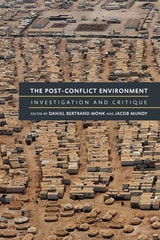
The Post-Conflict Environment
Investigation and CritiqueDaniel Bertrand Monk and Jacob Mundy, editors
University of Michigan Press, 2014
The Power of Dialogue between Israelis and Palestinians
Stories of Change from the School for PeaceSonnenschein, Nava
Rutgers University Press, 2019
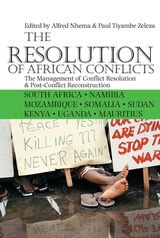
The Resolution of African Conflicts
The Management of Conflict Resolution and Post-Conflict ReconstructionAlfred Nhema
Ohio University Press, 2007
“These two volumes clearly demonstrate the efforts by a wide range of African scholars to explain the roots, routes, regimes and resolution of African conflicts and how to re-build post-conflict societies. They offer sober and serious analyses, eschewing the sensationalism of the western media and the sophistry of some of the scholars in the global North for whom African conflicts are at worst a distraction and at best a confirmation of their pet racist and petty universalist theories.”
—From the introduction by Paul Tiyambe Zeleza
This book offers analyses of a range of African conflicts and demonstrates that peace is too important to be left to outsiders.
Turkey and the Kurdish Peace Process
Actors, Issues, and ContextArin Y. Savran
University of Michigan Press, 2022
After the fall of the Ottoman Empire following World War I, the Kurds in the Middle East became the largest ethnic group in the region without a state of their own. Divided between Turkey, Syria, Iran, and Iraq, the Kurds have fought for their right to exist as a distinct national group, as well as for governing themselves. Turkey and the Kurdish Peace Process provides a historical and conceptual account of events in order to detail the key conditions, factors, and events that gave rise to the PKK (Kurdistan Workers’ Party) conflict in Turkey, as well as the conditions influencing the emergence, management, and collapse of the peace talks. Drawing from conflict resolution theories, this book investigates the transformation of key conflict actors and changes, over time, in their approach to the main conflict issues.
Moreover, Arin Y. Savran expands the concept of conflict transformation to encompass the ideological transformation of a movement as a result of a rigorous and deep intellectual epiphany on the part of the political leaders—a phenomenon that is unusual and little is known about, making it all the more relevant to include in future theoretical approaches in peace process studies. Methodologically, she rethinks conflict transformation/resolution approaches to focus on shifts in beliefs and relationships that occur prior to a peace process or the start of peace negotiations, when often much focus on peace processes is on the post-agreement phase. This book is among the first comprehensive, scholarly accounts to date (in the English language) that analyzes the Kurdish peace process.
Unchopping a Tree
Reconciliation in the Aftermath of Political ViolenceErnesto Verdeja
Temple University Press, 2009
Employing a normative theory of reconciliation that differs from prevailing approaches, Verdeja outlines a concept that emphasizes the importance of shared notions of moral respect and tolerance among adversaries in transitional societies. Drawing heavily from cases such as reconciliation efforts in Latin America and Africa—and interviews with people involved in such efforts—Verdeja debates how best to envision reconciliation while remaining realistic about the very significant practical obstacles such efforts face
Unchopping a Tree addresses the core concept of respect across four different social levels—political, institutional, civil society, and interpersonal—to explain the promise and challenges to securing reconciliation and broader social regeneration.
Understanding the Somalia Conflagration
Identity, Political Islam and PeacebuildingAfyare Abdi Elmi
Pluto Press, 2010
Somalia has been devastated by a US-backed Ethiopian invasion and years of civil war, and it has long been without a central government. Against this background of violence, Somali academic Afyare Abdi Elmi, attempts to explain the multiple dimensions of the conflict and find a peace-building consensus.
Somalia is a failed state and a Muslim state. This combination means the West assumes that it will become a breeding ground for extremism. The country regularly hits the headlines as a piracy hotspot. This combination of internal division and outside interference makes for an intensely hostile landscape. Elmi shows that only by addressing the problem of the statelessness in the country can the long process of peace begin. He highlights clan identities, Islam and other countries in the region as the key elements in any peace-building effort.
This unique account from an author who truly understands Somalia should be required reading for students and academics of international relations and peace / conflict studies.
WHO INTERVENES?
ETHNIC CONFLICT AND INTERSTATE CRISISDavid Carment, Patrick James, and Zeynep Taydas
The Ohio State University Press, 2006
The book includes a comparative analysis of five case studies: India and Sri Lanka, Somalia and Ethiopia, Malaysia and the Thai Malay (a non-intervention), the immediate aftermath of the breakup of Yugoslavia, and Greece and Turkey with Cyprus. The case histories produce strong support for the relevance of the typology and catalysts. Ethnic composition, institutional constraint, and ethnic affinity and cleavage are very useful factors in distinguishing both the likelihood and form of intervention.
Policies that encourage institutional reform and support ethnic diversity can be expected to reduce the likelihood and even the perceived need for intervention.