Results by title
24 books match the query 'Contributions in political science'
A Democracy of Distinction
Aristotle and the Work of PoliticsJill Frank
University of Chicago Press, 2004
Moving back and forth between Aristotle's writings and contemporary legal and political theory, Frank breathes new life into our conceptions of property, justice, and law by viewing them not only as institutions but as dynamic activities as well. Frank's innovative approach to Aristotle stresses his appreciation of the tensions and complexities of politics so that we might rethink and reorganize our own political ideas and practices. A Democracy of Distinction will be of enormous value to classicists, political scientists, and anyone interested in revitalizing democratic theory and practice.
A Vindication of Political Virtue
The Political Theory of Mary WollstonecraftVirginia Sapiro
University of Chicago Press, 1992
Drawing on all of Wollstonecraft's works and treating them thematically rather than sequentially, Sapiro shows that Wollstonecraft's ideas about women's rights, feminism, and gender are elements of a broad and fully developed philosophy, one with significant implications for contemporary democratic and liberal theory. The issues raised speak to many current debates in theory, including those surrounding interpretation of the history of feminism, the relationship between liberalism and republicanism in the development of political philosophy, and the debate over the canon. For political scientists, most of whom know little about Wollstonecraft's thought, Sapiro's book is an excellent, nuanced introduction which will cause a reconsideration of her work and her significance both for her time and for today's concerns. For feminist scholars, Sapiro's book offers a rounded and unconventional analysis of Wollstonecraft's thought.
Written with considerable charm and verve, this book will be the starting point for understanding this important writer for years to come.

Essays on Kant's Political Philosophy
Edited by Howard Lloyd Williams
University of Chicago Press, 1992
overshadowed by his compatriots Hegel and Marx. With his
strong defense of the rights of the person and his deep
insight into the strengths and weaknesses of modern society
Kant, possibly more than any other political thinker,
anticipated the problems of the late twentieth century.
Kant's political philosophy, wedded as it is to rights,
reform and gradual progress, is emerging from the shadows
cast by Hegelian and Marxist thinking about the state.
In this volume, thirteen distinguished contributors from the
United States, Canada, Britain, and Germany cast light on
important aspects of Kant's liberal thinking. Key topics
covered include Kant's liberal reformism, his relation with
Hegel, his attitude to women, the use of reason, revolution,
Kant's optimism and his moral and legal rigorism.
Howard Williams is a reader in political theory in the
Department of International Politics, University College of
Wales, Aberystwyth. His previous publications include
Kant's Political Philosophy, Concepts of
Ideology, and Hegel, Heraclitus, and Marx's
Dialectic.
Fortune Is a Woman
Gender and Politics in the Thought of Niccolo MachiavelliHanna Fenichel Pitkin
University of Chicago Press, 1999
Hanna Pitkin's provocative and enduring study of Machiavelli was the first to systematically place gender at the center of its exploration of his political thought. In this edition, Pitkin adds a new afterword, in which she discusses the book's critical reception and situates the book's arguments in the context of recent interpretations of Machiavelli's thought.
"A close and often brilliant exegesis of Machiavelli's writings."—The American Political Science Review
Foucault and Political Reason
Liberalism, Neo-Liberalism, and Rationalities of GovernmentEdited by Andrew Barry, Thomas Osborne, and Nikolas Rose
University of Chicago Press, 1996
These twelve essays provide a critical introduction to Foucault's work on politics, exploring its relevance to past and current thinking about liberal and neo-liberal forms of government. Moving away from the great texts of liberal political philosophy, this book looks closely at the technical means with which the ideals of liberal political rationalities have been put into practice in such areas as schools, welfare, and the insurance industry.
This fresh approach to one of the seminal thinkers of the twentieth century is essential reading for anyone interested in social and cultural theory, sociology, and politics.
Hegel's Critique of Liberalism
Rights in ContextSteven B. Smith
University of Chicago Press, 1989
Hypocrisy and Integrity
Machiavelli, Rousseau, and the Ethics of PoliticsRuth W. Grant
University of Chicago Press, 1997
John Locke's Liberalism
Ruth W. Grant
University of Chicago Press, 1987
Leo Strauss, Max Weber, and the Scientific Study of Politics
Nasser Behnegar
University of Chicago Press, 2002
Behnegar's impressive book argues that Strauss was not against the scientific study of politics, but he did reject the idea that it could be built upon political science's unexamined assumption of the distinction between facts and values. Max Weber was, for Strauss, the most profound exponent of values relativism in social science, and Behnegar's explication artfully illuminates Strauss's critique of Weber's belief in the ultimate insolubility of all value conflicts.
Strauss's polemic against contemporary political science was meant to make clear the contradiction between its claim of value-free premises and its commitment to democratic principles. As Behnegar ultimately shows, values—the ethical component lacking in a contemporary social science—are essential to Strauss's project of constructing a genuinely scientific study of politics.
Liberty, Equality, Fraternity
And Three Brief EssaysJames Fitzjames Stephen
University of Chicago Press, 1992
"His writing is strong meat—full of the threat of hellfrire, the virtue of government by the lash and a fervent belief that the state cannot remain neutral but has a duty to espouse a moral code."—Roderick Munday, Cambridge Law Journal
Machiavelli's Virtue
Harvey C. Mansfield
University of Chicago Press, 1996
"The book brings together essays that have mapped [Mansfield's] paths of reflection over the past thirty years. . . . The ground, one would think, is ancient and familiar, but Mansfield manages to draw out some understandings, or recognitions, jarringly new."—Hadley Arkes, New Criterion
"Mansfield's book more than rewards the close reading it demands."—Colin Walters, Washington Times
"[A] masterly new book on the Renaissance courtier, statesman and political philosopher. . . . Mansfield seeks to rescue Machiavelli from liberalism's anodyne rehabilitation."—Roger Kimball, The Wall Street Journal
Mill on Democracy
From the Athenian Polis to Representative GovernmentNadia Urbinati
University of Chicago Press, 2002
Redirecting attention to Mill as a political thinker, Nadia Urbinati argues that this claim misrepresents Mill's thinking. Although he did not elaborate a theory of democracy, Mill did devise new avenues of democratic participation in government that could absorb the transformation of politics engendered by the institution of representation. More generally, Urbinati assesses Mill's contribution to modern democratic theory by critiquing the dominant "two liberties" narrative that has shaped Mill scholarship over the last several decades. As Urbinati shows, neither Isaiah Berlin's theory of negative and positive freedom nor Quentin Skinner's theory of liberty as freedom from domination adequately captures Mill's notion of political theory.
Drawing on Mill's often overlooked writings on ancient Greece, Urbinati shows that Mill saw the ideal representative government as a "polis of the moderns," a metamorphosis of the unique features of the Athenian polis: the deliberative character of its institutions and politics; the Socratic ethos; and the cooperative implications of political agonism and dissent. The ancient Greeks, Urbinati shows, and Athenians in particular, are the key to understanding Mill's contribution to modern democratic theory and the theory of political liberty.
Urbinati concludes by demonstrating the importance of Mill's deliberative model of politics to the contemporary debate on liberal and republican views of liberty. Her fresh and persuasive approach not only clarifies Mill's political ideas but also illustrates how they can help enrich our contemporary understanding of democracy.
Not by Reason Alone
Religion, History, and Identity in Early Modern Political ThoughtJoshua Mitchell
University of Chicago Press, 1993
This erudite and ambitious work crosses disciplinary boundaries to expose unsuspected connections between political theory, religion, and history. In doing so, it offers a view of modern political thought undistorted by conventional distinctions between the ancient and the modern, and between the religious and the political.
"Original. . . . A delight to read a political philosopher who takes the theologies of Hobbes and Locke seriously." —J. M. Porter, Canadian Journal of History
"Mitchell's argument both illuminates and fascinates. . . . An arresting, even stunning, contribution to our study of modern political thought."—William R. Stevenson, Jr., Christian Scholar's Review
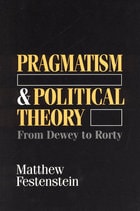
Pragmatism and Political Theory
From Dewey to RortyMatthew Festenstein
University of Chicago Press, 1997
The book's second part traces how Dewey's approach has been differently developed, especially in the work of three contemporary pragmatic thinkers: Richard Rorty, Jurgen Habermas, and Hilary Putnam. This first full-length critical study of the relationship between the pragmatist tradition and political philosophy fills a significant gap in contemporary thought.
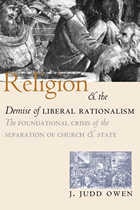
Religion and the Demise of Liberal Rationalism
The Foundational Crisis of the Separation of Church and StateJ. Judd Owen
University of Chicago Press, 2001
J. Judd Owen answers these questions with a remarkable critical analysis of four twentieth-century liberal and postliberal thinkers: John Dewey, John Rawls and, most extensively, Richard Rorty and Stanley Fish. His unique readings of these theorists and their approaches to religion lead him to conclusions that are meticulously constructed and surprising, arguing against the perception of liberalism as simple moral or religious neutrality, calling into question the prevailing justifications for separation of church and state, and challenging the way we think about the very basis of constitutional government.
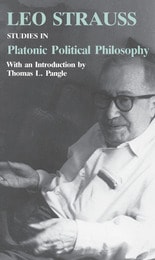
Studies in Platonic Political Philosophy
Leo Strauss
University of Chicago Press, 1983
As his choice of title indicates, the heart of Strauss's work is Platonism—a Platonism that is altogether unorthodox and highly controversial. These essays consider, among others, Heidegger, Husserl, Nietzsche, Marx, Moses Maimonides, Machiavelli, and of course Plato himself to test the Platonic understanding of the conflict between philosophy and political society. Strauss argues that an awesome spritual impoverishment has engulfed modernity because of our dimming awareness of that conflict.
Thomas Pangle's Introduction places the work within the context of the entire Straussian corpus and focuses especially on Strauss's late Socratic writings as a key to his mature thought. For those already familiar with Strauss, Pangle's essay will provoke thought and debate; for beginning readers of Strauss, it provides a fine introduction. A complete bibliography of Strauss's writings if included.
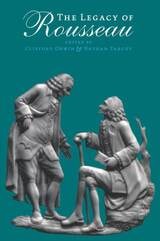
The Legacy of Rousseau
Edited by Clifford Orwin and Nathan Tarcov
University of Chicago Press, 1996
The volume begins by taking up a central theme noted by the late Allan Bloom—Rousseau's critique of the bourgeois as the dominant modern human type and as a being fundamentally in contradiction, caught between the sentiments of nature and the demands of society. It then turns to Rousseau's crucial polarity of nature and society and to the later conceptions of history and culture it gave rise to. The third part surveys Rousseau's legacy in both domestic and international politics. Finally, the book examines Rousseau's contributions to the virtues that have become central to the current sensibility: community, sincerity, and compassion.
Contributors include Allan Bloom, François Furet, Pierre Hassner, Christopher Kelly, Roger Masters, and Arthur Melzer.
The Lesson of Carl Schmitt
Four Chapters on the Distinction between Political Theology and Political PhilosophyHeinrich Meier
University of Chicago Press, 1998
Relating this religious dimension to Schmitt's support for National Socialism and his continuing anti-Semitism, Meier compels the reader to come to terms with the irreconcilable differences between political theology and political philosophy. His book will give pause to those who have tended to gloss over the troubling aspects of some of Schmitt's ideas.
With editions in German, French, Italian, and now English, Meier's two books on Schmitt have dramatically reoriented the international debate about Carl Schmitt and his significance for twentieth-century political thought.
"Standing far above the rest . . . is Heinrich Meier's new study, Die Lehre Carl Schmitts, which covers all of Schmitt's writings. . . . Meier's work has forced everyone to take a second look at the assumptions underlying Schmitt's better-known writings and reconsider some that have been ignored."—Mark Lilla, reviewing the German edition in The New York Review of Books
The Political and Social Theory of Max Weber
Collected EssaysWolfgang J. Mommsen
University of Chicago Press, 1989
The Spirit of Modern Republicanism
The Moral Vision of the American Founders and the Philosophy of LockeThomas L. Pangle
University of Chicago Press, 1988
"A work of extraordinary ambition, written with great intensity. . . . [Pangle offers] a trenchant analysis of Locke's writings, designed to demonstrate their remarkable originality and to clarify by doing so as much as the objective predicament as the conscious intentions of the Founding Fathers themselves."—John Dunn, Times Higher Education Supplement
"A forcefully argued study of the Founding Fathers' debt to Locke. . . . What distinguishes Pangle's study from the dozens of books which have challenged or elaborated upon the republican revision is the sharpness with which he exposes the errors of the revisionists while at the same time leaving something of substantive value for the reader to consider."—Joyce Appleby, Canadian Journal of History
"Breathtaking in its daring and novelty. . . . Pangle's book is tense and tenacious, a stunning meditation on America's political culture."—John Patrick Diggins, Transactions of the C. S. Peirce Society
Thomas Hobbes and the Natural Law Tradition
Norberto Bobbio
University of Chicago Press, 1993
Tracing Hobbes's work through De Cive and Leviathan, Bobbio identifies the philosopher's relation to the tradition of natural law. That Hobbes must now be understood in both this tradition as well as in the seemingly contradictory positivist tradition becomes clear for the first time in Bobbio's account. Bobbio also demonstrates that Hobbes cannot be easily labelled "liberal" or "totalitarian"; in Bobbio's provocative analysis of Hobbes's justification of the state, Hobbes emerges as a true conservative.
Though his primary concern is to reconstruct the inner logic of Hobbes's thought, Bobbio is also attentive to the philosopher's biography and weaves into his analysis details of Hobbes's life and world—his exile in France, his relation with the Mersenne circle, his disputes with Anglican bishops, and accusations of heresy leveled against him. The result is a revealing, thoroughly new portrait of the first theorist of the modern state.
Thomas More on Statesmanship
Gerard Wegemer
Catholic University of America Press, 1996
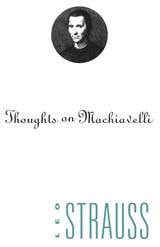
Thoughts on Machiavelli
Leo Strauss
University of Chicago Press, 1958
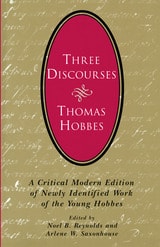
Three Discourses
A Critical Modern Edition of Newly Identified Work of the Young HobbesThomas Hobbes
University of Chicago Press, 1995
Saxonhouse and Reynolds present the complete texts of the discourse with full annotations and modernized spellings. These are followed by a lengthy essay analyzing the pieces' significance for Hobbes's intellectual development and modern political thought more generally. The discourses provide the strongest evidence to date for the profound influences of Bacon and Machiavelli on the young Hobbes, and they add a new dimension to the much-debated impact of the scientific method on his thought. The book also contains both introductory and in-depth explanations of statistical "wordprinting."