Results by title
23 books match the query 'Controversial literature'
A Foreign Kingdom
Mormons and Polygamy in American Political Culture, 1852-1890Christine Talbot
University of Illinois Press, 2013
Against the Inveterate Obduracy of the Jews
Irven M. Peter the Venerable
Catholic University of America Press, 2013
Antirevialism in Antebellum America
A Collection of Religious VoicesBratt, James D
Rutgers University Press, 2005
But revivalism has always generated opposition, too, even in its century of glory. In Anti-Revivalism in Antebellum America, James D. Bratt offers extensive introductions to primary anti-revivalist documents. These works range from the Philadelphia Methodist John F. Watson's protests against camp meetings in 1819, to Elizabeth Cady Stanton's "Eighty Years and More," written in 1898, in which she recalls her youthful encounter with revival preaching and her rebound into political activism and religious agnosticism. Through the recovered voices of antebellum religious critics, Bratt shows how American culture was already being reshaped a generation before the Civil War and how evangelical religion stood at the center of a "culture war."
If revivals typified the era when Americans launched and defined their new nation, then objections to these revivals embodied the growing discontent at what the nation had become. An important and long overdue collection, this book urges an understanding of anti-revival literature both in the context of the era when it emerged as well as in terms of the broader dynamic of American life.
Includes selections from Orestes Brownson, Horace Bushnell, Calvin Colton, Orville Dewey, Albert Baldwin Dod, George Elley, Charles G. Finney, John Williamson Nevin, Stephen Olin, Phoebe Palmer, Daniel Alexander Payne, Ephraim Perkins, Elizabeth Cady Stanton, Joseph Smith, Harriet Beecher Stowe, La Roy Sunderland, John Fanning Watson, Ellen G. White, and Friedrich C. D. Wyneken.
Bearing False Witness
Debunking Centuries of Anti-Catholic HistoryRodney Stark
Templeton Press, 2016
As we all know and as many of our well-established textbooks have argued for decades, the Inquisition was one of the most frightening and bloody chapters in Western history; Pope Pius XII was anti-Semitic and rightfully called “Hitler’s Pope,” the Dark Ages were stunting the progress of knowledge to be redeemed only by the secular spirit of the Enlightenment. The religious Crusades were an early example of the rapacious Western thirst for riches and power. But what if these long held beliefs were all wrong?
In this stunning, powerful, and ultimately persuasive book, Rodney Stark, one of the most highly regarded sociologists of religion and bestselling author of The Rise of Christianity (HarperSanFrancisco 1997), argues that some of our most firmly held ideas about history, ideas that paint the Catholic Church in the least favorable light are, in fact, fiction. Why have we held these wrongheaded ideas so firmly and for so long? And if our beliefs are wrong, what is the truth?
In each chapter, Stark takes on a well-established anti-Catholic myth, gives a fascinating history of how each myth became conventional wisdom and presents a startling picture of the real truth. For example, instead of the Spanish Inquisition being an anomaly of torture and murder of innocent people persecuted for “imaginary” crimes such as witchcraft and blasphemy, Stark argues that not only did the Spanish Inquisition spill very little blood, but it was a major force in support of moderation and justice.
Stark dispels the myth of Pope Pius XII being apathetic or even helpful to the Nazi movement, such as to merit the title “Hitler’s Pope,” and instead shows that the campaign to link Pope Pius XII to Hitler was initiated by the Soviet Union, presumably in hopes of neutralizing the Vatican in post-World War II affairs. Many praised Pope Pius XIIs vigorous and devoted efforts to saving Jewish lives during the war.
Instead of understanding the Dark Ages as a millennium of ignorance and backwardness inspired by the Catholic Church’s power, Stark argues that the whole notion of the “Dark Ages” was an act of pride perpetuated by anti-religious intellectuals who were determined to claim that theirs was the era of “Enlightenment.”
In the end, readers of Bearing False Witness will have a more accurate history of the Catholic Church and will also understand why it became unfairly maligned for so long. Bearing False Witness is a compelling and sobering account of how egotism and ideology often work together to give us a false truth.
Book of Abraham Apologetics
A Review and CritiqueDan Vogel
Signature Books, 2021
Dialogue against the Jews
Petrus Alfonsi
Catholic University of America Press, 2006
Discourses against Judaizing Christians
Saint John Chrysostom
Catholic University of America Press, 1979

Domestic Broils
Shakers, Antebellum Marriage, and the Narratives of Mary and Joseph DyerElizabeth De Wolfe
University of Massachusetts Press, 2010
Epistle to Marguerite de Navarre and Preface to a Sermon by John Calvin
Marie Dentière
University of Chicago Press, 2004
Dentière's Very Useful Epistle (1539) is the first explicit statement of reformed theology by a woman to appear in French. Addressed to Queen Marguerite of Navarre, sister of the French king Francis I, the Epistle asks the queen to help those persecuted for their religious beliefs. Dentière offers a stirring defense of women and asserts their right to teach the word of God in public. She defends John Calvin against his enemies and attacks the hierarchy of the Roman Catholic Church. Her Preface (1561) to one of Calvin's sermons criticizes immodesty and extravagance in clothing and warns the faithful to be vigilant. Undaunted in the face of suppression and ridicule, this outspoken woman persisted as an active voice in the Reformation.
Exposé of Polygamy
A Lady's Life Among the MormonsFanny Stenhouse
Utah State University Press, 2008
After the 1872 publication of Exposé,Fanny Stenhouse became a celebrity in the cultural wars between Mormons and much of America. An English convert, she had grown disillusioned with the Mormon Church and polygamy, which her husband practiced before associating with a circle of dissident Utah intellectuals and merchants. Stenhouse’s critique of plural marriage, Brigham Young, and Mormonism was also a sympathetic look at Utah’s people and honest recounting of her life. She later created a new edition, titled "Tell It All," which ensured her notoriety in Utah and popularity elsewhere but turned her thoughtful memoir into a more polemical, true exposé of Polygamy. Since 1874, it has stayed in print, in multiple, varying editions. The original book, meanwhile, is less known, though more readable. Tracing the literary history of Stenhouse’s important piece of Americana, Linda DeSimone rescues an important autobiographical and historical record from the baggage notoriety brought to it.

Jewish History, Jewish Religion
The Weight of Three Thousand YearsIsrael Shahak
Pluto Press, 2008
Israel Shahak was a remarkable man. Born in the Warsaw ghetto and a survivor of Belsen, Shahak arrived in Israel in 1945. Brought up under Jewish Orthodoxy and Hebrew culture, he consistently opposed the expansion of the borders of Israel from 1967.
In this extraordinary and highly acclaimed book, Shahak embarks on a provocative study of the extent to which the secular state of Israel has been shaped by religious orthodoxies of an invidious and potentially lethal nature. Drawing on the Talmud and rabbinical laws, Shahak argues that the roots of Jewish chauvinism and religious fanaticism must be understood before it is too late.
Written from a humanitarian viewpoint by a Jewish scholar, this is a rare and highly controversial criticism of Israel that will both excite and disturb readers worldwide.
Jews Against Zionism
The American Council for Judaism, 1942-1948Thomas A. Kolsky
Temple University Press, 1992
This is the first full-scale history of the only organized American Jewish opposition to Zionism during the 1940s. Despite extensive literature on the Zionist movement, the Jewish opposition to Zionism has received only marginal and usually negative attention. In this impartial study, Thomas A. Kolsky examines the neglected phenomenon of Jewish anti-Zionism, its roots, and its results.
In 1942, a number of dissident Reform rabbis founded the American Council for Judaism, the first and only Jewish organization created to fight against Zionism and the establishment of a Jewish state. Emphasizing the purely religious nature of Judaism and unequivocally rejecting Jewish nationalism, the Council supported free Jewish immigration and equal rights for Jews throughout the world. For Palestine, specifically, it advocated establishment of a democratic state wherein all citizens, regardless of their religion, would enjoy equal political rights.
Summarizing both the history of Zionism and the history of American Jews, Kolsky traces the effects of the Holocaust on the Zionist movement and the personalities that shaped the leadership of the Council. Its position toward Zionism has particular contemporary relevance in understanding the historical relationship between Israel and the Palestinians.
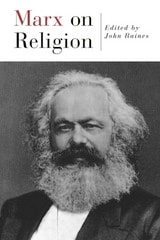
Marx On Religion
John Raines
Temple University Press, 2002
Moral Absolutes
Tradition, Revision, and Truth (Michael J. McGivney Lectures of the John Paul II Institute)John Finnis
Catholic University of America Press, 1991
Mormonism Unvailed
Eber D. Howe, with critical comments by Dan VogelEber Dudley Howe
Signature Books, 2015
On Genesis
Two Books on Genesis against the Manichees and On the Literal Interpretation of Genesis: An Unfinished BookSaint Augustine
Catholic University of America Press, 1991
Religion and Economic Justice
edited by Michael Zweig
Temple University Press, 1992
As Eastern European economies move to capitalism, many people there hope for a better life. But capitalism is no guarantee of prosperity. Economic deprivation, war, social marginalization, and powerlessness mark the lives of millions and spark social movements for economic justice aimed at correcting these conditions. Often these movements are based in religious communities, their activists motivated by religious commitment to human dignity and the need for personal empowerment. Although the new theology contains an economic critique, little dialogue has taken place between the religious and economic communities on matters of economic analysis. Religion and Economic Justice seeks to develop this exchange.
This book contains original essays by distinguished contributors from economics, religious ethics, and biblical studies. The authors provide a powerful critique of the individualism which underlies mainstream economic analysis and which fragments our communities, a critique that extends to the values implicit in the market system. The authors also show how social marginalization and economic deprivation are the consequences of economic organization, not simply the failings of individuals.
Spinoza's Critique of Religion
Leo Strauss
University of Chicago Press, 1965
Strauss's autobiographical Preface, traces his dilemmas as a young liberal intellectual in Germany during the Weimar Republic, as a scholar in exile, and as a leader of American philosophical thought.
"[For] those interested in Strauss the political philosopher, and also those who doubt whether we have achieved the 'final solution' in respect to either the character of political science or the problem of the relation of religion to the state." —Journal of Politics
"A substantial contribution to the thinking of all those interested in the ageless problems of faith, revelation, and reason." —Kirkus Reviews
Leo Strauss (1899-1973) was the Robert Maynard Hutchins Distinguished Service Professor Emeritus of political science at the University of Chicago. His contributions to political science include The Political Philosophy of Hobbes, The City and the Man, What is Political Philosophy?, and Liberalism Ancient and Modern.
The Case Against Christianity
Michael Martin
Temple University Press, 1993
In this systematic philosophical critique of the major tenets of Christianity, Michael Martin examines the semantic and epistemological bases of religious claims and beliefs. Beginning with a comparison and evaluation of the Apostles’ Creed, the Niceno-Chalcedonian Creed, and the Athanasian Creed, Martin discusses the principal theological, historical, and eschatological assumptions of Christianity. These include the historicity of Jesus, the Incarnation, the Second Coming, the Virgin Birth, the Resurrection, Salvation through faith in Jesus, and Jesus as a model of ethical behavior.
Until now, an adequately convincing criticism of Christianity did not exist. Martin’s use of historical evidence, textual analysis, and interpretations by philosophers and theologians provides the strongest case made to date against the rational justification of Christian doctrines.
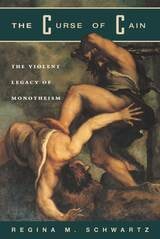
The Curse of Cain
The Violent Legacy of MonotheismRegina M. Schwartz
University of Chicago Press, 1997
"[A] provocative and timely examination of the interrelationship of monotheism and violence. . . . This is a refreshing alternative to criticism-biblical and otherwise-that so often confuses interpretation with closure; it is an invitation to an ethic of possibility, plenitude, and generosity, a welcome antidote to violence, as important for its insights into memory, identity, and place as for its criticism of monotheism's violent legacy."—Booklist
"Brilliant and provocative, this is a work demanding close attention from critics, theologians, and all those interested in the imaginative roots of common life."—Rowan Williams, Bishop of Monmouth
"A stunningly important book."—Walter Brueggemann, Theology Today
"Artfully rendered, endlessly provocative."—Lawrence Weschler, New Yorker
The Footsteps of Israel
Understanding Jews in Anglo-Saxon EnglandAndrew P. Scheil
University of Michigan Press, 2004
The Invention of Sodomy in Christian Theology
Mark D. Jordan
University of Chicago Press, 1997
"A crucial contribution to our understanding of the tortured and tortuous relationship between men who love men, and the Christian religion—indeed, between our kind and Western society as a whole. . . . The true power of Jordan's study is that it gives back to gay and lesbian people our place in history and that it places before modern theologians and church leaders a detailed history of fear, inconsistency, hatred and oppression that must be faced both intellectually and pastorally."—Michael B. Kelly, Screaming Hyena
"[A] detailed and disturbing tour through the back roads of medieval Christian thought."—Dennis O'Brien, Commonweal
"Being gay and being Catholic are not necessarily incompatible modes of life, Jordan argues. . . . Compelling and deeply learned."—Virginia Quarterly Review
Writings Against the Saracens
Catholic University of America Press, 2016