Results by title
1882 books match the query 'Criticism and interpretation' and 144 start with a
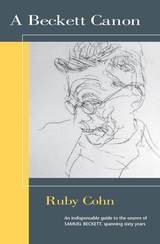
A Beckett Canon
Ruby Cohn
University of Michigan Press, 2005
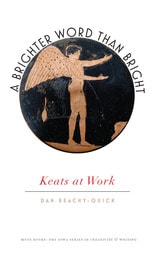
A Brighter Word Than Bright
Keats at WorkDan Beachy-Quick
University of Iowa Press, 2013
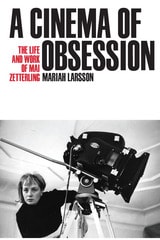
A Cinema of Obsession
The Life and Work of Mai ZetterlingMariah Larsson
University of Wisconsin Press, 2020
Critics have compared her work to that of Ingmar Bergman, Luis Buñuel, and Federico Fellini, but Zetterling had a distinct style—alternately radical and reactionary—that straddled the gendered divide between high art and mass culture. Tackling themes of sexuality, isolation, and creativity, her documentaries, short and feature films, and television works are visually striking. Her oeuvre provoked controversy and scandal through her sensational representations of reproduction and motherhood.
Mariah Larsson provides a lively and authoritative take on Zetterling's legacy and complicated position within film and women's history. A Cinema of Obsession provides necessary perspective on how the breadth of an artist's collected works keeps gatekeepers from recognizing their achievements, and questions why we still distinguish between national and global visual cultures and the big and small screens in the #MeToo era.
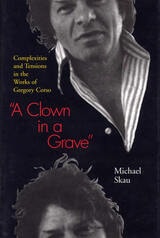
A Clown in a Grave
Complexities and Tensions in the Works of Gregory CorsoMichael Skau
Southern Illinois University Press, 1999
Using a number of critical approaches, Michael Skau examines Gregory Corso's complex imagination, his humor, and his poetic techniques in dealing with America, the Beat generation, and death.
Skau covers the complete works of Corso, one of the four major Beat Generation writers (with Jack Kerouac, Allen Ginsberg, and William S. Burroughs) who attempted to provide an alternative to what they saw as the academic forms of literature dominating American writing through the 1940s and 1950s. The Beat option focused on ordinary people, spurning the cultural pretensions of the intelligentsia and using common language as well as the rhythms of actual speech. Corso, abandoned as a child by his mother, subjected to a variety of foster homes, and imprisoned as an adolescent, became an authentic voice of America's neglected streetwise youth. He embodies much of the tension, confusion, and rebellion that emerged in America after World War II and eventually crested in the 1960s.
Corso emphasizes social issues, yet risks undermining this significance by using wit, wordplay, and humor. While conceding mortality, he is adamant in refusing to acknowledge death's power. Even as he rebels against conventional literature, he still is enchanted by classicism and romanticism, often borrowing their techniques and idioms. Skau examines these complexities and seeming contradictions throughout Corso's career, showing that Corso finds value in inconsistency and vacillation. For him, as illustrated in the poems "Hair" and "Marriage," contradiction and ambivalence suggest the foundations of freedom of imagination.
In spite of Corso's significance as an American poet, Skau's is the first extensive study of his work, including his fiction. Skau also provides the first complete bibliography of Corso's published work in more than thirty years.
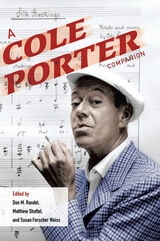
A Cole Porter Companion
Edited by Don M. Randel, Matthew Shaftel, and Susan Forscher
University of Illinois Press, 2016
In A Cole Porter Companion, a parade of performers and scholars offers essays on little-known aspects of the master tunesmith's life and art. Here are Porter's days as a Yale wunderkind and his nights as the exemplar of louche living; the triumph of Kiss Me Kate and shocking failure of You Never Know; and his spinning rhythmic genius and a turkey dinner into "You're the Top" while cultural and economic forces take "Ev'ry Time We Say Goodbye" in unforeseen directions. Other entries explore notes on ongoing Porter scholarship and delve into his formative works, performing career, and long-overlooked contributions to media as varied as film and ballet.
Prepared with the cooperation of the Porter archives, A Cole Porter Companion is an invaluable guide for the fans and scholars of this beloved American genius.
A Commentary on Cicero, De Natura Deorum II
Andrew R. Dyck
University of Michigan Press, 2025
A Commentary on The Complete Greek Tragedies. Aeschylus
James C. Hogan
University of Chicago Press, 1985
James C. Hogan provides a general introduction to Aeschylean theater and drama, followed by a line-by-line commentary on each of the seven plays. He places Aeschylus in the historical, cultural, and religious context of fifth-century Athens, showing how the action and metaphor of Aeschylean theater can be illuminated by information on Athenian law athletic contests, relations with neighboring states, beliefs about the underworld, and countless other details of Hellenic life. Hogan clarifies terms that might puzzle modern readers, such as place names and mythological references, and gives special attention to textual and linguistic issues: controversial questions of interpretation; difficult or significant Greek words; use of style, rhetoric, and commonplaces in Greek poetry; and Aeschylus's place in the poetic tradition of Homer, Hesiod, and the elegiac poets. Practical information on staging and production is also included, as are maps and illustrations, a bibliography, indexes, and extensive cross-references between the seven plays. Forthcoming volumes will cover the works of Sophocles and Euripides.
A Commentary on the Plays of Sophocles
James C. Hogan
Southern Illinois University Press, 1991
James C. Hogan introduces each play by highlighting specific and interpretive problems relevant to that play before turning to a line-by-line analysis. The line analysis is comprehensive, ranging from the meanings of words and phrases that pertain to a variety of Greek ideas and institutions to metaphor and imagery specific to each play as well as plots and borrowings from earlier poetry, styles, and characterizations.
Along with his examination of the seven extant plays of Sophocles in English translations, Hogan provides a general introduction to the theatre in Sophocles’ time, discussing staging, the conventions of the Greek theatre, the text of the plays, and mythology and religion.
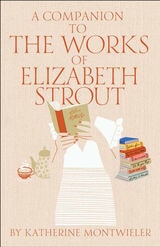
A Companion to the Works of Elizabeth Strout
Katherine Montwieler
Ohio University Press, 2022
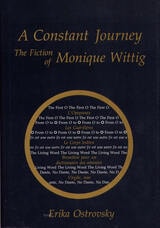
A Constant Journey
The Fiction of Monique WittigErika Ostrovsky
Southern Illinois University Press, 1991
From the creation of a neuter pronoun in her earliest work, L’Opoponax, to the confusion of genres in her most recent fiction, Virgile, non, Monique Wittig uses literary subversion and invention to accomplish what Erika Ostrovsky appropriately defines as renversement, the annihilation of existing literary canons and the creation of highly innovative constructs.
Erika Ostrovsky explores those aspects of Wittig’s work that best illustrate her literary approach. Among the countless revolutionary devices that Wittig uses to achieve renversement are the feminization of masculine gender names, the reorganization of myth patterns, and the replacement of traditional punctuation with her own system of grammatical emphasis and separation. It is the unexpected quantity and quality of such literary devices that make reading Monique Wittig’s fiction a fresh and rewarding experience. Such literary devices have earned Wittig the acclaim of her critics and peers—Marguerite Duras, Mary McCarthy, Alain Robbe-Grillet, Nathalie Sarraute, and Claude Simon, to name a few.
While analyzing the intrinsic value of each of Wittig’s fictions separately, Erika Ostrovsky traces the progressive development of Wittig’s major literary devices as they appear and reappear in her fictions. Ostrovsky maintains that the seeds of those innovations that appear in Wittig’s most recent texts can be found as far back as L’Opoponax. This evidence of progression supports Ostrovsky’s theory that clues to Wittig’s future endeavors can be found in her past.
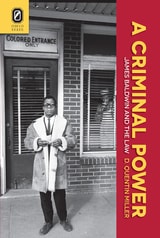
A Criminal Power
James Baldwin and the LawD. Quentin Miller
The Ohio State University Press, 2012
A Devil's Vaudeville
The Demonic in Dostoevsky's Major FictionWilliam J. Leatherbarrow
Northwestern University Press, 2005
In fresh, often surprising readings of Dostoevsky's individual works, Leatherbarrow shows how such a "language" articulates a series of concerns linked to views expressed elsewhere—in Dostoevsky's journalism and letters—on the question of Russia's relationship to Western Europe. His study also explores the narrative and generic implications of the way Dostoevsky inscribes the demonic in his fictional works—implications that point to a new understanding of familiar concepts in the work of this Russian master. Highly original, deftly argued and written, Leatherbarrow's work offers Dostoevsky specialists and general readers alike an opportunity to rediscover and reassess the rich complexities of some of the world's greatest literature.
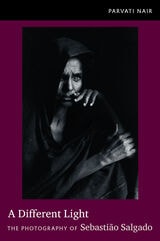
A Different Light
The Photography of Sebastião SalgadoParvati Nair
Duke University Press, 2012

A Divided World
Hollywood Cinema and Emigré Directors in the Era of Roosevelt and Hitler, 1933-1948Nick Smedley
Intellect Books, 2011
The New Deal introduced sweeping social, political, and cultural change across the United States, which Hollywood embraced enthusiastically. Then, when the heady idealism of the 1930s was replaced by the paranoia of the postwar years, Hollywood became an easy target for the anticommunists. A Divided World examines some of the important programs of the New Deal and the subsequent response of the film community—especially in relation to social welfare, women’s rights, and international affairs. The book also provides an analysis of the major works of three European directors—Billy Wilder, Ernst Lubitsch, and Fritz Lang—compared and contrasted with the products of mainstream Hollywood. This is a new interpretation of an influential period in American film history and it is sure to generate further debate and scholarship.
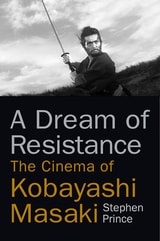
A Dream of Resistance
The Cinema of Kobayashi MasakiPrince, Stephen
Rutgers University Press, 2017
A Dream of Resistance is the first book in English to explore Kobayashi’s entire career, from the early films he made at Shochiku studio, to internationally-acclaimed masterpieces like The Human Condition, Harakiri, and Samurai Rebellion, and on to his final work for NHK Television. Closely examining how Kobayashi’s upbringing and intellectual history shaped the values of his work, Stephen Prince illuminates the political and religious dimensions of Kobayashi’s films, interpreting them as a prayer for peace in troubled times. Prince draws from a wealth of rare archives, including previously untranslated interviews, material that Kobayashi wrote about his films, and even the young director’s wartime diary. The result is an unprecedented portrait of this singular filmmaker.
A Fictional Commons
Natsume Soseki and the Properties of Modern LiteratureMichael K. Bourdaghs
Duke University Press, 2021
A Field Guide to the Poetry of Theodore Roethke
William Barillas
Ohio University Press, 2021
This volume is the first to reconsider Roethke’s work in terms of the expanded critical approaches to literature that have emerged since his death in 1963. Editor William Barillas and over forty contributors, including highly respected literary scholars, critics, and writers such as Peter Balakian, Camille Paglia, Jay Parini, and David Wojahn, collectively make a case for Roethke’s poetry as a complete, unified, and evolving body of work. The accessible essays employ a number of approaches, including formalism, ecocriticism, reader-response, and feminist critique to explicate the poetics, themes, and the biographical, historical, cultural, and literary contexts of Roethke’s work.
Contributors
Borja Aguiló Obrador
Peter Balakian
William Barillas
Don Bogen
Neal Bowers
Nicholas Bradley
Luke Brekke
Russell Brickey
Katharine Bubel
Norman Chaney
Jeffrey Clapp
Lyn Coffin
Kristin M. Distel
Carrie Duke
Laura Duncan
Laura Gill
Patrick Gill
Christopher Giroux
William Heyen
Trenton Hickman
Michael Hinds
Edward Hirsch
Brooke Horvath
Marcel Inhoff
Walter Kalaidjian
Frank J. Kearful
Andrew David King
Marc Malandra
John J. McKenna
Aaron M. Moe
Sarah Kathryn Moore
Edward Morin
Marcia Noe
Camille Paglia
Jay Parini
Rod Phillips
Ronald Primeau
Adam Putz
Bernard Quetchenbach
David Radavich
John Rohrkemper
Brandon Rushton
Joseph T. Thomas Jr.
Jeff Vande Zande
David Wojahn
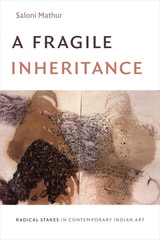
A Fragile Inheritance
Radical Stakes in Contemporary Indian ArtSaloni Mathur
Duke University Press, 2019
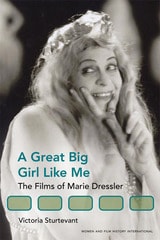
A Great Big Girl Like Me
The Films of Marie DresslerVictoria Sturtevant
University of Illinois Press, 2008
This premier analysis of her body of work explores how Dressler refocused the generic frame of her films beyond the shallow problems of the rich and beautiful, instead dignifying the marginalized, the elderly, women, and the poor. Sturtevant inteprets the meanings of Dressler's body through different genres, venues, and historical periods by looking at her vaudeville career, her transgressive representation of an "unruly" yet sexual body in Emma and Christopher Bean, ideas of the body politic in the films Politics and Prosperity, and Dressler as a mythic body in Min and Bill and Tugboat Annie.
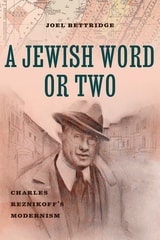
A Jewish Word or Two
Charles Reznikoff's ModernismJoel Bettridge
University of Iowa Press, 2026
The son of Jewish immigrants from Russia to New York, Charles Reznikoff found himself at the intersection of modernist innovation, ethnic otherness, and economic hardship. He both appreciated the modernists’ formal radicalism and critiqued their political failings—a task he accomplished by writing short lyric poems depicting the hardship and charm of urban life, as well as long poems presenting histories of horrific violence, from factory accidents to the Holocaust. But despite his contributions to American poetry, Reznikoff has remained a somewhat secondary figure, in part because his work—at times—is painful to read.
A Jewish Word or Two recasts Reznikoff ’s poetry as pleasurable and masterful even when disturbing. In their humor, their encounters with Jewish history, holiness, and identity, as well as their use of drama, horror, joy, and beauty, Reznikoff ’s poems help us celebrate what is simultaneously strange, surprising, lovely, and uncanny in our everyday lives.
A Kiss from Thermopylae
Emily Dickinson and LawJames R. Guthrie
University of Massachusetts Press, 2015
Yet Dickinson was also capable of criticizing, even satirizing, law and lawyers. Her poetic personae inhabit various legal roles including those of jurymen, judges, and attorneys, and some poems simulate courtroom contests pitting the rights of individuals against the power of the state. She was keenly interested in legal matters pertaining to women, such as breach of promise, dower, and trusts. With her tone ranging from subservient to domineering, from reverential to ridiculing, Dickinson's writings reflect an abiding concern with philosophic and political principles underpinning the law, as well as an identification with the plight of individuals who dared confront authority.
A Kiss from Thermopylae reveals a new dimension of Dickinson's writing and thinking, one indicating that she was thoroughly familiar with the legal community's idiomatic language, actively engaged with contemporary political and ethical questions, and skilled at deploying a poetic register ranging from high romanticism to low humor.
A Latin Lover in Ancient Rome
Readings in Propertius and His GenreW. R. Johnson
The Ohio State University Press, 2009
A Little Solitaire
John Frankenheimer and American FilmPomerance, Murray
Rutgers University Press, 2011
Think about some commercially successful film masterpieces--The Manchurian Candidate. Seven Days in May. Seconds. Then consider some lesser known, yet equally compelling cinematic achievements--The Fixer. The Gypsy Moths. Path to War. These triumphs are the work of the best known and most highly regarded Hollywood director to emerge from live TV drama in the 1950s--five-time Emmy-award-winner John Frankenheimer.
Although Frankenheimer was a pioneer in the genre of political thrillers who embraced the antimodernist critique of contemporary society, some of his later films did not receive the attention they deserved. Many claimed that at a midpoint in his career he had lost his touch. World-renowned film scholars put this myth to rest in A Little Solitaire, which offers the only multidisciplinary critical account of Frankenheimer's oeuvre. Especially emphasized is his deep and passionate engagement with national politics and the irrepressible need of human beings to assert their rights and individuality in the face of organizations that would reduce them to silence and anonymity.
A Menorah for Athena
Charles Reznikoff and the Jewish Dilemmas of Objectivist PoetryStephen Fredman
University of Chicago Press, 2001
Stephen Fredman illuminates the relationship of Jewish intellectuals to modernity through a close look at Reznikoff's life and writing. He shows that when we regard the Objectivists as modern Jewish poets, we can see more clearly their distinctiveness as modernists and the reasons for their profound impact upon later poets, such as Allen Ginsberg and Charles Bernstein. Fredman also argues that to understand Reznikoff's work more completely, we must see it in the context of early, nonsectarian attempts to make the study of Jewish culture a force in the construction of a more pluralistic society. According to Fredman, then, the indelible images in Reznikoff's poetry open a window onto the vexed but ultimately successful entry of Jewish immigrants and their children into the mainstream of American intellectual life.
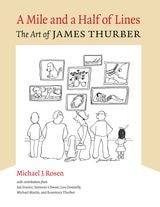
A Mile and a Half of Lines
The Art of James ThurberMichael J. Rosen, with contributions from Ian Frazier, Seymour Chwast, Liza Donnelly, Michael Maslin, and Rosemary Thurber
The Ohio State University Press, 2019
Including some 260 drawings, this collection is the first comprehensive focus on his work as an artist, a cartoonist, and an illustrator. With commentary from a host of preeminent cartoonists and writers, including Ian Frazier, Seymour Chwast, and Michael Maslin, A Mile and a Half of Lines celebrates the significance of Thurber’s spontaneous, unstudied, and novel drawing style that not only altered the nature of American cartooning but also expanded the very possibilities of an illustrated line. Coinciding with the first major retrospective of Thurber’s art presented by the Columbus Museum of Art in 2019, A Mile and a Half of Lines showcases both classic Thurber as well as visual material never before seen in print.
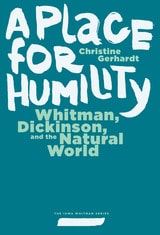
A Place for Humility
Whitman, Dickinson, and the Natural WorldChristine Gerhardt
University of Iowa Press, 2014
Dickinson and Whitman developed their environmentally suggestive poetics at roughly the same historical moment, at a time when a major shift was occurring in American culture’s view and understanding of the natural world. Just as they were achieving poetic maturity, the dominant view of wilderness was beginning to shift from obstacle or exploitable resource to an endangered treasure in need of conservation and preservation.
A Place for Humility examines Dickinson’s and Whitman’s poetry in conjunction with this important change in American environmental perception, exploring the links between their poetic projects within the context of developing nineteenth-century environmental thought. Christine Gerhardt argues that each author's poetry participates in this shift in different but related ways, and that their involvement with their culture’s growing environmental sensibilities constitutes an important connection between their disparate poetic projects. There may be few direct links between Dickinson’s “letter to the World” and Whitman’s “language experiment,” but via a web of environmentally-oriented discourses, their poetry engages in a cultural conversation about the natural world and the possibilities and limitations of writing about it—a conversation in which their thematic and formal choices meet on a surprising number of levels.
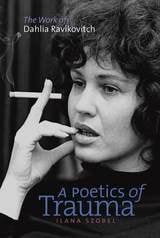
A Poetics of Trauma
The Work of Dahlia RavikovitchIlana Szobel
Brandeis University Press, 2013
A Power to Translate the World
New Essays on Emerson and International CultureEdited by David LaRocca and Ricardo Miguel-Alfonso
Dartmouth College Press, 2016
A Reader's Guide to Andrei Bely's "Petersburg"
Edited by Leonard Livak
University of Wisconsin Press, 2021
Bely expected his audience to participate in unraveling the work's many meanings, narrative strains, and patterns of details. In their essays, the contributors clarify these complexities, summarize the intellectual and artistic contexts that informed Petersburg's creation and reception, and review the interpretive possibilities contained in the novel. This volume will aid a broad audience of Anglophone readers in understanding and appreciating Petersburg.
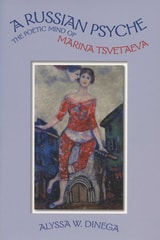
A Russian Psyche
The Poetic Mind of Marina TsvetaevaAlyssa W. Dinega
University of Wisconsin Press, 2001
Russian poet Marina Tsvetaeva’s powerful poetic voice and her tragic life have often prompted literary commentators to treat her as either a martyr or a monster. Born in Russia in 1892, she emigrated to Europe in 1922, returned to the Soviet Union at the height of the Stalinist Terror, and committed suicide in 1941. Alyssa Dinega focuses on the poetry, rediscovering Tsvetaeva as a serious thinker with a coherent artistic and philosophical vision.

A SUPERFICIAL READING OF HENRY JAMES
PREOCCUPATIONS WITH THE MATERIAL WORLDTHOMAS J OTTEN
The Ohio State University Press, 2006
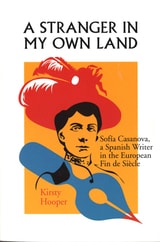
A Stranger in My Own Land
Sofia Casanova, a Spanish Writer in the European Fin de SiecleKirsty Hooper
Vanderbilt University Press, 2008
This study addresses the scandalous disappearance of Casanova and her female contemporaries from accounts of the emergence of the modern Spanish nation. Arguing that women's perceived silence during this critical period in the formation of modern Iberian identities has significant repercussions even today, it takes her works as a case study for modeling a radical rethinking of the way we teach and research the crucial years around the turn of the twentieth century. The first study of Casanova's radical and compelling, but now forgotten, early narrative, it explores the Galician, Polish and Spanish context of her work, arguing that her transnational career demonstrates the inadequacies of existing models of national literary history. At the same time, recognizing Casanova's innovative and strategic use of literary genres and techniques traditionally denominated as "feminine" (and therefore excluded from discussions of "serious" national literature), it provides a model for re-evaluating the vast cultural store of popular and sentimental literature as a key part of the debates about the transition to modernity, in Spain and beyond.
A Tanizaki Feast
The International Symposium in VeniceAdriana Boscaro and Anthony Hood Chambers, Editors
University of Michigan Press, 1998
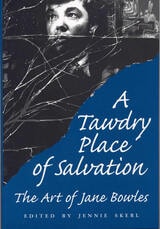
A Tawdry Place of Salvation
The Art of Jane BowlesEdited by Jennie Skerl
Southern Illinois University Press, 1997
Through these essays—which deal with Bowles’s published as well as her unpublished work—Skerl seeks to generate serious critical attention for an important but neglected female experimental writer of the mid-twentieth century and to celebrate her originality, power, and craft.
Based in disciplines and theoretical approaches that range from feminist criticism to Middle Eastern studies, from postmodernism to queer theory, and from Victorianism to the Beat Generation, the essayists naturally approach Bowles’s fiction and drama from a wide variety of critical perspectives. All of these essays are unpublished and written for this volume.
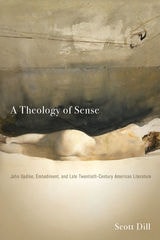
A Theology of Sense
John Updike, Embodiment, and Late Twentieth-Century American LiteratureScott Dill
The Ohio State University Press, 2018
A Trauma Artist
Tim O'Brien and the Fiction of VietnamMark A. Heberle
University of Iowa Press, 2001
A Trauma Artist examines how O'Brien's works variously rewrite his own traumatization during the war in Vietnam as a never-ending fiction that paradoxically "recovers" personal experience by both recapturing and (re)disguising it. Mark Heberle considers O'Brien's career as a writer through the prisms of post-traumatic stress disorder, postmodernist metafiction, and post-World War II American political uncertainties and public violence.
Based on recent conversations with O'Brien, previously published interviews, and new readings of all his works through 1999, this book is the first study to concentrate on the role and representation of trauma as the central focus of all O'Brien's works, whether situated in Vietnam, in post-Vietnam America, or in the imagination of protagonists suspended between the two. By doing so, Heberle redefines O'Brien as a major U.S. writer of the late twentieth century whose representations of self-damaging experiences and narratives of recovery characterize not only the war in Vietnam but also relationships between fathers and sons and men and women in the post-traumatic culture of the contemporary United States.
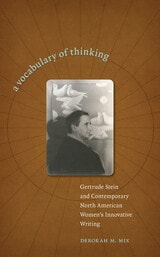
A Vocabulary of Thinking
Gertrude Stein and Contemporary North American Women's Innnovative WritingDeborah M. Mix
University of Iowa Press, 2007
Arguing that these authors have received relatively little attention because of the difficulty in categorizing them, Mix brings the writing of women of color, lesbians, and collaborative writers into the discussion of experimental writing. Thus, rather than exploring conventional lines of influence, she departs from earlier scholarship by using Stein and her work as a lens through which to read the ways these authors have renegotiated tradition, authority, and innovation.
Building on the tradition of experimental or avant-garde writing in the United States, Mix questions the politics of the canon and literary influence, offers close readings of previously neglected contemporary writers whose work doesn't fit within conventional categories, and by linking genres not typically associated with experimentalism-lyric, epic, and autobiography-challenges ongoing reevaluations of innovative writing.
A Voltaire for Russia
A. P. Sumarokov's Journey from Poet-Critic to Russian PhilosopheAmanda Ewington
Northwestern University Press, 2010
In A Voltaire for Russia, Amanda Ewington examines the tumultuous literary career of Alexander Petrovich Sumarokov in relation to that of his slightly older French contemporary, Voltaire. Although largely unknown in the English-speaking world, Sumarokov was one of the founding fathers of modern Russian literature, renowned in his own time as a great playwright and prolific
poet.
A Voltaire for Russia polemicizes with long-accepted readings of Sumarokov as an imitator of French neoclassical poets, ultimately questioning the very notion of a Russian “classicism.” Ewington uncovers Sumarokov’s poignantly personal devotion to Voltaire as a new framework for understanding not only his works but also his literary allegiances and agenda, as he sets out to establish a Russian literature and cultivate a reading public.
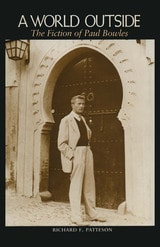
A World Outside
The Fiction of Paul BowlesBy Richard F. Patteson
University of Texas Press, 1987
Expatriation, the sense of being "outside" or exposed, is a central theme in the life and work of Paul Bowles. Beginning with Bowles' account of a frightening childhood memory, A World Outside explores how the dichotomies of inside and outside, safety and danger, enclosure and exposure—fundamental dualities in Bowles' fiction—have their deepest origin in the fabric of Bowles' own life and also mark his kinship with other twentieth-century writers. Like V. S. Naipaul, Paul Bowles is one of those writers who have an uncanny grasp of what it is like never to feel "at home."
In this much-needed study, Richard Patteson explores how this sense of "outsidedness" characterizes one's experience in a world in which many of the traditional shelters—social, familial, religious—seem to have lost their ability to protect. He discovers that storytelling is the vehicle by which both Bowles and his characters attempt to domesticate inchoate experience, bringing it into the familiar interior of human comprehension.
The music world has for decades recognized Paul Bowles' stature as a composer, but his fiction is only recently receiving the close attention it has long deserved from students of American and contemporary literature. Bowles is an author who neither sought nor received the kind of publicity often lavished on his contemporaries but one whom an ever-growing audience regards as a commanding figure of twentieth-century American literature.
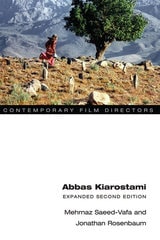
Abbas Kiarostami
Expanded Second EditionMehrnaz Saeed-Vafa and Jonathan Rosenbaum
University of Illinois Press, 2018
In this expanded second edition, award-winning Iranian filmmaker Mehrnaz Saeed-Vafa and film critic Jonathan Rosenbaum renew their illuminating cross-cultural dialogue on Kiarostami's work. The pair chart the filmmaker's late-in-life turn toward art galleries, museums, still photography, and installations. They also bring their distinct but complementary perspectives to a new conversation on the experimental film Shirin. Finally, Rosenbaum offers an essay on watching Kiarostami at home while Saeed-Vafa conducts a deeply personal interview with the director on his career and his final feature, Like Someone in Love.
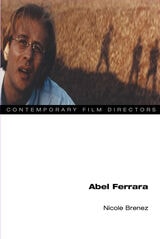
Abel Ferrara
Nicole Brenez. Translated from the French by Adrian Martin
University of Illinois Press, 2006
Nicole Brenez argues for Abel Ferrara’s place in a line of grand inventors who have blurred distinctions between industry and avant-garde film, including Orson Welles, Monte Hellman, and Nicholas Ray. Rather than merely reworking genre film, Brenez understands Ferrara’s oeuvre as formulating new archetypes that depict the evil of the modern world. Focusing as much on the human figure as on elements of storytelling, she argues that films such as Bad Lieutenant express this evil through visionary characters struggling against the inadmissible (inadmissible behavior, morality, images, and narratives).
About Bach
Edited by Gregory Butler, George Stauffer, and Mary Dalton Greer
University of Illinois Press, 2007
Contributors are Gregory G. Butler, Jen-Yen Chen, Alexander J. Fisher, Mary Dalton Greer, Robert Hill, Ton Koopman, Daniel R. Melamed, Michael Ochs, Mark Risinger, William H. Scheide, Hans-Joachim Schulze, Douglass Seaton, George B. Stauffer, Andrew Talle, and Kathryn Welter.
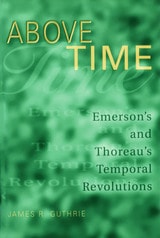
Above Time
Emerson's and Thoreau's Temporal RevolutionsJames R. Guthrie
University of Missouri Press, 2001
In Above Time, James R. Guthrie explores the origins of the two preeminent transcendentalists' revolutionary approaches to time, as well as to the related concepts of history, memory, and change. Most critical discussions of this period neglect the important truth that the entire American transcendentalist project involved a transcendence of temporality as well as of materiality. Correspondingly, both writers call in their major works for temporal reform, to be achieved primarily by rejecting the past and future in order to live in an amplified present moment.
Emerson and Thoreau were compelled to see time in a new light by concurrent developments in the sciences and the professions. Geologists were just then hotly debating the age of the earth, while zoologists were beginning to unravel the mysteries of speciation, and archaeologists were deciphering the Egyptian hieroglyphs. These discoveries worked collectively to enlarge the scope of time, thereby helping pave the way for the appearance of Darwin's Origin of Species in 1859.
Well aware of these wider cultural developments, Emerson and Thoreau both tried (although with varying degrees of success) to integrate contemporary scientific thought with their preexisting late-romantic idealism. As transcendentalists, they already believed in the existence of "correspondences"—affinities between man and nature, formalized as symbols. These symbols could then be decoded to discover the animating presence in the world of eternal laws as pervasive as the laws of science. Yet unlike scientists, Emerson and Thoreau hoped to go beyond merely understanding nature to achieving a kind of passionate identity with it, and they believed that such a union might be achieved only if time was first recognized as being a purely human construct with little or no validity in the rest of the natural world. Consequently, both authors employ a series of philosophical, rhetorical, and psychological strategies designed to jolt their readers out of time, often by attacking received cultural notions about temporality.
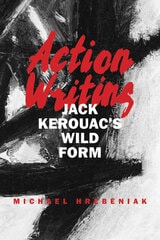
Action Writing
Jack Kerouac's Wild FormMichael Hrebeniak
Southern Illinois University Press, 2008
Action Writing: Jack Kerouac's Wild Form connects the personal and creative development of the Beat generation's famous icon with cultural changes in postwar America. Michael Hrebeniak asserts that Jack Kerouac's "wild form"—self-organizing narratives free of literary, grammatical, and syntactical conventions—moves within an experimental continuum across the arts to generate a Dionysian sense of writing as raw process. Action Writing highlights how Kerouac made concrete his 1952 intimation of "something beyond the novel" by assembling ideas from Beat America, modernist poetics, action painting, bebop, and subterranean oral traditions.
Geared to scholars and students of American literature, Beat studies, and creative writing, Action Writing places Kerouac's writing within the context of the American art scene at midcentury. Reframing the work of Kerouac and the Beat generation within the experimental modernist and postmodernist literary tradition, this probing inquiry offers a direct engagement with the social and cultural history at the foreground of Kerouac's career from the 1940s to the late 1960s.
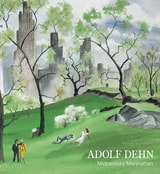
Adolf Dehn
Midcentury ManhattanAdolf Dehn
The Artist Book Foundation, 2017
Adolf Dehn (1895–1968), American painter in multimedia and acclaimed master lithographer, left his Minnesota hometown after formal training at the Minneapolis Art Institute to study at the Art Students League in New York. He toured Europe in the early 1920s, quickly acclimating to the continental lifestyle and adeptly depicting its nuances and idiosyncrasies with prolific lithographs and sketches. His critical and satirical renderings of the political movements, social conventions, and governmental policies in post-World War I Europe during "Le Crazy Years" gave the Midwestern artist ample material for his growing body of work.
Sailing back to the United States in 1929, Dehn survived the Great Depression with commercial artwork and contributions to popular magazines such as The New Yorker, Vogue, and Vanity Fair. His clever drawings that reflected the Jazz Age's culture and fashionable society made him a favorite of Frank Crowninshield, Vanity Fair's renowned editor.
During this time, while Dehn captured the heyday of Manhattan's burlesque theaters, lively Harlem nightclubs, impressive skyline, and busy harbor, he was continuously drawn to Central Park—his predilection for the city's magnificent green space was a sustaining source of inspiration and subject matter. Adolf Dehn: Midcentury Manhattan candidly examines the life and work of this exceptional, adventurous, and intrepid artist as he moved skillfully and capably between lithography, ink-wash drawings, gouache, casein painting, and watercolors. Combining numerous vintage photographs with newly discovered, Manhattan-inspired prints and drawings from the collections of, among others, the Whitney Museum of American Art, MoMA, and The Metropolitan Mesuem of Art, Adolf Dehn: Midcentury Manhattan traces how Dehn's art reflected the spirit, pulse, and uniquely American tonalities of The City of Dreams.
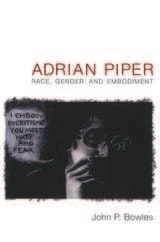
Adrian Piper
Race, Gender, and EmbodimentJohn P. Bowles
Duke University Press, 2011
Over the course of a decade, John P. Bowles and Piper conversed about her art and its meaning, reception, and relation to her scholarship on Kant’s philosophy. Drawing on those conversations, Bowles locates Piper’s work at the nexus of Conceptual and feminist art of the late 1960s and 1970s. Piper was the only African American woman associated with the Conceptual artists of the 1960s and one of only a few African Americans to participate in exhibitions of the nascent feminist art movement in the early 1970s. Bowles contends that Piper’s work is ultimately about our responsibility for the world in which we live.
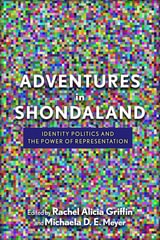
Adventures in Shondaland
Identity Politics and the Power of RepresentationGriffin, Rachel Alicia
Rutgers University Press, 2018
Shonda Rhimes is one of the most powerful players in contemporary American network television. Beginning with her break-out hit series Grey’s Anatomy, she has successfully debuted Private Practice, Scandal, How to Get Away with Murder, The Catch, For The People, and Station 19. Rhimes’s work is attentive to identity politics, “post-” identity politics, power, and representation, addressing innumerable societal issues. Rhimes intentionally addresses these issues with diverse characters and story lines that center, for example, on interracial friendships and relationships, LGBTIQ relationships and parenting, the impact of disability on familial and work dynamics, and complex representations of womanhood. This volume serves as a means to theorize Rhimes’s contributions and influence by inspiring provocative conversations about television as a deeply politicized institution and exploring how Rhimes fits into the implications of twenty-first century television.
Advertising the Self in Renaissance France
Lemaire, Marot, and RabelaisScott Francis
University of Delaware Press, 2019
Published by University of Delaware Press. Distributed worldwide by Rutgers University Press.
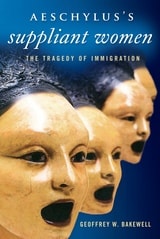
Aeschylus’s Suppliant Women
The Tragedy of ImmigrationGeoffrey W. Bakewell
University of Wisconsin Press, 2013
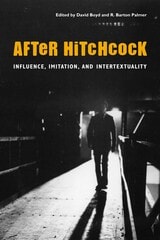
After Hitchcock
Influence, Imitation, and IntertextualityEdited by David Boyd and R. Barton Palmer
University of Texas Press, 2006
Alfred Hitchcock is arguably the most famous director to have ever made a film. Almost single-handedly he turned the suspense thriller into one of the most popular film genres of all time, while his Psycho updated the horror film and inspired two generations of directors to imitate and adapt this most Hitchcockian of movies. Yet while much scholarly and popular attention has focused on the director's oeuvre, until now there has been no extensive study of how Alfred Hitchcock's films and methods have affected and transformed the history of the film medium.
In this book, thirteen original essays by leading film scholars reveal the richness and variety of Alfred Hitchcock's legacy as they trace his shaping influence on particular films, filmmakers, genres, and even on film criticism. Some essays concentrate on films that imitate Hitchcock in diverse ways, including the movies of Brian de Palma and thrillers such as True Lies, The Silence of the Lambs, and Dead Again. Other essays look at genres that have been influenced by Hitchcock's work, including the 1970s paranoid thriller, the Italian giallo film, and the post-Psycho horror film. The remaining essays investigate developments within film culture and academic film study, including the enthusiasm of French New Wave filmmakers for Hitchcock's work, his influence on the filmic representation of violence in the post-studio Hollywood era, and the ways in which his films have become central texts for film theorists.