Results by title
31 books match the query 'Darwin, Charles'
Autobiography
Narrative of TransformationCarolyn A. Barros
University of Michigan Press, 1997
Darwin Deleted
Imagining a World without DarwinPeter J. Bowler
University of Chicago Press, 2013
In Darwin Deleted, Bowler argues that no one else, not even Wallace, was in a position to duplicate Darwin’s complete theory of evolution by natural selection. Evolutionary biology would almost certainly have emerged, but through alternative theories, which were frequently promoted by scientists, religious thinkers, and moralists who feared the implications of natural selection. Because non-Darwinian elements of evolutionism flourished for a time in the real world, it is possible to plausibly imagine how they might have developed, particularly if the theory of natural selection had not emerged until decades after the acceptance of the basic idea of evolution. Bowler’s unique approach enables him to clearly explain the non-Darwinian tradition—and in doing so, he reveals how the reception of Darwinism was historically contingent. By taking Darwin out of the equation, Bowler is able to fully elucidate the ideas of other scientists, such as Richard Owen and Thomas Huxley, whose work has often been misunderstood because of their distinctive responses to Darwin.
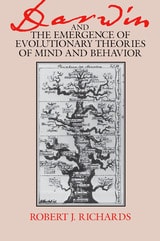
Darwin and the Emergence of Evolutionary Theories of Mind and Behavior
Robert J. Richards
University of Chicago Press, 1987
"Richards's book is now the obvious introduction to the history of ideas about mind and behavior in the nineteenth century."—Mark Ridley, Times Literary Supplement
"Not since the publication of Michael Ghiselin's The Triumph of the Darwinian Method has there been such an ambitious, challenging, and methodologically self-conscious interpretation of the rise and development and evolutionary theories and Darwin's role therein."—John C. Greene, Science
"His book . . . triumphantly achieves the goal of all great scholarship: it not only informs us, but shows us why becoming thus informed is essential to understanding our own issues and projects."—Daniel C. Dennett, Philosophy of Science
Darwin and the General Reader
The Reception of Darwin's Theory of Evolution in the British Periodical Press, 1859-1872Alvar Ellegård
University of Chicago Press, 1990
Darwin and the Making of Sexual Selection
Evelleen Richards
University of Chicago Press, 2017
Only now, with Darwin and the Making of Sexual Selection, do we have a comprehensive and meticulously researched account of Darwin’s path to its formulation—one that shows the man, rather than the myth, and examines both the social and intellectual roots of Darwin’s theory. Drawing on the minutiae of his unpublished notes, annotations in his personal library, and his extensive correspondence, Evelleen Richards offers a richly detailed, multilayered history. Her fine-grained analysis comprehends the extraordinarily wide range of Darwin’s sources and disentangles the complexity of theory, practice, and analogy that went into the making of sexual selection. Richards deftly explores the narrative strands of this history and vividly brings to life the chief characters involved. A true milestone in the history of science, Darwin and the Making of Sexual Selection illuminates the social and cultural contingencies of the shaping of an important—if controversial—biological concept that is back in play in current evolutionary theory.
Darwin and the Novelists
Patterns of Science in Victorian FictionGeorge Levine
University of Chicago Press, 1991
Darwin's Evolving Identity
Adventure, Ambition, and the Sin of SpeculationAlistair Sponsel
University of Chicago Press, 2018
Drawing on his own ambitious research in Darwin’s manuscripts and at the Beagle’s remotest ports of call, Sponsel takes us from the ocean to the Origin and beyond. He provides a vivid new picture of Darwin’s career as a voyaging naturalist and metropolitan author, and in doing so makes a bold argument about how we should understand the history of scientific theories.
Darwin's Most Wonderful Plants
A Tour of His Botanical LegacyKen Thompson
University of Chicago Press, 2019
Darwin was a brilliant and revolutionary botanist whose observations and theories were far ahead of his time. With Darwin’s Most Wonderful Plants, biologist and gardening expert Ken Thompson restores this important aspect of Darwin’s biography while also delighting in the botanical world that captivated the famous scientist. Thompson traces how well Darwin’s discoveries have held up, revealing that many are remarkably long-lasting. Some findings are only now being confirmed and extended by high-tech modern research, while some have been corrected through recent analysis.
We learn from Thompson how Darwin used plants to shape his most famous theory and then later how he used that theory to further push the boundaries of botanical knowledge. We also get to look over Darwin’s shoulder as he labors, learning more about his approach to research and his astonishing capacity for hard work. Darwin’s genius was to see the wonder and the significance in the ordinary and mundane, in the things that most people wouldn’t look at twice.
Both Thompson and Darwin share a love for our most wonderful plants and the remarkable secrets they can unlock. This book will instill that same joy in casual gardeners and botany aficionados alike.
Darwin's Orchids
Then and NowEdited by Retha Edens-Meier and Peter Bernhardt
University of Chicago Press, 2014
Mirroring the structure of Fertilisation of Orchids, Darwin’s Orchids investigates flowers from Darwin’s home in England, through the southern hemisphere, and on to North America and China as it seeks to address a set of questions first put forward by Darwin himself: What pollinates this particular type of orchid? How does its pollination mechanism work? Will an orchid self-pollinate or is an insect or other animal vector required? And how has this orchid’s lineage changed over time? Diverse in their colors, forms, aromas, and pollination schemes, orchids have long been considered ideal models for the study of plant evolution and conservation. Looking to the past, present, and future of botany, Darwin’s Orchids will be a vital addition to this tradition.
Darwin's Sacred Cause
Race, Slavery and the Quest for Human OriginsAdrian Desmond and James Moore
University of Chicago Press, 2011
There has always been a mystery surrounding Darwin: How did this quiet, respectable gentleman come to beget one of the most radical ideas in the history of human thought? It is difficult to overstate what Darwin was risking in publishing his theory of evolution. So it must have been something very powerful—a moral fire, as Desmond and Moore put it—that helped propel him. That moral fire, they argue, was a passionate hatred of slavery.
In opposition to the apologists for slavery who argued that blacks and whites had originated as separate species, Darwin believed the races belonged to the same human family. Slavery was a “sin,” and abolishing it became his “sacred cause.” By extending the abolitionists’ idea of human brotherhood to all life, Darwin developed our modern view of evolution.
Drawing on a wealth of fresh manuscripts, family letters, diaries, and even ships’ logs, Desmond and Moore argue that only by acknowledging Darwin’s abolitionist heritage can we fully understand the development of his groundbreaking ideas.
Debating Darwin
Robert J. Richards and Michael Ruse
University of Chicago Press, 2016
Examining key disagreements about Darwin that continue to confound even committed Darwinists, Richards and Ruse offer divergent views on the origins and nature of Darwin and his ideas. Ruse argues that Darwin was quintessentially British and that the roots of his thought can be traced back to the eighteenth century, particularly to the Industrial Revolution and thinkers such as Adam Smith and Thomas Robert Malthus. Ruse argues that when these influences are appreciated, we can see how Darwin’s work in biology is an extension of their theories. In contrast, Richards presents Darwin as a more cosmopolitan, self-educated man, influenced as much by French and particularly German thinkers. Above all, argues Richards, it was Alexander von Humboldt who both inspired Darwin and gave him the conceptual tools that he needed to find and formulate his evolutionary hypotheses. Together, the authors show how the reverberations of the contrasting views on Darwin’s influences can be felt in theories about the nature of natural selection, the role of metaphor in science, and the place of God in Darwin’s thought.
Revealing how much there still is to investigate and interrogate about Darwin’s ideas, Debating Darwin contributes to our understanding of evolution itself. The book concludes with a jointly authored chapter that brings this debate into the present, focusing on human evolution, consciousness, religion, and morality. This will be powerful, essential reading for anyone seeking a comprehensive understanding of modern-day evolutionary science and philosophy.
Design in the Age of Darwin
From William Morris to Frank Lloyd WrightStephen F Eisenman
Northwestern University Press, 2008
Charles Darwin’s monumental The Origin of Species, published in 1859, forever changed the landscape of natural science. The scientific world of the time had already established the principle of the “intelligent design” of a Creator; the art world had spent centuries devoting itself to the celebration of such a Designer’s creation. But the language of the book, and its implications, were stunning, and the ripples Darwin made when he rocked the boat spread outward: if he could question the Designer, what effect might there be on the art world, and on mortal designers’ renderings of Creation.
Published in partnership with the Mary and Leigh Block Museum of Art to accompany its exhibit, this catalog of essays and more than fifty color exhibition plates invokes these two senses of “intelligent design”—one from the debates between science and theology and the other from the world of art, particularly architecture and the decorative arts. The extensive exhibition includes furniture, metalware, glassware, textiles, and designs on loan from public and private collections in the United States and England. Among the artwork included are items from William Morris, C. R. Ashbee, Christopher Dresser, C. F. A. Voysey, Frank Lloyd Wright, and Louis Sullivan. Through these pieces and the accompanying examinations, the book explores how popular conceptions of the theory of evolution were used or rejected by British and American artists in the years that followed Darwin’s publication.
From Man to Ape
Darwinism in Argentina, 1870-1920Adriana Novoa and Alex Levine
University of Chicago Press, 2010
Upon its publication, The Origin of Species was critically embraced in Europe and North America. But how did Darwin’s theories fare in other regions of the world? Adriana Novoa and Alex Levine offer here a history and interpretation of the reception of Darwinism in Argentina, illuminating the ways culture shapes scientific enterprise.
In order to explore how Argentina’s particular interests, ambitions, political anxieties, and prejudices shaped scientific research, From Man to Ape focuses on Darwin’s use of analogies. Both analogy and metaphor are culturally situated, and by studying scientific activity at Europe’s geographical and cultural periphery, Novoa and Levine show that familiar analogies assume unfamiliar and sometimes startling guises in Argentina. The transformation of these analogies in the Argentine context led science—as well as the interaction between science, popular culture, and public policy—in surprising directions. In diverging from European models, Argentine Darwinism reveals a great deal about both Darwinism and science in general.
Novel in its approach and its subject, From Man to Ape reveals a new way of understanding Latin American science and its impact on the scientific communities of Europe and North America.
Lincoln and Darwin
Shared Visions of Race, Science, and ReligionJames Lander
Southern Illinois University Press, 2010
Born on the same day in 1809, Abraham Lincoln and Charles Darwin were true contemporaries. Though shaped by vastly different environments, they had remarkably similar values, purposes, and approaches. In this exciting new study, James Lander places these two iconic men side by side and reveals the parallel views they shared of man and God.
While Lincoln is renowned for his oratorical prowess and for the Emancipation Proclamation, as well as many other accomplishments, his scientific and technological interests are not widely recognized; for example, many Americans do not know that Lincoln is the only U.S. president to obtain a patent. Darwin, on the other hand, is celebrated for his scientific achievements but not for his passionate commitment to the abolition of slavery, which in part drove his research in evolution. Both men took great pains to avoid causing unnecessary offense despite having abandoned traditional Christianity. Each had one main adversary who endorsed scientific racism: Lincoln had Stephen A. Douglas, and Darwin had Louis Agassiz.
With graceful and sophisticated writing, Lander expands on these commonalities and uncovers more shared connections to people, politics, and events. He traces how these two intellectual giants came to hold remarkably similar perspectives on the evils of racism, the value of science, and the uncertainties of conventional religion.
Separated by an ocean but joined in their ideas, Lincoln and Darwin acted as trailblazers, leading their societies toward greater freedom of thought and a greater acceptance of human equality. This fascinating biographical examination brings the mid-nineteenth-century discourse about race, science, and humanitarian sensibility to the forefront using the mutual interests and pursuits of these two historic figures.
Metaphysics, Materialism, and the Evolution of Mind
The Early Writings of Charles DarwinCharles Darwin
University of Chicago Press, 1980
First published in 1974 as a companion volume to Darwin on Man by Howard E. Gruber, Paul Barrett’s transcriptions of Darwin’s M and N notebooks served to shed new light on the evolutionist’s methods and motivation.
According to Stephen Jay Gould in the New York Times Book Review, “Darwin kept [these notebooks] primarily in 1838, when he was 29 years old. In them, he recorded his early conviction of evolutionary continuity between humans and all other animals. . . . These notebooks display all the features of humanistic intellect that his detractors denied. We find erudition in his comments on Plato, Locke, Hume, Adam Smith, Whewell, Burke, Montaigne, Lessing and Spencer. . . . We appreciate an artistic bent in his delight with nature and her prophet Wordsworth. . . . We grasp the breadth of his bold attempt to clothe all human thought and behaviour in a new evolutionary garb. . . . Charles Darwin was reconstructing the world and he knew exactly what he was doing.”
Nature's Prophet
Alfred Russel Wallace and His Evolution from Natural Selection to Natural TheologyMichael A. Flannery
University of Alabama Press, 2018
An astute study of Alfred Russel Wallace’s path to natural theology.
A spiritualist, libertarian socialist, women’s rights advocate, and critic of Victorian social convention, Alfred Russel Wallace was in every sense a rebel who challenged the emergent scientific certainties of Victorian England by arguing for a natural world imbued with purpose and spiritual significance. Nature’s Prophet: Alfred Russel Wallace and His Evolution from Natural Selection to Natural Theology is a critical reassessment of Wallace’s path to natural theology and counters the dismissive narrative that Wallace’s theistic and sociopolitical positions are not to be taken seriously in the history and philosophy of science.
Author Michael A. Flannery provides a cogent and lucid account of a crucial—and often underappreciated—element of Wallace’s evolutionary worldview. As co-discoverer, with Charles Darwin, of the theory of natural selection, Wallace willingly took a backseat to the well-bred, better known scientist. Whereas Darwin held fast to his first published scientific explanations for the development of life on earth, Wallace continued to modify his thinking, refining his argument toward a more controversial metaphysical view which placed him within the highly charged intersection of biology and religion.
Despite considerable research into the naturalist’s life and work, Wallace’s own evolution from natural selection to natural theology has been largely unexplored; yet, as Flannery persuasively shows, it is readily demonstrated in his writings from 1843 until his death in 1913. Nature’s Prophet provides a detailed investigation of Wallace’s ideas, showing how, although he independently discovered the mechanism of natural selection, he at the same time came to hold a very different view of evolution from Darwin.
Ultimately, Flannery shows, Wallace’s reconsideration of the argument for design yields a more nuanced version of creative and purposeful theistic evolution and represents one of the most innovative contributions of its kind in the Victorian and Edwardian eras, profoundly influencing a later generation of scientists and intellectuals.
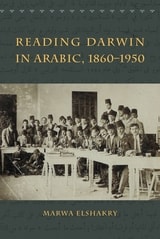
Reading Darwin in Arabic, 1860-1950
Marwa Elshakry
University of Chicago Press, 2013
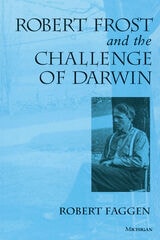
Robert Frost and the Challenge of Darwin
Robert Faggen
University of Michigan Press, 2001
Combining both intellectual history and detailed analysis of Frost's poems, Robert Faggen shows how Frost's reading of Darwin reflected the significance of science in American culture from Emerson and Thoreau, through James and pragmatism. He provides fresh and provocative readings of many of Frost's shorter lyrics and longer pastoral narratives as they illustrate the impact of Darwinian thought on the concept of nature, with particular exploration of man's relationship to other creatures, the conditions of human equality and racial conflict, the impact of gender and sexual differences, and the survival of religion.
The book shows that Frost was neither a pessimist lamenting the uncertainties of the Darwinian worldview, nor a humanist opposing its power. Faggen draws on Frost's unpublished notebooks to reveal a complex thinker who willingly engaged with the difficult moral and epistemological implications of natural science, and showed their consonance with myths and traditions stretching back to Milton, Lucretius, and the Old Testament. Frost emerges as a thinker for whom poetry was not only artistic expression, but also a forum for the trial of ideas and their impact on humanity.
Robert Frost and the Challenge of Darwin provides a deeper understanding not only of Frost and modern poetry, but of the meaning of Darwin in the modern world, the complex interrelations of literature and science, and the history of American thought.
"A forceful, appealing study of the Frost-Darwin relation, which has gone little noted by previous scholars, and a fresh explanation of Frost's ambivalent relation to modernism, which he scorned but also influenced" --William Howarth, Princeton University
Robert Faggen is Associate Professor of Literature, Claremont McKenna College and Adjunct Associate Professor, Claremont Graduate School.
Social Darwinism
Science and Myth in Anglo-American Social ThoughtRobert C. Bannister
Temple University Press, 1989
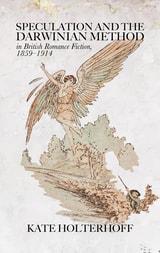
Speculation and the Darwinian Method in British Romance Fiction, 1859-1914
Kate Holterhoff
Ohio University Press, 2025
This study explores how British romance fictions published between 1859 and 1914 absorbed distinctly Darwinian attitudes toward the epistemology of science—one that accorded with scientific speculation. Following the 1859 publication of On the Origin of Species, in which Charles Darwin acknowledged arriving at his thesis by allowing himself “to speculate on the subject” of species transmutation, many romance fiction writers embraced, criticized, and promoted acts of speculating characterized as scientific. The romance fictions discussed in this book recurred to Darwin’s speculative methodology more than to rigorous Baconian empiricism because it permitted them to draw pointedly imaginative conclusions in reasonable ways. Kate Holterhoff’s book examines how romance authors like Grant Allen, H. G. Wells, and Arthur Conan Doyle incorporated Darwinian ideas and speculative thinking into their works to advance their ideological and aesthetic goals. Holterhoff uses five paired genres and methods to analyze this engagement:
- scientific romance and experimentation,
- metaphysical romance and thought experiments,
- anthropological romance and reasoning with imperfect data,
- gothic romance and probability, and
- utopian romance and Malthusian political economy.
By focusing on Darwin’s influence in legitimizing speculative methods in science, the book places the interplay between British science and romance fiction into critical perspective and highlights Darwin’s enduring impact on Western culture.
Subjects of the World
Darwin's Rhetoric and the Study of Agency in NaturePaul Sheldon Davies
University of Chicago Press, 2009
Being human while trying to scientifically study human nature confronts us with our most vexing problem. Efforts to explicate the human mind are thwarted by our cultural biases and entrenched infirmities; our first-person experiences as practical agents convince us that we have capacities beyond the reach of scientific explanation. What we need to move forward in our understanding of human agency, Paul Sheldon Davies argues, is a reform in the way we study ourselves and a long overdue break with traditional humanist thinking.
Davies locates a model for change in the rhetorical strategies employed by Charles Darwin in On the Origin of Species. Darwin worked hard to anticipate and diminish the anxieties and biases that his radically historical view of life was bound to provoke. Likewise, Davies draws from the history of science and contemporary psychology and neuroscience to build a framework for the study of human agency that identifies and diminishes outdated and limiting biases. The result is a heady, philosophically wide-ranging argument in favor of recognizing that humans are, like everything else, subjects of the natural world—an acknowledgement that may free us to see the world the way it actually is.
The Comparative Reception of Darwinism
Edited by Thomas F. Glick
University of Chicago Press, 1988
The Darwinian Revolution
Science Red in Tooth and ClawMichael Ruse
University of Chicago Press, 1999
For this edition Michael Ruse has written a new afterword that takes into account the research published since his book's first appearance.
"It is difficult to believe that yet another book on Darwin and the Darwinian Revolution could add anything new or contain any surprises. Ruse's book is an exception on all counts. Darwin scholars and the general reader alike can learn from it."—David L. Hull, Nature
"No other account of the Darwinian Revolution provides so detailed and sympathetic an account of the framework within which the scientific debates took place."—Peter J. Bowler, Canadian Journal of History
"A useful and highly readable synthesis. . .skillfully organized and written with verve, imagination, and welcome touches of humor."—John C. Greene, Science
The Expression of the Emotions in Man and Animals
Charles Darwin
University of Chicago Press, 1965
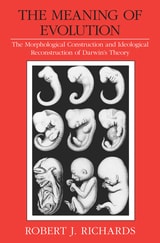
The Meaning of Evolution
The Morphological Construction and Ideological Reconstruction of Darwin's TheoryRobert J. Richards
University of Chicago Press, 1992
This provocative new reading of Darwin goes directly to the origins of evolutionary theory. Unlike most contemporary biologists or historians and philosophers of science, Richards holds that Darwin did concern himself with the idea of progress, or telos, as he constructed his theory. Richards maintains that Darwin drew on the traditional embryological meanings of the terms "evolution" and "descent with modification." In the 1600s and 1700s, "evolution" referred to the embryological theory of preformation, the idea that the embryo exists as a miniature adult of its own species that simply grows, or evolves, during gestation. By the early 1800s, however, the idea of preformation had become the concept of evolutionary recapitulation, the idea that during its development an embryo passes through a series of stages, each the adult form of an ancestor species.
Richards demonstrates that, for Darwin, embryological recapitulation provided a graphic model of how species evolve. If an embryo could be seen as successively taking the structures and forms of its ancestral species, then one could see the evolution of life itself as a succession of species, each transformed from its ancestor. Richards works with the Origin and other published and archival material to show that these embryological models were much on Darwin's mind as he considered the evidence for descent with modification.
Why do so many modern researchers find these embryological roots of Darwin's theory so problematic? Richards argues that the current tendency to see evolution as a process that is not progressive and not teleological imposes perspectives on Darwin that incorrectly deny the clearly progressive heart of his embryological models and his evolutionary theory.
The Moment of Racial Sight
A HistoryIrene Tucker
University of Chicago Press, 2012
The Nick of Time
Politics, Evolution, and the UntimelyElizabeth Grosz
Duke University Press, 2004
Grosz develops her argument by juxtaposing the work of three major figures in Western thought: Charles Darwin, Friedrich Nietzsche, and Henri Bergson. She reveals that in theorizing time as an active, positive phenomenon with its own characteristics and specific effects, each of these thinkers had a profound effect on contemporary understandings of the body in relation to time. She shows how their allied concepts of life, evolution, and becoming are manifest in the work of Gilles Deleuze and Luce Irigaray. Throughout The Nick of Time, Grosz emphasizes the political and cultural imperative to fundamentally rethink time: the more clearly we understand our temporal location as beings straddling the past and the future without the security of a stable and abiding present, the more transformation becomes conceivable.
The Science of Sympathy
Morality, Evolution, and Victorian CivilizationRob Boddice
University of Illinois Press, 2016
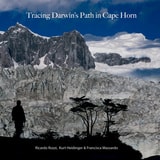
Tracing Darwin's Path in Cape Horn
Ricardo Rozzi
University of North Texas Press, 2019
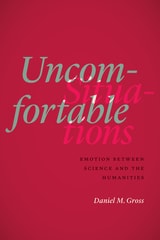
Uncomfortable Situations
Emotion between Science and the HumanitiesDaniel M. Gross
University of Chicago Press, 2017
Science and the humanities typically offer two different paradigms for thinking about emotion—the first rooted in brain and biology, the second in a social world. With rhetoric as a field guide, Uncomfortable Situations establishes common ground between these two paradigms, focusing on a theory of situated emotion. Daniel M. Gross anchors the argument in Charles Darwin, whose work on emotion has been misunderstood across the disciplines as it has been shoehorned into the perceived science-humanities divide. Then Gross turns to sentimental literature as the single best domain for studying emotional situations. There’s lost composure (Sterne), bearing up (Equiano), environmental hostility (Radcliffe), and feeling mixed (Austen). Rounding out the book, an epilogue written with ecological neuroscientist Stephanie Preston provides a different kind of cross-disciplinary collaboration. Uncomfortable Situations is a conciliatory work across science and the humanities—a groundbreaking model for future studies.
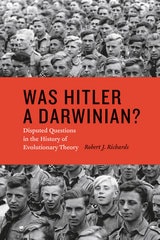
Was Hitler a Darwinian?
Disputed Questions in the History of Evolutionary TheoryRobert J. Richards
University of Chicago Press, 2013