Results by title
11 books match the query 'Facsimiles'
Codex Chimalpopoca
The Text in Nahuatl with a Glossary and Grammatical NotesJohn Bierhorst
University of Arizona Press, 2011
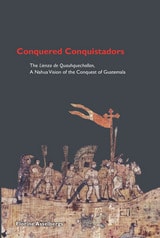
Conquered Conquistadors
The <i>Lienzo de Quauhquechollan,</i> A Nahua Vision of the Conquest of GuatemalaFlorine Asselbergs
University Press of Colorado, 2004
The people of the Nahua community of Quauhquechollan (present-day San Martín Huaquechula), in central Mexico, allied with Cortés during the Spanish-Aztec War and were assigned to the Spanish conquistador Jorge de Alvarado. De Alvarado and his allies, including the Quauhquecholteca and thousands of other indigenous warriors, set off for Guatemala in 1527 to start a campaign against the Maya. The few Quauhquecholteca who lived to tell the story recorded their travels and eventual victory on the huge cloth map, the Lienzo de Quauhquechollan.
Conquered Conquistadors, published in a European edition in 2004, overturned conventional views of the European conquest of indigenous cultures. American historians and anthropologists will relish this new edition and Asselbergs's astute analysis, which includes context, interpretation, and comparison with other pictographic accounts of the "Spanish" conquest. This heavily illustrated edition includes an insert reproduction of the Lienzo de Quauhquechollan.
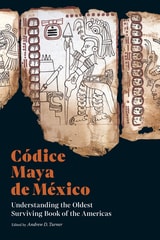
Códice Maya de México
Understanding the Oldest Surviving Book of the AmericasAndrew D. Turner
J. Paul Getty Trust, The, 2022
Ancient Maya scribes recorded prophecies and astronomical observations on the pages of painted books. Although most were lost to decay or destruction, three pre-Hispanic Maya codices were known to have survived, when, in the 1960s, a fourth book that differed from the others appeared in Mexico under mysterious circumstances. After fifty years of debate over its authenticity, recent investigations using cutting-edge scientific and art historical analyses determined that Códice Maya de México (formerly known as Grolier Codex) is in fact the oldest surviving book of the Americas, predating all others by at least two hundred years.
This volume provides a multifaceted introduction to the creation, discovery, interpretation, and scientific authentication of Códice Maya de México. In addition, a full-color facsimile and a page-by-page guide to the iconography make the codex accessible to a wide audience. Additional topics include the uses and importance of sacred books in Mesoamerica, the role of astronomy in ancient Maya societies, and the codex's continued relevance to contemporary Maya communities.
This volume is published to accompany an exhibition on view at the J. Paul Getty Museum at the Getty Center from October 18, 2022, to January 15, 2023.

Dickens' Working Notes for His Novels
Charles Dickens
University of Chicago Press, 1987
Harry Stone, an internationally recognized Dickens scholar, provides the reader with a full account of Dickens' methods of planning and working. In a comprehensive introduction and extensive notes, he uses Dickens' written plans to illuminate the thought and technique of the novels. He examines creative concerns, such as Dickens' process of naming and visualization, and technical matters, such as his use of various pen nibs, ink colors, and papers.
By making fully available and comprehensible Dickens' own cache of in-process plans, possibilities, and alternatives for shaping his novels, Dickens' Working Notes offers unparalleled insights into the novelist's art and into the nature of the creative imagination.
Emily Dickinson's Open Folios
Scenes of Reading, Surfaces of WritingMarta L. Werner
University of Michigan Press, 1996
History and Mythology of the Aztecs
The Codex ChimalpopocaJohn Bierhorst
University of Arizona Press, 1992
Of particular interest are the stories of the hero-god Quetzalcoatl, for which the Chimalpopoca is the premier source. John Bierhorst's work is the first major scholarship on the Codex Chimalpopoca in more than forty years. His is the first edition in English and the first in any language to include the complete text of the Legend of the Suns. The precise, readable translation not only contributes to the study of Aztec history and literature but also makes the codex an indispensable reference for Aztec cultural topics, including land tenure, statecraft, the role of women, the tribute system, warfare, and human sacrifice.

Inheritance of Night
Early Drafts of Lie Down in DarknessWilliam Styron
Duke University Press, 1993
Although Styron began the narrative twice, he realized both times that his writing was derivative and his characters not yet fully conceived. These drafts show young Stryon feeling his way into the story with various narrative voices and strategies, and attempting to work out his plot. Influence from William Faulkner, F. Scott Fitzgerald, and Robert Penn Warren is apparent in the text, and there is a character present named Marcus Bonner who is an early rendition of Stingo in Sophie's Choice.
The typescript drafts of Inheritance of Night for many years were thought to have been lost, but in 1980 were discovered in the files of one of Styron's former literary agents. These drafts, eventually made their way to the archive of Styron's papers assembled at Duke University Library. This facsimile is published here in two different limited editions for collectors: a lettered, signed, and boxed edition (26 copies) and a numbered, signed edition (250). A general interest trade volume is also available.
With a preface by Styron and an introduction by James L. W. West III, these drafts afford much insight into the creation of Lie Down in Darkness and the writing of a major twentieth-century American writer.
Maps in Tudor England
P. D. A. Harvey
University of Chicago Press, 1993
In Maps in Tudor England, P. D. A. Harvey traces this revolution of production, understanding, and use of maps in England from 1485 to 1603. By the mid-sixteenth century, mapmapers had begun to draw maps to a consistent scale, reproducing the results of measured survey. By the end of the century, maps drawn to scale and showing features by conventional signs were commonly used throughout England.
In this survey Harvey focuses on maps of small areas, up to the size of a county, exploring their impact on the political and social life of England in the spheres of the military, government, towns, landed estates, buildings, and the law. Richly illustrated with thirty color and fifty black and white reproductions of rare maps, his account is an informative and accessible introduction to this revolutionary period in the history of cartography, as well as a unique visual history of Tudor England.
The Codex Mexicanus
A Guide to Life in Late Sixteenth-Century New SpainBy Lori Boornazian Diel
University of Texas Press, 2018
Winner, Roland H. Bainton Book Prize, The Sixteenth Century Society and Conference, 2019
Some sixty years after the Spanish conquest of Mexico, a group of Nahua intellectuals in Mexico City set about compiling an extensive book of miscellanea, which was recorded in pictorial form with alphabetic texts in Nahuatl clarifying some imagery or adding new information altogether. This manuscript, known as the Codex Mexicanus, includes records pertaining to the Aztec and Christian calendars, European medical astrology, a genealogy of the Tenochca royal house, and an annals history of pre-conquest Tenochtitlan and early colonial Mexico City, among other topics. Though filled with intriguing information, the Mexicanus has long defied a comprehensive scholarly analysis, surely due to its disparate contents.
In this pathfinding volume, Lori Boornazian Diel presents the first thorough study of the entire Codex Mexicanus that considers its varied contents in a holistic manner. She provides an authoritative reading of the Mexicanus’s contents and explains what its creation and use reveal about native reactions to and negotiations of colonial rule in Mexico City. Diel makes sense of the codex by revealing how its miscellaneous contents find counterparts in Spanish books called Reportorios de los tiempos. Based on the medieval almanac tradition, Reportorios contain vast assortments of information related to the issue of time, as does the Mexicanus. Diel masterfully demonstrates that, just as Reportorios were used as guides to living in early modern Spain, likewise the Codex Mexicanus provided its Nahua audience a guide to living in colonial New Spain.
The Lucca Choirbook
Lucca, Archivio di Stato, MS 238; Lucca, Archivio Arcivescovile, MS 97; Pisa, Archivo Arcivescovile, Biblioteca Maffi, Cartella 11/IIIEdited and with an Introduction and Inventory by Reinhard Strohm
University of Chicago Press, 2009
More than forty years ago in the state archives of Lucca, Italy, musicologist Reinhard Strohm noticed that bindings on some of the books were unusual: they consisted of the pages of a centuries-old music manuscript. In the following years, Strohm worked with the archivists to remove these leaves and reassemble as much as possible of the original manuscript, a major cultural recovery now known as The Lucca Choirbook.
The recovered volume comprises what remains of a gigantic cathedral codex commissioned in Bruges around 1463 and containing English, Franco-Flemish, and Italian sacred music of the fifteenth century—including works by the celebrated composers Guillaume Du Fay and Henricus Isaac.
This facsimile of the choirbook includes all the known leaves, ordered according to their proper placement in the original codex. In the introduction, Strohm tells the fascinating story of this choirbook, identifying its early users and reconstructing its travel from Bruges to Lucca.
The Networked Recluse
The Connected World of Emily DickinsonMike Kelly, Carolyn Vega, Marta Werner, Susan Howe, Richard Wilbur
Amherst College Press, 2017
Yet that image scarcely captures the fullness and vitality of Dickinson’s life, most notably her many connections—to family, to friends, to correspondents, to the literary tastemakers of her day, even to the unnamed, and perhaps unknowable, “Master” to whom she addressed three of her most breathtaking works of prose. Through an exploration of a relatively small group of items from Dickinson’s vast literary remains, this volume—an accompaniment to an exhibition on Dickinson mounted at The Morgan Library & Museum in New York—demonstrates the complex ways in which these often humble objects came into conversation with other people, places, and events in the poet’s life. Seeing the network of connections and influences that shaped Dickinson’s life presents us with a different understanding of this most enigmatic yet elegiac poet in American letters, and allows us more fully to appreciate both her uniqueness and her humanity.
The materials collected here make clear that the story of Dickinson’s manuscripts, her life, and her work is still unfolding. While the image of Dickinson as the reclusive poet dressed only in white remains a popular myth, details of Dickinson’s life continue to emerge. Several items included both in the exhibit and in this volume were not known to exist until the present century. The scrap of biographical intelligence recorded by Sarah Tuthill in a Mount Holyoke catalogue, or the concern about Dickinson’s salvation expressed by Abby Wood in a private letter to Abiah Root, were acquired by Amherst College in the last fifteen years. What additional pieces of evidence remain to be uncovered and identified in the attics and basements of New England?
Published to accompany The Morgan Library & Museum’s pathbreaking exhibit I’m Nobody! Who are You? The Life and Poetry of Emily Dickinson—part of a series of exhibits at the Morgan celebrating and exploring the creative lives of significant women authors—The Networked Recluse offers the reader an account of the exhibit itself, together with a series of contributions by curators, scholars of Dickinson, and poets whose own work her words have influenced.