Results by title
29 books match the query 'Family violence'

Amá, Your Story Is Mine
Walking Out of the Shadows of AbuseBy Ercenia "Alice" Cedeño
University of Texas Press, 2007
In the preface to her memoir, Ercenia "Alice" Cedeño recalls the secrecy and turmoil that marked her youth: "I spent most of my growing years mad at my mother and wanting her to change to fit in with the rest of the world," she writes. "When my sisters and I wanted her to visit our friends' mothers, she would say, 'Why do people need to know other peoples' lives?' Looking back, I wonder if she was really saying, 'I don't want them to know our business.' There was so much to hide."
Now bringing those hidden memories to light, Amá, Your Story Is Mine traces the hardship, violence, deceit, and defiance that shaped the identity of two generations of women in Alice's family. Born in the mountains of northern Mexico, Alice's mother married at age 14 into a family rife with passion that often turned to anger. After losing several infant children to disease, the young couple crossed into the United States seeking a better life.
Unfolding in a series of powerful vignettes, Amá, Your Story Is Mine describes in captivating detail a daring matriarch who found herself having to protect her children from their own father while facing the challenges of cultural discrimination. By turns wry and tender, Alice's recollections offer a rare memoir that fully encompasses the Latina experience in the United States.
Anthropology at the Front Lines of Gender-Based Violence
Jennifer R. Wies
Vanderbilt University Press, 2011

Battered Women In The Courtroom
The Power of Judicial ResponsesUniversity Press of New England, 1999

Battering States
The Politics of Domestic Violence in IsraelMadelaine Adelman
Vanderbilt University Press, 2017
The politics of domestic violence create novel entry points to understanding how, although women may be vulnerable to gender-based violence, they do not necessarily share the same kind of belonging to the state. This means that markers of identity and power, such as gender, nationality, ethnicity, religion and religiosity, and socio-economic and geographic location, matter when it comes to safety and pathways to justice.
The study centers on Israel, where a number of factors bring connections between the cultural politics of the state and domestic violence into stark relief: the presence of a contentious multinational and multiethnic population; competing and overlapping sets of religious and civil laws; a growing gap between the wealthy and the poor; and the dominant presence of a security state in people's everyday lives. The exact combination of these factors is unique to Israel, but they are typical of states with a diverse population in a time of globalization. In this way, the example of Israel offers insights wherever the political and personal impinge on one another.
Body Evidence
Intimate Violence against South Asian Women in AmericaEdited by Shamita Das Dasgupta
Rutgers University Press, 2007
In Body Evidence, more than twenty scholars and public health professionals uncover the unique challenges faced by victims of violence in intimate spaces . . . within families, communities and trusted relationships in South Asian American communities. Topics include cultural obsession with women's chastity and virginity; the continued silence surrounding intimate violence among women who identify themselves as lesbian, bisexual, or transgender; the consequences of refusing marriage proposals or failing to meet dowry demands; and, ultimately, the ways in which the United States courts often confuse and exacerbate the plights of these women.

Choices Women Make
Agency in Domestic Violence, Assisted Reproduction, and Sex WorkCarisa R. Showden
University of Minnesota Press, 2010
In Showden’s analysis, women’s agency emerges as an individual and social construct, rooted in concrete experience, complex and changing over time. She traces the development and deployment of agency, illustrating how it plays out in the messy workings of imperfect lives. In a series of case studies, she considers women within situations of intimate partner violence, reproductive decision making, and sex work such as prostitution and pornography. Each narrative offers insight into how women articulate their self-understanding and political needs in relation to the pressures they confront.
Showden’s understanding of women’s agency ultimately leads her to review possible policy and legal interventions that could improve the conditions within which agency develops and that could positively enhance women’s ability to increase and exercise their political and personal options.
Crime and Family
Selected Essays of Joan McCordJoan McCord, introduction by David Farrington, foreword by Geoffrey Sayre-McCord
Temple University Press, 2007
Crime and Justice, Volume 11
Family ViolenceEdited by Lloyd Ohlin and Michael Tonry
University of Chicago Press Journals, 1990

Domestic Tyranny
The Making of American Social Policy against Family Violence from Colonial Times to the PresentElizabeth Pleck
University of Illinois Press, 2004
Domestic Violence and the Law in Colonial and Postcolonial Africa
Emily S. Burrill
Ohio University Press, 2010
Domestic Violence and the Law in Colonial and Postcolonial Africa reveals the ways in which domestic space and domestic relationships take on different meanings in African contexts that extend the boundaries of family obligation, kinship, and dependency. The term domestic violence encompasses kin-based violence, marriage-based violence, gender-based violence, as well as violence between patrons and clients who shared the same domestic space. As a lived experience and as a social and historical unit of analysis, domestic violence in colonial and postcolonial Africa is complex.
Using evidence drawn from Sub-saharan Africa, the chapters explore the range of domestic violence in Africa’s colonial past and its present, including taxation and the insertion of the household into the broader structure of colonial domination.
African histories of domestic violence demand that scholars and activists refine the terms and analyses and pay attention to the historical legacies of contemporary problems. This collection brings into conversation historical, anthropological, legal, and activist perspectives on domestic violence in Africa and fosters a deeper understanding of the problem of domestic violence, the limits of international human rights conventions, and local and regional efforts to address the issue.

Everyday Harm
Domestic Violence, Court Rites, and Cultures of ReconciliationMindie Lazarus-Black
University of Illinois Press, 2007
Exposing the powerful contradictions between empowering rights and legal rites
By investigating the harms routinely experienced by the victims and survivors of domestic violence, both inside and outside of law, Everyday Harm studies the limits of what domestic violence law can--and cannot--accomplish. Combining detailed ethnographic research and theoretical analysis, Mindie Lazarus-Black illustrates the ways persistent cultural norms and ingrained bureaucratic procedures work to unravel laws designed to protect the safety of society’s most vulnerable people.
Lazarus-Black’s fieldwork in Trinidad traces a story with global implications about why and when people gain the right to ask the court for protection from violence, and what happens when they pursue those rights in court. Why is itthat, in spite of laws designed to empower subordinated people, so little results from that legislation? What happens in and around courts that makes it so difficult for people to obtain their legally available rights and protections? In the case of domestic violence law, what can such legislation mean for women’s empowerment, gender equity, and protection? How do cultural norms and practices intercept the law?

Faithful Deliberation
Rhetorical Invention, Evangelicalism, and #MeToo ReckoningsT J Geiger II
University of Alabama Press, 2022
Investigates the rhetorical practices used by contemporary evangelical Christian women to confront theological and cultural issues that stymie deliberation within their communities
While often perceived as an insular enclave with a high level of in-group agreement about political and social issues, predominantly white evangelicalism includes prominent voices urging deliberation about appropriate responses to sexual abuse, domestic violence, and the discourses surrounding these traumas. In Faithful Deliberation: Rhetorical Invention, Evangelicalism, and #MeToo Reckonings, T J Geiger II examines theologically reflective rhetorical invention that reconfigures trauma-minimizing commonplaces in order to facilitate community-internal deliberation.
Resting at the intersection of feminist rhetorical studies and religious rhetorics, this book contains four related theological-rhetorical case studies that consider how figures such as Beth Moore, Jen Hatmaker, Rachael Denhollander, Karen Swallow Prior, and others engaged in rhetorical invention. Each juxtaposes differing approaches to contending with rape, domestic violence, sexual abuse, and other traumas. Each case contrasts an approach based on appeals to highly circumscribed understandings of grace, purity, and other denomination-specific traditions and values with approaches rooted in those same traditions and values, but with an eye toward community transformation, healing through justice, and reinvigorated forms of forgiveness. Geiger skillfully argues that this faithful deliberation involves practices of thinking, reflecting, storytelling, and acting within a tightly bounded community that can foster change through a recommitment to core values.
These rhetorical practices exemplify the kind of inventive listening deliberative discourse requires, point to the sort of healing they may promote in response to trauma and trauma discourses, and occur within a range of genres including social media posts, blog entries, published interviews, victim impact statements, and petitions. This study of invention for evangelical-to-other-evangelical deliberative discourse contributes to rhetorical studies by demonstrating the civic and social possibilities of rhetoric within religious enclaves. By locating the case studies as recent moments in longer US public and evangelical histories of activism, deliberative practice, and politics, Faithful Deliberation brings into focus how enclaves and the dominant public sphere interact.
Fragile Dignity
Intercontextual Conversations on Scriptures, Family, and ViolenceL. Juliana Claassens
SBL Press, 2013
Gender and Violence in Haiti
Women’s Path from Victims to AgentsBenedetta Faedi Duramy
Rutgers University Press, 2014
Gender and Violence in Haiti is the product of more than a year of extensive firsthand observations and interviews with the women who have been caught up in the widespread violence plaguing Haiti. Drawing from the experiences of a diverse group of Haitian women, Faedi Duramy finds that both the victims and perpetrators of violence share a common sense of anger and desperation. Untangling the many factors that cause these women to commit violence, from self-defense to revenge, she identifies concrete measures that can lead them to feel vindicated and protected by their communities.
Faedi Duramy vividly conveys the horrifying conditions pervading Haiti, even before the 2010 earthquake. But Gender and Violence in Haiti also carries a message of hope—and shows what local authorities and international relief agencies can do to help the women of Haiti.
Here, Our Culture Is Hard
Stories of Domestic Violence from a Mayan Community in BelizeBy Laura McClusky
University of Texas Press, 2001
Marriage among the Maya of Central America is a model of complementarity between a man and a woman. This union demands mutual respect and mutual service. Yet some husbands beat their wives.
In this pioneering book, Laura McClusky examines the lives of several Mopan Maya women in Belize. Using engaging ethnographic narratives and a highly accessible analysis of the lives that have unfolded before her, McClusky explores Mayan women's strategies for enduring, escaping, and avoiding abuse. Factors such as gender, age inequalities, marriage patterns, family structure, educational opportunities, and economic development all play a role in either preventing or contributing to domestic violence in the village. McClusky argues that using narrative ethnography, instead of cold statistics or dehumanized theoretical models, helps to keep the focus on people, "rehumanizing" our understanding of violence. This highly accessible book brings to the social sciences new ways of thinking about, representing, and studying abuse, marriage, death, gender roles, and violence.

Home Safe Home
Housing Solutions for Survivors of Intimate Partner ViolenceBotein, Hilary
Rutgers University Press, 2016
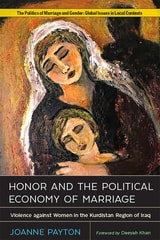
Honor and the Political Economy of Marriage
Violence against Women in the Kurdistan Region of IraqJoanne Payton
Rutgers University Press, 2020
Honor and the Political Economy of Marriage provides a description of ‘honor’-based violence that focuses upon the structure of the family rather than the perpetrator’s culture. The author, Joanne Payton, argues that within societies primarily organized by familial and marital connections, women’s ‘honor’ is a form of symbolic capital within a ‘political economy’ in which marriage organizes intergroup connections.
Drawing on statistical analysis of original data contextualized with historical and anthropological readings, Payton explores forms of marriage and their relationship to ‘honor’, sketching changing norms around the familial control of women from agrarian/pastoral roots to the contemporary era.

In Honor of Fadime
Murder and ShameUnni Wikan
University of Chicago Press, 2008
Unni Wikan narrates Fadime’s heartbreaking story through her own eloquent words, along with the testimonies of her father, mother, and two sisters. What unfolds is a tale of courage and betrayal, loyalty and love, power and humiliation, and a nearly unfathomable clash of cultures. Despite enduring years of threats over her emancipated life, Fadime advocated compassion for her killer to the end, believing him to be trapped by an unyielding code of honor. Wikan puts this shocking event in context by analyzing similar honor killings throughout Europe, Canada, and the United States. She also examines the concept of honor in historical and cross-cultural depth, concluding that Islam itself is not to blame—indeed, honor killings occur across religious and ethnic traditions—but rather the way that many cultures have resolutely linked honor with violence.
In Honor of Fadime holds profound and timely insights into conservative Kurdish culture, but ultimately the heart of this powerful book is Fadime’s courageous and tragic story—and Wikan’s telling of it is riveting.

Italian Blood
A MemoirDenise Tolan
CavanKerry Press, 2023
“I’ve heard that some volcanic eruptions are soft with oozing streams of lava dancing down the side of the volcano like a Las Vegas chorus line. My father’s eruptions were quick, like bricks being thrown through a window.”
Denise Tolan’s memoir-in-essay traces the legacy of violence in an Italian American family, showing how abuse reverberates both in the body and mind of a family. The book’s first part, “Blood is Not Water,” lays out how the origins of violence can infect the roots of a family tree. The second part, “Good Blood Doesn’t Lie,” shows what grows from those roots. Italian Blood is a raw, heartbreaking series of essays where everything is connected through literal and metaphorical blood. These essays offer a connection to anyone who suffered childhood shame, violence, or fear and provide reassurance that they are not alone.

Las hijas de Juan
Daughters BetrayedJosie Méndez-Negrete
Duke University Press, 2006
Méndez-Negrete was born in Mexico, in the state of Zacatecas. She recalls a joyous childhood growing up in the midst of Tabasco, a vibrant town filled with extended family. Her father, though, had dreams of acquiring wealth in el norte. He worked sun-up to sun-down in the fields of south Texas. Returning home to Mexico, his pockets full of dollars, he spent evenings drinking and womanizing.
When Méndez-Negrete was eleven, her father moved the family to the United States, where they eventually settled in California’s Santa Clara Valley. There her father began molesting his daughters, viciously beating them and their mother. Within the impoverished immigrant family, the abuse continued for years, until a family friend brought it to the attention of child welfare authorities. Méndez-Negrete’s father was tried, convicted, and imprisoned.
Las hijas de Juan is told chronologically, from the time Méndez-Negrete was a child until she was a young adult trying, along with the rest of her family, to come to terms with her father’s brutal legacy. It is a harrowing story of abuse and shame compounded by cultural and linguistic isolation and a system of patriarchy that devalues the experiences of women and girls. At the same time, Las hijas de Juan is an inspiring tale, filled with strong women and hard-won solace found in traditional Mexican cooking, songs, and storytelling.
Legal Spectatorship
Slavery and the Visual Culture of Domestic ViolenceKelli Moore
Duke University Press, 2022
Duke University Press Scholars of Color First Book Award recipient

Living Between Danger and Love
The Limits of ChoiceJones, Kathleen B.
Rutgers University Press, 1999

Speaking the Unspeakable
Marital Violence among South Asian Immigrants in the United StatesAbraham, Margaret
Rutgers University Press, 2000
Over the past 20 years, much work has focused on domestic violence, yet little attention has been paid to the causes, manifestations, and resolutions to marital violence among ethnic minorities, especially recent immigrants. Margaret Abraham’s Speaking the Unspeakable is the first book to focus on South Asian women’s experiences of domestic violence, defined by the author as physical, sexual, verbal, mental, or economic coercion, power, or control perpetrated on a woman by her spouse or extended kin. Abraham explains how immigration issues, cultural assumptions, and unfamiliarity with American social, legal, economic, and other institutional systems, coupled with stereotyping, make these women especially vulnerable to domestic violence.
Abraham lets readers hear the voices of abused South Asian women. Through their stories, we learn of their weaknesses and strengths, and of their experiences of domestic violence within the larger cultural, social, economic, and political context. We see both the individual strategies of resistance against their abusers as well as the pivotal role South Asian organizations play in helping these women escape abusive relationships.
Abraham also describes the central role played by South Asian activism as it emerged in the 1980s in the United States, and addresses the ideas and practices both within and outside of the South Asian community that stereotype, discriminate, and oppress South Asians in their everyday lives.

The Johnson-Sims Feud
Romeo and Juliet, West Texas StyleBill O'Neal
University of North Texas Press, 2010
The Price of Safety
Hidden Costs and Unintended Consequences for Women in the Domestic Violence Service SystemSara Shoener
Vanderbilt University Press, 2017
Through detailed observations of services such as court procedures, public benefits processes, and community-based IPV programs as well as in-depth interviews with dozens of IPV survivors and practitioners, Shoener describes how our current institutional response to IPV is often not useful--and sometimes quite harmful--for IPV survivors with the least material, social, and cultural capital to spare. For these women, as the interviews vividly record, IPV has long-term economic and social consequences, disrupting career paths and creating social isolation.
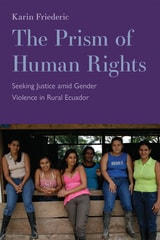
The Prism of Human Rights
Seeking Justice amid Gender Violence in Rural EcuadorKarin Friederic
Rutgers University Press, 2023

The Virtuous and Violent Women of Seventeenth-Century Massachusetts
Emily C.K. Romeo
University of Massachusetts Press, 2020
Dismantling the image of the peaceful and serene colonial goodwife and countering the assumption that New England was inherently less violent than other regions of colonial America, Emily C. K. Romeo offers a revealing look at acts of violence by Anglo-American women in colonial Massachusetts, from the everyday to the extraordinary. Using Essex County as a case study, Romeo deftly utilizes seventeenth- and eighteenth-century sources to demonstrate that Puritan women, both “virtuous” and otherwise, learned to negotiate the shifting boundaries between acceptable and unacceptable violence in their daily lives and communities.
The Virtuous and Violent Women of Seventeenth-Century Massachusetts shows that more dramatic violence by women—including infanticide, the scalping of captors during the Indian Wars, and even witchcraft accusations—was not necessarily intended to challenge the structures of authority but often sprung from women's desire to protect property, safety, and standing for themselves and their families. The situations in which women chose to flout powerful social conventions and resort to overt violence expose the underlying, often unspoken, priorities and gendered expectations that shaped this society.

Unclenching Our Fists
Abusive Men on the Journey to NonviolenceSara Elinoff Acker
Vanderbilt University Press, 2013
Surrounding this material are chapters that provide context about the disputes among researchers about whether batterer intervention programs work (only a small number of batterers renounce their abuse) and chapters that address the reactions of partners to these stories. "When the Man You Love is Abusive" is designed to caution women not to be manipulated by accounts of change and to outline the stages men need to pass through in the long process of becoming accountable. "The Last Word: Voices of Survivors" ends the book with a focus group discussion in which former abuse victims and advocates respond candidly to the men's stories.

Victims as Offenders
The Paradox of Women's Violence in RelationshipsMiller, Susan L.
Rutgers University Press, 2005
Arrests of women for assault increased more than 40 percent over the past decade, while male arrests for this offense have fallen by about one percent. Some studies report that for the first time ever the rate of reported intimate partner abuse among men and women is nearly equal. Susan L. Miller’s timely book explores the important questions raised by these startling statistics.
Are women finally closing the gender gap on violence? Or does this phenomenon reflect a backlash shaped by men who batter? How do abusive men use the criminal justice system to increase control over their wives? Do police, courts, and treatment providers support aggressive arrest policies for women? Are these women “victims” or “offenders”?
In answering these questions, Miller draws on extensive data from a study of police behavior in the field, interviews with criminal justice professionals and social service providers, and participant observation of female offender programs. She offers a critical analysis of the theoretical assumptions framing the study of violence and provides insight into the often contradictory implications of the mandatory and pro-arrest policies enacted in the 1980s and 1990s. Miller argues that these enforcement strategies, designed to protect women, have often victimized women in different ways. Without sensationalizing, Miller unveils a reality that looks very different from what current statistics on domestic violence imply.