Results by title
49 books match the query 'Fashion & Accessories'

Adorned in Dreams
Fashion and ModernityElizabeth Wilson
Rutgers University Press, 2003
All for Beauty
Makeup and Hairdressing in Hollywood's Studio EraAdrienne L. McLean
Rutgers University Press, 2022
Asians Wear Clothes on the Internet
Race, Gender, and the Work of Personal Style BloggingMinh-ha T. Pham
Duke University Press, 2015

Atomic Bombshells
How Plastics Shaped Postwar BodiesIsabelle Held
Duke University Press, 2026
Borderless Fashion Practice
Contemporary Fashion in the Metamodern AgeVanessa Gerrie
Rutgers University Press, 2023

Clothing Goes to War
Creativity Inspired by Scarcity in World War IINan Turner
Intellect Books, 2021
Manufacturing for civilians across the globe nearly stopped at the outset of World War II, as outfitting troops took precedence over nonmilitary production. Raw materials were prioritized for the armed forces and the majority of nonmilitary factories were shifted to war work, resulting in shortages and rationing of consumer products. Civilians, especially women, responded to the resulting scarcity of goods by using ingenuity and creativity to “make do.” In Clothing Goes to War, Nan Turner offers a critical look at some of the resourceful results of this period as necessity paved the way for fashionable invention.
Copenhagen Chic
A Locational History of Copenhagen FashionEdited by Katrina Sark
Intellect Books, 2023
Copenhagen has long been celebrated for its unique fashion, design, innovation, and sustainability practices, yet there has never been a comprehensive history of Copenhagen fashion and its current innovation and sustainability drive. This book fills that gap, assembling a multidisciplinary roster of contributors to examine all aspects of Copenhagen fashion and culture. Grounded in a broad context of Danish culture, industry, media, technology, sustainability, and innovation practices within the wider cultural and economic fields of fashion, the book helps us understand what makes Copenhagen unique.
Costume and History in Highland Ecuador
Edited by Ann Pollard Rowe
University of Texas Press, 2011
The traditional costumes worn by people in the Andes—women's woolen skirts, men's ponchos, woven belts, and white felt hats—instantly identify them as natives of the region and serve as revealing markers of ethnicity, social class, gender, age, and so on. Because costume expresses so much, scholars study it to learn how the indigenous people of the Andes have identified themselves over time, as well as how others have identified and influenced them.
Costume and History in Highland Ecuador assembles for the first time for any Andean country the evidence for indigenous costume from the entire chronological range of prehistory and history. The contributors glean a remarkable amount of information from pre-Hispanic ceramics and textile tools, archaeological textiles from the Inca empire in Peru, written accounts from the colonial period, nineteenth-century European-style pictorial representations, and twentieth-century textiles in museum collections. Their findings reveal that several garments introduced by the Incas, including men's tunics and women's wrapped dresses, shawls, and belts, had a remarkable longevity. They also demonstrate that the hybrid poncho from Chile and the rebozo from Mexico diffused in South America during the colonial period, and that the development of the rebozo in particular was more interesting and complex than has previously been suggested. The adoption of Spanish garments such as the pollera (skirt) and man's shirt were also less straightforward and of more recent vintage than might be expected.
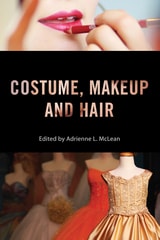
Costume, Makeup, and Hair
McLean, Adrienne L
Rutgers University Press, 2016
From the acclaimed Behind the Silver Screen series, Costume, Makeup, and Hair charts the development of these three crafts in the American film industry from the 1890s to the present. Each chapter examines a different era in film history, revealing how the arts of cinematic costume, makeup, and hair, have continually adapted to new conditions, making the transitions from stage to screen, from monochrome to color, and from analog to digital. Together, the book’s contributors give us a remarkable glimpse into how these crafts foster creative collaboration and improvisation, often fashioning striking looks and ingenious effects out of limited materials.
Costume, Makeup, and Hair not only considers these crafts in relation to a wide range of film genres, from sci-fi spectacles to period dramas, but also examines the role they have played in the larger marketplace for fashion and beauty products. Drawing on rare archival materials and lavish color illustrations, this volume provides readers with both a groundbreaking history of film industry labor and an appreciation of cinematic costume, makeup, and hairstyling as distinct art forms.
Cotton
Companies, Fashion and the Fabric of Our LivesEdited by Joseph H. II Hancock, Nioka Wyatt, and Tasha L. Lewis
Intellect Books, 2016

Couture and Consensus
Fashion and Politics in Postcolonial ArgentinaRegina A. Root
University of Minnesota Press, 2010
Crossing Gender Boundaries
Fashion to Create, Disrupt and TranscendEdited by Andrew Reilly and Ben Barry
Intellect Books, 2020
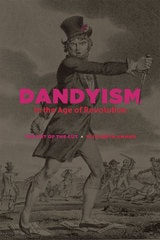
Dandyism in the Age of Revolution
The Art of the CutElizabeth Amann
University of Chicago Press, 2014
In Dandyism in the Age of Revolution, Elizabeth Amann shows that in France, England, and Spain, daring dress became a way of taking a stance toward the social and political upheaval of the period. France is the centerpiece of the story, not just because of the significance of the Revolution but also because of the speed with which its politics and fashions shifted. Dandyism in France represented an attempt to recover a political center after the extremism of the Terror, while in England and Spain it offered a way to reflect upon the turmoil across the Channel and Pyrenees. From the Hair Powder Act, which required users of the product to purchase a permit, to the political implications of the feather in Yankee Doodle’s hat, Amann aims to revise our understanding of the origins of modern dandyism and to recover the political context from which it emerged.
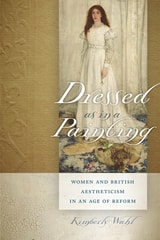
Dressed as in a Painting
Women and British Aestheticism in an Age of ReformKimberly Wahl
University of New Hampshire Press, 2013
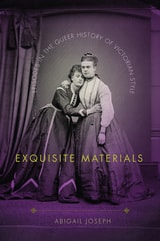
Exquisite Materials
Episodes in the Queer History of Victorian StyleAbigail Joseph
University of Delaware Press, 2011
Published by University of Delaware Press. Distributed worldwide by Rutgers University Press.
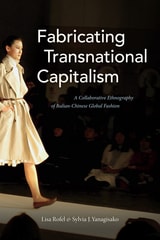
Fabricating Transnational Capitalism
A Collaborative Ethnography of Italian-Chinese Global FashionLisa Rofel and Sylvia J. Yanagisako
Duke University Press, 2018
Fashion Cities Africa
Edited by Hannah Azieb Pool
Intellect Books, 2016
Tied to the Fashion Cities Africa exhibition at the Brighton Museum, the book gives much needed attention to four key African fashion scenes: Nairobi, Lagos, Casablanca, and Johannesburg—one from each region of the continent. Filled with interviews of leading African fashion designers, stylists, and commentators, alongside hundreds of exclusive street-style images, Fashion Cities Africa is a landmark book that should be celebrated in fashion houses the world over.
Fashion Education
The Systemic RevolutionEdited by Ben Barry and Deborah A. Christel
Intellect Books, 2023
Despite the hard-earned successes of body positive, antiracist, and disability rights activists calling for diverse representation, the fashion industry has been slow to evolve. In Fashion Education: The Systemic Revolution, fashion educators share their experiences navigating, resisting, and transforming the narrow beauty and body ideals that have defined pedagogy within the discipline. The volume examines their challenges and successes, as well as practical strategies for countering narrow fashion education curricula. Educators share ways to radically redesign courses and decenter white supremacy, fatphobia, ableism, transphobia, and misogyny. Together, the chapters illuminate the critical role of fashion education in systematically eliminating body oppression and building a more inclusive profession.
Fashion Projects
15 Years of Fashion in DialogueEdited by Francesca Granata
Intellect Books, 2025
Fashion Projects was founded in New York in 2005 as a zine. It gradually morphed into a larger journal straddling the academic and general interest worlds, with international distribution and an ardent readership. It served as a platform to highlight the importance of fashion within current critical discourses through long-form interviews with a range of curators, critics, artists, and designers. This book collects the best articles from the journal, most issues of which are now unavailable.
From exploring the rise of digital fashion media with Penny Martin (the founding editor-in-chief of SHOWstudio) to the continued importance of connoisseurship with Harold Koda (former curator-in-chief of the Met’s Costume Institute), the anthology records the increasing centrality of fashion to contemporary critical discourse. The book is an index of a particular time within the fashion studies landscape and the attendant fields of fashion writing, fashion curation, and critical fashion practice during which the field witnessed a meteoric rise.
Fashion and Ethics
Critical Studies in Fashion and Beauty, Volume IIEdited by Efrat Tseëlon
Intellect Books, 2014
With essays that problematize issues such as ethical fashion’s self-appointed morality, the first-world notion that the environment should take priority over human development, the conflict between business profit and ethics, the unintended agendas involved in consuming green cosmetics or ethical culinary trends, and the discursive strategies of denial of the extreme cruelty in the procurement of animal skin and fur for use in fashion, Fashion and Ethics applies its uncompromising scrutiny to all areas of fashion. Throughout, the volume forces readers to confront the question: Does ethical fashion go deep enough into challenging unethical behavior or is it just a charade of good intentions?
Fashion and War in Popular Culture
Edited by Denise N. Rall
Intellect Books, 2014
The premier text to illustrate the impact of war on textiles, bodies, costume, art, and design, Fashion and War in Popular Culture will be warmly welcomed by scholars of fashion design and theory, historians of fashion, and those interested in theories of warfare and military science.
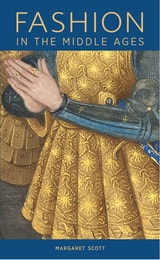
Fashion in the Middle Ages
Margaret Scott
J. Paul Getty Trust, The, 2018
From the costly velvets and furs worn by kings to the undyed wools and rough linens of the peasantry, the clothing worn by the various classes in the Middle Ages played an integral role in medieval society. In addition to providing clues to status, profession, and/or geographic origin, textiles were a crucial element in the economies of many countries and cities.
Much of what is known about medieval fashion is gleaned from the pages of manuscripts, which serve as a rich source of imagery. This volume provides a detailed look at both the actual fabrics and composition of medieval clothing as well as the period’s attitude toward fashion through an exploration of illuminated manuscripts in the collection of the J. Paul Getty Museum. The last portion of the book is dedicated to the depiction of clothing in biblical times and the ancient world as seen through a medieval lens. Throughout, excerpts from literary sources of the period help shed light on the perceived role and function of fashion in daily life.
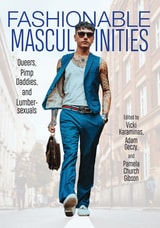
Fashionable Masculinities
Queers, Pimp Daddies, and LumbersexualsVicki Karaminas
Rutgers University Press, 2022
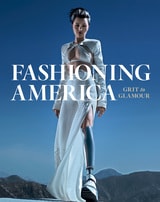
Fashioning America
Grit to GlamourMichelle Tolini Finamore
University of Arkansas Press, 2022
With nearly one hundred illustrations of garments and accessories that span two centuries of design, Fashioning America celebrates the achievements of a wide array of makers—especially immigrants, Native Americans, and Black Americans. Incorporating essays by fashion historians, curators, and journalists, this volume takes a fresh look at the country’s fashion history while exploring its close relationship with Hollywood and media in general, illuminating the role that American designers have played in shaping global visual culture and demonstrating why American fashion has long resonated around the world.
Footnotes
On ShoesEdited by Shari Benstock and Suzanne Ferriss
Rutgers University Press, 2002
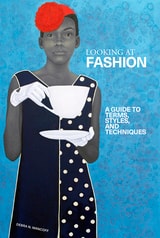
Looking at Fashion
A Guide to Terms, Styles, and TechniquesDebra N. Mancoff
J. Paul Getty Trust, The, 2024
Whether in art or life, fashion makes a statement. It gives form to the temper of the times and the motives of the moment, charting shifts in society, status, technology, and economy. Fashion is shaped by both high and popular culture and reveals the influence of individuals from diverse socioeconomic backgrounds.
Spanning the centuries and representing a global point of view, Looking at Fashion is a guide to the elements that make clothing practical, wearable, stylish, and distinctive. Created for scholars, students, fashionistas, and anyone who wants to expand their understanding of world culture through the history of dress, this book provides a rich and varied lexicon of the vocabulary that describes and explains the most essential components of garments and techniques of clothing construction. Ranging from basic pieces and their individual parts to structure, embellishments, and innovations, Looking at Fashion offers insights into the evolution of dress in terms of style, fit, and design. Gorgeous color illustrations, including paintings, photographs, historical garments, and custom drawings, reveal the interrelationship of fashion and art from antiquity to now.
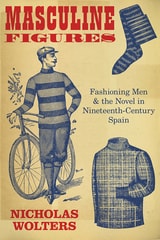
Masculine Figures
Fashioning Men and the Novel in Nineteenth-Century SpainNicholas Wolters
Vanderbilt University Press, 2022
Fictional masculinity performs a symbolic role in representing and negotiating the contradictions male novelists often encountered in their attempts to professionalize not only as writers, but also as businessmen, professors, lawyers, and politicians. Through specific and recurring figures like the student, the priest, the businessman, and the heir, male novelists portray and represent an increasingly middle-class world at odds with the values and virtues it inherited from an imperial Spanish past, and those it imported from more industrialized nations like England and France. The visual culture of the time and place marks the material turn in middle-class masculinity and sets the stage for discussions of race and sexuality.
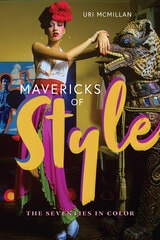
Mavericks of Style
The Seventies in ColorUri McMillan
Duke University Press, 2025

Mendings
Megan Sweeney
Duke University Press, 2023

Mirror, Mirror
Reflections on Philly Style, Finding My Voice, and Social JusticeElizabeth Wellington
Temple University Press, 2027
For award-winning fashion writer Elizabeth Wellington, style was initially less about labels and more about how she styled her looks. She knew what looked good and that what she wore was an essential form of self-expression. Mirror, Mirror collects thirty-six of Wellington’s columns for the Philadelphia Inquirer, where she has written about fashion, politics, and pop culture since 2002. Each chapter includes an opening essay defining the era and how Wellington fit into it along with a “Fashion Fast Forward” that reflects how both she and society have evolved.
Wellington started covering fashion when the industry was on the cusp of social and sartorial change. As trends evolved, so too did Wellington, who found her place as she defined Philadelphia’s style scene. She profiles local doyennes Joan Shepp and Toby Lerner and writes about finding the perfect jeans. Wellington also intertwines optics and social justice in columns about First Lady style, the power of the hoodie, and the impact of the CROWN Act, which protects against discrimination based on hair.
Writing thoughtfully about fashion with nostalgia and passion, Wellington covers retail, Fashion Week runways, and the changing political landscape. Mirror, Mirror showcases Wellington’s flair in her work as she writes about style and herself.
Montréal Chic
A Locational History of Montréal FashionKatrina Sark and Sara Danièle Bélanger-Michaud
Intellect Books, 2016
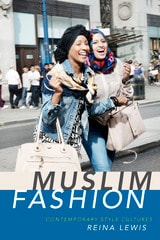
Muslim Fashion
Contemporary Style CulturesReina Lewis
Duke University Press, 2015
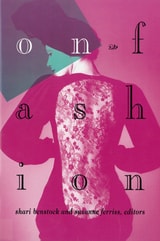
On Fashion
Benstock, Shari
Rutgers University Press, 1994
Until recently, fashion was considered the "F-word" in intellectual circles, dismissed as unworthy of serious attention. Yet no area of life, no individual moment, stands outside fashion's discourses. Intuitively, we all know that clothing is a language, incessantly communicating messages about its wearer. But who speaks this language, to whom is it addressed, what does it mean, and how are its meanings established and transformed? On Fashion explores the ways our material, political, psychological, sexual, even intellectual lives are woven into fashion's fabric.
This stimulating collection of essays explores fashion's symbolic and figurative functions in photography, cinema, and video; in consumerism, postmodernism, and feminism; in political and material culture; and in self-definition and subjectivity. They demonstrate the pervasive reach of fashion and its expressions.
This collection contains over sixty photographs and illustrations and includes essays by Barbara Brodman, Mary Ann Caws, Linda Benn DeLibero, Hlne Cixous, Diana Fuss, Cheryl Herr, Karla Jay, Deborah Jenson, Douglas Kellner, Ingeborg Majer O'Sickey, Leslie W. Rabine, Andrew Ross, Sonia Rykiel, Carol Shloss, Kaja Silverman, Maureen Turim, and Iris Marion Young.
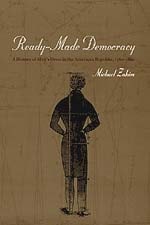
Ready-Made Democracy
A History of Men's Dress in the American Republic, 1760-1860Michael Zakim
University of Chicago Press, 2003
By the early nineteenth century, homespun began to disappear from the American material landscape. Exhortations of industry and modesty, however, remained a common fixture of public life. In fact, they found expression in the form of the business suit. Here, Zakim traces the evolution of homespun clothing into its ostensible opposite—the woolen coats, vests, and pantaloons that were "ready-made" for sale and wear across the country. In doing so, he demonstrates how traditional notions of work and property actually helped give birth to the modern industrial order. For Zakim, the history of men's dress in America mirrored this transformation of the nation's social and material landscape: profit-seeking in newly expanded markets, organizing a waged labor system in the city, shopping at "single-prices," and standardizing a business persona.
In illuminating the critical links between politics, economics, and fashion in antebellum America, Ready-Made Democracy will prove essential to anyone interested in the history of the United States and in the creation of modern culture in general.
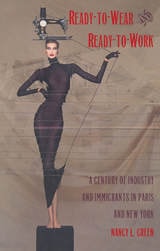
Ready-to-Wear and Ready-to-Work
A Century of Industry and Immigrants in Paris and New YorkNancy L. Green
Duke University Press, 1997
Green focuses on issues of fashion and fabrication as they involve both the production and consumption of clothing. Traditionally, much of the urban garment industry has been organized around small workshops and flexible homework, and Green emphasizes the effect this labor organization had on the men and mostly women who have sewn the garments. Whether considering the immigrant Jews, Italians, Puerto Ricans, Dominicans, and Chinese in New York or the Chinese-Cambodians, Turks, Armenians, and Russian, Polish, and Tunisian Jews in Paris, she outlines similarities of social experience in the shops and the unions, while allowing the voices of the workers, in all their diversity to be heard.
A provocative examination of gender and ethnicity, historical conflict and consensus, and notions of class and cultural difference, Ready-to-Wear and Ready-to-Work breaks new ground in the methodology of comparative history.
Rise Of Fashion
A ReaderDaniel Leonhard Purdy
University of Minnesota Press, 2004
A remarkable anthology of key writings that parallels the history of fashion with modern life
Writing more than a century before Vogue, no less a figure than G. W. F. Hegel reviewed the fashion of his day and found it wanting because, in becoming outmoded so quickly, it drew attention away from the timeless beauty of the human form. And Hegel is not unique among philosophers in his interest in fashion’s role; for more than 250 years, social thinkers have considered fashion—its transitive nature, the conformity it inspires, the vast range of its influence—as a defining feature of modern life.
In The Rise of Fashion, Daniel Leonhard Purdy brings together key writings from the Enlightenment to the twentieth century that explore fashion as the ultimate expression of modernity. Making available many previously untranslated or otherwise unfamiliar works from French, German, and English, Purdy establishes an extraordinary lineage of fashion commentary dating back to Mandeville and Voltaire, which laid the groundwork for the writings on commodity culture of Adorno, Benjamin, and the Frankfurt School. From critiques of aristocratic excess to accounts of fashion’s influence on our ideals of masculinity or femininity, from the figure of the dandy and the eroticism of clothing to the class politics of fashion, this landmark reader includes works by philosophers (Carlyle, Rousseau, Georg Simmel) and social theorists (Herbert Spencer, Veblen), as well as writers (Goethe, Baudelaire, Mallarmé, Wilde) and critics (Karl Kraus, Adolf Loos, Simone de Beauvoir).Collecting and contextualizing many of the earliest and most significant formulations of fashion theory, The Rise of Fashion provocatively examines the proposition that to be modern is to be fashionable.
Shapely Bodies
The Image of Porcelain in Eighteenth-Century FranceChristine A. Jones
University of Delaware Press, 2013
Shapely Bodies: The Image of Porcelain in Eighteenth-Century France constructs the first cultural history of porcelain making in France. It takes its title from two types of “bodies” treated in this study: the craft of porcelain making shaped clods of earth into a clay body to produce high-end commodities and the French elite shaped human bodies into social subjects with the help of makeup, stylish patterns, and accessories. These practices crossed paths in the work of artisans, whose luxury objects reflected and also influenced the curves of fashion in the eighteenth century.
French artisans began trials to reproduce fine Chinese porcelain in the 1660s. The challenge proved impossible until they found an essential ingredient, kaolin, in French soil in the 1760s. Shapely Bodies differs from other studies of French porcelain in that it does not begin in the 1760s at the Sèvres manufactory when it became technically possible to produce fine porcelain in France, but instead ends there. Without the secret of Chinese porcelain, artisans in France turned to radical forms of experimentation. Over the first half of the eighteenth century, they invented artificial alternatives to Chinese porcelain, decorated them with French style, and, with equal determination, shaped an identity for their new trade that distanced it from traditional guild-crafts and aligned it with scientific invention. The back story of porcelain making before kaolin provides a fascinating glimpse into the world of artisanal innovation and cultural mythmaking.
To write artificial porcelain into a history of “real” porcelain dominated by China, Japan, and Meissen in Saxony, French porcelainiers learned to describe their new commodity in language that tapped into national pride and the mythic power of French savoir faire. Artificial porcelain cut such a fashionable image that by the mid-eighteenth century, Louis XV appropriated it for the glory of the crown. When the monarchy ended, revolutionaries reclaimed French porcelain, the fruit of a century of artisanal labor, for the Republic. Tracking how the porcelain arts were depicted in documents and visual arts during one hundred years of experimentation, Shapely Bodies reveals the politics behind the making of French porcelain’s image.
Published by University of Delaware Press. Distributed worldwide by Rutgers University Press.Showing Out
Fashion in HarlemPeter "Souleo" Wright
Rutgers University Press, 2027
Showing Out: Fashion in Harlem explores the unprecedented and enduring impact of the Harlem Institute of Fashion (HIF) on American culture and style. Founded in 1966 by Lois K. Alexander-Lane, HIF produced legendary fashion shows for the annual HARLEM WEEK festival. With their eye-catching costumes, dramatic runway presentations, and embrace of the local community, the shows became one of HIF’s most popular and successful initiatives, spotlighting the underrepresented talents of Black fashion designers, models, and administrators. Tracing HIF’s legacy within the larger narrative of fashion history, Showing Out uses fashion shows as a portal, showcasing previously unpublished archival photos; first-hand accounts from HIF alumni, and contemporary collectives that continue to celebrate the Black contribution to fashion. In the wake of Black Lives Matter, anti-DEI policies, and ongoing political and racial turmoil, Showing Out is the much-needed voice of inspiration to reshape the narrative around fashion.
Street Fashion Moscow
Elena Siemens
Intellect Books, 2017
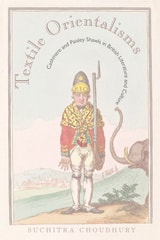
Textile Orientalisms
Cashmere and Paisley Shawls in British Literature and CultureSuchitra Choudhury
Ohio University Press, 2023
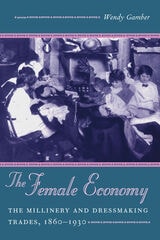
The Female Economy
The Millinery and Dressmaking Trades, 1860-1930Wendy Gamber
University of Illinois Press, 1997
The Female Economy explores that lost world of women's dominance, showing how independent, often ambitious businesswomen and the sometimes imperious consumers they served gradually vanished from the scene as custom production gave way to a largely unskilled modern garment industry controlled by men. Wendy Gamber helps overturn the portrait of wage-earning women as docile souls who would find fulfillment only in marriage and motherhood. She combines labor history, women's history, business history, and the history of technology while exploring topics as wide-ranging as the history of pattern-making and the relationship between entrepreneurship and marriage.
A volume in the series The Working Class in American History, edited by David Brody, Alice Kessler-Harris, David Montgomery, and Sean Wilentz, and in the series Women in American History, edited by Anne Firor Scott, Nancy A. Hewitt, and Stephanie Shaw
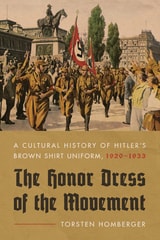
The Honor Dress of the Movement
A Cultural History of Hitler’s Brown Shirt Uniform, 1920–1933Torsten Homberger
University of Massachusetts Press, 2021
In The Honor Dress of the Movement, Torsten Homberger contends that the brown-shirted Stormtrooper uniform was central to Hitler's rise to power. By analyzing its design and marketing, he investigates how Nazi leaders used it to project a distinct political and military persona that was simultaneously violent and orderly, retrograde and modern—a dual image that proved popular with the German people and was key to the Nazis' political success. Based on a wealth of sources that includes literature, films, and newspapers of the era, Homberger exhibits how the Nazis shaped and used material culture to destroy democracy.
The Intellect Handbook of Men’s Fashion
Edited by Ben Barry, Andy Reilly, and José Blanco F.
Intellect Books, 2026
Recent years have seen the study of men’s fashion grow from an emerging topic into a vibrant and expanding field, engaging with critical conversations on gender, race, sexuality, disability, colonialism, and globalization. Reflecting this shift, this volume moves beyond traditional narratives by highlighting three key approaches: decentralizing and decolonizing men’s fashion studies, embracing global perspectives, and focusing on multiple, overlapping social identities. Comprising thirty-four chapters by insightful scholars in fashion and dress studies, the collection offers a fresh and forward-looking examination of the field’s development.
Primarily designed for academic audiences, this handbook serves as an ideal textbook or core reading for undergraduate and graduate courses on gender and fashion. At the same time, it appeals to fashion practitioners, curators, cultural critics, and general readers interested in the history, culture, and meaning of men’s fashion and dress.
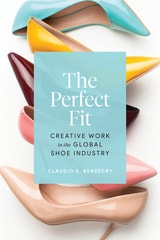
The Perfect Fit
Creative Work in the Global Shoe IndustryClaudio E. Benzecry
University of Chicago Press, 2022
We know a lot about how clothing and shoes are made cheaply, but very little about the process when they are made beautifully. In The Perfect Fit, Claudio E. Benzecry looks at the craft that goes into designing shoes for women in the US market, revealing that this creative process takes place on a global scale. Based on unprecedented behind-the-scenes access, The Perfect Fit offers an ethnographic window into the day-to-day life of designers, fit models, and technicians as they put together samples and prototypes, showing how expert work is a complement to and a necessary condition for factory exploitation.
Benzecry looks at the decisions and constraints behind how shoes are designed and developed, from initial inspiration to the mundane work of making sure a size seven stays constant. In doing so, he also fosters an original understanding of how globalization works from the ground up. Drawing on five years of research in New York, China, and Brazil, The Perfect Fit reveals how creative decisions are made, the kinds of expertise involved, and the almost impossible task of keeping the global supply chain humming.
Trappings
Stories of Women, Power, and ClothingLudwig, Tiffany
Rutgers University Press, 2007
What do you wear that makes you feel powerful? How about the woman next to you at the bank? In line with you at the store? Think about your mother. What would she put on to reveal her power source to the world? These are the questions that inspired Tiffany Ludwig and Renee Piechocki to embark on an interview journey across the United States. Over a period of six years, they talked with more than 500 women and girls, ages four through ninety-two, who ranged from office workers to drag-kings, stay-at-home moms to attorneys, fashion industry executives to elected officials, students to cowgirls.
It is these women’s sensitive, funny, and always revealing thoughts that are at the heart of Trappings—a book that although it begins with a question about clothing is not about fashion at all. Here, clothing is simply a vehicle to access a larger dialogue about a diverse range of issues women face related to power and identity, including what expectations and limitations are placed upon them by their affiliation with a specific gender, culture, race, class, or profession. A complex spectrum of responses include discussions about the importance of clothing’s comfort and practicality, how clothing can facilitate women’s movement through class and social strata, how sex is used strategically in business and social settings, and how clothing can be used to empower women by connecting them with cultural or personal history.
Complimented by 148 color and black-and-white photographs, the visual and written portraits in this book reveal much more than the contents of women’s closets. Through the intimate lens of clothing, Ludwig and Piechocki expose the very personal ways that power is sought, experienced, and projected by women.
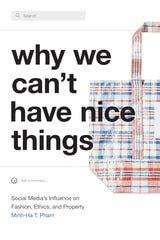
Why We Can't Have Nice Things
Social Media’s Influence on Fashion, Ethics, and PropertyMinh-Ha T. Pham
Duke University Press, 2022
Why Would Anyone Wear That?
Fascinating Fashion FactsCelia E. Stall-Meadows
Intellect Books, 2013
With a blend of wisdom and wit, Why Would Anyone Wear That? explores extreme fashions from around the world. The Victorian era was by no means alone in strange sartorial choices. Throughout history, men and women have turned to clothing and accessories to adorn and accentuate parts of the body. Some of the fashions, like bloomers, were surprisingly functional. Others, like powdered wigs and hobble skirts, were inconvenient and uncomfortable. And a few particularly painful practices could even permanently disfigure the wearer, like brass coils worn in Burma to lengthen the neck and the custom of binding of women’s feet to fit tiny lotus slippers in Song dynasty China. Presenting dozens of the most peculiar fashions, including shoes, hats, jewelry, undergarments, and outerwear, the book provides insightful commentary, placing the garments and accessories in the proper historical, social, and cultural context.
If you’ve ever wondered why the codpiece was created or the leisure suit went out of style, this book will answer that question and many more. Fully illustrated and packed with fun facts, Why Would Anyone Wear That? introduces readers to the fascinating stories behind some of the world’s weirdest fashions.
Wiener Chic
A Locational History of Vienna FashionSusan Ingram and Markus Reisenleitner
Intellect Books, 2013
The first book that connects Vienna and fashion with urban theory, Wiener Chic draws on material that is virtually unknown in an English-language context to give readers an insider’s vantage point on an underappreciated European fashion capital.
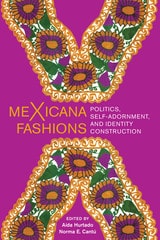
meXicana Fashions
Politics, Self-Adornment, and Identity ConstructionEdited by Aída Hurtado and Norma E. Cantú
University of Texas Press, 2020
2020 Second Place, Best Nonfiction Multi Author, International Latino Book Awards
Collecting the perspectives of scholars who reflect on their own relationships to particular garments, analyze the politics of dress, and examine the role of consumerism and entrepreneurialism in the production of creating and selling a style, meXicana Fashions examines and searches for meaning in these visible, performative aspects of identity.
Focusing primarily on Chicanas but also considering trends connected to other Latin American communities, the authors highlight specific constituencies that are defined by region (“Tejana style,” “L.A. style”), age group (“homie,” “chola”), and social class (marked by haute couture labels such as Carolina Herrera and Oscar de la Renta). The essays acknowledge the complex layers of these styles, which are not mutually exclusive but instead reflect a range of intersections in occupation, origin, personality, sexuality, and fads. Other elements include urban indigenous fashion shows, the shifting quinceañera market, “walking altars” on the Days of the Dead, plus-size clothing, huipiles in the workplace, and dressing in drag. Together, these chapters illuminate the full array of messages woven into a vibrant social fabric.