Results by title
44 books match the query 'Fathers and sons'
A Father's Words
A NovelRichard Stern
University of Chicago Press, 1990
"Richard Stern's novels are robustly intelligent, very funny, and beguilingly humane. He knows as much as anyone writing American prose about family mischief, intellectual shenanigans, love blunders—and about writing American prose."—Philip Roth
"A delectable rhetorical display. . . . "—The New Yorker
"Anyone who has read Richard Stern's previous novels won't need to be told he is an unusually crisp and intelligent writer, with a sharp edge to his wit; and in A Father's Words he runs true to form. Many of the book's pleasures are incidental: jokes, intellectual cadenzas, agile turns of phrase . . . The author's powers of farcical invention climax in a brilliant, bitter episode where . . . the younger man proclaims his final failure . . . Mr. Stern has written an excellent novel."—John Gross, New York Times
"Richard Stern is American letters' unsung comic writer about serious matters . . . [A Father's Words] produced in this reviewer an apostolic desire to convince a wider audience to try Stern, especially the vintage Stern."—Doris Grumbach, Chicago Tribune
A Fatherless Child
Autobiographical Perspectives of African American MenTara T. Green
University of Missouri Press, 2009
Through her analysis, Green emphasizes the role of community as a father-substitute in producing successful black men, the impact of fatherlessness on self-perceptions and relationships with women, and black men’s engagement with healing the pain of abandonment. She also looks at why these four men visited Africa to reclaim a cultural history and identity, showing how each developed a clearer understanding of himself as an American man of African descent.
A River Runs Through It and Other Stories, Twenty-fifth Anniversary Edition
Norman Maclean
University of Chicago Press, 2001
Maclean grew up in the western Rocky Mountains in the first decades of the twentieth century. As a young man he worked many summers in logging camps and for the United States Forest Service. The two novellas and short story in this collection are based on his own experiences—the experiences of a young man who found that life was only a step from art in its structures and beauty. The beauty he found was in reality, and so he leaves a careful record of what it was like to work in the woods when it was still a world of horse and hand and foot, without power saws, "cats," or four-wheel drives. Populated with drunks, loggers, card sharks, and whores, and set in the small towns and surrounding trout streams and mountains of western Montana, the stories concern themselves with the complexities of fly fishing, logging, fighting forest fires, playing cribbage, and being a husband, a son, and a father.
By turns raunchy, poignant, caustic, and elegiac, these are superb tales which express, in Maclean's own words, "a little of the love I have for the earth as it goes by." A first offering from a 70-year-old writer, the basis of a top-grossing movie, and the first original fiction published by the University of Chicago Press, A River Runs through It and Other Stories has sold more than a million copies. As Proulx writes in her foreword to this new edition, "In 1990 Norman Maclean died in body, but for hundreds of thousands of readers he will live as long as fish swim and books are made."
A River Runs Through It, and Other Stories
Norman Maclean
University of Chicago Press, 1976
Based on Norman Maclean's childhood experiences, the title novella has established itself as one of the most moving stories of our time; it captivates readers with vivid descriptions of life along Montana's Big Blackfoot River and its near magical blend of fly fishing with the troubling affections of the heart.
The paperback edition is now available with an evocative new cover by acclaimed Montana painter Russell Chatham.
"A masterpiece. . . . This is more than stunning fiction: It is a lyric record of a time and a life, shining with Maclean's special gift for calling the reader's attention to arts of all kinds—the arts that work in nature, in personality, in social intercourse, in fly-fishing."—Kenneth M. Pierce, Village Voice
Norman Maclean (1902-90), woodsman, scholar, teacher, and storyteller, grew up in the Western Rocky Mountains of Montana and worked for many years in logging camps and for the United States Forestry Service before beginning his academic career. He retired from the University of Chicago in 1973.

A River Runs through It
Norman Maclean
University of Chicago Press, 1989
Based on Norman Maclean's childhood experiences, A River Runs through It has established itself as one of the most moving stories of our time; it captivates readers with vivid descriptions of life along Montana's Big Blackfoot River and its near magical blend of fly fishing with the troubling affections of the heart.
This handsome edition is designed and illustrated by Barry Moser. There are thirteen two-color wood engravings.
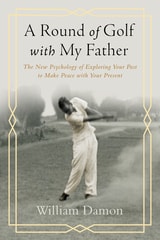
A Round of Golf with My Father
The New Psychology of Exploring Your Past to Make Peace with Your PresentDamon, William
Templeton Press, 2021
Viewing our past through the eyes of maturity can reveal insights that our younger selves could not see. Lessons that eluded us become apparent. Encounters that once felt like misfortunes now become understood as valued parts of who we are. We realize what we’ve learned and what we have to teach. And we’re encouraged to chart a future that is rich with purpose.
In A Round of Golf with My Father, William Damon introduces us to the “life review.” This is a process of looking with clarity and curiosity at the paths we’ve traveled, examining our pasts in a frank yet positive manner, and using what we’ve learned to write purposeful next chapters for our lives.
For Damon, that process began by uncovering the mysterious life of his father, whom he never met and never gave much thought to. What he discovered surprised him so greatly that he was moved to reassess the events of his own life, including the choices he made, the relationships he forged, and the career he pursued.
Early in his life, Damon was led to believe that his father had been killed in World War II. But the man survived and went on to live a second life abroad. He married a French ballerina, started a new family, and forged a significant Foreign Service career. He also was an excellent golfer, a bittersweet revelation for Damon, who wishes that his father had been around to teach him the game.
We follow Damon as he struggles to make sense of his father’s contradictions and how his father, even though living a world apart, influenced Damon’s own development in crucial ways. In his life review, Damon uses what he learned about his father to enhance his own newly emerging self-knowledge.
Readers of this book may come away inspired to conduct informal life reviews for themselves. By uncovering and assembling the often overlooked puzzle pieces of their pasts, readers can seek present-day contentment and look with growing optimism to the years ahead.
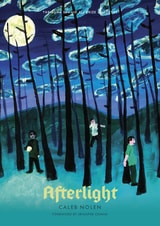
Afterlight
Caleb Nolen
University of Utah Press, 2026
Winner of the Agha Shahid Ali Prize in Poetry
“When I wake I’m in ninth grade again,” begins “Reunion,” the first poem in Caleb Nolen’s debut collection Afterlight. These haunting, tender poems revisit the fraught adolescence of a group of boys growing up in the late 1990s and early 2000s.
Told through the voice of one of the boys who left and is later looking back, Afterlight navigates the silences left by absent fathers, early deaths, and a God who doesn't speak. Interwoven throughout are letters to saints and biblical figures: pleas for intercession and understanding that echo the speaker’s search for grace amid violence and loss. By the book’s end, the lost boys and the saints share the same hallowed space, their stories entwined. Written in plain, unsparing language, these poems reveal the tenderness within troubled masculinity and the ache of trying to love what has already vanished.

Back to Bizkaia
A Basque-American MemoirVince J. Juaristi
University of Nevada Press, 2011
Nevada sheep rancher Joe Juaristi spoke for years about making a trip back to the Spanish Basque Country that he left sixty years earlier, but each time the subject came up the discussion evolved into a family debate about the scope and members of the journey. Finally Joe's son, Vince, secretly resolved to organize the trip that his father wanted and needed--the two of them, traveling alone, making a quiet reunion with Joe's twin sister, who suffers from Alzheimer's, visiting other aging siblings and friends, and recounting the places that formed Joe's memories of his youth.
Back to Bizkaia is part travel book, part memoir of two men exploring their mutual roots and their unique father-son bond. The narrative intertwines an engaging account of the contemporary Basque Country with Joe's experiences as an immigrant making his way in a new country and Vince's memories of growing up in a close Basque-American community in the American West. This is a book about Basques and their American families, but on another level it is every immigrant's story of return to a beloved homeland.
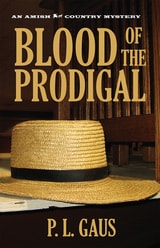
Blood of the Prodigal
An Amish Country MysteryP. L. Gaus
Ohio University Press, 1999
P. L. Gaus’s Blood of the Prodigal, a mystery in the tradition of Tony Hillerman, is back in a new edition, including an exclusive interview with the author, discussion questions for reading groups, and a detailed map and driving guide to Holmes County, Ohio, with everything one needs to visit the iconic scenes depicted in the story.
In Holmes County, Ohio—home to the largest Amish and Mennonite settlements in the world—mystery and foreboding lurk in the quiet Old Order Amish community led by Bishop Eli Miller.
The illusion of peace is shattered one early morning when a young Amish boy goes missing—abducted from his home and from Bishop Miller’s care. At first, the bishop suspects the child’s father, who was exiled from the Old Order ten years ago, but a murder soon casts doubt on the bishop’s theory. With a strong distrust of law enforcement and the modern “English” ways, the bishop must put his faith in an unlikely partnership with Professor Michael Branden before it’s too late.With the help of the peaceful pastor Cal Troyer and the reckless Sheriff Bruce Robertson, Branden plunges headlong into the closed culture to unravel the mystery of the missing child and uncover truths many would prefer to leave undisturbed.
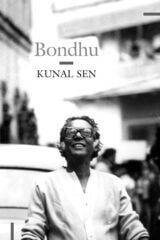
Bondhu
My Father, My FriendKunal Sen
Seagull Books, 2023
“No one remembers when and why I started calling my father Bondhu. It was a strange way to address a father, as the word means ‘friend’ in Bengali. . . . As I got older, I became very self-conscious about such an odd name . . . and yet I cannot explain why I could not switch to the more acceptable Baba or something similar.”
Just as Kunal Sen, son of actor Gita Sen and filmmaker Mrinal Sen, was approaching adolescence, his father’s cinematic celebrity was reaching new heights. In this memoir, Kunal reflects on growing up in a middle-class household in South Calcutta, where his father’s Marxist beliefs and unrelenting urge “to be challenged and contradicted” often collided with the practical challenges of making a living. Through it all, what emerges is a picture of a family’s unyielding commitment to the craft of cinema, the risks each of its members took, and their endearing sense of humor. Celebrating Mrinal Sen’s birth centenary in 2023, Bondhu takes us on an intimate journey of a son attempting to reconcile his father’s public and private selves.
Club Icarus
Matt W. Miller
University of North Texas Press, 2013
Confessions of a Horseshoer
Ron Tatum
University of North Texas Press, 2012
Currency of the Heart
A Year of Investing, Death, Work, and CoinsDonald Nichols
University of Iowa Press, 2002
Nichols uses money in myriad forms—a grandfather‘s silver dollar, stocks and bonds, salaries, pallets of coins at the U.S. Mint, on-the-job dealings with coin collectors—as touchstones for reflections on relationships, motives, and a career "like one of those moving walkways in airports." His father's health is measured, tested, and evaluated in part by the health of his finances; at the same time, the turmoil and mystery surrounding both money and relationships are reflected in this memorable story.
Diary of Our Fatal Illness
Charles Bardes
University of Chicago Press, 2017
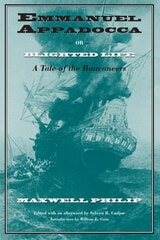
Emmanuel Appadocca; or, Blighted Life
A Tale of the BoucaneersMaxwell Philip
University of Massachusetts Press, 1997
This 1854 novel traces a mulatto son's quest for vengeance against his white father, a sugar planter who abandoned him and his mother. Intent on redeeming his mother's honor and outraged by the cruelty and greed that slavery has engendered Appadocca sails the seas with a band of ruthless pirates on a ship named the Black Schooner. The novel, written by the important activist and intellectual Michel Maxwell Philip (1829–1888) deals with themes, symbols, and literary techniques that are reminiscent of other major authors such as Melville, Douglass, and Stowe. This new edition with scholarly commentaries and annotations will reorient our understanding of the development of Caribbean literature in relation to English and American literary production.
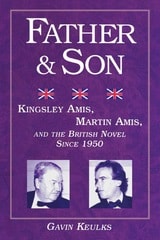
Father and Son
Kingsley Amis, Martin Amis, and the British Novel since 1950Gavin Keulks
University of Wisconsin Press, 2004
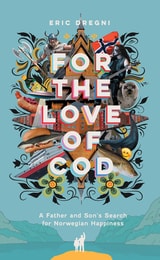
For the Love of Cod
A Father and Son's Search for Norwegian HappinessEric Dregni
University of Minnesota Press, 2021
A journey to find Norway’s supposed bliss makes for a comic travelogue that asks, seriously, what makes Norwegians so damn happy—and does it translate?
Norway is usually near or at the top of the World Happiness Report. But is it really one of the happiest countries on Earth? Eric Dregni had his doubts. Years ago he and his wife had lived in this country his great-great-grandfather once fled. When their son Eilif was born there, the Norwegian government paid for the birth, gave them $5,000, and deposited $150 into their bank account every month, but surely happiness was more than a generous health care system. What about all those grim months without sun? When Eilif turned fifteen, father and son decided to go back together and investigate. For the Love of Cod is their droll report on the state of purported Norwegian bliss.
Arriving in May, a month of festivals and eternal sun, the Dregnis are thrust into Norway at its merriest—and into the reality of the astronomical cost of living, which forces them to find lodging with friends and relatives. But this gives them an inside look at the secrets to a better life. It’s not the massive amounts of money flowing from the North Sea oil fields but how these funds are distributed that fuels the Norwegian version of democratic socialism—resulting in miniscule differences between rich and poor. Locals introduce them to the principles underlying their avowed contentment, from an active environmentalism that translates into flyskam (flight shame), which keeps Norwegians in the family cabin for the long vacations prescribed by law and charges a 150 percent tax on gas guzzlers (which, Eilif observes, means more Teslas seen in one hour than in a year in Minnesota!).
From a passion for dugnad or community volunteerism and sakte or “slow,” a rejection of the mad pace of modernity, to the commodification of Viking history and the dark side of Black Metal music that turns the idea of quaint, traditional Norway upside down, this idiosyncratic father and son tour lets readers, free of flyskam, see how, or whether, Norwegian happiness translates.
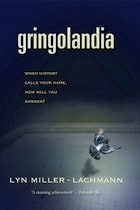
Gringolandia
Lyn Miller-Lachmann
Northwestern University Press, 2009
After papá’s arrest in 1980, Daniel’s family fled to the United States. Now Daniel has a new life, playing guitar in a rock band and dating Courtney, a minister’s daughter. He hopes to become a US citizen as soon as he turns eighteen.
When Daniel’s father is released and rejoins his family, they see what five years of prison and torture have done to him. Marcelo is partially paralyzed, haunted by nightmares, and bitter about being exiled to “Gringolandia.” Daniel worries that Courtney’s scheme to start a bilingual human rights newspaper will rake up papá’s past and drive him further into alcohol abuse and self-destruction. Daniel dreams of a real father-son relationship, but he may have to give up everything simply to save his papá’s life.
This powerful coming-of-age story portrays an immigrant teen’s struggle to reach his tortured father and find his place in the world.
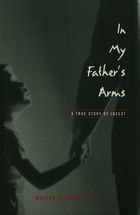
In My Father’s Arms
A Son’s Story of Sexual AbuseWalter A. de Milly III
University of Wisconsin Press, 2012
Tragically, Walter's deeply troubled father would launch his family on a perilous journey into darkness. To the outside world, this man is a prominent businessman, a dignified Presbyterian, and a faithful husband; to Walter, he is an overwhelming, handsome monster. Whenever the two are together, young Walter becomes a sexual plaything for his father; father and son outings are turned into soul-obliterating nightmares.
Walter eventually becomes a successful businessman only to be stricken by another catastrophe: his father, at the age of seventy, is caught molesting a young boy. Walter is asked to confront his father. Walter convenes his family, and in a private conference with a psychiatrist, the father agrees to be surgically castrated.
De Milly's portraits of his relationships with his father and mother, and the confrontation that leads to his father's bizarre and irreversible voluntary "cure," are certain to be remembered long after the reader has set aside this powerful contribution to the literature of incest survival.
In the Congo
Urs Widmer
Seagull Books, 2015
In Urs Widmer’s characteristic style, In the Congo is a riveting yarn, threading through not only the relationship between a father and son, but that of Africa and Europe. Translated by Donal McLaughlin, this novel will delight Widmer fans the world over and will turn our notions of colonialism on their heads.
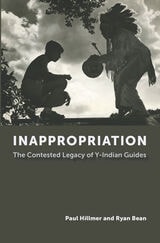
Inappropriation
The Contested Legacy of Y-Indian GuidesPaul Hillmer
University of Missouri Press, 2023
The Y-Indian Guides was a father-son (and later parent-child) program that encouraged real and enduring bonds through play and an authentic appreciation of family. While “playing Indian” seemed harmless to most participants during the program’s heyday, Paul Hillmer and Ryan Bean demonstrate the problematic nature of its methods. In the process of seeking to admire and emulate Indigenous Peoples, Y-Indian Guide participants often misrepresented American Indians and reinforced harmful stereotypes. Ultimately, this history demonstrates many ways in which American culture undermines and harms its Indigenous communities.
Irish Girl
StoriesTim Johnston
University of North Texas Press, 2009
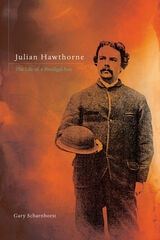
Julian Hawthorne
The Life of a Prodigal SonGary Scharnhorst
University of Illinois Press, 2014
Julian Hawthorne (1846-1934), Nathaniel Hawthorne's only son, lived a long and influential life marked by bad circumstances and worse choices. Raised among luminaries such as Thoreau, Emerson, and the Beecher family, Julian became a promising novelist in his twenties, but his writing soon devolved into mediocrity.
What talent the young Hawthorne had was spent chasing across the changing literary and publishing landscapes of the period in search of a paycheck, writing everything from potboilers to ad copy. Julian was consistently short of funds because--as biographer Gary Scharnhorst is the first to reveal--he was supporting two households: his wife in one and a longtime mistress in the other.
The younger Hawthorne's name and work ethic gave him influence in spite of his haphazard writing. Julian helped to found Cosmopolitan and Collier's Weekly. As a Hearst stringer, he covered some of the era's most important events: McKinley's assassination, the Galveston hurricane, and the Spanish-American War, among others.
When Julian died at age 87, he had written millions of words and more than 3,000 pieces, out-publishing his father by a ratio of twenty to one. Gary Scharnhorst, after his own long career including works on Mark Twain, Oscar Wilde, and other famous writers, became fascinated by the leaps and falls of Julian Hawthorne. This biography shows why.
Loser Sons
Politics and AuthorityAvital Ronell
University of Illinois Press, 2013
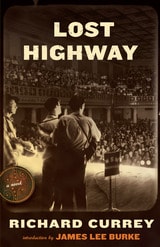
Lost Highway
RICHARD CURRY
West Virginia University Press, 2005
Richard Currey's Lost Highway has attracted a legion of admirers since its initial publication in 1997. The book depicts the epic struggle of an ordinary person living his dreams and following his passion. Lost Highway is the story of Sapper Reeves, a gifted country musician from the small town of Maxwell, West Virginia. Sapper’s story covers the events of more than half a century, from his birth in a poor coal mining town through his travels on the back roads of Appalachia in search of recognition and respect. Along the way, Sapper’s embattled love for his wife and struggle to come to terms with his combat-wounded son form the basis of his artistic and personal redemption.
Man in the Moon
Essays on Fathers and FatherhoodStephanie G'Schwind
University Press of Colorado, 2014
"Science claims it will one day be able to eliminate fathers from the equation by mating bone marrow with ovum. When that day comes, I imagine this book, along with a handful of other works (King Lear, Fun Home) will become even more necessary. Herein find the blueprints for the mystery, the maps for the uncharted, the keys to the archetype."
—Nick Flynn, author of The Reenactments and Another Bullshit Night in Suck City
"At this moment, I find myself at loose ends, lost in the various vacuums left by my father's dying and my sons' departures out into the voids. Yet this stunning constellation of essays centered me, became for me fine instruments of reckoning of where to stand in the ceaseless entropic dynamic of kin, of paternal keening. These waxing meditations demonstrate the inflationary universe, the heft and velocity of that big ol' nothing. They elegantly fill, with sober hope and the balm of joy, the terrifying, infinite spaces between those waning stars."
—Michael Martone, author of Michael Martone and Four for a Quarter
"What an unreachable mystery the father is, preoccupied, unknowable, pervasive. In these fascinating essays, a shared portrait emerges as writers articulate the perpetual puzzle of the father and, with grace and candor, explore what it means to not know him, to never know him. As one voice, these essays investigate the man—his inventories, his myths, his mere traces—who makes up our horizons, who forever shimmers there beyond our collective grasp."
—Susanna Sonnenberg, author of Her Last Death and She Matters: A Life in Friendships
Selected from the country's leading literary journals and publications—Crazyhorse, Colorado Review, The Nervous Breakdown, Creative Nonfiction, Georgia Review, Gulf Coast, The Missouri Review, The Normal School, and others—Man in the Moon brings together essays in which sons, daughters, and fathers explore the elusive nature of this intimate relationship and find unique ways to frame and understand it: through astronomy, arachnology, storytelling, map-reading, television, puzzles, DNA, and so on. In the collection's title essay, Bill Capossere considers the inextricable link between his love of astronomy and memories of his father: "The man in the moon is no stranger to me,” he writes. "I have seen his face before, and it is my father's, and his father's, and my own.” Other essays include Dinty Moore's "Son of Mr. Green Jeans: A Meditation on Missing Fathers,” in which Moore lays out an alphabetic investigation of fathers from popular culture—Ward Cleaver, Jim Anderson, Ozzie Nelson—while ruminating on his own absent father and hesitation to become a father himself. In "Plot Variations,” Robin Black attempts to understand, through the lens of teaching fiction to creative writing students, her inability to attend her father's funeral. Deborah Thompson tries to reconcile her pride in her father's pioneering research in plastics and her concerns about their toxic environmental consequences in "When the Future Was Plastic.” At turns painfully familiar, comic, and heartbreaking, the essays in this collection also deliver moments of seari
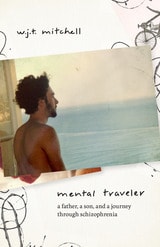
Mental Traveler
A Father, a Son, and a Journey through SchizophreniaW. J. T. Mitchell
University of Chicago Press, 2020
Gabriel Mitchell was diagnosed with schizophrenia at age twenty-one and died by suicide eighteen years later. He left behind a remarkable archive of creative work and a father determined to honor his son’s attempts to conquer his own illness. Before his death, Gabe had been working on a film that would show madness from inside and out, as media stereotype and spectacle, symptom and stigma, malady and minority status, disability and gateway to insight. He was convinced that madness is an extreme form of subjective experience that we all endure at some point in our lives, whether in moments of ecstasy or melancholy, or in the enduring trauma of a broken heart. Gabe’s declared ambition was to transform schizophrenia from a death sentence to a learning experience, and madness from a curse to a critical perspective.
Shot through with love and pain, Mental Traveler shows how Gabe drew his father into his quest for enlightenment within madness. It is a book that will touch anyone struggling to cope with mental illness, and especially for parents and caregivers of those caught in its grasp.

Mister Martini
Richard Carr
University of North Texas Press, 2008
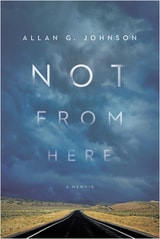
Not from Here
A MemoirAllan Johnson
Temple University Press, 2015
As a white man with Norwegian and English lineage, Johnson explores both America and the question of belonging to a place whose history holds the continuing legacy of the displacement, dispossession, and genocide of Native peoples.
More than a personal narrative, Not from Here illuminates the national silence around unresolved questions of accountability, race, and identity politics, and the dilemma of how to take responsibility for “a past we did not create.” Johnson’s story—about the past living in the present; of redemption, fate, family, tribe, and nation; of love and grief—raises profound questions about belonging, identity, and place.
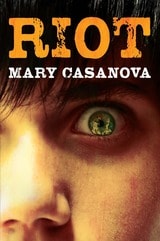
Riot
Mary Casanova
University of Minnesota Press, 2014
Based on actual events from 1989 in International Falls, Minnesota, Riot tells the story of sixth-grader Bryan, whose family becomes stressed when nonunion labor “rats” are hired by the local paper mill, leaving his father, a union worker, angry and out of a job. Tension erupts into daily fights at school and nightly acts of vandalism with no solution in sight. Already torn between his parents’ opposing viewpoints on how to handle the escalating situation, Bryan’s growing feelings for the daughter of a nonunion worker only complicate matters.
Bryan tries to understand the turmoil affecting his home and his town, but it is becomes harder and harder to separate his friends from his enemies. And when he witnesses a violent act that implicates his father, he must wrestle with family loyalty and telling the truth.
Saving Ben
A Father's Story of AutismDan E. Burns
University of North Texas Press, 2009

Slouching Towards Kalamazoo
A NovelPeter De Vries
University of Chicago Press, 2005
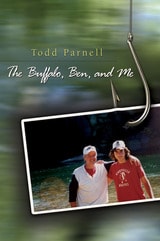
The Buffalo, Ben, and Me
Todd Parnell & Foreword by Jim Baker
University of Missouri Press, 2007
The Buffalo River in northwest Arkansas is one of the longest free-flowing, undammed rivers west of the Mississippi—and one of the most beautiful waterways on earth. Almost lost to development, it proved to be the perfect testing ground for a young boy almost lost to mediocrity.
Middle-schooler Ben is struggling with learning challenges that have left him resentful and underachieving. His father, middle-ager Todd, wants to help his son gain self-confidence but is searching for his own identity. For twelve adventure-filled days on the river—all 125 miles of her navigable course, from Ponca to the White River—father and son discover the formative, curative, and redemptive powers of nature.
Leaving video games and cell phones behind isn’t easy for kids these days, but in the great outdoors parents and youngsters can connect in unimaginable ways. The Buffalo, Ben, and Me shares such a connection in an adventure story set on a wild river. It is a captivating tale featuring a host of colorful characters and enlivened by photos that reflect the essence of the wilderness.
But deeper than that, it is the story of crossing a threshold from dream to possibility—of one man’s search for meaning in his life and his efforts to motivate his son, blending love of family with love of nature in a tale of transformation. It tells how a rebellious teen and a bored banker conspired to buck a system keyed to predictability, and how a wild river inspired both to a better use of their lives. “This trip hit me as hard as it did Ben,” writes Parnell, “as a wake-up call to life, to what is important, to what is not.”
The trip down the Buffalo was one that even Ben admits changed his life in more ways than one, as he later went on to earn a master of science degree specializing in stream ecology. For any reader who loves the outdoors—and especially those seeking to connect with their children—The Buffalo, Ben, and Me is essential reading that reminds us of possibilities to be had in facing life head-on as it raises awareness of the need to protect the Ozarks’ water resources and heritage.
The Death of the Child Valerio Marcello
Margaret L. King
University of Chicago Press, 1994
This child, scion of a family of power and privilege at Venice's time of greatness, left his father in a state of despair so profound and so public that it occasioned an outpouring of consoling letters, orations, treatises, and poems. In these documents, we find a firsthand account, richly colored by humanist conventions and expectations, of the life of the fifteenth-century boy, the passionate devotion of his father, the feelings of his brothers and sisters, the striking absence of his mother. The father's story is here as well: the career of a Venetian nobleman and scholar, patron and soldier, a participant in Venice's struggle for dominion in the north of Italy.
Through these sources also King traces the cultural trends that made Marcello's century famous. Her work enlarges our view of the literature of consolation, which had a distinctive tradition in Venice, and shifting attitudes toward death from the late Middle Ages onward.
For the depth and acuity of its insights into political, cultural, and private life in fifteenth-century Venice, this book will be essential reading for students of the Renaissance. For the grace and drama of its storytelling, it will be savored by anyone who wishes to look into life and death in a palace, and a city, long ago.
The Eternal Son
Cristovão Tezza
Tagus Press, 2013
The Gambler's Apprentice
H. Lee Barnes
University of Nevada Press, 2016
Starting with a cattle-rustling scheme involving his father, Willy embarks on a life of crime early, eventually landing in a Laredo jail for shooting a man. During his incarceration he meets Sonny Archer, an itinerant gambler, who teaches Willy how to be a cardsharp. Upon his release, Willy roams the country, honing his new talent and getting into more trouble. During his time in New Orleans, Willy even winds up in a confrontation with an Italian crime ring.
While all these adventures mold Willy into a clever card player and a masterful fortune-hunter, his grand ambition to be a professional gambler is thwarted when the influenza epidemic strikes. Willy is forced to return home to his family’s Texas ranch, where he faces the most challenging test of his young life and begins to prove that he is far more than simply an apprentice.
The Garden of the World
Lawrence Coates
University of Nevada Press, 2012
California’s Santa Clara Valley was once home to a vigorous wine industry. The Garden of the World is the tale of a pioneer winemaking family headed by Paul Tourneau, a fiercely ambitious vintner determined to make the finest wines in California. His plans are disrupted by a phylloxera epidemic at the beginning of the twentieth century, the trials of national Prohibition, and the bitter alienation of his older son. Played out against the vividly depicted seasonal rhythms of vineyard life, this is a moving saga of betrayal, loss, and the harsh consequences of unbreakable ambition.
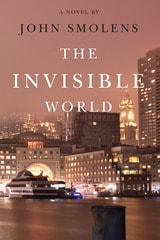
The Invisible World
John Smolens
Michigan State University Press, 2017
After Sam's mother dies and is cremated, her ashes are stolen. Believing that his father is responsible, Sam pursues the man he has not seen in years. He discovers that he is not the only one searching for his father—federal agents, a disgraced politician, a retired Boston cop, and several journalists join the chase.
“The Invisible World is more than a first-rate political thriller,” says The Boston Globe. “It’s an absorbing tale of alienation and loss, and the ramifications of a rootless, troubled family.” What Sam Adams ultimately discovers is that the shadowy realm of conspiracies conjures a world of hidden truths and intrigue in which the familiar is the most mysterious force of all.
The Long Night
Andrew Lytle
University of Alabama Press, 1988
A first-rate novel that provides vivid descriptions of Alabama during an important period in the state’s history, The Long Night is set in the vicinity of Montgomery, Alabama, between 1850 and 1865. Originally published in 1936, the book is based on a true story related to Lytle by one of his close friends and colleagues at Vanderbilt University, Frank L. Owsley, who later became the chairman of The University of Alabama Department of History. In fact, the novel opens with a letter to Professor Owsley from the author, and Owsley’s son has written the introduction to this edition.
As described by George B. Tindall, The Long Night is “the episodic story of a young Alabamian beset by the moral dilemma of desire for revenge against the persecutors of his father and his larger duty in the war, a story that rose to its climax in the Battle of Shiloh.” The work is rich in its description of the land and people of Black-Belt Alabama during the mid-19th century.
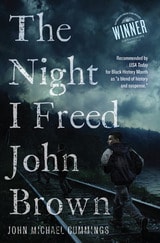
The Night I Freed John Brown
John Michael Cummings
West Virginia University Press, 2016
Winner of The Paterson Prize for Books for Young People
Recommended by USA Today for Black History Month as "a blend of history and suspense."
In this novel for young adults, Josh knows there is something about the tall Victorian House on the Harpers Ferry Hill, the one his father grew up in, that he can’t quite put his finger on. And his impossible father won’t give him any clues. He’s hiding something.
And then there’s the famous John Brown. The one who all the tourists come to hear about. The one whose statue looms over Josh’s house. Why does he seem to haunt Josh and his whole family? When the fancy Richmonds come to town and move right next door, their presence forces Josh to find the answers and stand up to the secrets of the House, to his father—and to John Brown, too.
The historic village of Harpers Ferry comes alive in this young boy’s brave search for answers and a place of his own in this brilliant first novel by John Michael Cummings.
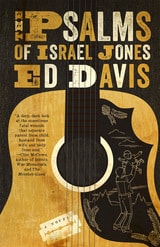
The Psalms of Israel Jones
A NovelEd Davis
West Virginia University Press, 2014
Secrets and snakes, rock and gospel, guilt and grace.
The Psalms of Israel Jones is the story of a father and son’s journey towards spiritual redemption. This novel tells the tale of a famous father trapped inside the suffocating world of rock and roll, and his son who is stranded within the bounds of conventional religion.
When Reverend Thomas Johnson receives an anonymous phone call, he learns his Dylanesque rock star father is acting deranged on stage, where he’s being worshipped by a cult of young people who slash their faces during performances. In his declining years, Israel Jones has begun to incite his fans to violence. They no longer want to watch the show—they want to be the show.
Eager to escape troubles with his congregation as well as gain an apology from his dad for abandoning his family, Reverend Johnson leaves town and joins Israel Jones’s Eternal Tour. This decision propels him to the center of a rock and roll hell, giving him one last chance to reconnect with his father, wife, congregation—and maybe even God.
The Psalms of Israel Jones is the 2010 Hackney Literary Award winner for an unpublished manuscript.
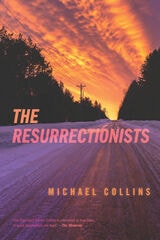
The Resurrectionists
Collins, Michael
University of Iowa Press, 2021
Haunted by the deaths of his parents and uncle, Frank Cassidy journeys north to dispute a cousin's claim to the family farm, where he meets a stranger who might resolve mysteries about Frank's past.
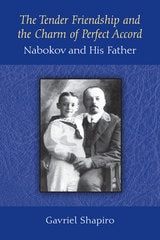
The Tender Friendship and the Charm of Perfect Accord
Nabokov and His FatherGavriel Shapiro
University of Michigan Press, 2014
Vladimir Nabokov (1899–1977), a writer of world renown, grew up in a culturally refined family with diverse interests. Nabokov’s father, Vladimir Dmitrievich (1870–1922), was a distinguished jurist and statesman at the turn of the twentieth century. He was also a great connoisseur and aficionado of literature, painting, theater, and music as well as a passionate butterfly collector, keen chess player, and avid athlete. This book, the first of its kind, examines Vladimir Nabokov’s life and works as impacted by his distinguished father. It demonstrates that V. D. Nabokov exerted the most fundamental influence on his son, making this examination pivotal to understanding the writer’s personality and his world perception, as well as his literary, scholarly, and athletic accomplishments. The book contains never heretofore published archival materials. It is appended with rare articles by Nabokov and his father and is accompanied by old photographs. In addition, the book constitutes a survey of sorts of Russian civilization at the turn of the twentieth century by providing a partial view of the multifaceted picture of Imperial Russia in its twilight hours. The book illumines the historical background, political struggle, juridical battles, and literary and artistic life as well as athletic activities during the epoch, rich in cultural events and fraught with sociopolitical upheavals.
Cover illustration: Vladimir Nabokov and his father, 1906. The Nabokov family photographs. Copyright © The Estate of Vladimir Nabokov, used by permission of The Wylie Agency, LLC; and of The Henry W. and Albert A. Berg Collection of English and American Literature, The New York Public Library, Astor, Lenox and Tilden Foundations.

Windy McPherson's Son
Sherwood Anderson
University of Illinois Press, 1993