Results by title
22 books match the query 'Historical films'
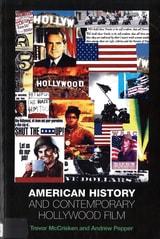
American History and Contemporary Hollywood Film
McCrisken, Trevor
Rutgers University Press, 2005
Hollywood has always been fascinated by America's past, but never more so than in the past fifteen years. Bringing exciting new perspectives to how and why Hollywood has sought to repicture American history, this book offers analysis of more than twenty mainstream contemporary films, including The Patriot, Amistad, Glory, Ride with the Devil, Cold Mountain, Saving Private Ryan, TheThin Red Line, Pearl Harbor, U-571, Platoon, Born on the Fourth of July, Heaven and Earth, JFK, Nixon, Malcolm X, Ali, Black Hawk Down, and Three Kings.
Both authoritative and engaging, American History and Contemporary Hollywood Film is the first book to comprehensively explore the post-cold war period of filmmaking, and to navigate the complex ways that film mediates history-sometimes challenging or questioning, but more frequently reaffirming traditional interpretations. The authors consider why such films are becoming increasingly integral to the ambitions of a globally focused American film industry.
Structured by historical periods, chapters cover significant events and eras such as the American Revolution, slavery and the Civil War, World War II, the sixties and seventies, civil rights and black nationalism, the Vietnam War, and post-cold war global conflicts. The lessons learned from the examples will be illuminating for general readers and college students alike.
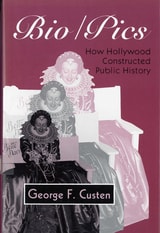
Bio/Pics
How Hollywood Constructed Public HistoryGeorge Custen
Rutgers University Press, 1992
Bio/Pics is the first comprehensive study of a once important film genre, the biographical film. Using previously unavailable archival materials from Twentieth Century-Fox, Warner Bros., MGM, and RKO studios, as well as censorship files from the Production Code Administration, George Custen argues that, through these films, Hollywood manufactured a nearly monochromatic view of history that was systematically distorted in regard to race, gender, nationality, and profession.Utilizing a carefully selected sample of over 100 films produced during the Studio Era (1927-1960), Custen maintains that the biopic constructed a Hollywood code of history out of a tightly controlled reference system, glamorizing the producers' own personal visions of what constituted a great life. Custen's examination of production practices reveals that the machinery of public history operating through these films was fueled by difference sources. His analysis of the roles played by star personae, legal considerations, censorship practices, and the producers' own ideologies brings the world of biopic alive, even into the age of the made-for-TV movie.

Cinematic Uses of the Past
Marcia Landy
University of Minnesota Press, 1996
Cinematic Uses of the Past was first published in 1996. Minnesota Archive Editions uses digital technology to make long-unavailable books once again accessible, and are published unaltered from the original University of Minnesota Press editions.
From the first, cinema has sustained a romance with the past. The nature of this attachment, and what it reveals about our culture, is the subject of Marcia Landy's book. Cinematic Uses of the Past looks at British, American, Italian, and African films for what they can tell us about popular history and our cultural investment in certain images of the past.
Landy peruses six different moments in the history of cinema, employing the theories of Nietzsche and Gramsci. Her reading of these films explores their investments in history and memory in relation to ideas of nation, sexuality, gender, and race. Among the films she discusses are A Fistful of Dynamite, The Scarlet Empress, Dance with a Stranger, Holocaust, Schindler's List, Le camp de Thiaroye, Guelwaar, The Leopard, and Veronika Voss.
A thoroughly compelling reading of these emblematic films, Cinematic Uses of the Past is also a revealing interpretation of popular history, exposing the fragmentary, tentative, and invested nature of cultural memory.
Marcia Landy is professor of literature and film studies at the University of Pittsburgh. She is the author of several books, including Film, Politics, and Gramsci (Minnesota, 1995).
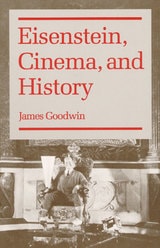
Eisenstein, Cinema, and History
James Goodwin
University of Illinois Press, 1993
stands alone as the maker of a fully historical cinema. James Goodwin treats
issues of revolutionary history and historical representation as central to
an understanding of Eisentein's work, which explores two movements within Soviet
history and consciousness: the Bolshevik Revolution and the Stalinist state.
Goodwin articulates intersections
between Eisentein's ideas and aspects of the thought of Walter Benjamin, Georg
Lukács, Ernst Bloch, and Bertolt Brecht. He also shows how the formal
properties and filmic techniques of each work reveal perspectives on history
. Individual chapters focus on Strike, Battleship Potemkin, October, Old
and New, projects of the 1930s, Alexander Nevsky, and Ivan the
Terrible.
Film Nation
Hollywood Looks at U.S. HistoryRobert Burgoyne
University of Minnesota Press, 1997
Film Nation
Hollywood Looks at U.S. History, Revised EditionRobert Burgoyne
University of Minnesota Press, 2010

Framing the Past
The Historiograpy of German Cinema and TelevisionEdited by Bruce A. Murray and Christopher J. Wickham
Southern Illinois University Press, 1992
This collection of essays was selected from those presented in October 1988 at a conference sponsored by the National Endowment for the Humanities, "Concepts of History in German Cinema." The contributors include notable historians, film scholars, and German studies specialists who explore the complex network of social, political, and religious institutions that have influenced the historiography of German cinema and television.
Before the turn of the century, Germans began to employ the medium of film to represent the past when they attempted to document their Prussian heritage. Since then, German cinema and television have promoted history as a component of personal, cultural, and national identity by consistently providing prominent treatment of historical subjects.
Although it is relatively easy to document changes in the selection and handling of these subjects, it is more difficult to determine precisely which factors have motivated those changes.
In attempting to define these factors, the link between German cinema, television, and history has developed around three interrelated issues: (1) the reception of Weimar cinema, which for most film scholars continues to be mediated to one extent or another by Siegfried Kracauer’s work; (2) the inscribing of fascism in cinema and television; and (3) the nature of, and potential for, alternatives to mainstream cinema and television.
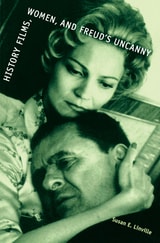
History Films, Women, and Freud's Uncanny
By Susan E. Linville
University of Texas Press, 2004
History films were a highly popular genre in the 1990s, as Hollywood looked back at significant and troubling episodes from World War II, the Cold War era, and the techno-war in the Persian Gulf. As filmmakers attempted to confront and manage intractable elements of the American past, such as the trauma of war and the legacy of racism, Susan Linville argues that a surprising casualty occurred—the erasure of relevant facets of contemporary women's history.
In this book, Linville offers a sustained critique of the history film and its reduction of women to figures of ambivalence or absence. Historicizing and adapting Freud's concept of the uncanny and its relationship to the maternal body as the first home, she offers theoretically sophisticated readings of the films Midnight Clear, Saving Private Ryan, The Thin Red Line, Nixon, Courage Under Fire, Lone Star, and Limbo. She also demonstrates that the uncanny is not only a source of anxiety but also potentially a progressive force for eroding nostalgic ideals of nation and gender. Linville concludes with a close reading of a recent 9/11 documentary, showing how the patterns and motifs of 1990s history films informed it and what that means for our future.
History and Modern Media
A Personal JourneyJohn Mraz
Vanderbilt University Press, 2021
The book interweaves an autobiographical narrative with concrete research. Mraz describes the resistance he encountered in US academia to this new way of showing and describing the past in films and photographs, as well as some illuminating experiences as a visiting professor at several US universities. More importantly, he reflects on what it has meant to move to Mexico and become a Mexican. Mexico is home to a thriving school of photohistorians perhaps unequaled in the world. Some were trained in art history, and a few continue to pursue that discipline. However, the great majority work from the discipline known as "photohistory" which focuses on vernacular photographs made outside of artistic intentions.
A central premise of the book is that knowing the cultures of the past and of the other is crucial in societies dominated by short-term and parochial thinking, and that today's hyper-audiovisuality requires historians to use modern media to offer their knowledge as alternatives to the "perpetual present" in which we live.
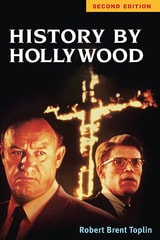
History by Hollywood, Second Edition
Robert Brent Toplin
University of Illinois Press, 2010
This newly updated edition of History by Hollywood explores the question of what happens to history when Hollywood filmmakers get their hands on it. With a fresh look at recent films and television productions such as Titanic, Pearl Harbor, The Patriot, and John Adams, Robert Brent Toplin examines how filmmakers have interpreted American history through their movies. Toplin discusses how writers, producers, and directors become involved in making historical films, what influences their interpretations of the past, and the responses they make to the controversies their works excite. With a realistic appreciation of the challenges filmmakers face, he effectively measures the strengths and weaknesses of Hollywood's presentation of history in the films Mississippi Burning, JFK, Sergeant York, Missing, Bonnie and Clyde, Patton, All the President's Men, and Norma Rae.
Making History Move
Five Principles of the Historical FilmKim Nelson
Rutgers University Press, 2024

New Zealand Cinema
Interpreting the PastEdited by Alistair Fox, Barry Keith Grant, and Hilary Radner
Intellect Books, 2011
New Zealand has produced one of the world’s most vibrant film cultures, a reflection of the country’s evolving history and the energy and resourcefulness of its people. From early silent features like The Te Kooti Trail to recent films such as River Queen, this book examines the role of the cinema of New Zealand in building a shared sense of national identity. The works of key directors, including Peter Jackson, Jane Campion, and Vincent Ward, are here introduced in a new light, and select films are given in-depth coverage. Among the most informative accounts of New Zealand’s fascinating national cinema, this will be a must for film scholars around the globe.
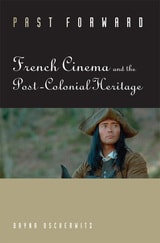
Past Forward
French Cinema and the Post-Colonial HeritageDayna Oscherwitz
Southern Illinois University Press, 2010
In Past Forward: French Cinema and the Post-Colonial Heritage, author Dayna Oscherwitz focuses on the world of French films with a new lens. Drawing upon a wealth of research and the examination of popular French movies, Oscherwitz offers fresh perspectives not only on the unique importance of motion pictures and their indelible influence on French character, but on current debates regarding individual and collective memory.
Past Forward traces the development and ascension of the French heritage film—those historical and costume dramas focusing on prestigious French subjects, events, and settings. These motion pictures, preeminent during a period of globalization and fear over the affects of immigration in 1980s France, quickly came to embody a specific version of French national and collective identity: one that idealized the past, condemned the present, and created an institutional form of memory. Oscherwitz presents the intriguing notion that French heritage films are not exclusively expressions of nationalism and nostalgia as has commonly been asserted. On the contrary, although these movies were born out of a perceived loss of French culture, their ambivalence toward traditional hallmarks of nationalism opens them up to new interpretation. Also in contrast to typical conceptions, the author suggests that these heritage films are far from cinematic bastions of multicultural backlash; instead, she argues, popular culture has in its own fashion reinserted the history of colonialism and immigration into the national past, thus reimagining heritage itself.
Against this backdrop, Oscherwitz goes on to investigate the multicultural worlds of beur and banlieue movies—cinema seemingly in direct contrast with the heritage film—offering the theory that these films serve as a “countermemory” to an institutionalized one and provide alternative models of collective memory and identity. Through careful analysis of several examples, Oscherwitz demonstrates how these two seemingly different realms—heritage and multicultural cinema—are far from mutually exclusive in the construction of French identity.
Throughout the volume, numerous well-known French movies are reexamined, inviting new interpretations of and challenging old views through investigations of familiar cinematic works. Past Forward is arevolutionary volume that boldly reimagines our ideas about French film and its role in communicating history and memory.
Pretty Pictures
Production Design and the History FilmBy C. S. Tashiro
University of Texas Press, 1998
Theories of film have traditionally dealt with either narrative or industrial issues, with the consequence that the physical content of the graphic frame has often been ignored or relegated to the sidelines. By contrast, C. S. Tashiro foregrounds the visual aspect of cinema in this book, drawing on his experiences as a designer and filmmaker, as well as on contemporary theory, to show how production design can support or contradict narrative structure, or exist in an entirely parallel realm of meaning.
Tashiro looks at cinematic production design from a broadly interdisciplinary perspective, encompassing art and architecture theory, audience reception, narrative theory, and phenomenology, to arrive at a more encompassing definition of the process. He builds his argument around studies of several prominent history films, since design is central to historical representation, and explores the most pertinent issues raised by the topic, particularly commodity consumption. In his conclusion, he also offers possible solutions to some of the social problems raised by design.
Real Emotional Logic
Film and Television Docudrama as Persuasive PracticeSteven N. Lipkin
Southern Illinois University Press, 2002
Analyzing docudrama as a mode of argument, Steven N. Lipkin explores the ethical, historical, and ideological functions of docudrama to discover why these films based on true stories offer such appealing story lines. That appeal, Lipkin discovers, is rooted in docudrama’s representation of actual people and events by means of melodramatic narrative structures that play on the emotions of the viewer.
The dual nature of docudramas—blending narrative and documentary style— argues for a moral view of reality-based subject matter. The ethics, the ideology, the very presence of docudrama on television and the range of topics and problems that appear in contemporary feature film docudramas indicate how this form of presentation appeals to its audience. Docudrama offers a warranted, rational view of what the story material might suggest initially to be an irrational world. Through its moral agenda, docudrama ultimately allows the possibilities of understanding, optimism, and hope to emerge from “real stories.”
Real Emotional Logic traces the development of docudramas into contemporary movies of the week and feature films, including Schindler’s List, Amistad, JFK, The Killing Fields, Quiz Show, A League of Their Own, In the Name of the Father, Call Northside 777, 13 Rue Madeleine, Cheerleader Mom, Shine, Rosewood, A Civil Action, and October Sky.
Lipkin provides further insight into the genre by identifying and describing the commonalities connecting ostensibly different docudramas through their shared themes and narrative techniques. In doing so, he exposes the persuasive rhetorical strategies at the heart of docudramas and reveals the constructed emotional appeal inherent in films “based on a true story.”
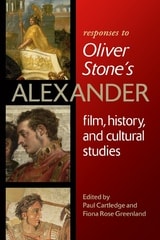
Responses to Oliver Stone’s Alexander
Film, History, and Cultural StudiesEdited by Paul Cartledge and Fiona Rose Greenland; Afterword by Oliver Stone
University of Wisconsin Press, 2009
This volume brings together an intriguing mix of leading scholars in Macedonian and Greek history, Persian culture, film studies, classical literature, and archaeology—including some who were advisors for the film—and includes an afterword by Oliver Stone discussing the challenges he faced in putting Alexander’s life on the big screen. The contributors scrutinize Stone’s project from its inception and design to its production and reception, considering such questions as: Can a film about Alexander (and similar figures from history) be both entertaining and historically sound? How do the goals of screenwriters and directors differ from those of historians? How do Alexander’s personal relationships—with his mother Olympias, his wife Roxane, his lover Hephaistion, and others—affect modern perceptions of Alexander? Several of the contributors also explore reasons behind the film’s tepid response at the box office and subsequent controversies.
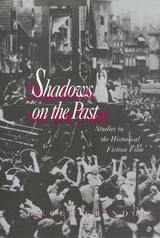
Shadows on the Past
Studies in the Historical Fiction FilmLeger Grindon
Temple University Press, 1994
Studying popular Hollywood films from Gone With the Wind to Reds and such distinguished European films as La Marseillaise and The Rise to Power of Louis XIV, Leger Grindon examines how historical fiction films interpret the present through a representation of the past.
The historical fiction film is characterized by a set of motives and, Grindon argues, deserves to be considered a genre unto itself. Appropriation of historical events can insinuate a film's authority of its subject, veil an intention, provide an escape into nostalgia, or direct a search for knowledge and origins. Utilizing the past as a way of responding to social conflicts in the present, Grindon shows how the genre promotes a political agenda, superseding the influence of scholarship on the public's perception and interpretation of history.
In the series Culture and the Moving Image, edited by Robert Sklar.
Shadows, Specters, Shards
Making History in Avant-Garde FilmJeffrey Skoller
University of Minnesota Press, 2005
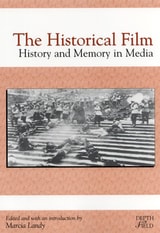
The Historical Film
History and Memory in MediaLandy, Marcia
Rutgers University Press, 2000
What is history? How do we represent it? How do our notions of history change over time? The essays in The Historical Film: History and Memory in Media probe the roles that cinema and television play in altering and complicating our understanding of historical events.
The book brings together representative examples of how both media critics and historians write about history as it is created and disseminated through film and television. The essays explore what is at stake culturally and politically in media history and how this form of history-making is different from traditional historiography. The volume is divided into four parts--Regarding History; History as Trauma; History, Fiction, and Postcolonial Memory; and History and Television--that progressively deepen our understanding of just how complex the issues are. Essays by top scholars analyze many different kinds of film: historical film, documentary, costume drama, and heritage films. The section on television is equally broad, examining phenomena as diverse as news broadcasts and Ken Burns's documentary The Civil War.
Contributors are Mbye Cham, George F. Custen, Mary Ann Doane, Richard Dienst, Taylor Downing, Gary Edgerton, Naomi Greene, Miriam Bratu Hansen, Sue Harper, Sumiko Higashi, Anton Kaes, Marcia Landy, Shawn Rosenheim, Robert A. Rosenstone, Pierre Sorlin, Maria Wyke, and Ismail Xavier.
The Historical Film
History and Memory in MediaLandy, Marcia
Rutgers University Press, 2000
What is history? How do we represent it? How do our notions of history change over time? The essays in The Historical Film: History and Memory in Media probe the roles that cinema and television play in altering and complicating our understanding of historical events.
The book brings together representative examples of how both media critics and historians write about history as it is created and disseminated through film and television. The essays explore what is at stake culturally and politically in media history and how this form of history-making is different from traditional historiography. The volume is divided into four parts--Regarding History; History as Trauma; History, Fiction, and Postcolonial Memory; and History and Television--that progressively deepen our understanding of just how complex the issues are. Essays by top scholars analyze many different kinds of film: historical film, documentary, costume drama, and heritage films. The section on television is equally broad, examining phenomena as diverse as news broadcasts and Ken Burns's documentary The Civil War.
Contributors are Mbye Cham, George F. Custen, Mary Ann Doane, Richard Dienst, Taylor Downing, Gary Edgerton, Naomi Greene, Miriam Bratu Hansen, Sue Harper, Sumiko Higashi, Anton Kaes, Marcia Landy, Shawn Rosenheim, Robert A. Rosenstone, Pierre Sorlin, Maria Wyke, and Ismail Xavier.
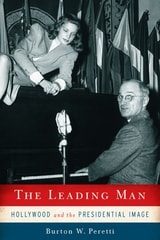
The Leading Man
Hollywood and the Presidential ImagePeretti, Burton W
Rutgers University Press, 2012
American presidents and Hollywood have interacted since the 1920s. This relationship has made our entertainment more political and our political leadership more aligned with the world of movies and movie stars.
In The Leading Man, Burton W. Peretti explores the development of the cinematic presidential image. He sets the scene in chapter 1 to show us how the chief executive, beginning with George Washington, was positioned to assume the mantle of cultural leading man. As an early star figure in the young republic, the president served as a symbol of national survival and wish fulfillment. The president, as head of government and head of state, had the potential to portray a powerful and charismatic role.
At the center of the story are the fourteen presidents of the cinematic era, from Herbert Hoover to Barack Obama. Since the 1920s, the president, like the lead actor in a movie, has been given the central place on the political stage under the intense glare of the spotlight. Like other American men, future presidents were taught by lead movie actors how to look and behave, what to say, and how to say it. Some, like John F. Kennedy and Richard M. Nixon, took particular care to learn from the grooming, gestures, movements, and vocal inflections of film actors and applied these lessons to their political careers. Ronald Reagan was a professional actor. Bill Clinton, a child of the post–World War II Baby Boom, may have been the biggest movie fan of all presidents. Others, including Lyndon Johnson, showed little interest in movies and their lessons for politicians.
Presidents and other politicians have been criticized for cheapening their offices by hiring image and advertising consultants and staging their public events. Peretti analyzes the evolution and the significance of this interaction to trace the convoluted history of the presidential cinematic image. He demonstrates how movies have been the main force in promoting appearance and drama over the substance of governing, and how Americans’ lives today may be dominated by entertainment at the expense of their engagement as citizens.
Why Docudrama?
Fact-Fiction on Film and TVEdited by Alan Rosenthal
Southern Illinois University Press, 1999
When the 1990 English docudrama Who Bombed Birmingham? cast serious doubt on the guilt of six men convicted of bombing two British pubs in 1974, Prime Minister Margaret Thatcher declared that a "television program alters nothing." But, as Alan Rosenthal concludes, Thatcher was wrong. The film engendered a new inquiry that led to the release of the convicted men.
Rosenthal notes that docudrama wields more influence than the average documentary and that "reality-based stories taken from topical journalism are the most popular drama genre on U.S. and British television today." This three-part collection of diverse and provocative essays addresses the dominant questions and controversies the genre poses.
Defining and examining the rationale of docudrama, the nine essayists in the first part discuss the history and development of docudrama on TV and in film; they also consider the place of truth in docudrama, the main critiques of the form, and the audience's susceptibilities and expectations. In investigating the actual filmmaking process, the eight essays in the second part focus on how "docudrama as a 'commodity' is created in the United States and England." Part essay, part case study, and part interview, this section also explores how Hollywood and the commercial networks as well as producers and writers work and think. The final part presents an in-depth critique of a number of controversial docudramas that have helped form and shape public opinion, including Battleship Potemkin, Roots, Reds, JFK, Mississippi Burning, Schindler's List, and In the Name of the Father.
In addition to Rosenthal, the contributors are John Corner, George F. Custen, David Edgar, Leslie Fishbein, George MacDonald Fraser, Todd Gitlin, Douglas Gomery, Richard Grenier, Sumiko Higashi, Tom W. Hoffer, Jerry Kuehl, Steve Lipkin, Yosefa Loshitsky, Ian McBride, Richard Alan Nelson, Conor Cruise O'Brien, Derek Paget, Robert A. Rosenstone, Betsy Sharkey, Irene Shubik, Jeff Silverman, D. J. Wenden, Sita Williams, and Leslie Woodhead.