Results by title
18 books match the query 'Horror tales, American'
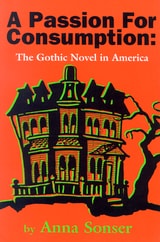
A Passion for Consumption
The Gothic Novel in AmericaAnna Sonser
University of Wisconsin Press, 2001
America's Gothic Fiction
The Legacy of Magnalia Christi AmericanaDorothy Z. Baker
The Ohio State University Press, 2007
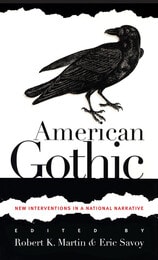
American Gothic
New Interventions in a National NarrativeRobert K. Martin
University of Iowa Press, 1998
In America as in Britain, the rise of the Gothic represented the other—the fearful shadows cast upon Enlightenment philosophies of common sense, democratic positivism, and optimistic futurity. Many critics have recognized the centrality of these shadows to American culture and self-identification. American Gothic, however, remaps the field by offering a series of revisionist essays associated with a common theme: the range and variety of Gothic manifestations in high and popular art from the roots of American culture to the present.
The thirteen essayists approach the persistence of the Gothic in American culture by providing a composite of interventions that focus on specific issues—the histories of gender and race, the cultures of cities and scandals and sensations—in order to advance distinct theoretical paradigms. Each essay sustains a connection between a particular theoretical field and a central problem in the Gothic tradition.
Drawing widely on contemporary theory—particularly revisionist views of Freud such as those offered by Lacan and Kristeva—this volume ranges from the well-known Gothic horrors of Edgar Allan Poe and Nathaniel Hawthorne to the popular fantasies of Stephen King and the postmodern visions of Kathy Acker. Special attention is paid to the issues of slavery and race in both black and white texts, including those by Ralph Ellison and William Faulkner. In the view of the editors and contributors, the Gothic is not so much a historical category as a mode of thought haunted by history, a part of suburban life and the lifeblood of films such as The Exorcist and Fatal Attraction.

American Nightmares
The Haunted House Formula in American Popular FictionDale Bailey
University of Wisconsin Press, 1999
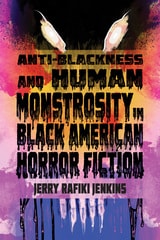
Anti-Blackness and Human Monstrosity in Black American Horror Fiction
Jerry Rafiki Jenkins
The Ohio State University Press, 2024

As American as Mom, Baseball, and Apple Pie
Constructing Community in Contemporary American Horror FictionLinda J. Holland-Toll
University of Wisconsin Press, 2001
Blood is the Life
Vampires in LiteratureLeonard G. Heldreth
University of Wisconsin Press, 1999
Charles Brockden Brown
An American TaleBy Alan Axelrod
University of Texas Press, 1983
Charles Brockden Brown: An American Tale is the first comprehensive literary, biographical, and cultural study of the novelist whom critic Leslie Fiedler has dubbed "the inventor of the American writer."
The author of Wieland, Arthur Mervyn, Ormond, and Edgar Huntly, Charles Brockden Brown (1771-1810) is considered the first American professional author. He introduced Indian characters into American fiction. His keen interest in character delineation and abnormal psychology anticipates the stories of Poe, Hawthorne, and later masters of the psychological novel.
Brown was eager to establish for himself an American identity as a writer, to become what Crèvecoeur called "the new man in the New World." It is especially this intimate identification of writer with country that makes Brown a telling precursor of our most characteristic authors from Poe, Hawthorne, and Cooper to Fitzgerald, Hemingway, and Faulkner.
To understand its significance, Brown's work must be examined as both art and artifact. Accordingly, Charles Brockden Brown: An American Tale is literary history as well as criticism, embued with insights into a writer's sources and influences and the psychology of literary composition. It is also a fascinating examination of a nation's emotional and intellectual impact on a young man in search of his identity as creative artist.

Dissecting Stephen King
From the Gothic to Literary NaturalismHeidi Strengell
University of Wisconsin Press, 2005
Ultimately, Strengell shows how King shatters our illusions of safety and control: "King places his decent and basically good characters at the mercy of indifferent forces, survival depending on their moral strength and the responsibility they may take for their fellow men."

Gothic Passages
Racial Ambiguity and the American GothicJustin D. Edwards
University of Iowa Press, 2003
This groundbreaking study analyzes the development of American gothic literature alongside nineteenth-century discourses of passing and racial ambiguity.
By bringing together these areas of analysis, Justin Edwards considers the following questions. How are the categories of “race” and the rhetoric of racial difference tied to the language of gothicism? What can these discursive ties tell us about a range of social boundaries—gender, sexuality, class, race, etc.—during the nineteenth century? What can the construction and destabilization of these social boundaries tell us about the development of the U.S. gothic?
The sources used to address these questions are diverse, often literary and historical, fluidly moving between “representation” and “reality.” Works of gothic literature by Edgar Allan Poe, Herman Melville, Frances Harper, and Charles Chesnutt, among others, are placed in the contexts of nineteenth-century racial “science” and contemporary discourses about the formation of identity. Edwards then examines how nineteenth-century writers gothicized biracial and passing figures in order to frame them within the rubric of a “demonization of difference.” By charting such depictions in literature and popular science, he focuses on an obsession in antebellum and postbellum America over the threat of collapsing racial identities—threats that resonated strongly with fears of the transgression of the boundaries of sexuality and the social anxiety concerning the instabilities of gender, class, ethnicity, and nationality.
Gothic Passages not only builds upon the work of Americanists who uncover an underlying racial element in U.S. gothic literature but also sheds new light on the pervasiveness of gothic discourse in nineteenth-century representations of passing from both sides of the color line. This fascinating book will be of interest to scholars of American literature, cultural studies, and African American studies.
Landscape of Fear
Stephen King's American GothicTony Magistrale
University of Wisconsin Press, 1988
One of the very first books to take Stephen King seriously, Landscape of Fear (originally published in 1988) reveals the source of King's horror in the sociopolitical anxieties of the post-Vietnam, post-Watergate era. In this groundbreaking study, Tony Magistrale shows how King's fiction transcends the escapism typical of its genre to tap into our deepest cultural fears: "that the government we have installed through the democratic process is not only corrupt but actively pursuing our destruction, that our technologies have progressed to the point at which the individual has now become expendable, and that our fundamental social institutions-school, marriage, workplace, and the church-have, beneath their veneers of respectability, evolved into perverse manifestations of narcissism, greed, and violence."
Tracing King's moralist vision to the likes of Twain, Hawthorne, and Melville, Landscape of Fear establishes the place of this popular writer within the grand tradition of American literature. Like his literary forbears, King gives us characters that have the capacity to make ethical choices in an imperfect, often evil world. Yet he inscribes that conflict within unmistakably modern settings. From the industrial nightmare of "Graveyard Shift" to the breakdown of the domestic sphere in The Shining, from the techno-horrors of The Stand to the religious fanaticism and adolescent cruelty depicted in Carrie, Magistrale charts the contours of King's fictional landscape in its first decade.

Queer Gothic
George E. Haggerty
University of Illinois Press, 2000
Stephen King's America
Jonathan P. Davis
University of Wisconsin Press, 1994
Stephen King's America aims to heighten awareness of the numerous American issues that resonate throughout King's fiction, issues that bear universal application to the evolution of the human condition.
The Gothic World of Anne Rice
Edited by Gary Hoppenstand and Ray B. Browne
University of Wisconsin Press, 1996
This anthology argues for the serious study of the literary oeuvre of Anne Rice, a major figure in today’s popular literature. The essays assert that Rice expands the conventions of the horror genre’s formula to examine important social issues. Like a handful of authors working in this genre, Rice manipulates its otherwise predictable narrative structures so that a larger, more interesting cultural mythology can be developed. Rice searches for philosophical truth, examining themes of good and evil, the influence on people and society of both nature and nurture, and the conflict and dependence of humanism and science.
The Gothic World of Stephen King
Landscape of NightmaresEdited by Gary Hoppenstand and Ray B. Browne
University of Wisconsin Press, 1987

The Readers' Advisory Guide to Horror
Becky Siegel Spratford
American Library Association, 2012
The Readers' Advisory Guide to Horror
Becky Siegel Spratford
American Library Association, 2021
Like the zombies, ghouls, and vampires which inhabit many of its books, the popularity of horror fiction is unstoppable. Even if you don’t happen to be a fan yourself, you won’t be “scared” to advise readers on finding their next great fright thanks to the astute guidance provided by horror expert Spratford in her updated guide. This definitive resource for library workers at any level of experience or familiarity with horror fiction
- details the state of the genre right now, including its appeal factors and key authors, assisting readers in getting up to speed quickly;
- presents ten annotated lists of suggested titles, all published since 2000, each with a short introduction providing historical context;
- delves into horror movies, TV shows, podcasts, and other formats; and
- offers abundant marketing advice, programming options, and pointers on additional resources.

The Short Fiction of Edgar Allan Poe
AN ANNOTATED EDITIONEdited by Stuart Levine and Susan Levine
University of Illinois Press, 1990