Results by title
36 books match the query 'Housing policy'
A Right to Housing
Foundation for a New Social AgendaRachel Bratt
Temple University Press, 2006
The contributors to A Right to Housing consider the key issues related to America's housing crisis, including income inequality and insecurity, segregation and discrimination, the rights of the elderly, as well as legislative and judicial responses to homelessness. The book offers a detailed examination of how access to adequate housing is directly related to economic security.
With essays by leading activists and scholars, this book presents a powerful and compelling analysis of the persistent inability of the U.S. to meet many of its citizens' housing needs, and a comprehensive proposal for progressive change.
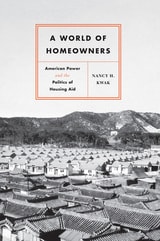
A World of Homeowners
American Power and the Politics of Housing AidNancy H. Kwak
University of Chicago Press, 2015
A World of Homeowners charts the emergence of democratic homeownership in the postwar landscape and booming economy; its evolution as a tool of foreign policy and a vehicle for international investment in the 1950s, ’60s, and ’70s; and the growth of lower-income homeownership programs in the United States from the 1960s to today. Kwak unravels all these threads, detailing the complex stories and policy struggles that emerged from a particularly American vision for global democracy and capitalism. Ultimately, she argues, the question of who should own homes where—and how—is intertwined with the most difficult questions about economy, government, and society.
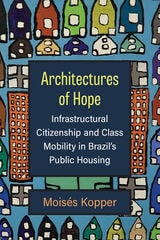
Architectures of Hope
Infrastructural Citizenship and Class Mobility in Brazil's Public HousingMoisés Kopper
University of Michigan Press, 2022
Architectures of Hope examines how communal idealism, electoral politics, and low-income consumer markets made first-time homeownership a reality for millions of low-income Brazilians over the last ten years.
Drawing on a five-year-long ethnography among city planners, architects, street-level bureaucrats, politicians, market and bank representatives, community leaders, and past, present, and future beneficiaries, Moisés Kopper tells the story of how a group of grassroots housing activists rose from oblivion to build a model community. He explores the strategies set forth by housing activists as they waited and hoped for—and eventually secured—homeownership through Minha Casa Minha Vida’s public-private infrastructure. By showing how these efforts coalesced in Porto Alegre—Brazil’s once progressive hotspot—he interrogates the value systems and novel arrangements of power and market that underlie the country’s post-neoliberal project of modern and inclusive development.
By chronicling the making and remaking of material hope in the aftermath of Minha Casa Minha Vida, Architectures of Hope reopens the future as a powerful venue for ethnographic inquiry and urban development.
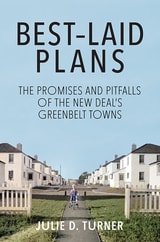
Best-Laid Plans
The Promises and Pitfalls of the New Deal Greenbelt TownsJulie D. Turner
University of Minnesota Press, 2022
In 1935, under the direction of the Resettlement Administration, the United States government embarked on a New Deal program to construct new suburban towns for the working class. Teams of architects, engineers, and city planners, along with thousands of workers, brought three such communities to life: Greenbelt, Maryland; Greendale, Wisconsin; and Greenhills, Ohio. President Franklin Roosevelt saw this as a way to create jobs. Resettlement Administration head Rexford Tugwell longed to improve the living conditions of the nation’s underclass.
In Best-Laid Plans, Julie Turner identifies where the Greenbelt Towns succeeded and where they failed. The program suffered under the burden of too many competing goals: maximum job creation at minimal cost, exquisite town planning that would provide modest residences for low-income families, progressive innovation that would serve to honor and reinforce traditional American values. Yet the Greenbelt program succeeded in one respect—providing new homes in well-planned communities that continue to welcome residents.
Town planning and suburbanization did not follow the blueprint of the Greenbelt model and instead took a turn toward the suburban sprawl we know today. The Greenbelt towns may represent an unrealistic dream, but they show an imagined way of American life that continues to appeal and hints at what might have been possible.

Challenging Uneven Development
An Urban Agenda for the 1990sNyden, Philip
Rutgers University Press, 1991
The editors and contributors to this volume are not willing to accept what is known as uneven development, where some cities win and some lose. They look at two practical consequences of urban growth: the change in residence patterns as neighborhoods gentrify, and the change in employment patterns, as factory workers lose jobs and white-collar workers gain jobs. The editors' goal is to highlight the alternatives to uneven development and to the growth ideology. They outline and advocate specific policies, including affordable housing, changes in taxation, and direct community participation in planning and zoning decisions.
Challenging Uneven Development begins with a rousing discussion of the pervasiveness of the community redevelopment ideology. The growth machine defines the language of the debate. The next group of chapters examine residence patterns--how communities have organized to fight gentrification, why residential integration is essential for good planning as well as morality, and what strategies can be used to achieve racial diversity. Another chapter emphasizes the role of lenders in regulating the flow of credit within communities. Disinvestment by credit providers causes decline, and opens the way for gentrification, which displaces local residents. The impact of taxes in stimulating the growth machine is also explained.
Later chapters move beyond gentrification issues to examine other problems of economic restructuring. They look at how blacks, Latinos, and women have been affected by the growth of service sector jobs. The final chapter serves as a strategic guide to those who wish to establish a progressive agenda for community-based economic development. The authors call for social change, not unimaginative reform.
The contributors to this volume are leaders or researchers from community organizations, civic groups, government agencies, and universities. In addition to the editors, they are Mel King, Teresa Cordova, Daniel Lauber, Jena Pogge, David Flax-Hatch, Arthur Lyons, Wendy Wintermute, Charles Hicklin, Jeffrey D. Reckinger, David Mosena, Charlotte Chun, Raymndo Flores, Luther Snow, Deborah Bennett, John Betancur, and Patricia Wright. They have presented "state-of-the-art" progressive policy solutions for urban problems.
Collateral Damages
Landlords and the Urban Housing CrisisMeredith Greif
Russell Sage Foundation, 2022
For three years, Greif followed sixty private landlords serving low- and moderate-income residents in the Cleveland, Ohio, metropolitan area to better understand how local regulations, such as criminal activity nuisance ordinances (CANOs) and local water billing regulations, affect their landlording practices. CANOs are intended to protect communities by discouraging criminal activity on private properties. Property owners can face financial and criminal sanctions if they do not abate nuisance activities, which can include littering, noise, drug use, and calls for police assistance, including calls for domestic violence. Local water billing regulations hold landlords responsible for delinquent water bills, even in cases where the account is registered in the tenant’s name. Greif finds that such laws often increase landlords’ sense of “financial precarity” – the real or perceived uncertainty that their business is financially unsustainable – by holding them responsible for behavior they feel is out of their control. Feelings of financial uncertainty led some landlords to use illegitimate business practices against their tenants, including harassment, oversurveillance, poor property upkeep, and illegal evictions. And to avoid to financial penalties associated with CANOs and delinquent water bills, some landlords engage in discriminatory screening of vulnerable potential tenants who are unemployed or have histories of domestic violence or drug use. In this sense, by promoting a sense of financial insecurity among landlords, laws meant to protect renters ultimately had the opposite effect.
While some landlords, particularly those who rented a larger number of units, were able to operate their businesses both lawfully and profitably, the majority could not. Greif offers practical recommendations to address the concerns of small- and mid-sized landlords, such as regular meetings that bring landlords and local authorities together to engage in constructive dialogue about local housing policy, issues, and concerns. She also proposes policy recommendations to protect renters, such as establishing the right to counsel for lower-income tenants in eviction hearings and enacting a federal renter’s tax credit.
Collateral Damages is an enlightening investigation on how local laws and practices perpetuate disadvantage among marginalized populations and communities, in ways that are hidden and often unintended.
Colored Property
State Policy and White Racial Politics in Suburban AmericaDavid M. P. Freund
University of Chicago Press, 2007
Engaging the Intersection of Housing and Health
Volume ThreeEdited by Mina Silberberg
University of Minnesota Press, 2021
Researchers often hope that their work will inform social change. The questions that motivate them to pursue research careers in the first place often stem from observations about gaps between the world as we wish it to be and the world as it is, accompanied by a deep curiosity about how it might be made different. Researchers view their profession as providing important information about what is, what could be, and how to get there. However, if research is to inform social change, we must first change the way in which research is done.
Engaging the Intersection of Housing and Health offers case studies of research that is interdisciplinary, stakeholder-engaged and intentionally designed for “translation” into practice. There are numerous ways in which housing and health are intertwined. This intertwining—which is the focus of this volume—is lived daily by the children whose asthma is exacerbated by mold in their homes, the adults whose mental illness increases their risk for homelessness and whose homelessness worsens their mental and physical health, the seniors whose home environment enhances their risk of falls, and the families who must choose between paying for housing and paying for healthcare.
Fortunate People in a Fortunate Land
At Home in Santa Monica's Rent-Controlled HousingLauren E. M. Everett
Temple University Press, 2025
Everett seeks to understand the extent to which individuals feel at home or not at home and what factors contribute to those experiences. She also explores the nexus of Santa Monica’s tenant protection policies, infrastructure, and resources and the extent to which they inform stability—both perceived and actual—and life decisions.
The first scholarly book to take a tenant-centered approach to examining the benefits and problems of rent control, Fortunate People in a Fortunate Land examines the residential experience in this specific local context and explains how it relates to policy and other externalities in cities where homeownership is not financially viable for most renters.
In the series Urban Life, Landscape, and Policy
Furthering Fair Housing
Prospects for Racial Justice in America's NeighborhoodsEdited by Justin P. Steil, Nicholas F. Kelly, Lawrence J. Vale and Maia S. Woluchem
Temple University Press, 2021
The 2015 Affirmatively Furthering Fair Housing Rule was the most significant federal effort to increase equality of access to place-based resources and opportunities, such as high-performing schools or access to jobs, since the 1968 Fair Housing Act. However, in an effort to appeal to suburban voters, the Trump administration repealed the rule in 2020, leaving its future in doubt.
Furthering Fair Housing analyzes multiple dimensions of this rule, identifying failures of past efforts to increase housing choice, exploring how the AFFH Rule was crafted, measuring the initial effects of the rule before its rescission, and examining its interaction with other contemporary housing issues, such as affordability, gentrification, anti-displacement, and zoning policies.
The editors and contributors to this volume—a mix of civil rights advocates, policymakers, and public officials—provide critical perspectives and identify promising new directions for future policies and practices. Placing the history of fair housing in the context of the centuries-long struggle for racial equity, Furthering Fair Housing shows how this policy can be revived and enhanced to advance racial equity in America’s neighborhoods.
Garden Apartments
The History of a Low-Rent UtopiaJoshua B. Freeman
University of Chicago Press, 2026
Eminent historian Joshua Freeman rescues garden apartments—typically low-rise multifamily residences that enclose or are surrounded by landscaped gardens—from their invisibility in the American landscape. He details their outsized influence on housing policy and social policy as they helped upgrade living standards for working people. Inspired by the architectural innovations and socialist politics of British garden cities, Red Vienna, and German modernist housing in the 1920s, these large, centrally managed projects were mostly not public housing, but their capitalist developers worked with governments to keep down rents. The results were often relatively small apartments and large communal spaces, aimed at fostering actual American community.
Housing Needs and Policy Approaches
Trends in Thirteen CountriesWillem Van Vliet , Elizabeth Huttman, and Sylvia Fava, eds.
Duke University Press, 1985
Housing and Mortgage Markets in Historical Perspective
Edited by Eugene N. White, Kenneth Snowden, and Price V. Fishback
University of Chicago Press, 2014
This volume begins to answer these questions, providing a much-needed context for understanding recent events by examining how historical housing and mortgage markets worked—and how they sometimes failed. Renowned economic historians Eugene N. White, Kenneth Snowden, and Price Fishback survey the foundational research on housing crises, comparing that of the 1930s to that of the early 2000s in order to authoritatively identify what contributed to each crisis. Later chapters explore notable historical experiences with mortgage securitization and the role that federal policy played in the surge in home ownership between 1940 and 1960. By providing a broad historical overview of housing and mortgage markets, the volume offers valuable new insights to inform future policy debates.
How to House the Homeless
Ingrid Gould Ellen
Russell Sage Foundation, 2010
In Search of a Home
Rental and Shared Housing in Latin AmericaAlan Gilbert
University of Arizona Press, 1993
Just Below the Line
Disability, Housing, and Equity in the SouthKorydon H. Smith
University of Arkansas Press, 2010
Published in collaboration with the Fay Jones School of Architecture.
Local Interests
Politics, Policy, and Interest Groups in US City GovernmentsSarah F. Anzia
University of Chicago Press, 2022
Local politics in the United States once seemed tranquil compared to the divisiveness and dysfunction of the country’s national politics. Those days have passed. As multiple wide-ranging crises have thrust America’s local governments into the spotlight, they have also exposed policy failures and systemic problems that have mounted for years. While issues such as policing and the cost of housing are debated nationally, much of the policymaking surrounding these issues occurs locally. In Local Interests, Sarah F. Anzia explores how local governments—and the interest groups that try to influence them—create the policies that drive the national conversation: policing, economic development, housing, and challenges of taxing and spending.
Anzia examines local interest groups in terms of the specific policies they pursue, including how these groups get active in politics and what impact they have. By offering new perspectives on these issues, Anzia contributes to our knowledge of how interest groups function and the significant role they play in shaping broader social outcomes.
Making the Second Ghetto
Race and Housing in Chicago 1940-1960Arnold R. Hirsch
University of Chicago Press, 1998
"In this excellent, intricate, and meticulously researched study, Hirsch exposes the social engineering of the post-war ghetto."—Roma Barnes, Journal of American Studies
"According to Arnold Hirsch, Chicago's postwar housing projects were a colossal exercise in moral deception. . . . [An] excellent study of public policy gone astray."—Ron Grossman, Chicago Tribune
"An informative and provocative account of critical aspects of the process in [Chicago]. . . . A good and useful book."—Zane Miller, Reviews in American History
"A valuable and important book."—Allan Spear, Journal of American History
Making the Second Ghetto
Race and Housing in Chicago, 1940-1960Arnold R. Hirsch
University of Chicago Press, 2021
Hirsch’s classic and groundbreaking work of urban history is a revelatory look at Chicago in the decades after the Great Depression, a period when the city dealt with its rapidly growing Black population not by working to abolish its stark segregation but by expanding and solidifying it. Even as the civil rights movement rose to prominence, Chicago exploited a variety of methods of segregation—including riots, redevelopment, and a host of new legal frameworks—that provided a national playbook for the emergence of a new kind of entrenched inequality. Hirsch’s chronicle of the strategies employed by ethnic, political, and business interests in reaction to the Great Migration of Southern Blacks in the mid-twentieth century makes startingly clear how the violent reactions of an emergent white population found common ground with policy makers to segregate first a city and then the nation.
This enlarged edition of Making the Second Ghetto features a visionary afterword by historian N. D. B. Connolly, explaining why Hirsch’s book still crackles with “blistering relevance” for contemporary readers.
Modern Housing for America
Policy Struggles in the New Deal EraGail Radford
University of Chicago Press, 1996
New Urban Development
Looking Back to See ForwardGruen, Claude
Rutgers University Press, 2010
New Urban Development traces how locally induced housing cost increases led federal policy-makers to toss out the safeguards against lending excesses that had been put in place during the 1930s. But the story begins much earlier, during the colonial era, continuing up through the mortgage collapse that ushered in the recession of 2008. In his sweeping history of these issues, Gruen considers gentrification, environmentalism, sprawl, anti-sprawl movements, and more. His clarification of how urban development change occurs backs up his recommendations for increasing the production of housing and replacing obsolete commercial and industrial spaces with development that serves the twenty-first-century economy. New Urban Development specifies thirteen changes to policies at the federal, state, and local levels to provide better and less expensive urban housing, desirable neighborhoods, and thriving workplaces across the country.
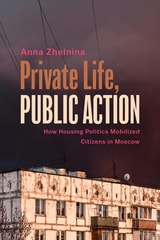
Private Life, Public Action
How Housing Politics Mobilized Citizens in MoscowAnna Zhelnina
Temple University Press, 2026
Private Life, Public Action traces how residents impacted by the relocation plan became activists despite having little to no experience organizing or even forming political affiliations and opinions. Author Anna Zhelnina details the ways in which neighbors engaged in collective action, as well as the individual and structural changes these interactions caused.
Zhelnina develops the concept of “housing strategies” to explain how residents’ debates with their neighbors about housing were shaped by their private life strategies. She applies her findings about housing in Moscow to ongoing questions about political mobilization, demonstrating how public engagement is shaped by historical and social contexts.
Examining the intersection of housing, politics, and citizenship in contemporary Russia, Private Life, Public Action offers a new way to look at urban change.
In the series Politics, History, and Social Change
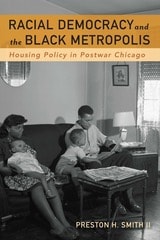
Racial Democracy and the Black Metropolis
Housing Policy in Postwar ChicagoPreston H. Smith II
University of Minnesota Press, 2012
“The African American community.” “The black position.” In accounts of black politics after the Second World War, these phrases reflect how the African American perspective generally appeared consistent, coherent, and unified. In Racial Democracy and the Black Metropolis, Preston H. Smith II examines housing debates in Chicago that go beyond black and white politics, and he shows how class and factional conflicts among African Americans actually helped to reproduce stunning segregation along economic lines.
Class and factional conflicts were normal in the rough-and-tumble world of land use politics. They are, however, often not visible in accounts of the postwar fight against segregation. Smith outlines the ideological framework that black civic leaders in Chicago used to formulate housing policy, both within and outside the black community, to reveal a surprising picture of leaders who singled out racial segregation as the source of African Americans’ inadequate housing rather than attacking class inequalities. What are generally presented as black positions on housing policy in Chicago, Smith makes clear, belonged to the black elite and did not necessarily reflect black working-class participation or interests.
This book details how black civic leaders fought racial discrimination in ways that promoted—or at least did not sacrifice—their class interests in housing and real estate struggles. And, as Smith demonstrates, their accommodation of the real estate practices and government policy of the time has had a lasting effect: it contributed to a legacy of class segregation in the housing market in Chicago and major metropolitan areas across the country that is still felt today.
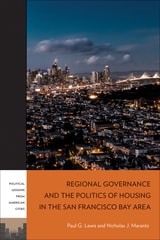
Regional Governance and the Politics of Housing in the San Francisco Bay Area
Paul G. Lewis and Nicholas J. Marantz
Temple University Press, 2023
The authors evaluate six potential reforms, arguing that targeted changes to local and regional institutions could generate durable improvements to the region’s housing opportunities. The main lesson from the case of the San Francisco Bay Area is the need to focus on governance when addressing the housing challenge. As the authors effectively illustrate, leaving a solution up to individual cities is unlikely to lead to increased housing supply.
Rethinking Rental Housing
John Gilderbloom
Temple University Press, 1987
In recent years, almost daily media attention has been focused on the plight of the homeless in cities across the United States. Drawing upon experiences in the U.S. and Europe, John Gilderbloom and Richard Appelbaum challenge conventional assumptions concerning the operation of housing markets and provide policy alternatives directed at the needs of low- and moderate-income families. Rethinking Rental Housing is a ground-breaking analysis that shows the value of applying a broad sociological approach to urban problems, one that takes into account the basic economic, social, and political dimensions of the urban housing crisis.
Gilderbloom and Appelbaum predict that this crisis will worsen in the 1990s and argue that a "supply and demand" approach will not work in this case because housing markets are not competitive. They propose that the most effective approach to affordable housing is to provide non-market alternatives fashioned after European housing programs, particularly the Swedish model.
An important feature of this book is the discussion of tenant movements that have tried to implement community values in opposition to values of development and landlord capital. One of the very few publications on rental housing, it is unique in applying a sociological framework to the study of this topic.
Shelter Poverty
New Ideas on Housing AffordabilityMichael E. Stone
Temple University Press, 1993
Spontaneous Shelter
Carl Patton
Temple University Press, 1988
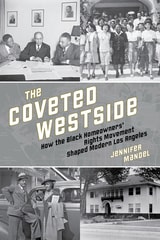
The Coveted Westside
How the Black Homeowners' Rights Movement Shaped Modern Los AngelesJennifer Mandel
University of Nevada Press, 2022
Mandel exposes the enduring struggle between Whites determined to establish their hegemony and create residential heterogeneity in the growing city, and people of color equally determined to obtain full access to the city and the opportunities, including residential, that it offered. Not only does this book document the Black homeowners’ fight against housing discrimination, it shares personal accounts of Blacks’ efforts to settle in the highly desirable Westside of Los Angeles. Mandel explores the White-derived social and legal mechanisms that created this segregated city and the African American-led movement that challenged efforts to block access to fair housing.
The Homeowner Ideology
Economic (F)Utility of Real Property Rights in Four African CitiesSingumbe Muyeba
University of Michigan Press, 2025
The Housing Lottery
How Scarcity Drives America’s Rental Assistance PoliciesBrian J. McCabe
University of Chicago Press, 2026
How scarcity shapes nearly every aspect of our rental assistance programs, including the Housing Choice Voucher program.
It’s no secret that the United States is experiencing a housing crisis. While the cost of rental housing has soared since 2000, the median household income has barely changed. The Housing Choice Voucher program is America’s largest rental assistance program, but most households that are eligible for assistance simply cannot get access to it. Without enough resources to serve every eligible household in their communities, public housing agencies keep waiting lists, run lotteries, and claw back vouchers from households that are unable to meet the demands of the housing market. Despite the enormous benefits that come from affordable housing, it’s simply out of reach for most renters in need.
In The Housing Lottery, sociologist Brian J. McCabe takes readers to the frontlines of these housing agencies to understand how scarcity shapes nearly every aspect of the program. Following the bureaucrats charged with making these decisions about allocating housing resources, McCabe shows how decisions and regulations resulting from scarcity have enormous consequences. He presents extensive evidence about the importance of rental assistance for lifting households out of poverty and creating economic opportunity. To improve housing assistance as a public resource and to combat housing insecurity and its negative effects, McCabe argues for a more inclusive, expansive approach to federal housing policy.
The Mutual Housing Experiment
New Deal Communities for the Urban Middle ClassKristin M Szylvian
Temple University Press, 2016
In The Mutual Housing Experiment, Kristin Szylvian examines 32 mutual housing associations that are still in existence today, and offers strong evidence to show that federal public housing policy was not the failure that critics allege. She explains that mutual home ownership has not only proven its economic value, but has also given rise to communities characterized by a strong sense of identity and civic engagement.
The book shows that this important period in urban and housing policy provides critical lessons for contemporary housing analysts who continue to emphasize traditional home ownership for all wage-earners despite the home mortgage crisis of 2008.
The Origins of the Dual City
Housing, Race, and Redevelopment in Twentieth-Century ChicagoJoel Rast
University of Chicago Press, 2019
The Sociology of Housing
How Homes Shape Our Social LivesEdited by Brian J. McCabe and Eva Rosen
University of Chicago Press, 2023
In 1947, the president of the American Sociological Association, Louis Wirth, argued for the importance of housing as a field of sociological research. Now, seventy-five years later, the sociology of housing has still not developed as a distinct subfield, leaving efforts to understand housing’s place in society to other disciplines, such as economics and urban planning. With this volume, the editors and contributors solidify the importance of housing studies within the discipline of sociology by tackling topics like racial segregation, housing instability, the supply of affordable housing, and the process of eviction. In doing so, they showcase the very best traditions of sociology: they draw on diverse methodologies, present unique field sites and data sources, and foreground a range of theoretical approaches to elucidate the relationships between contemporary housing, public policy, and key social outcomes.
The Sociology of Housing is a landmark volume that will be used by researchers and students alike to define this growing subfield, map continued directions for research, and center sociologists in interdisciplinary conversations about housing.
The Suburban Racial Dilemma
Housing and NeighborhoodsW. Dennis Keating
Temple University Press, 1994
The Value of Homelessness
Managing Surplus Life in the United StatesCraig Willse
University of Minnesota Press, 2015
It is all too easy to assume that social service programs respond to homelessness, seeking to prevent and understand it. The Value of Homelessness, however, argues that homelessness today is an effect of social services and sciences, which shape not only what counts as such but what will?or ultimately won’t?be done about it.
Through a history of U.S. housing insecurity from the 1930s to the present, Craig Willse traces the emergence and consolidation of a homeless services industry. How to most efficiently allocate resources to control ongoing insecurity has become the goal, he shows, rather than how to eradicate the social, economic, and political bases of housing needs. Drawing on his own years of work in homeless advocacy and activist settings, as well as interviews conducted with program managers, counselors, and staff at homeless services organizations in New York, Los Angeles, San Francisco, and Seattle, Willse provides the first analysis of how housing insecurity becomes organized as a governable social problem.
An unprecedented and powerful historical account of the development of contemporary ideas about homelessness and how to manage homelessness, The Value of Homelessness offers new ways for students and scholars of social work, urban inequality, racial capitalism, and political theory to comprehend the central role of homelessness in governance and economy today.
The War on Slums in the Southwest
Public Housing and Slum Clearance in Texas, Arizona, and New Mexico, 1935-1965Robert B Fairbanks
Temple University Press, 2016
In The War on Slums in the Southwest, Robert Fairbanks provides compelling and probing case studies of economic problems and public housing plights in Albuquerque, Dallas, Houston, Phoenix and San Antonio. He provides brief histories of each city--all of which expanded dynamically between 1935 and 1965--and how they responded to slums under the Housing Acts of 1937, 1949, and 1954.
Despite being a region where conservative politics has ruled, these Southwestern cities often handled population growth, urban planning, and economic development in ways that closely followed the national account of efforts to eliminate slums and provide public housing for the needy. The War on Slums in the Southwest therefore corrects some misconceptions about the role of slum clearance and public housing in this region as Fairbanks integrates urban policy into the larger understanding of federal and state-based housing policies.