Results by title
36 books match the query 'Humorous'
A Bohemian Youth
Josef Hirsal
Northwestern University Press, 1997
Josef Hiršal's experimental novel is a Dada-like romp through the life of a young man born into a Bohemian peasant family. Told in five parts, A Bohemian Youth begins with a word to the wise, moves on to the text, continues with notes and with notes to the note, and ends with a note on the notes to the notes.
More than just a tongue-in-cheek parody of a literary memoir, A Bohemian Youth is a glimpse of the First Czechoslovak Republic as seen through the eyes of a young peasant from the provinces. Abounding in intimate details--the manners of a servant girl, the habits of the town homosexual, the sounds of popular music; the way people eat in wartime—Hiršal's novel is a wrenching and hilarious tale of a young man's emotional and sexual awakening.
A History of Hands
A NovelRod Val Moore
University of Massachusetts Press, 2014
Soon, however, an elderly and possibly criminal doctor, offering free therapy, moves in, much to the dismay of bedridden Virge. While the physician endeavors to restore the patient's hands with a series of highly suspect injections, Virge recovers his sense of autonomy and an urge to escape the suffocating domestic circumstances that have perhaps caused his illnesses in the first place.
A History of Hands is a novel that invites the reader into a richly and eccentrically detailed world where fevered imaginations and dark comedy prevail, but where the determination to escape the ambiguities of illness leads to the equal ambiguities of health and freedom.
Adventures of Captain Simon Suggs
Late of the Tallapoosa Volunteers; Together with Taking the Census and Other Alabama SketchesJohnson Jones Hooper
University of Alabama Press, 1993
Originally published in 1845, Adventures of Captain Simon Suggs is a series of sketches written in part to parody some the campaign literature of the era. The character, Simon Suggs, with his motto, “it is good to be shifty in a new country,” fully incarnates a backwoods version of the national archetypes now know as the confidence man, the grafter, the professional flim-flam artist supremely skilled in the arts by which a man gets along in the world. This classic volume of good humor is set in the rough-and-tumble world of frontier life and politics.
Any Time But This Time
Adam Peterson
The Ohio State University Press, 2026
The stories of Adam Peterson’s funny, daring, and deliciously outrageous debut Any Time But This Time span our history and confront our future. From the first woman on Earth grieving among the Neanderthals to the last man alive nursing the dying flame of love, this collection moves across human history and geography to reveal us at our best and lament our worst. Jesus declares himself a superhero. Lost sailors launch an ill-fated attempt to colonize medieval England. A young woman fights to commandeer the founding of America. A pioneer’s wife satisfies her endless sexual appetite in barren Nebraska. Children hurtle into space to confront alien life—even though they really, really just want love. For fans of George Saunders and Kelly Link, these voices, unbound by time and undaunted by consequence, show us that there are truly no limits to what a short story—so long as it centers our relentless human heart—can do.
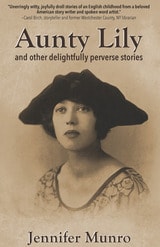
Aunty Lily
and other delightfully perverse storiesJennifer Munro
Parkhurst Brothers, Inc., 2016
Munro’s stories were born five decades ago in a small English village where children were seen and not heard, fathers were wacky, neighbors were snoopy, and maiden aunts were beautifully crafted artifices. Her original stories, dolloped with characters reminiscent of those from her childhood, telling of domestic shenanigans and outings gone revealingly awry are written with meticulous timing. Rich in details about the frailty and strength of the human spirit, her stories resonate with the truth of what is means to be human.
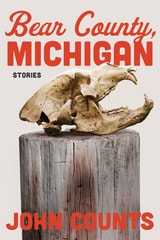
Bear County, Michigan
StoriesJohn Counts
Northwestern University Press, 2025
Following desperate characters in desperate circumstances in the rural Midwest
In these colorful, darkly comic stories, veteran journalist and crime reporter John Counts takes readers to an often-ignored part of the country: a fictional Great Lakes coastal town in northern Michigan defined by beauty and bleakness. The cast of characters in these connected stories ranges from addicts to backwoods misfits to ruined lumber families, all bound together by their desire to obtain something just out of reach. Big Frank breaks out of a rehab facility trying to outrun grief. The women in the village of Brotherhood grapple with sterility resulting from an environmental calamity. A local politician must convince her mother to leave a nudist colony. And in the final, sweeping story, a splinter group from the local tribe attempts to reclaim its ancestral land by force. The people of Bear County and their predicaments encompass the wildly original and yet totally ordinary truths about American life off the beaten track.
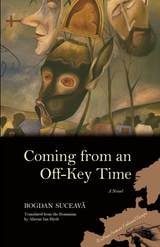
Coming from an Off-Key Time
A NovelBogdan Suceava
Northwestern University Press, 2011
The fall of communism in Eastern Europe in 1989 marked, in one famous formulation, the "end of history." In his apocalyptic novel Coming from an Off-Key Time, Bogdan Suceavă satirizes the events in his native Romania since the violent end of the Ceauşescu regime that fateful year.
Suceavă uses three interrelated narratives to illustrate the destructive power of Romanian society’s most powerful mythologies. He depicts madness of all kinds but especially religious beliefs and their perversion by all manner of outrageous sects. Here horror and humor reside impossibly in the same time and place, and readers experience the vertiginous feeling of living in the middle of a violent historical upheaval.
Even as Coming from an Off-Key Time suggests the influence of such writers as Mikhail Bulgakov, the fantastic satirist of the early Soviet Union, Suceavă engages the complexities of a quickly changing country in search of its bearings and suspicious of its past. Bogdan Suceavă is an associate professor of mathematics at California State University, Fullerton. One of Romanian literature’s most promising and original young writers, he is the author of four novels, two books of short stories, and several collections of poems.
Alistair Ian Blyth’s previous translations include Filip Florian, Little Fingers (2009); Lucian Dan Teodorovici, Our Circus Presents (2009); and Catalin Avramescu’s An Intellectual History of Cannibalism (2009).
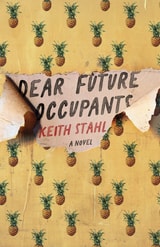
Dear Future Occupants
Keith Stahl
University of Wisconsin Press, 2026
It is 1979 and patriarch Bud relocates his family to his conservative hometown of Greenhill, Connecticut. Despite dubious restaurant experience, he uses his wife’s inheritance to purchase a diner in hopes of proving himself. Things begin to fall apart when police find an all-too-literal skeleton in the family’s basement. A series of misfortunes, accidents, and comedic events follow, including the creation of a vending-machine-sandwich/drug-dealing business and a protest-turned-siege at the local hospital.
Charting one family’s rise to subversive glory in a genteel New England town, this colonial gothic novel is told through found documents and multiple perspectives, including those of Bud; Victor, the middle son; and Herman, the ahead-of-their time, nonbinary, eldest child whose journal entries serve as a kind of Greek chorus throughout. In this breathless, exuberant work, Keith Stahl brilliantly captures the foundational dichotomies at the heart of the American experience: a puritanical distrust of anything fun and a nearly anarchic love of pleasure and freedom. Moving and bitterly humorous, Dear Future Occupants is a paean to the working class and the diversity that holds a family together.
Double Vision
A NovelGeorge Garrett
University of Alabama Press, 2007
A shotgun marriage of fact and fiction by one of the most highly regarded writers and teachers of our time
A writer named George Garrett, suffering from double vision as a result of a neurological disorder, is asked to review a recent, first biography of the late Peter Taylor, a renowned writer who has been his long-time friend and neighbor in Charlottesville. Reflecting on their relationship, Garrett conceives of a character—not unlike himself—a writer in his early 70s, ill and suffering from double vision, named Frank Toomer. He gives Toomer a neighbor, a distinguished short story writer named Aubrey Carver.
As the real George Garrett and Peter Taylor are replaced by two very different and imaginary writers, the story becomes a wise and insightful exploration of American literary life, the art of biography, the comical rivalries among writers and academics, notions of success, and the knotty relationship of art to life, fact to fiction, and life to death. Double Vision is a witty tour de force and an elegy for a gifted generation of writers.
Edward Lear's Nonsense Birds
Edward Lear
Bodleian Library Publishing, 2013
Edward Lear’s Nonsense Birds collects more than sixty of Lear’s bird illustrations from across his entire body of work. Often, the birds have hilariously human characteristics. There is, for instance, a Good-Natured Grey Gull, a Hasty Hen, and a Querulous Quail. The Judicious Jay is chiefly concerned with good grooming. The Vicious Vulture, meanwhile, turns out to be a wordsmith whose verses on vellum celebrate veal. Each bird is endowed with a unique personality, while collectively they form a wonderfully amusing flock. Also included are a series of twenty-four hand-colored illustrations.
Bright and beautifully illustrated, this book will make a perfect gift for children of all ages and will also be welcomed by all who love Lear’s work or are interested in learning more about his fascination with birds.
In-House Weddings
Bohumil Hrabal
Northwestern University Press, 2007
The task, taken up by such a rogue comic talent, could be nothing other than strangely delightful; and in In-House Weddings, the first of the trilogy that Hrabal produced, we meet the author through the eyes of his wife Eliska. She narrates his life from his upbringing in Nymburk through his work as a dispatcher in a train station and then in a scrap paper plant, his first publication, his trouble with the authorities, and his association with notable artists and authors such as Jiri Kolar, Vladimir Boudnik, and Arnost Lustig. Hrabal’s bohemian life was itself a source of great interest to the Czech public; transmuted here, it is even more compelling, a wry portrait of artistic life in postwar Eastern Europe and a telling reflection on how such a life might be recast in the light of literary brilliance.
Keno Runner
A Dark RomanceDavid Kranes
University of Nevada Press, 1995
Mysteriously treated like a high-roller in the casinos, Kohlman is beaten, stabbed, and shot. His wounds are salved by a doctor and his wife who offer a kinky interpretation of the Hippocratic oath. A black messianic boxer known as Challenger teaches Kohlman the meditative art of psychokinesis, and together they perform amazing feats. Angel, who introduces the resistant Kohlman as her husband, loves him with an unconditional devotion he has never known.
But after all his trials, Kohlman may be redeemed through shedding his own blood and through his growing love for Angel. Western Literature Series.
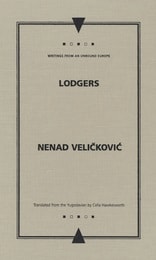
Lodgers
Nenad Velickovic
Northwestern University Press, 2005
Published as the siege of Sarajevo ended, Lodgers is a hilarious, unsentimental report from the front lines of the Balkan wars of the 1990s. Detergent mixed with flour, museum relics sold to U.N. peacekeepers, the magic power of laminated accreditation-all of the folly and the horror of that time are revealed in the sarcastic report of the novel's teenage would-be authoress.
Maja lives in the basement of a Sarajevo museum, enduring with equal annoyance Serb artillery and vegetarian meals that taste like fried sponge. Her father, the museum director, zealously guards the treasures upstairs while their aged co-lodger Julio plots to trade them away. Maja's mother copes with yoga while dour stepbrother Davor endures the endless crying and cravings of his pregnant wife. Floating amidst it all is Maja's grandmother, blind and deaf, yet drawn to any conversation involving food.
Need and crisis propel Maja and her companions from one humorous situation to another. Yet her pitch-perfect gallows humor makes it clear that the brutalities of war penetrate these small moments of life-and even the self-centeredness of a teenaged girl. A best seller in the Balkans and widely translated in Europe, Lodgers is an uncompromising novel about a modern tragedy.
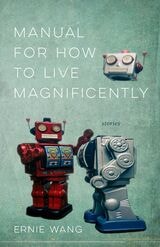
Manual for How to Live Magnificently
StoriesErnie Wang
Acre Books, 2026
This debut collection turns the ordinary into sweeping tragicomedy, probing the small, daily confrontations that shape a life well lived.
In a debut collection at once deeply felt and delightfully playful, Ernie Wang presents ordinary people struggling with challenges that confront many today: how to find steady, meaningful work; how to manage when our healthcare system fails us; how to navigate thorny relationships with lovers, with friends, with children; how to keep one’s dreams alive, and how to let them go. The thirteen stories in Manual for How to Live Magnificently are intriguingly linked, with narrators becoming players and players becoming narrators. Several stories feature cameos by the irrepressible seventy-something Mabel Rogerson, who serves by turns as catalyst, comic relief, and means to catharsis. The book toggles among dramatically different locales—Dayton, Ohio; Las Vegas; Disneyland; Kamisoshigaya, Japan—drawing them thematically into a shared orbit.
Though each of Wang’s offerings has heft and poignancy, the stories also serve up superb comic set pieces. A fake fortuneteller forgoes his crystal ball in favor of a snow globe; a priest moonlights as a professional wrestler named the Grim Preacher; a troubled lawyer who reluctantly cat-sits for a friend winds up finding solace with Killer and Hoedaddy. Revelations are reached at the male strip club Dayton Dix, or during a ritual spanking at Hofbräuhaus just off the Las Vegas Strip, or on Captain Hook’s flying galleon during a theme park ride. And almost everyone eventually ends up at Applebee’s. When storylines converge in a terrifying tragedy, Wang takes the opportunity to explore the complexity of family, to deepen our understanding of sacrifice and the many ways people demonstrate love for one another.
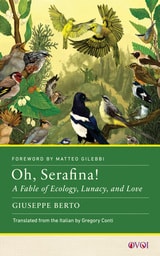
Oh, Serafina!
A Fable of Ecology, Lunacy, and LoveGiuseppe Berto
Rutgers University Press, 2023
Newly translated into English, Giuseppe Berto’s charming 1973 novel Oh, Serafina! was one of the first works of Italian literature to deal with ecological themes while also questioning the destructive effects of industrial capitalism, the many forms spirituality might take, and the ways our society defines madness. This translation includes a foreword from literary scholar Matteo Gilebbi that provides biographical, historical, and philosophical context for appreciating this whimsical fable of ecology, lunacy, and love.
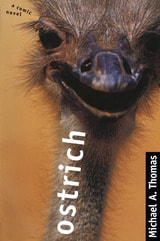
Ostrich
(A Comic Novel)Michael A. Thomas
University of Nevada Press, 2000
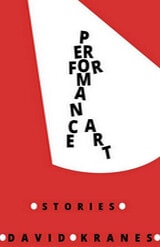
Performance Art
StoriesDavid Kranes
University of Nevada Press, 2021
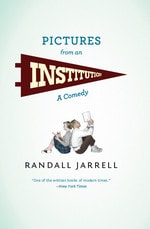
Pictures from an Institution
A ComedyRandall Jarrell
University of Chicago Press, 1952
A finalist for the National Book Award, this classic novel of midcentury campus life is demonically funny and brutally cutting
Beneath the unassuming surface of a progressive women’s college lurks a world of intellectual pride and pomposity awaiting devastation by the pens of two brilliant and appalling wits. Randall Jarrell’s classic novel was originally published to overwhelming critical acclaim in 1954, forging a new standard for campus satire—and instantly yielding comparisons to Dorothy Parker’s razor-sharp barbs. Like his fictional nemesis, Jarrell cuts through the earnest conversations at Benton College—mischievously, but with mischief nowhere more wicked than when crusading against the vitriolic heroine herself.
“A most literate account of a group of most literate people by a writer of power. . . . A delight of true understanding.”—Wallace Stevens
“I’m greatly impressed by the real fun, the incisive satire, the closeness of observation, and in the end by a kind of sympathy and human warmth. It’s a remarkable book.”—Robert Penn Warren
“Move over Dorothy Parker. Pictures . . . is less a novel than a series of poisonous portraits, set pieces, and endlessly quotable put-downs. Read it less for plot than sharp satire, Jarrell’s forte.”—Mary Welp
“One of the wittiest books of modern times.”—New York Times
“[T]he father of the modern campus novel, and the wittiest of them all. Extraordinary to think that ‘political correctness’ was so deliciously dissected 50 years ago.”—Noel Malcolm, Sunday Telegraph
“A sustained exhibition of wit in the great tradition. . . . Immensely and very devastatingly shrewd.”—Edmund Fuller, Saturday Review
“[A] work of fiction, and a dizzying and brilliant work of social and literary criticism. Not only ‘a unique and serious joke-book,’ as Lowell called it, but also a meditation made up of epigrams.”—Michael Wood
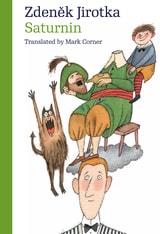
Saturnin
Zdenek Jirotka
Karolinum Press, 2016
On its initial publication in Czech in 1942, Saturnin was a best seller, its gentle satire offering an unexpected—if temporary—reprieve from the grim reality of the German occupation. In the years since, the novel has been hailed as a classic of Czech literature, and this translation makes it available to English-language readers for the first time—which is entirely appropriate, for author Zdeněk Jirotka clearly modeled his light comedy on the English masters Jerome K. Jerome and P. G. Wodehouse. The novel’s main character, Saturnin, a “gentleman’s gentleman” who obviously owes a debt to Wodehouse’s beloved Jeeves, wages a constant battle to protect his master from romantic disaster and intrusive relatives, such as Aunt Catherine, the “Prancing Dictionary of Slavic Proverbs.” Saturnin will warm the heart of any fan of literary comedy.

Saturnin
Zdenek Jirotka
Karolinum Press, 2013
On its initial publication in Czech in 1942, Saturnin was a best seller, its gentle satire offering an unexpected—if temporary—reprieve from the grim reality of the German occupation. In the years since, the novel has been hailed as a classic of Czech literature, and this translation makes it available to English-language readers for the first time—which is entirely appropriate, for author Zdeněk Jirotka clearly modeled his light comedy on the English masters Jerome K. Jerome and P. G. Wodehouse. The novel’s main character, Saturnin, a “gentleman’s gentleman” who obviously owes a debt to Wodehouse’s beloved Jeeves, wages a constant battle to protect his master from romantic disaster and intrusive relatives, such as Aunt Catherine, the “Prancing Dictionary of Slavic Proverbs.” Saturnin will warm the heart of any fan of literary comedy.
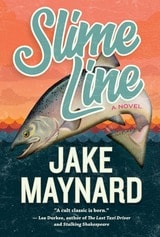
Slime Line
A NovelJake Maynard
West Virginia University Press, 2024
In the wake of his father’s death, Garrett Deaver washes up at a salmon processing plant in his dad’s old stomping grounds of Alaska. There, he renames himself Beaver—because just like a beaver, he’s “an industrious motherfucker”— and vows to become a supervisor at Klak Fancy Salmon, LLC. But moving up within the industry’s seasonal underclass is anything but simple, and soon he finds himself with real, and imagined, enemies at the plant. As amphetamines scramble his sense of reality, and secrets about his father’s life are revealed, the job he’d hoped would bring him salvation threatens to leave him broke, alone, and—maybe even literally—underwater.
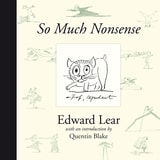
So Much Nonsense
Edward Lear
Bodleian Library Publishing, 2007
Which they ate with a runcible spoon;
And hand in hand, on the edge of the sand,
They danced by the light of the moon,
The moon,
The moon,
They danced by the light of the moon.
The Owl and the Pussycat is only the most familiar of Edward Lear’s numerous nonsense verses, which have delighted millions worldwide for the last two centuries. Now his beloved verse and drawings are compiled here in a handsomely produced volume of classic material.
Leariana runs rampant in this enchanting treasury; readers encounter such indelible Lear creations as “snail mail,” while drawings of the Stripy Bird and images of the heroic and irrepressible Foss in heraldic poses are scattered throughout. Lear’s zany illustrations are reproduced here in their full vibrancy, and the goofily delightful art, including his illustrated nonsense alphabets, infuses Lear’s fanciful phrases and humorously incomprehensible limericks with their original liveliness and irresistible spirit. Rarely has the powerful charm and timeless appeal of Edward Lear’s work been available in such a beautifully produced edition, and So Much Nonsense is a gift that will unleash the imaginations of young and old alike.
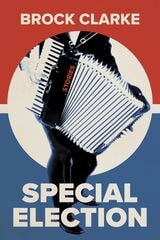
Special Election
StoriesBrock Clarke
Acre Books, 2025
In Special Election, ingenious fictions target our all-too-familiar preoccupations and vulnerabilities—belonging, (dis)engagement, the struggle for self-worth, the difficulty of loving and being loved, the banality and absurdity of existence. Brock Clarke’s rapier wit, inexhaustible imagination, and brilliant leaps of illogic transform his characters’ desperation and distress into tragicomic delight. In the title story, Lawrence Welk is ousted from heaven to run for governor in present-day North Dakota. In “One Goes Where One Is Needed,” we follow the former Provisional Coalition Administrator of post-liberation Iraq, now a youth ski instructor at Okemo Mountain in Vermont. In “The Slim Jim,” the protagonist finds himself (literally and figuratively) very slowly choking to death on a frozen microwavable burrito.
“There is something wrong with me,” states the narrator of “The Big Book of Useless Saturdays.” This could be said of all the characters in Special Election, and through loopy misdirection and mordant observation, Clarke devotes himself to showing his characters and his readers exactly what is wrong. Yet the sharpness of his attention and lavish ludicrousness of his storylines belie a sneaking affection for this imperfect, disappointing world filled with imperfect, disappointing humans. Though Clarke has been compared to such greats as Barthelme, Bellow, and Saunders, the nine stories in Special Election vibrate at a frequency all his own, showcasing the strengths of one of our most gifted comic writers.
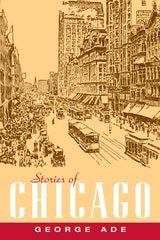
Stories of Chicago
George Ade
University of Illinois Press, 1941
Ade was hailed by such contemporaries as Mark Twain, H. L. Mencken, and William Dean Howells, and the stories contained in this volume showcase the full spectrum of his skills: his keen eye for the absurd and sublime moments of daily urban life, his ear for the vernacular, his shrewd understanding of the Midwestern character, and above all his firm belief that all of human life was worthy literary subject matter.
This volume includes many lively and evocative drawings by John T. McCutcheon, Ade's college classmate and friend who came to be known as "the Dean of American Cartoonists." Also included is an introduction by Franklin J. Meine, incorporating interviews with Ade and letters from John McCutcheon, Mark Twain, and Ade's managing editor, Charles H. Dennis.
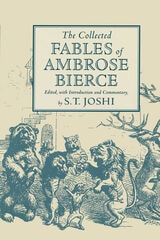
THE COLLECTED FABLES OF AMBROSE BIERCE
Ambrose Bierce, Edited with introduction and commentary by S. T. Joshi
The Ohio State University Press, 2000
Ambrose Bierce was a well-known and highly admired journalist, short story writer, and satirist. After distinguished Civil War service, Bierce became a journalist, and in 1887 he became a columnist for William Randolph Hearst’s Sunday Examiner. His work for the San Francisco Examiner made his reputation, especially on the West Coast. In 1914 he vanished on a trip to Mexico.
The work for which he is best know, The Devil’s Dictionary, was first published in 1906. Bierce also published volumes of short stories. His Tales of Soldiers and Civilians (1891) represents some of the finest writing to come out of the Civil War. Bierce’s stories of the supernatural, collected in Can Such Things Be? (1893), established him as one of the leading American authors of supernatural fiction.
This volume gathers together for the first time the 850 fables written by Bierce over his forty-year career, including more than 400 fables never reprinted from the magazines and newspapers in which they originally appeared.
Bierce’s fables are distinguished for their biting wit and their cynical reflection of the political and social events of his time. Local and national political figures; corrupt lawyers, judges, and clergymen; and even incidents in the Spanish-American War are all mercilessly lampooned. The fables not only testify to Bierce’s hatred of “hypocrisy, cant, and all sham” but provide a window into late nineteenth-century American society. S. T. Joshi has provided extensive commentary explaining historical and literary references in the fables.
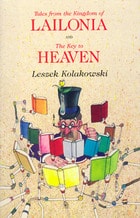
Tales from the Kingdom of Lailonia and The Key to Heaven
Leszek Kolakowski
University of Chicago Press, 1989
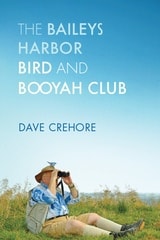
The Baileys Harbor Bird and Booyah Club
Dave Crehore
University of Wisconsin Press, 2012
Open this book and you are in Door County, Wisconsin, strolling down Coot Lake Road—a one-lane, dead-end gravel track just a few miles from Baileys Harbor and the Lake Michigan shore. Along the way you meet George and Helen O’Malley, who are growing old gracefully. Russell, their brave and empathetic golden retriever, wags hello and offers you a paw to shake.
The Olsons and the Berges live just down the road. Bump Olson is the local septic tank pumper and birdwatcher extraordinaire, and Hans Berge, MD, PhD, was at one time the only Norwegian psychiatrist in Chicago—or so he says. In a cottage out by the highway, you may spot Lloyd Barnes, ex–Tennessee state trooper, hound fancier, and local man of mystery. Uncle Petter Sorenson, visiting from Grand Forks, takes the polar bear plunge at Jacksonport. Around the neighborhood you’ll meet Deputy Doug, the flirtatious cellist Debbie Dombrowski, and Italian import Rosa Zamboni.
Dave Crehore’s sketches of life on the Door peninsula also expound on:
• the delights of codfish pizza
• how to insult Canadians
• what to expect at your fiftieth high school reunion
• how to lose a school board election
• the prevention of creeping old-fogyism
• Marilyn, a buxom eight-pound smallmouth bass
• and what goes on in the winter, when no one is there.
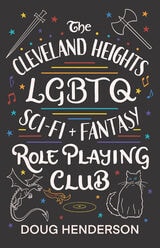
The Cleveland Heights LGBTQ Sci-Fi and Fantasy Role Playing Club
Doug Henderson
University of Iowa Press, 2021
On Thursday nights, the players assemble in the back of Readmore Comix and Games. Celeste is the dungeon master; Valerie, who works at the store, was roped in by default; Mooneyham, the banker, likes to argue; and Ben, sensitive, unemployed, and living at home, is still recovering from an unrequited love. In the real world they go about their days falling in love, coming out at work, and dealing with their family lives all with varying degrees of success. But in the world of their fantasy game, they are heroes and wizards fighting to stop an evil cult from waking a sleeping god.
But then a sexy new guy, Albert, joins the club, Ben’s character is killed, and Mooneyham’s boyfriend is accosted on the street. The connections and parallels between the real world and the fantasy one become stronger and more important than ever as Ben struggles to bring his character back to life and win Albert’s affection, and the group unites to organize a protest at a neighborhood bar. All the while the slighted and competing vampire role playing club, working secretly in the shadows, begins to make its move.
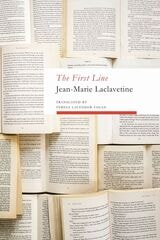
The First Line
Jean-Marie Laclavetine
Seagull Books, 2025
A sharp, witty send-up of the literary world, set in the world of book publishing—a must-read for anyone who’s ever dreamt of (or dreaded) getting published.
Cyril Cordouan is the beleaguered editor at Fulmen, a distinguished publishing house known for its solid but not particularly popular literary titles. Every day, Cyril faces an avalanche of subpar manuscripts, struggling to find a glimmer of quality amid the piles of drivel. Rejections are a routine part of his job, but aspiring authors don’t take kindly to their works being dismissed, and one distraught writer tragically ends his life after his manuscript is declined.
Devastated, Cyril decides to create an outlet for these rejected writers. Can group therapy for the hopelessly hopeful cure Cyril’s woes? Not quite. Between vengeful widows, surprise bestsellers, and a crippling crisis of conscience, Cyril’s life is a hilarious disaster.
With sharp wit and keen insight, Laclavetine, himself an industry insider, offers a satirical look at the literary world along with thought-provoking commentary on the nature of literary ambition, rejection, and the often ridiculous realities of the publishing industry.
The Last People You’d Expect
Spencer Wise
Carnegie Mellon University Press, 2027
A budding journalist and a housing advocate join forces to investigate a series of crimes spurred by an act of vandalism at the Boston Holocaust Memorial.
On the eve of the “Summer of Hate,” Mark Bergman, a young struggling Bar Mitzvah photographer trying to break into serious journalism, meets fellow tenant Annie Holt, a Catholic housing activist. The same night, across town, someone vandalizes the Boston Holocaust Memorial, which at first appears to be an isolated event, but when Mark joins Annie at an eviction protest across town, they soon discover it was a part of a more sinister and coordinated series of attacks. From the Vilna Shul in Beacon Hill down to South Carolina low country, Mark and Annie’s relationship deepens as they hunt the perpetrators and ultimately reach a point, both with each other and the crimes they’re investigating, where they must make the most difficult decisions they ever faced. Told from alternating points of view, Last People follows both Mark and Annie and a series of humorous minor characters, all of whom are searching for identity and a place in a fractured, volatile, and dangerous America. Part love story, part mystery, part coming of age, Last People is a novel about homelessness—literally, metaphorically—and the ways in which people grasp onto labels in order to find meaning and purpose in their lives even when those labels fail to adequately define them.
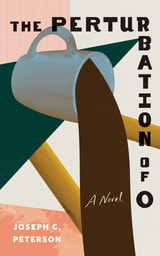
The Perturbation of O
Joseph G. Peterson
University of Iowa Press, 2025
Told mostly in a single conversation between Gideon and Regina as they sit on a spring morning drinking coffee and eating pastries, The Perturbation of O deals with concepts of fame and intimacy, and who has the right to speak about whom.
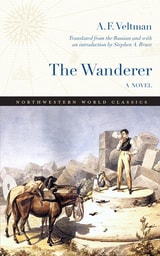
The Wanderer
A NovelAlexander Veltman, Stephen A. Bruce
Northwestern University Press, 2026
An unnamed narrator embarks on a rambling journey across the diverse borderlands of the Russian and Ottoman Empires—all without leaving his divan. Drawing on his own experiences in Bessarabia during the Russo-Turkish War of 1828–29, A. F. Veltman describes our Romantic narrator poring over a map and traversing distant, contested regions—at once imperial backwaters and cosmopolitan crossroads—where Romanians, Ruthenians, Jews, Bulgarians, Germans, and Turks comingle.
Meandering and motley in form and language, this lost classic of the early nineteenth century deploys metafictional innovations that anticipate postmodernist literature. The novel is speckled with dictionary entries, multiplication tables, philosophical digressions, and love poetry as Veltman swings from Gothic horror to antiquarian commentary to burlesque comedy. Past, present, and fantasy blend together, as Alexander the Great, Ovid, and Augustus join the narrator on his daydreamed journey of self-discovery.
Hugely popular in its day, The Wanderer is a remarkable tale that depicts the extraordinary places and peoples that met along the fault lines of once-great empires.
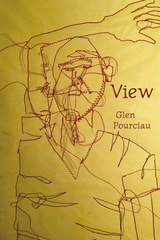
View
Glen Pourciau
Four Way Books, 2017
Vita Nuova
A NovelBohumil Hrabal
Northwestern University Press, 2010
Vita Nuova is the second in a trilogy of memoirs written from the perspective of Bohumil Hrabal’s wife, Elis.ka, about their life in Prague from the 1950s to the 1970s, when Communist repression of artists was at its peak.
Hrabal’s inimitable humor, which in Elis.ka’s ruminations ranges from bawdy slapstick to cutting irony, is all the more penetrating for being directed at himself. Vita Nuova showcases Hrabal’s legendary bohemian intellectual life, particularly his relationship with Vladimír Boudník. Hrabal creates a shrewd, lively portrait of Eastern European intellectual life in the mid-twentieth century.
We Were a Handful
Karel Polácek
Karolinum Press, 2007
A favorite work of Czech humor, We Were a Handful depicts the adventures of five boys from a small Czech town through the diary of Petr Bajza, the grocer’s son. Written by Karel Poláček at the height of World War II before his deportation to Auschwitz in 1944, this book draws on the happier years of Poláček’s own childhood as inspiration. As we look upon the world through Petr’s eyes, we, too, marvel at the incomprehensible world of grownups; join in fights between gangs of neighborhood kids; and laugh at the charming language of boys, a major source of the book’s humor. This translation at last offers English-language readers the opportunity to share in Petr’s (and Poláček’s) childhood and reminds us that joy and laughter are possible even in the darkest times.
We Were a Handful
Karel Polácek
Karolinum Press, 2007
A favorite work of Czech humor, We Were a Handful depicts the adventures of five boys from a small Czech town through the diary of Petr Bajza, the grocer’s son. Written by Karel Poláček at the height of World War II before his deportation to Auschwitz in 1944, this book draws on the happier years of Poláček’s own childhood as inspiration. As we look upon the world through Petr’s eyes, we, too, marvel at the incomprehensible world of grownups; join in fights between gangs of neighborhood kids; and laugh at the charming language of boys, a major source of the book’s humor. This translation at last offers English-language readers the opportunity to share in Petr’s (and Poláček’s) childhood and reminds us that joy and laughter are possible even in the darkest times.