Results by title
19 books match the query 'Information Services'

ALA Guide To Medical & Health Science
American Library Association, 2011
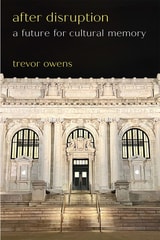
After Disruption
A Future for Cultural MemoryTrevor Owens
University of Michigan Press, 2024
After Disruption posits that we are no longer planning for a digital future, but instead living in a digital present. In this context, Owens asks how we plan for and develop a more just, sustainable, and healthy future for cultural memory. The first half of the book draws on critical scholarship on the history of technology and business to document and expose the sources of tech startup ideologies and their pernicious results, revealing that we need powerful and compelling counter frameworks and values to replace these ideologies. The second half of the book makes the case for the centrality of maintenance, care, and repair as interrelated frameworks to build a better future in which libraries, archives, and museums can thrive as sites of belonging and connection through collections.
Crisis in Employment
Jane Jerrard
American Library Association, 2008
Guide to Reference in Medicine and Health
Denise Beaubien Bennett
American Library Association, 2014
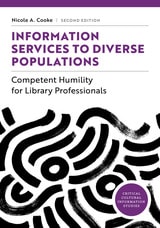
Information Services to Diverse Populations
Competent Humility for Library ProfessionalsNicole A. Cooke
American Library Association, 2026
Foreword by Cynthia Sturgis Landrum
The development of cultural competency skills and social awareness benefits LIS students, their future employers, and the library profession at large―not to mention library customers and society as a whole. Cooke's freshly updated text introduces readers to the contexts and situations that promote the development of empathy and build cultural competence. It marshals cutting edge research and relevant best practices to give readers a strong grasp of the political, social, economic, and technological divides among library patrons. It also covers outreach and library services to diverse populations, how to evaluate such services, and many other key topics. Complete with an updated syllabus, lesson plans, and exercises ready-made for course use, Cooke’s text
- demonstrates why social responsibility is a foundational value of librarianship;
- considers library services to members of marginalized racial or ethnic groups, older adults, people with mental health or physical disabilities, neurodiverse library users, refugees and immigrants, people experiencing homelessness or hunger, those growing up in or experiencing poverty, members of the LGBTQIA+ communities, and people who are incarcerated;
- features a myriad of testimonials drawn from a wide variety of settings that highlight the experiences of library and museum practitioners who are working with diverse populations;
- introduces a new model of cultural competence and cultural humility;
- authoritatively covers such essential concepts as intersectionality, privilege, marginalization, cultural competence, cultural humility, and counter-storytelling along with discussions of how they interplay in the communities that libraries serve;
- explores the impact of overwhelming whiteness of the library profession and what can be done to recruit, welcome, mentor, and retain racially and ethnically diverse library workers; and
- identifies potential employment and networking opportunities related to diversity and social justice in librarianship.
Introduction to Reference Sources in Health Science
American Library Association, 2008
Introduction to Reference Sources in the Health Sciences
Jeffrey T. Huber
American Library Association, 2014
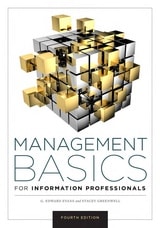
Management Basics for Information Professionals
G. Edward Evans
American Library Association, 2020
The recipient of rave reviews from far and wide (Journal of Hospital Librarianship deemed it “a librarian’s dream … very forward-thinking”), since its initial publication this text has served as an essential resource for both LIS students and practitioners. The new fourth edition offers an updated, comprehensive examination of the myriad of basic skills effective library managers must exercise throughout their careers. Throughout, Evans and new co-author Greenwell pay close attention to management in "new normal" straitened economic conditions and the pervasive impact of technology on a library manager’s role. This book’s coverage includes
- a new focus on how being in the public/nonprofit sector influences the application of management basics such as planning, accountability, trust and delegation, decision making, principles of effective organizational communication, fostering change and innovation, quality control, and marketing;
- the managerial environment, organizational skill sets, the importance of a people-friendly organization, and legal issues;
- key points on leadership, team-building, and human resource management;
- budget, resource, and technology management;
- management ethics, with a lengthy discussion of why ethics matter; and
- tips for planning a library career, with a look at the work/life debate.
This book, to quote Australian Library Journal, is “a recommended text for library science students, but is also an excellent source of information for career librarians wanting to refresh their knowledge of library management in a fast-moving information services environment.”
Management Basics for Information Professionals
G. Edward Evans
American Library Association, 2013
Medication in Maternity
Infant Exposure and Maternal InformationYvonne Brackbill, Karen McManus, and Lynn Woodward
University of Michigan Press, 1985
Reference and Access for Archives and Manuscripts
Cheryl Oestreicher
Society of American Archivists, 2020
Reference and Information Services
An IntroductionKay Ann Cassell
American Library Association, 2018
Reference and Information Services
An IntroductionKay Ann Cassell
American Library Association, 2012
Reference and Information Services
An Introduction, Fifth EditionKay Ann Cassell and Uma Hiremath
American Library Association, 2022
- a basic template for the skills required and expectations demanded of the reference librarian;
- the pandemic’s effect on reference services and how the ingenuity employed by libraries in providing remote and virtual reference is here to stay;
- a new chapter dedicated to health information, with a special focus on health equity and information sources;
- selecting and evaluating reference materials, with strategies for keeping up to date;
- a heightened emphasis on techniques for evaluating sources for misinformation and ways to give library users the tools to discern facts vs. “fake facts”;
- reference as programming, readers’ advisory services, developmentally appropriate material for children and young adults, and information literacy;
- evidence-based guidance on handling microaggressions in reference interactions, featuring discussions of cultural humility and competence alongside recommended resources on implicit bias;
- managing, assessing, and improving reference services; and
- the future of information and reference services, encapsulating existing models, materials, and services to project possible evolutions in the dynamic world of reference
Reflective Teaching, Effective Learning
Instructional Literacy for Library EducatorsChar Booth
American Library Association, 2011
Solving Problems in Technical Communication
Edited by Johndan Johnson-Eilola and Stuart A. Selber
University of Chicago Press, 2012
The field of technical communication is rapidly expanding in both the academic world and the private sector, yet a problematic divide remains between theory and practice. Here Stuart A. Selber and Johndan Johnson-Eilola, both respected scholars and teachers of technical communication, effectively bridge that gap.
The Medical Library Association Guide to Managing Health Care Libraries
Rosalind Farnam Dudden
American Library Association, 2011

The Price of Nuclear Power
Uranium Communities and Environmental JusticeMalin, Stephanie A.
Rutgers University Press, 2015
Useful, Usable, Desirable
Aaron Schmidt
American Library Association, 2014