Results by title
11 books match the query 'Intellectual History'
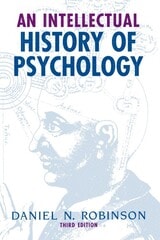
An Intellectual History of Psychology
Daniel N. Robinson
University of Wisconsin Press, 1995
An Intellectual History of Psychology, already a classic in its field, is now available in a concise new third edition. It presents psychological ideas as part of a greater web of thinking throughout history about the essentials of human nature, interwoven with ideas from philosophy, science, religion, art, literature, and politics.
Daniel N. Robinson demonstrates that from the dawn of rigorous and self-critical inquiry in ancient Greece, reflections about human nature have been inextricably linked to the cultures from which they arose, and each definable historical age has added its own character and tone to this long tradition. An Intellectual History of Psychology not only explores the most significant ideas about human nature from ancient to modern times, but also examines the broader social and scientific contexts in which these concepts were articulated and defended. Robinson treats each epoch, whether ancient Greece or Renaissance Florence or Enlightenment France, in its own terms, revealing the problems that dominated the age and engaged the energies of leading thinkers.
Robinson also explores the abiding tension between humanistic and scientific perspectives, assessing the most convincing positions on each side of the debate. Invaluable as a text for students and as a stimulating and insightful overview for scholars and practicing psychologists, this volume can be read either as a history of psychology in both its philosophical and aspiring scientific periods or as a concise history of Western philosophy’s concepts of human nature.
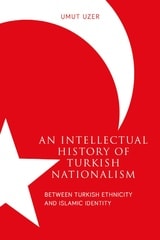
An Intellectual History of Turkish Nationalism
Between Turkish Ethnicity and Islamic IdentityUmut Uzer
University of Utah Press, 2016
While predominantly a textual analysis of the primary sources written by the nationalists, this volume takes into account how political developments influenced Turkish nationalism and also tackles the question of how an ideology that began as a revolutionary, progressive, forward-looking ideal eventually transformed into one that is conservative, patriarchal, and nostalgic to the Ottoman and Islamic past. Between Islamic and Turkish Identity is the first book in any language to comprehensively analyze Turkish nationalism with such scope and engagement with primary sources; it aims to dissect the phenomenon in all its manifestations.
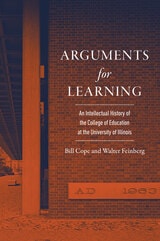
Arguments for Learning
An Intellectual History of the College of Education at the University of IllinoisBill Cope and Walter Feinberg
University of Illinois Press, 2025
Cope and Feinberg draw on conversations, narratives, and archival research that reveal how different generations explored their role in defining and carrying out the College’s multifaceted mission. Their account raises critical questions about the character of learning, the aims of teaching, and the nature of teaching as a profession. At the same time, the authors address issues that range from the role of schools in fostering individual and collective identity to the introduction of computer-mediated and online learning. Cope and Feinberg examine changes in self-understanding about fundamental ideas and chart how the College evolved from its original narrow mission of training children’s schoolteachers to embracing global perspectives.
A wide-ranging portrait of an institution, Arguments for Learning uses the School of Education to tell the stories of thinkers dedicated to the idea that education can change the world for the better.
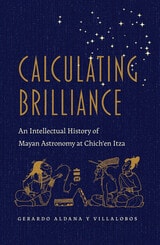
Calculating Brilliance
An Intellectual History of Mayan Astronomy at Chich’en ItzaGerardo Aldana y Villalobos
University of Arizona Press, 2021
Near the structure known today as the Great Ball Court and within the interior of the Lower Temple of the Jaguar, a mural depicts a female Mayan astronomer called K'uk'ul Ek' Tuyilaj. Weaving together archaeology, mathematics, history, and astronomy, Calculating Brilliance brings to light the discovery by this Mayan astronomer, which is recorded in the Venus Table of the Dresden Codex. As the book demonstrates, this brilliant discovery reverberated throughout Mayan science. But it has remained obscured to modern eyes.
Jumping from the vital contributions of K'uk'ul Ek' Tuyilaj, Gerardo Aldana y Villalobos critically reframes science in the pre-Columbian world. He reexamines the historiography of the Dresden Codex and contextualizes the Venus Table relative to other Indigenous literature. From a perspective anchored to Indigenous cosmologies and religions, Aldana y Villalobos delves into how we may understand Indigenous science and discovery—both its parallels and divergences from modern globalized perspectives of science.
Calculating Brilliance brings different intellectual threads together across time and space, from the Classic to the Postclassic, the colonial period to the twenty-first century to offer a new vision for understanding Mayan astronomy.
Harmony and the Balance
An Intellectual History of Seventeenth-Century English Economic ThoughtAndrea Finkelstein
University of Michigan Press, 2000
Andrea Finkelstein is Assistant Professor of History, City University of New York.

Keeping the World’s Environment under Review
An Intellectual History of the Global Environment OutlookJan Bakkes
Central European University Press, 2022
How do we take stock of the state and direction of the world’s environment, and what can we learn from the experience? Among the myriad detailed narratives about the condition of the planet, the Global Environment Outlook (GEO) reports—issued by the United Nations Environment Programme—stand out as the most ambitious. For nearly three decades the GEO project has not only delivered iconic global assessment reports, but through its multitude of contributors has inspired hundreds of similar processes worldwide from the regional to the local level.
This book provides an inside account of the evolution of the GEO project from its earliest days. Building on meticulous research, including interviews with former heads of the United Nations Environment Programme, diplomats, leading contributing scientists, and senior leaders of collaborating organizations, the story is told from the perspective of five GEO veterans who all played a pivotal role in shaping the periodic assessments. The GEO’s history provides striking insights and will save valuable time to those who commission, design and conduct, as well as critique and improve, assessments of environmental development in the next decade.
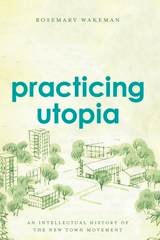
Practicing Utopia
An Intellectual History of the New Town MovementRosemary Wakeman
University of Chicago Press, 2016
In Practicing Utopia, Rosemary Wakeman gives us a sweeping view of the new town movement as a global phenomenon. From Tapiola in Finland to Islamabad in Pakistan, Cergy-Pontoise in France to Irvine in California, Wakeman unspools a masterly account of the golden age of new towns, exploring their utopian qualities and investigating what these towns can tell us about contemporary modernization and urban planning. She presents the new town movement as something truly global, defying a Cold War East-West dichotomy or the north-south polarization of rich and poor countries. Wherever these new towns were located, whatever their size, whether famous or forgotten, they shared a utopian lineage and conception that, in each case, reveals how residents and planners imagined their ideal urban future.
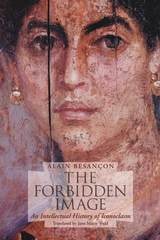
The Forbidden Image
An Intellectual History of IconoclasmAlain Besançon
University of Chicago Press, 2001
Philosophers and theologians have long engaged in intense debate and introspection over the representation of the deity, its possibilities and its proscriptions. The Forbidden Image traces the dual strains of “iconophilia” and iconoclasm, the privileging and prohibition of religious images, over a span of two and a half millennia in the West.
Alain Besançon’s work begins with a comprehensive examination of the status of the image in Greek, Judaic, Islamic, and Christian thought. The author then addresses arguments regarding the moral authority of the image in European Christianity from the medieval through the early modern periods. Besançon completes The Forbidden Image with an examination of how iconophilia and iconoclasm have been debated in the modern period.
“Even the reader who has heard something of the Byzantine quarrels about images and their theological background will be surprised by a learned and convincing interpretation of the works of Mondrian, Kandinsky, and Malevich in terms of religiously inspired iconoclasm. . . . This is an immensely rich and powerful masterpiece.”—Leszek Kolakowski, Times Literary Supplement
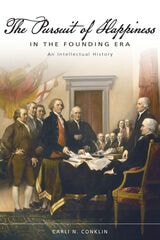
The Pursuit of Happiness in the Founding Era
An Intellectual HistoryCarli N. Conklin
University of Missouri Press, 2020
Scholars have long debated the meaning of the pursuit of happiness, yet have tended to define it narrowly, focusing on a single intellectual tradition, and on the use of the term within a single text, the Declaration of Independence. In this insightful volume, Carli Conklin considers the pursuit of happiness across a variety of intellectual traditions, and explores its usage in two key legal texts of the Founding Era, the Declaration and William Blackstone’s Commentaries on the Laws of England.
For Blackstone, the pursuit of happiness was a science of jurisprudence, by which his students could know, and then rightly apply, the first principles of the Common Law. For the founders, the pursuit of happiness was the individual right to pursue a life lived in harmony with the law of nature and a public duty to govern in accordance with that law. Both applications suggest we consider anew how the phrase, and its underlying legal philosophies, were understood in the founding era. With this work, Conklin makes important contributions to the fields of early American intellectual and legal history.
The Sower and the Seer
Perspectives on the Intellectual History of the American MidwestJoseph Hogan
Wisconsin Historical Society Press, 2021
The Midwest has been characterized as a fertile seedbed for the germination of great thinkers, but a wasteland for their further growth. The Sower and the Seer reveals that representation to be false. In fact, the region has sustained many innovative minds and been the locus of extraordinary intellectualism. It has also been the site of shifting interpretations—to some a frontier, to others a colonized space, a breadbasket, a crossroads, a heartland. As agrarian reformed (and Michigander) Liberty Hyde Bailey expressed in his 1916 poem “Sower and Seer,” the Midwestern landscape has given rise to significant visionaries, just as their knowledge has nourished and shaped the region.
The essays gathered for this collection examine individual thinkers, writers, and leaders, as well as movements and ideas that shaped the Midwest, including rural school consolidation, women’s literary societies, Progressive-era urban planning, and Midwestern radical liberalism. While disparate in subject and style, these essays taken together establish the irrefutable significance of the intellectual history of the American Midwest.
Thinking through Transition
Liberal Democracy, Authoritarian Pasts, and Intellectual History in East Central Europe After 1989Michal Kopecek
Central European University Press, 2015