Results by title
16 books match the query 'Investments & Securities'
A History of the Global Stock Market
From Ancient Rome to Silicon ValleyB. Mark Smith
University of Chicago Press, 2004
Informative, entertaining, and written for specialists and non-specialists alike, A History of the Global Stock Market is a worthy read for anyone who wants to understand the role of the stock market in the global economy.
Administrative Aspects of Investment-Based Social Security Reform
Edited by John B. Shoven
University of Chicago Press, 2000
Financial Aspects of the United States Pension System
Edited by Zvi Bodie and John B. Shoven
University of Chicago Press, 1984
-What is the current financial status of the elderly, and how vulnerable are they to inflation?
-What is the impact of inflation on the private pension system, and what are the effects of alternative indexing schemes?
-What roles can the social security system play in the provision of retirement income?
-What is the effect of the tax code and the Employee Retirement Income Security Act of 1974 (ERISA) on corporate pension policy?
-How well funded are corporate pension plans, and is a firm's unfunded pension liability fully reflected in the market value of its common stock?
Many of the conclusions these experts reach contradict and challenge popular views, thus providing fertile ground for innovation in pension planning.
Financial Derivatives and the Globalization of Risk
Edward LiPuma and Benjamin Lee
Duke University Press, 2005
LiPuma and Lee explain how derivatives are essentially wagers—often on the fluctuations of national currencies—based on models that aggregate and price risk. They describe how these financial instruments are changing the face of capitalism, undermining the power of nations and perpetrating a new and less visible form of domination on postcolonial societies. As they ask: How does one know about, let alone demonstrate against, an unlisted, virtual, offshore corporation that operates in an unregulated electronic space using a secret proprietary trading strategy to buy and sell arcane financial instruments? LiPuma and Lee provide a necessary look at the obscure but consequential role of financial derivatives in the global economy.
Foreign Direct Investment
Edited by Kenneth A. Froot
University of Chicago Press, 1993
Chapters cover such topics as theoretical accounts of FDI patterns, the growth of multinational enterprises, and the FDI experiences of Japan, the United States, and selected developing countries. This volume will interest economists, government officials, and business people concerned with FDI today.
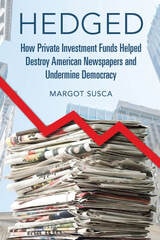
Hedged
How Private Investment Funds Helped Destroy American Newspapers and Undermine DemocracyMargot Susca
University of Illinois Press, 2024
The ultrawealthy largely own and guide the newspaper system in the United States. Through entities like hedge funds and private equity firms, this investor class continues to dismantle the one institution meant to give voice to average citizens in a democracy.
Margot Susca reveals the little-known history of how private investment took over the newspaper industry. Drawing on a political economy of media, Susca’s analysis uses in-depth interviews and documentary evidence to examine issues surrounding ownership and power. Susca also traces the scorched-earth policies of layoffs, debt, cash-outs, and wholesale newspaper closings left behind by private investors and the effects of the devastation on the future of news and information. Throughout, Susca reveals an industry rocked less by external forces like lost ad revenue and more by ownership and management obsessed with profit and beholden to private fund interests that feel no responsibility toward journalism or the public it is meant to serve.

How to Think about Information
Dan Schiller
University of Illinois Press, 2006
It is common wisdom that the U.S. economy has adapted to losses in its manufacturing base because of the booming information sector, with high-paying jobs for everything from wireless networks to video games. We are told we live in the Information Age, in which communications networks and media and information services drive the larger economy. While the Information Age may have looked sunny in the beginning, as it has developed it looks increasingly ominous: its economy and benefits grow more and more centralized--and in the United States, it has become less and less subject to democratic oversight.
Corporations around the world have identified the value of information and are now seeking to control its production, transmission, and consumption. In How to Think about Information, Dan Schiller explores the ways information has been increasingly commodified as a result and how it both resembles and differs from other commodities. Through a linked series of theoretical, historical, and contemporary studies, Schiller reveals this commodification as both dynamic and expansionary, but also deeply conflicted and uncertain. He examines the transformative political and economic changes occurring throughout the informational realm and analyzes key dimensions of the process, including the buildup of new technological platforms, the growth of a transnationalizing culture industry, and the role played by China as it reinserts itself into an informationalized capitalism.
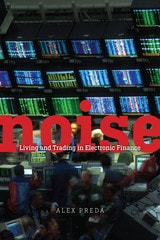
Noise
Living and Trading in Electronic FinanceAlex Preda
University of Chicago Press, 2017
In Noise, Alex Preda explores the world of the people who trade even when by all measures they would be better off not trading. Based on firsthand observations, interviews with traders and brokers, and on international direct trading experience, Preda’s fascinating ethnography investigates how ordinary people take up financial trading, how they form communities of their own behind their computer screens, and how electronic finance encourages them to trade more and more frequently. Along the way, Preda finds the answer to the paradox of amateur trading—the traders aren’t so much seeking monetary rewards in the financial markets, rather the trading itself helps them to fulfill their own personal goals and aspirations.

Organic Coffee
Sustainable Development by Mayan FarmersMaria Elena Martinez-Torres
Ohio University Press, 2006
Maria Elena Martinez-Torres explains how Mayan farmers have built upon their ethnic networks to make a crucial change in their approach to agriculture. Taking us inside Chiapas, Mexico's poorest state and scene of the 1994 Zapatista uprising, she examines the anatomy of the ongoing organic coffee boom and the fair-trade movement. The organic coffee boom arose as very poor farmers formed cooperatives, revalued their ethnic identity, and improved their land through organic farming. The result has been significant economic benefits for their families and ecological benefits for the future sustainability of agriculture in the region.
Organic Coffee refutes the myth that organic farming is less productive than chemical-based agriculture and gives us reasons to be hopeful for indigenous peoples and peasant farmers
Pioneers for Profit
Foreign Entrepreneurship and Russian Industrialization, 1885-1913John P. McKay
University of Chicago Press, 1970
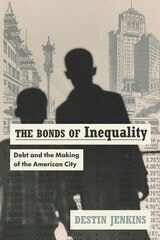
The Bonds of Inequality
Debt and the Making of the American CityDestin Jenkins
University of Chicago Press, 2021
In this passionate and deeply researched book, Destin Jenkins shows in vivid detail how, beyond the borrowing decisions of American cities and beneath their quotidian infrastructure, there lurks a world of politics and finance that is rarely seen, let alone understood. Focusing on San Francisco, The Bonds of Inequality offers a singular view of the postwar city, one where the dynamics that drove its creation encompassed not only local politicians but also banks, credit rating firms, insurance companies, and the national municipal bond market. Moving between the local and the national, The Bonds of Inequality uncovers how racial inequalities in San Francisco were intrinsically tied to municipal finance arrangements and how these arrangements were central in determining the distribution of resources in the city. By homing in on financing and its imperatives, Jenkins boldly rewrites the history of modern American cities, revealing the hidden strings that bind debt and power, race and inequity, democracy and capitalism.
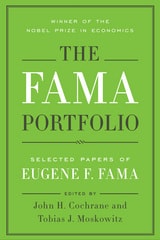
The Fama Portfolio
Selected Papers of Eugene F. FamaEugene F. Fama
University of Chicago Press, 2017
Published soon after the fiftieth anniversary of Fama’s appointment to the University of Chicago and his receipt of the Nobel Prize in Economics, The Fama Portfolio offers an authoritative compilation of Fama’s central papers. Many are classics, including his now-famous essay on efficient capital markets. Others, though less famous, are even better statements of the central ideas. Fama’s research considers key questions in finance, both as an academic field and an industry: How is information reflected in asset prices? What is the nature of risk that scares people away from larger returns? Does lots of buying and selling by active managers produce value for their clients? The Fama Portfolio provides for the first time a comprehensive collection of his work and includes introductions and commentary by the book’s editors, John H. Cochrane and Tobias Moskowitz, as well as by Fama’s colleagues, themselves top scholars and successful practitioners in finance. These essays emphasize how the ideas presented in Fama’s papers have influenced later thinking in financial economics, often for decades.
The Internationalization of Equity Markets
Edited by Jeffrey A. Frankel
University of Chicago Press, 1994
Eight essays examine such issues as the current extent of international market integration, gains to U.S. investors through international diversification, home-country bias in investing, the role of time and location around the world in stock trading, and the behavior of country funds. Other, long-standing questions about equity markets are also addressed, including market efficiency and the accuracy of models of expected returns, with a particular focus on variances, covariances, and the price of risk according to the Capital Asset Pricing Model.
The Role of Foreign Direct Investment in East Asian Economic Development
Edited by Takatoshi Ito and Anne O. Krueger
University of Chicago Press, 2000
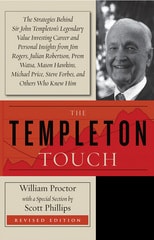
The Templeton Touch
William Proctor
Templeton Press, 2012
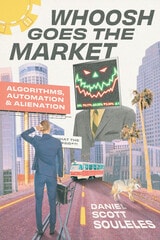
Whoosh Goes the Market
Algorithms, Automation, and AlienationDaniel Scott Souleles
University of Chicago Press, 2024
Markets are messy, and no one knows this better than traders who work tirelessly to predict what they will do next. In Whoosh Goes the Market, Daniel Scott Souleles takes us into the day-to-day experiences of a team at a large trading firm, revealing what it’s actually like to make and lose money on contemporary capital markets.
The traders Souleles shadows have mostly moved out of the pits and now work with automated, glitch-prone computer systems. They remember the days of trading manually, and they are suspicious of algorithmically driven machine-learning systems. Openly musing about their own potential extinction, they spend their time expressing fear and frustration in profanity-laced language. With Souleles as our guide, we learn about everything from betting strategies to inflated valuations, trading swings, and market manipulation. This crash course in contemporary finance vividly reveals the existential anxiety at the evolving front lines of American capitalism.