Results by title
7 books match the query 'Jihad'
Combating Jihadism
American Hegemony and Interstate Cooperation in the War on TerrorismBarak Mendelsohn
University of Chicago Press, 2009
Inferno in Chechnya
The Russian-Chechen Wars, the Al Qaeda Myth, and the Boston Marathon BombingsBrian Glyn Williams
University Press of New England, 2015

Islam in the Digital Age
E-Jihad, Online Fatwas and Cyber Islamic EnvironmentsGary R. Bunt
Pluto Press, 2003
The Internet is an increasingly important source of information for many people in the Muslim world. Many Muslims in majority and minority contexts rely on the Internet -- including websites and e-mail -- as a primary source of news, information and communication about Islam. As a result, a new media culture is emerging which is having a significant impact on areas of global Muslim consciousness. Post-September 11th, this phenomenon has grown more rapidly than ever.
Gary R. Bunt provides a fascinating account of the issues at stake, identifying two radical new concepts:
Firstly, the emergence of e-jihad ('Electronic Jihad') originating from diverse Muslim perspectives -- this is described in its many forms relating to the different definitions of 'jihad', including on-line activism (ranging from promoting militaristic activities to hacking, to co-ordinating peaceful protests) and Muslim expression post 9/11.
Secondly, he discusses religious authority on the Internet -- including the concept of on-line fatwas and their influence in diverse settings, and the complexities of conflicting notions of religious authority.
Jihad in West Africa during the Age of Revolutions
Paul E. Lovejoy
Ohio University Press, 2016
In Jihād in West Africa during the Age of Revolutions, a preeminent historian of Africa argues that scholars of the Americas and the Atlantic world have not given Africa its due consideration as part of either the Atlantic world or the age of revolutions. The book examines the jihād movement in the context of the age of revolutions—commonly associated with the American and French revolutions and the erosion of European imperialist powers—and shows how West Africa, too, experienced a period of profound political change in the late eighteenth through the mid-nineteenth centuries. Paul E. Lovejoy argues that West Africa was a vital actor in the Atlantic world and has wrongly been excluded from analyses of the period.
Among its chief contributions, the book reconceptualizes slavery. Lovejoy shows that during the decades in question, slavery expanded extensively not only in the southern United States, Cuba, and Brazil but also in the jihād states of West Africa. In particular, this expansion occurred in the Muslim states of the Sokoto Caliphate, Fuuta Jalon, and Fuuta Toro. At the same time, he offers new information on the role antislavery activity in West Africa played in the Atlantic slave trade and the African diaspora.
Finally, Jihād in West Africa during the Age of Revolutions provides unprecedented context for the political and cultural role of Islam in Africa—and of the concept of jihād in particular—from the eighteenth century into the present. Understanding that there is a long tradition of jihād in West Africa, Lovejoy argues, helps correct the current distortion in understanding the contemporary jihād movement in the Middle East, Afghanistan, Pakistan, and Africa.
New Political Religions, or an Analysis of Modern Terrorism
Barry Cooper
University of Missouri Press, 2004
In New Political Religions, or an Analysis of Modern Terrorism, Barry Cooper applies the insights of Eric Voegelin to the phenomenon of modern terrorism. Cooper points out that the chief omission from most contemporary studies of terrorism is an analysis of the “spiritual motivation” that is central to the actions of terrorists today. When spiritual elements are discussed in conventional literature, they are grouped under the opaque term religion. A more conceptually adequate approach is provided by Voegelin’s political science and, in particular, by his Schellingian term pneumopathology—a disease of the spirit.
While terrorism has been used throughout the ages as a weapon in political struggles, there is an essential difference between groups who use these tactics for more of less rational political goals and those seeking more apocalyptic ends. Cooper argues that today's terrorists have a spiritual perversity that causes them to place greater significance on killing than on exploiting political grievances. He supports his assertion with an analysis of two groups that share the characteristics of a pneumopathological consciousness—Aum Shinrikyo, the terrorist organization that poisoned thousands of Tokyo subway riders in 1995, and Al-Qaeda, the group behind the infamous 9/11 killings.Cooper applies the Voegelinian terms first reality (a commonsense goal regarding legitimate political grievances) and second reality (a fantastic objective sought by those whose rationality has been obscured) to show the major divide between political and apocalyptic terrorist groups. Osama Bin Laden's "second reality" was the imaginary goal that the 9/11 attack was supposed to achieve, and the commonsense reality was what truly happened (the deaths of nearly 3,000 people and the United States's subsequent military response). Cooper shows how such spiritual perversity enables a human being, imagining himself empowered by God, to go on a campaign of mass destruction.
Cooper concludes with a chapter on the uniqueness of terrorist networks, their limitations, and the means by which they can be dealt with. In the ongoing conversations among specialists in terrorist studies, as well as the ordinary discourse of citizens in western democracies wishing to understand the world around them, this book will add a distinctive voice.
Seeds of Hate
How America's Flawed Middle East Policy Ignited the JihadLawrence Pintak
Pluto Press, 2003
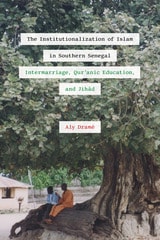
The Institutionalization of Islam in Southern Senegal
Intermarriage, Qur'anic Education, and JihadAly Dramé
University of Michigan Press, 2025
Drawing on archival documents, oral history and traditions, travelers’ accounts, the Arabic text Pakao al-Qurano (Holy Book of Pakao), and original ethnography, The Institutionalization of Islam in Southern Senegal demonstrates how these communities reframe the debates about the institutionalization of Islam in Senegambia geographically, chronologically, and thematically.