Results by title
12 books match the query 'Juvenile corrections'
A Century of Juvenile Justice
Edited by Margaret K. Rosenheim, Franklin E. Zimring, David S. Tanenhaus, and Be
University of Chicago Press, 2002
A Century of Juvenile Justice is the first standard, comprehensive and comparative reference work to span the history and current state of juvenile justice. An extraordinary assemblage of leading authorities have produced a accessible, illustrated document, designed as a reference for everyone from probation personnel and police to students, educators, lawyers, and social workers.
Editors' introductions place into context each of the book's five sections, which consider the history of the ideas around which the system was organized and the institutions and practices that resulted; the ways in which this set of institutions and practices interacts with other aspects of government policy toward children in the U.S. and in other nations; and also the ways in which changing social and legal meanings of childhood and youth have continued to influence juvenile justice. The doctrine and institutions of juvenile justice in Europe, Japan, England, and Scotland are profiled in depth to show the range of modern responses to youth crime and child endangerment. This comparative material provides a fresh basis for judging the direction of policy in the U.S.
Margaret K. Rosenheim is the Helen Ross professor Emerita in the School of Social Service Administration of the University of Chicago. Franklin Zimring is Professor of Law and Director of the Earl Warren Legal Institute at the University of California, Berkeley. David S. Tanenhaus is Assistant Professor of History at the University of Nevada, Las Vegas. Bernardine Dohrn is Director of the Children and Family Justice Center of Northwestern University Law School.
Contributors:
Anthony Bottoms
Jaap Doek
Bernardine Dohrn
Peter Edelman
John Eekelaar
David Farrington
Frank Furstenberg
Michael Grossberg
John Laub
Paul Lerman
Rolf Loeber
Akira Morita
Margaret K. Rosenheim
Elizabeth Scott
David S. Tanenhaus
Lee Teitelbaum
Mark Testa
Franklin E. Zimring
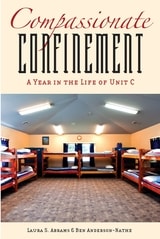
Compassionate Confinement
A Year in the Life of Unit CAbrams, Laura S.
Rutgers University Press, 2013
Received an Honorable Mention for the 2015 Society for Social Work and Research Outstanding Social Work Book Award
To date, knowledge of the everyday world of the juvenile correction institution has been extremely sparse. Compassionate Confinement brings to light the challenges and complexities inherent in the U.S. system of juvenile corrections. Building on over a year of field work at a boys’ residential facility, Laura S. Abrams and Ben Anderson-Nathe provide a context for contemporary institutions and highlight some of the system’s most troubling tensions.
This ethnographic text utilizes narratives, observations, and case examples to illustrate the strain between treatment and correctional paradigms and the mixed messages regarding gender identity and masculinity that the youths are expected to navigate. Within this context, the authors use the boys’ stories to show various and unexpected pathways toward behavior change. While some residents clearly seized opportunities for self-transformation, others manipulated their way toward release, and faced substantial challenges when they returned home.
Compassionate Confinement concludes with recommendations for rehabilitating this notoriously troubled system in light of the experiences of its most vulnerable stakeholders.
Crime and Justice, Volume 31
Youth Crime and Youth Justice: Comparative and Cross-national PerspectivesEdited by Michael Tonry and Anthony N. Doob
University of Chicago Press Journals, 2004
Contributors:
Hans-Jörg Albrecht
Anthony Bottoms
James Dignan
Anthony N. Doob
Carl-Gunnar Janson
Josine Junger-Tas
Britta Kyvsgaard
Allison Morris
Julian V. Roberts
Jane B. Sprott
Lode Walgrave
Disrupting the School-to-Prison Pipeline
An Action Guide for LibrariesCarrie Scott Banks and Jill Anderson
American Library Association, 2026
The school-to-prison pipeline impacts communities across the country; often, this system and families impacted by it remain invisible. But librarians, educators, and others who work with youth know first-hand that libraries and reading can be life-altering for youth impacted by incarceration. Written by public librarians who have supported youth before, during, and after incarceration, this book draws from their own experiences while showcasing insights from other library workers, researchers, educators, people who work in the juvenile justice fields, and mental health professionals. Designed to empower libraries and their staff to provide children and teens with information, visibility, knowledge and skills, recreation, and role models, it shares practical strategies for helping youth avoid the school-to-prison pipeline or contend with it. Readers will discover
- a concise explanation of the school-to-prison pipeline, including statistics on how and why it disproportionately impacts LGBTQ+, BIPOC, and disabled youth;
- concrete, proven strategies for disrupting youth incarceration pathways by giving young people the tools and support they need to avoid incarceration;
- steps for bolstering youth engagement during out of school time;
- guidance on how to align disciplinary approaches with trauma-informed practices when dealing with rowdy youth and other disruptive behavior;
- an overview of what libraries are doing to provide programs and services inside a youth facility, including literacy support, high school equivalency/GED programs, and televisiting;
- strategies for combatting the isolation of children of incarcerated parents by creating inclusive and welcoming library environments;
- information about the complex and difficult process of reentry for incarcerated youth, with adaptable ideas and lessons from the work being done in libraries for reentering adults; and
- an inspiring vision, extrapolating from work in adjacent fields, of what libraries can do to overcome barriers to bringing more youth into the library.
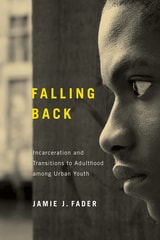
Falling Back
Incarceration and Transitions to Adulthood among Urban YouthFader, Jamie J
Rutgers University Press, 2013
Winner of the 2016 Outstanding Book for the Academy of Criminal Justice Science (ACJS)
2014 Scholarly Contribution Award from the Children and Youth Section of the American Sociological Association
Received an Honorable Mention for the American Sociological Association Race, Gender and Class Section's 2014 Distinguished Book Award
Named a 2013 Choice Outstanding Academic Title
Jamie J. Fader documents the transition to adulthood for a particularly vulnerable population: young inner-city men of color who have, by the age of eighteen, already been imprisoned. How, she asks, do such precariously situated youth become adult men? What are the sources of change in their lives?
Falling Back is based on over three years of ethnographic research with black and Latino males on the cusp of adulthood and incarcerated at a rural reform school designed to address “criminal thinking errors” among juvenile drug offenders. Fader observed these young men as they transitioned back to their urban Philadelphia neighborhoods, resuming their daily lives and struggling to adopt adult masculine roles. This in-depth ethnographic approach allowed her to portray the complexities of human decision-making as these men strove to “fall back,” or avoid reoffending, and become productive adults. Her work makes a unique contribution to sociological understandings of the transitions to adulthood, urban social inequality, prisoner reentry, and desistance from offending.

Girls in Trouble with the Law
Schaffner, Laurie
Rutgers University Press, 2006
Offering a critical assessment of what she describes as a gender-insensitive juvenile legal system, Schaffner makes a compelling argument that current policies do not go far enough to empower disadvantaged girls so that communities can assist them in overcoming the social limitations and gender, sexual, and racial/ethnic discrimination that continue to plague young women growing up in contemporary United States.
Judging Children As Children
A Proposal for a Juvenile Justice SystemMichael A. Corriero
Temple University Press, 2007
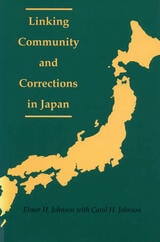
Linking Community and Corrections in Japan
Elmer H. Johnson with Carol H. Jonnson
Southern Illinois University Press, 2000
Completing Elmer H. Johnson’s impressive three-volume examination of corrections in Japan, Linking Community and Corrections in Japan (written with the assistance of Carol H. Johnson) focuses on the Rehabilitation Bureau’s responsibilities regarding probation, parole, and aftercare as well as the Correction Bureau’s role in Japan’s version of community-oriented corrections. Johnson first outlines the tasks of the Rehabilitation Bureau, then turns to historical and contemporary views of community and corrections. In discussions of the probation and parole system for both adults and juveniles, he describes in detail the Japanese version of supervision and the return of prisoners to the community. One strength of this study is Johnson’s impartiality. As an investigator, he functions as a "friend of the court," an adviser who is free to conduct an objective pursuit of the fundamental strengths and shortcomings of the Japanese prison system. He also follows the Foucauldian dictum: "With the prisons there would be no sense of limiting oneself to discourses about prisons; just as important are the discourses which arise within the prison, the decisions and regulations which are among its constituent elements, its means of functioning, along with its strategies."

Lost Causes
Blended Sentencing, Second Chances, and the Texas Youth CommissionBy Chad R. Trulson, Darin R. Haerle, Jonathan W. Caudill, and Matt DeLisi<br>Foreword by James W. Marquart
University of Texas Press, 2016
What should be done with minors who kill, maim, defile, and destroy the lives of others? The state of Texas deals with some of its most serious and violent youthful offenders through “determinate sentencing,” a unique sentencing structure that blends parts of the juvenile and adult justice systems. Once adjudicated via determinate sentencing, offenders are first incarcerated in the Texas Youth Commission (TYC). As they approach age eighteen, they are either transferred to the Texas prison system to serve the remainder of their original determinate sentence or released from TYC into Texas’s communities.
The first long-term study of determinate sentencing in Texas, Lost Causes examines the social and delinquent histories, institutionalization experiences, and release and recidivism outcomes of more than 3,000 serious and violent juvenile offenders who received such sentences between 1987 and 2011. The authors seek to understand the process, outcomes, and consequences of determinate sentencing, which gave serious and violent juvenile offenders one more chance to redeem themselves or to solidify their place as the next generation of adult prisoners in Texas. The book’s findings—that about 70 percent of offenders are released to the community during their most crime-prone years instead of being transferred to the Texas prison system and that about half of those released continue to reoffend for serious crimes—make Lost Causes crucial reading for all students and practitioners of juvenile and criminal justice.

REFORMING JUVENILE DETENTION
IRA M. SCHWARTZ
The Ohio State University Press, 1997
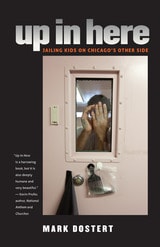
Up in Here
Jailing Kids on Chicago's Other SideMark Dostert
University of Iowa Press, 2014
The juveniles’ attitudes toward Dostert change, however, once he begins working as a “Children’s Attendant” at the Audy Home, clocking in for eight hours every day to enforce rules and maintain order on the cellblocks. His colorblind, altruistic volunteer world fractures into a full-time, emotionally charged reality of white and black and brown. When the boys change, he must change too. Despite wanting to help them feel human in such a dehumanizing environment, Dostert realizes he needs to make sure his kindness is not perceived as weakness. Dostert learns to march the juveniles through the facility to school, recreation activities, and chapel. He must strip-search them, interrupt their brawls, root through their cells for drugs and handcrafted weapons, and monitor group showers to thwart sexual extortion and the inscription of gang symbols in soap on walls and mirrors. Week after week and month after month, the job exposes hidden views not only of the juveniles and the “system” incarcerating them, but of Children’s Attendant Dostert himself.
From one man’s struggle to reconcile his humanitarian intentions with his actual job responsibilities in what, to him, is a strange new world, emerges a sincere effort to confront the realities of America’s persisting racial tensions and institutionalized poverty. Dostert’s story is an honest and unflinching journey from thinking he has many of the answers for how to change this world to discovering how little he really knows about the world he is trying to change.
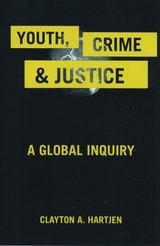
Youth, Crime, and Justice
A Global InquiryHartjen, Clayton A
Rutgers University Press, 2008
In Youth, Crime, and Justice, Clayton A. Hartjen provides a broad overview of juvenile delinquency: how it manifests itself around the world and how societies respond to misconduct among their children. Taking a global, rather than country-specific approach, chapters focus on topics that range from juvenile laws and the correction of child offenders to the abuse, exploitation, and victimization of young people. Hartjen includes specific examples from the United States, Australia, Spain, Switzerland, New Zealand, Japan, India, Egypt, and elsewhere as he sorts through the various definitions of “delinquent” and explores the differences in behavior that contribute to these classifications. Most importantly, his in-depth and comparative look at judicial systems worldwide raises questions about how young offenders should be “corrected” and how much fault can be laid on misbehaving youths acting out against the very societies that produced them.