Results by title
22 books match the query 'Juvenile justice, Administration of'
A Century of Juvenile Justice
Edited by Margaret K. Rosenheim, Franklin E. Zimring, David S. Tanenhaus, and Be
University of Chicago Press, 2002
A Century of Juvenile Justice is the first standard, comprehensive and comparative reference work to span the history and current state of juvenile justice. An extraordinary assemblage of leading authorities have produced a accessible, illustrated document, designed as a reference for everyone from probation personnel and police to students, educators, lawyers, and social workers.
Editors' introductions place into context each of the book's five sections, which consider the history of the ideas around which the system was organized and the institutions and practices that resulted; the ways in which this set of institutions and practices interacts with other aspects of government policy toward children in the U.S. and in other nations; and also the ways in which changing social and legal meanings of childhood and youth have continued to influence juvenile justice. The doctrine and institutions of juvenile justice in Europe, Japan, England, and Scotland are profiled in depth to show the range of modern responses to youth crime and child endangerment. This comparative material provides a fresh basis for judging the direction of policy in the U.S.
Margaret K. Rosenheim is the Helen Ross professor Emerita in the School of Social Service Administration of the University of Chicago. Franklin Zimring is Professor of Law and Director of the Earl Warren Legal Institute at the University of California, Berkeley. David S. Tanenhaus is Assistant Professor of History at the University of Nevada, Las Vegas. Bernardine Dohrn is Director of the Children and Family Justice Center of Northwestern University Law School.
Contributors:
Anthony Bottoms
Jaap Doek
Bernardine Dohrn
Peter Edelman
John Eekelaar
David Farrington
Frank Furstenberg
Michael Grossberg
John Laub
Paul Lerman
Rolf Loeber
Akira Morita
Margaret K. Rosenheim
Elizabeth Scott
David S. Tanenhaus
Lee Teitelbaum
Mark Testa
Franklin E. Zimring
COPS AND KIDS
Policing Juvenile Delinquency in Urban America, 1890–1940David B. Wolcott
The Ohio State University Press, 2005
Cops and Kids analyzes how police regulated juvenile behavior in turn-of-the-century America. Focusing on Los Angeles, Chicago, and Detroit, it examines how police saw their mission, how they dealt with public demands, and how they coped daily with kids. Whereas most scholarship in the field of delinquency has focused on progressive-era reformers who created a separate juvenile justice system, David B. Wolcott’s study looks instead at the complicated, sometimes coercive, relationship between police officers and young offenders. Indeed, Wolcott argues, police officers used their authority in a variety of ways to influence boys’ and girls’ behavior. Prior to the creation of juvenile courts, police officers often disciplined kids by warning and releasing them, keeping them out of courts. Establishing separate juvenile courts, however, encouraged the police to cast a wider net, pulling more young offenders into the new system. While some departments embraced “child-friendly” approaches to policing, others clung to rough-and-tumble methods. By the 1920s and 1930s, many police departments developed new strategies that combined progressive initiatives with tougher law enforcement targeted specifically at growing minority populations.
Cops and Kids illuminates conflicts between reformers and police over the practice of juvenile justice and sheds new light on the origins of lasting tensions between America’s police and urban communities.

Complicated Lives
Girls, Parents, Drugs, and Juvenile JusticeLopez, Vera
Rutgers University Press, 2017
Complicated Lives focuses on the lives of sixty-five drug-using girls in the juvenile justice system (living in group homes, a residential treatment center, and a youth correctional facility) who grew up in families characterized by parental drug use, violence, and child maltreatment. Vera Lopez situates girls’ relationships with parents who fail to live up to idealized parenting norms and examines how these relationships change over time, and ultimately contribute to the girls’ future drug use and involvement in the justice system.
While Lopez’s subjects express concerns and doubt in their chances for success, Lopez provides an optimistic prescription for reform and improvement of the lives of these young women and presents a number of suggestions ranging from enhanced cultural competency training for all juvenile justice professionals to developing stronger collaborations between youth and adult serving systems and agencies.
Crime and Justice, Volume 31
Youth Crime and Youth Justice: Comparative and Cross-national PerspectivesEdited by Michael Tonry and Anthony N. Doob
University of Chicago Press Journals, 2004
Contributors:
Hans-Jörg Albrecht
Anthony Bottoms
James Dignan
Anthony N. Doob
Carl-Gunnar Janson
Josine Junger-Tas
Britta Kyvsgaard
Allison Morris
Julian V. Roberts
Jane B. Sprott
Lode Walgrave
Dilemma of Duties
The Conflicted Role of Juvenile DefendersAnne M. Corbin
Southern Illinois University Press, 2018
In Dilemma of Duties, Corbin outlines patterns of role conflict that defenders experience, details its impact on counselors and clients in the juvenile justice system, and addresses the powerful influence of the juvenile court culture and the lack of resources for defenders. Tasked with guiding these children, counselors frequently must contend with and manage their clients’ general distrust of adults as they attempt to serve as their voices to the court.
Understanding how juvenile defenders define their role and experience role conflict provides valuable insights into our juvenile justice system, especially its role in upholding due process rights. Such knowledge points to the importance of the training and practices of juvenile court functionaries and the efficacy, credibility, and legitimacy of the juvenile justice system itself.
Falling Back
Incarceration and Transitions to Adulthood among Urban YouthFader, Jamie J
Rutgers University Press, 2013
Winner of the 2016 Outstanding Book for the Academy of Criminal Justice Science (ACJS)
2014 Scholarly Contribution Award from the Children and Youth Section of the American Sociological Association
Received an Honorable Mention for the American Sociological Association Race, Gender and Class Section's 2014 Distinguished Book Award
Named a 2013 Choice Outstanding Academic Title
Jamie J. Fader documents the transition to adulthood for a particularly vulnerable population: young inner-city men of color who have, by the age of eighteen, already been imprisoned. How, she asks, do such precariously situated youth become adult men? What are the sources of change in their lives?
Falling Back is based on over three years of ethnographic research with black and Latino males on the cusp of adulthood and incarcerated at a rural reform school designed to address “criminal thinking errors” among juvenile drug offenders. Fader observed these young men as they transitioned back to their urban Philadelphia neighborhoods, resuming their daily lives and struggling to adopt adult masculine roles. This in-depth ethnographic approach allowed her to portray the complexities of human decision-making as these men strove to “fall back,” or avoid reoffending, and become productive adults. Her work makes a unique contribution to sociological understandings of the transitions to adulthood, urban social inequality, prisoner reentry, and desistance from offending.
Judging Children As Children
A Proposal for a Juvenile Justice SystemMichael A. Corriero
Temple University Press, 2007
Justice for Girls?
Stability and Change in the Youth Justice Systems of the United States and CanadaJane B. Sprott and Anthony N. Doob
University of Chicago Press, 2009
For over a century, as women have fought for and won greater freedoms, concern over an epidemic of female criminality, especially among young women, has followed. Fear of this crime wave—despite a persistent lack of evidence of its existence—has played a decisive role in the development of the youth justice systems in the United States and Canada. Justice for Girls? is a comprehensive comparative study of the way these countries have responded to the hysteria over “girl crime” and how it has affected the treatment of both girls and boys.
Tackling a century of historical evidence and crime statistics, Jane B. Sprott and Anthony N. Doob carefully trace the evolution of approaches to the treatment of young offenders. Seeking to keep youths out of adult courts, both countries have built their systems around rehabilitation. But, as Sprott and Doob reveal, the myth of the “girl crime wave” led to a punitive system where young people are dragged into court for minor offenses and girls are punished far more severely than boys. Thorough, timely, and persuasive, Justice for Girls? will be vital to anyone working with troubled youths.

Locked Up, Locked Out
Young Men in the Juvenile Justice SystemAnne M. Nurse
Vanderbilt University Press, 2010
Status is key to everyday life in prison, and it is often played out in demonstrations of masculinity, misogyny, and violence. Some gangs and some "area codes" (as the old neighborhoods are called) are seen as tougher than others and are given more respect. Even letters from family members and girlfriends are important signs of whether a prisoner matters: one young man says, "I'd write letters every day to people to beg 'em to write me back." Another reports, "There would be people in there writing girls, saying, hey, write me this nasty letter of things we're going to do and things we did. And they'd write back with these letters. And now he'll get to walk around with his letter bragging, like, hey, check this out. These are the kind of girls I got."
Incarcerated youth also work hard at impression management. Coping with prison requires a young man to present one face to fellow prisoners and another to the authorities who will decide his release date.
The author pays substantial attention to the programs youth are offered, including those focusing on education, anger management, job training, and parenting skills. Another section looks at contact between incarcerated youth and the outside world, including a discussion of the impact of incarceration on families.
Based on her extensive knowledge of policies in other states, the author also provides a broad overview of the juvenile justice system nationally, describing how the system is organized, administered, and funded. Readers are taken through the juvenile justice process from conviction through parole with special attention paid to new state initiatives and sentencing structures.

Lost Causes
Blended Sentencing, Second Chances, and the Texas Youth CommissionBy Chad R. Trulson, Darin R. Haerle, Jonathan W. Caudill, and Matt DeLisi<br>Foreword by James W. Marquart
University of Texas Press, 2016
What should be done with minors who kill, maim, defile, and destroy the lives of others? The state of Texas deals with some of its most serious and violent youthful offenders through “determinate sentencing,” a unique sentencing structure that blends parts of the juvenile and adult justice systems. Once adjudicated via determinate sentencing, offenders are first incarcerated in the Texas Youth Commission (TYC). As they approach age eighteen, they are either transferred to the Texas prison system to serve the remainder of their original determinate sentence or released from TYC into Texas’s communities.
The first long-term study of determinate sentencing in Texas, Lost Causes examines the social and delinquent histories, institutionalization experiences, and release and recidivism outcomes of more than 3,000 serious and violent juvenile offenders who received such sentences between 1987 and 2011. The authors seek to understand the process, outcomes, and consequences of determinate sentencing, which gave serious and violent juvenile offenders one more chance to redeem themselves or to solidify their place as the next generation of adult prisoners in Texas. The book’s findings—that about 70 percent of offenders are released to the community during their most crime-prone years instead of being transferred to the Texas prison system and that about half of those released continue to reoffend for serious crimes—make Lost Causes crucial reading for all students and practitioners of juvenile and criminal justice.
Our Children, Their Children
Confronting Racial and Ethnic Differences in American Juvenile JusticeEdited by Darnell F. Hawkins and Kimberly Kempf-Leonard
University of Chicago Press, 2005
Our Children, Their Children provides a state-of-the-science examination of racial and ethnic disparities in the American juvenile justice system. Here, contributors document the precise magnitude of these disparities, seek to determine their causes, and propose potential solutions. In addition to race and ethnicity, contributors also look at the effects on juvenile justice of suburban sprawl, the impact of family and neighborhood, bias in postarrest decisions, and mental health issues. Assessing the implications of these differences for public policy initiatives and legal reforms, this volume is the first critical summary of what is known and unknown in this important area of social research.

REFORMING JUVENILE DETENTION
IRA M. SCHWARTZ
The Ohio State University Press, 1997
Taking Juvenile Justice Seriously
Developmental Insights and System ChallengesChristopher J. Sullivan
Temple University Press, 2019
The juvenile justice system navigates a high degree of variation in youthful offenders. While professionals with insights about reform and adolescent development consider the risks, the needs, and the patterns of delinquency of youth, too little attention is paid to the responses and practicalities of a system that is both complex and limited in its resources.
In his essential book, Taking Juvenile Justice Seriously, Christopher Sullivan systematically analyzes key facets of justice-involved youth populations and parses cases to better understand core developmental influences that affect delinquency. He takes a comprehensive look at aspects of the life-course affected by juvenile justice as well as at the juvenile justice system’s operations and its multifaceted mission of delivering both treatment and sanctions to a varied population of youths.
Taking Juvenile Justice Seriously first provides an overview of the youth who encounter the system, then describes its present operations and obstacles, synthesizes relevant developmental insights, and reviews current practices. Drawing on research, theory, and evidence regarding innovative policies, Sullivan offers a series of well-grounded recommendations that suggest how to potentially—and realistically—implement a more effective juvenile justice system that would benefit all.
The Black Child-Savers
Racial Democracy and Juvenile JusticeGeoff K. Ward
University of Chicago Press, 2012
At once an inspiring story about the shifting boundaries of race, citizenship, and democracy in America and a crucial look at the nature of racial inequality, The Black Child Savers is a stirring account of the stakes and meaning of social justice.
The Changing Borders of Juvenile Justice
Transfer of Adolescents to the Criminal CourtEdited by Jeffrey Fagan and Franklin E. Zimring
University of Chicago Press, 2000
Research in this area has not kept pace with these legislative developments. There has never been a detailed, sociolegal analytic book devoted to this topic. In this important collection, researchers discuss policy, substantive procedural and empirical dimensions of waivers, and where the boundaries of the courts lie. Part 1 provides an overview of the origins and development of law and contemporary policy on the jurisdiction of adolescents. Part 2 examines the effects of jurisdictional shifts. Part 3 offers valuable insight into the developmental and psychological aspects of current and future reforms.
Contributors: Donna Bishop, Richard Bonnie, M. A. Bortner, Elizabeth Cauffman, Linda Frost Clausel, Robert O. Dawson, Jeffrey Fagan, Barry Feld, Charles Frazier, Thomas Grisso, Darnell Hawkins, James C. Howell, Akiva Liberman, Richard Redding, Simon Singer, Laurence Steinberg, David Tanenhaus, Marjorie Zatz, and Franklin E. Zimring
The Child Savers
The Invention of DelinquencyAnthony M. Platt
University of Chicago Press, 1977
In this second, enlarged edition of The Child Savers, the author has added a new introduction and postscript in which he critically reflects upon his original analysis, suggests new ways of thinking about the child-saving movement, and summarizes recent developments in the juvenile justice system.
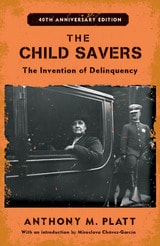
The Child Savers
The Invention of DelinquencyPlatt, Anthony M
Rutgers University Press, 2009
Focusing on social reformers of the late nineteenth and early twentieth centuries, Platt's principal argument is that the "child savers" movement was not an effort to liberate and dignify youth but, instead, a punitive and intrusive attempt to control the lives of working-class urban adolescents. This expanded edition provides a renewed and distinguished contribution by placing it in historical context through insightful commentaries from cross-disciplinary academics, along with an essay by Miroslava Chávez-García examining how Platt's influential study has impacted many of the central arguments social scientists and historians face today.
The Child before the Court
Judgment, Citizenship, and the ConstitutionTimothy Barouch
University of Alabama Press, 2021
A study that challenges our notions about citizenship and judgment by considering the place of children in historical and contemporary legal discourse.
Many of the most controversial political issues of our time focus on the actions and well-being of children such as Greta Thunberg’s climate movement; youth activists standing up for racial justice, safe schools, and an equitable economy; and the furor over separating migrant children from their families. When do we treat children as competent citizens, when do we treat them as dependents in need of protection, and why?
The Child before the Court: Judgment, Citizenship, and the Constitution provides answers to these foundational questions. It analyzes landmark US Supreme Court cases involving children’s free speech and due process rights and argues that our ideas about civic and legal judgment are deeply contested concepts instead of simple character traits. These cases serve as analytic touchstones for these problems, and the Court’s opinions seemingly articulate clear rules through a pragmatic balancing of interests.
Timothy Barouch shows how these cases continually reshape constitutional thought, breaking from a vocabulary of wardship and recasting the child as a liberal individual. He analyzes these legal opinions as judicial novelizations and focuses on their rhetorical markers: the range of tropes, idioms, figures, and arguments that emerge across nearly two centuries of jurisprudence in this important but oft-neglected area. The careful and subtle readings of these cases demonstrate how judicial representations of the child provide key resources for thinking about the child as citizen and, more broadly, citizenship itself. It serves as a bold call to think through the relationship between the liberal individual and the problem of civic judgment as it manifests in public culture in a wide array of contexts at a time when liberal democracy is under siege.
Trapped in a Vice
The Consequences of Confinement for Young PeopleCox, Alexandra
Rutgers University Press, 2018
Trapped in a Vice explores the consequences of a juvenile justice system that is aimed at promoting change in the lives of young people, yet ultimately relies upon tools and strategies that enmesh them in a system that they struggle to move beyond. The system, rather than the crimes themselves, is the vice. Trapped in a Vice explores the lives of the young people and adults in the criminal justice system, revealing the ways that they struggle to manage the expectations of that system; these stories from the ground level of the justice system demonstrate the complex exchange of policy and practice.
Weeping in the Playtime of Others
America’s Incarcerated Children. 2nd edition.Written by Kenneth Wooden with a foreword by Kathleen M. Heide
The Ohio State University Press, 2000
Kenneth Wooden’s Weeping in the Playtime of Others—first published in 1976 and an enduring work of investigative journalism and criminology that was nominated for a Pulitzer Prize—exposes the harsh realities faced by children in the American juvenile justice system. Wooden’s extensive research and firsthand accounts highlight the systemic abuse, neglect, and violence that incarcerated youth endure. Investigative reporter Wooden journeyed across thirty states to document brutal conditions in juvenile detention centers and training schools. His work revealed in stark detail how these institutions regularly failed to provide the rehabilitation they promised, perpetuating cycles of violence and criminality, and presented a devastating picture of the detrimental effects on of solitary confinement, physical punishment, and inadequate educational and psychological support.
Wooden’s many case studies include that of a young Charles Manson, illustrating how early institutionalization can presage lifelong criminal behavior. Wooden also critiques the political and economic forces that sustain these abusive systems, calling for comprehensive reforms.
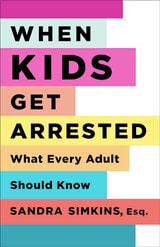
When Kids Get Arrested
What Every Adult Should KnowSandra Simkins, Esq.
Rutgers University Press, 2009
Sandra Simkins provides straight answers to common questions such as:
- Should I let my child talk to the police without a lawyer?
- How can I help my child succeed on probation?
- Should my child admit to the charges or take the case to trial?
- How will this case impact my child's future? Will it prevent him from getting a job or going into the army?
- My child has mental health issues. Can the juvenile justice system help?
- My daughter is out of control. Should I call the police?
- My son got arrested at school and is now suspended. What should I do next?
Simkins takes complicated legal concepts and breaks them down into easy-to-understand guidelines. She includes information on topics such as police interrogation, detention hearings, and bail, along with state-by-state specifics. When Kids Get Arrested is a perfect resource for parents, social workers, guidance counselors, teachers, principals, coaches, and anyone else who works with children.
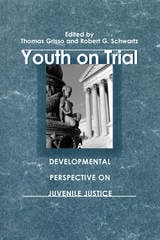
Youth on Trial
A Developmental Perspective on Juvenile JusticeEdited by Thomas Grisso and Robert G. Schwartz
University of Chicago Press, 2003