Results by title
27 books match the query 'Korean War, 1950-1953'
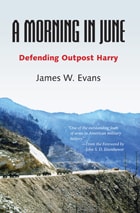
A Morning in June
Defending Outpost HarryJames W. Evans, with a foreword by John S. D. Eisenhower
University of Alabama Press, 2010
Exploring the strategic and human dimensions of the defense of Outpost Harry.
By June 1953 the Korean War, marked at the outset by extremely fluid advances and retreats up and down the peninsula, had settled into position warfare very near the original pre-war demarcation line between North and South Korea. At this point both sides were fighting to win a peace, to achieve incremental advantages that could be translated into gains at the peace negotiations in Panmunjom. The battle at Outpost Harry devolved into hand-to-hand combat during a period of constant, intense fighting that lasted two days. The author, although seriously wounded that night, refused evacuation and remained on the hill to successfully lead his company in defense of the outpost. It wasn’t romantic; it wasn’t chivalrous; and many died or were badly wounded. Some of the survivors never fully overcame the mental and physical damage they suffered during the nightmare.
With this book, one of those scarred by that experience recounts the events of the battle and his lifelong efforts to deal with the residual horrors. The Korean Conflict may be called "the forgotten war" by some, but not by those who were on the front lines.
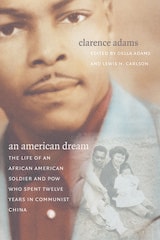
An American Dream
The Life of an African American Soldier and POW Who Spent Twelve Years in Communist ChinaClarence Adams
University of Massachusetts Press, 2007
Throughout his life, Clarence Adams exhibited self-reliance, ambition, ingenuity, courage, and a commitment to learning—character traits often equated with the successful pursuit of the American Dream. Unfortunately, for an African American coming of age in the 1930s and 1940s, such attributes counted for little, especially in the South.
Adams was a seventeen-year-old high school dropout in 1947 when he fled Memphis and the local police to join the U.S. Army. Three years later, after fighting in the Korean War in an all-black artillery unit that he believed to have been sacrificed to save white troops, he was captured by the Chinese. After spending almost three years as a POW, during which he continued to suffer racism at the hands of his fellow Americans, he refused repatriation in 1953, choosing instead the People's Republic of China, where he hoped to find educational and career opportunities not readily available in his own country.
While living in China, Adams earned a university degree, married a Chinese professor of Russian, and worked in Beijing as a translator for the Foreign Languages Press. During the Vietnam War he made a controversial anti-war broadcast over Radio Hanoi, urging black troops not to fight for someone else's political and economic freedoms until they enjoyed these same rights at home.
In 1966, having come under suspicion during the Chinese Cultural Revolution, he returned with his wife and two children to the United States, where he was subpoenaed to appear before the House Committee on Un-American Activities to face charges of “disrupting the morale of American fighting forces in Vietnam and inciting revolution in the United States.” After these charges were dropped, he and his family struggled to survive economically. Eventually, through sheer perseverance, they were able to fulfill at least part of the American Dream. By the time he died, the family owned and operated eight successful Chinese restaurants in his native Memphis.
An American Rabbi in Korea
A Chaplain's Journey in the Forgotten WarMilton J. Rosen, translated and edited by Stanley R. Rosen
University of Alabama Press, 2004
During the height of the Korean conflict, 1950–51, Orthodox Jewish chaplain Milton J. Rosen wrote 19 feature-length articles for Der Morgen Zhornal, a Yiddish daily in New York, documenting his wartime experiences as well as those of the servicemen under his care. An American Rabbi in Korea is an English translation of Rosen's important articles prepared by his son and annotated with background about Rosen's military service, a general introduction to the war and conflict on the Korean peninsula, and numerous maps and photographs.
Rosen was among those nearly caught in the Chinese entrapment of American and Allied forces in North Korea in late 1950, and some of his most poignant writing details the trying circumstances that faced both soldiers and civilians during that time. As chaplain, Rosen was able to offer a unique account of the American Jewish experience on the frontlines and in the United States military while also describing the impact of the American presence on Korean citizens and their culture. His interest in Korean attitudes toward Jews is also a significant theme within these articles. The sum is a readable account of war and its turmoil from an astute and compassionate observer.

Before the Fire Dogs Steal the Sun
An ElegyCrystal Mun-hye Baik
Duke University Press, 2026
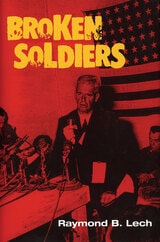
Broken Soldiers
Raymond B. Lech
University of Illinois Press, 2000
Drawing on some 60,000 pages of court-martial transcripts Lech secured through the Freedom of Information Act, Broken Soldiers documents the appalling treatment and the sophisticated propagandizing to which American POWs fell victim during the Korean conflict. Three thousand American soldiers perished in North Korean camps over the winter of 1950-51, most from starvation. Through the unsentimental testimony of survivors, Lech describes how these young men, filthy and lice-infested, lost an average of 40 percent of their body weight. Many also lost their powers of resistance and their grip on soldierly conduct.
After six months of starvation, the emaciated, disoriented prisoners were subjected to a relentless campaign to educate them to the virtues of communism. Bombarded with propaganda, the Americans were organized into study groups and forced to discuss and write about communism and Marxism, even to broadcast harangues against capitalist aggression and appeals for an end to the war.
Lech traces the spiral of debilitation and compromise, showing how parroting certain phrases came to seem a small price to pay for physical safety. Threatened with starvation and indefinite confinement in Korea, many POWs succumbed to pressure to mouth communist slogans and provide information far in excess of the regulation "name, rank, and service number."
Of the thousands of American soldiers who, while prisoners in North Korea, spoke and wrote favorably of communism and disparaged their country, a handful were charged with collaborating with the enemy. Why were so few singled out? Why did each branch of the armed services judge parallel circumstances differently, and why were American soldiers not realistically prepared for capture? A powerful indictment of justice miscarried, Broken Soldiers raises troubling questions that remain unanswered decades after the events.
Embattled Memories
Contested Meanings in Korean War MemorialsSuhi Choi
University of Nevada Press, 2014
From the Tundra to the Trenches
Eddy Weetaltuk
University of Manitoba Press, 2016
Haunting the Korean Diaspora
Shame, Secrecy, and the Forgotten WarGrace M. Cho
University of Minnesota Press, 2008
Grace M. Cho exposes how Koreans in the United States have been profoundly affected by the forgotten war and uncovers the silences and secrets that still surround it, arguing that trauma memories have been passed unconsciously through a process psychoanalysts call “transgenerational haunting.” Tracing how such secrets have turned into “ghosts,” Cho investigates the mythic figure of the yanggongju, literally the “Western princess,” who provides sexual favors to American military personnel. She reveals how this figure haunts both the intimate realm of memory and public discourse, in which narratives of U.S. benevolence abroad and assimilation of immigrants at home go unchallenged. Memories of U.S. violence, Cho writes, threaten to undo these narratives—and so they have been rendered unspeakable.
At once political and deeply personal, Cho’s wide-ranging and innovative analysis of U.S. neocolonialism and militarism under contemporary globalization brings forth a new way of understanding—and remembering—the impact of the Korean War.
In Time of War
Understanding American Public Opinion from World War II to IraqAdam J. Berinsky
University of Chicago Press, 2009
From World War II to the war in Iraq, periods of international conflict seem like unique moments in U.S. political history—but when it comes to public opinion, they are not. To make this groundbreaking revelation, In Time of War explodes conventional wisdom about American reactions to World War II, as well as the more recent conflicts in Korea, Vietnam, the Gulf, Afghanistan, and Iraq. Adam Berinsky argues that public response to these crises has been shaped less by their defining characteristics—such as what they cost in lives and resources—than by the same political interests and group affiliations that influence our ideas about domestic issues.
With the help of World War II–era survey data that had gone virtually untouched for the past sixty years, Berinsky begins by disproving the myth of “the good war” that Americans all fell in line to support after the Japanese bombed Pearl Harbor. The attack, he reveals, did not significantly alter public opinion but merely punctuated interventionist sentiment that had already risen in response to the ways that political leaders at home had framed the fighting abroad. Weaving his findings into the first general theory of the factors that shape American wartime opinion, Berinsky also sheds new light on our reactions to other crises. He shows, for example, that our attitudes toward restricted civil liberties during Vietnam and after 9/11 stemmed from the same kinds of judgments we make during times of peace.
With Iraq and Afghanistan now competing for attention with urgent issues within the United States, In Time of War offers a timely reminder of the full extent to which foreign and domestic politics profoundly influence—and ultimately illuminate—each other.
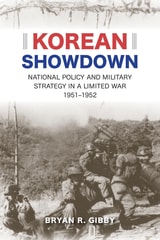
Korean Showdown
National Policy and Military Strategy in a Limited War, 1951–1952Bryan R. Gibby
University of Alabama Press, 2021
WINNER OF THE 2023 ANDREW F. KREPINEVICH JR. WRITING AWARD
A historical analysis of the policies and military strategies applied during the Korean War stalemate period.
Korean Showdown: National Policy and Military Strategy in a Limited War, 1951–1952 takes a holistic and integrative approach to strategy, operations, and tactics during the Korean War’s stalemate period and demonstrates how these matters shaped each other and influenced, or were influenced by, political and strategic policy decision-making. Bryan R. Gibby offers an analysis of the major political and military decisions affecting how the war was conducted operationally and diplomatically by examining American, Chinese, North Korean, and South Korean operations in the context of fighting a limited war with limited means, but for objectives that were not always limited in scope or ambition. The foundational political decision was Harry Truman’s voluntary repatriation policy, which extended the war by up to eighteen months. Its military counterpart was the American-led Operation Showdown, the last deliberate military offensive to coerce concessions at the negotiation table. Showdown’s failure (and the Communists’ own equally disappointing military efforts) opened up new avenues for solving the war short of a militarily imposed solution.
Gibby’s research draws on primary sources from American, Korean, and Chinese archives and publications. Many of these sources have not yet been mined in diplomatic and military histories of the Korean War. This innovative book also addresses a significant gap in the study of Korean military operations—the linkage between ground and air pressure campaigns, as well as the many Chinese and American operations conducted to establish negotiation positions. Gibby also explores many political and propagandist developments that assumed great importance in the summer of 1952, such as prisoner of war riots, the bombing of hydroelectric dams, and the South Korean constitutional crisis, which significantly influenced American and Chinese military decision-making.
Ultimately, this volume serves as a cautionary analysis of the limits of force, the necessity to understand an adversary, and the importance of strategic consensus. It also offers an effective case study on an underappreciated period of civil-military tension during the Cold War and on how civilian politicians and military leaders must collaborate to determine a realistic and effective strategy.
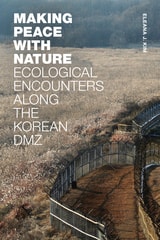
Making Peace with Nature
Ecological Encounters along the Korean DMZEleana J. Kim
Duke University Press, 2022
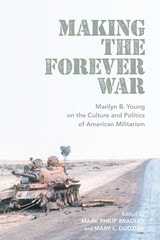
Making the Forever War
Marilyn B. Young on the Culture and Politics of American MilitarismMary L. Dudziak
University of Massachusetts Press, 2021
Making the Forever War brings Young's articles and essays on American war together for the first time, including never before published works. Moving from the first years of the Cold War to Korea, Vietnam, and more recent "forever" wars in Iraq and Afghanistan, Young reveals the ways in which war became ever-present, yet more covert and abstract, particularly as aerial bombings and faceless drone strikes have attained greater strategic value. For Young, U.S. empire persisted because of, not despite, the inattention of most Americans. The collection concludes with an afterword by prominent military historian Andrew Bacevich.
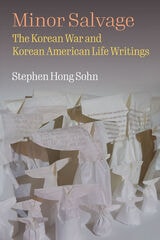
Minor Salvage
The Korean War and Korean American Life WritingsStephen Hong Sohn
University of Michigan Press, 2022
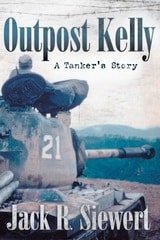
Outpost Kelly
A Tanker's StoryJack R. Siewert, with a foreword by Paul M Edwards
University of Alabama Press, 2006
Heavy rains turned the mountainous terrain around Outpost Kelly into shin-deep mud and muck. At the height of the fighting, Siewert was able to bring to bear the guns of only one of his five tanks against the enemy. Forced to abandon traditional tank warfare doctrine, he improvised. Allowing members of the 15th Infantry to retake Outpost Kelly, Siewert offers an excellent analysis of how theory and experience come together in a point-of-the-spear military situation.
Outpost Kelly also paints a fascinating picture of the type of fighting, often overlooked, that characterized the second and third years of the Korean War. With truce talks proceeding in Panmunjom, both sides fought to claim incremental pieces of real estate along the demarcation line between North and South.
Reencounters
On the Korean War and Diasporic Memory CritiqueCrystal Mun-hye Baik
Temple University Press, 2020
In Reencounters,Crystal Mun-hye Baik examines what it means to live with and remember an ongoing war when its manifestations—hypervisible and deeply sensed—become everyday formations delinked from militarization. Contemplating beyond notions of inherited trauma and post memory, Baik offers the concept of reencounters to better track the Korean War’s illegible entanglements through an interdisciplinary archive of diasporic memory works that includes oral history projects, performances, and video installations rarely examined by Asian American studies scholars.
Baik shows how Korean refugee migrations are repackaged into celebrated immigration narratives, how transnational adoptees are reclaimed by the South Korean state as welcomed “returnees,” and how militarized colonial outposts such as Jeju Island are recalibrated into desirable tourist destinations. Baik argues that as the works by Korean and Korean/American artists depict this Cold War historiography, they also offer opportunities to remember otherwise the continuing war.
Ultimately, Reencounters wrestles with questions of the nature of war, racial and sexual violence, and neoliberal surveillance in the twenty-first century.
Remembering Korea 1950
A Boy Soldier's StoryH. K. Shin
University of Nevada Press, 2001
Retrieving Bones
Stories and Poems of the Korean WarEhrhart, W. D.
Rutgers University Press, 1999
The Korean War was a major event in American history. It marked an abrupt end to the euphoria Americans felt in the wake of victory in World War II and turned out to be the harbinger of disaster in Vietnam a decade later.
Though three years of brutal fighting resulted in millions of casualties, the final truce line of 1953 corresponded almost exactly to the positions the opponents held when the fighting began. Back home, the returning veterans met with little interest in or appreciation of what they had endured. Consequently, literary responses to the Korean War did not find an eager readership. Few people, it seemed, wanted to read about what they perceived as a backwater war that possessed neither grand scale nor apparent nobility, a war that ended not with a bang, but a whimper.
Yet an important literature has come out of the Korean War. As we mark the fiftieth anniversary of the war, these writings are well worth our attention. Many of the twelve stories and fifty poems assembled in Retrieving Bones have long been out of print and are almost impossible to find in any other source. The editors have enhanced this collection by providing maps, a chronology of the Korean War, and annotated lists of novels, works of nonfiction, and films. In a detailed introduction, Ehrhart and Jason discuss the milestones of the Korean War and place each fiction writer and poet represented into historical and literary contexts.
Among the writers and poets are
· James Lee Burke
· Eugene Burdick
· William Chamberlain
· Rolando Hinojosa
· Reg Saner
· Vern Sneider
· Stanford Whitmore
· Keith Wilson
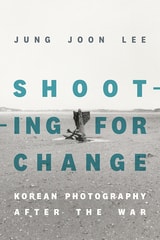
Shooting for Change
Korean Photography after the WarJung Joon Lee
Duke University Press, 2024
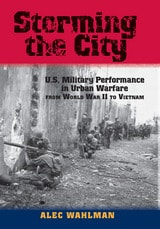
Storming the City
U.S. Military Performance in Urban Warfare from World War II to VietnamAlec Wahlman
University of North Texas Press, 2015
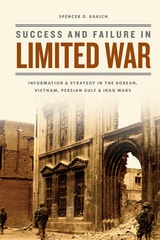
Success and Failure in Limited War
Information and Strategy in the Korean, Vietnam, Persian Gulf, and Iraq WarsSpencer D. Bakich
University of Chicago Press, 2014
Traditional assessments of wartime strategy focus on the relationship between the military and civilians, but Bakich argues that we must take into account the information flow patterns among top policy makers and all national security organizations. By examining the fate of American military and diplomatic strategy in four limited wars, Bakich demonstrates how not only the availability and quality of information, but also the ways in which information is gathered, managed, analyzed, and used, shape a state’s ability to wield power effectively in dynamic and complex international systems.
Utilizing a range of primary and secondary source materials, Success and Failure in Limited War makes a timely case for the power of information in war, with crucial implications for international relations theory and statecraft.
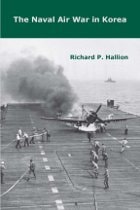
The Naval Air War in Korea
Richard P. Hallion
University of Alabama Press, 2011
How carrier-based air power helped define victory in the first hot war of the Cold War.
In The Naval Air War in Korea, Richard P. Hallion offers a compelling and authoritative account of the U.S. Navy and Marine Corps air campaign during the Korean War, a conflict that marked a pivotal transition in the history of military aviation. Through meticulous research and engaging narrative, Hallion examines how carrier-based air power became a decisive factor in supporting United Nations forces across the Korean Peninsula.
From the desperate defense of the Pusan Perimeter and the dramatic Inchon landing to interdiction strikes, close air support missions, and air superiority operations, naval aviators demonstrated extraordinary adaptability in a rapidly changing battlefield environment. The conflict also witnessed the evolution of aviation technology as propeller-driven aircraft served alongside emerging jet fighters, foreshadowing the future of modern air warfare.
Hallion highlights the courage, innovation, and operational effectiveness of Navy and Marine pilots who flew from aircraft carriers positioned off Korea's coasts, projecting combat power far beyond the reach of ground forces. Beyond recounting key battles and campaigns, he explores the strategic lessons learned from the war and their lasting influence on American naval doctrine and Cold War military planning.
A valuable resource for historians, aviation enthusiasts, and students of military strategy, this volume illuminates the crucial role of naval air power in shaping the outcome and legacy of the Korean War.
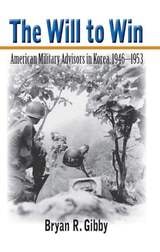
The Will to Win
American Military Advisors in Korea, 1946–1953Bryan R. Gibby
University of Alabama Press, 2012
One of America’s early attempts at nation building - US military advisors' shaping of the Republic of Korea Army (ROKA) from 1946 until 1953.
Gibby describes ROKA’s structure, mission, challenges, and successes, thereby linking the South Korean army and their US advisors to the traditional narrative of this “forgotten war.” The work also demonstrates the difficulties inherent in national reconstruction, focusing on barriers in culture and society, and the effects of rapid decolonization combined with intense nationalism and the appeal of communism to East Asia following the destruction of the Japanese empire. Key conclusions include the importance of individual advisors, the significance of the prewar advisory effort, and the depth of the impact these men had on individual Korean units and in a few cases on the entire South Korean army.
The success or failure of South Korean government in the decade following the end of World War II hinged on the loyalty, strength, and fighting capability of its army, which in turn relied on its American advisors. Gibby argues that without a proficient ROKA, the 1953 armistice, still in effect today, would not have been possible. He reexamines the Korean conflict from its beginning in 1945—particularly Korean politics, military operations, and armed forces—and demonstrates the crucial role the American military advisory program and personnel played to develop a more competent and reliable Korean army.
Truman and Korea
The Political Culture of the Early Cold WarPaul G. Pierpaoli, Jr.
University of Missouri Press, 1999
Detailing for the first time the story of America's homefront during the Korean War, Truman and Korea fills an important gap in the historical scholarship of the postwar era. Paul Pierpaoli analyzes the political, economic, social, and international ramifications of America's first war of Soviet containment, never losing sight of the larger context of the cold war. He focuses on how and why the Truman administration undertook a bloody, inconclusive war on the Korean peninsula while permanently placing the nation on a war footing.
Truman and Korea illuminates the importance of the Korean conflict as a critical turning point in the cold war by examining both the immediate and the long-term domestic and foreign policy effects of the conflict. Pierpaoli addresses such important topics as presidential war powers and debates concerning the Defense Production Act; the inner workings of the many war mobilization agencies; the operations and politics of nationwide price and wage controls; questions concerning cold war tax policies and fiscal and monetary policies; and the evolution of national security policy.
Pierpaoli shows that President Truman's decision to intervene in the Korean War quickly became subsumed by larger cold war concerns. By the autumn of 1950 the Korean mobilization program had become the nation's de facto cold war preparedness program, which would come to span nearly forty years and eight presidential administrations. After 1950 the cold war not only continued to significantly shape political and ideological discourse in the United States but also began to reshape aggregate economic policy. By doing so, it altered the nation's industrial and economic contours, giving birth to the concept of an institutionalized "national security state," which in turn spawned the cold war military-industrial-scientific complex.
Based upon extensive research in the papers and official presidential files of Harry S. Truman, as well as many manuscript collections and records of wartime and government agencies, Truman and Korea offers a new perspective on the Korean War era and its inextricable ties to broader cold war decision making.
Warring Genealogies
Race, Kinship, and the Korean WarJoo Ok Kim
Temple University Press, 2022
Warring Genealogies examines the elaboration of kinships between Chicano/a and Asian American cultural production, such as the 1954 proxy adoption of a Korean boy by Leavenworth prisoners. Joo Ok Kim considers white supremacist expressions of kinship—in prison magazines, memorials, U.S. military songbooks—as well as critiques of such expressions in Chicana/o and Korean diasporic works to conceptualize racialized formations of kinship emerging from the Korean War.
Warring Genealogies unpacks writings by Rolando Hinojosa (Korean Love Songs, The Useless Servants) and Luis Valdez (I Don’t Have to Show You No Stinking Badges, Zoot Suit) to show the counter-representations of the Korean War and the problematic depiction of the United States as a benevolent savior. Kim also analyzes Susan Choi’s The Foreign Student as a novel that proposes alternative temporalities to dominant Korean War narratives. In addition, she examines Chicano military police procedurals, white supremacist women’s organizations, and the politics of funding Korean War archives.
Kim’s comparative study Asian American and Latinx Studies makes insightful connections about race, politics, and citizenship to critique the Cold War conception of the “national family.”

We Were Innocents
AN INFANTRYMAN IN KOREAWilliam D. Dannenmaier
University of Illinois Press, 1999
William Dannenmaier served in Korea with the U.S. Army from December 1952 to January 1954, first as a radioman and then as a radio scout with the Fifteenth Infantry Regiment. Eager to serve a cause in which he fervently believed—the safeguarding of South Korea from advancing Chinese Communists—he enlisted in the army with an innocence that soon evaporated. His letters from the front, most of them to his sister, Ethel, provide a springboard for his candid and wry observations of the privations, the boredom, and the devastation of infantry life. At the same time these letters, designed to disguise the true danger of his tasks and his dehumanizing circumstances, reflect a growing failure to communicate with those outside the combat situation.
Woven through the letters is Dannenmaier's narrative account of his combat experiences, including a vivid re-creation of the bloody battle for Outpost Harry, which he describes as "trivial and insignificant—except to the men who fought it."A high-intensity, eight-day battle for a hill American forces would abandon three months later with the signing of the truce, Outpost Harry was largely ignored by the press despite heavy casualties and many official citations for heroism.
From his vantage point as an Everyman, Dannenmaier describes the frustration of men on the front lines who never saw their commanding superiors, the exhaustion of soldiers whose long-promised leaves never materialized, the transitory friendships and shared horrors that left indelible memories. Endangered by minefields and artillery fire, ground down by rumors and constant tension, these men returned—if they returned at all—profoundly and irrevocably changed.
This intimate, revealing memoir, a rare account by a common soldier, is a tribute to the Americans who served in a conflict that has only recently begun to gain a place in official public memory.
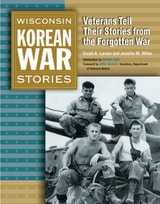
Wisconsin Korean War Stories
Veterans Tell Their Stories from the Forgotten WarSarah Larsen
Wisconsin Historical Society Press, 2008
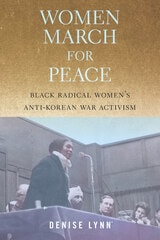
Women March for Peace
Black Radical Women’s Anti-Korean War ActivismDenise Lynn
University of Massachusetts Press, 2025
The Korean War is commonly known as the “forgotten war” because it supposedly had little impact on American culture in comparison to World War II or the American War in Vietnam. Yet from 1950–1953, the conflict produced vigorous anti-war activism, particularly among Black radical women. Informed by their experiences with racism and misogyny within the US, these women were convinced that peace was not just the absence of military aggression, but that it required the liberation of the most oppressed, including the end of capitalist exploitation of women and People of Color and the return of self-determination to colonized peoples—themes that later anti-war activists would echo and develop. Whether or not the Korean War has ever truly been forgotten, the visionary activism of these women has been largely overlooked.
In Women March for Peace, Denise Lynn examines the lives of seven Black women—Louise Thompson Patterson, Claudia Jones, Charlotta Bass, Shirley Graham Du Bois, Eslanda Robeson, Lorraine Hansberry, and Beulah Richardson—and their resistance to domestic and foreign US policies during the height of anticommunist hysteria. While much peace scholarship focuses on the threat of nuclear conflict, Lynn instead explores how these women connected issues of civil rights at home with international military campaigns, highlights the hypocrisy of containment policies that sought to secure the freedom and rights for Koreans when US citizens were still oppressed. Lynn traces their peace advocacy through their personal papers, local and national articles, Progressive Party documents, and global conventions. Women March for Peace recovers the radical activism of these Black women to understand a crucial chapter in the fight against American imperialism and white supremacy.