Results by title
26 books match the query 'Land settlement patterns, Prehistoric'
Archaeological Settlement Pattern Data from the Chalco, Xochimilco, Ixtapalapa, Texcoco and Zumpango Regions, Mexico
Jeffrey R. Parsons, Keith W. Kintigh, and Susan A. Gregg
University of Michigan Press, 1983
Archaeology, History, and Predictive Modeling
Research at Fort Polk, 1972-2002David G. Anderson and Steven D. Smith
University of Alabama Press, 2003
Fort Polk Military Reservation encompasses approximately 139,000 acres in western Louisiana 40 miles southwest of Alexandria. As a result of federal mandates for cultural resource investigation, more archaeological work has been undertaken there, beginning in the 1970s, than has occurred at any other comparably sized area in Louisiana or at most other localities in the southeastern United States. The extensive program of survey, excavation, testing, and large-scale data and artifact recovery, as well as historic and archival research, has yielded a massive amount of information. While superbly curated by the U.S. Army, the material has been difficult to examine and comprehend in its totality.
With this volume, Anderson and Smith collate and synthesize all the information into a comprehensive whole. Included are previous investigations, an overview of local environmental conditions, base military history and architecture, and the prehistoric and historic cultural sequence. An analysis of location, environmental, and assemblage data employing a sample of more than 2,800 sites and isolated finds was used to develop a predictive model that identifies areas where significant cultural resources are likely to occur. Developed in 1995, this model has already proven to be highly accurate and easy to use.
Archaeology, History, and Predictive Modeling will allow scholars to more easily examine the record of human activity over the past 13,000 or more years in this part of western Louisiana and adjacent portions of east Texas. It will be useful to southeastern archaeologists and anthropologists, both professional and amateur.
Between Desert and River
Hohokam Settlement and Land Use in the Los Robles CommunityChristian E. Downum
University of Arizona Press, 1993
"Downum's carefully done volume is an important contribution to Hohokam archaeology. . . . Clearly written and illustrated."—AM Indian Quarterly
Casas Grandes and Its Hinterlands
Prehistoric Regional Organization in Northwest MexicoMichael E. Whalen and Paul E. Minnis
University of Arizona Press, 2001
Contemporary Archaeologies of the Southwest
William Walker
University Press of Colorado, 2011
Chapters address place-making in Chaco Canyon, recent trends in landscape archaeology, the formation of identities, landscape boundaries, and the movement associated with these aspects of place-making. They address how interaction of peoples with objects brings landscapes to life. Representing a diverse cross section of Southwestern archaeologists, the authors of this volume push the boundaries of archaeological method and theory, building a strong foundation for future Southwest studies.
This book will be of interest to professional and academic archaeologists, as well as students working in the American Southwest.
Detachment from Place
Beyond an Archaeology of Settlement AbandonmentMaxime Lamoureux-St-Hilaire
University Press of Colorado, 2019
Detachment from Place is the first comparative and interdisciplinary volume on the archaeology of settlement abandonment, with contributions focusing on materiality, ideology, the environment, and social construction of space. The volume sheds new light on an important but underexamined aspect of settlement abandonment wherein sedentary groups undergoing the process of abandonment leave behind many meaningful elements of their inhabited landscape. The process of detaching from place—which could last centuries—transformed inhabitants into migrants and transformed settled, constructed, and agricultural landscapes into imagined ones that continued to figure significantly in the identities of migrant groups.
Drawing on case studies from the Americas, Africa, and Asia, the volume explores how relationships between ancient peoples and the places they lived were transformed as they migrated elsewhere. Contributors focus on social structure, ecology, and ideology to study how people and places both disentangled from each other and remained tied together during this process. From Huron-Wendat villages and Classic Maya palaces to historical villages in Togo and the great Southeast Asian Medieval capital of Bagan, specific cultural, historical, and environmental factors led ancient peoples to detach from their homes and embark on migrations that altered social memory and cultural identity—as evidenced in the archaeological record.
Detachment from Place provides new insights into transfigurations of community identity, political organization, social and economic relations, religion, warfare, and agricultural practices and will be of interest to landscape archaeologists as well as researchers focused on collective memory, population movement, migratory patterns, and interaction.
Contributors:
Tomas Q. Barrientos, Jennifer Birch, Eduardo José Bustamante Luna, Catherine M. Cameron, Marcello A. Canuto, Jeffrey H. Cohen, Michael D. Danti, Phillip de Barros, Pete Demarte, Donna M. Glowacki, Gyles Iannone, Louis Lesage, Patricia A. McAnany, Asa R. Randall, Kenneth E. Sassaman
Frontiers in Colorado Paleoindian Archaeology
From the Dent Site to the Rocky MountainsRobert H. Brunswig
University Press of Colorado, 2007
The editors introduce the research with scientific context. A review of seventy-five years of Paleoindian archaeology in Colorado highlights the foundation on which new work builds, and a survey of Colorado's ancient climates and ecologies helps readers understand Paleoindian settlement patterns.
Eight essays discuss archaeological evidence from Plains to high Rocky Mountain sites. The book offers the most thorough analysis to date of Dent--the first Clovis site discovered. Essays on mountain sites show how advances in methodology and technology have allowed scholars to reconstruct settlement patterns and changing lifeways in this challenging environment.
Colorado has been home to key moments in human settlement and in the scientific study of our ancient past. Readers interested in the peopling of the New World as well as those passionate about the methods and history of archaeology will find new material and satisfying overviews in this book. Contributors include Rosa Maria Albert, Robert H. Brunswig, Reid A. Bryson, Linda Scott Cummings, James Doerner, Daniel C. Fisher, David L. Fox, Bonnie L. Pitblado, Jeffrey L. Saunders, Todd A. Surovell, R. A. Varney, and Nicole M. Waguespack.
Gardens of Prehistory
The Archaeology of Settlement Agriculture in Greater MesoamericaThomas W. Killion
University of Alabama Press, 1992
The prehistoric agricultural systems of the New World provided the foundations for a diverse set of complex social developments ranging from the puebloan societies of the American Southwest to the archaic state polities of Mesoamerica and the Andean region. From the tropical forests of Central America to the arid environments or northern New Mexico, Native American farmers made use of a distinctive set of cultigens and cropping systems that supported—with varying degrees of success—growing populations and expanding economies. Lacking most domesticated animals, so important to the mixed agricultural systems of the Old World, Precolumbian farmers developed intensive and resilient systems of agricultural production. These systems supported large societies of people who altered the landscapes they inhabited and generated a unique archaeological record of the evolution of farming in the New World.
Hohokam Along the Cañada del Oro
Specialized Land Use at the Rooney Ranch SiteEdited by Jeffrey T. Jones and Helen L. O’Brien
University of Arizona Press, 2026
This work presents the results of more than a decade of archaeological fieldwork at the Rooney Ranch site in Oro Valley, Arizona—an upland Hohokam village that played a key role in regional agave production. Edited by Jeffrey T. Jones and Helen L. O’Brien, this volume synthesizes extensive data collected by the Pima Community College Centre for Archaeological Field Training, offering a rare and richly detailed look at how small peripheral settlements contributed to the sustainability of larger Hohokam communities in the Sonoran Desert. Through GIS-based mapping and the analysis of ceramics, lithics, and faunal and botanical remains, the book reveals how specialized land use shaped the economic and social fabric of the region for centuries.
This legacy project stands out not only for its depth but also for its educational significance. As one of the few long-term, community-college-led excavations in the Southwest, the Rooney Ranch project highlights the vital role of student training and local collaboration in archaeological research. With more than seventy data-rich tables and contributions from leading specialists, this volume is an essential resource for archaeologists, historians, and anyone interested in Indigenous land use, desert adaptation, and the enduring legacy of the Hohokam in southern Arizona.
Contributors
Jon Boyd
Chance Copperstone
Michael W. Diehl
Linda M. Gregonis
Lea Mason-Kohlmeyer
Christine H. Virden-Lange
Human Dispersal, Human Evolution, and the Sea
The Palaeolithic Seafaring DebateJohn F. Cherry
University Press of Colorado, 2025
Exploring the data in detail, the authors here show how a complex series of interrelated problems has tended to be treated in reductionist or overly simplistic terms. Cherry and Leppard elucidate this complexity by bringing to bear perspectives from archaeology, ecology, and evolutionary biology. They demonstrate not only that a series of unique circumstances—evolutionary, behavioral, environmental, and economic—conspired to drive mass, ubiquitous global colonization over the last ten millennia; but also that earlier, sparser data provide real insight into key social and behavioral thresholds, even if there is little evidence to support the “oceans as highways” model for species other than our own.
A major intervention in this important debate, Human Dispersal, Human Evolution, and the Sea explains the deep significance of the problem and the profound implications for history, archaeology, and biological anthropology.
Inka Settlement Planning
By John Hyslop
University of Texas Press, 1990
Before the Spanish conquest in the sixteenth century A.D., the Inka Empire stretched along the Pacific side of South America, all the way from Ecuador to northwest Argentina. Though today many Inka researchers focus on the imperial capital of Cuzco, Peru, and surrounding areas, ruins of Inka settlements abound throughout the vast territory of the former empire and offer many clues about how the empire was organized, managed, and defended. These outlying settlements, as well as those in the Cuzco area, form the basis for John Hyslop's detailed study Inka Settlement Planning.
Using extensive aerial photography and detailed site maps, Hyslop studies the design of several dozen settlements spread throughout the empire. In addition to describing their architecture and physical infrastructure, he gives special emphasis to the symbolic aspects of each site's design. Hyslop speculates that the settlement plans incorporate much iconography expressive of Inka ideas about the state, the cosmos, and relationships to non-Inka peoples—iconography perhaps only partially related to the activities that took place within the sites. And he argues that Inka planning concepts applied not only to buildings but also to natural features (stone outcrops, water sources, and horizons) and specialized landscaping (terracing).
Of interest to a wide readership in archaeology, architecture, urbanization, empire building, and Andean travel, Inka Settlement Planning charts one of Native America's greatest achievements.
Landscape Learning in the Pleistocene Great Basin
David B. Hunt
University of Utah Press, 2025
Hunt seeks insight into the initial development of adaptive strategies related to the procurement of essential resources within a region. Incorporating data from archaeological investigation at the Old River Bed Delta in Utah and focusing specifically on the lithics recovered, Hunt develops what he terms the Discoverability Model. He proposes this model as a way for archaeologists to begin quantifying the qualitative aspects of colonization and landscape learning models.
Legacies of The Basin of Mexico
Carlos E. Cordova
University Press of Colorado, 2023
More than four decades after that book’s publication, the fourteen contributions in this volume review and analyze its theoretical and methodological influence in light of recent research across disciplines. Among a spectrum of authors representing several generations are those who participated directly in the Basin of Mexico surveys—including the late Jeffrey R. Parsons—as well as those who have been actively working on recent projects in the basin and neighboring regions.
Providing a broad and multidisciplinary perspective of the present and future state of research in the area, The Legacies of The Basin of Mexico will be of interest to Mesoamerican and Latin American archaeologists as well as geographers, geologists, historians, and specialists in the study of past environments.
Contributors: Guillermo Acosta Ochoa, Aleksander Borejsza, Destiny Crider, Charles Frederick, Raúl García-Chávez, Larry Gorenflo, Angela Huster, Georgina Ibarra Arzave, Charles Kolb, Frank Lehmkuhl, Abigail Meza Peñaloza, Emily McClung de Tapia, John K. Millhauser, Deborah Nichols, Jeffrey R. Parsons, Serafin Sánchez Pérez, Philipp Schulte, Sergey Sedov, Elizabeth Solleiro Rebolledo, Daisy Valera Fenández, Federico Zertuche
Monte Alban's Hinterland, Part I
The Prehispanic Settlement Patterns of the Central and Southern Parts of the Valley of Oaxaca, MexicoRichard E. Blanton, Stephen Kowalewski, Gary Feinman, and Jill Appel
University of Michigan Press, 1982
Mountaineer Site
A Folsom Winter Camp in the RockiesBrian N. Andrews
University Press of Colorado, 2022
Contributors examine data concerning the structures, the duration and repetition of occupations, and the nature of the site’s artifact assemblages to offer a valuable new perspective on human activity in the Rocky Mountains in the Late Pleistocene. Chapters survey the history of fieldwork at the site and compare and explain the various excavation procedures used; discuss the geology, taphonomic history, and geochronology of the site; analyze artifacts and other recovered materials; examine architectural elements; and compare the present and past environments of the Upper Gunnison Basin to gain insight into the setting in which Folsom groups were operating and the resources that were available to them.
The Folsom archaeological record indicates far greater variability in adaptive behavior than previously recognized in traditional models. The Mountaineer Site shows how accounting for reduced mobility, more generalized subsistence patterns, and variability in tool manufacture and use allows for a richer and more accurate understanding of Folsom lifeways. It will be of great interest to graduate students and archaeologists focusing on Paleoindian archaeology, hunter-gatherer mobility, lithic technological organization, and prehistoric households, as well as prehistorians, anthropologists, and social scientists.
Contributors: Richard J. Anderson, Andrew R. Boehm, Christy E. Briles, Katherine A. Cross, Steven D. Emslie, Metin I. Eren, Richard Gunst, Kalanka Jayalath, Brooke M. Morgan, Cathy Whitlock
Olmec to Aztec
Settlement Patterns in the Ancient Gulf LowlandsBarbara L. Stark
University of Arizona Press, 1997
Pre-Hispanic Occupance in the Valley of Sonora, Mexico
Archaeological Confirmations of Early Spanish ReportsWilliam E. Doolittle
University of Arizona Press, 1988
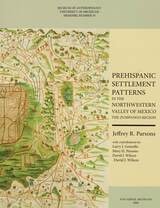
Prehispanic Settlement Patterns in the Northwestern Valley of Mexico
The Zumpango RegionJeffrey R. Parsons with contributions by Larry J. Gorenflo, Mary H. Parsons, and David J. Wilson
University of Michigan Press, 2008
Prehispanic Settlement Patterns in the Southern Valley of Mexico
The Chalco-Xochimilco RegionJeffrey R. Parsons, Elizabeth Brumfiel, Mary H. Parsons, and David J. Wilson
University of Michigan Press, 1982
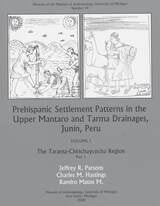
Prehispanic Settlement Patterns in the Upper Mantaro and Tarma Drainages, Junín, Peru
The Tarama-Chinchaycocha Region, Vol. 1, Parts 1 and 2Jeffrey R. Parsons, Charles M. Hastings, Ramiro Matos M.
University of Michigan Press, 2000
Prehispanic Settlement Patterns in the Upper Mantaro and Tarma Drainages, Junín, Peru
Volume 2, The Wanka RegionEdited by Jeffrey R. Parsons, Charles M. Hastings and Ramiro Matos M.
University of Michigan Press, 2000
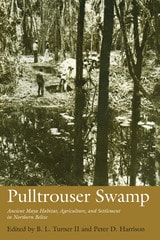
Pulltrouser Swamp
Ancient Maya Habitat, Agriculture, and Settlement in Northern BelizeEdited by B. L. Turner and Peter D. Harrison
University of Texas Press, 1983
Among Mesoamericanists, the agricultural basis of the ancient Maya civilization of the Yucatan Peninsula has been an important topic of research—and controversy. Interest in the agricultural system of the Maya greatly increased as new discoveries showed that the lowland Maya were not limited to slash-and-burn technology, as had been previously believed, but used a variety of more sophisticated agricultural techniques and practices, including terracing, raised fields, and, perhaps, irrigation. Because of the nature of the data and because this form of agricultural technology had been key to explanations of state formation elsewhere in Mesoamerica, raised-field agriculture became a particular focus of investigation.
Pulltrouser Swamp conclusively demonstrates the existence of hydraulic, raised-field agriculture in the Maya lowlands between 150 B.C. and A.D. 850. It presents the findings of the University of Oklahoma's Pulltrouser SwampProject, an NSF-supported interdisciplinary study that combined the talents of archaeologists, anthropologists, geographers, paleobotanists, biologists, and zoologists to investigate the remains of the Maya agricultural system in the swampy region of northern Belize.
By examining soils, fossil pollen and other plant remains, gastropods, relic settlements, ceramics, lithics, and other important evidence, the Pulltrouser Swamp team has clearly demonstrated that the features under investigation are relics of Maya-made raised and channelized fields and associated canals. Other data suggest the nature of the swamps in which the fields were constructed, the tools used for construction and cultivation, the possible crops cultivated, and at least one type of settlement near the fields, with its chronology. This verification of raised fields provides dramatic evidence of a large and probably organized workforce engaged in sophisticated and complex agricultural technology. As record of this evidence, Pulltrouser Swamp is a work of seminal importance for all students and scholars of New World prehistory.
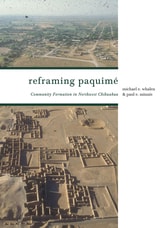
Reframing Paquimé
Community Formation in Northwest ChihuahuaMichael E. Whalen and Paul E. Minnis
University of Arizona Press, 2025
Reframing Paquimé: Community Formation in Northwest Chihuahua is a groundbreaking reinterpretation of the Casas Grandes region by scholars Michael E. Whalen and Paul E. Minnis. This final installment in their comprehensive study challenges the dominant view of Paquimé as a hierarchical society founded by outsiders, presenting instead a compelling case for a largely locally organized society with Mesoamerican and Puebloan characteristics. Drawing on twenty-five years of extensive survey and excavation data, the authors offer a fresh perspective that reframes our understanding of this remarkable archaeological site.
Whalen and Minnis bring forth significant new data that illuminates the cultural and ecological history of Paquimé and its neighboring communities. The book features more than fifty new radiocarbon dates, hundreds of analyzed archaeobotanical and faunal samples, plus tens of thousands of other artifacts. The data reveal a network of settlements characterized by corporate and ritual-based authority, challenging traditional models of the center’s rise, collapse, and subsequent regional abandonment and arguing that aspects of the Paquimé culture continued to exist up to the Spanish Colonial period.
Reframing Paquimé is poised to become an essential reference for archaeologists interested in Northwest Mexico and the U.S. Southwest. By addressing the complex dynamics of community formation and dissolution, Whalen and Minnis provide invaluable insights that will ignite scholarly debate and inspire future research. This meticulously researched volume, authored by leading experts with decades of fieldwork experience, is a vital addition to any collection on the archaeology and ethnobotany of ancient North American societies.
Sedentism and Mobility in a Social Landscape
Mesa Verde and BeyondMark D. Varien
University of Arizona Press, 1999
The Sola Valley and the Monte Albán State
A Study of Zapotec Imperial ExpansionAndew K. Balkansky
University of Michigan Press, 2002
Tracing the Relational
The Archaeology of Worlds, Spirits, and TemporalitiesMeghan E. Buchanan and B. Jacob Skousen
University of Utah Press, 2015