Results by title
35 books match the query 'Learning and scholarship'
A Professor at the End of Time
The Work and Future of the ProfessoriateBest, John
Rutgers University Press, 2017
Alien Forms and Minor Genres
A Speculative Handbook of Academic LaborTina Chen
Duke University Press, 2026

American Studies in a Moment of Danger
George Lipsitz
University of Minnesota Press, 2001
A forthright look at the future of the discipline in the wake of immense social changes.
What becomes of "national knowledge" in our age of globalization? If dramatic changes in technology, commerce, and social relations are undermining familiar connections between culture and place, what happens to legacies of learning that put the nation at the center of the study of history, culture, language, politics, and geography? In short, what remains of American Studies? At a critical moment, this book offers a richly textured historical perspective on where our notions of national knowledge-and our sense of American Studies-have come from and where they may lead in a future of new ideas about culture and community.
The America that seems to be disappearing before our very eyes is, George Lipsitz argues, actually the cumulative creation of yesterday’s struggles over identity, culture, and power. With examples from statistics and history, poster designs and music lyrics, Lipsitz shows how American Studies has been shaped by the social movements of the 1930s, 1960s, and 1980s. His analysis reveals the sedimented history of social movement contestation contained in contemporary popular music, visual art, and cinema.Finally, Lipsitz identifies the ways in which the globalization of commerce and culture are producing radically new understandings of politics, performance, consumption, knowledge, and nostalgia; the changing realities present not so much a danger as a clear challenge to a still-evolving American Studies-a challenge that this book helps us to confront wisely, flexibly, and effectively. Critical American Studies SeriesAnnouncing a new seriesCritical American Studies George Lipsitz, series editorThis series examines recent trends in American Studies that address fundamental questions about history, culture, social structure, race, gender, sexuality, and citizenship. It examines the forces-including mass migration, global economy, the seeming weaknesses of the nation-state, and ongoing ethnic antagonisms-that compel the field to reexamine the role of culture in producing individual and collective identities.
And the Garden Is You
Essays on Fieldwork, Writingwork, and ReadingworkMichael Taussig
University of Chicago Press, 2024
Michael Taussig’s work is known for its critical insights and bold, experimental style. In the eleven essays in this new collection, Taussig reflects on the act of writing itself, demonstrating its importance for anthropological practice and calling for the discipline to keep experiential knowledge from being extinguished as fieldnotes become scholarship.
Setting out to show how this can be done, And the Garden Is You exemplifies a form of exploratory writing that preserves the spontaneity of notes scribbled down in haste. In these essays, the author’s reflections take us from his childhood in Sydney to trips to Afghanistan, Colombia, Finland, Italy, Turkey, and Syria. Along the way, Taussig explores themes of fabulation and provocation that are central to his life’s work, in addition to the thinkers dearest to him—Bataille, Benjamin, Burroughs, and Nietzsche, among others. This collection is vintage Taussig, bound to interest longtime readers and newcomers alike.
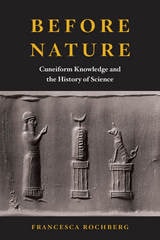
Before Nature
Cuneiform Knowledge and the History of ScienceFrancesca Rochberg
University of Chicago Press, 2016
Before the concept of nature formed over the long history of European philosophy and science, our ancestors in ancient Assyria and Babylonia developed an inquiry into the world in a way that is kindred to our modern science. With Before Nature, Francesca Rochberg explores that Assyro-Babylonian knowledge tradition and shows how it relates to the entire history of science. From a modern, Western perspective, a world not conceived somehow within the framework of physical nature is difficult—if not impossible—to imagine. Yet, as Rochberg lays out, ancient investigations of regularity and irregularity, norms and anomalies clearly established an axis of knowledge between the knower and an intelligible, ordered world. Rochberg is the first scholar to make a case for how exactly we can understand cuneiform knowledge, observation, prediction, and explanation in relation to science—without recourse to later ideas of nature. Systematically examining the whole of Mesopotamian science with a distinctive historical and methodological approach, Before Nature will open up surprising new pathways for studying the history of science.
Beyond the Veil of Knowledge
Triangulating Security, Democracy, and Academic ScholarshipPiki Ish-Shalom
University of Michigan Press, 2019
Bridging Scholarship and Activism
Reflections from the Frontlines of Collaborative ResearchBernd Reiter
Michigan State University Press, 2015
CONTENTS:
Introduction, Ulrich Oslender and Bernd Reiter
Part One. The Promises and Pitfalls of Collaborative Research
- Of Academic Embeddedness: Communities of Choice and How to Make Sense of Activism and Research Abroad, Bernd Reiter
- New Shapes of Revolution, Gustavo Esteva
- The Accidental Activist Scholar: A Memoir on Reactive Boundary and Identity Work for Social Change within the Academy, Rob Benford
- Leaving the Field: How to Write about Disappointment and Frustration in Collaborative Research, Ulrich Oslender
- Invisible Heroes, Eshe Lewis
- El Muntuen America, Manuel Zapata Olivella
- Activism as History Making: The Collective and the Personal in Collaborative Research with the Process of Black Communities in Colombia, Arturo Escobar
- Out of Bounds: Negotiating Researcher Positionality in Brazil, Elizabeth Hordge-Freeman
- Between Soapboxes and Shadows: Activism, Theory, and the Politics of Life and Death in Salvador, Bahia, Brazil, Christen A. Smith
- State Violence and the Ethnographic Encounter: Feminist Research and Racial Embodiment, Keisha-Khan Y. Perry
- The Challenges Resulting from Combining Scientific Production and Social-Political Activism in the Brazilian Academy, Fernando Conceição
- The Challenge of Doing Applied/Activist Anti-Racist Anthropology in Revolutionary Cuba, Gayle L. McGarrity
- Conclusion, Ulrich Oslender and Bernd Reiter
- About the Authors
Classics from Papyrus to the Internet
An Introduction to Transmission and ReceptionBy Jeffrey M. Hunt, R. Alden Smith, and Fabio Stok
University of Texas Press, 2017
Winner, PROSE Award, Classics, Association of American Publishers (AAP), 2018
Writing down the epic tales of the Trojan War and the wanderings of Odysseus in texts that became the Iliad and the Odyssey was a defining moment in the intellectual history of the West, a moment from which many current conventions and attitudes toward books can be traced. But how did texts originally written on papyrus in perhaps the eighth century BC survive across nearly three millennia, so that today people can read them electronically on a smartphone?
Classics from Papyrus to the Internet provides a fresh, authoritative overview of the transmission and reception of classical texts from antiquity to the present. The authors begin with a discussion of ancient literacy, book production, papyrology, epigraphy, and scholarship, and then examine how classical texts were transmitted from the medieval period through the Renaissance and the Enlightenment to the modern era. They also address the question of reception, looking at how succeeding generations responded to classical texts, preserving some but not others. This sheds light on the origins of numerous scholarly disciplines that continue to shape our understanding of the past, as well as the determined effort required to keep the literary tradition alive. As a resource for students and scholars in fields such as classics, medieval studies, comparative literature, paleography, papyrology, and Egyptology, Classics from Papyrus to the Internet presents and discusses the major reference works and online professional tools for studying literary transmission.
Commerce with the Classics
Ancient Books and Renaissance ReadersAnthony Grafton
University of Michigan Press, 1997
Complacency
Classics and Its Displacement in Higher EducationJohn T. Hamilton
University of Chicago Press, 2022
In response to philosopher Simon Blackburn’s portrayal of complacency as a vice that impairs university study at its core, John T. Hamilton examines the history of complacency in classics and its implications for our contemporary moment.
The subjects, philosophies, and literatures of ancient Greece and Rome were once treated as the foundation of learning, with everything else devolving from them. Hamilton investigates what this model of superiority, derived from the golden age of the classical tradition, shares with the current hegemony of mathematics and the natural sciences. He considers how the qualitative methods of classics relate to the quantitative positivism of big data, statistical reasoning, and presumably neutral abstraction, which often dismiss humanist subjectivity, legitimize self-sufficiency, and promote a fresh brand of academic complacency. In acknowledging the reduced status of classics in higher education today, he questions how scholarly striation and stagnation continue to bolster personal, ethical, and political complacency in our present era.
Digital Samaritans
Rhetorical Delivery and Engagement in the Digital HumanitiesJim Ridolfo
University of Michigan Press, 2015

Exiles and Expatriates in the History of Knowledge, 1500–2000
Peter Burke
Brandeis University Press, 2017
Global Debates in the Digital Humanities
Domenico Fiormonte
University of Minnesota Press, 2022
A necessary volume of essays working to decolonize the digital humanities
Often conceived of as an all-inclusive “big tent,” digital humanities has in fact been troubled by a lack of perspectives beyond Westernized and Anglophone contexts and assumptions. This latest collection in the Debates in the Digital Humanities series seeks to address this deficit in the field. Focused on thought and work that has been underappreciated for linguistic, cultural, or geopolitical reasons, contributors showcase alternative histories and perspectives that detail the rise of the digital humanities in the Global South and other “invisible” contexts and explore the implications of a globally diverse digital humanities.
Advancing a vision of the digital humanities as a space where we can reimagine basic questions about our cultural and historical development, this volume challenges the field to undertake innovation and reform.
Contributors: Maria José Afanador-Llach, U de los Andes, Bogotá; Maira E. Álvarez, U of Houston; Purbasha Auddy, Jadavpur U; Diana Barreto Ávila, U of British Columbia; Deepti Bharthur, IT for Change; Sayan Bhattacharyya, Singapore U of Technology and Design; Anastasia Bonch-Osmolovskaya, National Research U Higher School of Economics; Jing Chen, Nanjing U; Carlton Clark, Kazimieras Simonavičius U, Vilnius; Carolina Dalla Chiesa, Erasmus U, Rotterdam; Gimena del Rio Riande, Institute of Bibliographic Research and Textual Criticism; Leonardo Foletto, U of São Paulo; Rahul K. Gairola, Murdoch U; Sofia Gavrilova, Leibniz Institute for Regional Geography; Andre Goodrich, North-West U; Anita Gurumurthy, IT for Change; Aliz Horvath, Eötvös Loránd U; Igor Kim, Russian Academy of Sciences; Inna Kizhner, Siberian Federal U; Cédric Leterme, Tricontinental Center; Andres Lombana-Bermudez, Pontificia, U Javeriana, Bogotá; Lev Manovich, City U of New York; Itay Marienberg-Milikowsky, Ben-Gurion U of the Negev; Maciej Maryl, Polish Academy of Sciences; Nirmala Menon, Indian Institute of Technology, Indore; Boris Orekhov, National Research U Higher School of Economics; Ernesto Priego, U of London; Sylvia Fernández Quintanilla, U of Kansas; Nuria Rodríguez-Ortega, U of Málaga; Steffen Roth, U of Turku; Dibyadyuti Roy, Indian Institute of Technology, Jodhpur; Maxim Rumyantsev, Siberian Federal U; Puthiya Purayil Sneha, Centre for Internet and Society, Bengaluru; Juan Steyn, South African Centre for Digital Language Resources; Melissa Terras, U of Edinburgh; Ernesto Miranda Trigueros, U of the Cloister of Sor Juana; Lik Hang Tsui, City U of Hong Kong; Tim Unwin, U of London; Lei Zhang, U of Wisconsin–La Crosse.
Heresy in the University
The Black Athena Controversy and the Responsibilities of American IntellectualsJacques Berlinerblau
Rutgers University Press, 1999
History and Hope in the Heart of Dixie
Scholarship, Activism, and Wayne Flynt in the Modern SouthEdited by Gordon E. Harvey, Richard D. Starnes and Glenn Feldman
University of Alabama Press, 2006
Exploring the history, challenges, and promise of a changing South through the legacy of Wayne Flynt.
This collection of essays on the social and political history of the modern South consider the region’s poor, racial mores and race relations, economic opportunity, Protestant activism, political coalitions and interest groups, social justice, and progressive reform. History and Hope in the Heart of Dixie illuminates the dual role of historian and public advocate in modern America. In a time when the nation’s eyes have been focused by Hurricanes Katrina and Rita onto the vulnerability and dire condition of poor people in the South, the applicability of research, teaching, and activism for this voiceless element seems all the more relevant.
Responding to the example of Wayne Flynt, whose fierce devotion to his state of Alabama and its region has not blinded his recognition of the inequities and despair that define southern life for so many, the scholars assembled in this work present contributions to the themes Flynt so passionately explored in his own work.Two seasoned observers of southern history and culture—John Shelton Reed and Dan T. Carter—offer assessments of Flynt’s influence on the history profession as a whole and on the region of the South in particular.
Indians and Mestizos in the "Lettered City"
Reshaping Justice, Social Hierarchy, and Political Culture in Colonial PeruAlcira Duenas
University Press of Colorado, 2010
Scholars have long assumed that Spanish rule remained largely undisputed in Peru between the 1570s and 1780s, but educated elite Indians and mestizos challenged the legitimacy of Spanish rule, criticized colonial injustice and exclusion, and articulated the ideas that would later be embraced in the Great Rebellion in 1781. Their movement extended across the Atlantic as the scholars visited the seat of the Spanish empire to negotiate with the king and his advisors for social reform, lobbied diverse networks of supporters in Madrid and Peru, and struggled for admission to religious orders, schools and universities, and positions in ecclesiastic and civil administration.
Indians and Mestizos in the "Lettered City" explores how scholars contributed to social change and transformation of colonial culture through legal, cultural, and political activism, and how, ultimately, their significant colonial critiques and campaigns redefined colonial public life and discourse. It will be of interest to scholars and students of colonial history, colonial literature, Hispanic studies, and Latin American studies.
Intellectual Appetite
A Theological GrammarPaul J. Griffiths
Catholic University of America Press, 2009
Little Tools of Knowledge
Historical Essays on Academic and Bureaucratic PracticesPeter Becker and William Clark, Editors
University of Michigan Press, 2001
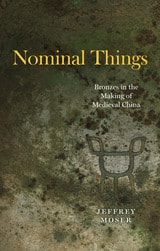
Nominal Things
Bronzes in the Making of Medieval ChinaJeffrey Moser
University of Chicago Press, 2023
This book opens in eleventh-century China, where scholars were the first in world history to systematically illustrate and document ancient artifacts. As Jeffrey Moser argues, the visual, technical, and conceptual mechanisms they developed to record these objects laid the foundations for methods of visualizing knowledge that scholars throughout early modern East Asia would use to make sense of the world around them.
Of the artifacts these scholars studied, the most celebrated were bronze ritual vessels that had been cast nearly two thousand years earlier. While working to make sense of the relationship between the bronzes’ complex shapes and their inscribed glyphs, they came to realize that the objects were “nominal things”—objects inscribed with names that identified their own categories and uses. Eleventh-century scholars knew the meaning of these glyphs from hallowed Confucian writings that had been passed down through centuries, but they found shocking disconnects between the names and the bronzes on which they were inscribed. Nominal Things traces the process by which a distinctive system of empiricism was nurtured by discrepancies between the complex materiality of the bronzes and their inscriptions. By revealing the connections between the new empiricism and older ways of knowing, the book explains how scholars refashioned the words of the Confucian classics into material reality.
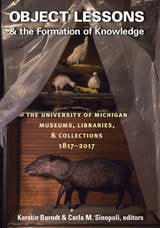
Object Lessons and the Formation of Knowledge
The University of Michigan Museums, Libraries, and Collections 1817–2017Kerstin Barndt and Carla M. Sinopoli, editors
University of Michigan Press, 2017
On the Shoulders of Giants
The Post-Italianate EditionRobert K. Merton
University of Chicago Press, 1993
"This book is the delightful apotheosis of donmanship: Merton parodies scholarliness while being faultlessly scholarly; he scourges pedantry while brandishing his own abstruse learning on every page. The most recondite and obscure scholarly squabbles are transmuted into the material of comedy as the ostensible subject is shouldered to one side by yet another hobby horse from Merton's densely populated stable. He has created a jeu d'esprit which is profoundly suggestive both in detail and as a whole."—Sean French, Times Literary Supplement

Owning And Using Scholarship
An Ip Handbook For TeachersKevin Smith
Assoc of College & Research Libraries, 2014
Politics and Scholarship
Feminist Academic Journals and the Production of KnowledgePatrice McDermott
University of Illinois Press, 1994
-- J'nana Morse Sellery, coauthor of Elizabeth Bowen: A Bibliography
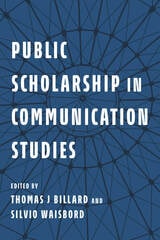
Public Scholarship in Communication Studies
Edited by Thomas J Billard and Silvio Waisbord
University of Illinois Press, 2024
Thomas J Billard and Silvio Waisbord curate essays from a wide range of specialties within the study of communication. Aimed at scholars and students alike, the contributors use approaches from critical meditations to case studies to how-to guides as they explore the possibilities of seeing shared knowledge not as a gift to be granted but as an imperative urging readers to address the problems of the world. Throughout the volume, the works show that a pivot to ideas of scholarship as public service is already underway in corners of communication studies across the country.
Visionary and provocative, Public Scholarship in Communication Studies proposes a needed reconsideration of knowledge and a roadmap to its integration with community.
Contributors: Elaine Almeida, Becca Beets, Thomas J Billard, Danielle K. Brown, Aymar Jean Christian, Stacey L. Connaughton, Paula Gardner, Larry Gross, Amy Jordan, Daniel Kreiss, Rachel Kuo, Susan Mancino, Shannon C. McGregor, Philip M. Napoli, Todd P. Newman, Srividya Ramasubramanian, Chad Raphael, Sue Robinson, Silvio Waisbord, Yidong Wang, and Holley Wilkin
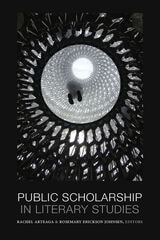
Public Scholarship in Literary Studies
Rachel Arteaga
Amherst College Press, 2021
"There are books of literary criticism that attempt to reach crossover audiences but none that take this particular public-humanities-focused-on-literary criticism perspective."—Kathryn Temple, Georgetown University
Contributions by Rachel Arteaga, Christine Chaney, Jim Cocola, Daniel Coleman, Christopher Douglas, Gary Handwerk, Cynthia L. Haven, Rosemary Erickson Johnsen, Anu Taranath, Carmaletta M. Williams, and Lorraine York.
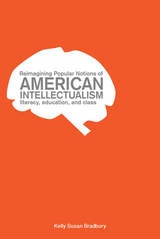
Reimagining Popular Notions of American Intellectualism
Literacy, Education, and ClassKelly Susan Bradbury
Southern Illinois University Press, 2016
Bradbury begins by tracing the origins and evolution of the narrow views of intellectualism that are common in the United States today. Then, applying a more inclusive and egalitarian definition of intellectualism, she examines the literacy and learning practices of three nonelite sites of adult public education in the United States: the nineteenth-century lyceum, a twentieth-century labor college, and a twenty-first-century GED writing workshop. Bradbury argues that together these three case studies teach us much about literacy, learning, and intellectualism in the United States over time and place. She concludes the book with a reflection on her own efforts to aid students in recognizing and resisting the rhetoric of anti-intellectualism that surrounds them and that influences their attitudes and actions.
Drawing on case studies as well as Bradbury’s own experiences with students, Reimagining Popular Notions of American Intellectualism demonstrates that Americans have engaged and do engage in the process and exercise of intellectual inquiry, contrary to what many people believe. Addressing a topic often overlooked by rhetoric, composition, and literacy studies scholars, it offers methods for helping students reimagine what it means to be intellectual in the twenty-first century.

Reinventing the Library for Online Education
Frederick Stielow
American Library Association, 2013
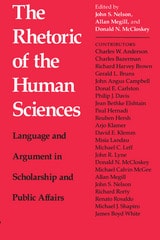
Rhetoric Of The Human Sciences
Language And Argument In Scholarship And Public AffairsJohn S. Nelson
University of Wisconsin Press, 1990
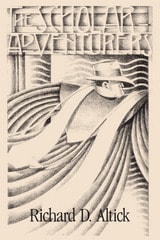
SCHOLAR ADVENTURERS
Richard D. Altick
The Ohio State University Press, 1987
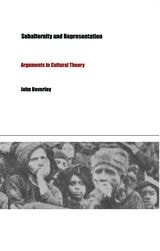
Subalternity and Representation
Arguments in Cultural TheoryJohn Beverley
Duke University Press, 1999
Dismissed by some as simply another new fashion in the critique of culture and by others as a postmarxist heresy, subaltern studies began with the work of Ranajit Guha and the South Asian Subaltern Studies collective in the 1980s. Beverley’s focus on Latin America, however, is evidence of the growing province of this field. In assessing subaltern studies’ purposes and methods, the potential dangers it presents, and its interactions with deconstruction, poststructuralism, cultural studies, Marxism, and political theory, Beverley builds his discussion around a single, provocative question: How can academic knowledge seek to represent the subaltern when that knowledge is itself implicated in the practices that construct the subaltern as such? In his search for answers, he grapples with a number of issues, notably the 1998 debate between David Stoll and Rigoberta Menchú over her award-winning testimonial narrative, I, Rigoberta Menchú. Other topics explored include the concept of civil society, Florencia Mallon’s influential Peasant and Nation, the relationship between the Latin American “lettered city” and the Túpac Amaru rebellion of 1780–1783, the ideas of transculturation and hybridity in postcolonial studies and Latin American cultural studies, multiculturalism, and the relationship between populism, popular culture, and the “national-popular” in conditions of globalization.
This critique and defense of subaltern studies offers a compendium of insights into a new form of knowledge and knowledge production. It will interest those studying postcolonialism, political science, cultural studies, and Latin American culture, history, and literature.
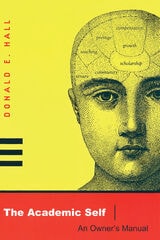
The Academic Self
An Owner’s ManualDonald E. Hall
The Ohio State University Press, 2002
Donald E. Hall offers a self-help book designed for academics, from graduate students to tenured faculty. He helps readers engage in an active process of career management, goal setting, prioritization, and reflection on the norms that constitute what he calls “academic selfhood.” Drawing broadly on the insights of Anthony Giddens’ notions of reflexivity and self-identity, Hall encourages new and seasoned scholars to “own up to” the behaviors, attitudes, and complicities that compromise their professional identities. This book couples all its exhortations with clear, concrete, and practical strategies for responding productively to the many uncertainties of academic life.
Separate chapters of the book examine the textuality of the academic self, profession, academic processes and collegiality. Among the topics candidly discussed are careerism, burnout, procrastination, and insecurity. Throughout the book readers will find anecdotes, real-life examples, and concrete tips for constructing and maintaining a successful career defined on their own terms.
The Academic Self: An Owner’s Manual opens up a new and frank discussion on academic life and academics’ basic responsibility for their own actions and attitudes.
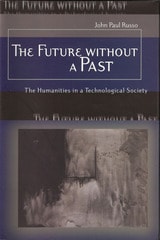
The Future without a Past
The Humanities in a Technological SocietyJohn Paul Russo
University of Missouri Press, 2005
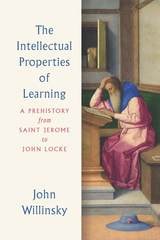
The Intellectual Properties of Learning
A Prehistory from Saint Jerome to John LockeJohn Willinsky
University of Chicago Press, 2017
Willinsky begins with Saint Jerome in the fifth century, then traces the evolution of reading, writing, and editing practices in monasteries, schools, universities, and among independent scholars through the medieval period and into the Renaissance. He delves into the influx of Islamic learning and the rediscovery of classical texts, the dissolution of the monasteries, and the founding of the Bodleian Library before finally arriving at John Locke, whose influential lobbying helped bring about the first copyright law, the Statute of Anne of 1710. Willinsky’s bravura tour through this history shows that learning gave rise to our idea of intellectual property while remaining distinct from, if not wholly uncompromised by, the commercial economy that this concept inspired, making it clear that today’s push for marketable intellectual property threatens the very nature of the quest for learning on which it rests.

The Wandering Scholars
Helen Waddell
University of Michigan Press, 1990
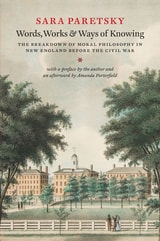
Words, Works, and Ways of Knowing
The Breakdown of Moral Philosophy in New England before the Civil WarSara Paretsky
University of Chicago Press, 2016
What’s less well-known is that before Paretsky began her writing career, she earned a PhD in history from the University of Chicago with a dissertation on moral philosophy and religion in New England in the early and mid-nineteenth century. Now, for the first time, fans of Paretsky can read that earliest work, Words, Works, and Ways of Knowing.
Paretsky here analyzes attempts by theologians at Andover Seminary, near Boston, to square and secure Calvinist religious beliefs with emerging knowledge from history and the sciences. She carefully shows how the open-minded scholasticism of these theologians paradoxically led to the weakening of their intellectual credibility as conventional religious belief structures became discredited, and how this failure then incited reactionary forces within Calvinism. That conflict between science and religion in the American past is of interest on its face, but it also sheds light on contemporary intellectual battles.
Rounding out the book, leading religious scholar Amanda Porterfield provides an afterword discussing where Paretsky’s work fits into the contemporary study of religion. And in a sobering—sometimes shocking—preface, Paretsky paints a picture of what it was like to be a female graduate student at the University of Chicago in the 1970s. A treat for Paretsky’s many fans, this book offers a glimpse of the development of the mind behind the mysteries.