Results by title
716 books match the query 'Literary Figures' and 63 start with a
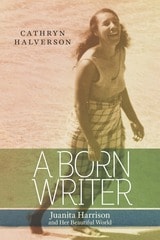
A Born Writer
Juanita Harrison and Her Beautiful WorldCathryn Halverson
University of Massachusetts Press, 2025
Despite the challenges she faced as an average southern Black woman of her time, Juanita Harrison transcended expectations, earning a unique place in African American and literary history. Over the course of more than four decades, she traveled constantly, first throughout the US and then throughout the world. To fund her trips, she took on short-term jobs as housekeeper, cook, and nurse, never committing to any one household. Always on the move, she made it a rule to travel alone, and she had a penchant for “passing,” not as white but as local. Her wanderlust was less aspirational and upwardly mobile than dedicated to the pursuit of leisure, freedom, and experience. “It’s my life to see and enjoy,” she declared.
In 1936, she published My Great, Wide, Beautiful World, a travelogue that charts her life between 1927 and 1935. A compilation of letters she sent to friends, employers, and patrons during her travels, the book was an immediate success, running through nine printings within ten months and becoming a bestseller for that year. The illustrious Atlantic Monthly published excerpts, the book was reviewed in newspapers and magazines nationwide, and it attracted a remarkably diverse readership, sparking the enthusiasm of Black working-class library patrons, white women’s book clubs, Japanese American journalists, Harlem Renaissance luminaries, and many others. It came back into print in 1996, ensuring her legacy would endure.
A Born Writer is the first biography of this fascinating woman who found a uniquely rewarding way to live and work that many would envy today. Combining micro histories, literary criticism, and biography—and despite limited archival records—Cathryn Halverson skillfully traces Harrison from her birth in the bitterly divided South to her death in Hawai’i, tracking her varied experiences along the way in New York, Havana, Paris, Madrid, Cairo, Mumbai, Kobe, Buenos Aires, and many other places. The resulting portrait shows a woman who transcended all kinds of borders—political, social, and cultural—to experience a freedom rarely available to women, and especially women of color, in the early-to-mid twentieth century, an achievement that continues to resonate.
A Box of Photographs
Roger Grenier
University of Chicago Press, 2013

A Cezanne in the Hedge and Other Memories of Charleston and Bloomsbury
Edited by Hugh Lee
University of Chicago Press, 1992
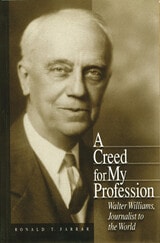
A Creed for My Profession
Walter Williams, Journalist to the WorldRonald T. Farrar
University of Missouri Press, 1998
This superb biography provides for the first time a candid look at the remarkable life of Walter Williams, the man who founded the world's first school of journalism and perhaps contributed more toward the promotion of professional journalism than any other person of his time.
Williams, the youngest of six children, was born in Boonville, Missouri, in 1864. Never an athletic child, he always had a love of books and of learning; yet, he scarcely had a high school education. He began his journalistic career as a printer's devil at seventy cents per week and eventually became editor and part- owner of a weekly in Columbia, Missouri. During his time as an editor, Williams became convinced that journalism would never reach its potential until its practitioners had the opportunity for university training in their field. After years of crusading, he established the first journalism school, on the University of Missouri campus. Later, he was chosen president of the University of Missouri, which he led with distinction during the Great Depression.
Williams was an unwavering advocate of high professional standards. His Journalist's Creed became one of the most widely circulated codes of professional ethics. Williams inspired the confidence of his fellow journalists, and he carried his message to nearly every country in which newspapers were published. Not only did he invent journalism education, he also created global organizations of journalists and spread the gospel of professionalism throughout the world. His death, in 1935, was mourned throughout the United States, and editorial tributes came from around the world. As one British editor succinctly put it, "Williams was not born to greatness. Neither was it thrust upon him. Literally, he achieved greatness."
A Life of Solitude
Stanislawa Przybyszewska, a Biographical Study with Selected LettersJadwiga Kosicka
Northwestern University Press, 1986
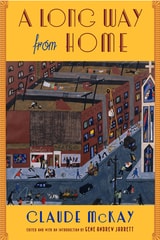
A Long Way From Home
Jarrett, Gene A
Rutgers University Press, 2007
Claude McKay (1889–1948) was one of the most prolific and sophisticated African American writers of the early twentieth century. A Jamaican-born author of poetry, short stories, novels, and nonfiction, McKay has often been associated with the “New Negro” or Harlem Renaissance, a movement of African American art, culture, and intellectualism between World War I and the Great Depression. But his relationship to the movement was complex. Literally absent from Harlem during that period, he devoted most of his time to traveling through Europe, Russia, and Africa during the 1920s and 1930s. His active participation in Communist groups and the radical Left also encouraged certain opinions on race and class that strained his relationship to the Harlem Renaissance and its black intelligentsia. In his 1937 autobiography, A Long Way from Home, McKay explains what it means to be a black “rebel sojourner” and presents one of the first unflattering, yet informative, exposés of the Harlem Renaissance. Reprinted here with a critical introduction by Gene Andrew Jarrett, this book will challenge readers to rethink McKay’s articulation of identity, art, race, and politics and situate these topics in terms of his oeuvre and his literary contemporaries between the world wars.
A Lucky American Childhood
Paul Engle
University of Iowa Press, 1996
A Lucky American Childhood will appeal to people with memories of the small-town America that Paul Engle describes with such affectionate realism and to all those interested in the roots of this renowned man of letters.
A Personal Record
Joseph Conrad
Northwestern University Press, 1982
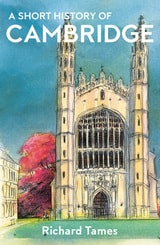
A Short History of Cambridge
Richard Tames
Haus Publishing, 2025
A Short History of Cambridge provides a narrative of the city and university, from the Middle Ages to the present day. Going beyond the world-renowned research attractions of Cambridge University, this revised paperback edition explores the vast cultural output of the town, from art and literature to theater and comedy. Richard Tames sheds light on the very origins of academia in the area, the intricate lives of the students and scholars who studied there, and how this community interacted with the townsfolk over the past eight hundred years.
Cambridge offers the splendor of King's College Chapel and the beauty of “the Backs” as well as outstanding collections of fans and fritillaries, sculpture and stained glass, and medieval coins and oriental manuscripts. Attractions include the world-class Fitzwilliam Museum and Botanic Gardens, quirky Kettle’s Yard, and museums devoted to archaeology, anthropology, zoology, earth sciences, polar research, and the history of science, plus Britain's oldest bookshop. Enter the world of “Bumps and Bedders” and learn why May Week is in June. This joyful history of the town to which more than eight million visitors flock every year will delight both readers familiar with the cobbles of Cambridge and those who have seen no further than the stained-glass windows of King’s College Chapel.
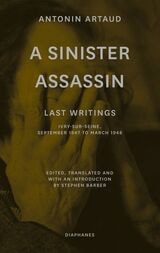
A Sinister Assassin
Last Writings, Ivry-Sur-Seine, September 1947 to March 1948Antonin Artaud
Diaphanes, 2022
A Sinister Assassin presents translations of Antonin Artaud’s largely unknown final work of 1947–48, revealing new insights into his obsessions with human anatomy, sexuality, societal power, creativity, and ill-will—notably, preoccupations of the contemporary world.
Artaud’s last conception of performance is that of a dance-propelled act of autopsy, generating a ”body without organs” which negates malevolent microbial epidemics. This book assembles Artaud’s crucial writings and press interviews from September 1947 to March 1948, undertaken at a decrepit pavilion in the grounds of a convalescence clinic in Ivry-sur-Seine, on the southern edge of Paris, as well as in-transit through Paris’s streets. It also draws extensively on Artaud’s manuscripts and original interviews with his friends, collaborators, and doctors throughout the 1940s, illuminating the many manifestations of Artaud’s final writings: the contents of his last, death-interrupted notebook; his letters; his two final key texts; his glossolalia; the magazine issue which collected his last fragments; and the two extraordinary interviews he gave to national newspaper journalists in the final days of his life, in which he denounces and refuses both his work’s recent censorship and his imminent death.
Edited, translated, and with an introduction by Stephen Barber, A Sinister Assassin illuminates Artaud’s last, most intensive, and terminal work for the first time.
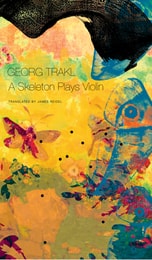
A Skeleton Plays Violin
Book Three of Our TraklGeorg Trakl
Seagull Books, 2017
A Skeleton Plays Violin comprises the final volume in a trilogy of works by Trakl published by Seagull Books. This selection gathers Trakl’s early, middle, and late work, none of it published in book form during his lifetime. The work here ranges widely, from his haunting prose pieces to his darkly beautiful poems documenting the first bloody weeks of World War I on the Eastern Front.
Book Three of Our Trakl—the series that began with Trakl’s first book Poems and his posthumously published Sebastian Dreaming—also includes translations of unpublished poems and significant variants. Interpolated throughout this comprehensive and chronological selection is a biographical essay that provides more information about Trakl’s gifted and troubled life, especially as it relates to his poetry, as well as the necessary context of his relationship with his favorite sibling, his sister Grete, whose role as a muse to her brother is still highly controversial. Trakl’s life was mysterious and fascinating, a fact reflected in his work. A Skeleton Plays Violin should not be missed.
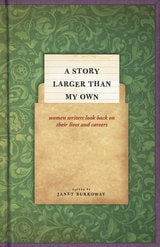
A Story Larger than My Own
Women Writers Look Back on Their Lives and CareersEdited by Janet Burroway
University of Chicago Press, 2014
Kumin, who went on to win the Pulitzer Prize for poetry, was part of a groundbreaking generation of women writers who came of age during the midcentury feminist movement. By challenging the status quo and ultimately finding success for themselves, they paved the way for future generations of writers. In A Story Larger than My Own, Janet Burroway brings together Kumin, Julia Alvarez, Jane Smiley, Erica Jong, and fifteen other accomplished women of this generation to reflect on their writing lives.
The essays and poems featured in this collection illustrate that even writers who achieve critical and commercial success experience a familiar pattern of highs and lows over the course of their careers. Along with success comes the pressure to sustain it, as well as a constant search for subject matter, all too frequent crises of confidence, the challenges of a changing publishing scene, and the difficulty of combining writing with the ordinary stuff of life—family, marriage, jobs. The contributors, all now over the age of sixty, also confront the effects of aging, with its paradoxical duality of new limitations and newfound freedom.
Taken together, these stories offer advice from experience to writers at all stages of their careers and serve as a collective memoir of a truly remarkable generation of women.
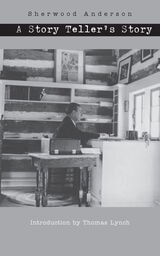
A Story Teller's Story
A MemoirSherwood Anderson
University of Michigan Press, 2005
"The voice of the soliloquist . . . amplifies the drama of A Story Teller's Story, as does the persistent theme of escape, from an America of fact and factories, marketing and manufacturing, to the borderless Ohios of imagination and creation."
—From the introduction by Thomas Lynch
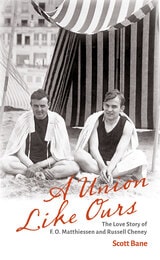
A Union Like Ours
The Love Story of F. O. Matthiessen and Russell CheneyScott Bane
University of Massachusetts Press, 2022
After a chance meeting aboard the ocean liner Paris in 1924, Harvard University scholar and activist F. O. Matthiessen and artist Russell Cheney fell in love and remained inseparable until Cheney’s death in 1945. During the intervening years, the men traveled throughout Europe and the United States, achieving great professional success while contending with serious personal challenges, including addiction, chronic disease, and severe depression.
During a hospital stay, years into their relationship, Matthiessen confessed to Cheney that “never once has the freshness of your life lost any trace of its magic for me. Every day is a new discovery of your wealth.” Situating the couple’s private correspondence alongside other sources, Scott Bane tells the remarkable story of their relationship in the context of shifting social dynamics in the United States. From the vantage point of the present day, with marriage equality enacted into law, Bane provides a window into the realities faced by same-sex couples in the early twentieth century, as they maintained relationships in the face of overt discrimination and the absence of legal protections.
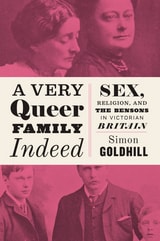
A Very Queer Family Indeed
Sex, Religion, and the Bensons in Victorian BritainSimon Goldhill
University of Chicago Press, 2016
So begins A Very Queer Family Indeed, which introduces us to the extraordinary Benson family. Edward White Benson became Archbishop of Canterbury at the height of Queen Victoria’s reign, while his wife, Mary, was renowned for her wit and charm—the prime minister once wondered whether she was “the cleverest woman in England or in Europe.” The couple’s six precocious children included E. F. Benson, celebrated creator of the Mapp and Lucia novels, and Margaret Benson, the first published female Egyptologist.
What interests Simon Goldhill most, however, is what went on behind the scenes, which was even more unusual than anyone could imagine. Inveterate writers, the Benson family spun out novels, essays, and thousands of letters that open stunning new perspectives—including what it might mean for an adult to kiss and propose marriage to a twelve-year-old girl, how religion in a family could support or destroy relationships, or how the death of a child could be celebrated. No other family has left such detailed records about their most intimate moments, and in these remarkable accounts, we see how family life and a family’s understanding of itself took shape during a time when psychoanalysis, scientific and historical challenges to religion, and new ways of thinking about society were developing. This is the story of the Bensons, but it is also more than that—it is the story of how society transitioned from the high Victorian period into modernity.
A Whitman Chronology
Joann P. Krieg
University of Iowa Press, 1998
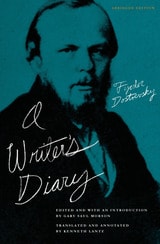
A Writer's Diary
Fydor Dostoevsky
Northwestern University Press, 2009
The essential entries from Dostoevsky's complete Diary, called his boldest experiment in literary form, are now available in this abridged edition; it is a uniquely encyclopedic forum of fictional and nonfictional genres. A Writer's Diary began as a column in a literary journal, but by 1876 Dostoevsky was able to bring it out as a complete monthly publication with himself as an editor, publisher, and sole contributor, suspending work on The Brothers Karamazov to do so.
The Diary's radical format was matched by the extreme range of its contents. In a single frame it incorporated an astonishing variety of material: short stories; humorous sketches; reports on sensational crimes; historical predictions; portraits of famous people; autobiographical pieces; and plans for stories, some of which were never written while others appeared later in the Diary itself. A range of authorial and narrative voices and stances and an elaborate scheme of allusions and cross-references preserve and present Dostoevsky's conception of his work as a literary whole.
Selected from the two-volume set, this abridged edition of A Writer's Diary appears in a single paperback volume, along with a new condensed introduction by editor Gary Saul Morson.
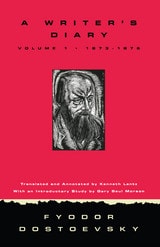
A Writer's Diary Volume 1
1873-1876Fyodor Dostoevsky
Northwestern University Press, 1997
This is the first paperback edition of the complete collection of writings that has been called Dostoevsky's boldest experiment with literary form; it is a uniquely encyclopedic forum of fictional and nonfictional genres. The Diary's radical format was matched by the extreme range of its contents. In a single frame it incorporated an astonishing variety of material: short stories; humorous sketches; reports on sensational crimes; historical predictions; portraits of famous people; autobiographical pieces; and plans for stories, some of which were never written while others appeared in the Diary itself.
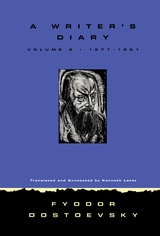
A Writer's Diary Volume 2
1877-1881Fyodor Dostoevsky
Northwestern University Press, 1997
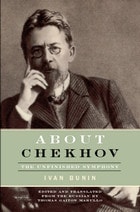
About Chekhov
The Unfinished SymphonyIvan Bunin
Northwestern University Press, 2007
In About Chekhov Ivan Bunin sought to free the writer from limiting political, social, and aesthetic assessments of his life and work, and to present both in a more genuine, insightful, and personal way. Editor and translator Thomas Gaiton Marullo subtitles About Chekhov "The Unfinished Symphony," because although Bunin did not complete the work before his death in 1953, he nonetheless fashioned his memoir as a moving orchestral work on the writers' existence and art. . . . "Even in its unfinished state, About Chekhov stands not only as a stirring testament of one writer's respect and affection for another, but also as a living memorial to two highly creative artists." Bunin draws on his intimate knowledge of Chekhov to depict the writer at work, in love, and in relation with such writers as Tolstoy and Gorky. Through anecdotes and observations, spirited exchanges and reflections, this memoir draws a unique portrait that plumbs the depths and complexities of two of Russia's greatest writers.
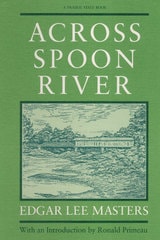
Across Spoon River
Edgar Lee Masters; Introduction by Ronald Primeau
University of Illinois Press, 1991
The autobiography of the influential American poet
This intimate and provocative autobiography, first published in 1936, reveals the innermost thoughts of a great American poet. Edgar Lee Masters was a transitional figure in American literature with one foot planted in the nineteenth century and the other firmly placed on the path of what we now think of as the modern period.
Masters expounds on his own development as a poet and as a human being; he shares his views on American culture, politics, and the literary criticism of the times. Masters's friends and acquaintances discussed here include some of the most prominent writers and politicians of his age. And he reflects on his life events that shaped, haunted, and inspired his writings of the classic Spoon River Anthology.
Adventures in Pen Land
One Writer's Journey from Inklings to InkMarianne Gingher
University of Missouri Press, 2008
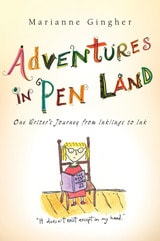
Featuring guest appearances by other writers such as Fred Chappell, Max Steele, and Annie Dillard plus cameos by the likes of Patty Hearst, Richard Nixon, and Bon Jovi, Adventures in Pen Land celebrates writing as a form of play that Gingher has never outgrown. The lighthearted illustrations by novelist Daniel Wallace (author of Big Fish) serve to reinforce this refreshing message as they depict one writer and her imagination growing up together.

After The Fire
A Writer Finds His PlacePaul Zimmer
University of Minnesota Press, 2002
Looking back at a lifetime of rich experience from Wisconsin’s driftless hills
We all dream of finding the place we can be most ourselves, the landscape that seems to have been crafted just for us. The poet Paul Zimmer has found his: a farm in the driftless hills of southwestern Wisconsin, a region of rolling land and crooked rivers, "driftless" because here the great glaciers of the Patrician ice sheet split widely, leaving behind a heart-shaped area untouched by crushing ice. After the Fire is the story of Zimmer’s journey from his boyhood in the factory town of Canton, Ohio, and his days as a soldier during atomic tests in the Nevada desert, to his many years in the book business as a writer and publisher, and the rural tranquillity of his present life.
Zimmer juxtaposes timeless rustic subjects (tending the land, country people and their ways, the ever-changing beauty of his natural surroundings) with flashbacks to key moments: his first and only boxing match, hearing Count Basie play and discovering his lifelong love of jazz, his return to the France of his ancestors, his painful departure from the publishing world after forty years. These stories are full of humor and pathos, keen insights and poignant meditations, but the real center of the book is the abiding beauty of the driftless hills, the silence and peace that is the source of and reward for Zimmer’s hard-won wisdom. Above all, it is a meditation on the ways that nature provides deep meaning and solace, and a consideration of the importance of finding the right place.
After the Whale
Melville in the Wake of Moby-DickClark Davis
University of Alabama Press, 1995
Beyond Moby-Dick: Reinterpreting Melville's later works through language, embodiment, and literary transformation.
The study focuses on Melville’s vision of the purpose and function of language from Moby-Dick through Billy Budd with a special emphasis on how language—in function and form—follows and depends on the function and form of the body, how Melville’s attitude toward words echoes his attitude toward fish. Davis begins by locating and describing the fundamental dialectic formulated in Moby-Dick in the characters of Ahab and Ishmael. This dialectic produces two visions of bodily reality and two corresponding visions of language: Ahab’s, in which language is both weapon and substitute body, and Ishmael’s, in which language is an extension of the body—a medium of explanation, conversation, and play. These two forms of language provide a key to understanding the difficult relationships and formal changes in Melville’s writings after Moby-Dick.
By following each work’s attitude toward the dialectic, we can see the contours of the later career more clearly and so begin a movement away from weakly contextualized readings of individual novels and short stories to a more complete consideration of Melville’s career. Since the rediscovery of Herman Melville in the early decades of this century, criticism has been limited to the prose in general and to a few major works in particular.
Those who have given significant attention to the short fiction and poetry have done so frequently out of context, that is, in multi-author works devoted exclusively to these genres. The result has been a criticism with large gaps, most especially for works from Melville’s later career. The relative lack of interest in the poetry has left us with little understanding of how Melville’s later voices developed, of how the novels evolved into tales, the tales into poetry, and the poetry back into prose. In short, the development of Melville’s art during the final three decades of his life remains a subject of which we have been afforded only glimpses, rarely a continuous attention. After the Whale provides a new, more comprehensive understanding of Melville’s growth as a writer.
Albert Camus
The Artist in the ArenaEmmett Parker
University of Wisconsin Press, 1966
Albert Murray and the Aesthetic Imagination of a Nation
Edited by Barbara A. Baker
University of Alabama Press, 2010
Reimagining America Through the Blues, Jazz, and the Cultural Vision of Albert Murray.
This collection consists of essays written by prominent African American literature, jazz, and Albert Murray scholars, reminiscences from Murray protégés and associates, and interviews with Murray himself. It illustrates Murray’s place as a central figure in African American arts and letters and as an American cultural pioneer.
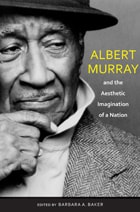
Born in Nokomis, Alabama, and raised in Mobile, Albert Murray graduated from Tuskegee University, where he later taught, but he has long resided in New York City. He is the author of many critically acclaimed novels, memoirs, and essay collections, among them The Omni-Americans, South to a Very Old Place, Train Whistle Guitar, The Spyglass Tree, and The Seven League Boots. He is also a critic and visual artist, as well as a lifelong friend of and collaborator with artistic luminaries such as Ralph Ellison, Duke Ellington, and Romare Bearden. As such, his life and work are testaments to the centrality of southern and African American aesthetics in American art. Murray is widely viewed as a figure who, through his art and criticism, transforms the “fakelore” of white culture into a new folklore that illustrates the centrality of the blues and jazz idioms and reveals the black vernacular as what is most distinct about American art.
Alejo Carpentier
The Pilgrim at HomeBy Roberto González Echevarría
University of Texas Press, 1990
Alejo Carpentier was one of the greatest Latin American novelists of the twentieth century, as well as a musicologist, journalist, cultural promoter, and diplomat. His fictional world issues from an encyclopedic knowledge of the history, art, music, and literature of Latin America and Europe. Carpentier’s novels and stories are the enabling discourse of today’s Latin American narrative, and his interpretation of Latin American history has been among the most influential. Carpentier was the first to provide a comprehensive view of Caribbean history that centered on the contribution of Africans, above and beyond the differences created by European cultures and languages. Alejo Carpentier: The Pilgrim at Home, first published in 1977 and updated for this edition, covers the life and works of the great Cuban novelist, offering a new perspective on the relationship between the two.
González Echevarría offers detailed readings of the works La música en Cuba, The Kingdom of This World, The Lost Steps, and Explosion in a Cathedral. In a new concluding chapter, he takes up Carpentier’s last years, his relationship with the Cuban revolutionary regime, and his last two novels, El arpa y la sombra and La consagración de la primavera, in which Carpentier reviewed his life and career.
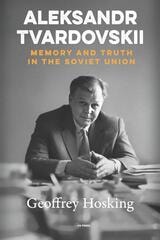
Aleksandr Tvardovskii
Memory and Truth in the Soviet UnionGeoffrey Hosking
Central European University Press, 2025
By giving a balanced account of his strengths and weaknesses, his achievements and failures, the author succeeds in giving the fullest picture available anywhere of a controversial man who turns out to be more complex than he has been portrayed so far. To understand him better is to understand why the Soviet intelligentsia changed so fundamentally in the USSR’s final decades, a change that helps to explain the rise of Gorbachev twenty years later. The study—which includes an in-depth analysis of Tvardovskii’s major works—also helps to better understand the fate of culture under an authoritarian regime and the intricacies of the struggle against censorship.
Alfonso Reyes and Spain
His Dialogue with Unamuno, Valle-Inclán, Ortega y Gasset, Jiménez, and Gómez de la SernaBy Barbara Bockus Aponte
University of Texas Press, 1972
Alfonso Reyes, the great humanist and man of letters of contemporary Spanish America, began his literary career just before the outbreak of the Mexican Revolution of 1910. He spearheaded the radical shift in Mexico's cultural and philosophical orientation as a leading member of the famous "Athenaeum Generation."
The crucial years of his literary formation, however, were those he spent in Spain (1914-1924). He arrived in Madrid unknown and unsure of his future. When he left, he had achieved both professional maturity and wide acclaim as a writer. This book has, as its basis, the remarkable correspondence between Reyes and some of the leading spirits of the Spanish intellectual world, covering not only his years in Spain but also later exchanges of letters.
Although Reyes always made it clear that he was a Mexican and a Spanish American, he became a full-fledged member of the closed aristocracy of Spanish literature. It was the most brilliant period in Spain's cultural history since the Golden Age, and it is richly represented here by Reyes' association with five of its most important figures: Miguel de Unamuno and Ramón del Valle-Inclán were of the great "Generation of 98"; among the younger writers were José Ortega y Gasset, essayist and philosopher; the Nobel poet Juan Ramón Jiménez; and Ramón Gómez de la Serna, a precursor of surrealism.
Alfonso Reyes maintained lifelong friendships with these men, and their exchanges of letters are of a dual significance. They reveal how the years in Spain allowed Reyes to pursue his vocation independently, thereby prompting him to seek universal values. Coincidentally, they provide a unique glimpse into the inner world of those friends—and their dreams of a new Spain.
Alfred Bester
Jad Smith
University of Illinois Press, 2016
Jad Smith traces the career of the unlikeliest of SF icons. Winner of the first Hugo Award for The Demolished Man, Bester also worked in comics, radio, and TV, and his intermittent SF writing led some critics to brand him a dabbler. In the 1960s, however, New Wave writers championed his work, and his reputation grew. Smith follows Bester's journey from consummate outsider to an artist venerated for foundational works that influenced the New Wave and cyberpunk revolutions. He also explores the little-known roots of a wayward journey fueled by curiosity, disappointment with the SF mainstream, and an artist's determination to go his own way.
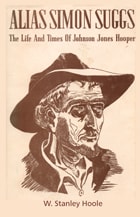
Alias Simon Suggs
The Life and Times of Johnson Jones HooperWilliam Stanley Hoole
University of Alabama Press, 2008
Alias Simon Suggs is a study in the life and writings of Johnson J. Hooper of Alabama, and is a masterful contribution to American biography and to American literature.
Extensively documented with illuminating footnotes and revealing references, its style is direct and captivating and will appeal to those who enjoy entertaining biography will relish the privilege of reading it.
Alice in Space
The Sideways Victorian World of Lewis CarrollGillian Beer
University of Chicago Press, 2016
Gillian Beer explores Carroll’s work through the speculative gaze of Alice, for whom no authority is unquestioned and everything can speak. Parody and Punch, evolutionary debates, philosophical dialogues, educational works for children, math and logic, manners and rituals, dream theory and childhood studies—all fueled the fireworks. While much has been written about Carroll’s biography and his influence on children’s literature, Beer convincingly shows him at play in the spaces of Victorian cultural and intellectual life, drawing on then-current controversies, reading prodigiously across many fields, and writing on multiple levels to please both children and adults in different ways.
With a welcome combination of learning and lightness, Beer reminds us that Carroll’s books are essentially about curiosity, its risks and pleasures. Along the way, Alice in Space shares Alice’s exceptional ability to spark curiosity in us, too.

Alien Heart
The Life and Work of Margaret LaurenceLyall Powers
University of Manitoba Press, 2005
Lyall Powers is both a respected scholar of literature and a lifelong friend of Laurence's, having met her when they were students together at Winnipeg's United College in the 1940s. Alien Heart is the first full-length biography of Margaret that combines personal knowledge and insights about Laurence with a study of her work, which often paralleled the events and concerns in her own life.
Drawing on letters, personal correspondence, journals, and interviews, Lyall Powers discusses the struggles and triumphs Laurence experienced in her efforts to understand herself in the roles of writer, wife, mother, and public figure. He portrays a deeply compassionate and courageous woman, who yet felt troubled by conflicting demands. While Laurence's work is not directly autobiographical, Powers illustrates how her writing expressed many of the same dilemmas, and how the resolution her characters achieved in the novels and stories had an impact on Laurence's own life.
Powers provides an in-depth analysis of all Laurence's work, including the early African essays, fiction, and translations, and her books for children, as well as the beloved Manawaka fiction. The study clearly shows the progression and expression of Laurence as a writer of great humanity and conscience.
Allen Tate - American Writers 39
University of Minnesota Pamphlets on American WritersGeorge Hemphill
University of Minnesota Press, 1964
Allen Tate - American Writers 39 was first published in 1964. Minnesota Archive Editions uses digital technology to make long-unavailable books once again accessible, and are published unaltered from the original University of Minnesota Press editions.
Ambrose Bierce - American Writers 37
University of Minnesota Pamphlets on American WritersRobert A. Wiggins
University of Minnesota Press, 1964
Ambrose Bierce - American Writers 37 was first published in 1964. Minnesota Archive Editions uses digital technology to make long-unavailable books once again accessible, and are published unaltered from the original University of Minnesota Press editions.
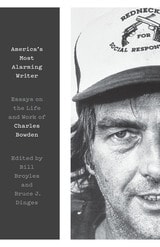
America's Most Alarming Writer
Essays on the Life and Work of Charles BowdenEdited by Bill Broyles and Bruce J. Dinges
University of Texas Press, 2019
The author of more than twenty books and a revered contributor to numerous national publications, Charles Bowden (1945–2014) used his keen storyteller’s eye to reveal both the dark underbelly and the glorious determination of humanity, particularly in the borderlands between the United States and Mexico. In America’s Most Alarming Writer, key figures in his life—including his editors, collaborators, and other writers—deliver a literary wake for the man who inspired them throughout his forty-year career.
Part revelation, part critical assessment, the fifty essays in this collection span the decades from Bowden’s rise as an investigative journalist through his years as a singular voice of unflinching honesty about natural history, climate change, globalization, drugs, and violence. As the Chicago Tribune noted, “Bowden wrote with the intensity of Joan Didion, the voracious hunger of Henry Miller, the feral intelligence and irony of Hunter Thompson, and the wit and outrage of Edward Abbey.” An evocative complement to The Charles Bowden Reader, the essays and photographs in this homage brilliantly capture the spirit of a great writer with a quintessentially American vision. Bowden is the best writer you’ve (n)ever read.
American Humorists - American Writers 42
University of Minnesota Pamphlets on American WritersWillard Thorp
University of Minnesota Press, 1964
American Humorists - American Writers 42 was first published in 1964. Minnesota Archive Editions uses digital technology to make long-unavailable books once again accessible, and are published unaltered from the original University of Minnesota Press editions.
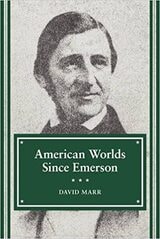
American Worlds Since Emerson
David Marr
University of Massachusetts Press, 2009
Marr shows that the decline of the political, the elusiveness of democracy, and the monumental influence of "idealized privatism" on its historiographers and critics are major themes of American literary thought and constitute a tradition that spans literature, criticism, history, philosophy, and political theory. He illustrates this through readings of Emerson's ideas of nature, culture, and politics; Walt Whitman's fantasy of the autocrat of letters; William James's critique of "vicious intellectualism;" the contrasting formulations of radical interiority in the poetry of Robinson Jeffers and the criticism of R. P. Blackmur; and two contemporary pictures of public discourse as revealed in Joseph Heller's Catch-22 and the essays of Ralph Ellison.
Discussing not only the works of classic American thinkers, but also the recent writings of such new-pragmatists as Stanley Cavell, Richard Rorty, and Nelson Goodman, Marr calls for a reassessment of the American intellectual past and of contemporary assumptions about the relations of literature to political life.
Amy Levy
Critical EssaysLinda Hunt Beckman
Ohio University Press, 2000
Amy Lowell - American Writers 82
University of Minnesota Pamphlets on American WritersF. Cudworth Flint
University of Minnesota Press, 1969
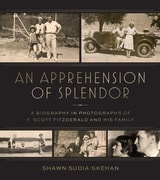
An Apprehension of Splendor
A Biography in Photographs of F. Scott Fitzgerald and His FamilyShawn Sudia-Skehan; Foreword by Jackson R. Bryer; Introduction by Eleanor Lanahan
University of Alabama Press, 2025
A unique collection of Fitzgerald family photographs, many never before published, hand selected by a curator of the Scott and Zelda Fitzgerald Museum.
Enter the Jazz Age glamour of F. Scott and Zelda Fitzgerald and their daughter, Scottie. An Apprehension of Splendor is a rich pictorial biography that illuminates the lives of this brilliant literary family in 344 rare photographs, 180 of which have never been published.
The Fitzgeralds are chiefly known from a small number of iconic, posed images, but the dashing couple and their daughter amassed hundreds of candid snapshots now housed in archives and university library collections throughout North America. These rare photos reveal the full, vivid lives behind the icons—a Buffalo boy cradling a velvety puppy, a jaunty southern gamine in the shade of a loblolly pine laughing at a secret, the stoic gloom of an enlistee in a scratchy woolen uniform, a plot taking shape in the mind of a fledgling writer with bed-tousled hair, an amorous young couple struggling to light a cigarette in the chiaroscuro of a Riviera beach, an unhappy baby tugged through the snow in a laundry basket lashed to a sled, and a myriad of other images that will rekindle fascination with the Fitzgeralds and their time.
With unparalleled access to the family’s personal papers and photographs, Shawn Sudia-Skehan, former director of acquisitions at the Scott and Zelda Fitzgerald Museum, handpicked and annotated this collection of images that brings readers closer to the Fitzgeralds than any other work. Readers of Tender Is the Night, The Beautiful and Damned, and many other works by F. Scott and Zelda will recognize some of the places and experiences that inspired their unforgettable fictions.
A captivating portrait of Jazz Age celebrity, young passion, and artistic ambition, An Apprehension of Splendor returns the perfume to the luminous flower of the Fitzgeralds.
An Extraordinary Year of Ordinary Days
By Susan Wittig Albert
University of Texas Press, 2010
From Eudora Welty's memoir of childhood to May Sarton's reflections on her seventieth year, writers' journals offer an irresistible opportunity to join a creative thinker in musing on the events—whether in daily life or on a global scale—that shape our lives. In An Extraordinary Year of Ordinary Days, best-selling mystery novelist Susan Wittig Albert invites us to revisit one of the most tumultuous years in recent memory, 2008, through the lens of 365 ordinary days in which her reading, writing, and thinking about issues in the wider world—from wars and economic recession to climate change—caused her to reconsider and reshape daily practices in her personal life.
Albert's journal provides an engaging account of how the business of being a successful working writer blends with her rural life in the Texas Hill Country and the Sangre de Cristo Mountains of New Mexico. As her eclectic daily reading ranges across topics from economics, food production, and oil and energy policy to poetry, place, and the writing life, Albert becomes increasingly concerned about the natural world and the threats facing it, especially climate change and resource depletion. Asking herself, "What does it mean? And what ought I do about it?", she determines practical steps to take, such as growing more food in her garden, and also helps us as readers make sense of these issues and consider what our own responses might be.
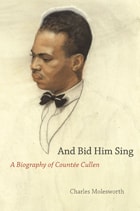
And Bid Him Sing
A Biography of Countée CullenCharles Molesworth
University of Chicago Press, 2012
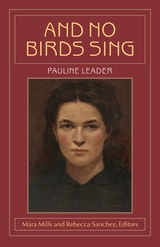
And No Birds Sing
Pauline Leader
Gallaudet University Press, 2016
This edition is accompanied by a new introduction and afterword that provide a scholarly framework for understanding Leader and her times. She persevered and became a published poet and novelist, often drawing on the experiences offered up here. Compelling and evocative, And No Birds Sing deftly reveals a complex, intelligent spirit toiling in a brutal world.
From the book:
I insisted to myself that I could still hear. I heard in my mind the sounds of streams as I passed them. I knew the sound the river made, that river that I had known always, the river by the marble house. In my mind the river washed with a low intimate sound. I had no need to hear as the people heard. True intimacy needs no ears. I knew the sound of birds; I heard them as they hopped about. I knew the sound of words also. It was words that I most intensely heard. I had not always the river and the birds—they appeared far away at times. I did not always want river and birds, but I always wanted words, and I always had them. I would have been terribly lonely without them. With them always in my mind, I could not be truly lonely. I played with them; I set them to music; I achieved endless variations with them. They were never weary, as other things could sometimes be weary.
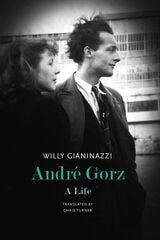
André Gorz
A LifeWilly Gianinazzi
Seagull Books, 2022
Recognized as one of the most lucid and innovative critics of contemporary capitalism, André Gorz (1923–2007) was known for asking fundamental questions regarding the meaning of life and work. This first biography of a unique figure operating at the confluence of literature, philosophy, and journalism revisits half a century of intellectual and political life.
Born Gerhart Hirsch in Vienna, he studied in Switzerland before opting to live and work in France. A self-taught existentialist thinker, he was constantly revising his view of the world, unafraid to break new theoretical ground in doing so. Influenced by Marx, Husserl, Sartre, and Illich, he had very close affinities with the new thinking on the Left that was coming out of Italy in the 1960s and 70s. He was also one of the first thinkers to shape political ecology and to advocate de-growth. The intellectual on the editorial board of Sartre’s journal Les Temps Modernes, Gorz was also a mainstream journalist. He wrote in L’Express under the sobriquet Michel Bosquet before joining others in the creation of Le Nouvel Observateur.
Through Gorz’s life journey, we meet not only Sartre and de Beauvoir, but also Herbert Marcuse, Fidel Castro, Daniel Cohn-Bendit, Ivan Illich, Félix Guattari, Antonio Negri, and many others. Beyond his poignant autobiographical narratives, The Traitor and Letter to D, which attest to his deep humanity, Gorz remains a precious guide for all who believe that another world is still possible.
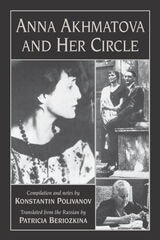
Anna Akhmatova and Her Circle
Konstantin Polivanov
University of Arkansas Press, 2016
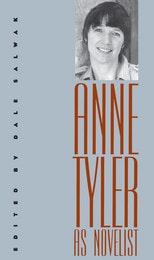
Anne Tyler as Novelist
Dale Salwak
University of Iowa Press, 1994
Another Part of a Long Story
Literary Traces of Eugene O'Neill and Agnes BoultonWilliam Davies King
University of Michigan Press, 2010
---Stephen Wilmer, Trinity College, Dublin
Biographers of American playwright Eugene O'Neill have been quick to label his marriage to actress Carlotta Monterey as the defining relationship of his illustrious career. But in doing so, they overlook the woman whom Monterey replaced---Agnes Boulton, O'Neill's wife of over a decade and mother to two of his children. O'Neill and Boulton were wed in 1918---a time when she was a successful pulp novelist and he was still a little-known writer of one-act plays. During the decade of their marriage, he gained fame as a Broadway dramatist who rejected commercial compromise, while she mapped that contentious territory known as the literary marriage. His writing reflected her, and hers reflected him, as they tried to realize progressive ideas about what a marriage should be. But after O'Neill left the marriage, he and new love Carlotta Monterey worked diligently to put Boulton out of sight and mind---and most O'Neill biographers have been quick to follow suit.
William Davies King has brought Agnes Boulton to light again, providing new perspectives on America's foremost dramatist, the dynamics of a literary marriage, and the story of a woman struggling to define herself in the early twentieth century. King shows how the configuration of O'Neill and Boulton's marriage helps unlock many of O'Neill's plays. Drawing on more than sixty of Boulton's published and unpublished writings, including her 1958 memoir, Part of a Long Story, and an extensive correspondence, King rescues Boulton from literary oblivion while offering the most radical revisionary reading of the work of Eugene O'Neill in a generation.
William Davies King is Professor of Theater at the University of California, Santa Barbara, and author of several books, most recently Collections of Nothing, chosen by Amazon.com as one of the Best Books of 2008.
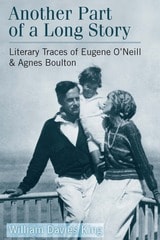
Illustration: Eugene O'Neill, Shane O'Neill, and Agnes Boulton ca. 1923. Eugene O'Neill Collection, Beinecke Rare Book and Manuscript Library, Yale University.
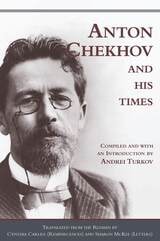
Anton Chekhov and his Times
Andrei Turkov
University of Arkansas Press, 1995
This anthology comprises reminiscences by a number of Anton Pavlovich Chekhov’s contemporaries, including the artist Konstantin Korovin, the writer Maxim Gorky, and Chekhov’s wife, Olga Knipper-Chekhova, and numerous letters written by Chekhov to his fellow writers and artists, family, publishers, and others.
Now available for the first time in English in America, these sixty-eight letters and ten essay-length reminiscences trace the development of Chekhov’s personality and talent, opening a window into the life and times of one of the world’s greatest short-story writers and playwrights. These perspectives on his family life and marriage, his early works, the stage productions of his plays, his literary successes, and the philosophies behind his writing create a rich biography of Chekhov that will reward writers, scholars, and all lovers of literature.
Anton Chekhov's Life and Thought
Selected Letters and CommentariesAnton Chekhov
Northwestern University Press, 1996