Results by title
914 books match the query 'Medieval' and 71 start with a
A Comedy Called Susenbrotus
Connie McQuillen
University of Michigan Press, 1998
Susenbrotus is in many ways representative of later university comedy. It is a rowdy, bawdy farce with roots in the Roman comedies of Plautus and Terence. The wit and much of the humor in these plays is in the reworking of traditional themes with characters and situations adapted to contemporary types and topical satire. Almost every playwright for the professional stage (with the notable exception of Shakespeare) either wrote or acted in university plays. Moreover, they were popular forms of entertainment and were attended not only by members of the academic community but also by visiting dignitaries, courtiers, foreign ambassadors, and on occasion, the English monarchs.
Susenbrotus is special among later university plays because it was specifically written for King James I. It was meant to flatter the king, who prided himself on his humanist education, with a display of wit and erudition. It was also meant to entertain: the play itself is quite funny. It involves the antics of several contemporary types (the pedant, a poet, a Spanish dandy, and a braggart soldier) vying for the affection of a cross-dressed boy. Much of the wit in Susenbrotus is verbal: scholarly puns, sexual metaphors, classical allusions, and quotations that are explained in annotations. The sustained transvestitism of the character Fortunia distinguishes it from its classical sources as well as from other plays of its type. Unlike Latin texts that were submitted to publishing houses and therefore corrected or stylized by printers, Susenbrotus is an example of Latin as it was written in the seventeenth century.
Connie McQuillen is Associate Professor of Humanities, Southwest State University, Minnesota.
A Commentary on Cicero, De Officiis
Andrew R. Dyck
University of Michigan Press, 1997
Composed in haste shortly before Cicero's death, de Officiis has exercised enormous influence over the centuries. It is all the more surprising that Andrew R. Dyck's volume is the first detailed English commentary on the work written in this century. It deals with the problems of the Latin text (taking account of Michael Winterbottom's new edition), it delineates the work's structure and sometimes elusive train of thought, clarifies the underlying Greek and Latin concepts, and provides starting points for approaching the philosophical and historical problems that de Officiis raises.
A work of major importance for classicists, philosophers, and ancient historians, this Commentary will be an invaluable companion to all readers of Cicero's last philosophical work.
Andrew R. Dyck is Professor of Classics, University of California, Los Angeles.
Publication of this volume is supported by a grant from the National Endowment for the Humanities.
A Cosmos of Desire
The Medieval Latin Erotic Lyric in English ManuscriptsThomas C Moser, Jr.
University of Michigan Press, 2004
Thomas C. Moser, Jr. explores the fascinating body of medieval Latin erotic poetry found in English manuscripts. His study describes the intellectual and social context from which the great erotic songs of the twelfth century emerged, and examines a variety of erotic poems, from school exercises to the magnificent lyrics found in Arundel 384. He also illuminates the influence of neoplatonic philosophy on this poetry, explicating key neoplatonic texts and applying that analysis in close readings of erotic lyrics from the same period and milieu.
A Cosmos of Desire will interest scholars of medieval literature as well as specialists in Latin poetry and philosophy. Students of Middle English literature will find that it fills an important gap in our understanding of English intellectual life between the twelfth and the fourteenth century. All Latin prose and poetry is translated, some works for the first time, and the book is generously illustrated with photographs of the manuscripts discussed.
Thomas C. Moser, Jr. is Associate Professor of English at the University of Maryland, College Park.
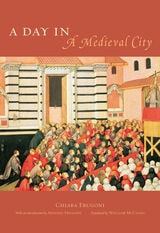
A Day in a Medieval City
Chiara Frugoni
University of Chicago Press, 2005
A Day in a Medieval City breathes life into the activities of the city streets, homes, fields, schools, and places of worship. With entertaining anecdotes and gritty details, it engages the modern reader with its discoveries of the religious, economic, and institutional practices of the day. From urban planning and education to child care, hygiene, and the more leisurely pursuits of games, food, books, and superstitions, Frugoni unearths the daily routines of the private and public lives of citizens. A Day in a Medieval City is a charming portal to the Middle Ages that you'll surely want with you on your travels to Europe—or in your armchair.
“Stunningly beautiful . . . and a good read as well. . . . It’s amazing how much wealth of detail and image Ms. Frugoni has packed into this delightful, relatively small book.”—Steve Goode, Washington Times
“Charming and insightful. . . .Written with exceptional grace and infused with a warm sense of humanity.”—Library Journal
A Feast for the Eyes
Art, Performance, and the Late Medieval BanquetChristina Normore
University of Chicago Press, 2015
A Feast for the Eyes is the first book-length study of the court banquets of northwestern Europe in the fourteenth and fifteenth centuries. Christina Normore draws on an array of artworks, archival documents, chroniclers’ accounts, and cookbooks to re-create these events and reassess the late medieval visual culture in which banquets were staged. Feast participants, she shows, developed sophisticated ways of appreciating artistic skill and attending to their own processes of perception, thereby forging a court culture that delighted in the exercise of fine aesthetic judgment.
Challenging modern assumptions about the nature of artistic production and reception, A Feast for the Eyes yields fresh insight into the long history of multimedia work and the complex relationships between spectacle and spectators.
A Florentine Chansonnier from the Time of Lorenzo the Magnificent
Edited by Howard M. Brown
University of Chicago Press, 1983
A Guide to Editing Middle English
Vincent McCarren and Douglas Moffat, Editors
University of Michigan Press, 1998
A Guide to Editing Middle English collects nineteen essays and three appendices written by leading text editors in Middle English. A number of essays deal primarily with theoretical questions, while others offer assessments of historical developments in editing, especially in regard to the most well-known Middle English works. Most of the essays deal with practical matters: how to use a computer in preparing and presenting an edition; how to form and arrange the standard parts of an edition; and how to handle problems presented by texts in areas such as science, astrology, and cooking. The three appendices provide bibliographical references to dictionaries, facsimiles, and manuscript description.
Contributors, in addition to the editors, are Peter Baker, Richard Beadle, Norman Blake, Helen Cooper, A. S. G. Edwards, Jennifer Fellows, David C. Greetham, Mary Hamel, Constance Heiatt, Nicholas Jacobs, Geroge Keiser, Peter J. Lucas, Maldwyn Mills, Linne Mooney, and Peter Robinson.
The many and varied perspectives of this volume will make it of interest to readers of Middle English texts, those involved in textual scholarship, and those interested in editing in general. It occupies a unique place in the field of Middle English studies and will likely remain a standard reference tool for a long time.
Vincent McCarren is a Research Associate with the Middle English Dictionary at the University of Michigan. Douglas Moffat, formerly with the Middle English Dictionary, is a Development Officer with the University of Michigan.
A History of Russia
Medieval, Modern, Contemporary, c.882-1996Paul Dukes
Duke University Press, 1998
With its breadth of scope and conciseness of presentation, this third edition of A History of Russia will be invaluable to students of European and Russian history, and also to students of Russian language, literature, and social science.
A History of the Crusades, Volume I
The First Hundred YearsSeries Edited by Kenneth M. Setton; Volume Edited by Marshall W. Baldwin
University of Wisconsin Press, 1969
A History of the Crusades, Volume II
The Later Crusades, 1189-1311Series Edited by Kenneth M. Setton; Volume Edited by Wolff and Hazard
University of Wisconsin Press, 1969
A History of the Crusades, Volume III
The Fourteenth and Fifteenth CenturiesSeries Edited by Kenneth M. Setton; Volume Edited by Harry W. Hazard
University of Wisconsin Press, 1975
A History of the Crusades, Volume IV
The Art and Architecture of the Crusader StatesSeries Edited by Kenneth M. Setton, Volume Edited by Harry W. Hazard
University of Wisconsin Press, 1977
A History of the Crusades, Volume V
The Impact of the Crusades on the Near EastSeries Edited by Kenneth M. Setton, Volume Edited by Zacour and Hazard
University of Wisconsin Press, 1985
A History of the Crusades, Volume VI
The Impact of the Crusades on EuropeSeries Edited by Kenneth M. Setton, Volume Edited by Hazard and Zacour
University of Wisconsin Press, 1990
A History of the Old Icelandic Commonwealth
Islendinga SagaJon Johannesson
University of Manitoba Press, 2007
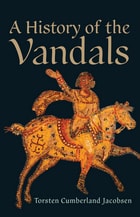
A History of the Vandals
Torsten Cumberland Jacobsen
Westholme Publishing, 2012
The First General History in English of the Germanic People Who Sacked Rome in the Fifth Century AD and Established a Kingdom in North Africa
The fifth century AD was a time of great changes in the Mediterranean world. In the early 400s, the Roman Empire ranged from the lowlands of Scotland to the Upper Nile and from Portugal to the Caucasus. It was almost at its widest extent, and although ruled by two emperors—one in the West and one in the East—it was still a single empire. One hundred years later, Roman control of Western Europe and Western North Africa had been lost. In its place, a number of Germanic kingdoms had been established in these regions, with hundreds of thousands of Germanic and other peoples settling permanently inside the former borders of the Western Roman Empire.
One of the most fascinating of these tribes of late antiquity were the Vandals, who over a period of six hundred years had migrated from the woodland regions of Scandinavia across Europe and ended in the deserts of North Africa. In A History of the Vandals, the first general account in English covering the entire story of the Vandals from their emergence to the end of their kingdom, historian Torsten Cumberland Jacobsen pieces together what we know about the Vandals, sifting fact from fiction. In the middle of the fifth century the Vandals, who professed Arianism, a form of Christianity considered heretical by the Roman emperor, created the first permanent Germanic successor state in the West and were one of the deciding factors in the downfall of the Western Roman Empire. Later Christian historians described their sack of Rome in 455 and their vehement persecution of Catholics in their kingdom, accounts that were sensationalized and gave birth to the term “vandalism.”
In the mid-sixth century, the Vandals and their North African kingdom were the first target of Byzantine Emperor Justinian’s ambitious plan to reconquer the lost territories of the fallen Western Empire. In less than four months, what had been considered one of the strongest Germanic kingdoms had been defeated by a small Roman army led by the general Belisarius. Despite later rebellions, this was the end of the Germanic presence in North Africa, and in many ways the end of the Arian heresy of Christianity. For the Romans it was the incredibly successful start of the reconquest of the lost lands of the Western Empire.
A Hole in the Heavens
Dyan Elliott
Arizona Center for Medieval and Renaissance Studies, 2017
A Mother’s Manual for the Women of Ferrara
A Fifteenth-Century Guide to Pregnancy and PediatricsMichele Savonarola
Iter Press, 2022
Around 1460, Michele Savonarola produced the extraordinary Mother’s Manual for the Women of Ferrara, a gynecological, obstetrical, and pediatric treatise composed in the vernacular so that it could be read not only by the learned but also by pregnant and nursing mothers and the midwives and wet nurses who presided over childbirth. Savonarola’s work is not merely a trivial set of instructions, but the work of a learned scholar who drew on, among others, the ancient Greek physicians Hippocrates and Galen, and Avicenna’s Canon of Medicine. The first of its kind, Savonarola’s Mother’s Manual helps readers understand both the development of late-medieval and early-modern obstetrics and gynecology, as well as the experiences of women who turn to advice books for help with reproductive issues. This book also provides a key to understanding why and how a new genre of book—the midwifery manual or advice book for pregnant women—arose in sixteenth-century Italy and eventually became a popular genre all over Europe from the early modern period to the present day.
A Network of Converso Families in Early Modern Toledo
Assimilating a MinorityLinda Martz
University of Michigan Press, 2003
Linda M. Martz focuses on families that were immersed in the worlds of business and finance. They formed the backbone of the trade industry and, during the economic expansion of the sixteenth century, enjoyed a high degree of affluence. The seventeenth century, however, brought harder times. How these families rose to positions of commercial eminence and then adapted to this economic downturn is one of the questions addressed in this insightful book.
A Network of Converso Families in Early Modern Toledo relies heavily on archival evidence--notarial, parish, and city records--that offers new insights into the families' histories. Business endeavors, marriage alliances, involvement in local politics, and the pursuit of improved social status are all subjected to Martz's keen analysis.
These families appear to have been well integrated into their contemporary society; aside from their business and financial activities, many were members of the city's governing council. But how well did they integrate with the lower classes? Assimilating minorities in the majority culture is a task that confronts most modern societies, so the experience of Spain and this particular minority may serve as an example of how earlier societies viewed and confronted this challenge.
This book will appeal to historians of medieval and Renaissance Spain and those interested in the Inquisition's effect on Renaissance Spain. It will also prove to be indispensable for those interested in the history of the Jewish race, as well as for those pursuing the question of marginalization.
Linda M. Martz is an independent historian as well as a freelance editor and writer.
A Pernicious Sort of Woman
Quasi-Religious Women and Canon Lawyers in the Later Middle Ages (Studies in Medieval and Early Modern Canon Law, Volume 6)Elizabeth Makowski
Catholic University of America Press, 2005
A Poetry Precise and Free
Selected Madrigals of GuariniNicholas R. Jones
University of Michigan Press, 2018
This volume is organized into ten sections, grouping the madrigals around themes such as the anguish of passion, the asymmetry of desire, the incursions of jealousy, and the possibility of mutual bliss. Nicholas R. Jones renders Guarini’s poetry into accessible contemporary English verse that nevertheless stays true to the substance and form of the original texts, reflecting their roots in the Petrarchan poetic tradition and displaying the emotion and musicality that made these lyrics so popular from the start. A substantive introduction provides cultural context for the madrigals and their musical settings; brief commentaries follow each translation to illuminate aspects of poetic and rhetorical craft. An extensive appendix lists the madrigal compositions that set these lyrics for vocal performance.
The book fills a major gap in the scholarship on Guarini’s literary legacy. It will appeal to scholars of literature, Renaissance studies, and musicology, early-music performers, and general readers interested in poetry and classical music.

A Professor in the Wilderness
Peter Damian Before the Gregorian ReforJohn Howe
Catholic University of America Press, 2027
A Sacred Kingdom
Bishops and the Rise of Frankish Kingship, 300-850Michael Edward Moore
Catholic University of America Press, 2011

Abandoned Women
Rewriting the Classics in Dante, Boccaccio, and ChaucerSuzanne Hagedorn
University of Michigan Press, 2003
Action and Conduct
Thomas Aquinas and the Theory of ActionStephen Brock
Catholic University of America Press, 2021
"A first-rate book...Brock's lucid and illuminating analysis offers much of value to both intellectual historians and theologians, as well as philosophers."—Theological Studies"Brock's treatment of Aquinas's account of action exhibits a rare combination of rigor and learning. It is, no doubt, the best we have."—The Thomist
Al-Ghazali's "Moderation in Belief"
Al-Ghazali
University of Chicago Press, 2013
The first complete English-language edition of Moderation in Belief, this new annotated translation by Aladdin M. Yaqub draws on the most esteemed critical editions of the Arabic texts and offers detailed commentary that analyzes and reconstructs the arguments found in the work’s four treatises. Explanations of the historical and intellectual background of the texts also enable readers with a limited knowledge of classical Arabic to fully explore al-Ghazali and this foundational text for the first time.
With the recent resurgence of interest in Islamic philosophy and the conflict between philosophy and religion, this new translation will be a welcome addition to the scholarship.
Albertus Magnus On Animals V1 2
A Medieval Summa Zoologica Revised EditionKenneth F. Kitchell Jr.and Irven Michael Resnick
The Ohio State University Press, 2018
In his work De animalibus, Albert integrated the vast amount of information on nature that had come down to him in previous centuries: the exposition of Michael Scotus’s translation from the Arabic of Aristotle’s books on the natural world (Books 1–19), Albert’s own revisions to Aristotle’s teachings (Books 20–21), and a “dictionary” of animals appropriated largely from the De natura rerum of Thomas of Cantimpré (Books 22–26). Albert’s comprehensive treatise on living things was acknowledged as the reputable authority in biology for almost five hundred years.
In this translated and annotated edition, Kenneth F. Kitchell Jr. and Irven Michael Resnick illuminate the importance of this work, allowing Albert’s magnum opus to be better understood and more widely appreciated than ever before. Broken into two volumes (Books 1–10 and 11–26),Albertus Magnus On Animals is a veritable medieval scientific encyclopedia, ranging in topics from medicine, embryology, and comparative anatomy to women, hunting and everyday life, commerce, and much more—an essential work for historians, medievalists, scientists, and philosophers alike.
Albertus Magnus On Animals V1
A Medieval Summa Zoologica Revised EditionAlbertus Magnus, Edited by Kenneth F. Kitchell Jr.and Irven Michael Resnick
The Ohio State University Press, 2018
In his work De animalibus, Albert integrated the vast amount of information on nature that had come down to him in previous centuries: the exposition of Michael Scotus’s translation from the Arabic of Aristotle’s books on the natural world (Books 1–19), Albert’s own revisions to Aristotle’s teachings (Books 20–21), and a “dictionary” of animals appropriated largely from the De natura rerum of Thomas of Cantimpré (Books 22–26). Albert’s comprehensive treatise on living things was acknowledged as the reputable authority in biology for almost five hundred years.
In this translated and annotated edition, Kenneth F. Kitchell Jr. and Irven Michael Resnick illuminate the importance of this work, allowing Albert’s magnum opus to be better understood and more widely appreciated than ever before. Broken into two volumes (Books 1–10 and 11–26),Albertus Magnus On Animals is a veritable medieval scientific encyclopedia, ranging in topics from medicine, embryology, and comparative anatomy to women, hunting and everyday life, commerce, and much more—an essential work for historians, medievalists, scientists, and philosophers alike.
Albertus Magnus On Animals V2
A Medieval Summa Zoologica Revised EditionAlbertus Magnus, Edited by Kenneth F. Kitchell Jr.and Irven Michael Resnick
The Ohio State University Press, 2019
In his work De animalibus, Albert integrated the vast amount of information on nature that had come down to him in previous centuries: the exposition of Michael Scotus’s translation from the Arabic of Aristotle’s books on the natural world (Books 1–19), Albert’s own revisions to Aristotle’s teachings (Books 20–21), and a “dictionary” of animals appropriated largely from the De natura rerum of Thomas of Cantimpré (Books 22–26). Albert’s comprehensive treatise on living things was acknowledged as the reputable authority in biology for almost five hundred years.
In this translated and annotated edition, Kenneth F. Kitchell Jr. and Irven Michael Resnick illuminate the importance of this work, allowing Albert’s magnum opus to be better understood and more widely appreciated than ever before. Broken into two volumes (Books 1–10 and 11–26),Albertus Magnus On Animals is a veritable medieval scientific encyclopedia, ranging in topics from medicine, embryology, and comparative anatomy to women, hunting and everyday life, commerce, and much more—an essential work for historians, medievalists, scientists, and philosophers alike.
Albrecht Durer's Renaissance
Humanism, Reformation, and the Art of FaithDavid Hotchkiss Price
University of Michigan Press, 2003
David Price is Associate Professor of History and of Church History, Southern Methodist University.
Aldus Manutius
The Invention of the PublisherOren Margolis
Reaktion Books, 2023
Now in paperback, a fresh reading of Aldus Manutius, preeminent in the history of the printed book.
Aldus Manutius is perhaps the greatest figure in the history of the printed book: in Venice, Europe’s capital of printing, he invented the italic type and issued more first editions of the classics than anyone before or since, as well as Hypnerotomachia Poliphili, the most beautiful and mysterious printed book of the Italian Renaissance.
This is the first monograph in English on Aldus Manutius in over forty years. It shows how Aldus redefined the role of a book printer, from mere manual laborer to a learned publisher. As a consequence, Aldus participated in the same debates as contemporaries such as Leonardo da Vinci and Erasmus of Rotterdam, making this book an insight into their world too.
Alexander the Great
The Unique History of Quintus CurtiusElizabeth Baynham
University of Michigan Press, 2004
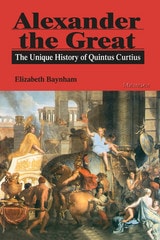
The reign and personality of Alexander the Great---one of the most romantic and powerful kings in history---have remained a source of fascination from antiquity to the present. But because the ancient information surrounding the conqueror is rich, contradictory, and complex, every historian of this near-mythical ruler-whether ancient or modern-invariably creates his or her own Alexander.
The unique work of one such ancient historian, Quintus Curtius, is the subject of Elizabeth Baynham's book. She mines Curtius' study of power for his contemporary perspective, historical methodology, and his portrait of the famous king and presents us with a brilliant, multifaceted study of this unique account regarding one of the most fascinating rulers in history.
Alfarabi and the Foundation of Islamic Political Philosophy
Muhsin S. Mahdi
University of Chicago Press, 2001
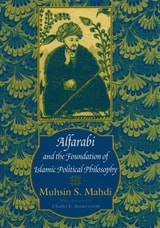
Beginning with a survey of Islamic philosophy and a discussion of its historical background, Mahdi considers the interrelated spheres of philosophy, political thought, theology, and jurisprudence of the time. He then turns to Alfarabi's concept of "the virtuous city," and concludes with an in-depth analysis of the trilogy, Philosophy of Plato and Aristotle.
This philosophical engagement with the writings of and about Alfarabi will be essential reading for anyone interested in medieval political philosophy.
Alfred the Great
The King and His EnglandEleanor Shipley Duckett
University of Chicago Press, 1958
All the Names of the Lord
Lists, Mysticism, and MagicValentina Izmirlieva
University of Chicago Press, 2008
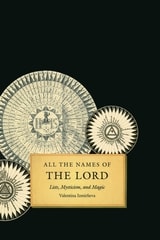
This unexpected juxtaposition of a theological treatise and a magical amulet allows Izmirlieva to reveal lists’ rhetorical potential to create order and to function as both tools of knowledge and of power. Despite the two different visions of order represented by each list, Izmirlieva finds that their uses in Christian practice point to a complementary relationship between the existential need for God’s protection and the metaphysical desire to submit to his infinite majesty—a compelling claim sure to provoke discussion among scholars in many fields.
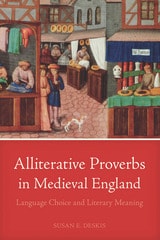
Alliterative Proverbs in Medieval England
Language Choice and Literary MeaningSusan E. Deskis
The Ohio State University Press, 2016
The proverb has been an underutilized resource in tracing the linguistic and intellectual cultures of the past. Making the fullest use of this material, this study, by Susan E. Deskis, is complex in its combination of philology, paroemiology, literary history, and sociolinguistics, ultimately reaching conclusions that are enlightening for both the literary and linguistic histories of medieval England. In the language ecology of England from about 1100 to about 1500, where English, French, and Latin compete for use, alliterative proverbs are marked not only by the choice of English as the language of expression but also because alliteration in Middle English connotes a conscious connection to the past. Alliterative Proverbs in Medieval England: Language Choice and Literary Meaning explores how that connection is exploited in various literary genres from school texts and sermons to romances and cycle plays.
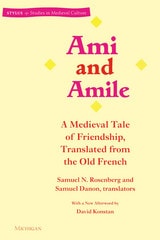
Ami and Amile
A Medieval Tale of Friendship, Translated from the Old FrenchSamuel N. Rosenberg and Samuel Danon
University of Michigan Press, 1996
Amoral Gower
Language, Sex, and PoliticsDiane Watt
University of Minnesota Press, 2003
An innovative reading of John Gower’s work and an exciting new approach to medieval vernacular texts
“Moral Gower” he was called by friend and sometime rival Geoffrey Chaucer, and his “Confessio Amantis” has been viewed as an uncomplicated analysis of the universe, combining erotic narratives with ethical guidance and political commentary. Diane Watt offers the first sustained reading of John Gower’s “Confessio” to argue that this early vernacular text offers no real solutions to the ethical problems it raises—and in fact actively encourages perverse readings.
Drawing on a combination of queer and feminist theory, ethical criticism, and psychoanalytic, historicist, and textual criticism, Watt focuses on the language, sex, and politics in Gower’s writing. How, she asks, is Gower’s “Confessio” related to contemporary controversies over vernacular translation and debates about language politics? How is Gower’s treatment of rhetoric and language gendered and sexualized, and what bearing does this have on the ethical and political structure of the text? What is the relationship between the erotic, ethical, and political sections of “Confessio Amantis”? Watt demonstrates that Gower engaged in the sort of critical thinking more commonly associated with Chaucer and William Langland at the same time that she contributes to modern debates about the ethics of criticism.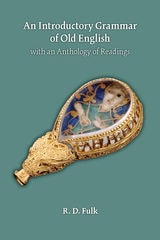
An Introductory Grammar of Old English with an Anthology of Readings
Robert D. Fulk
Arizona Center for Medieval and Renaissance Studies, 2014
Ancient Privileges
Beowulf, Law, and the Making of Germanic AntiquitySTEFAN JURASINSKI
West Virginia University Press, 2006
Ancient Weeds
Contours of Popular and Trash Literature in Ancient and Medieval TimesEdited by Sylva Fischerová and Jirí Starý
Karolinum Press, 2023
The common story in literary studies is that the emergence of popular and junk literature is related to the emergence of modern society due to the rise of literacy and the shortening of workdays. Ancient Weeds upends this misconception by demonstrating that antiquity had its fair share of literary pieces that fit the definition of popular, trivial, and junk literature. The authors analyze artifacts such as the ancient Egyptian Turin Papyrus, ancient love novels, Christian hagiographies and passion plays, lives of Jesus and Marian hymns, Old Norse tales and lying sagas, and Spanish blind romances. Through numerous excerpts, it becomes clear that the line between junk and high literature is thinner than it seems. They reveal how seemingly low themes such as sex and violence often overlap with the themes of high literature. In many cases, low literature is more imaginative and subversive than canonical texts, and bizarreness and non-conformity do not necessarily equate to the ephemerality of a work. As Ancient Weeds shows, thousands of years after it was written, low literature can still be a great source of entertainment today.
Andreas Capellanus, Scholasticism, and the Courtly Tradition
Don A. Monson
Catholic University of America Press, 2005
Angels, Devils
The Supernatural and Its Visual RepresentationGerhard Jaritz
Central European University Press, 2011
Anglicanus ortus
A Verse Herbal of the Twelfth CenturyHenry of Huntingdon
Bodleian Library Publishing, 2012
Animal Skins and the Reading Self in Medieval Latin and French Bestiaries
Sarah Kay
University of Chicago Press, 2017
Bestiaries present accounts of animals whose fantastic behaviors should be imitated or avoided, depending on the given trait. In a highly original argument, Kay suggests that the association of beasts with books is here both literal and material, as nearly all surviving bestiaries are copied on parchment made of animal skin, which also resembles human skin. Using a rich array of examples, she shows how the content and materiality of bestiaries are linked due to the continual references in the texts to the skins of other animals, as well as the ways in which the pages themselves repeatedly—and at times, it would seem, deliberately—intervene in the reading process. A vital contribution to animal studies and medieval manuscript studies, this book sheds new light on the European bestiary and its profound power to shape readers’ own identities.
Anne’s Bohemia
Czech Literature And Society, 1310-1420Alfred Thomas
University of Minnesota Press, 1998
The first book in English on medieval Czech literature.
Anne’s Bohemia is the first general book in English to introduce the little-known riches of medieval Bohemian culture. Alfred Thomas considers the development of Czech literature and society from the election of Count John of Luxembourg as king of Bohemia in 1310 to the year 1420, when the papacy declared a Catholic crusade against the Hussite reformers. This period is of particular relevance to the study of medieval England because of the marriage of Richard II to Anne of Bohemia, the figure around whom this book is focused.
Anne’s Bohemia provides a social context for the most important works of literature written in the Czech language, from the earliest spiritual songs and prayers to the principal Hussite and anti-Hussite tracts of the fifteenth century. The picture that emerges from Thomas’s close readings of these texts is one of a society undergoing momentous political and religious upheavals in which kings, queens, clergy, and heretics all played crucial roles. During the reign of Charles IV (1346-78), the Bohemian Lands became the administrative and cultural center of the Holy Roman Empire and Prague its splendid capital. Comparing and contrasting the situation in Bohemia with the England of Richard II, Anne’s Bohemia charts the growth and decline of the international court culture and the gradual ascendancy of the Hussite reformers in the fifteenth century. Expert but accessibly written, the book offers an engaging overview of medieval Bohemian culture for specialist and nonspecialist alike.ISBN 0-8166-3053-4 Cloth $49.95xxISBN 0-8166-3054-2 Paper $19.95x232 pages 6 black-and-white photos 5 7/8 x 9 AprilMedieval Cultures Series, volume 13Translation inquiries: University of Minnesota Press
Anonymus and Master Roger
Martyn Rady
Central European University Press, 2010
Anselm of Canterbury and the Desire for the Word
Eileen C. Sweeney
Catholic University of America Press, 2012
Answerable Style
The Idea of the Literary in Medieval EnglandFrank Grady and Andrew Galloway
The Ohio State University Press, 2013
Apocalyptic Ecologies
From Creation to Doom in Middle English LiteratureShannon Gayk
University of Chicago Press, 2024
When a series of ecological disasters swept medieval England, writers turned to religious storytelling for precedents. Their depictions of biblical floods, fires, storms, droughts, and plagues reveal an unsettled relationship to the natural world, at once unchanging and bafflingly unpredictable. In Apocalyptic Ecologies, Shannon Gayk traces representations of environmental calamities through medieval plays, sermons, and poetry such as Cleanness and Piers Plowman. In premodern disaster writing, she recovers a vision of environmental flourishing that could inspire new forms of ecological care today: a truly apocalyptic sensibility capable of seeing in every ending, every emergency a new beginning waiting to emerge.