Results by title
1247 books match the query 'Midwest (IA, IL, IN, KS, MI, MN, MO, ND, NE, OH, SD, WI)' and 106 start with a
A Black Gambler’s World of Liquor, Vice, and Presidential Politics
William Thomas Scott of Illinois, 1839–1917Bruce L. Mouser
University of Wisconsin Press, 2014
Scott helped build the National Negro Liberty Party to forward economic, political, and legal rights for his race. But the hustling that had brought him business success proved his undoing as a national political figure. He was the NNLP's initial presidential nominee, only to be replaced by a better-educated and more socially acceptable candidate, George Edwin Taylor.
A Blueprint for Worker Solidarity
Class Politics and Community in WisconsinNaomi R Williams
University of Illinois Press, 2025
Naomi R Williams traces the journeys of two local activists to highlight how people can support democracy and economic freedom in the twenty-first century. In Racine, ideas of class and race shifted but remained strong. The broad-based class politics that emerged drew on racial analysis, vigilant organizing, and agile labor leadership that organized more people. Unionized workers in turn won political power while uniting to resist conservative and corporate attacks. Charting Racine’s transition, Williams breaks down how worker solidarity persevered and presents lessons that can provide valuable guidance for today’s generation of activists.
A Brick and a Bible
Black Women's Radical Activism in the Midwest during the Great DepressionMelissa Ford
Southern Illinois University Press, 2022
Uncovering the social revolution led by Black women in the heartland
In this first study of Black radicalism in midwestern cities before the civil rights movement, Melissa Ford connects the activism of Black women who championed justice during the Great Depression to those involved in the Ferguson Uprising and the Black Lives Matter movement. A Brick and a Bible examines how African American working-class women, many of whom had just migrated to “the promised land” only to find hunger, cold, and unemployment, forged a region of revolutionary potential.
A Brick and a Bible theorizes a tradition of Midwestern Black radicalism, a praxis-based ideology informed by but divergent from American Communism. Midwestern Black radicalism that contests that interlocking systems of oppression directly relates the distinct racial, political, geographic, economic, and gendered characteristics that make up the American heartland. This volume illustrates how, at the risk of their careers, their reputations, and even their lives, African American working-class women in the Midwest used their position to shape a unique form of social activism.
Case studies of Detroit, St. Louis, Chicago, and Cleveland—hotbeds of radical activism—follow African American women across the Midwest as they participated in the Ford Hunger March, organized the Funsten Nut Pickers’ strike, led the Sopkin Dressmakers’ strike, and supported the Unemployed Councils and the Scottsboro Boys’ defense. Ford profoundly reimagines how we remember and interpret these “ordinary” women doing extraordinary things across the heartland. Once overlooked, their activism shaped a radical tradition in midwestern cities that continues to be seen in cities like Ferguson and Minneapolis today.
A City At War
Milwaukee Labor During World War IIRichard L. Pifer
Wisconsin Historical Society Press, 2003

A Conversation about Ohio University and the Presidency, 1975–1994
Charles J. Ping
Ohio University Press, 2013
When Charles Ping first arrived at Ohio University in 1975, the university was experiencing a decline in student enrollment and confronting serious financial challenges. But rather than focusing on its problems, Ping instead concentrated on Ohio University’s potential.
During the nineteen years that Ping served as president, he guided Ohio University in scholarship, research, and service while substantially increasing the size of the campus through the acquisition of The Ridges. “What attracted me was, essentially, the richness of the campus in people and programs,” said Ping.
A Conversation about Ohio University and the Presidency, 1975–1994 is an edited version of the transcript of videotaped interviews recorded in May and June 2011. “It is a conversation between two old friends,” said Ping of the series of interviews conducted by Sam Crowl, Shakespearean scholar and now trustee professor emeritus.
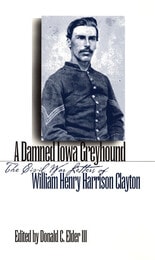
A Damned Iowa Greyhound
The Civil War Letters of William Henry Harrison ClaytonDonald C. Elder, III
University of Iowa Press, 1998
William Henry Harrison Clayton was one of nearly 75,000 soldiers from Iowa to join the Union ranks during the Civil War. Possessing a high school education and superior penmanship, Clayton served as a company clerk in the 19th Infantry, witnessing battles in the Trans-Mississippi theater. His diary and his correspondence with his family in Van Buren County form a unique narrative of the day-to-day soldier life as well as an eyewitness account of critical battles and a prisoner-of-war camp.
Clayton participated in the siege of Vicksburg and took part in operations against Mobile, but his writings are unique for the descriptions he gives of lesser-known but pivotal battles of the Civil War in the West. Fighting in the Battle of Prairie Grove, the 19th Infantry sustained the highest casualties of any federal regiment on the field. Clayton survived that battle with only minor injuries, but he was later captured at the Battle of Stirling's Plantation and served a period of ten months in captivity at Camp Ford, Texas.
Clayton's writing reveals the complicated sympathies and prejudices prevalent among Union soldiers and civilians of that period in the country's history. He observes with great sadness the brutal effects of war on the South, sympathizing with the plight of refugees and lamenting the destruction of property. He excoriates draft evaders and Copperheads back home, conveying the intra-sectional acrimony wrought by civil war. Finally, his racist views toward blacks demonstrate a common but ironic attitude among Union soldiers whose efforts helped lead to the abolition of slavery in the United States.
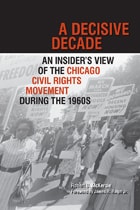
A Decisive Decade
An Insider's View of the Chicago Civil Rights Movement during the 1960sRobert B. McKersie, Foreword by James R. Ralph Jr.
Southern Illinois University Press, 2013
The deeply personal story of a historic time in Chicago, Robert B. McKersie’s A Decisive Decade follows the unfolding action of the Civil Rights Movement as it played out in the Windy City. McKersie’s participation as a white activist for black rights offers a unique, firsthand viewpoint on the debates, boycotts, marches, and negotiations that would forever change the face of race relations in Chicago and the United States at large.
Described within are McKersie’s intimate observations on events as they developed during his participation in such historic occasions as the impassioned marches for open housing in Chicago; the campaign to end school segregation under Chicago Schools Superintendent Benjamin Willis; Operation Breadbasket’s push to develop economic opportunities for black citizens; and dialogs with corporations to provide more jobs for blacks in Chicago. In addition, McKersie provides up close and personal descriptions of the iconic Civil Rights leaders who spearheaded some of the most formative battles of Chicago’s Civil Rights movement, including Dr. Martin Luther King, Jr., Reverend Jesse Jackson, Timuel Black Jr. and W. Alvin Pitcher. The author illumines the tensions experienced by two major institutions in responding to the demands of the civil rights movement: the university and the church. Packed with historical detail and personal anecdotes of these history-making years, A Decisive Decade offers a never-before-seen perspective on one of our nation’s most tumultuous eras.
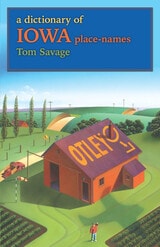
A Dictionary of Iowa Place-Names
Tom Savage
University of Iowa Press, 2007
Savage includes information on the place-names of all 1,188 incorporated and unincorporated communities in Iowa that meet at least two of the following qualifications: twenty-five or more residents; a retail business; an annual celebration or festival; a school; church, or cemetery; a building on the National Register of Historic Places; a zip-coded post office; or an association with a public recreation site. If a town’s name has changed over the years, he provides information about each name; if a name’s provenance is unclear, he provides possible explanations. He also includes information about the state’s name and about each of its ninety-nine counties as well as a list of ghost towns. The entries range from the counties of Adair to Wright and from the towns of Abingdon to Zwingle; from Iowa’s oldest town, Dubuque, starting as a mining camp in the 1780s and incorporated in 1841, to its newest, Maharishi Vedic City, incorporated in 2001.
The imaginations and experiences of its citizens played a role in the naming of Iowa’s communities, as did the hopes of the huge influx of immigrants who settled the state in the 1800s. Tom Savage’s dictionary of place-names provides an appealing genealogical and historical background to today’s map of Iowa.
“It is one of the beauties of Iowa that travel across the state brings a person into contact with so many wonderful names, some of which a traveler may understand immediately, but others may require a bit of investigation. Like the poet Stephen Vincent Benét, we have fallen in love with American names. They are part of our soul, be they family names, town names, or artifact names. We identify with them and are identified with them, and we cannot live without them. This book will help us learn more about them and integrate them into our beings.”—from the foreword by Loren N. Horton
“Primghar, O’Brien County. Primghar was established by W. C. Green and James Roberts on November 8, 1872. The name of the town comes from the initials of the eight men who were instrumental in developing it. A short poem memorializes the men and their names:
Pumphrey, the treasurer, drives the first nail;
Roberts, the donor, is quick on his trail;
Inman dips slyly his first letter in;
McCormack adds M, which makes the full Prim;
Green, thinking of groceries, gives them the G;
Hayes drops them an H, without asking a fee;
Albright, the joker, with his jokes all at par;
Rerick brings up the rear and crowns all ‘Primghar.’
Primghar was incorporated on February 15, 1888.”

A Domestic Cook Book
Containing a Careful Selection of Useful Receipts for the KitchenMalinda Russell
University of Michigan Press, 2025
A Domestic Cook Book contains 260 recipes and household tips that draw from Malinda Russell’s twenty years of experience cooking in Southern kitchens, her boarding house, and her pastry shop, and showcase her skills as a pastry chef. This new edition includes a foreword by scholar Rafia Zafar as well as an introduction by the late food historian Janice Bluestein Longone that contextualize Russell’s cookbook. Using the only known copy of the original book housed in the Janice Bluestein Longone Culinary Archive at the University of Michigan Library's Special Collections Research Center, this new edition preserves an important part of Michigan and American history and makes it widely available to readers for the first time.
A Fire Bell in the Past
The Missouri Crisis at 200, Volume I, Western Slavery, National ImpasseJeffrey L. Pasley
University of Missouri Press, 2021
Drawing on the participants in two landmark conferences held at the University of Missouri and the City University of New York, this first of two volumes finds myriad new perspectives on the Missouri Crisis. Celebrating Missouri’s bicentennial the scholarly way, with fresh research and unsparing analysis, this eloquent collection of essays from distinguished historians gives the epochal struggle over Missouri statehood its due as a major turning point in American history.
Contributors include the editors, Christa Dierksheide, David N. Gellman, Sarah L. H. Gronningsater, Robert Lee, Donald Ratcliffe, Andrew Shankman, Anne Twitty, John R. Van Atta, and David Waldstreicher.
A Fire Bell in the Past
The Missouri Crisis at 200, Volume II: “The Missouri Question” and Its AnswersJeffrey L. Pasley
University of Missouri Press, 2021
Drawn from the of participants in two landmark conferences held at the University of Missouri and the City University of New York, those who contributed original essays to this second of two volumes—a group that includes young scholars and foremost authorities in the field—answer the Missouri “Question,” in bold fashion, challenging assumptions both old and new in the long historiography by approaching the event on its own terms, rather than as the inevitable sequel of the flawed founding of the republic or a prequel to its near destruction.
This second volume of A Fire Bell in the Past features a foreword by Daive Dunkley. Contributors include Dianne Mutti Burke, Christopher Childers, Edward P. Green, Zachary Dowdle, David J. Gary, Peter Kastor, Miriam Liebman, Matthew Mason, Kate Masur, Mike McManus, Richard Newman, and Nicholas Wood.

A French Aristocrat in the American West
The Shattered Dreams of De Lassus De LuzièresCarl J. Ekberg & Foreword by Marie-Sol de La Tour d'Auvergne
University of Missouri Press, 2010
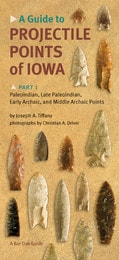
A Guide to Projectile Points of Iowa, Part 1
Paleoindian, Late Paleoindian, Early Archaic, and Middle Archaic PointsJoseph A. Tiffany
University of Iowa Press, 2009
The two beautifully illustrated parts depict a total of sixty-one full-size stone point types in color by archaeological period. References are provided for those wishing to learn more about each type shown. Archaeologist Joseph Tiffany lists the stone type for each point as well as its estimated range of use based on calibrated radiocarbon age, catalog number, and the county where it was found. By providing actual-size color images of the typed points, each part is very easy to use in the field, lab, or classroom.
From the highly finished Clovis points of the Paleoindian period to the delicate notched and stemmed points of the Woodland period, these tangible remnants of vanished cultures reveal the huge changes in the lifeways of Iowa’s native populations over time. Lay and professional archaeologists, collectors, students, and enthusiasts will appreciate the beauty of the photos and the usefulness of the information in this pocket guide to Iowa projectile points.

A Guide to Projectile Points of Iowa, Part 2
Middle Archaic, Late Archaic, Woodland, and Late Prehistoric PointsTiffany, Joseph A.
University of Iowa Press, 2009
The two beautifully illustrated parts depict a total of sixty-one full-size stone point types in color by archaeological period. References are provided for those wishing to learn more about each type shown. Archaeologist Joseph Tiffany lists the stone type for each point as well as its estimated range of use based on calibrated radiocarbon age, catalog number, and the county where it was found. By providing actual-size color images of the typed points, each part is very easy to use in the field, lab, or classroom.
From the highly finished Clovis points of the Paleoindian period to the delicate notched and stemmed points of the Woodland period, these tangible remnants of vanished cultures reveal the huge changes in the lifeways of Iowa’s native populations over time. Lay and professional archaeologists, collectors, students, and enthusiasts will appreciate the beauty of the photos and the usefulness of the information in this pocket guide to Iowa projectile points.
A Historical Guidebook to Old Columbus
Finding the Past in the Present in Ohio’s Capital CityBob Hunter
Ohio University Press, 2012
Ever look at a modern skyscraper or a vacant lot and wonder what was there before? Or maybe you have passed an old house and been curious about who lived there long ago. This richly illustrated new book celebrates Columbus, Ohio’s, two-hundred-year history and supplies intriguing stories about the city’s buildings and celebrated citizens, stopping at individual addresses, street corners, parks, and riverbanks where history was made. As Columbus celebrates its bicentennial in 2012, a guide to local history is very relevant.
Like Columbus itself, the city’s history is underrated. Some events are of national importance; no one would deny that Abraham Lincoln’s funeral procession down High Street was a historical highlight. But the authors have also included a wealth of social and entertainment history from Columbus’s colorful history as state capital and destination for musicians, artists, and sports teams.
The book is divided into seventeen chapters, each representing a section of the city, including Statehouse Square, German Village, and Franklinton, the city’s original settlement in 1797. Each chapter opens with an entertaining story that precedes the site listings. Sites are clearly numbered on maps in each section to make it easy for readers to visit the places that pique their interest. Many rare and historic photos are reproduced along with stunning contemporary images that offer insight into the ways Columbus has changed over the years.
A Historical Guidebook to Old Columbus invites Columbus’s families to rediscover their city with a treasure trove of stories from its past and suggests to visitors and new residents many interesting places that they might not otherwise find. This new book is certain to amuse and inform for years to come.
A History in Indigenous Voices
Menominee, Ho-Chunk, Oneida, Stockbridge, and Brothertown Interactions in the Removal EraCarol Cornelius
Wisconsin Historical Society Press, 2023
Treaties made in the 1800s between the United States and the Indigenous nations of what is now Wisconsin have had profound influence on the region’s cultural and political landscape. Yet few people realize that in the early part of that century, the Menominee and Ho-Chunk Nations of Wisconsin signed land treaties with several Indigenous nations from New York State. At the onset of the removal era, these eastern nations, including the Oneida Nation and the Six Nations Confederacy, were under constant pressure from the federal government and land speculators to move to lands around Green Bay and Lake Winnebago.
In this groundbreaking book, Carol A. Cornelius has compiled a careful account of these nation-to-nation treaties, in large part in the words of those Indigenous leaders who served as the voices and representatives of their nations. Drawing on a rich collection of primary sources, Cornelius walks readers through how, why, and for whom these treaties were made and how the federal government’s failure and unwillingness to acknowledge their legitimacy led to the further loss of Indigenous lands. The living documents transcribed here testify to the complexity and sovereignty of Indigenous governance then and now, making this volume a vital resource for historians and an accessible introduction to Indigenous treatymaking in Wisconsin.
Winner of the 2024 Wisconsin Historical Society’s Book of Merit Award
Finalist for the 2023 Foreword INDIES Book of the Year Award for Adult Nonfiction History
A History of Ann Arbor
Jonathan Marwil
University of Michigan Press, 1991
A History of Badger Baseball
The Rise and Fall of America's Pastime at the University of WisconsinSteven D. Schmitt
University of Wisconsin Press, 2017
There is painful history here, too. African Americans played on Wisconsin's first Big Ten championship team in 1902, including team captain Julian Ware, but there were none on the team between 1904 and 1960. Heartbreaking to many fans was the 1991 decision to discontinue baseball as a varsity sport at the university. Today, Wisconsin is the only member of the Big Ten conference without a men's baseball team.
Appendixes provide details of team records and coaches, All Big Ten and All American selections, Badgers in the major leagues, and Badgers in the amateur free-agent draft.

A History of Bicycling in Illinois
160 Years of Booms and BustsChristopher Sweet
University of Illinois Press, 2026

A History of Chicago, Volume II
From Town to City 1848-1871Bessie Louise Pierce
University of Chicago Press, 1940
Originally conceived as a centennial history of Chicago, the project became, under the guidance of renowned historian Bessie Louise Pierce, a definitive, three-volume set describing the city’s growth—from its humble frontier beginnings to the horrors of the Great Fire, the construction of some of the world’s first skyscrapers, and the opulence of the 1893 World’s Fair. Pierce and her assistants spent over forty years transforming historical records into an inspiring human story of growth and survival.
Rich with anecdotal evidence and interviews with the men and women who made Chicago great, all three volumes will now be available for the first time in years. A History of Chicago will be essential reading for anyone who wants to know this great city and its place in America.
“With this rescue of its history from the bright, impressionable newspapermen and from the subscription-volumes, Chicago builds another impressive memorial to its coming of age, the closing of its first ‘century of progress.’”—E. D. Branch, New York Times (1937)
A History of Chicago, Volume III
The Rise of a Modern City, 1871-1893Bessie Louise Pierce
University of Chicago Press, 1957
Originally conceived as a centennial history of Chicago, the project became, under the guidance of renowned historian Bessie Louise Pierce, a definitive, three-volume set describing the city’s growth—from its humble frontier beginnings to the horrors of the Great Fire, the construction of some of the world’s first skyscrapers, and the opulence of the 1893 World’s Fair. Pierce and her assistants spent over forty years transforming historical records into an inspiring human story of growth and survival.
Rich with anecdotal evidence and interviews with the men and women who made Chicago great, all three volumes will now be available for the first time in years. A History of Chicago will be essential reading for anyone who wants to know this great city and its place in America.
“With this rescue of its history from the bright, impressionable newspapermen and from the subscription-volumes, Chicago builds another impressive memorial to its coming of age, the closing of its first ‘century of progress.’”—E. D. Branch, New York Times (1937)
A History of Hate in Ohio
Then and NowMichael E. Brooks and Bob Fitrakis with an introduction by Marilyn K. Howard
The Ohio State University Press, 2021
A History of Missouri (V1)
Volume I, 1673 to 1820William E. Foley
University of Missouri Press, 1971
Including a completely revised and updated bibliography, A History of Missouri: Volume I, 1673 to 1820 covers the pre-statehood history of Missouri, beginning with the arrival in 1673 of the first Europeans in the area, Louis Jolliet and Jesuit Father Jacques Marquette, and continuing through the development and growth of the region, to the final campaign for statehood in 1820. In tracing the broad outlines of Missouri's development through the formative years, the author examines the origins of Missouri's diverse heritage as the region passed under the control of French, Spanish, and American authorities.

A History of Missouri (V2)
Volume II, 1820 to 1860Perry McCandless
University of Missouri Press, 2000
With a newly revised bibliography, A History of Missouri: Volume II, 1820 to 1860 covers the turbulent years of Missouri's adolescence—from statehood to the outset of the Civil War.

A History of Missouri (V3)
Volume III, 1860 to 1875William E. Parrish
University of Missouri Press, 2001
A History of Missouri: Volume III, 1860 to 1875, now available in paperback with a new, up-to-date bibliography, follows the course of the state's history through the turbulent years of the Civil War and Reconstruction. Increasingly bitter confrontations over the questions of secession and neutrality divided Missourians irreparably in 1861, with the result that the state was represented in the armies both of the North and of the South. During the next four years, Missouri would be the scene of several important battles, including Wilson's Creek and Westport, and much bloody combat as secessionist guerrillas and Union militias engaged in constant encounters throughout the state. Indeed, Missouri probably saw more military encounters during the war than any other state.
Out of the chaos, the Radical party emerged as a powerful political force seeking to eradicate pro-Confederate influences, and its efforts made the Reconstruction era as volatile as the war years had been. Jesse and Frank James, who had been part of Quantrill's guerrillas, continued to provoke disorder through their numerous bank and train robberies. In their efforts to establish a "new order," the Radicals effected a new, highly proscriptive constitution. In the long run, however, they were unable to eradicate the strong conservative influences in the state, and by the mid-1870s reaction set in.
In addition to the important political events of the period, the social and economic conditions of the state immediately before, during, and after the war are treated in A History of Missouri: Volume III. Despite the ravages of war and political dispute, Missouri managed during Reconstruction to make impressive strides in economic development, education, and racial equality. The changes introduced by such industries as railroads, farming, and mining served to revitalize the state and to guarantee its future growth and development.
This volume will be an essential resource for anyone—scholars, students, and general readers—interested in this crucial and important part of Missouri's history.

A History of Physical Education and Athletics at Oberlin College
Lee C. Drickamer with Fredrick D. Shults
The Ohio State University Press, 2022
A History of the Chicago Portage
The Crossroads That Made Chicago and Helped Make AmericaBenjamin Sells
Northwestern University Press, 2021
This fascinating account explores the significance of the Chicago Portage, one of the most important—and neglected—sites in early US history. A seven-mile-long strip of marsh connecting the Chicago and Des Plaines Rivers, the portage was inhabited by the earliest indigenous people in the Midwest and served as a major trade route for Native American tribes. A link between the Mississippi River and the Atlantic Ocean, the Chicago Portage was a geopolitically significant resource that the French, British, and US governments jockeyed to control. Later, it became a template for some of the most significant waterways created in the nineteenth and twentieth centuries. The portage gave Chicago its name and spurred the city’s success—and is the reason why the metropolis is located in Illinois, not Wisconsin.
A History of the Chicago Portage: The Crossroads That Made Chicago and Helped Make America is the definitive story of a national landmark.
A History of the Ozarks, Volume 3
The OzarkersBrooks Blevins
University of Illinois Press, 2021
Brooks Blevins tells the cultural history of the Ozarks as a regional variation of an American story. As he shows, the experiences of the Ozarkers have not diverged from the currents of mainstream life as sharply or consistently as the mythmakers would have it. If much of the region seemed to trail behind by a generation, the time lag was rooted more in poverty and geographic barriers than a conscious rejection of the modern world and its progressive spirit. In fact, the minority who clung to the old days seemed exotic largely because their anachronistic ways clashed against the backdrop of the evolving region around them. Blevins explores how these people’s disproportionate influence affected the creation of the idea of the Ozarks, and reveals the truer idea that exists at the intersection of myth and reality.
The conclusion to the acclaimed trilogy, The History of the Ozarks, Volume 3: The Ozarkers offers an authoritative appraisal of the modern Ozarks and its people.

A History of the University of Wisconsin System
Patricia A. Brady
University of Wisconsin Press, 2020
The UW System serves as a powerful case study for how broad, national trends in higher education take shape on the ground. Brady illustrates the ways culture wars have played out on campuses and the pressures that have mounted as universities have shifted to a student-as-consumer approach. This is the essential, unvarnished story of the unique collection of institutions that serve Wisconsin and the world—and a convincing argument for why recognizing and reinvesting in the System is critically important for the economic and civic future of the state and its citizens.
A House for the Struggle
The Black Press and the Built Environment in ChicagoE. James West
University of Illinois Press, 2022
- Winner of the 2023 Michael Nelson Prize of International Association for Media and History (IAMHIST)
- Recipient of the 2022 Jane Jacobs Urban Communication Book Award
- Winner of the 2023 American Journalism Historians Association Book of the Year
- Winner of the 2023 ULCC’s (Union League Club of Chicago) Outstanding Book on the History of Chicago Award
- Recipient of a 2023 Best of Illinois History Superior Achievement award from the Illinois State Historical Society
- Winner of the 2023 BAAS Book Prize (British Association for American Studies)
- Winner of a 2023 The Brinck Book Award and Lecture series (University of New Mexico School of Architecture + Planning)
- Honorable Mention for the 2021-22 RSAP Book Prize (Research Society for American Periodicals)
Buildings once symbolized Chicago's place as the business capital of Black America and a thriving hub for Black media. In this groundbreaking work, E. James West examines the city's Black press through its relationship with the built environment. As a house for the struggle, the buildings of publications like Ebony and the Chicago Defender embodied narratives of racial uplift and community resistance. As political hubs, gallery spaces, and public squares, they served as key sites in the ongoing Black quest for self-respect, independence, and civic identity. At the same time, factors ranging from discriminatory business practices to editorial and corporate ideology prescribed their location, use, and appearance, positioning Black press buildings as sites of both Black possibility and racial constraint.
Engaging and innovative, A House for the Struggle reconsiders the Black press's place at the crossroads where aspiration collided with life in one of America's most segregated cities.
A Just Cause
The Impeachment and Removal of Governor Rod BlagojevichBernard H. Sieracki. Foreword by Jim Edgar
Southern Illinois University Press, 2016
During the predawn hours of December 9, 2008, an FBI team swarmed the home of Illinois governor Rod Blagojevich and took him away in handcuffs. The shocking arrest, based on allegations of corruption and extortion, launched a chain of political events never before seen in Illinois. In A Just Cause, Bernard H. Sieracki delivers a dynamic firsthand account of this eight-week political crisis, beginning with Blagojevich’s arrest, continuing through his impeachment and trial, and culminating in his conviction and removal from office. Drawing on his own eyewitness observations of the hearings and trial, the comments of interviewees, trial transcripts, and knowledge gained from decades of work with the Illinois legislature, Sieracki tells the compelling story of the first impeachment and removal from office of an Illinois governor, while providing a close look at the people involved.
A Just Cause depicts Blagojevich as a master of political gamesmanship, a circus ringmaster driven by personal ambition and obsessed with private gain. Sieracki examines in depth the governor’s unethical behavior while in office, detailing a litany of partisan and personal hostilities that spanned years. He thoroughly covers the events leading to Blagojevich’s downfall and the reactions of the governor’s cohorts. The author discusses the numerous allegations against Blagojevich, including attempts to “sell” appointments, jobs, and contracts in exchange for financial contributions. Sieracki then exhaustively recounts Blagojevich’s senate trial and the governor’s removal from office.
This engrossing volume is both a richly detailed case study of the American checks-and-balances system and an eyewitness account of unprecedented events. It will appeal to anyone interested in the stunning, true tale of a state upholding the maxim “The welfare of the people is the supreme law.”

A Keg of Their Best
Brewing in the Beer State Capital—From the Beer Baron Era to Modern MicrobrewsRobin Shepard
Wisconsin Historical Society Press, 2026
Wisconsin has long been known as “The Beer State,” and the history of its capital city brims with stories of brewing innovation—from the city’s earliest beer-makers and long-forgotten farmstead breweries to today’s experimental microbrewers and enterprising taprooms. In A Keg of Their Best: Brewing in the Beer State Capital—From the Beer Baron Era to Modern Microbrews, journalist and beer expert Robin Shepard offers an authoritative history of Madison’s brewing legacy and its key figures from the 1830s to the present.
A Keg of Their Best documents how the beer industry emerged before Madison became a city, starting with the arrival of its first white residents, Roseline and Eben Peck, who opened a tavern in the back room of their cabin in 1837. Subsequent waves of German and English immigrants brought their lager and ale recipes and brewing traditions—some of which live on today. The book also explores how the region’s environment—its rich soil and abundant water sources—made it ideal for beer-making. And it reveals how beer barons created and funded much of the early infrastructure that established Madison as the territorial capital.
Readers will discover how brewmasters, bootleggers, and homebrewers survived during Prohibition and the ways the post-Prohibition beer-making renaissance gave rise to the modern craft beer movement. Shepard brings Wisconsin’s brewing history up through today by highlighting the craft brewers, microbrewers, and regional breweries that are producing inspiring pilsners, IPAs, stouts, sours, and other tasty brews in Madison and Dane County’s thriving beer scene.
Drawing from newspaper accounts, ancestry and property records, and hundreds of personal interviews, Shepard has compiled a thorough and engrossing tribute to Madison’s beer-making heritage—including every known brewery in Dane County since the 1840s. Richly illustrated with historical and modern photos, maps, and breweriana, A Keg of Their Best is a must-have for beer enthusiasts, history lovers, and anyone who has raised a pint in the Beer State Capital.
A Literary History of Iowa
Clarence A. Andrews
University of Iowa Press, 1972

A Love Affair with Birds
The Life of Thomas Sadler RobertsSue Leaf
University of Minnesota Press, 2021
The father of Minnesota ornithology, whose life story opens a window on a lost world of nature and conservation in the state’s early days
Imagine a Minneapolis so small that, on calm days, the roar of St. Anthony Falls could be heard in town, a time when passenger pigeons roosted in neighborhood oak trees. Now picture a dapper professor conducting his ornithology class (the university’s first) by streetcar to Lake Harriet for a morning of bird-watching. The students were mostly young women—in sunhats, sailor tops, and long skirts, with binoculars strung around their necks. The professor was Thomas Sadler Roberts (1858–1946), a doctor for three decades, a bird lover virtually from birth, the father of Minnesota ornithology, and the man who, perhaps more than any other, promoted the study of the state’s natural history. A Love Affair with Birds is the first full biography of this key figure in Minnesota’s past.
Roberts came to Minnesota as a boy and began keeping detailed accounts of Minneapolis’s birds. These journals, which became the basis for his landmark work The Birds of Minnesota, also inform this book, affording a view of the state’s rich avian life in its early days—and of a young man whose passion for birds and practice of medicine in a young Minneapolis eventually dovetailed in his launching of the beloved Bell Museum of Natural History.
Bird enthusiast, doctor, author, curator, educator, conservationist: every chapter in Roberts’s life is also a chapter in the state’s history, and in his story acclaimed author Sue Leaf—an avid bird enthusiast and nature lover herself—captures a true Minnesota character and his time.
A Milwaukee Woman's Life on the Left
The Autobiography of Meta BergerMeta Berger
Wisconsin Historical Society Press, 2001
A Mind of Her Own
Helen Connor Laird and Family, 1888–1982Helen L. Laird
University of Wisconsin Press, 2006
A Mind of Her Own: Helen Connor Laird and Family 1888–1982 captures the public achievement and private pain of a remarkable Wisconsin woman and her family, whose interests and influence extended well beyond the borders of the state. Spanning almost a century, the history speaks to the way we were and are: a stridently materialistic nation with a deep and persistent spiritual component.
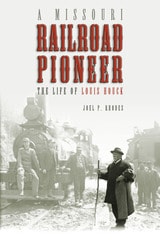
A Missouri Railroad Pioneer
The Life of Louis HouckJoel P. Rhodes
University of Missouri Press, 2013
Lawyer and journalist, entrepreneur and philanthropist, Louis Houck is often called the “Father of Southeast Missouri” because he brought the railroad to the region and opened this backwater area to industrialization and modernization. Although Houck’s name is little known today outside Missouri, Joel Rhodes shows how his story has relevance for both the state and the nation.
Rhodes presents a more complete picture of Houck than has ever been available: reviewing his life from his German immigrant roots, considering his career from both social and political perspectives, and grounding the story in both state and national history. He especially tells how, from 1880 to the 1920s, this self-taught railroader constructed a network of five hundred miles of track through the wilderness of wetlands known as “Swampeast Missouri”—and how these “Houck Roads” provided a boost for population, agriculture, lumbering, and commerce that transformed Cape Girardeau and the surrounding area.
Rhodes discusses how Houck fits into the era of economic individualism—a time when men with little formal training shaped modern industry—and also gives voice to Houck’s critics and shows that he was not always an easy man to work with. In telling the story of his railroading enterprise, Rhodes chronicles Houck’s battle with the Jay Gould railroad empire and offers key insight into the development of America’s railway system, from the cutthroat practices of ruthless entrepreneurs to the often-comic ineptness of start-up rail lines.
More than simply a biography of a business entrepreneur, the book tells how Houck not only developed the region economically but also followed the lead of Andrew Carnegie by making art, culture, and formal education available to all social classes. Houck also served for thirty-six years as president of the Board of Regents of Southeast Missouri State Teacher’s College, and as a self-taught historian he wrote the first comprehensive accounts of Missouri’s territorial period.
A Missouri Railroad Pioneer chronicles a multifaceted career that transformed a region. Solidly researched, this lively narrative also offers an entertaining read for anyone interested in Missouri history.
A Nation within a Nation
Voices of the Oneidas in WisconsinL. Gordon McLester III
Wisconsin Historical Society Press, 2010
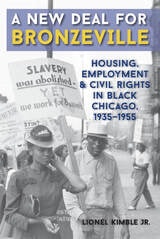
A New Deal for Bronzeville
Housing, Employment, and Civil Rights in Black Chicago, 1935-1955Lionel Kimble Jr.
Southern Illinois University Press, 2015
During the Great Migration of the 1920s and 1930s, southern African Americans flocked to the South Side Chicago community of Bronzeville, the cultural, political, social, and economic hub of African American life in the city, if not the Midwest. The area soon became the epicenter of community activism as working-class African Americans struggled for equality in housing and employment. In this study, Lionel Kimble Jr. demonstrates how these struggles led to much of the civil rights activism that occurred from 1935 to 1955 in Chicago and shows how this working-class activism and culture helped to ground the early civil rights movement. Despite the obstacles posed by the Depression, blue-collar African Americans worked with leftist organizations to counter job discrimination and made strong appeals to New Deal allies for access to public housing. Kimble details how growing federal intervention in local issues during World War II helped African Americans make significant inroads into Chicago’s war economy and how returning African American World War II veterans helped to continue the fight against discrimination in housing and employment after the war. The activism that appeared in Bronzeville was not simply motivated by the “class consciousness” rhetoric of the organized labor movement but instead grew out of everyday struggles for racial justice, citizenship rights, and improved economic and material conditions. With its focus on the role of working-class African Americans—as opposed to the middle-class leaders who have received the most attention from civil rights historians in the past—A New Deal for Bronzeville makes a significant contribution to the study of civil rights work in the Windy City and enriches our understanding of African American life in mid-twentieth-century Chicago.
This publication is partially funded by a grant from Furthermore: a program of the J.M. Kaplan fund.
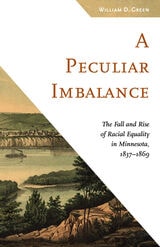
A Peculiar Imbalance
The Fall and Rise of Racial Equality in Minnesota, 1837–1869William D. Green
University of Minnesota Press, 2015
A Peculiar Imbalance is the little-known history of the black experience in Minnesota in the mid-1800s, a time of dramatic change in the region. William D. Green explains how, as white progressive politicians pushed for statehood, black men who had been integrated members of the community, owning businesses and maintaining good relationships with their neighbors, found themselves denied the right to vote or to run for office in those same communities.
As Minnesota was transformed from a wilderness territory to a state, the concepts of race and ethnicity and the distinctions among them made by Anglo-Americans grew more rigid and arbitrary. A black man might enjoy economic success and a middle-class lifestyle but was not considered a citizen under the law. In contrast, an Irish Catholic man was able to vote—as could a mixed-blood Indian—but might find himself struggling to build a business because of the ethnic and religious prejudices of the Anglo-American community. A Peculiar Imbalance examines these disparities, reflecting on the political, social, and legal experiences of black men from 1837 to 1869, the year of black suffrage.
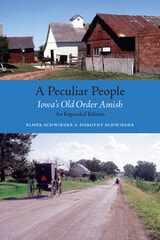
A Peculiar People
Iowa's Old Order AmishElmer Schwieder
University of Iowa Press, 1975
A Peculiar People explores the origin and growth of the Old Order Amish in Iowa, their religious practices, economic organization, family life, the formation of new communities, and the vital issue of education. Included also are appendixes giving the 1967 “Act Relating to Compulsory School Attendance and Educational Standards”; a sample “Church Organization Financial Agreement,” demonstrating the group’s unusual but advantageous mutual financial system; and the 1632 Dortrecht Confession of Faith, whose eighteen articles cover all the basic religious tenets of the Old Order Amish.
Thomas Morain’s new essay describes external and internal issues for the Iowa Amish from the 1970s to today. The growth of utopian Amish communities across the nation, changes in occupation (although The Amish Directory still lists buggy shop operators, wheelwrights, and one lone horse dentist), the current state of education and health care, and the conscious balance between modern and traditional ways are reflected in an essay that describes how the Old Order dedication to Gelassenheit—the yielding of self to the interests of the larger community—has served its members well into the twenty-first century.
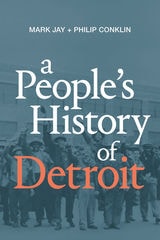
A People's History of Detroit
Mark Jay and Philip Conklin
Duke University Press, 2020
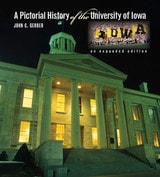
A Pictorial History of the University of Iowa
An Expanded EditionJohn C. Gerber
University of Iowa Press, 1988
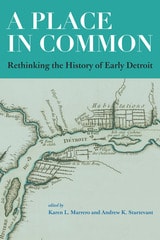
A Place in Common
Rethinking the History of Early DetroitKaren L. Marrero
Michigan State University Press, 2025

A Police State
Politics and Public Safety in Minneapolis, 1945–2020Michael J. Lansing
University of Chicago Press, 2027
How the police in Minneapolis used electoral politics to accrue power and avoid accountability.
The 2020 murder of George Floyd made Minneapolis synonymous with unjust policing and the pain and outrage left in its wake. The city became ground zero for police reform in the United States—even though liberal politicians in Minnesota had promised, and delivered, police reforms for decades. Centered on professionalization, these changes inadvertently exacerbated injustice. Better training and higher standards broadened the influence of the police, who then claimed expertise in public safety. They deployed it to bargain for governmental support, even when they treated residents unfairly. Though Black, Indigenous, and gay residents resisted, the political power amassed by the police rendered real change almost impossible.
In A Police State, historian and fourth-generation Minneapolis resident Michael J. Lansing chronicles how the police became a political force in one of the nation’s most liberal cities. Lansing shows how, in the years after World War II, public safety policies that appealed to voters in the overwhelmingly white city protected and expanded police discretion. As union members, administrators, and citizens, officers shaped these policies to shield themselves and their violent actions from scrutiny. They campaigned for better wages, secured legal safeguards, resisted race-neutral policing, and elected one of their own to the mayor’s office. Ultimately, they used democratic institutions to cultivate and sustain a police state that protected white people and harmed people of color. Lansing uncovers this dysfunctional relationship between a city and its cops while illuminating a larger American story about reform, resistance, and democracy.
A significant exploration of policing politics, this book helps us understand the history that led to George Floyd’s murder—and insists that the future of community safety depends on reenvisioning the role of police in our society.
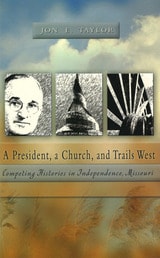
A President, a Church and Trails West
Competing Histories in Independence, MissouriJon E. Taylor
University of Missouri Press, 2008
Over the past century, three nationally significant histories have vied for space and place in Independence, Missouri. Independence was declared Zion by Joseph Smith, served as a gathering and provisioning point for trails west, and was called home by President Harry S. Truman for sixty-four years. Historian Jon E. Taylor has integrated research from newspapers, public documents, oral histories, and private papers to detail how the community has preserved and remembered these various legacies.
Truman’s legacy would appear to have been secured in Independence via three significant designations—his presidential library opened there in 1957, his neighborhood was designated a national historic landmark in 1972, and his home was declared a national historic site in 1982. However, Taylor argues that Truman’s seeming dominance in the community’s memory is in fact endangered by competition from the other aspects of the town’s historical heritage.
Taylor considers the role Mormon history has played in the city's history and chronicles how the Reorganized Church of Jesus Christ of Latter Day Saints returned to Independence to fulfill Joseph Smith's dream of creating Zion in the city, a situation that impacted neighborhoods near the Truman home. Taylor also examines the city's fascination with the Santa Fe, Oregon, and California trails, detailing how that history was lost and remembered and is now immortalized on the Independence square and in the National Frontier Trails Museum.
In the 1980s, the city council reduced the size of the Truman Heritage District, created to maintain Truman’s association with his neighborhood, after church opposition. At the same time, city officials pushed to make Independence a major tourist destination, a move largely dependent upon the city capitalizing on its association with Truman. These inconsistent policies and incongruous goals have led to innumerable changes in the landscape Truman enjoyed during his legendary morning walks.
A President, a Church, and Trails West chronicles one city’s struggle to preserve its history and the built environment. Taylor places the role of preservation in Independence not only within the larger context of preservation in the United States but also within the context of American environmental history. This volume is sure to appeal to anyone interested in public history, historic preservation, history and memory, and local history.
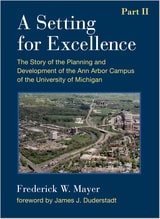
A Setting For Excellence, Part II
The Story of the Planning and Development of the Ann Arbor Campus of the University of MichiganFrederick W. Mayer
University of Michigan Press, 2017
By tracing the development of the Ann Arbor campus from its early days to the present, within the context of the evolution of higher education in America, Mayer provides a strong argument for the importance of rigorous and enlightened campus planning as a critical element of the learning environment of the university. His comprehensive history of campus planning, illustrated with photos, maps, and diagrams from Michigan’s history, is an outstanding contribution to the university’s history as it approaches its bicentennial.

A Settler's Year
Pioneer Life through the SeasonsKathleen Ernst
Wisconsin Historical Society Press, 2015
"This is a book with great meaning for those of us who grew up on farms, and a book to be shared with young people eager to know more about pioneer life." --Jerry Apps, author of "Old Farm: A History" and "Whispers and Shadows: A Naturalist's Memoir"
"A Settler's Year" provides a rare glimpse into the lives of early immigrants to the upper Midwest. Evocative photographs taken at Old World Wisconsin, the country's largest outdoor museum of rural life, lushly illustrate stories woven by historian, novelist, and poet Kathleen Ernst and compelling firsthand accounts left by the settlers themselves.
In this beautiful book, readers will discover the challenges and triumphs found in the seasonal rhythms of rural life in the nineteenth and early twentieth centuries. As they turn the pages--traveling from sprawling farm to tidy crossroads village, and from cramped and smoky cabins to gracious, well-furnished homes--they'll experience the back-straining chores, cherished folk traditions, annual celebrations, and indomitable spirit that comprised pioneer life.
At its heart "A Settler's Year" is about people dreaming of, searching for, and creating new homes in a new land. This moving book transports us back to the pioneer era and inspires us to explore the stories found on our own family trees.

A Short History of Wisconsin
Erika Janik
Wisconsin Historical Society Press, 2010
Rediscover Wisconsin history from the very beginning. A Short History of Wisconsin recounts the landscapes, people, and traditions that have made the state the multifaceted place it is today. With an approach both comprehensive and accessible, historian Erika Janik covers several centuries of Wisconsin's remarkable past, showing how the state was shaped by the same world wars, waves of new inhabitants, and upheavals in society and politics that shaped the nation.
Swift, authoritative, and compulsively readable, A Short History of Wisconsin commences with the glaciers that hewed the region's breathtaking terrain, the Native American cultures who first called it home, and French explorers and traders who mapped what was once called "Mescousing." Janik moves through the Civil War and two world wars, covers advances in the rights of women, workers, African Americans, and Indians, and recent shifts involving the environmental movement and the conservative revolution of the late 20th century. Wisconsin has hosted industries from fur-trapping to mining to dairying, and its political landscape sprouted figures both renowned and reviled, from Fighting Bob La Follette to Joseph McCarthy. Janik finds the story of a state not only in the broad strokes of immigration and politics, but also in the daily lives shaped by work, leisure, sports, and culture. A Short History of Wisconsin offers a fresh understanding of how Wisconsin came into being and how Wisconsinites past and present share a deep connection to the land itself.
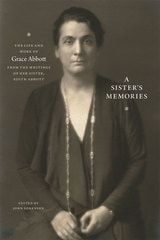
A Sister's Memories
The Life and Work of Grace Abbott from the Writings of Her Sister, Edith AbbottEdited by John Sorensen
University of Chicago Press, 2015
A Sister’s Memories is the inspiring story of Grace Abbott (1878–1939), as told by her sister and social justice comrade, Edith Abbott (1876–1957). Edith recalls in vivid detail the Nebraska childhood, impressive achievements, and struggles of her sister who, as head of the Immigrants’ Protective League and the U.S. Children’s Bureau, championed children’s rights from the slums of Chicago to the villages of Appalachia. Grace’s crusade can perhaps be best summed up in her well-known credo: “Justice for all children is the high ideal in a democracy.” Her efforts saved the lives of thousands of children and immigrants and improved those of millions more. These trailblazing social service works led the way to the creation of the Social Security Act and UNICEF and caused the press to nickname her “The Mother of America’s 43 Million Children.” She was the first woman in American history to be nominated to the presidential cabinet and the first person to represent the United States at a committee of the League of Nations.
Edited by Abbott scholar John Sorensen, A Sister’s Memories is destined to become a classic. It shapes the diverse writings of Edith Abbott into a cohesive narrative for the first time and fills in the gaps of our understanding of Progressive Era reforms. Readers of all backgrounds will find themselves engrossed by this history of the unstoppable, pioneer feminist Abbott sisters.