Results by title
36 books match the query 'Municipal government'
Activism, Majority Rule, and Local Democracy
Rethinking Public InfluenceBrian E. Adams
Temple University Press, 2026
Local democracy doesn’t work as it should, declares Brian Adams in Activism, Majority Rule, and Local Democracy. Local politics is where citizens have the most opportunity for direct participation, control, and influence, but that activism doesn’t necessarily translate into majority rule.
While greater local engagement can produce policy that better reflects activists’ strong preferences, Adams explains that activists are not representative of the public-at-large and states that a reconceptualization of how the public should be able to influence local officials is required. Based on interviews with activists in San Diego, California, Adams concludes that activism can be beneficial, but we need to view it as distinct from majority rule, with a focus on managing the tension between the two.
Improving local democracy is not just a matter of generating more activism. It requires articulating when we want policy to reflect majority preferences and when we want activists to hold sway.
African-American Mayors
Race, Politics, and the American CityEdited by David R. Colburn and Jeffrey S. Adler
University of Illinois Press, 2001
Once in office, African-American mayors faced vexing challenges. In large and small cities from the Sunbelt to the Rustbelt, black mayors assumed office during economic downturns and confronted the intractable problems of decaying inner cities, white flight, a dwindling tax base, violent crime, and diminishing federal support for social programs. Many encountered hostility from their own parties, city councils, and police departments; others worked against long-established power structures dominated by local business owners or politicians. Still others, while trying to respond to multiple demands from a diverse constituency, were viewed as traitors by blacks expecting special attention from a leader of their own race. All struggled with the contradictory mandate of meeting the increasing needs of poor inner-city residents while keeping white businesses from fleeing to the suburbs.
This is the first comprehensive treatment of the complex phenomenon of African-American mayors in the nation's major urban centers. Offering a diverse portrait of leadership, conflict, and almost insurmountable obstacles, this volume assesses the political alliances that brought black mayors to office as well as their accomplishments--notably, increased minority hiring and funding for minority businesses--and the challenges that marked their careers. Mayors profiled include Carl B. Stokes (Cleveland), Richard G. Hatcher (Gary), "Dutch" Morial (New Orleans), Harold Washington (Chicago), Tom Bradley (Los Angeles), Marion Barry (Washington, D.C.), David Dinkins (New York City), Coleman Young (Detroit), and a succession of black mayors in Atlanta (Maynard Jackson, Andrew Young, and Bill Campbell).Probing the elusive economic dimension of black power, African-American Mayors demonstrates how the same circumstances that set the stage for the victories of black mayors exaggerated the obstacles they faced.
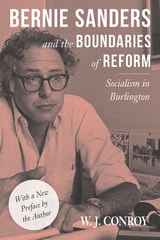
Bernie Sanders and the Boundaries of Reform
Socialism in BurlingtonW. J. Conroy
Temple University Press, 2016
In his preface to this reissue of the 1990 book, Challenging the Boundaries of Reform, W. J. Conroy reflects on the recent legacy of Sanders, his Agenda for America, and his appeal to young voters. His book then looks back to identify Sanders’ experience in Burlington by examining several case studies that unfolded amidst a conservative trend nationally, an unsympathetic state government, and a hostile city council.
Ultimately, Conroy asks what lessons can be drawn from the case of Burlington that would aid the American left in its struggle to capture both government and civil society?

Black Representation and Urban Policy
Albert Karnig and Susan Welch
University of Chicago Press, 1981
In exploring the factors that underlie the election of blacks to public office, the authors found that the resources of the black community itself—the size as well as the education and income of the black population—are the best predictors of blacks' winning political office. The authors' assessment of the impact of black elected officials on urban policy constitutes perhaps their most profoundly important finding. Cities with black mayors have had greater increases in social welfare expenditures than have similar communities without black mayors. The authors point out that election of blacks to mayoral posts, then, can have more than symbolic consequences for public policy.
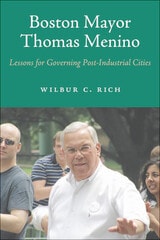
Boston Mayor Thomas Menino
Lessons for Governing Post-Industrial CitiesWilbur C. Rich
University of Massachusetts Press, 2023
Hailed as one of Boston’s most beloved mayors and its longest serving, Thomas Menino (1942–2014) deftly managed the city’s finances and transformed Boston into the hub of innovation that it is today. During his time in office, Boston embraced modern industrial growth and moved forward with noteworthy developments that altered neighborhoods, while also facing ongoing racial strife, challenges of unaffordable housing, and significant public union negotiations.
Mayors in modern American cities occupy unique positions as government leaders who need to remain active parts of their communities in addition to being tasked with fixing neighborhood issues, managing crises, and keeping schools and public infrastructure on course. Situating news coverage alongside interviews with the mayor and his administration, political scientist Wilbur C. Rich chronicles Menino’s time in office while also considering his personal and professional background, his larger-than-life personality, and his ambitions. Menino’s approach to these challenges and opportunities offers enduring lessons to anyone interested in urban government and political leadership.
City Limits
Paul E. Peterson
University of Chicago Press, 1981
"City Limits radically reinterprets urban politics by deriving its dominant forces from the logic of the American federal structure. It is thereby able to explain some pervasive tendencies of urban political outcomes that are puzzling or scarcely noticed at all when cities are viewed as autonomous units, outside the federal framework. Professor Peterson's analysis is imaginativelyfor conceived and skillfully carried through. His beautifully finished volume will lastingly alter our understanding of urban affairs in America."—from the citation by the selection committee for the Woodrow Wilson Foundation Award
City and Regime in the American Republic
Stephen L. Elkin
University of Chicago Press, 1987
The present workings of American urban political institutions are, Elkin maintains, characterized by a close relationship between politicians and businessmen, a relationship that promotes neither political equality nor effective social problem-solving. Elkin pays particular attention to the issue of land-use in his analysis of these failures of popular control in traditional city politics. Urban political institutions, however, are not just instruments for the dispensing of valued outcomes or devices for social problem-solving—they help to form the citizenry. Our present institutions largely define citizens as interest group adversaries and do little to encourage them to focus on the commercial public interest of the city. Elkin concludes by proposing new institutional arrangements that would be better able to harness the self-interested behavior of individuals for the common good of a commercial republic.
Contested City
Municipal Politics and the Rise of Nazism in Altona, 1917-1937Anthony McElligott
University of Michigan Press, 1998
Does Local Government Matter?
How Urban Policies Shape Civic EngagementElaine B. Sharp
University of Minnesota Press, 2012
Until recently, policy evaluation has mostly meant assessing whether government programs raise reading levels, decrease teen pregnancy rates, improve air quality levels, lower drunk-driving rates, or achieve any of the other goals that government programs are ostensibly created to do. Whether or not such programs also have consequences with respect to future demands for government action and whether government programs can heighten—or dampen—citizen involvement in civic activities are questions that are typically overlooked.
This book applies such questions to local government. Employing policy feedback theory to a series of local government programs, Elaine B. Sharp shows that these programs do have consequences with respect to citizens’ political participation. Unlike other feedback theory investigations, which tend to focus on federal government programs, Sharp’s looks at a broad range of policy at the local level, including community policing programs, economic development for businesses, and neighborhood empowerment programs.
With this clear-eyed analysis, Sharp finds that local governments’ social program activities actually dampen participation of the have-nots, while cities’ development programs reinforce the political involvement of already-privileged business interests. Meanwhile, iconic urban programs such as community policing and broader programs of neighborhood empowerment fail to enhance civic engagement or build social capital at the neighborhood level; at worst, they have the potential to deepen divisions—especially racial divisions—that undercut urban neighborhoods.
Everyday Law on the Street
City Governance in an Age of DiversityMariana Valverde
University of Chicago Press, 2012
Governing American Cities
Inter-Ethnic Coalitions, Competition, and ConflictMichael Jones-Correa
Russell Sage Foundation, 2001
Implementing City Sustainability
Overcoming Administrative Silos to Achieve Functional Collective ActionRachel M. Krause and Christopher V. Hawkins
Temple University Press, 2021
Implementing City Sustainability examines the structures and processes that city governments employ to pursue environmental, social, and economic well-being within their communities. As American cities adopt sustainability objectives, they are faced with the need to overcome fuzzy-boundary, coordination, and collective action challenges to achieve successful implementation.
Sustainability goals often do not fit neatly into traditional city government structures, which tend to be organized around specific functional responsibilities, such as planning, public works, parks and recreation, and community development. The authors advance a theory of Functional Collective Action and apply it to local sustainability to explain how cities can—and in some cases do—organize to successfully administer changes to achieve complex objectives that transcend these organizational separations. Implementing City Sustainability uses a mixed-method research design and original data to provide a national overview of cities’ sustainability arrangements, as well as eight city case studies highlighting different means of organizing to achieve functional collective action.
By focusing not just on what cities are doing to further sustainability, but also on how they are doing it, the authors show how administrative structure enables—or inhibits—cities to overcome functional divides and achieve successful outcomes.
Jerusalem 1900
The Holy City in the Age of PossibilitiesVincent Lemire
University of Chicago Press, 2017
In this masterly history, Lemire uses newly opened archives to explore how Jerusalem’s elite residents of differing faiths cooperated through an intercommunity municipal council they created in the mid-1860s to administer the affairs of all inhabitants and improve their shared city. These residents embraced a spirit of modern urbanism and cultivated a civic identity that transcended religion and reflected the relatively secular and cosmopolitan way of life of Jerusalem at the time. These few years would turn out to be a tipping point in the city’s history—a pivotal moment when the horizon of possibility was still open, before the council broke up in 1934, under British rule, into separate Jewish and Arab factions. Uncovering this often overlooked diplomatic period, Lemire reveals that the struggle over Jerusalem was not historically inevitable—and therefore is not necessarily intractable. Jerusalem 1900 sheds light on how the Holy City once functioned peacefully and illustrates how it might one day do so again.
Justice at Work
The Rise of Economic and Racial Justice Coalitions in CitiesMarc Doussard
University of Minnesota Press, 2022
A pathbreaking look at how progressive policy change for economic justice has swept U.S. cities
In the 2010s cities and counties across the United States witnessed long-overdue change as they engaged more than ever before with questions of social, economic, and racial justice. After decades of urban economic restructuring that intensified class divides and institutional and systemic racism, dozens of local governments countered the conventional wisdom that cities couldn’t address inequality—enacting progressive labor market policies, from $15 minimum wages to paid sick leave.
Justice at Work examines the mutually reinforcing roles of economic and racial justice organizing and policy entrepreneurship in building power and support for policy changes. Bridging urban social movement and urban politics studies, it demonstrates how economic and racial justice coalitions are collectively the critical institution underpinning progressive change. It also shows that urban policy change is driven by “urban policy entrepreneurs” who use public space and the intangible resources of the city to open “agenda windows” for progressive policy proposals incubated through national networks.
Through case studies of organizing and policy change efforts in cities including Chicago, Seattle, and New Orleans around minimum wages, targeted hiring, paid time off, fair scheduling, and anti-austerity, Marc Doussard and Greg Schrock show that the contemporary wave of successful progressive organizing efforts is likely to endure. Yet they caution that success is dependent on skillful organizing that builds and sustains power at the grassroots—and skillful policy work inside City Hall. By promoting justice at—and increasingly beyond—work, these movements hold the potential to unlock a new model for inclusive economic development in cities.
Latino Mayors
Political Change in the Postindustrial CityMarion Orr
Temple University Press, 2018
As recently as the early 1960s, Latinos were almost totally excluded from city politics. This makes the rise of Latino mayors in the past three decades a remarkable American story—one that explains ethnic succession, changing urban demography, and political contexts. The vibrant collection Latino Mayors features case studies of eleven Latino mayors in six American cities: San Antonio, Los Angeles, Denver, Hartford, Miami, and Providence.
The editors and contributors analyze Latino mayors for their governing styles and policies. They describe how candidates shaped race, class, and economic issues—particularly in deracialized campaigns. Latino Mayors also addresses coalition politics, political incorporation, and how community groups operate, as well as the challenges these pioneers have faced in office from political tensions and governance issues that sometimes even harm Latinos.
Ultimately, Latino Mayors charts the performances, successes, and failures of these elected officials to represent their constituents in a changing economic and urban environment.
Contributors include: Stefanie Chambers, Carlos E. Cuéllar, Emily M. Farris, Maria Ilcheva, Robert Preuhs, Heywood T. Sanders, Ellen Shiau, and the editors.
Learning from Shenzhen
China’s Post-Mao Experiment from Special Zone to Model CityEdited by Mary Ann O'Donnell, Winnie Wong, and Jonathan Bach
University of Chicago Press, 2017
Bringing China studies into dialogue with urban studies, the contributors explore how the post-Mao Chinese appropriation of capitalist logic led to a dramatic remodeling of the Chinese city and collective life in China today. These essays show how urban villages and informal institutions enabled social transformation through cases of public health, labor, architecture, gender, politics, education, and more. Offering scholars and general readers alike an unprecedented look at one of the world’s most dynamic metropolises, this collective history uses the urban case study to explore critical problems and possibilities relevant for modern-day China and beyond.
Local Officials and the Struggle to Transform Cities
A View from Post-Apartheid South AfricaEdited by Claire Bénit-Gbaffou
University College London, 2024
Why are even progressive local authorities with the will to improve seldom able to change cities? Why does it seem almost impossible to redress spatial inequalities, deliver and maintain basic services, elevate impoverished areas, and protect marginalized communities? Why do municipalities in the Global South refuse to work with prevailing social informalities, and resort instead to interventions that are known to displace and aggravate the very issues they aim to address?
Local Officials and the Struggle to Transform Cities analyzes these challenges in South African cities, where the brief post-apartheid moment opened a window for progressive city government and made research into state practices both possible and necessary. The book interrogates city officials’ practices through a comparative gaze into other ‘progressive moments’ in large cities in Brazil, the United States, and India. It considers the instruments that these officials invent to implement urban policies, the agency these officials develop, and the constraints they navigate in governing unequal cities. Claire Bénit-Gbaffou captures in this book actual officials’ practices through first-hand experience, state ethnographies, and engaged research. This reveals day-to-day practices that question generalized explanations of state failure in complex urban societies as essential malevolence, contextual weakness, corruption, and inefficiency.
This book opens the black box of the workings of the state, with the hope of opening paths for the construction of progressive policies in contemporary cities.
MAKING SENSE OF THE CITY
LOCAL GOVERNMENT, CIVIC CULTURE, AND COMMUNITY LIFE IN URBAN AMERICAROBERT B. FAIRBANKS
The Ohio State University Press, 2001
Making Sense of the City explores the ways in which urbanites have attempted to confront the challenges of urban life during the nineteenth and twentieth centuries. In the spirit of Zane L. Miller, whom this volume honors, the nine contributors focus closely on the words and actions of individuals, institutions, and organizations who participated in the public discourse about what the city was or could be. Through an examination of such topics as city charters, city planning texts, neighborhood organizations, municipal recreation programs, urban government reforms, urban identity, and fair housing campaigns, the authors offer insight into the process through which ideas about the nature of the city have affected action in the urban environment.
Contributing authors are
- Robert B. Fairbanks
- Patricia Mooney-Melvin
- Judith Spraul-Schmidt
- Alan I. Marcus
- Robert A. Burnham
- Andrea Tuttle Kornbluh
- Bradley D. Cross
- Charles F. Casey-Leininger
- Roger W. Lotchin

NEWER IDEALS OF PEACE
Jane Addams
University of Illinois Press, 2006
In this her second book, Jane Addams moves beyond humanitarian appeals to sensibility and prudence, advancing a more aggressive, positive idea of peace as a dynamic social process emerging out of the poorer quarters of cosmopolitan cities. Her deep analysis of relations among diverse groups in U.S. society, exemplified by inter-ethnic and labor relations in Chicago, draws widely useful lessons for both domestic and global peace, in an early formulation of today’s "globalization from below."
In an unprecedented, revolutionary critique of the pervasive militarization of society, Addams applies her scathing pen to traditional advocates and philosophers of “negative” peace, founders of the U.S. constitution, militarists, bigots, imperialists, and theories of “democratic peace” and liberal capitalism. Instead she sees a slow, powerful emergence of forces from below--the poor, the despised, workers, women, ethnic and racial communities, oppressed groups at home and abroad--that would invent moral substitutes for war and gradually shape a just, peaceful, and varied social order. An extensive, in-depth introduction by Berenice Carroll and Clinton Fink provides historical context, analysis, and a reassessment of the theoretical and practical significance of Newer Ideals of Peace today.
New Jersey's Multiple Municipal Madness
Karcher, Alan
Rutgers University Press, 1998
Alan Karcher looks at the history and high cost of New Jersey's multiple municipalities. He investigates the economic considerations, political pressures, and personal agendas that created the bizarre configurations dividing the Garden State, while analyzing the public policies that allowed and even encouraged the formation of new municipalities. Karcher also examines the political dynamics that thwarted every effort of New Jersey metropolises to join the front ranks of major American cities.
Karcher identifies the major motivations behind the unparalleled experience of New Jersey's municipal multiplication. He delves deeply into the primary causes of new lines being drawn, such as road appropriations, the location of a railroad station, control of a local school district, the regulation of alcohol sales, and the preservation of exclusivity prior to the acceptance of zoning. He also assesses the present situation and what has happened in the past 60 years since the municipal multiplication madness ceased, calling on elected officials to confront reality and correct yesterday's excesses.
The genesis of the present political map of the state is a story that while interesting is not always charming, while fascinating is far from edifying. Little in the history can be called quaint. Rather it is a story of separation and exclusion, of division and greed, of preservation of prerogatives and prejudices. It is a story that supports the conclusion that these lines are rarely the product of chance, rather they were drawn by politicians with very human foibles and frailties, and with very narrow agendas-agendas that have proven to be egregiously expensive for today's taxpayers.
Alan Karcher, the former Speaker of the New Jersey Assembly during the activist 1980s, currently practices municipal law in Middlesex County. He represents the third generation of his family to serve as a member of the New Jersey State Legislature.
Political Monopolies in American Cities
The Rise and Fall of Bosses and ReformersJessica Trounstine
University of Chicago Press, 2008
Situating her in-depth studies of Chicago and San Jose in the broad context of data drawn from more than 240 cities over the course of a century, she finds that the answer—a resounding yes—illuminates the nature of political power. Both political machines and reform governments, she reveals, bias the system in favor of incumbents, effectively establishing monopolies that free governing coalitions from dependence on the support of their broader communities. Ironically, Trounstine goes on to show, the resulting loss of democratic responsiveness eventually mobilizes residents to vote monopolistic regimes out of office. Envisioning an alternative future for American cities, Trounstine concludes by suggesting solutions designed to free urban politics from this damaging cycle.
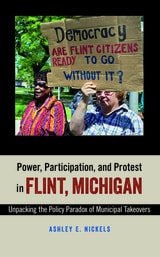
Power, Participation, and Protest in Flint, Michigan
Unpacking the Policy Paradox of Municipal TakeoversAshley E. Nickels
Temple University Press, 2019
When the 2011 municipal takeover in Flint, Michigan placed the city under state control, some supported the intervention while others saw it as an affront to democracy. Still others were ambivalent about what was supposed to be a temporary disruption. However, the city’s fiscal emergency soon became a public health emergency—the Flint Water Crisis—that captured international attention.
But how did Flint’s municipal takeovers, which suspended local representational government, alter the local political system? In Power, Participation, and Protest in Flint, Michigan, Ashley Nickels addresses the ways residents, groups, and organizations were able to participate politically—or not—during the city’s municipal takeovers in 2002 and 2011. She explains how new politics were created as organizations developed, new coalitions emerged and evolved, and people’s understanding of municipal takeovers changed.
Inwalking readers through the policy history of, implementation of, and reaction to Flint’s two municipal takeovers, Nickels highlights how the ostensibly apolitical policy is, in fact, highly political.
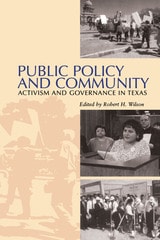
Public Policy and Community
Activism and Governance in TexasEdited by Robert H. Wilson
University of Texas Press, 1997
The decentralization of public policy from the federal government to state and local governments offers increased opportunities for ordinary citizens to participate directly in public policymaking. Yet these opportunities may not be equally shared. Due to a variety of factors, low-income citizens have long been denied a meaningful role in the public life and governance of our country.
By contrast, the essays in this volume explore how low-income citizens have successfully affected public policy. The book is built around six case studies, all from Texas, that cover education finance and reform, local infrastructure provision, environmental protection, and indigent health care.
This research illuminates several issues of national importance, including how communities gain standing and recognition for themselves and their issues, how policy agendas are defined, how communities mobilize technical and institutional resources, and how they form coalitions and alliances to accomplish their goals.
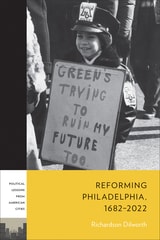
Reforming Philadelphia, 1682–2022
Richardson Dilworth
Temple University Press, 2023
Reforming Philadelphia examines the cyclical efforts of insurgents to change the city’s government over nearly 350 years. Political scientist Richardson Dilworth tracks reformers as they create a new purpose for the city or reshape the government to reflect emerging ideas. Some wish to thwart the “corrupt machine,” while others seek to gain control of the government via elections. These actors formed coalitions and organizations that disrupted the status quo in the hope of transforming the city (and perhaps also enriching themselves).
Dilworth addresses Philadelphia’s early development through the present day, including momentous changes from its new city charter in 1885 and the Republican machine that emerged around the same time to its transformation to a Democratic stronghold in the 1950s, when the city also experienced a racial transition. Focusing primarily on the twentieth and twenty-first centuries, Dilworth evaluates the terms of Mayors Frank Rizzo, Wilson Goode, and Ed Rendell, as well as John Street, Michael Nutter, and Jim Kenney to illustrate how power and resistance function, and how Philadelphia’s political history and reform cycles offer a conceptual model that can easily be applied to other cities.
Reforming Philadelphia provides a new framework for understanding the evolving relationship between national politics and local, city politics.
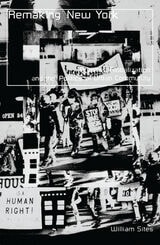
Remaking New York
Primitive Globalization And The Politics Of Urban CommunityWilliam Sites
University of Minnesota Press, 2003
Uses New York City to discuss the ways that policy has mismanaged the effects of globalization
Inequality increases, instability grows, communities fragment: this is the fate of a city in the wake of globalization—but is globalization really the cause? Proposing a new perspective on politics, globalization, and the city, this provocative book argues that such urban problems result in part from U.S. policies that can be changed.
William Sites develops the concept of primitive globalization, identifying a pattern of reactive politics—ad hoc measures to subsidize business, displace the urban poor, and dismantle the welfare state—that uproots social actors (corporations, citizens, urban residents) and facilitates a damaging, short-term-oriented type of international integration. In light of this theory, Sites examines the transformation of New York City since the 1970s, focusing on the logic of political action at national, local, and neighborhood levels. In the process, the story of late twentieth-century New York and its Lower East Side community emerges as something different: not a tale of globalist transformation or of local resurgence but a distinctly American case, one in which urban politics and the state, in their own right, exacerbate inequality and community fragmentation within the city.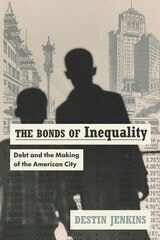
The Bonds of Inequality
Debt and the Making of the American CityDestin Jenkins
University of Chicago Press, 2021
In this passionate and deeply researched book, Destin Jenkins shows in vivid detail how, beyond the borrowing decisions of American cities and beneath their quotidian infrastructure, there lurks a world of politics and finance that is rarely seen, let alone understood. Focusing on San Francisco, The Bonds of Inequality offers a singular view of the postwar city, one where the dynamics that drove its creation encompassed not only local politicians but also banks, credit rating firms, insurance companies, and the national municipal bond market. Moving between the local and the national, The Bonds of Inequality uncovers how racial inequalities in San Francisco were intrinsically tied to municipal finance arrangements and how these arrangements were central in determining the distribution of resources in the city. By homing in on financing and its imperatives, Jenkins boldly rewrites the history of modern American cities, revealing the hidden strings that bind debt and power, race and inequity, democracy and capitalism.
The Hidden Face of Local Power
Appointed Boards and the Limits of DemocracyMirya R. Holman
Temple University Press, 2025
The Hidden Face of Local Power explicates the purpose, role, and consequences of appointed boards in U.S. cities. Mirya Holman finds cities create strong boards that generate policy, consolidate power, and defend the interests of businesses and wealthy and white residents. In contrast, weak boards pacify agitation from marginalized groups to give the appearance of inclusivity, democratic deliberation, and redistributional policymaking. Cities preserve this strong board/weak board dichotomy through policymaking power, institutional design, and by controlling who serves on the boards.
The Hidden Face of Local Power examines the role of boards in the development of urban political institutions, the allocation of power in local politics, and the persistence of inequality. Holman enhances our understanding of how political institutions have contributed to racism and their impact on how people use and live in urban spaces. In her shrewd analysis of the creation and use of boards as political institutions, Holman proves that neither weak or strong boards achieves the goal they are advertised to achieve. In doing so, she provides a new view of the failures of local democracy along with ideas for improvement.
The New Chicago Way
Lessons from Other Big CitiesEd Bachrach and Austin Berg
Southern Illinois University Press, 2019
Rather than simply lament the situation, criticize specific leaders, or justify an ideology, Bachrach and Berg compare the decisions about Chicago’s governance and finances with choices made in fourteen other large U.S. cities. The problems that seem unique to Chicago have been encountered elsewhere, and Chicagoans, the authors posit, can learn from the successful solutions other cities have embraced.
Chicago government and its citizens must let go of the past to prepare for the future, argue Bachrach and Berg. A future filled with demographic, technological, and economic change requires a government capable of responding and adapting. Reforms can transform the city. The prescriptions for change provided in this book point toward a hopeful future: the New Chicago Way.
The People's Money
Pensions, Debt, and Government ServicesEdited by Michael A. Pagano
University of Illinois Press, 2019
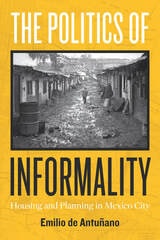
The Politics of Informality
Housing and Planning in Mexico CityEmilio de Antuñano
University of Texas Press, 2026
An examination of the central role and political power of informal neighborhoods in Mexico City.
At the beginning of the twentieth century, Mexico City was tightly bounded, with a population of about half a million people. By the end of that century, it was an unfathomable megalopolis of some 20 million. It had also become exhibit A in an “urban crisis” decried by demographers, NGOs, and the Mexican government. Mexico City’s greatest sin was its shantytowns—informal neighborhoods built in defiance of regulations and viewed as incurably disordered.
The Politics of Informality is an illuminating political and intellectual history, examining how these neighborhoods have figured in Mexican life and in the ideologies underlying urban planning. Prior to the Mexican Revolution of 1910, urban experts saw Mexico City as a tidy modern capital in-waiting. But during the interwar period, informal neighborhoods boomed, as working-class families asserted claims to housing under the revolution’s framework of citizenship and social justice. Then, amid Cold War realignments, a new cohort of urban experts pathologized Mexico City, turning it into a transnational laboratory for the study of poverty, migration, and overpopulation. Tracing a fascinating evolution, ThePolitics of Informality underscores the stubborn opposition between technocratic modernism and revolutionary, extralegal politics.

The Progressive City
Planning and Participation, 1969-1984Clavel, Pierre
Rutgers University Press, 1986
The Public Good and the Brazilian State
Municipal Finance and Public Services in São Paulo, 1822–1930Anne G. Hanley
University of Chicago Press, 2018
In The Public Good and the Brazilian State, Anne G. Hanley assembles an economic history of public revenues as they developed in nineteenth-century Brazil. Specifically, Hanley investigates the financial life of the municipality—a district comparable to the county in the United States—to understand how the local state organized and prioritized the provision of public services, what revenues paid for those services, and what happened when the revenues collected failed to satisfy local needs. Through detailed analyses of municipal ordinances, mayoral reports, citizen complaints, and financial documents, Hanley sheds light on the evolution of public finance and its effect on the early economic development of Brazilian society. This deeply researched book offers valuable insights for anyone seeking to better understand how municipal finance informs histories of inequality and underdevelopment.
The Voluntary City
Choice, Community, and Civil SocietyDavid T. Beito, Peter Gordon, and Alexander Tabarrok, Editors
University of Michigan Press, 2002
Town Meeting
Practicing Democracy in Rural New EnglandDonald L. Robinson
University of Massachusetts Press, 2011
At Gettysburg, Abraham Lincoln described government by the people as “the great task remaining before us.” Many citizens of modern America, frustrated and disheartened, are tempted to despair of realizing that ideal. Yet, it is a project still alive in parts of New England.
This book traces the origins of town-meeting democracy in Ashfield, a community of just under 2,000 people in the foothills of the Berkshires in western Massachusetts. Donald Robinson begins by recounting several crises at the town's founding in the eighteenth century that helped to shape its character. He shows how the town has changed since then and examines how democratic self-government functions in the modern context.
The picture is not pretty. Self-government carries no guarantees, and Ashfield is no utopia. Human failings are abundantly on display. Leaders mislead. Citizens don't pay attention and they forget hard-earned lessons.
But in this candid account of the operation of democracy in one New England town, Robinson demonstrates that for better and for worse, Ashfield governs itself democratically. Citizens control the actions of their government. Not everyone participates, but all may, and everyone who lives in the town must accept and obey what town meeting decides.
Welcoming New Americans?
Local Governments and Immigrant IncorporationAbigail Fisher Williamson
University of Chicago Press, 2018
Abigail Fisher Williamson explores why and how local governments across the country are taking steps to accommodate immigrants, sometimes despite serious political opposition. Drawing on case studies of four new immigrant destinations—Lewiston, Maine; Wausau, Wisconsin; Elgin, Illinois; and Yakima, Washington—as well as a national survey of local government officials, she finds that local capacity and immigrant visibility influence whether local governments take action to respond to immigrants. State and federal policies and national political rhetoric shape officials’ framing of immigrants, thereby influencing how municipalities respond. Despite the devolution of federal immigration enforcement and the increasingly polarized national debate, local officials face on balance distinct legal and economic incentives to welcome immigrants that the public does not necessarily share. Officials’ efforts to promote incorporation can therefore result in backlash unless they carefully attend to both aiding immigrants and increasing public acceptance. Bringing her findings into the present, Williamson takes up the question of whether the current trend toward accommodation will continue given Trump’s anti-immigrant rhetoric and changes in federal immigration policy.
Women in Politics in the American City
Myra Holman
Temple University Press, 2014
This book provides the first comprehensive evaluation of the influence of gender on the behavior of mayors and city council members in the United States. Holman considers the effects of gender in local, urban politics and analyzes how a leader's gender does-and does not-influence policy preferences, processes, behavior, and outcomes.
Holman effectively uses original survey data to evaluate policy attitudes, combined with observations of city council meetings and interviews with leaders and community members. In doing so, she demonstrates the importance of considering the gender of leaders in local office.
Women in Politics in the American City emphasizes that the involvement of women in local politics does matter and that it has significant consequences for urban policy as well as state and local democracy.