Results by title
16 books match the query 'Neurology'
A Clinician's Guide to Progressive Supranuclear Palsy
Golbe, Lawrence I
Rutgers University Press, 2019
A Clinician’s Guide to Progressive Supranuclear Palsy emphasizes early diagnostic signs, medication options, non-pharmacologic management and palliative care. It offers a quick overview of the complications of PSP most likely to prompt an ER visit; a widening spectrum of PSP variants; and ample description of the genetics, epidemiology, natural history, pathology, molecular biology and neurochemistry of PSP. The PSP Rating Scale used in the book is a convenient tool for clinicians in routine practice and the leading PSP clinical measure world-wide. Golbe provides a practical and useful guidebook to help all clinicians learn and battle this complex disorder.

Alzheimer's and Dementia
A Practical and Legal Guide for Nevada Caregivers, Revised and UpdatedKim Boyer
University of Nevada Press, 2025
The book, specific to Nevada, covers state laws including Medicaid planning, asset protection, guardianship, probate, advance directives, and patient rights. It also addresses estate and financial planning, and provides a detailed list of resources available to assist caregivers. Written by an elder law attorney and a gerontologist, Alzheimer’s and Dementiaoffers insights from two professionals who provide practical solutions to common obstacles faced by caregivers, helping them support the needs and overcome the challenges facing those coping with these diseases.
Boyer and Shapiro coauthored The Essential Eldercare Handbook for Nevada also available from the University of Nevada Press.

Alzheimer’s and Dementia
A Practical and Legal Guide for Nevada CaregiversKim Boyer
University of Nevada Press, 2012
Cerebral Herniation Syndromes and Intracranial Hypertension
Koenig, Matthew
Rutgers University Press, 2016
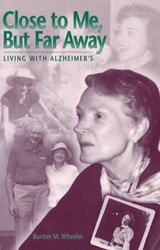
Close to Me, but Far Away
Living with Alzheimer'sBurton M. Wheeler
University of Missouri Press, 2001
Each day Burt Wheeler is plagued by the same question. When did it happen? If he could pinpoint the beginning, then he might begin to make peace with himself. He vividly remembers when the doctor diagnosed Kee, his loving wife of over fifty years, with "Alzheimer-type dementia." But, as hard as he tries, it's impossible for him to determine when his wife's dementia started. He remembers her bout with depression, but that, he thinks, was surely due to her breast cancer. There was their dream vacation to Greece when Kee seemed so tired and indifferent. There were the unopened books, when reading had always been such a source of pleasure to her. And, he recalls, the gradual personality changes with friends, and even with family.
Wheeler started writing this book as a form of self-therapy when he found himself thrust into the role of caretaker to his wife--a role for which he felt unprepared. He wrote in memory of the very special woman his wife had been—a wonderful mother, charming and gracious, as well as a deeply respected psychotherapist. She was also his best friend, and he loved her. So, to some degree, this is a love story—a story about two people who have shared life's ups and downs for over fifty years. It's also about commitment.
In Close to Me, but Far Away, Wheeler provides insight into what a caregiver's day is like, as he shares his most intimate thoughts with us. The book provides a window into the author's personal life as he seeks to confront his own ineptitude and the occasional despair he feels as he deals daily with Alzheimer's. He also touches on the question of what keeps him going through times of exhaustion and frustration. Part of his answer lies in holding tenaciously to memories, and part lies in what he believes is a human's extraordinary capacity to continue plodding along simply because he must. Wheeler also believes in rejoicing in the beauty that can be experienced, and he believes in humor, humor achieved only by distancing ourselves from the events that so deeply engage us. And, of course, there is also the indefinable nature of love.
Alzheimer's is a terrifying and horrible disease, as much for loved ones as for the patient. Those who are caregivers or friends of Alzheimer's patients or caregivers will empathize with Burton Wheeler's story. And some might receive comfort from his words or learn from him. Because Alzheimer's is a disease that could affect anyone, Close to Me, but Far Away is a story that should be read by all.

Intimate Subjects
Touch and Tangibility in Britain's Cerebral AgeSimeon Koole
University of Chicago Press, 2024
When, where, and who gets to touch and be touched, and who decides? What do we learn through touch? How does touch bring us closer together or push us apart? These are urgent contemporary questions, but they have their origins in late nineteenth- and early twentieth-century Britain, when new urban encounters compelled intense discussion of what touch was, and why it mattered. In this vividly written book, Simeon Koole excavates the history of these concerns and reveals how they continue to shape ideas about “touch” in the present.
Intimate Subjects takes us to the bustling railway stations, shady massage parlors, all-night coffee stalls, and other shared spaces where passengers, customers, vagrants, and others came into contact, leading to new understandings of touch. We travel in crammed subway cars, where strangers negotiated the boundaries of personal space. We visit tea shops where waitresses made difficult choices about autonomy and consent. We enter classrooms in which teachers wondered whether blind children could truly grasp the world and labs in which neurologists experimented on themselves and others to unlock the secrets of touch. We tiptoe through London’s ink-black fogs, in which disoriented travelers became newly conscious of their bodies and feared being accosted by criminals. Across myriad forgotten encounters such as these, Koole shows, touch remade what it meant to be embodied—as well as the meanings of disability, personal boundaries, and scientific knowledge.
With imagination and verve, Intimate Subjects offers a new way of theorizing the body and the senses, as well as a new way of thinking about embodiment and vulnerability today.
Localization and Its Discontents
A Genealogy of Psychoanalysis and the Neuro DisciplinesKatja Guenther
University of Chicago Press, 2015
Given these differences, it is remarkable that both fields found resources for their development in the same tradition of late nineteenth-century German medicine: neuropsychiatry. In Localization and Its Discontents, Katja Guenther investigates the significance of this common history, drawing on extensive archival research in seven countries, institutional analysis, and close examination of the practical conditions of scientific and clinical work. Her remarkable accomplishment not only reframes the history of psychoanalysis and the neuro disciplines, but also offers us new ways of thinking about their future.
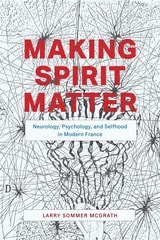
Making Spirit Matter
Neurology, Psychology, and Selfhood in Modern FranceLarry Sommer McGrath
University of Chicago Press, 2020
The connection between mind and brain has been one of the most persistent problems in modern Western thought; even recent advances in neuroscience haven’t been able to explain it satisfactorily. Historian Larry Sommer McGrath’s Making Spirit Matter studies how a particularly productive and influential group of nineteenth- and early twentieth-century French thinkers attempted to solve this puzzle by showing the mutual dependence of spirit and matter. The scientific revolution taking place at this point in history across disciplines, from biology to psychology and neurology, located our mental powers in the brain and offered a radical reformulation of the meaning of society, spirit, and the self. Tracing connections among thinkers such as Henri Bergson, Alfred Fouillée, Jean-Marie Guyau, and others, McGrath plots alternative intellectual movements that revived themes of creativity, time, and experience by applying the very sciences that seemed to undermine metaphysics and religion. Making Spirit Matter lays out the long legacy of this moment in the history of ideas and how it might renew our understanding of the relationship between mind and brain today.

Neurofilaments
Charles A. Marotta
University of Minnesota Press, 1983
Neurofilaments was first published in 1983. Minnesota Archive Editions uses digital technology to make long-unavailable books once again accessible, and are published unaltered from the original University of Minnesota Press editions.
Neurofilaments are fibrous organelles that serve as one of the main structural elements of neurons. Synthesized in the perikaryon ,or nerve cell body, neurofilaments are transported along the axon, where they help to maintain the neuronal architecture. Recent research has shown that neurofilaments are biochemically distinct from other kinds of cellular filaments and that they play a special role in the health and functioning of neurons. Although their existence has been recognized for over a century, scientists have only recently started to apply the methods of cellular and molecular biology to the study of neurofilaments, aided by the use of the electron microscope. The study of neurofilaments has raised a number of interesting biological questions with implications for our understanding of neurophysiology, neuroanatomy, and neurology. This book is the first to provide, in one place, reports by specialists on the most significant areas of research on these neuronal organelles.
The book opens with a historical background to current research, followed by chapters dealing with the neuronal cytoskeleton; the biochemistry of neurofilaments; neurofilaments of the mammalian peripheral nerve; the functional role of neurofilaments in axonal transport; the metabolism of neurofilaments; experimental models of abnormal neurofilamentous pathology; and the relation of these abnormal structures to Alzheimer's disease. Editor Charles Marotta's closing chapter surveys current and future neurofilament research.
Neuropharmacotherapy in Critical Illness
Brophy, Gretchen
Rutgers University Press, 2017
In the treatment of neurocritical disease states, pharmacotherapeutic strategies are increasingly relevant. Neuropharmacotherapy in Critical Illness is the first book that provides this information in a high-yield format for the busy healthcare provider. Edited and authored by leading experts in the field, this book provides practitioners with clinical pearls on neuropharmacology, dosing strategies, monitoring, adverse events, drug interactions, and evidence-based pharmacotherapy.
Physiological Foundations of Neurology and Psychiatry
Ernst Gellhorn
University of Minnesota Press, 1953
Principles of Intensive Psychotherapy
Frieda Fromm-Reichmann
University of Chicago Press, 1950
"One is continuously aware that here is a truly human being at work, human in the sense of exquisite awareness, on a profoundly intuitive level, of the workings of the human totality. . . . Because of this she can bridge the vast divide that separates us from the psychotic . . . thereby gaining access to the process of recalling the patient to his lost domain."—Louise E. DeRosis, M.D., American Journal of Psychoanalysis

Racing Uphill
Confronting a Life with EpilepsyStacia Kalinoski
University of Minnesota Press, 2025
The candid, inspiring story of a woman’s experience with a chronic, unpredictable neurological condition
When twenty-nine-year-old reporter Stacia Kalinoski regained consciousness on a couch at the TV station where she worked, she assumed that she’d had another seizure. But the electrical storm that had just torn through her brain was more destructive than she could have imagined, and the broadcast journalism career she loved swiftly came to an end. Forced to confront the reality of her medical condition, Kalinoski made the risky decision to undergo brain surgery, targeting the epilepsy that was ravaging her life.
In Racing Uphill, Kalinoski describes the seizures that occurred while she was running, which led to her pursuit of an uncertain cure. Rallying the grit she developed as an athlete and engaging the research and reporting skills she acquired as a journalist, she gives us a rare inside look at the ways epilepsy can change a life. Moving beyond her own personal experience, Kalinoski interviews prominent epileptologists to understand how seizures can spread, steal memories, and create strange behaviors and mood disorders. She seamlessly joins what she learned from her research with her own story, offering valuable insight into the experience of grappling with a relentless neurological disease.
The vivid auras that preceded seizures and the damage that followed; the toll of her epilepsy on her family and loved ones; the extraordinary determination her reckoning required—these are all part of Kalinoski’s story of adversity, denial, acceptance, and resilience. In sharing the remarkable opportunity that epilepsy presented for her courage and growth, Stacia Kalinoski speaks to anyone facing an uphill battle and offers inspiration for taking control of one’s own health.
The Physiology and Pathology of the Cerebellum
Robert S. Dow and Guiseppe Moruzzi
University of Minnesota Press, 1958
The Physiology and Pathology of the Cerebellum was first published in 1958. Minnesota Archive Editions uses digital technology to make long-unavailable books once again accessible, and are published unaltered from the original University of Minnesota Press editions.
The development of electrical methods of recording activity in the nervous system has greatly augmented our knowledge of cerebellar physiology. Now, for the first time in a single volume, this new information has been related to facts derived from older methods of investigation. Previously unpublished reports of experiments conducted at the Institute of Physiology, University of Pisa, Italy, also are included.
The authors, an American clinical neurologist and an Italian neuro-physiologist, have collaborated to provide a comprehensive review of cerebellar physiology and a survey of the clinical symptomatology of cerebellar disorders and the pathology of the cerebellum.
In Part I, devoted to the physiology, the authors review the literature completely and place it in proper relation to the latest developments in this field. There are chapters on this history of cerebellar physiology, ablation experiments, stimulation experiments, electro-physiological experiments, the relations between the cerebellum and other central nervous structures, developmental physiology, and the functions of the cerebellum, considered generally.Part II is devoted to the human cerebellum as studied in the clinic. Where anatomical and physiological observation may shed light upon obscure clinical findings, the laboratory data are related to the clinical investigations. The disorders and diseases affecting the cerebellum are systemically reviewed. The book is illustrated with 61 halftones and 124 line drawings.
The Shapes of Memory Loss
Stories, Poems and Essays from the University of Michigan Medical School and Health SystemMichigan Publishing Services, 2013
Thomas Hardy's Brains
Psychology, Neurology, and Hardy's ImaginationSuzanne Keen
The Ohio State University Press, 2014
This study reveals how Hardy made sense of diverse sources of an affective human psychology, a discipline that expanded significantly during Hardy’s working life. From the 1870s to the turn of the twentieth century, the tools and techniques for studying the structures and function of the nervous system developed rapidly. Simultaneously, Hardy moved steadily toward realizing a more physiologically accurate rendering of brains and nerves.