Results by title

8 books match the query 'Oedipus (Greek mythological figure)'

cover of Jack Kerouac's Duluoz Legend: The Mythic Form of an Autobiographical Fiction

Jack Kerouac's Duluoz Legend

The Mythic Form of an Autobiographical Fiction

James T. Jones

Southern Illinois University Press, 1999

In the only critical examination of all of Jack Kerouac's published prose, James T. Jones turns to Freud to show how the great Beat writer used the Oedipus myth to shape not only his individual works but also the entire body of his writing.

Like Balzac, Jones explains, Kerouac conceived an overall plan for his total writing corpus, which he called the Duluoz Legend after Jack Duluoz, his fictional alter ego. While Kerouac's work attracts biographical treatment—the ninth full-length biography was published in 1998—Jones takes a Freudian approach to focus on the form of the work. Noting that even casual readers recognize family relationships as the basis for Kerouac's autobiographical prose, Jones discusses these relationships in terms of Freud's notion of the Oedipus complex.

After establishing the basic biographical facts and explaining Freud's application of the Oedipus myth, Jones explicates Kerouac's novels of childhood and adolescence, focusing on sibling rivalry. Supporting his contention that the Beat writer worked according to a plan, Jones then shows how Kerouac revised The Town and the City (1950), his first published novel, in Vanity of Duluoz, the last novel published in his lifetime, to de-emphasize the death of the father. He treats three versions of Kerouac's road novel—including On the Road—as versions of Oedipus's fateful journey from Corinth to Thebes. And he argues that Pic, often considered peripheral to the Duluoz Legend, replicates the Oedipal themes.

Jones demonstrates that Maggie Cassidy, The Subterraneans, and Tristessa share a form that results from Kerouac's unresolved rivalry with his father for the love of his mother. He discusses Kerouac's replacement of the destructive brother figures in On the Road and Visions of Cody with the constructive hero of The Dharma Bums. He also shows how the Oedipal structure of the Duluoz Legend applies to Kerouac's nonfiction.

In the penultimate chapter, Jones explains how Big Sur, Kerouac's story of his alcohol-induced nervous breakdown, actually marks the climax of the Duluoz Legend. The alcoholism, Jones insists, is not the cause but a symptom of a breakdown brought on by his attachment to his mother. He shows how Kerouac's obsession with his family repeats Oedipal themes throughout the Duluoz Legend. Finally, he deals with Oedipal themes in Kerouac's nonnarrative work, including Old Angel Midnight, Some of the Dharma, The Scripture of the Golden Eternity, and several poems.
[more]
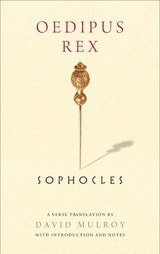
cover of Oedipus Rex

Oedipus Rex

David Sophocles

University of Wisconsin Press, 2011

Oedipus Rex is the greatest of the Greek tragedies, a profound meditation on the human condition. The story of the mythological king, who is doomed to kill his father and marry his mother, has resonated in world culture for almost 2,500 years. But Sophocles’ drama as originally performed was much more than a great story—it was a superb poetic script and exciting theatrical experience. The actors spoke in pulsing rhythms with hypnotic forward momentum, making it hard for audiences to look away. Interspersed among the verbal rants and duels were energetic songs performed by the chorus.
            David Mulroy’s brilliant verse translation of Oedipus Rex recaptures the aesthetic power of Sophocles’ masterpiece while also achieving a highly accurate translation in clear, contemporary English. Speeches are rendered with the same kind of regular iambic rhythm that gave the Sophoclean originals their drive. The choral parts are translated as fluid rhymed songs. Mulroy also supplies an introduction, notes, and appendixes to provide helpful context for general readers and students.
[more]
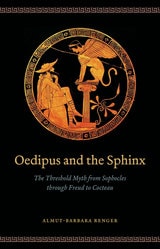
cover of Oedipus and the Sphinx: The Threshold Myth from Sophocles through Freud to Cocteau

Oedipus and the Sphinx

The Threshold Myth from Sophocles through Freud to Cocteau

Almut-Barbara Renger

University of Chicago Press, 2013
When Oedipus met the Sphinx on the road to Thebes, he did more than answer a riddle—he spawned a myth that, told and retold, would become one of Western culture’s central narratives about self-understanding. Identifying the story as a threshold myth—in which the hero crosses over into an unknown and dangerous realm where rules and limits are not known—Oedipus and the Sphinx offers a fresh account of this mythic encounter and how it deals with the concepts of liminality and otherness.
 
Almut-Barbara Renger assesses the story’s meanings and functions in classical antiquity—from its presence in ancient vase painting to its absence in Sophocles’s tragedy—before arriving at two of its major reworkings in European modernity: the psychoanalytic theory of Sigmund Freud and the poetics of Jean Cocteau. Through her readings, she highlights the ambiguous status of the Sphinx and reveals Oedipus himself to be a liminal creature, providing key insights into Sophocles’s portrayal and establishing a theoretical framework that organizes evaluations of the myth’s reception in the twentieth century. Revealing the narrative of Oedipus and the Sphinx to be the very paradigm of a key transition experienced by all of humankind, Renger situates myth between the competing claims of science and art in an engagement that has important implications for current debates in literary studies, psychoanalytic theory, cultural history, and aesthetics.
[more]
cover of Oedipus at Colonus

Oedipus at Colonus

Sophocles, A verse translation by David Mulroy, with introduction and notes

University of Wisconsin Press, 2014

Oedipus at Colonus is the third in Sophocles' trilogy of plays about the famous king of Thebes and his unhappy family. It dramatizes the mysterious death of Oedipus, by which he is transformed into an immortal hero protecting Athens. This was Sophocles' final play, written in his mid-eighties and produced posthumously. Translator David Mulroy's introduction and notes deepen the reader's understanding of Oedipus' character and the real political tumult that was shaking Athens at the time that Sophocles wrote the play. Oedipus at Colonus is at once a complex study of a tragic character, an indictment of Athenian democracy, and a subtle endorsement of hope for personal immortality.
            As in his previous translations of Oedipus Rex and Antigone, Mulroy combines scrupulous scholarship and textual accuracy with a fresh poetic style. He uses iambic pentameter for spoken passages and short rhymed stanzas for choral songs, resulting in a text that is accessible and fun to read and perform.
[more]
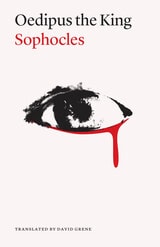
cover of Oedipus the King, Second Edition

Oedipus the King, Second Edition

Sophocles

University of Chicago Press, 2013

An updated stand-alone edition of Sophocles’s Oedipus the King taken from Chicago’s renowned translations of the Greek tragedies.
 
Over the years, David Grene and Richmond Lattimore’s Complete Greek Tragedies have been the preferred translations of millions of readers—for personal libraries, individual study, and classroom use. Drawn from the authoritative third edition of the University of Chicago Press’s classic series, this updated stand-alone edition of Grene’s Oedipus the King renders the original Greek in clear, vivid, and poetic English for a new generation to savor.
 
Mark Griffith and Glenn W. Most’s introduction to Sophocles’s searing tale of jealousy, rage, and revenge provides essential information about the play’s first production, plot, and reception in antiquity and beyond.
 
[more]
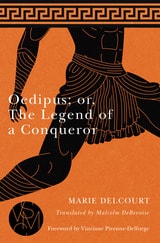
cover of Oedipus; or, The Legend of a Conqueror

Oedipus; or, The Legend of a Conqueror

Marie Delcourt

Michigan State University Press, 2020
Marie Delcourt’s brilliant study of the Oedipus legend, an unjustly neglected monument of twentieth-century classical scholarship published in 1944 and issued here for the first time in English translation, bridges the gap between Carl Robert’s influential Oidipus (1915) and the work of Lowell Edmunds seventy years later. Delcourt studies the legend in its various aspects, six episodes that have equal weight and that stress the same themes: greatness, conquest, domination, the right to rule—all of them bound up with the idea of kingship. Together they form the biography of a Theban hero, the fullest account that has come down to us about the prehistory of sovereign power among the ancient Greeks. Delcourt does not suppose that Oedipus, or indeed any other Greek hero, was a historical figure. The personality familiar to us from the plays of the tragedians of the fifth century—our oldest source, and a very late one—was the result of their extraordinary artistry in linking together themes rooted in very ancient social and religious rites that in the interval had come to describe the feats of Oedipus, then his life, and finally his character. It was in order to explain these rites, whose meaning had ceased to be understood, that myths and legends were invented in the first place. Oedipus, Delcourt argues, is the archetype of all heroes of essentially (if not exclusively) ritual origin, whose acts were prior to their person. This is a very different— and far more complex—Oedipus than the one rather implausibly imagined by Freud. More generally, the origin and transmission of the Oedipus legend tells us a great deal about the strength and persistence of public memories in prehistoric societies.
[more]
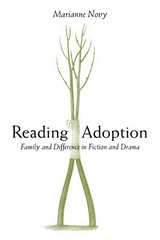
cover of Reading Adoption: Family and Difference in Fiction and Drama

Reading Adoption

Family and Difference in Fiction and Drama

Marianne Novy

University of Michigan Press, 2005

Reading Adoption explores the ways in which novels and plays portray adoption, probing the cultural fictions that these literary representations have perpetuated. Through careful readings of works by Sophocles, Shakespeare, George Eliot, Charles Dickens, Barbara Kingsolver, Edward Albee and others, Marianne Novy reveals how fiction has contributed to general perceptions of adoptive parents, adoptees, and birth parents. She observes how these works address the question of what makes a parent, as she scrutinizes basic themes that repeat throughout, such as the difference between adoptive parents and children, the mirroring between adoptees and their birth parents, and the romanticization of the theme of lost family and recovered identity. Engagingly written from Novy's dual perspectives as critic and adult adoptee, the book artfully combines the techniques of literary and feminist scholarship with memoir, and in doing so it sheds new light on familiar texts.

Marianne Novy is Professor of English and Women's Studies at the University of Pittsburgh. She is author or editor of numerous books, including Imagining Adoption: Essays on Literature and Culture.
[more]
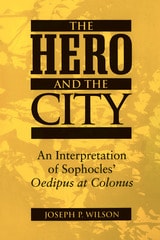
cover of The Hero and the City: An Interpretation of Sophocles' Oedipus at Colonus

The Hero and the City

An Interpretation of Sophocles' Oedipus at Colonus

Joseph P. Wilson

University of Michigan Press, 2003

This work of seemingly conventional, philologically based criticism challenges many of the traditional views of Sophocles' Oedipus at Colonus. Joseph P. Wilson disputes the received wisdom that Oedipus was a suppliant of the Athenians, arguing rather that the primary relationship that governed Oedipus's dealings with his hosts was xenia (hospitality), not hiketeia (supplication). Likewise, he considers in detail the disputed reading of empolin or empalin in verse 637 and the vexed question of whether Oedipus ever became a citizen of Athens. He concludes by investigating the matter of Oedipus' heroic and oracular capabilities and the role that Oedipus' own will plays in creating his heroic persona. Wilson's study offers a radical rereading of the Oedipus riddle and concludes with a substantial discussion of the play's (and playwright's) role in providing a political and moral education for the troubled Athenian polis in the last decade of the tumultuous fifth century.
Joseph P. Wilson is Professor of Foreign Languages at the University of Scranton.
[more]