Results by title
29 books match the query 'Operas'
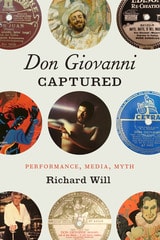
"Don Giovanni" Captured
Performance, Media, MythRichard Will
University of Chicago Press, 2022
Mozart’s opera Don Giovanni has long inspired myths about eros and masculinity. Over time, its performance history has revealed a growing trend toward critique—an increasing effort on the part of performers and directors to highlight the violence and predatoriness of the libertine central character, alongside the suffering and resilience of his female victims.
In “Don Giovanni” Captured, Richard Will sets out to analyze more than a century’s worth of recorded performances of the opera, tracing the ways it has changed from one performance to another and from one generation to the next. Will consults audio recordings, starting with wax cylinders and 78s, as well as video recordings, including DVDs, films, and streaming videos. As Will argues, recordings and other media shape our experience of opera as much as live performance does. Seen as a historical record, opera recordings are also a potent reminder of the refusal of works such as Don Giovanni to sit still. By choosing a work with such a rich and complex tradition of interpretation, Will helps us see Don Giovanni as a standard-bearer for evolving ideas about desire and power, both on and off the stage.
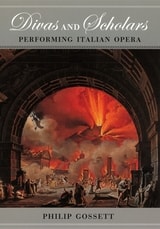
Divas and Scholars
Performing Italian OperaPhilip Gossett
University of Chicago Press, 2006
Winner of the 2007 Otto Kinkeldey Award from the American Musicological Society and the 2007 Deems Taylor Award from the American Society of Composers, Authors, and Publishers.
Divas and Scholars is a dazzling and beguiling account of how opera comes to the stage, filled with Philip Gossett’s personal experiences of triumphant—and even failed—performances and suffused with his towering and tonic passion for music. Writing as a fan, a musician, and a scholar, Gossett, the world's leading authority on the performance of Italian opera, brings colorfully to life the problems, and occasionally the scandals, that attend the production of some of our most favorite operas.
Gossett begins by tracing the social history of nineteenth-century Italian theaters in order to explain the nature of the musical scores from which performers have long worked. He then illuminates the often hidden but crucial negotiations opera scholars and opera conductors and performers: What does it mean to talk about performing from a critical edition? How does one determine what music to perform when multiple versions of an opera exist? What are the implications of omitting passages from an opera in a performance? In addition to vexing questions such as these, Gossett also tackles issues of ornamentation and transposition in vocal style, the matters of translation and adaptation, and even aspects of stage direction and set design.
Throughout this extensive and passionate work, Gossett enlivens his history with reports from his own experiences with major opera companies at venues ranging from the Metropolitan and Santa Fe operas to the Rossini Opera Festival at Pesaro. The result is a book that will enthrall both aficionados of Italian opera and newcomers seeking a reliable introduction to it—in all its incomparable grandeur and timeless allure.
Dramatizing Dido, Circe, and Griselda
Louise-Geneviève Gillot de Sainctonge
Iter Press, 2010
—Perry Gethner
Norris Professor of French, Oklahoma State University
Ernani
Dramma lirico in Four Acts by Francesco Maria PiaveGiuseppe Verdi
University of Chicago Press, 1985
Giovanna d'Arco
Dramma lirico in Four Acts by Temistocle SoleraGiuseppe Verdi
University of Chicago Press, 2009
This critical edition of Giovanna d’Arco, the first publication in full score, is based on the composer’s autograph score preserved in the archives of Verdi’s publisher, Casa Ricordi. It restores the opera’s original text, which had been heavily censored, and accurately reflects Verdi’s colorful and elaborate musical setting. Editor Alberto Rizzuti’s introduction discusses the opera’s origins, sources, and performance questions, while the critical commentary details editorial problems and solutions.
Heggie and Scheer's Moby-Dick
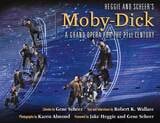
A Grand Opera for the Twenty-first CenturyRobert K. Wallace
University of North Texas Press, 2013
I Dream a World
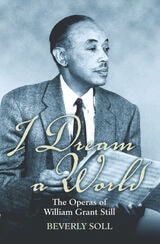
The Operas of William Grant StillBeverly Soll
University of Arkansas Press, 2005
I masnadieri
Melodramma tragico in Four Parts by Andrea MaffeiGiuseppe Verdi Edited by Roberta Montemorra Marvin
University of Chicago Press, 2000
The critical edition is the first publication of I masnadieri in full score. Based on the composer's autograph and on important secondary sources such as the performing parts mentioned above, this edition provides scholars and performers alike with unequaled means for interpretation and study of one of Verdi's less well known works. The detailed critical commentary discusses problems and ambiguities in the sources, while a wide-ranging introduction to the score traces the opera's genesis, sources, and performance history and practices.
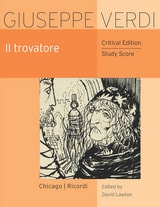
Il trovatore
Critical Edition Study ScoreGiuseppe Verdi
University of Chicago Press, 2016
Based on Verdi’s autograph score and an examination of important secondary sources, including contemporary manuscript copies and performing parts, this edition of Il trovatore identifies and resolves numerous ambiguities of harmony, melodic detail, text, and phrasing that have marred previous scores. Scholars and performers alike will find a wealth of information in the critical apparatus to inform their research and interpretations. The introduction to the score outlines the work’s genesis, sources, and performance history, while the critical commentary discusses all editorial decisions.
Il trovatore
Dramma in Four Parts by Salvadore CammaranoGiuseppe Verdi
University of Chicago Press, 1993
The lengthy introduction to the score discusses the work's genesis, sources, and performance history as well as issues of instrumental and vocal performance practice, production and staging, and problems of notation. As an added feature of the introduction is an original study by Carlos Matteo Mossa of the creation of the libretto, based on the original draft and numerous other autograph documents.
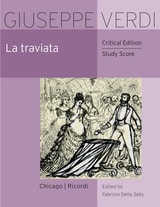
La traviata
Critical Edition Study ScoreGiuseppe Verdi
University of Chicago Press, 2017
The University of Chicago Press, in collaboration with Casa Ricordi, has undertaken to publish the first critical edition of the complete works of Giuseppe Verdi. The series, based exclusively on original sources, is the only one to present authentic versions of all of the composer’s works; together with his operas, the critical edition presents his songs, his choral music and sacred pieces, and his string quartet and other instrumental works.
The Works of Giuseppe Verdi will be an invaluable standard reference work—a necessary acquisition for all music libraries and a joy to own for all lovers of opera. The new series of study scores presents an adaptation of each critical edition that provides scholars with an affordable and portable option for exploring Verdi’s oeuvre. The study scores have been designed to distinguish editors’ marks from Verdi’s own notations while remaining clear enough for use in performance. The introduction to each score discusses the work’s sources, composition, and performance history, as well as performance practices, instrumentation, and problems of notation. The newest editions of the study scores examine two of Verdi’s three-act operas: La traviata and Rigoletto.
La traviata
Melodramma in Three Acts, Libretto by Francesco Maria PiaveGiuseppe Verdi
University of Chicago Press, 1997
This critical edition presents the 1854 version as the main score, and also makes available for the first time in full score the original 1853 settings of the revised pieces. For this edition Fabrizio della Seta used not only the composer's autograph and many secondary sources, but also Verdi's previously unknown sketches. These sketches helped corroborate the original readings and illuminate the work's compositional stages. The editor's wide-ranging introduction traces the opera's genesis, sources, performance history and practices, and a detailed critical commentary discusses source problems and ambiguities.
Luisa Miller
Melodramma tragico in Three Acts by Salvadore CammaranoGiuseppe Verdi
University of Chicago Press, 1992
Luisa Miller, a milestone in the maturation of Verdi's style, is the fifth work to be published in The Works of Giuseppe Verdi. Following the strict requirements of the series, this edition is based on Verdi's autograph and other authentic sources, and has been reviewed by a distinguished editorial board—Philip Gossett (general editor), Julian Budden, Martin Chusid, Francesco Degrada, Ursula Günter, Giorgio Pestelli, and Pierluigi Petrobelli. It is available as a two-volume set: a full orchestral score and a critical commentary. The newly set score is printed on acid-free paper and beautifully bound in an oversized format. The introduction to the score discusses the work's genesis, sources, and performance history as well as performance practice, instrumentation, and problems of notation. The critical commentary discusses editorial decisions and identifies the sources of alternate readings of the music and libretto.
Macbeth
Melodramma in Four Acts. Libretto by Francesco Maria PiaveGiuseppe Verdi
University of Chicago Press, 2005
Published in three volumes, this critical edition of Macbeth is the only one based entirely on autograph sources. Containing the later version as the principal score, it is the first edition to consult the composer's manuscripts of the revised pieces, preserved at the Bibliothèque Nationale in Paris. An appendix contains the earlier movements, and David Lawton provides a wide-ranging introduction to the opera's complex history. This critical edition of Macbeth includes here for the first time Verdi's preferred text—the version he set to music—as well as his own stage directions and thus offers the most vivid and dramatic reading to date.
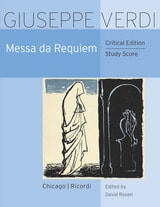
Messa da Requiem
Critical Edition Study ScoreGiuseppe Verdi
University of Chicago Press, 2016
This edition of Messa da Requiem is based on Verdi’s autograph score and other original sources. The appendices include two pieces from the compositional history of the Requiem: an early version of the Libera me, composed in 1869 as part of a collaborative work planned as a memorial to Rossini; and the Liber scriptus, which in the original score of the Manzoni memorial Requiem was composed as a fugue for chorus. The introduction to the score traces the complex compositional and performance histories of the Requiem and discusses the work’s problems of instrumentation and notation, while the critical commentary gives a full description of the sources and an account of all editorial decisions.
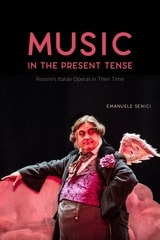
Music in the Present Tense
Rossini’s Italian Operas in Their TimeEmanuele Senici
University of Chicago Press, 2019
Emanuele Senici’s new book provides a fresh look at the motives behind the Rossinian furore and its aftermath by examining the composer’s works in the historical context in which they were conceived, performed, seen, heard, and discussed. Situating the operas firmly within the social practices, cultural formations, ideological currents, and political events of early nineteenth-century Italy, Senici reveals Rossini’s dramaturgy as a radically new and specifically Italian reaction to the epoch-making changes witnessed in Europe at the time. The first book-length study of Rossini’s Italian operas to appear in English, Music in the Present Tense exposes new ways to explore nineteenth-century music and addresses crucial issues in the history of modernity, such as trauma, repetition, and the healing power of theatricality.
Nabucodonosor
Dramma lirico in Four Parts by Temistocle SoleraGiuseppe Verdi
University of Chicago Press, 1988
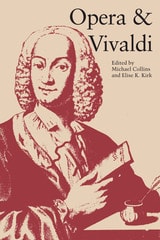
Opera and Vivaldi
Edited by Michael Collins and Elise K. Kirk
University of Texas Press, 1984
From the New York Times review of the Dallas Opera's performance of Orlando furioso and the international symposium on Baroque opera: ". . . it was a serious, thoughtful, consistent and imaginative realization of a beautiful, long-neglected work, one that fully deserved all the loving attention it received. As such, the production and its attendant symposium made a positive contribution to the cause of Baroque opera . . . . "
Baroque opera experienced a revival in the late twentieth century. Its popularity, however, has given rise to a number of perplexing and exciting questions regarding literary sources, librettos, theater design, set design, stage movement, and costumes—even the editing of the operas.
In 1980, the Dallas Opera produced the American premier of Vivaldi's Orlando furioso, which met with much acclaim. Concurrently an international symposium on the subject of Baroque opera was held at Southern Methodist University. Authorities from around the world met to discuss the operatic works of Vivaldi, Handel, and other Baroque composers as well as the characteristics of the genre. Michael Collins and Elise Kirk, deputy chair and chair of the symposium, edited the papers to produce this groundbreaking study, which will be of great interest to music scholars and opera lovers throughout the world.
Contributors to Opera and Vivaldi include Shirley Wynne, John Walter Hill, Andrew Porter, Eleanor Selfridge-Field, Howard Mayer Brown, William Holmes, Ellen Rosand, and the editors.
Opera for Everyone
The Industry's Experiments with American Opera in the Digital AgeMegan Steigerwald Ille
University of Michigan Press, 2024
Rigoletto
Critical Edition Study ScoreGiuseppe Verdi
University of Chicago Press, 2017
The University of Chicago Press, in collaboration with Casa Ricordi, has undertaken to publish the first critical edition of the complete works of Giuseppe Verdi. The series, based exclusively on original sources, is the only one to present authentic versions of all of the composer’s works; together with his operas, the critical edition presents his songs, his choral music and sacred pieces, and his string quartet and other instrumental works.
The Works of Giuseppe Verdi will be an invaluable standard reference work—a necessary acquisition for all music libraries and a joy to own for all lovers of opera. The new series of study scores presents an adaptation of each critical edition that provides scholars with an affordable and portable option for exploring Verdi’s oeuvre. The study scores have been designed to distinguish editors’ marks from Verdi’s own notations while remaining clear enough for use in performance. The introduction to each score discusses the work’s sources, composition, and performance history, as well as performance practices, instrumentation, and problems of notation. The newest editions of the study scores examine two of Verdi’s three-act operas: La traviata and Rigoletto.
Rigoletto
Melodramma in Three Acts by Francesco Maria PiaveGiuseppe Verdi
University of Chicago Press, 1983
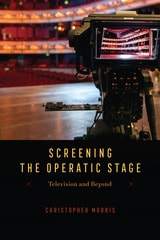
Screening the Operatic Stage
Television and BeyondChristopher Morris
University of Chicago Press, 2024
From the early days of television broadcasts to today’s live streams, opera houses have embraced technology as a way to reach new audiences. But how do these new forms of remediated opera extend, amplify, or undermine production values, and what does the audience gain or lose in the process? In Screening the Operatic Stage, Christopher Morris critically examines the cultural implications of opera’s engagement with screen media.
Foregrounding the potential for a playful exchange and self-awareness between stage and screen, Morris uses the conceptual tools of media theory to understand the historical and contemporary screen cultures that have transmitted the opera house into living rooms, onto desktops and portable devices, and across networks of movie theaters. If these screen cultures reveal how inherently “technological” opera is as a medium, they also highlight a deep suspicion among opera producers and audiences toward the intervention of media technology. Ultimately, Screening the Operatic Stage shows how the conventions of televisual representation employed in opera have masked the mediating effects of technology in the name of fidelity to live performance.
Stiffelio
Libretto (in three acts) by Francesco Maria PiaveGiuseppe Verdi
University of Chicago Press, 2003
Not until 1992 was it revealed that Verdi's heirs possessed not only most of the canceled score, but also sixty pages of sketches for Stiffelio. These were used for the preliminary score of the critical edition, premiered in 1993 at New York's Metropolitan Opera. It was the first time Stiffelio was performed as Verdi wrote it. It has been enthusiastically received around the world.
With the publication of the critical edition, the first in full orchestral score, Stiffelio should take its rightful place in the Verdi canon.
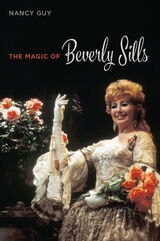
The Magic of Beverly Sills
Nancy Guy
University of Illinois Press, 2015
The Operas of Giuseppe Verdi
Abramo Basevi
University of Chicago Press, 2014
Tonality as Drama
Closure and Interruption in Four Twentieth-Century American OperasEdward D. Latham
University of North Texas Press, 2008
Un giorno di regno
Melodramma giocoso in Two Acts by Felice RomaniGiuseppe Verdi
University of Chicago Press, 2021
This critical edition, based on Verdi’s autograph manuscript, offers the first publication of the opera in full score. Editor Francesco Izzo contextualizes Un giorno di regno in his introductory discussion of the work’s origins, sources, and performances. In addition, appendices provide alternative musical readings and reconstruct lost versions of segments of the musical numbers, while the critical commentary explores editorial problems and answers.
Verdi's Middle Period
Source Studies, Analysis, and Performance PracticeEdited by Martin Chusid
University of Chicago Press, 1997
In addition to offering new insights into such staples as Il trovatore, La traviata, and Un ballo in maschera, Verdi's Middle Period also highlights works which have only recently begun to re-enter public consciousness, such as Stiffelio, as well as lesser-known works such as Luisa Miller and Les Vêpres siciliennes. Comprising major essays by some of the best-known Verdians of our day, as well as articles from up-and-coming scholars, this volume has much to offer readers ranging from musicologists to serious opera buffs.
Contributors are Martin Chusid, Markus Engelhardt, Linda B. Fairtile, Philip Gossett, Kathleen Kuzmick Hansell, Elizabeth Hudson, James Hepokoski, Roberta Montemorra Marvin, Carlo Matteo Mossa, Roger Parker, Harold S. Powers, David Rosen, and Mary Ann Smart.
Verdi's Theater
Creating Drama through MusicGilles de Van
University of Chicago Press, 1998
Although melodrama tends to dominate Verdi's early work and musical drama his later, both aesthetics are woven into all his operas: musical drama is already present in Ernani (1844), and melodrama is still present in Otello (1887). Indeed, much of the interest and originality of Verdi's operas lies in his adherence to both these contradictory systems, allowing the composer/dramatist to be simultaneously classical and modern, traditionalist and innovator.