Results by title
26 books match the query 'Orphans'
A Cold, Hard Prayer
John Smolens
Michigan State University Press, 2023
Adoption, Memory, and Cold War Greece
Kid pro quo?Gonda Van Steen
University of Michigan Press, 2019
This book presents a committed quest to unravel and document the postwar adoption networks that placed more than 3,000 Greek children in the United States, in a movement accelerated by the aftermath of the Greek Civil War and by the new conditions of the global Cold War. Greek-to-American adoptions and, regrettably, also their transactions and transgressions, provided the blueprint for the first large-scale international adoptions, well before these became a mass phenomenon typically associated with Asian children. The story of these Greek postwar and Cold War adoptions, whose procedures ranged from legal to highly irregular, has never been told or analyzed before. Adoption, Memory, and Cold War Greece answers the important questions: How did these adoptions from Greece happen? Was there any money involved? Humanitarian rescue or kid pro quo? Or both? With sympathy and perseverance, Gonda Van Steen has filled a decades-long gap in our understanding, and provided essential information to the hundreds of adoptees and their descendants whose lives are still affected today.
Charity and Children in Renaissance Florence
The Ospedale degli Innocenti, 1410-1536Philip Gavitt
University of Michigan Press, 1991
Alongside the architectural splendor and intellectual brilliance of early Renaissance Florence there existed a second world of poverty, misery, social despair, and child abandonment. The Ospedale degli Innocenti (Hospital of the Innocents), designed and built between 1419 and 1445 by the renowned architect Filippo Brunelleschi, united these disparate worlds. Christian charity and compassion, as well as the humanist commitment to social perfection, family values, and love for children, were intertwined with a civic pride in which charity curried God's favor and invoked God's blessings on the city's fortunes.
Based on a close and attentive reading of archival material from the hospital and from the Florentine State Archives, Charity and Children in Renaissance Florence both chronicles the concerns and ambivalence of parents who abandoned children and follows the lives of the hospital's inhabitants from childhood to death. The book also demonstrates how hospital officials deliberately duplicated the structure and values of the Florentine family within the hospital walls. Gavitt's research shows that early modern foundling hospitals were not charnel houses where parents knowingly and impersonally abandoned their unwanted children to certain death. Charity and Children in Renaissance Florence provokes reflection on the contrast between our own views on the care of homeless children and those of the Italian Renaissance.
Winner of the Society for Italian Historical Studies 1988 Award for Best Unpublished Manuscript.
Crying for Our Elders
African Orphanhood in the Age of HIV and AIDSKristen E. Cheney
University of Chicago Press, 2017
Through ethnographic fieldwork and collaborative research with children in Uganda, Cheney traces how the “best interest” principle that governs children’s’ rights can stigmatize orphans and leave children in the post-antiretroviral era even more vulnerable to exploitation. She details the dramatic effects this has on traditional family support and child protection and stresses child empowerment over pity. Crying for Our Elders advances current discussions on humanitarianism, children’s studies, orphanhood, and kinship. By exploring the unique experience of AIDS orphanhood through the eyes of children, caregivers, and policymakers, Cheney shows that despite the extreme challenges of growing up in the era of HIV/AIDS, the post-ARV generation still holds out hope for the future.

Farewell to Russia
Memories of When I Was KolaNikolai Prestia
Rutgers University Press, 2026
Growing up in 1990s Russia in a family marked by poverty, substance abuse, and neglect, Kola and his sister are eventually admitted into the orphanage system. Here, Kola comes face to face with a different but equally daunting challenge: navigating an unfamiliar and sometimes hostile world haunted by the absence of his mother. The ensuing journey, which eventually culminates in the adoption by an Italian family, alternates moments of both trauma and deliverance, while asking fundamental questions about our ability to reconcile ourselves with unfathomable loss.
Harrowing yet lyrical, Nikolai Prestia’s prize-winning 2021 novel is a testament to the duality of memory in its ability to both hurt and heal, and to the transformative power of those figures, adults and peers alike, who contribute to a child’s development. Translated into English as part of a collaboration between the author and a mother-daughter translator duo, the novel serves up a wrenching glimpse into the back stories that often precede the adoption of an older child.

Finding Mars
Ned Rozell
University of Alaska Press, 2011
Florida
Christine Schutt
Northwestern University Press, 2003
Florida is the portrait of the artist as a young woman, an orphan's story full of loss and wonder, a familiar tale told in original language. Alice Fivey, fatherless at age seven, is left in the care of her relatives at ten when her love-wearied mother loses custody of her and submits to the sanitarium and years of psychiatric care. A namesake daughter locked in the orphan's move-around life, she must hold still while the seamstress pins her into someone not her mother. But they share the same name, so she is her mother, isn't she?
Alice finds consolation in books and she herself is a storyteller who must build a home for herself word by right word. Florida is her story, recalled in brief scenes of spare beauty and strangeness as Alice moves from house to house, ever further from the desolation of her mother's actions, ever closer to the meaning of her experience. In this most elegiac and luminous novel, Schutt gives voice to the feast of memory, the mystery of the mad and missing, and above all, the life-giving power of language.
Infected Kin
Orphan Care and AIDS in LesothoEllen Block
Rutgers University Press, 2019
Supplementary instructor resources (https://www.csbsju.edu/sociology/faculty/anthropology-teaching-resources/infected-kin-teaching-resources)
Joyful Orphan
PoemsMark Irwin
University of Nevada Press, 2023
Through poems of witness, species and habitat extinction, war, pandemic, technology, history, and race, Mark Irwin’s elegant collection of poetry explores the collision between metropolis and wilderness, and engages with forms of spirit that cannot be bound. With the incursion of electronic communication, our connections with one another have been radically distorted. Irwin’s poems confront what it means to be human, and how conflict, along with the interface between technology and humanity, can cause us to become orphaned in many different ways. But it is our decision to be joyful.
Excerpt from “Letter”
Times when we touch hope like the hem of a cloud
just as when we touch a body or door, or think
of the dead come back, romancing
us through the warp of memory, lighting a way
by luring . . .
Kinship by Design
A History of Adoption in the Modern United StatesEllen Herman
University of Chicago Press, 2008
Beginning in the early 1900s, when children were still transferred between households by a variety of unregulated private arrangements, Ellen Herman details efforts by the U.S. Children’s Bureau and the Child Welfare League of America to establish adoption standards in law and practice. She goes on to trace Americans’ shifting ideas about matching children with physically or intellectually similar parents, revealing how research in developmental science and technology shaped adoption as it navigated the nature-nurture debate.
Concluding with an insightful analysis of the revolution that ushered in special needs, transracial, and international adoptions, Kinship by Design ultimately situates the practice as both a different way to make a family and a universal story about love, loss, identity, and belonging. In doing so, this volume provides a new vantage point from which to view twentieth-century America, revealing as much about social welfare, statecraft, and science as it does about childhood, family, and private life.
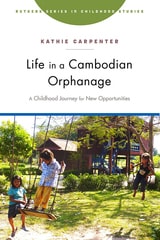
Life in a Cambodian Orphanage
A Childhood Journey for New OpportunitiesKathie Carpenter
Rutgers University Press, 2021
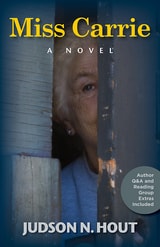
Miss Carrie
A NovelJudson N. Hout
Parkhurst Brothers, Inc., 2013
“Set in Arkansas during World War II, Hout’s touching story of an orphaned boy's relationship with the inhabitant of a small town's "haunted house” will keep you guessing, right up to the satisfying ending. Another endearing novel from Judson Hout."
--Cindy Ward, Dallas, Texas
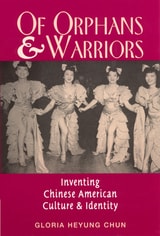
Of Orphans and Warriors
Inventing Chinese American Culture and IdentityChun, Gloria Heyung
Rutgers University Press, 1999
"We were as American as can be," states Jadin Wong in recalling the days when she used to dance at a San Francisco nightclub during the 1940s. Wong belonged to an all-Chinese chorus line at a time when all East Asians were called "Orientals." In this context, then, what did it mean for Wong, an American-born Chinese, to say that she thought of herself as an "American"? Of Orphans and Warriors explores the social and cultural history of largely urban, American-born Chinese from the 1930s through the 1990s, focusing primarily on those living in California. Chun thus opens a window onto the ways in which these Americans born of Chinese ancestry negotiated their identity over a half century.
Past scholarship has portrayed these individuals as desiring to assimilate into mainstream American culture, but being prevented from doing so by the immigrant parent generation. Taking a new approach, Chun uses memoirs, autobiographies, and fictional writings to unravel complex issues of ethnic identity as both culturally defined and individually negotiated. She concludes that, while indeed many Chinese Americans were caught between the lures of mainstream American culture and their parents' old-world values, this liminal position offered them unprecedented opportunities to carve out new identities for themselves from a position of strength.
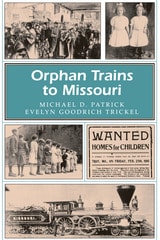
Orphan Trains to Missouri
Michael D. Patrick & Evelyn Goodrich Trickel
University of Missouri Press, 1997
As an "orphan train" crossed the country, it left part of its cargo at each stop, a few children in one small town and a few in another. Even though farmers needed many hands for labor, most of the small farm communities could not or would not take all of the children on the train. As the train moved to its next stop, those children not taken feared no one would ever want them.
Early immigration laws encouraged the poor of Europe to find new hope with new lives in the United States. But sometimes the immigrants exchanged a bad situation in their native country for an even worse one on the streets of New York and other industrial cities. As a result, the streets were filled with crowds of abandoned children that the police called "street arabs." Many New York citizens blamed the street arabs for crime and violence in the city and wanted them placed in orphan homes or prisons.
In 1853 a man by the name of Charles Loring Brace, along with other well-to-do men in New York City, founded the Children's Aid Society. The society planned to give food, lodging, and clothing to homeless children and provide educational and trade opportunities for them. But the number of children needing help was so large that the Children's Aid Society was unable to care for them, and Brace developed a plan to send many of the children to the rural Midwest by train. He was convinced that the children of the streets would find many benefits in rural America. In 1854 he persuaded the board of the society to send the first trainload of orphans west. With this, the orphan trains were born.
Cheap fares, the central location of the state, and numerous small farming towns along the railroad tracks made Missouri the perfect hub for the orphan trains, even though many areas of the state were still largely unsettled. Researchers have estimated that from 150,000 to 400,000 children were sent out on orphan trains, with perhaps as many as 100,000 being placed in Missouri.
Orphan Trains to Missouri documents the history of the children on those Orphan Trains--their struggles, their successes, and their failures. Touching stories of volunteers who oversaw the placement of the orphans as well as stories of the orphans themselves make this a rich record of American and midwestern history.
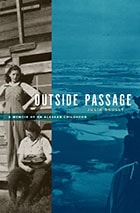
Outside Passage
A Memoir of an Alaskan ChildhoodJulia Scully
University of Alaska Press, 2010
Outside Passage is a lyrical and affecting memoir of those years, simultaneously an emotional account of a young girl’s first steps into adulthood and a unique portrait of a vanished frontier life.
Rogues, Widows and Orphans
Mischief and Misadventures in the World of BooksRebecca Lee
Brandeis University Press, 2026
A publishing industry insider reveals the hilarious and fascinating mishaps, hoaxes, and gaffes behind your favorite books.
It’s a long journey from a writer’s mind to a finished book, and a lot needs to go right along the way. But isn’t it more interesting when things go wrong?
Rebecca Lee, a senior editorial manager at Penguin Random House, guides readers through the secrets of the book industry, a world fizzing with scandals, rivalries, catastrophes, and con jobs. Lee demonstrates how the tiniest of typos can have oversized consequences, unearths horrifying examples of bad taste and worse style, and peeks into tales of forgeries and feuds as dramatic as any thriller. She unredacts the most egregious cases of censorship, exposes hoarders and thieves, and asks whether AI is really an existential threat to the literary universe—or if we are our own worst enemies.
An irresistible tour of mistakes and misbehavior, Rogues, Widows and Orphans will make you cringe, crack you up, and renew your appreciation for the hard work of making books—and all the ways it can go sidewise.
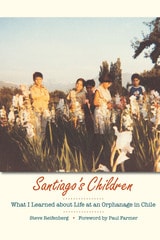
Santiago's Children
What I Learned about Life at an Orphanage in ChileBy Steve Reifenberg
University of Texas Press, 2008
Runner-up, Bronze Medal, Independent Publishers Book Awards: Memoir/Autobiography Category, 2009
Unclear about his future career path, Steve Reifenberg found himself in the early 1980s working at a small orphanage in a poor neighborhood in Santiago, Chile, where a determined single woman was trying to create a stable home for a dozen or so children who had been abandoned or abused. With little more than good intentions and very limited Spanish, the 23-year-old Reifenberg plunged into the life of the Hogar Domingo Savio, becoming a foster father to kids who stretched his capacities for compassion and understanding in ways he never could have imagined back in the United States.
In this beautifully written memoir, Reifenberg recalls his two years at the Hogar Domingo Savio. His vivid descriptions create indelible portraits of a dozen remarkable kids—mature-beyond-her-years Verónica; sullen, unresponsive Marcelo; and irrepressible toddler Andrés, among them. As Reifenberg learns more about the children's circumstances, he begins to see the bigger picture of life in Chile at a crucial moment in its history.
The early 1980s were a time of economic crisis and political uprising against the brutal military dictatorship of Augusto Pinochet. Reifenberg skillfully interweaves the story of the orphanage with the broader national and international forces that dramatically impact the lives of the kids. By the end of Santiago's Children, Reifenberg has told an engrossing story not only of his own coming-of-age, but also of the courage and resilience of the poorest and most vulnerable residents of Latin America.
The Children Of Africa Confront AIDS
From Vulnerability To PossibilityArvind Singhal
Ohio University Press, 2003
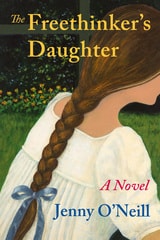
The Freethinker’s Daughter
A NovelJenny O'Neill
Ohio University Press, 2022
This historical and inspiring coming-of-age novel for young readers explores topics of both historical and contemporary relevance as it follows a harrowing year in the life of its intrepid teenaged narrator.
Lexington, Kentucky, 1833: Calendula “Cal” Farmer, a thirteen-year-old white girl, has been raised by her abolitionist, freethinking mother to reason for herself, consult her inner wisdom, and come to her own conclusions. But when a flash flood devastates her family’s home, Cal is unexpectedly thrust into domestic service in a wealthy family’s mansion. There, she encounters firsthand the physical, intellectual, and emotional brutalities of slavery. Later, a cholera outbreak kills a quarter of the population, including Cal’s mother, and Cal enters an orphanage, where she bravely begins another chapter in her young life.
Cal’s story is sure to captivate readers as she confronts the injustices and uncertainties of racism, class consciousness, epidemic disease, and personal loss with independent thinking, perseverance, and love.
The Home on Gorham Street and the Voices of Its Children
Howard Goldstein
University of Alabama Press, 1996
Giving voice to childhood, memory, and resilience within a shared home.
The Home on Gorham Street looks back to an earlier era of care for orphaned and dependent children of Eastern European Jewish immigrants. Within this social history and ethnography, the voices of elders once wards of the home in the 1930s and 1940s tell us in sometimes poetic, often comic, usually ironic, and always poignant words what it was really like to grow up in an orphanage. Emerging from this penetrating adventure are principles for the future of effective group care in meeting the needs of the rapidly growing number of abused, forsaken, and orphaned children.
Goldstein's ethnography demonstrates amply that children who spend years in an institution can go on to lead productive lives under certain conditions. Such conditions may never have been met in any other children's institution. That they did exist one time, however, is cause not only to rejoice but also to understand that recreating these conditions is difficult and possibly impossible.
The Illustrated Version of Things
Affinity Konar
University of Alabama Press, 2009
The Orphans of Byzantium
Child Welfare in the Christian EmpireTimothy S. Miller
Catholic University of America Press, 2003
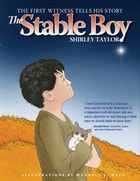
The Stable Boy
The First Witness Tells His StoryShirley A. Taylor
Parkhurst Brothers, Inc., 2012
"Shirley Taylor's story gives readers and hearers insight into the town of Bethlehem at the time of the birth of Christ. Wendell Hall's illustrations help us imagine that scene wonderfully. The young homeless boy touches our hearts and imaginations. Not just for children, this is a read aloud book for all ages." - Lauretta Phillips, Storyteller, Author, Radio & TV Host
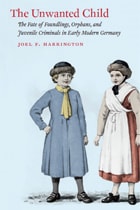
The Unwanted Child
The Fate of Foundlings, Orphans, and Juvenile Criminals in Early Modern GermanyJoel F. Harrington
University of Chicago Press, 2009
The baby abandoned on the doorstep is a phenomenon that has virtually disappeared from our experience, but in the early modern world, unwanted children were a very real problem for parents, government officials, and society. The Unwanted Child skillfully recreates sixteenth-century Nuremberg to explore what befell abandoned, neglected, abused, or delinquent children in this critical period.
Joel F. Harrington tackles this question by focusing on the stories of five individuals. In vivid and poignant detail, he recounts the experiences of an unmarried mother-to-be, a roaming mercenary who drifts in and out of his children’s lives, a civic leader handling the government’s response to problems arising from unwanted children, a homeless teenager turned prolific thief, and orphaned twins who enter state care at the age of nine. Braiding together these compelling portraits, Harrington uncovers and analyzes the key elements that link them, including the impact of war and the vital importance of informal networks among women. From the harrowing to the inspiring, The Unwanted Child paints a gripping picture of life on the streets five centuries ago.
Understood Betsy
Dorothy Canfield Fisher
Brandeis University Press, 1999
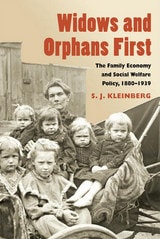
Widows and Orphans First
The Family Economy and Social Welfare Policy, 1880-1939S. J. Kleinberg
University of Illinois Press, 2005
The experiences of widows and their children during the Progressive Era and the New Deal depended on differences in local economies and values. How did these widely varied experiences impact the origins of the welfare state?
S. J. Kleinberg delves into the question by comparing widows' lives in three industrial cities with differing economic, ethnic, and racial bases. Government in Fall River, Massachusetts, saw employment as a solution to widows' poverty and as a result drastically limited public charity. In Pittsburgh, widows received sympathetic treatment. Few jobs existed for them or their children; indeed, the jobs for men were concentrated in "widowmaking" industries like steel and railroading. With a large African American population and a diverse economy that relied on inexpensive child and female labor, Baltimore limited funds for public services. African Americans adapted by establishing their own charitable institutions.
A fascinating comparative study, Widows and Orphans First offers a one-of-a-kind look at social welfare policy for widows and the role of children in society during a pivotal time in American history.