Results by title
35 books match the query 'Physiology'
Across the Bridge
Understanding the Origin of the VertebratesHenry Gee
University of Chicago Press, 2018
As Gee shows, even as scientific advances have falsified a variety of theories linking these groups, the extant relatives of vertebrates are too few for effective genetic analysis. Moreover, the more we learn about the species that do remain—from sea-squirts to starfish—the clearer it becomes that they are too far evolved along their own courses to be of much use in reconstructing what the latest invertebrate ancestors of vertebrates looked like. Fossils present yet further problems of interpretation. Tracing both the fast-changing science that has helped illuminate the intricacies of vertebrate evolution as well as the limits of that science, Across the Bridge helps us to see how far the field has come in crossing the invertebrate-to-vertebrate divide—and how far we still have to go.
Albertus Magnus On Animals V1 2
A Medieval Summa Zoologica Revised EditionKenneth F. Kitchell Jr.and Irven Michael Resnick
The Ohio State University Press, 2018
In his work De animalibus, Albert integrated the vast amount of information on nature that had come down to him in previous centuries: the exposition of Michael Scotus’s translation from the Arabic of Aristotle’s books on the natural world (Books 1–19), Albert’s own revisions to Aristotle’s teachings (Books 20–21), and a “dictionary” of animals appropriated largely from the De natura rerum of Thomas of Cantimpré (Books 22–26). Albert’s comprehensive treatise on living things was acknowledged as the reputable authority in biology for almost five hundred years.
In this translated and annotated edition, Kenneth F. Kitchell Jr. and Irven Michael Resnick illuminate the importance of this work, allowing Albert’s magnum opus to be better understood and more widely appreciated than ever before. Broken into two volumes (Books 1–10 and 11–26),Albertus Magnus On Animals is a veritable medieval scientific encyclopedia, ranging in topics from medicine, embryology, and comparative anatomy to women, hunting and everyday life, commerce, and much more—an essential work for historians, medievalists, scientists, and philosophers alike.
Animal Personalities
Behavior, Physiology, and EvolutionEdited by Claudio Carere and Dario Maestripieri
University of Chicago Press, 2013
Autonomic Imbalance and the Hypthalamus
Implications for Physiology, Medicine, Psychology, and NeuropsychiatryErnst Gellhorn
University of Minnesota Press, 1957
Brownsville, Brooklyn
Blacks, Jews, and the Changing Face of the GhettoWendell E. Pritchett
University of Chicago Press, 2001
The story of these two different, but in many ways similar, Brownsvilles is compellingly told in this probing new work. Focusing on the interaction of Brownsville residents with New York's political and institutional elites, Wendell Pritchett shows how the profound economic and social changes of post-World War II America affected the area. He covers a number of pivotal episodes in Brownsville's history as well: the rise and fall of interracial organizations, the struggles to deal with deteriorating housing, and the battles over local schools that culminated in the famous 1968 Teachers Strike. Far from just a cautionary tale of failed policies and institutional neglect, the story of Brownsville's transformation, he finds, is one of mutual struggle and frustrated cooperation among whites, blacks, and Latinos.
Ultimately, Brownsville, Brooklyn reminds us how working-class neighborhoods have played, and continue to play, a central role in American history. It is a story that needs to be read by all those concerned with the many challenges facing America's cities today.
Echolocation in Bats and Dolphins
Edited by Jeanette A. Thomas, Cynthia F. Moss, and Marianne Vater
University of Chicago Press, 2003
Echolocation in Bats and Dolphins consists of six sections: mechanisms of echolocation signal production; the anatomy and physiology of signal reception and interpretation; performance and cognition; ecological and evolutionary aspects of echolocation mammals; theoretical and methodological topics; and possible echolocation capabilities in other mammals, including shrews, seals, and baleen whales. Animal behaviorists, ecologists, physiologists, and both scientists and engineers who work in the field of bioacoustics will benefit from this book.

Environmental Physiology of the Amphibians
Edited by Martin E. Feder and Warren W. Burggren
University of Chicago Press, 1992
Evaluation Of Joint Motion
Methods of Measurement and RecordingDortha Esch
University of Minnesota Press, 1974

Experimental Leukemia and Mammary Cancer
Induction, Prevention, CureCharles Brenton Huggins
University of Chicago Press, 1979
Feminism and the Biological Body
Birke, Lynda
Rutgers University Press, 2000
What is a body? What are our perceptions of our inner bodies? How are these perceptions influenced?
In recent years, thinking about the body has become highly fashionable. However, the renewed focus, while certainly welcome, seems to always end at the corporeal surface. While recent sociological and feminist theory has made important claims about the process of cultural inscription on the body, and about the cultural representation of the body, what actually appears in this new theory seems to be, ironically, disembodied. If this newly theorized form has interiority, it is one that is explained predominantly through psychoanalysis. The physiological processes remain a mystery to be explained, if at all, only in the esoteric language of biomedicine.
As a trained biologist, Lynda Birke was frustrated by the gap between feminist cultural analysis and her own scientific background. In this book, she seeks to bridge this gap using ideas in anatomy and physiology to develop the feminist view that the biological body is socially and culturally constructed. Birke rejects the assumption that bodily function is somehow fixed and unchanging, claiming that biology offers more than just a deterministic narrative of how nature works. Feminism and the Biological Body brings natural science and feminist theory together and suggests that we need a new politics that includes, rather than denies, our flesh.
Fishy Business
Rik Scarce
Temple University Press, 2000
About Pacific salmon -- a game fish and food source that is protected and manages for economic and environmental abundance -- Scarce writes, "What other living thing receives such extensive attention from science and society, is used in so many ways, yet retains so much of what we would like to think is its 'wild' character?" He shows how political, bureaucratic, and economic forces have directed salmon science for their own purposes and how control remains a central feature in salmon biology.
Identifying a countertrend rooted in environmental activism, Scarce also argues that an ecocentric perspective is gaining ground even as pressures mount simultaneously to save endangered salmon populations and to bring every last salmon to market. Thus, while external forces control much of the biologists' work, a movement is underway to free biology from political and economic pressures. In rich, ethnographic detail, Scarce develops this portrait of a science struggling with nature and itself. The old-line "fisheries biologists" tell how they work under immense pressure to unravel the unknowns of salmon existence to fulfill objectives of politically-motivated funding agencies. In contrast, the new breed of "conservation biology" researchers struggles to maintain the genetic diversity of salmon populations while minimizing the ways humans determine the fate of the salmon.
Fishy Business provides new ways for regarding about human interactions with other species, from appealing ones like wolves, whales, and redwood tress to less popular ones like snail darters and kangaroo rats. Society struggles to decide what parts of nature matter and why. Ultimately, Scarce argues, nature is a social product: what shall we make of it?
Higher and Colder
A History of Extreme Physiology and ExplorationVanessa Heggie
University of Chicago Press, 2019
Unlike most books on modern biomedicine, Higher and Colder focuses on fieldwork, expeditions, and exploration, and in doing so provides a welcome alternative to laboratory-dominated accounts of the history of modern life sciences. Though centered on male-dominated practices—science and exploration—it recovers the stories of women’s contributions that were sometimes accidentally, and sometimes deliberately, erased. Engaging and provocative, this book is a history of the scientists and physiologists who face challenges that are physically demanding, frequently dangerous, and sometimes fatal, in the interest of advancing modern science and pushing the boundaries of human ability.

How Primates Eat
A Synthesis of Nutritional Ecology across a Mammal OrderEdited by Joanna E. Lambert, Margaret A. H. Bryer, and Jessica M. Rothman
University of Chicago Press, 2024
What do we mean when we say that a diet is nutritious? Why can some animals get all the energy they need from eating leaves while others would perish on such a diet? Why don’t mountain gorillas eat fruit all day as chimpanzees do? Answers to these questions about food and feeding are among the many tasty morsels that emerge from this authoritative book. Informed by the latest scientific tools and millions of hours of field and laboratory work on species across the primate order and around the globe, this volume is an exhaustive synthesis of our understanding of what, why, and how primates eat. State-of-the-art information presented at physiological, behavioral, ecological, and evolutionary scales will serve as a road map for graduate students, researchers, and practitioners as they work toward a holistic understanding of life as a primate and the urgent conservation consequences of diet and food availability in a changing world.
Human Fertility
Henri Leridon
University of Chicago Press, 1977
The book begins with a readable, authoritative review of human fertility in its natural state. Leridon summarizes and evaluates current knowledge, drawing together rare statistical data on physiological variables as well as demographic treatments of these data. After discussing the classical framework used by demographers, Leridon undertakes a "microdemographic" analysis in which he focuses on the individual and explicates the biological processes through which social, psychological, and economic factors affect fertility. He isolates its components—fecundability, intrauterine mortality, the physiological nonsusceptible period, and sterility—then reviews the composite effect of variation in any one component.
Leridon considers situations of controlled fertility: contraception, abortion, and sterilization. The author also presents valuable new data from his own investigations of varying risks of intrauterine mortality. Finally, he shows how the previous approaches can be complemented by the use of mathematical models.
Our Intelligent Bodies
Gary F. Merrill
Rutgers University Press, 2020
In Our Intelligent Bodies, physiology professor Gary F. Merrill takes you on a guided tour through the human body. You’ll learn how our eyes are designed to detect unimaginably small bursts of light and how our ears contain bundles of tiny hairs, each one attuned to different sound frequencies. You’ll also discover how our hearts are smart enough to compensate for skipped beats and irregular rhythms and how our pulmonary system adjusts for low oxygen levels. You’ll even find out why the gut is sometimes called the “second brain,” its reflexes controlled by millions of neurons.
Written in a fun, easy-to-comprehend style and filled with illuminating analogies, Our Intelligent Bodies also brings readers up to date on cutting-edge research into the wonders of human physiology. It will give you a new appreciation for the smart decisions our bodies are making when our brains aren’t paying attention.
Our Marvelous Bodies
An Introduction to the Physiology of Human HealthMerrill, Gary F
Rutgers University Press, 2008
Our Marvelous Bodies offers a unique perspective on the structure, function, and care of the major systems of the human body. Unlike other texts that use a strictly scientific approach, physiologist Gary F. Merrill relays medical facts alongside personal stories that help students relate to and apply the information.
Readers learn the basics of feedback control systems, homeostasis, and physiological gradients. These principles apply to an understanding of the body’s functioning under optimal, healthy conditions, and they provide insight into states of acute and chronic illness. Separate chapters are devoted to each of the body’s systems in detail: nervous, endocrine, cardiovascular, respiratory, renal, gastrointestinal, musculoskeletal, reproductive, and immune. Through a series of real-life examples, the book also shows the importance of maintaining careful medical records for health care professionals, scientists, and patients alike.
Petersburg
The Physiology of a CityThomas Gaiton Marullo
Northwestern University Press, 2009
Physiological Foundations of Neurology and Psychiatry
Ernst Gellhorn
University of Minnesota Press, 1953
Principles of Autonomic-Somatic Integrations
Physiological Basis and Psychological and Clinical ImplicationsErnst Gellhorn
University of Minnesota Press, 1967
Questions concerning Aristotle's On Animals (The Fathers of the Church, Mediaeval Continuation, Volume 9)
Irven M. Albert the Great
Catholic University of America Press, 2008
Raveling the Brain
Toward a Transdisciplinary NeurorhetoricJordynn Jack
The Ohio State University Press, 2019
Jack first looks at the problem of “neurohype”—exaggerated or oversimplified claims that essentialize brains and make them “uncritically real”—questioning some of the fundamental assumptions about the brain that experimental protocols and psychological concepts rely on. Then, through examples of research on sex and gender, political orientation, and affect, Jack demonstrates how a rhetorical-material approach can help to generate alternative approaches to studying the brain that might mitigate the problem of neurohype. By raveling out the roots of neurohype and raveling back its use through time, Raveling the Brain shows how rhetoric and neuroscience might be raveled together, or intertwined, to create a stronger transdisciplinary approach that might enrich our understanding of those issues of interest to neuroscientists and humanists alike.
Riotous Flesh
Women, Physiology, and the Solitary Vice in Nineteenth-Century AmericaApril R. Haynes
University of Chicago Press, 2015
As April R. Haynes shows, the crusade against female masturbation was rooted in a generally shared agreement on some major points: that girls and women were as susceptible to masturbation as boys and men; that “self-abuse” was rooted in a lack of sexual information; and that sex education could empower women and girls to master their own bodies. Yet the groups who made this education their goal ranged widely, from “ultra” utopians and nascent feminists to black abolitionists. Riotous Flesh explains how and why diverse women came together to popularize, then institutionalize, the condemnation of masturbation, well before the advent of sexology or the professionalization of medicine.
Sex Testing
Gender Policing in Women's SportsLindsay Pieper
University of Illinois Press, 2016
Ranging from Cold War tensions to gender anxiety to controversies around doping, Lindsay Parks Pieper explores sex testing in sport from the 1930s to the early 2000s. Pieper examines how the IOC in particular insisted on a misguided binary notion of gender that privileged Western norms. Testing evolved into a tool to identify--and eliminate--athletes the IOC deemed too strong, too fast, or too successful. Pieper shows how this system punished gifted women while hindering the development of women's athletics for decades. She also reveals how the flawed notions behind testing--ideas often sexist, racist, or ridiculous--degraded the very idea of female athleticism.
Sleep and Wakefulness
Nathaniel Kleitman
University of Chicago Press, 1987
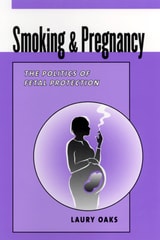
Smoking and Pregnancy
The Politics of Fetal ProtectionOaks, Laury
Rutgers University Press, 2001
The 1966 edition of the leading medical textbook states that pregnant women can safely smoke half a pack of cigarettes a day. Yet today, women who smoke during pregnancy are among the most vilified figures in public health campaigns. Laury Oaks argues this shift is not due solely to medical findings indicating that cigarette smoking may harm the fetus. Also responsible are a variety of social factors that converged more than a decade ago to construct the demonized category of the “pregnant smoker.”
This book charts the emergence of smoking during pregnancy as a public health concern and social problem. Oaks looks at the emphasis public health educators place on individual responsibility, the current legal and social assertion of fetal personhood, the changing expectations of pregnant and prepregnant women, and the advent of antismoking campaigns. She explores how public health educators discuss “the problem” with one another, how they communicate with pregnant smokers, and how these women themselves understand the “risk” of fetal harm. Finally, Oaks discusses the various meanings of “objective” statistics on the effects of smoking on the fetus, exploring the significance of cultural context in assessing the relative importance of those numbers. She argues that rather than bombarding pregnant women with statistics, health educators should consider the daily lives of these women and their socioeconomic status to understand why some women choose to smoke during pregnancy. Without downplaying the seriousness of the health risks that smoking poses to women and their babies, the book supports new efforts that challenge the moral policing of pregnant smokers.
The Gestation of German Biology
Philosophy and Physiology from Stahl to SchellingJohn H. Zammito
University of Chicago Press, 2017
In The Gestation of German Biology, historian of ideas John Zammito presents a different version of the emergence of the field, one that takes on both Foucault and Mayr and emphasizes the scientific progress throughout the eighteenth century that led to the recognition of the need for a special science. The embrace of the term biology around 1800, Zammito shows, was the culmination of a convergence between natural history and human physiology that led to the development of comparative physiology and morphology—the foundations of biology. Magisterial in scope, Zammito’s book offers nothing less than a revisionist history of the field, with which anyone interested in the origins of biology will have to contend.
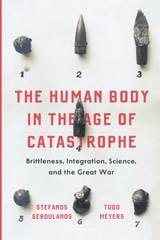
The Human Body in the Age of Catastrophe
Brittleness, Integration, Science, and the Great WarStefanos Geroulanos and Todd Meyers
University of Chicago Press, 2018
In The Human Body in the Age of Catastrophe, Stefanos Geroulanos and Todd Meyers uncover a fascinating story of how medical scientists came to conceptualize the body as an integrated yet brittle whole. Responding to the harrowing experience of the Great War, the medical community sought conceptual frameworks to understand bodily shock, brain injury, and the vast differences in patient responses they occasioned. Geroulanos and Meyers carefully trace how this emerging constellation of ideas became essential for thinking about integration, individuality, fragility, and collapse far beyond medicine: in fields as diverse as anthropology, political economy, psychoanalysis, and cybernetics.
Moving effortlessly between the history of medicine and intellectual history, The Human Body in the Age of Catastrophe is an intriguing look into the conceptual underpinnings of the world the Great War ushered in.
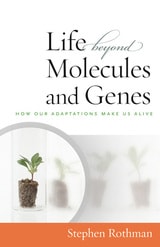
The Life Beyond Molecules and Genes
In Search of Harmony between Life and ScienceStephen Rothman
Templeton Press, 2009
What makes us alive? Is it our DNA? Our genetics? Is it our atomic composition that gives us life? Somehow, all of this feels radically dissonant from our everyday experience. In Life Beyond Molecules and Genes, experimental biologist Stephen Rothman makes the bold case that it is, in fact, our adaptive abilities, hewn by evolution, that make us alive. In making this point, he reveals a hidden harmony between science and life as we live it.
The Life of a Leaf
Steven Vogel
University of Chicago Press, 2012
In Vogel’s account, the leaf serves as a biological everyman, an ordinary and ubiquitous living thing that nonetheless speaks volumes about our environment as well as its own. Thus in exploring the leaf’s world, Vogel simultaneously explores our own.

The Most Secret Quintessence of Life
Sex, Glands, and Hormones, 1850-1950Chandak Sengoopta
University of Chicago Press, 2006
Through a series of case studies drawn from Central Europe, the United States, and Britain, The Most Secret Quintessence of Life explores how the notion of sex hormones enabled scientists to remap the human body, encouraging hopes that glandular interventions could cure ills, malfunctions, and even social deviance in ways inconceivable to previous generations. Many of these dreams failed, but their history, Chandak Sengoopta shows, takes us into the very heart of scientific medicine, revealing how even its most arcane concerns are shaped by cultural preoccupations and anxieties.
The Pancreas
Biology and PhysiologyJohn A. Williams
Michigan Publishing Services, 2021
This book provides comprehensive and definitive coverage of the current understanding of the structure and function of the exocrine pancreas. While emphasis is on normal physiology, the relevant cell biological, developmental and biochemical information is also provided. Where appropriate, chapters also include material on functional changes in pancreatitis. All chapters are fully referenced and provide up to date information.
The book has been overseen and published by the American Pancreatic Association with Fred S. Gorelick and John A. Williams as Editors. It includes 26 chapters written by an international group of authorities; completed chapters are also presented in open access format on the Pancreapedia (www.pancreapedia.org). The book contains full-color images and summary diagrams that enhance readability and extend the detail provided in the text.
The Pancreas: Biology and Physiology is divided into four sections:
- Pancreatic Exocrine Structure and Function Anatomy, Bioenergetics, Cytoskeleton, Intracellular Signaling
- Acinar Cells Digestive enzyme synthesis, intracellular transport, Zymogen granules, Exocytosis
- Exocrine Pancreas Integrative Responses Hormonal and Neural Control of Protein and Fluid Secretion, Molecular mechanisms of fluid and bicarbonate secretion, regulation of growth and regeneration
- Pancreatic Islet and Stellate Cell Structure and Function Structure and vasculature of islets, regulation of islet secretion, Stellate Cells in health and disease
The book is designed to be a reference book for pancreas researchers but its clear and readable text will appeal to teachers, students and all individuals interested in the exocrine pancreas.

The Physiology and Pathology of the Cerebellum
Robert S. Dow and Guiseppe Moruzzi
University of Minnesota Press, 1958
The Physiology and Pathology of the Cerebellum was first published in 1958. Minnesota Archive Editions uses digital technology to make long-unavailable books once again accessible, and are published unaltered from the original University of Minnesota Press editions.
The development of electrical methods of recording activity in the nervous system has greatly augmented our knowledge of cerebellar physiology. Now, for the first time in a single volume, this new information has been related to facts derived from older methods of investigation. Previously unpublished reports of experiments conducted at the Institute of Physiology, University of Pisa, Italy, also are included.
The authors, an American clinical neurologist and an Italian neuro-physiologist, have collaborated to provide a comprehensive review of cerebellar physiology and a survey of the clinical symptomatology of cerebellar disorders and the pathology of the cerebellum.
In Part I, devoted to the physiology, the authors review the literature completely and place it in proper relation to the latest developments in this field. There are chapters on this history of cerebellar physiology, ablation experiments, stimulation experiments, electro-physiological experiments, the relations between the cerebellum and other central nervous structures, developmental physiology, and the functions of the cerebellum, considered generally.Part II is devoted to the human cerebellum as studied in the clinic. Where anatomical and physiological observation may shed light upon obscure clinical findings, the laboratory data are related to the clinical investigations. The disorders and diseases affecting the cerebellum are systemically reviewed. The book is illustrated with 61 halftones and 124 line drawings.
The Physiology of New York Boarding-Houses
Faflik, David
Rutgers University Press, 2008
In his introduction, David Faflik considers what made Gunn's book a compelling read in the past and how today it can elucidate our understanding of the formation and evolution of urban American life and letters.
The Politics of Women's Biology
Hubbard, Ruth
Rutgers University Press, 1990
The Science of Walking
Investigations into Locomotion in the Long Nineteenth CenturyAndreas Mayer
University of Chicago Press, 2020
Looking back at more than a century of locomotion research, Mayer charts, for the first time, the rise of scientific endeavors to control and codify locomotion and analyzes their social, political, and aesthetic ramifications throughout the long nineteenth century. In an engaging narrative that weaves together science and history, Mayer sets the work of the most important representatives of the physiology of locomotion—including Wilhelm and Eduard Weber and Étienne-Jules Marey—in their proper medical, political, and artistic contexts. In tracing the effects of locomotion studies across other cultural domains, Mayer reframes the history of the science of walking and gives us a deeper understanding of human movement.