Results by title
42 books match the query 'Poets'
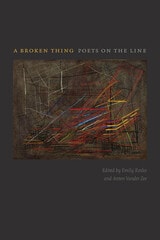
A Broken Thing
Poets on the LineEmily Rosko and Anton Vander Zee
University of Iowa Press, 2011
In the arena of poetry and poetics over the past century, no idea has been more alive and contentious than the idea of form, and no aspect of form has more emphatically sponsored this marked formal concern than the line. But what, exactly, is the line? Emily Rosko and Anton Vander Zee’s anthology gives seventy original answers that lead us deeper into the world of poetry, but also far out into the world at large: its people, its politics, its ecology. The authors included here, emerging and established alike, write from a range of perspectives, in terms of both aesthetics and identity. Together, they offer a dynamic hybrid collection that captures a broad spectrum of poetic practice in the twenty-first century.
A Company of Poets
Louis Simpson
University of Michigan Press, 1981

A God in the House
Poets Talk About FaithEdited by Ilya Kaminsky and Katherine Towler
Tupelo Press, 2012
A New Geography of Poets
Edward Field
University of Arkansas Press, 1993
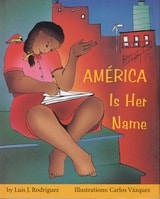
América Is Her Name
Luis J. Rodriguez
Northwestern University Press, 1998
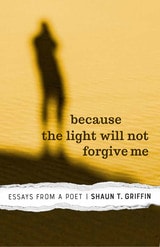
Because the Light Will Not Forgive Me
Essays from a PoetShaun T, Griffin
University of Nevada Press, 2019
In this luminous and moving book of essays, award-winning author Shaun Griffin weaves together a poetic meditation on living meaningfully in this world. Anchored in the American West but reaching well beyond, he recounts his discoveries as a poet and devoted reader of poetry, a teacher of the disadvantaged, a friend of poets and artists, and a responsible member of the human family.
Always grounded in place, be it Nevada, South Africa, North Dakota, Spain, Zimbabwe, or Mexico, Griffin confronts the world with an openness that allows him to learn and grow from the people he meets. This is a meditation on how all of us can confront our own influences to achieve wholeness in our lives. Along with Griffin, readers will reflect on how they might respond to a homeless man walking through central Nevada, viewing the open desert as Thoreau might have viewed Walden, seeing the US-Mexico border as a region of lost identity, reconciling how poets who live west of the Hudson River find anonymity to be their laurel, and experiencing how writing poetry in prison becomes lifesaving.
Whether poets or places in the West or beyond, experiences with other cultures, or an acute awareness that poetry is the refuge of redress—all have influenced Griffin’s writing and thinking as a poet and activist in the Great Basin. The mindfulness of Because the Light Will Not Forgive Me demonstrates that even though the light does not forgive, it still reveals.
Beyond Lament
Poets of the World Bearing Witness to the HolocaustMarguerite Striar
Northwestern University Press, 1998
Editor Marguerite M. Striar has arranged the nearly 300 poems in this volume to tell the story beginmning with the early premonitions of Nazi evil in 1933, through the course of the unthinkable violence that ended in 1945 with Hitler's demise, to the flourishing of concern for human rights in the aftermath of the Holocaust. These works by well-known poets such as Paul Celan, Nelly Sachs, Czeslaw Milosz, Dannie Abse, and Robert Pinsky, as well as many lesser-known or unknown poets, show how poetry makes history memorable, confirm the resiliance of the human spirit, and prove that even in the fact of great suffering, the flame of creation will not be extinguished.
Dancing with Poets
Reed Turchi
University Press of Colorado, 2026
Reed Turchi’s debut collection, Dancing with Poets, explores what it means to make—and re-make—oneself amid a swirl of love, loss, and memory. In dive bars and art museums, baseball stadiums and blues clubs, Turchi summons his ghosts and invites them to sing their songs. A Grammy Award–winning musician as well as poet, Turchi is guided by finely honed rhythm and a singular sonic sensibility that coaxes music from poems that are narrative and lyric in turn. As a collection, Dancing with Poets remembers those the author has loved and lost, but avoids nostalgia, asking instead what futures may be built from grief and how love may grow on the other side of devastation. While the poems may swirl, their emotional truth remains crystalline: The characters, moments, and stories in each poem are infinitely recognizable—fantastic and quotidian in equal measure. Within these poems there are chicken tenders and high art, motorcycles and funerals—a familiar boyhood that happened to be spent surrounded by some of the finest American poets of the late twentieth century. In Dancing with Poets, Turchi invites his reader to join him—“to strut and spin” in grief and joy alike.
Dancing with Poets
Reed Turchi
University Press of Colorado, 2026
Reed Turchi’s debut collection, Dancing with Poets, explores what it means to make—and re-make—oneself amid a swirl of love, loss, and memory. In dive bars and art museums, baseball stadiums and blues clubs, Turchi summons his ghosts and invites them to sing their songs. A Grammy Award–winning musician as well as poet, Turchi is guided by finely honed rhythm and a singular sonic sensibility that coaxes music from poems that are narrative and lyric in turn. As a collection, Dancing with Poets remembers those the author has loved and lost, but avoids nostalgia, asking instead what futures may be built from grief and how love may grow on the other side of devastation. While the poems may swirl, their emotional truth remains crystalline: The characters, moments, and stories in each poem are infinitely recognizable—fantastic and quotidian in equal measure. Within these poems there are chicken tenders and high art, motorcycles and funerals—a familiar boyhood that happened to be spent surrounded by some of the finest American poets of the late twentieth century. In Dancing with Poets, Turchi invites his reader to join him—“to strut and spin” in grief and joy alike.
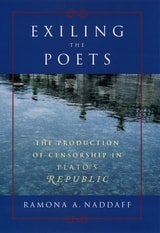
Exiling the Poets
The Production of Censorship in Plato's RepublicRamona A. Naddaff
University of Chicago Press, 2002
Censorship, Nadaff argues, is not merely a mechanism of silencing but also provokes new ways of speaking about controversial and crucial cultural and artistic events. It functions philosophically in the Republic to subvert Plato's most crucial arguments about politics, epistemology, metaphysics, and ethics. Naddaff develops this stunning argument through an extraordinary reading of Plato's work. In books 2 and 3, the first censorship of poetry, she finds that Plato constitutes the poet as a rival with whom the philosopher must vie agonistically. In other words, philosophy does not replace poetry, as most commentators have suggested; rather, the philosopher becomes a worthy and ultimately victorious poetic competitor. In book 10's second censorship, Plato exiles the poets as a mode of self-subversion, rethinking and revising his theory of mimesis, of the immortality of the soul, and, most important, the first censorship of poetry. Finally, in a subtle and sophisticated analysis of the myth of Er, Naddaff explains how Plato himself censors his own censorships of poetry, thus producing the unexpected result of a poetically animated and open-ended dialectical philosophy.
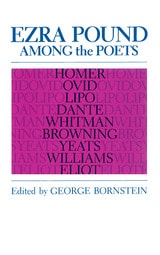
Ezra Pound among the Poets
Edited by George Bornstein
University of Chicago Press, 1985
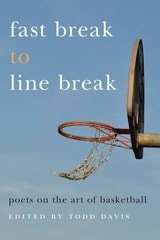
Fast Break to Line Break
Poets on the Art of BasketballTodd Davis
Michigan State University Press, 2012
If baseball is the sport of nostalgic prose, basketball’s movement, myths, and culture are truly at home in verse. In this extraordinary collection of essays, poets meditate on what basketball means to them: how it has changed their perspective on the craft of poetry; how it informs their sense of language, the body, and human connectedness; how their love of the sport made a difference in the creation of their poems and in the lives they live beyond the margins. Walt Whitman saw the origins of poetry as communal, oral myth making. The same could be said of basketball, which is the beating heart of so many neighborhoods and communities in this country and around the world. On the court and on the page, this “poetry in motion” can be a force of change and inspiration, leaving devoted fans wonderstruck.
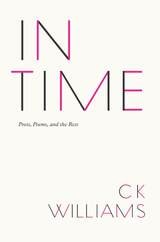
In Time
Poets, Poems, and the RestC. K. Williams
University of Chicago Press, 2012
Lofty Dogmas
Poets on PoeticsDeborah Brown
University of Arkansas Press, 2005
Love among the Poets
The Victorian Poetics of IntimacyPearl Chaozon Bauer; Erik Gray
Ohio University Press, 2024
Mentor and Muse
Essays from Poets to PoetsEdited by Blas Falconer, Beth Martinelli, and Helena Mesa
Southern Illinois University Press, 2010
In Mentor and Muse, a collection of twenty-nine insightful essays by some of today’s leading poetic minds, editors Blas Falconer, Beth Martinelli, and Helena Mesa have brought together an illuminating anthology that draws upon both established and emerging poets to create a one-of-a-kind resource and unlock the secrets of writing and revising poetry.
Gathered here are numerous experts eager to share their wisdom with other writers. Each author examines in detail a particular poetic element, shedding new light on the endless possibilities of poetic forms. Addressed within are such topics as the fluid possibilities of imagery in poetry; the duality of myth and the personal, and the power of one to unlock the other; the surprising versatility of traditional poetic forms; and the pleasure of collaboration with other poets. Also explored in depth are the formative roles of cultural identity and expectations, and their effect on composition; advice on how to develop one’s personal poetic style and approach; the importance of setting in reading and meaning; and the value of indirection in the lyric poem. Challenges to conventional concepts of beauty are examined through Shakespeare’s sonnets, and the ghost of Longfellow is called upon to guide students through the rewards and roadblocks of writing popular poetry. Poetic persona is demystified through Newton’s law of gravity, while the countless permutations of punctuation are revealed with analysis of e. e. cummings and W. S. Merwin.
The essays include the full text of the poems discussed, and detailed, relevant writing exercises that allow students the opportunity to directly implement the strategies they have learned. While many advanced topics such as authenticity, discordant music, and prosody are covered, this highly readable volume is as user-friendly as it is informative. Offering a variety of aesthetics and approaches to tackling the issues of composition, Mentor and Muse takes poets beyond the simple stages of poetic terms and strategies. These authorsinvite students to explore more advanced concepts, enabling them to draw on the traditions of the past while at the same time forging their own creative paths into the future.
Chosen as one of the "Best Books for Writers" by Poets & Writers magazine
Nemerov's Door
EssaysRobert Wrigley
Tupelo Press, 2021
Poetry Like Bread, New Expanded Edition
Poets of the Political Imagination from Curbstone PressMartín Espada
Northwestern University Press, 2000
These poems were not written to be studied. They were meant to be read. Or better yet, heard. Whole or in part. Alone or among friends and strangers. Reading and hearing them, you must respond and react. Some may inspire you, knock the wind out of you—make you indignant, sad, joyous, ashamed. Whether you drop this book, seek out others, join a social action group, write letters to your elected representatives, or write poems of your own, your reaction to the poems will be as political as the poems themselves.
Some of the subjects of these poems may be unfamiliar to you, or very familiar to you. Many relate stories from war-torn Central and South America, where U. S. policy has had a huge impact on people's lives. The rest are the voices of the voiceless here in the U.S: Latinos and African Americans, Vietnam veterans and Vietnamese, prison inmates, blue collar workers, migrant workers, women, the homeless. It's the poet's job to open up and validate these worlds to us. Our job, once roused, is to learn. To learn and to act.
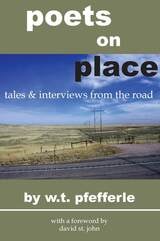
Poets On Place
W. T. Pfefferle
Utah State University Press, 2005
Out to see America and satisfy his travel bug, W. T. Pfefferle resigned from his position as director of the writing program at Johns Hopkins University and hit the road to interview sixty-two poets about the significance of place in their work. The lively conversations that resulted may surprise with the potential meanings of a seemingly simple concept. This gathering of voices and ideas is illustrated with photo and word portraits from the road and represented with suitable poems.
The poets are James Harms, David Citino, Martha Collins, Linda Gregerson, Richard Tillinghast, Orlando Ricardo Menes, Mark Strand, Karen Volkman, Lisa Samuels, Marvin Bell, Michael Dennis Browne, David Allan Evans, David Romtvedt, Sandra Alcosser, Robert Wrigley, Nance Van Winckel, Christopher Howell, Mark Halperin, Jana Harris, Sam Hamill, Barbara Drake, Floyd Skloot, Ralph Angel, Carol Muske-Dukes, David St. John, Sharon Bryan, Donald Revell, Claudia Keelan, Alberto Rios, Richard Shelton, Jane Miller, William Wenthe, Naomi Shihab Nye, Peter Cooley, Miller Williams, Beth Ann Fennelly, Natasha Trethewey, Denise Duhamel, Campbell McGrath, Terrance Hayes, Alan Shapiro, Nikki Giovanni, Charles Wright, Rita Dove, Henry Taylor, Dave Smith, Nicole Cooley, David Lehman, Lucie Brock-Broido, Michael S. Harper, C. D. Wright, Mark Wunderlich, James Cummins, Frederick Smock, Mark Jarman, Carl Phillips, Scott Cairns, Elizabeth Dodd, Jonathan Holden, Bin Ramke, Kenneth Brewer, and Paisley Rekdal.
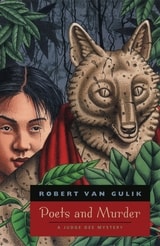
Poets and Murder
A Judge Dee MysteryRobert van Gulik
University of Chicago Press, 1968
Judge Dee, the master detective of seventh-century China, sets out to solve a puzzling double murder and discovers complex passions lurking beneath the placid surface of academic life. A mild-mannered student is rumored to have been slain by a fox-demon, while a young dancer meets her death as she dresses to perform for the magistrate's illustrious dinner guests—an obese Zen monk revered for his calligraphy, a beautiful poetess accused of murder, and the past president of the imperial academy. To connect the present crimes with betrayals and adulteries from decades past, the clever judge must visit a high-class brothel and the haunted shrine of the Black Fox. From the moment the young scholar is found dead on the eve of the Autumn Festival, the pace never lets up.

Poets and Playwrights
Shakespeare, Jonson, Spenser, MiltonElmer Edgar Stoll
University of Minnesota Press, 1967
Poets and Playwrights was first published in 1967. Minnesota Archive Editions uses digital technology to make long-unavailable books once again accessible, and are published unaltered from the original University of Minnesota Press editions.
Poets and Playwrights is a collection of nine essays by the eminent Shakespearean scholar and critic, the late Elmer Edgar Stoll. In this work, which was first published by the University of Minnesota Press in 1930, Professor Stoll presents his maturest consideration of the art of the poets and playwrights of his subtitle—Shakespeare, Jonson, Spenser, and Milton. The most extensive essay, "Shakespeare and the Moderns," includes, in Mr. Stoll's words, "a review of Shakespeare as I conceive him, in order the better to compare him with those who in some respect or other are his peers."
Poets and the Visual Arts in Renaissance England
By Norman K. Farmer, Jr.
University of Texas Press, 1984
In the twentieth century, the pioneering work of such art historians as Erwin Panofsky and Edgar Wind heightened our awareness of the relationship between Renaissance literature and the visual arts. By focusing on that relationship in the work of such poets as Sir Philip Sidney, John Donne, Richard Crashaw, Edmund Waller, and Robert Herrick, Norman K. Farmer, Jr., convincingly shows that they and other writers of the late sixteenth and early seventeenth centuries in England wrote with a lively and creative sense of the visual—a sense richly informed by the theory and practice of Renaissance art.
Farmer begins by describing the powerful visual matrix that underlies the narrative structure of Sidney's New Arcadia. He compares the role of the visual in the poetry of Donne and Ben Jonson, and demonstrates how works by both Thomas Carew and Lord Herbert exhibit poetic invention according to familiar Renaissance pictorial themes. Herrick's Hesperides is shown to be the major seventeenth-century poetic application of the Horatian idea ut pictura poesis.
A special feature of this gracefully written and enlightening volume is Farmer's discussion of Lady Drury's oratory at Hawstead Hall. Published here for the first time are photographs of this uniquely decorated oratory, in which themes from a variety of English and Continental emblem books were painted on the walls of a room apparently designed for private meditation.
Poets as Public Scholars
Contemporary Poetics in an Age of Social MediaC. R. Grimmer
University of Michigan Press, 2026
Poets as Public Scholars is a multimedia project that interrogates how poet-scholars use digital platforms to expand access and visibility for underrepresented voices, but also to critique the commodification, extraction, and erasure practices embedded in neoliberal literary circulation. Framed by two core questions—how poets teach public scholarship through networked media, and how to support underrepresented poets without reinforcing market-driven erasure—the collection offers videos for student and public engagement, essays for scholarly audiences, and discussion questions for classroom use.
Structured around seven video dialogues and seven critical essays, the book features contributions from poet-scholars including Camea Davis, A.D. Carson, Tyrone Williams, Patrick Milian, Stevi Costa, Cameron Awkward-Rich, and Woogee Bae. Each chapter examines the material and affective economies that shape poetic production and reception, while proposing alternative, community-rooted infrastructures for literary and cultural labor. Designed for layered audiences, the video interviews model public-facing discourse, while the companion essays situate the work within critical conversations in literature, cultural theory, and media studies. With included discussion questions by Dr. Molly Ubbesen (University of Minnesota Rochester) and open access availability, Poets as Public Scholars functions as both a teaching tool and a theoretical intervention for scholars and educators seeking to integrate anti-racist, anti-capitalist approaches to literary and digital humanities pedagogy.

Poets as Readers in Nineteenth-Century France
Critical ReflectionsEdited by Joseph Acquisto, Adrianna M. Paliyenko, and Catherine Witt
University of London Press, 2015
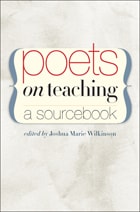
Poets on Teaching
A SourcebookJoshua Marie Wilkinson
University of Iowa Press, 2010
In response to a lack of source works for wide-ranging approaches to teaching poetry, award-winning poet Joshua Marie Wilkinson has gathered ninety-nine micro-essays for poets, critics, and scholars who teach and for students who wish to learn about the many ways poets think about how a poem comes alive from within—and beyond—a classroom. Not narrowly concerned with how to read poetry or how to write poetry, by virtue of their central concern with teaching poetry, the essays in this fresh and innovative volume address both reading and writing and give teachers and students useful tools for the classroom and beyond.
Divided into four sections—“Reflections / Poetics,” “Exercises / Praxis,” “New Approaches to Poetry Courses and Methodology,” and “Talks / Directives”—Poets on Teaching provides practical, intelligent advice. “Reflections / Poetics” encompasses the most expansive approaches to teaching poetry, where poets reflect variously on what teachers can cultivate in their classrooms. “Exercises / Praxis” consists of hands-on approaches to reading and, especially, writing poems. “New Approaches to Poetry Courses and Methodology” features essays on rethinking specific courses, offering new ideas for course design and pedagogy. “Talks / Directives” contains a series of more informal and conversational discussions geared toward becoming a stronger reader, writer, teacher, and student of poetry. Poets on Teaching will be required reading for new and experienced teachers alike.
Kazim Ali, Rae Armantrout, Hadara Bar-Nadav, Dan Beachy-Quick, Bruce Beasley, Claire Becker, Jaswinder Bolina, Jenny Boully, Joel Brouwer, Lily Brown, Laynie Browne, Stephen Burt, Julie Carr, Joshua Clover, Matthew Cooperman, Oliver de la Paz, Linh Dinh, Ben Doller, Sandra Doller, Julie Doxsee, Lisa Fishman, Graham Foust, John Gallaher, Forrest Gander, C. S. Giscombe, Peter Gizzi, Lara Glenum, Kenneth Goldsmith, Johannes Göransson, Noah Eli Gordon, Arielle Greenberg, Richard Greenfield, Sarah Gridley, Anthony Hawley, Terrance Hayes, Eric Hayot, Brian Henry, Brenda Hillman, Jen Hofer, Paul Hoover, Christine Hume, Brenda Iijima, Lisa Jarnot, Kent Johnson, Bhanu Kapil, Karla Kelsey, Aaron Kunin, Quraysh Ali Lansana, Dorothea Lasky, Sueyeun Juliette Lee, Ada Limón, Timothy Liu, Sabrina Orah Mark, Dawn Lundy Martin, Kristi Maxwell, Joyelle McSweeney, Christina Mengert, Albert Mobilio, K. Silem Mohammad, Fred Moten, Jennifer Moxley, Laura Mullen, Sawako Nakayasu, Aimee Nezhukumatathil, Hoa Nguyen, Jena Osman, D. A. Powell, Kristin Prevallet, Bin Ramke, Jed Rasula, Srikanth Reddy, Barbara Jane Reyes, Boyer Rickel, Elizabeth Robinson, Martha Ronk, Emily Rosko, Prageeta Sharma, Evie Shockley, Eleni Sikelianos, Richard Siken, Ron Silliman, Tracy K. Smith, Juliana Spahr, Sasha Steensen, Peter Streckfus, Cole Swensen, Michael Theune, Tony Trigilio, Spring Ulmer, Karen Volkman, Catherine Wagner, G. C. Waldrep, Mark Wallace, Tyrone Williams, Mark Yakich, Jake Adam York, Stephanie Young, Timothy Yu, Matthew Zapruder, Andrew Zawacki, and Rachel Zucker

Politics and Poetic Value
Edited by Robert von Hallberg
University of Chicago Press, 1987
Re Verse
Essays on Poetry and PoetsDavid R. Slavitt
Northwestern University Press, 2009
Combining personal reminiscence with deft literary analysis, incisive biographical sketches, and, sometimes, literary gossip, these essays give new perspectives on the famous--such as Harold Bloom, Robert Penn Warren, Robert Frost, and Stephen Spender--and recover the charms of the near-forgotten--such as Dudley Fitts, Winfield Townley Scott, Merrill Moore and John Hall Wheelock. Slavitt writes with self-deprecating humor of his own literary education, and uses his impressive experience and erudition to illuminate the whims of poetic influence, passion, and reputation. With a refreshing honesty and considerable poise, he gives readers an enlightening view of the vast and ever-changing literary universe.
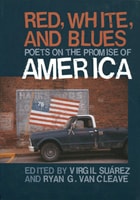
Red, White, and Blues
Poets on the Promise of AmericaVirgil & Ryan G. Suarez & Van Cleave
University of Iowa Press, 2004
Red, White, and Blues, a new anthology from the award-winning editors of Like Thunder: Poets Respond to Violence in America and Vespers: Contemporary American Poems of Religion and Spirituality, offers a chorus of contemporary American poets on the idea of liberty, democracy, patriotism, and the American Dream;a twenty-first-century "Song of Myself” for the entire country.
The poems in Red, White, and Blues reflect our collective memory—from icons of pop culture to national disasters and times of unrest. Yet they are not simply reflections of the headline news or political diatribes of the day; instead, they provide roadmaps of American history—roadmaps of where we’ve been, who we are, and where we’re going as a nation.
Poets as diverse as Martín Espada and Paisley Rekdal, J. P. Dancing Bear and Vivian Shipley seek to answer questions that resonate within the heart of our national identity—what does it mean to be an American? What is the American Dream? How does one define patriotism? Regardless of ethnicity, gender, or class, each poet’s answer to such questions proves that our experiences unite us more than they divide us.
Red, White, and Blues is an ambitious collection of the finest contemporary poetry on the subject of America and the indefatigable spirit of its citizens. Its poems don’t pull punches, nor do they celebrate without cause. They show spirit and excitement, outrage and joy, solemnity and ambiguity—all reflections of our wonderfully diverse nation.
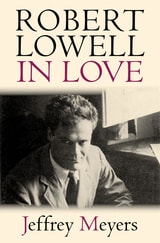
Robert Lowell in Love
Jeffrey Meyers
University of Massachusetts Press, 2016
Lowell's charismatic personality, compelling poetry, and literary fame attracted lovers and friends who were both frightened and excited by his aura of brilliance and danger. He loved the idea of falling in love, and in his recurring manic episodes he needed women at the center of his emotional and artistic life. Each affair became an intense dramatic episode. Though he idealized his loves and encouraged their talents, his frenetic affairs and tortured marriages were always conducted on his own terms. Robert Lowell in Love tells the story of the poet in the grip of love and gives voice to the women who loved him, inspired his poetry, and suffered along with him.
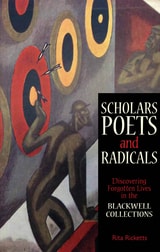
Scholars, Poets and Radicals
Discovering Forgotten Lives in the Blackwell CollectionRita Ricketts
Bodleian Library Publishing, 2015
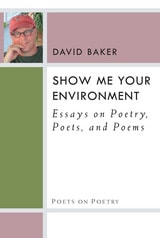
Show Me Your Environment
Essays on Poetry, Poets, and PoemsDavid Baker
University of Michigan Press, 2014
In Show Me Your Environment, a penetrating yet personable collection of critical essays, David Baker explores how a poem works, how a poet thinks, and how the art of poetry has evolved—and is still evolving as a highly diverse, spacious, and inclusive art form. The opening essays offer contemplations on the “environment” of poetry from thoughts on physical places and regions as well as the inner aesthetic environment. Next, Baker looks at the highly distinctive achievements and styles of poets ranging from George Herbert and Emily Dickinson through poets writing today. Finally, he takes joy in reading individual poems—from the canonical to the contemporary; simply and closely.
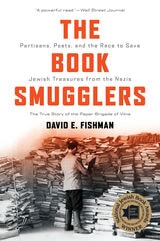
The Book Smugglers
Partisans, Poets, and the Race to Save Jewish Treasures from the NazisDavid E. Fishman
University Press of New England, 2018
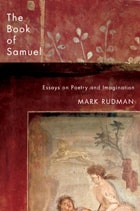
The Book of Samuel
Essays on Poetry and ImaginationMark Rudman
Northwestern University Press, 2009
Crisis, breakdown, rejuvenation: this is the territory of poetry that Rudman takes readers into with this set of essays. Constructed as a series of character studies, the essays are rooted in autobiographical material with biographical counterpoints, tying the poets distinctly to places. Even as they are placed, however, they are displaced: Rudman's subjects, from D.H. Lawrence to Czeslaw Milosz to T. S. Eliot, are almost all exiles, either geographically or within themselves. This exile spins anger into energy, transmuting emotion into imagination the same way that Passaic Falls, known to William Carlos Williams, turns water into power.
The mosaic style of the essays touches on nerve after nerve, avoiding the snags of academic jargon to ease towards an illuminating truth about the artists' shifting work and worlds. Some of the Samuels—Beckett and Fuller—were able to navigate these shifts, while others--Coleridge and Johnson--are shown to be less able to transmute their energy into motion.
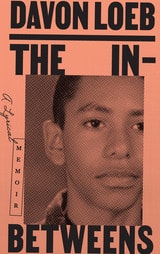
The In-Betweens
A Lyrical MemoirDavon Loeb
West Virginia University Press, 2023
“Utterly captivating and resonant.” —Chicago Review of Books
“Gorgeously told.” —Philadelphia Inquirer
“Resonant. . . . Engagingly delivered, candid reflections on heritage and identity.” —Kirkus Reviews
The In-Betweens tells the story of a biracial boy becoming a man, all the while trying to find himself, trying to come to terms with his white family, and trying to find his place in American society. A rich narrative in the tradition of Justin Torres’s We the Animals and Bryan Washington’s Memorial, Davon Loeb’s memoir is relevant to the country’s current climate and is part of the necessary rewrite of the nation’s narrative and identity.
The son of a Black mother with deep family roots in Alabama and a white Jewish man from Long Island, Loeb grows up in a Black family in the Pine Barrens of New Jersey as one of the few nonwhite children in their suburban neighborhood. Despite his many and ongoing efforts to fit in, Loeb acutely feels his difference—he is singled out in class during Black History Month; his hair doesn’t conform to the latest fad; coaches and peers assume he is a talented athlete and dancer; and on the field trip to the Holocaust Museum, he is the Black Jew. But all is not struggle. In lyrical vignettes, Loeb vibrantly depicts the freedom, joys, and wonder of childhood; the awkwardness of teen years, first jobs, first passions. Loeb tells an individual story universally, and readers, regardless of subjectivity and relation, will see themselves throughout The In-Betweens.
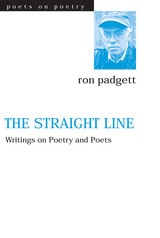
The Straight Line
Writing on Poetry and PoetsRon Padgett
University of Michigan Press, 2000
But along with the playful wit comes Padgett's serious fascination with how words work. Essays discuss such subjects as the otherness of languages; French poets and their relationship to Cubist painters; an afternoon with the poet Edwin Denby; a tribute to Ted Berrigan; twentieth-century modernism; and suggestions for using the computer to write poetry.
The book concludes with pieces that Padgett has written during his thirty years as a teacher of poetry. Essays explore the unexpected relationships between poetry and dance; the practical value of using "gimmicks" to inspire poetry writing; and some radical and entertaining ideas for innovative ways to read creatively.
Ron Padgett is Publications Director, Teachers and Writers Collaborative. His books include Albanian Diary, Creative Reading, and Old Faithful: 18 Writers Present Their Favorite Writing Assignments.
To Make a Prairie
Essays on Poets, Poetry, and Country LivingMaxine Kumin
University of Michigan Press, 1980
Unauthorized Voices
Essays on Poets and Poetry, 1987-2009Marilyn Hacker
University of Michigan Press, 2010
Praise for Marilyn Hacker:
"How piercing the duet we're offered between Marilyn Hacker and the reality principle. Reality saying, it’s impossible, something's always sacrificed: you can't be so merry and so raw; so learned and earthy; so gut-wrenching, so danceable at once. Can you? To which, steadily, the voice of Marilyn Hacker: Yes. Evidently; Evidently so."
---Eve Kosofsky Sedgwick, author of Epistemology of the Closet and Touching Feeling
"Hacker is one of our best singers---by turns elegiac and fierce, sweet and witty. With each new collection her voice grows richer, more resonant, sorrowing and lovely."
---Julia Alvarez, author of In the Time of the Butterflies and How the García Girls Lost Their Accents
"Marilyn Hacker joins a marvelous facility with poetic forms to a shockingly intense sensuality. Not unlike Baudelaire, you might say, and indeed like him, she shares a taste for excess, drink, Paris, women, crowds. 'Enivrez-vous!' Baudelaire ordered his readers, and Marilyn Hacker has taken his advice seriously."
---Edmund White, author of Hotel de Dream, City Boy, and Le Flâneur
"Everything is thrilling and true, fast and witty, deep and wise; her vitality is the pulse of life itself."
---Derek Mahon, author of Harbour Lights and An Autumn Wind
A volume in the Poets on Poetry series, which collects critical works by contemporary poets, gathering together the articles, interviews, and book reviews by which they have articulated the poetics of a new generation.
For over twenty years, award-winning poet, translator, and editor Marilyn Hacker has been writing incisive criticism and reviews of contemporary poetry, with particular attention to the work of feminist poets, poets of color, and any poets whose work she judged worthy of more attention from the American (and sometimes British) reading public.
Unauthorized Voices is Hacker’s first collection of critical prose, bringing together her essays on American, British, Irish, and French poets. It includes pieces on Adrienne Rich, Hayden Carruth, Elizabeth Bishop, Tony Harrison, Marilyn Nelson, and June Jordan; on French and Francophone poets including Vénus Khoury-Ghata and Guy Goffette; on poetry and politics; and on the contemporary sonnet, all affirming Hacker as a lively, unabashedly opinionated American critical voice.
Marilyn Hacker is the author of twelve books of poems, most recently Names and Essays on Departure, and of ten collections of poetry translated from the French, including Marie Étienne's King of a Hundred Horsemen, recipient of the 2009 PEN Award for Poetry in Translation. She has been the recipient of the Lenore Marshall Poetry Prize, two Lambda Literary Awards, and the National Book Award for her own poetry and is a Chancellor of the Academy of American Poets.
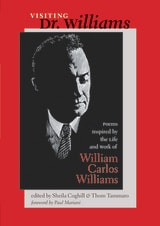
Visiting Dr. Williams
Poems Inspired by the Life and Work of William Carlos WilliamsSheila Coghill
University of Iowa Press, 2011
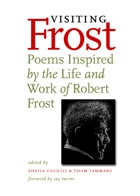
Visiting Frost
Poems Inspired by the Life and Work of Robert FrostSheila Coghill
University of Iowa Press, 2005
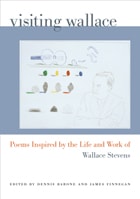
Visiting Wallace
Poems Inspired by the Life and Work of Wallace StevensDennis Barone
University of Iowa Press, 2009
Whether whimsical or serious, solemn or light, the poems in Dennis Barone and James Finnegan’s Visiting Wallace are sure to inspire delight and thought. Alan Filreis’s brilliant foreword asks us to consider whether there is another modern poet who means as much to contemporary verse as Stevens: “seventy-six poems giving us seventy-six distinct Stevenses to follow and succeed.”
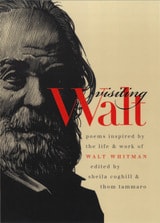
Visiting Walt
Poems Inspired by the Life and Work of Walt WhitmanSheila Coghill
University of Iowa Press, 2003
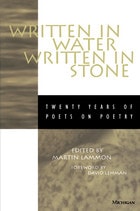
Written in Water, Written in Stone
Twenty Years of Poets on PoetryMartin Lammon, Editor
University of Michigan Press, 1996
Included are selections from, among others, Robert Bly, Hayden Carruth, Amy Clampitt, Robert Creeley, Tess Gallagher, Donald Hall, Robert Hayden, Galway Kinnell, Richard Kostelanetz, Maxine Kumin, Philip Levine, Marge Piercy, Anne Sexton, Charles Simic, Louis Simpson, William Stafford, Diane Wakoski, Charles Wright, and James Wright. This diverse collection of popular contemporary poets is sure to appeal to a wide range of readers.
Martin Lammon teaches creative writing at Fairmont State College. He is a poet and editor of the literary magazine Kestrel.