Results by title
44 books match the query 'Programming'
A Guide to MATLAB® Object-Oriented Programming
Andy H. Register
The Institution of Engineering and Technology, 2007

Advances in Command, Control and Communication Systems
C.J. Harris
The Institution of Engineering and Technology, 1987
Algorithmic Worldmaking
The Rhetorical Craft of Networked OrderJeremy David Johnson
University of Alabama Press, 2025
Illuminates how algorithms, intertwined with human biases, damage political discourse and civic engagement.
Algorithmic Worldmaking is an urgent exploration of the dynamic relationship between algorithms that encode their human creators’ assumptions and the humans whose choices are shaped by these algorithms in search engines, social media, and other digital spaces. Transcending discussions of one or the other, Jeremy David Johnson traces the corrupting political and social influences that arise from their mutual interaction.
Johnson uses the concept of kosmos in its sense of a dynamic order to frame the interplay between algorithms, humans, and their environments. He first shows how algorithms, far from being objective or unbiased, perpetuate human errors. Johnson then suggests a framework of four parts—navigation, exploration, maintenance, and monetization—to map the variety of political consequences to a society influenced by these four factors.
Citing controversies at major platforms such as Google, YouTube, and Facebook, Johnson demonstrates how algorithms limit and shape human thought. He makes several persuasive arguments. First, algorithms and humans share agency but humans have exceptional responsibility. Second, the algorithmic kosmos mirrors and shapes social oppression. Third, algorithms incentivize capitalist exploitation. Last, these influences damage democratic deliberation.
This landmark study is essential for scholars and students of political science, media studies, and those interested in the perilous implications of algorithmic systems on civic and political life.
Calculus for the Modern Engineer
Math and Programming at the Scale of LifeJessy Grizzle
Michigan Publishing Services, 2026
In the ever-evolving landscape of engineering education, calculus stands as a foundational pillar, yet its teaching methods have remained largely unchanged for decades. This textbook is born out of a deep-seated need for reform. Traditional calculus courses struggle to incorporate relevant, real-world examples. The disconnect between mathematical theory and its real-world uses hinders the learning process and fails to fully engage students in the practical applications of calculus. A second core issue lies not in the examples used but in the selection of material and the overemphasis on lengthy, manual calculations that lack meaningful context. This book represents a radical departure from conventional approaches, inspired by Prof. Grizzle’s experience developing and teaching the first-semester course ROB 101 Computational Linear Algebra. Its goal is to breathe life into mathematics through programming and realistic examples. It begins by placing integration at the beginning of the learning process, starting with sums and progressing to integration, which is not only more intuitive but also lends itself well to programming applications, such as calculating the change in position of mobile robots from velocity curves. Following integration, the book delves into differentiation (both single-variable and multivariable) and its myriad applications. Traditional methods of computing integrals, such as antiderivatives and substitution methods, are then introduced and framed within the context of both manual calculations and modern symbolic tools. The journey continues through improper integrals, ordinary differential equations (ODEs), Laplace Transforms, and Feedback Control, encompassing a breadth of topics rarely seen in a single calculus course.
Cineaste on Film Criticism, Programming, and Preservation in the New Millennium
Edited by Cynthia Lucia and Rahul Hamid
University of Texas Press, 2017
Digital technology and the Internet have revolutionized film criticism, programming, and preservation in deeply paradoxical ways. The Internet allows almost everyone to participate in critical discourse, but many print publications and salaried positions for professional film critics have been eliminated. Digital technologies have broadened access to filmmaking capabilities, as well as making thousands of older films available on DVD and electronically. At the same time, however, fewer older films can be viewed in their original celluloid format, and newer, digitally produced films that have no “material” prototype are threatened by ever-changing servers that render them obsolete and inaccessible.
Cineaste, one of the oldest and most influential publications focusing on film, has investigated these trends through a series of symposia with the top film critics, programmers, and preservationists in the United States and beyond. This volume compiles several of these symposia: “Film Criticism in America Today” (2000), “International Film Criticism Today” (2005), “Film Criticism in the Age of the Internet” (2008), “Film Criticism: The Next Generation” (2013), “The Art of Repertory Film Exhibition and Digital Age Challenges” (2010), and “Film Preservation in the Digital Age” (2011). It also includes interviews with the late, celebrated New Yorker film critic Pauline Kael and the critic John Bloom (“Joe Bob Briggs”), as well as interviews with the programmers/curators Peter von Bagh and Mark Cousins and with the film preservationist George Feltenstein. This authoritative collection of primary-source documents will be essential reading for scholars, students, and film enthusiasts.
Coderspeak
The Language of Computer ProgrammersGuilherme Orlandini Heurich
University College London, 2024
Software applications have taken over our lives. We use and are used by software many times a day. Nevertheless, we know very little about the invisibly ubiquitous workers who write software. Who are they and how do they perceive their practice? How does that shape how they collaborate to build the myriad of apps that we use every day? And how does that impact the users of apps?
Coderspeak provides a critical approach to the digital transformation of our world through an engaging and thoughtful analysis of the people who write software applications. It is a focused and in-depth look at one programming language and its community, Ruby, based on ethnographic research at a London company and conversations with members of the wider Ruby community in Europe, the Americas, and Japan.
This book shows that the place where people write code, the language they write it in, and the stories shared by that community are crucial in questioning and unpacking what it means to be a coder. Understanding this social group is essential if we are to grasp a future (and a present) in which computer programming increasingly dominates our lives.
Computer Game Worlds
Claus Pias
Diaphanes, 2017
With Computer Game Worlds, Claus Pias sets out to answer these questions. Tracing computer games from their earliest forms to the unstoppable commercial and cultural phenomena they have become today, Pias then provides a careful epistemological reconstruction of the process of playing games, both at computers and by computers themselves. The book makes a valuable theoretical contribution to the ongoing discussion about computer games.
Computing Taste
Algorithms and the Makers of Music RecommendationNick Seaver
University of Chicago Press, 2022
The people who make music recommender systems have lofty goals: they want to broaden listeners’ horizons and help obscure musicians find audiences, taking advantage of the enormous catalogs offered by companies like Spotify, Apple Music, and Pandora. But for their critics, recommender systems seem to embody all the potential harms of algorithms: they flatten culture into numbers, they normalize ever-broadening data collection, and they profile their users for commercial ends. Drawing on years of ethnographic fieldwork, anthropologist Nick Seaver describes how the makers of music recommendation navigate these tensions: how product managers understand their relationship with the users they want to help and to capture; how scientists conceive of listening itself as a kind of data processing; and how engineers imagine the geography of the world of music as a space they care for and control.
Computing Taste rehumanizes the algorithmic systems that shape our world, drawing attention to the people who build and maintain them. In this vividly theorized book, Seaver brings the thinking of programmers into conversation with the discipline of anthropology, opening up the cultural world of computation in a wide-ranging exploration that travels from cosmology to calculation, myth to machine learning, and captivation to care.
Curating Deviance
Programming the Queer Film CanonMarc Francis
Duke University Press, 2026
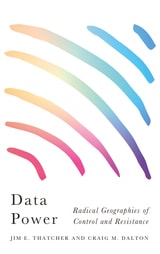
Data Power
Radical Geographies of Control and ResistanceJim E. Thatcher
Pluto Press, 2021
In recent years, popular media has inundated audiences with sensationalized headlines recounting data breaches, new forms of surveillance and other dangers of our digital age. Despite their regularity, such accounts treat each case as unprecedented and unique. This book proposes a radical rethinking of the history, present and future of our relations with the digital, spatial technologies that increasingly mediate our everyday lives.
From smartphones to surveillance cameras, to navigational satellites, these new technologies offer visions of integrated, smooth and efficient societies, even as they directly conflict with the ways users experience them. Recognizing the potential for both control and liberation, the authors argue against both acquiescence to and rejection of these technologies.
Through intentional use of the very systems that monitor them, activists from Charlottesville to Hong Kong are subverting, resisting and repurposing geographic technologies. Using examples as varied as writings on the first telephones to the experiences of a feminist collective for migrant women in Spain, the authors present a revolution of everyday technologies. In the face of the seemingly inevitable circumstances, these technologies allow us to create new spaces of affinity, and a new politics of change.
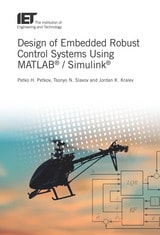
Design of Embedded Robust Control Systems Using MATLAB® / Simulink®
Petko Hristov Petkov
The Institution of Engineering and Technology, 2018
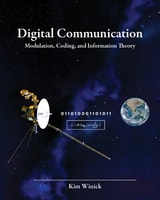
Digital Communication Modulation, Coding, and Information Theory
Kim Winick
Michigan Publishing Services, 2025
The modern era of digital communication dates to Claude Shannon’s three seminal papers appearing in 1948 and 1949 in the Bell System Technical Journal. Digital communication advanced rapidly in the following years and generated a large number of technologies, including cell phones, Wi-Fi, fiber optic communication, MP3 players, JPEG-encoded photographs, high-definition television (HDTV), etc. With increasing demands for remote and high-speed digital access to data and real-time video, advances are likely to continue for the foreseeable future. The topics covered in this book constitute a “first course” on digital communication because with a few exceptions, primarily related to the multipath propagation effects and fading, only the point-to-point additive white Gaussian noise channel is considered. This was one of the first channels to be seriously studied in the modern era of digital communication that began with Shannon. From a practical perspective, modulation and coding for the deep-space channel motivated much of the early work in this field. The material covered in this textbook is still widely used and forms the basis for subsequent and ongoing advancements in the field. Broadly speaking, the fundamentals covered in this textbook are the notion of information, entropy, lossless data compression, error-correcting methods in the presence of noise, the fundamental limits of reliable communication, channel capacity, optimum decision theory and optimum receiver principals, common modulation types, the relationship between bandwidth and dimensionality, system performance using modulation and coding, and the fundamental trade-off between energy-efficiency and bandwidth-efficiency.
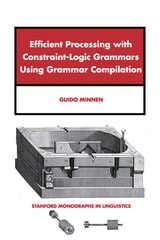
Efficient Processing with Constraint-Logic Grammars Using Grammar
Guido Minnen
CSLI, 2001
This book investigates programs for automatic analysis and production of written human language. These specialized programs use knowledge about the structure and meaning of human language in the form of grammars. Various techniques are proposed which focus on solutions for practical problems in processing of constraint-logic grammars. The solutions are all based on the automatic adaptation or compilation of a grammar rather than a modification of the processing algorithm used. As such they allow the grammar writer to abstract over details of grammar processing and in many cases enable more efficient processing.
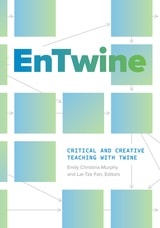
EnTwine
Critical and Creative Teaching with TwineEdited by Emily Christina Murphy and Lai-Tze Fan
Amherst College Press, 2026
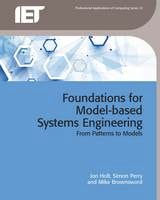
Foundations for Model-based Systems Engineering
From patterns to modelsJon Holt
The Institution of Engineering and Technology, 2016

Fuzzy Logic Control in Energy Systems with design applications in MATLAB®/Simulink®
Ismail H. Altaş
The Institution of Engineering and Technology, 2017

Going Mobile
Developing Apps for Your Library Using Basic HTML ProgrammingScott American Library Association
American Library Association, 2012
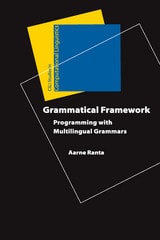
Grammatical Framework
Programming with Multilingual GrammarsAarne Ranta
CSLI, 2011
Grammatical Framework is a programming language designed for writing grammars, which has the capability of addressing several languages in parallel. This thorough introduction demonstrates how to write grammars in Grammatical Framework and use them in applications such as tourist phrasebooks, spoken dialogue systems, and natural language interfaces. The examples and exercises presented here address several languages, and the readers are shown how to look at their own languages from the computational perspective.
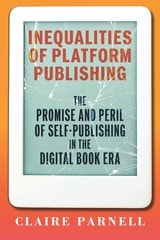
Inequalities of Platform Publishing
The Promise and Peril of Self-Publishing in the Digital Book EraClaire Parnell
University of Massachusetts Press, 2025
Uncovering race, gender, and sexual biases in popular self-publishing platforms
The average reader need not go far in a bookstore before, knowingly or not, they encounter authors who started their careers by self-publishing prior to achieving commercial success. Examples include Margaret Atwood, Andy Weir, Colleen Hoover, Anna Todd, E. L. James, Scarlett St. Clair, and many more. Such stories of self-made writers are compelling and seem more attainable to others with the accessibility of modern publishing platforms such as Amazon, Apple, Google, Kobo, Wattpad, Webtoon, Radish, Inkitt, Qidian, Tapas, and Swoon Reads. However, as Claire Parnell uncovers in her examination of the two most popular—Amazon and Wattpad—these services in fact perpetuate systemic racial, gender, and sexual bias against authors of color and queer authors through their technological, economic, social, and cultural structures.
At a time when there is a real reckoning with the discrimination that has resulted in publishing opportunities for only relatively few privileged authors—who are often White, upper class, and male—self-publishing presents itself as an equalizer of sorts. Exploring that idea, Parnell shows that these platforms are not just intermediaries for information; they structure content and users in multiple, often inequitable, ways through their ability to set market conditions and apply algorithmic sorting. Combining original interviews, walkthrough method, metadata analysis, and more, Parnell finds that self-publishing platforms reproduce challenges for authors from marginalized communities. Far from equalizing the market, the new platforms instead frequently perpetuate the stubborn barriers to mainstream success for BIPOC and queer authors.
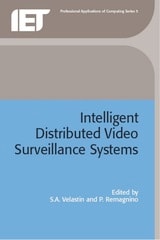
Intelligent Distributed Video Surveillance Systems
Sergio A. Velastin
The Institution of Engineering and Technology, 2006
Knowledge Discovery and Data Mining
M.A. Bramer
The Institution of Engineering and Technology, 1999
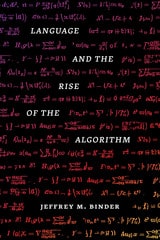
Language and the Rise of the Algorithm
Jeffrey M. Binder
University of Chicago Press, 2022
A wide-ranging history of the algorithm.
Bringing together the histories of mathematics, computer science, and linguistic thought, Language and the Rise of the Algorithm reveals how recent developments in artificial intelligence are reopening an issue that troubled mathematicians well before the computer age: How do you draw the line between computational rules and the complexities of making systems comprehensible to people? By attending to this question, we come to see that the modern idea of the algorithm is implicated in a long history of attempts to maintain a disciplinary boundary separating technical knowledge from the languages people speak day to day.
Here, Jeffrey M. Binder offers a compelling tour of four visions of universal computation that addressed this issue in very different ways: G. W. Leibniz’s calculus ratiocinator; a universal algebra scheme Nicolas de Condorcet designed during the French Revolution; George Boole’s nineteenth-century logic system; and the early programming language ALGOL, short for algorithmic language. These episodes show that symbolic computation has repeatedly become entangled in debates about the nature of communication. Machine learning, in its increasing dependence on words, erodes the line between technical and everyday language, revealing the urgent stakes underlying this boundary.
The idea of the algorithm is a levee holding back the social complexity of language, and it is about to break. This book is about the flood that inspired its construction.
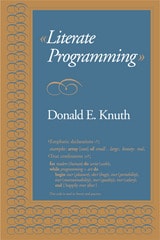
Literate Programming
Donald E. Knuth
CSLI, 1992
This volume is first in a series of Knuth's collected works.
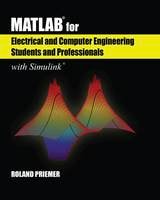
MATLAB® for Electrical and Computer Engineering Students and Professionals
With Simulink®Roland Priemer
The Institution of Engineering and Technology, 2013
Modal Logic and Process Algebra
Edited by Alban Ponse, Maarten de Rijke, and Yde Venema
CSLI, 1995
Model-Based Requirements Engineering
Jon Holt
The Institution of Engineering and Technology, 2011
Modelling Enterprise Architectures
Jon Holt
The Institution of Engineering and Technology, 2010

Nonlinear Optimization in Electrical Engineering with Applications in MATLAB®
Mohamed Bakr
The Institution of Engineering and Technology, 2013

Nostalgia and Videogame Music
A Primer of Case Studies, Theories and Analyses for the Player-AcademicEdited by Vincent E. Rone, Can Aksoy, and Sarah Pozderac-Chenevey
Intellect Books, 2022
This book allows readers to understand the relationships and memories they often form around games, and music is central to this process. The quest into the past begins with this book, a map that leads to the intersection between nostalgia and videogame music. Informed by research on musicology, memory, and practices of gaming culture, this edited volume discusses different forms of nostalgia, considers how videogames display their relation to those forms, and explores the ways theoretically self-conscious positions can be found in games. An important scholarly addition to the burgeoning field of ludomusicology, this book will appeal to researchers, educators, practitioners, undergraduate and graduate students, and videogame fans and players alike.

Play to Submission
Gaming Capitalism in a Tech FirmTongyu Wu
Temple University Press, 2024
Play to Submission shows how Behemoth’s games undermined and manipulated workers. They lost their work-life balance and the constant competition made labor organizing difficult. Nonetheless, many workers embraced management’s games as a chance to show off their “gamer” identities and create a workplace culture with privileged insiders and exiled outsiders, with female and migrant workers usually in the latter group. Moreover, Wu indicates this may be the future of work for high- and low-skilled and, creative workers in an environment where capitalists have heightened demands for technology and creativity.
Drawing from 13 months of ethnographic work, Wu presents a persistent reality in which the company reaps the reward of surplus productivity, leaving employees themselves in a highly competitive and sometimes precarious work position.

Portable Biosensors and Point-of-Care Systems
Spyridon E. Kintzios
The Institution of Engineering and Technology, 2017
Reflection in Rewriting Logic
Metalogical Foundations and Metaprogramming ApplicationsManuel Clavel
CSLI, 2000
This book proposes a general theory of reflective logics and reflective declarative programming languages. This theory provides a conceptual foundation for judging the extent to which a computational system is reflective. Manuel Clavel presents a proof of the reflective nature of rewriting logic and provides examples of the potential for reflective programming in a number of novel computer applications. These applications are implemented in Maude, a reflective programming language and environment based on rewriting logic that can define, represent and execute a breadth of logics, languages and models of computation. A general method to easily build theorem-proving tools in Maude is also proposed and illustrated. The book goes on to promote the notion of a "universal theory" that can simulate the deductions of all representable theories within any given logic.
Semi-custom IC Design and VLSI
P.J. Hicks
The Institution of Engineering and Technology, 1983
Swarm Intelligence
Applications, Volume 3Ying Tan
The Institution of Engineering and Technology, 2018
Swarm Intelligence
Innovation, new algorithms and methods, Volume 2Ying Tan
The Institution of Engineering and Technology, 2018
Swarm Intelligence
Principles, current algorithms and methods, Volume 1Ying Tan
The Institution of Engineering and Technology, 2018
SysML for Systems Engineering
Jon Holt
The Institution of Engineering and Technology, 2008
SysML for Systems Engineering
A model-based approachJon Holt
The Institution of Engineering and Technology, 2013
The Music of Nobuo Uematsu in the Final Fantasy Series
Edited by Richard Anatone
Intellect Books, 2023
Japanese musician and composer Nobuo Uematsu has built his career and reputation on his soundtracks to the enduring Final Fantasy video game series, which are notable for their remarkable cinematic feel. Today Uematsu is one of Japan’s most beloved living composers, credited with inspiring a new generation of classical music fans. This volume, the first book-length study of the music of Uematsu, takes a variety of different analytical approaches to his body of work. It offers readers interested in ludomusicology—the study of and research into video game music—a variety of ways with which to understand Uematsu’s compositional process and the role that video game music has in the overall gaming experience.
Trusted Computing
Chris Mitchell
The Institution of Engineering and Technology, 2005
Trusted Platform Modules
Why, when and how to use themAriel Segall
The Institution of Engineering and Technology, 2017
UML for Systems Engineering
Watching the wheelsJon Holt
The Institution of Engineering and Technology, 2004
VALU, AVX and GPU Acceleration Techniques for Parallel FDTD Methods
Wenhua Yu
The Institution of Engineering and Technology, 2014
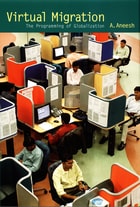
Virtual Migration
The Programming of GlobalizationA. Aneesh
Duke University Press, 2006
Aneesh draws on the sociology of science, social theory, and research on migration to illuminate the practical and theoretical ramifications of virtual migration. He combines these insights with his extensive ethnographic research in offices in three locations in India—in Delhi, Gurgaon, and Noida—and one in New Jersey. Aneesh contrasts virtual migration with “body shopping,” the more familiar practice of physically bringing programmers from other countries to work on site, in this case, bringing them from India to New Jersey. A significant contribution to the social theory of globalization, Virtual Migration maps the expanding transnational space where globalization is enacted via computer programming code.