Results by title
26 books match the query 'Progressive Era'

Bad News Travels Fast
The Telegraph, Libel, and Press Freedom in the Progressive EraPatrick C. File
University of Massachusetts Press, 2019
This largely forgotten era in the development of American libel law provides crucial historical context for contemporary debates about the news media, public discourse, and the role of a free press. File argues that the legal thinking surrounding these cases laid the groundwork for the more friendly libel standards the press now enjoys and helped to establish today's regulations of press freedom amid the promise and peril of high-speed communication technology.
Barons of Labor
The San Francisco Building Trades and Union Power in the Progressive EraMichael Kazin
University of Illinois Press, 1989
Black Georgia in the Progressive Era, 1900-1920
John Dittmer
University of Illinois Press, 1977
have of black life in a southern state at the beginning of the twentieth century."
-- Howard N. Rabinowitz,
Journal of American History
"The author shows clearly and forcefully
the ways in which this [white] system abused and controlled the black lower
caste in Georgia." -- Lester C. Lamon, American Historical Review.
"Dittmer has a faculty for lucid exposition of complicated subjects. This is
especially true of the sections on segregation, racial politics, disfranchisement,
woman's suffrage and prohitibion, the neo-slavery in agriculture, and the racial
violence whose threat and reality hung like a pall over all of Georgia throughout
the period." -- Donald L. Grant, Georgia Historical Quarterly.

Boss Cox’s Cincinnati
Urban Politics in the Progressive EraZane L. Miller
The Ohio State University Press, 2000
In documenting the changes Cincinnati experienced during the Progressive Era, Zane L. Miller provides a clear perspective on the processes of urbanization that transformed the American city. His focus is political because politics provided continuity amid the diversity of city life. The most important aspect of political continuity in Cincinnati and in other cities was "bossism," often depicted as an example of corruption, but which was in many cities part of the quest for a new urban order. In Cincinnati, Boss George B. Cox's machine was a response to the disorder of the times; interestingly, the machine actually helped to control disorder, paving the way for later reforms. Miller carefully explores both the nature and the significance of bossism, showing how it and municipal reform were both essential components of the modern urban political system.
Originally published in 1968, Boss Cox's Cincinnati is considered a classic in the field of urban studies.
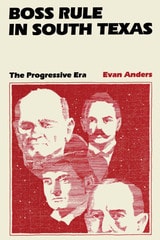
Boss Rule in South Texas
The Progressive EraBy Evan Anders
University of Texas Press, 1982
Four men played leading roles in the political drama that unfolded in South Texas during the first decades of this century:
- James B. Wells, who ruled as boss of Cameron County and served as leading conservative spokesman of the Democratic Party in Texas;
- Archer (Archie) Parr, whose ruthless tactics and misuse of public funds in Duval County established him as one of the most notoriously corrupt politicians in Texas history;
- Manuel Guerra, Mexican American rancher and merchant whose domination of Starr County mirrored the rule of his Anglo counterparts in the border region;
- John Nance Garner, who served the interests of these bosses of South Texas as he set forth on the road that would lead him to the United States vice-presidency.
Evan Anders's Boss Rule in South Texas tells the story of these men and the county rings they shaped in South Texas during the Progressive Era.
Power was the byword of the bosses of the Lower Rio Grande Valley, and Anders explores the sources of that power. These politicos did not shirk from using corrupt and even violent means to attain their goals, but Anders demonstrates that their keen sensitivity to the needs of their diverse constituency was key to their long-term success. Patronage and other political services were their lifeblood, and the allies gained by these ranged from developers and businessmen to ranchers and Mexican Americans, wealthy and poor.
Besides examining the workings of the Democratic machines of four South Texas counties, Anders explores the role of the Hispanic populace in shaping the politics of the border region, the economic development of the Lower Rio Grande Valley and its political repercussions, the emergence and nature of progressive movements at both local and state levels, and the part played by the Texas Rangers in supporting bossism in South Texas.
Constructing Disability after the Great War
Blind Veterans in the Progressive EraEvan P. Sullivan
University of Illinois Press, 2024

Corporal Rhetoric
Regulating Reproduction in the Progressive EraBarbara Schneider
University of Alabama Press, 2021
Examines public discourse from the Progressive Era over the state’s right to regulate women’s bodies and their reproduction
When Justice Oliver Wendell Holmes determined in 1927 that sterilization was a legitimate means of safeguarding the nation’s health, he was asserting the state’s right to regulate the production of the national body. His opinion represented a culmination of arguments about reproduction and immigration that had been circulating for years but that intensified during the Progressive Era. Arguments about reproductive and immigration practices surged to the foreground, and tectonic shifts in the conceptual schemes and practices of reproduction in the United States followed.
Drawing on feminist historiography and genre studies, Corporal Rhetoric: Regulating Reproduction in the Progressive Era explores the rhetoric of medical research, new technologies, and material practices that shifted the idea of childbirth as an act of God or Nature to a medical procedure enacted by male physicians on the bodies of women made passive by both drugs and discourse. Barbara Schneider considers how efficiency, the hallmark of scientific management, was raised to a cardinal virtue by its inclusions in the powerful mediums of presidential speeches, national educational policies, and eugenics discourse to reclassify babies, long regarded as gifts, as either valuable assets or defective products.
Schneider shows how the legal system drew upon medicine, scientific management, and the emerging discipline of sociology to restrict women’s labor in order to preserve reproductive capacity, categorized by Supreme Court opinions as a public good rather than a private capacity. Throughout, she ties the arguments developed during this era to current debates about mothering rhetorics, reproductive rights, immigration, and conceptions of the nation.
By weaving together medical research reports, clinical practices, case studies, legal opinions and legislative acts, and the epistemology of scientific management, Schneider illuminates the network that women such as Margaret Sanger, Jane Addams, Lillian Gilbreth and multiple others negotiated as they sought to give women room to exercise their reproductive capacity. Through her analysis of the machinery of these discourses and the material uptake of their genres in the daily practices of reproductive bodies, Schneider offers a provisional theory of corporal rhetoric that begins to answer the call for a new material theory of the body.
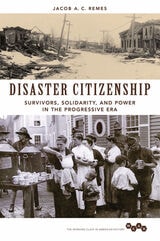
Disaster Citizenship
Survivors, Solidarity, and Power in the Progressive EraJacob Remes
University of Illinois Press, 2015
In Disaster Citizenship, Jacob A. C. Remes draws on histories of the Salem and Halifax events to explore the institutions--both formal and informal--that ordinary people relied upon in times of crisis. He explores patterns and traditions of self-help, informal order, and solidarity and details how people adapted these traditions when necessary. Yet, as he shows, these methods--though often quick and effective--remained illegible to reformers. Indeed, soldiers, social workers, and reformers wielding extraordinary emergency powers challenged these grassroots practices to impose progressive "solutions" on what they wrongly imagined to be a fractured social landscape.
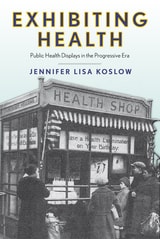
Exhibiting Health
Public Health Displays in the Progressive EraJennifer Lisa Koslow
Rutgers University Press, 2020
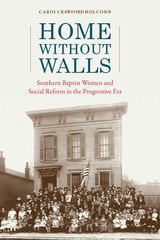
Home without Walls
Southern Baptist Women and Social Reform in the Progressive EraCarol Crawford Holcomb
University of Alabama Press, 2020
The Woman’s Missionary Union (WMU), founded in 1888, carved out a uniquely feminine space within the Southern Baptist Convention during the tumultuous years of the Progressive Era when American theologians were formulating the social gospel. These women represented the Southern Baptist elite and as such had the time to read, write, and discuss ideas with other Southern progressives. They rubbed shoulders with more progressive Methodist and Presbyterian women in clubs and ecumenical missionary meetings. Baptist women studied the missionary publications of these other denominations and adopted ideas for a Southern Baptist audience.
Home without Walls: Southern Baptist Women and Social Reform in the Progressive Era shows how the social attitudes of women were shaped at the time. By studying primary documents—including personal letters, official exchanges and memoranda, magazine publications, newsletters, and editorials—Carol Crawford Holcomb uncovers ample evidence that WMU leaders, aware of the social gospel and sympathetic to social reform, appropriated the tools of social work and social service to carry out their missionary work.
Southern Baptist women united to build a financial empire that would sustain the Southern Baptists through the Great Depression and beyond. Their social attitudes represented a kaleidoscope of contrasting opinions. By no stretch of the imagination could WMU leaders be characterized as liberal social gospel advocates. However, it would also be wrong to depict them as uniformly hostile to progressivism or ignorant of contemporary theological ideas. In the end, they were practical feminists in their determination to provide a platform for women’s views and a space for women to do meaningful work.
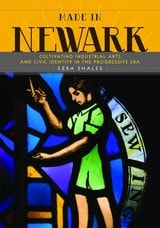
Made in Newark
Cultivating Industrial Arts and Civic Identity in the Progressive EraShales, Ezra
Rutgers University Press, 2010
This is the story of experimental exhibitions in the library and the founding of the Newark Museum Associationùa project in which cultural literacy was intertwined with civics and consumption. Local artisans demonstrated crafts, connecting the cultural institution to the department store, school, and factory, all of which invoked the ideal of municipal patriotism. Today, as cultural institutions reappraise their relevance, Made in Newark explores precedents for contemporary debates over the ways the library and museum engage communities, define heritage in a multicultural era, and add value to the economy.
Marriage Making News
Working Women and Millionaire Men in the Progressive EraCarole Srole
University of Illinois Press, 2026
Women’s desire for autonomy, a rising divorce rate, the declining power of the upper class, new ideas of beauty and sexuality—newspaper tales of cross-class nuptials brought a host of anxieties about gender and class to the front page. Srole focuses particular attention on the economic changes faced by working-class women while also surveying newspaper attacks on their morality and womanhood, and their complicity in their own poverty. As she shows, working women and their advocates persevered by asserting an independence they pursued through union activism, professionalism, land ownership, and filling traditionally male jobs.
An engaging merger of media and women’s history, Marriage Making News looks at a rags-to-riches genre and illuminates the forces of change at work behind the stories.

New York Undercover
Private Surveillance in the Progressive EraJennifer Fronc
University of Chicago Press, 2009
To combat behavior they viewed as sexually promiscuous, politically undesirable, or downright criminal, social activists in Progressive-era New York employed private investigators to uncover the roots of society’s problems. New York Undercover follows these investigators—often journalists or social workers with no training in surveillance—on their information-gathering visits to gambling parlors, brothels, and meetings of criminal gangs and radical political organizations.
Drawing on the hundreds of detailed reports that resulted from these missions, Jennifer Fronc reconstructs the process by which organizations like the National Civic Federation and the Committee of Fourteen generated the knowledge they needed to change urban conditions. This information, Fronc demonstrates, eventually empowered government regulators in the Progressive era and beyond, strengthening a federal state that grew increasingly repressive in the interest of pursuing a national security agenda. Revealing the central role of undercover investigation in both social change and the constitution of political authority, New York Undercover narrates previously untold chapters in the history of vice and the emergence of the modern surveillance state.
Performing the Progressive Era
Immigration, Urban Life, and Nationalism on StageMax Shulman and J. Chris Westgate
University of Iowa Press, 2019
Public Health
The Development of a Discipline, From the Age of Hippocrates to the Progressive EraSchneider, Dona
Rutgers University Press, 2008
The editors provide annotated readings and biographical details to punctuate the historical timeline and to provide students with insights into the progression of ideas, initiatives, and reforms in the field. From Hippocrates and John Graunt in the early period, to John Snow and Florence Nightingale during the nineteenth-century sanitary reform movement, to Upton Sinclair and Margaret Sanger in the Progressive Era, readers follow the identification, evolution, and implementation of public health concepts as they came together under one discipline.
Reading for Reform
The Social Work of Literature in the Progressive EraLaura R. Fisher
University of Minnesota Press, 2019
An unprecedented examination of class-bridging reform and U.S. literary history at the turn of the twentieth century
Reading for Reform rewrites the literary history of late nineteenth and early twentieth century America by putting social reform institutions at the center of literary and cultural analysis. Examining the vibrant, often fractious literary cultures that developed as part of the Progressive mandate to uplift the socially disadvantaged, it shows that in these years reformers saw literature as a way to combat the myriad social problems that plagued modern U.S. society. As they developed distinctly literary methods for Americanizing immigrants, uplifting and refining wage-earning women, and educating black students, their institutions gave rise to a new social purpose for literature.
Class-bridging reform institutions—the urban settlement house, working girls’ club, and African American college—are rarely addressed in literary history. Yet, Laura R. Fisher argues, they engendered important experiments in the form and social utility of American literature, from minor texts of Yiddish drama and little-known periodical and reform writers to the fiction of Edith Wharton and Nella Larsen. Fisher delves into reform’s vast and largely unexplored institutional archives to show how dynamic sites of modern literary culture developed at the margins of social power.
Fisher reveals how reformist approaches to race, class, religion, and gender formation shaped American literature between the 1880s and the 1920s. In doing so, she tells a new story about the fate of literary practice, and the idea of literature’s practical value, during the very years that modernist authors were proclaiming art’s autonomy from concepts of social utility.
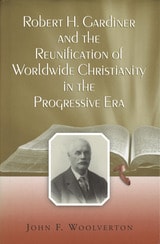
Robert H. Gardiner and the Reunification of Worldwide Christianity in the Progressive Era
John F. Woolverton
University of Missouri Press, 2005
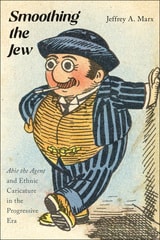
Smoothing the Jew
"Abie the Agent" and Ethnic Caricature in the Progressive EraJeffrey A. Marx
Rutgers University Press, 2024
Smoothing the Jew investigates how Jewish artists of the time attempted to “smooth over” these demeaning portrayals by focusing on the first Jewish comic strip published in English, Harry Hershfield’s Abie the Agent. Jeffrey Marx demonstrates how Hershfield created a Jewish protagonist who in part reassured nativists of the Jews’ ability to assimilate into American society while also encouraging immigrants and their children that, over time, they would be able to adopt American customs without losing their distinctly Jewish identity.

The Aquatic Frontier
Oysters and Aquaculture in the Progressive EraSamuel P. Hanes
University of Massachusetts Press, 2019
The Aquatic Frontier explores the forms this debate took between 1870 and 1920 in law enforcement, legislative advising, natural science, and oyster cartography. Samuel P. Hanes argues that the effort to centralize and privatize the industry failed due to a lack of understanding of the complex social-ecological systems in place—a common dilemma for environmental managers in this time period and for fisheries management confronting dangers from dwindling populations today.
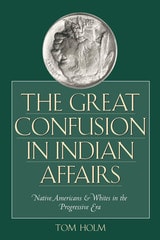
The Great Confusion in Indian Affairs
Native Americans and Whites in the Progressive EraBy Tom Holm
University of Texas Press, 2005
The United States government thought it could make Indians "vanish." After the Indian Wars ended in the 1880s, the government gave allotments of land to individual Native Americans in order to turn them into farmers and sent their children to boarding schools for indoctrination into the English language, Christianity, and the ways of white people. Federal officials believed that these policies would assimilate Native Americans into white society within a generation or two. But even after decades of governmental efforts to obliterate Indian culture, Native Americans refused to vanish into the mainstream, and tribal identities remained intact.
This revisionist history reveals how Native Americans' sense of identity and "peoplehood" helped them resist and eventually defeat the U.S. government's attempts to assimilate them into white society during the Progressive Era (1890s-1920s). Tom Holm discusses how Native Americans, though effectively colonial subjects without political power, nonetheless maintained their group identity through their native languages, religious practices, works of art, and sense of homeland and sacred history. He also describes how Euro-Americans became increasingly fascinated by and supportive of Native American culture, spirituality, and environmental consciousness. In the face of such Native resiliency and non-Native advocacy, the government's assimilation policy became irrelevant and inevitably collapsed. The great confusion in Indian affairs during the Progressive Era, Holm concludes, ultimately paved the way for Native American tribes to be recognized as nations with certain sovereign rights.
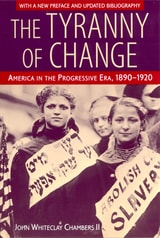
The Tyranny of Change
America in the Progressive Era, 1890-1920Chambers, John Whiteclay II
Rutgers University Press, 2000
Between 1890 and 1920, the forces accompanying industrialization sent the familiar nineteenth-century world plummeting toward extinction. The traditional countryside with its villages and family farms was eclipsed by giant corporations and sprawling cities. America appeared headed into an unknown future.
In lively, accessible prose, John Chambers incorporates the latest scholarship about the social, cultural, political, and economic changes which produced modern America. He illuminates the experiences of blacks, Asians, Latinos, as well as other working men and women in the cities and countryside as they struggled to improve their lives in a transformed economy. He explores the dimensions of the new consumer society and the new information and entertainment industries: newspapers, magazines, the movies. Striding these pages are many of the prominent individuals who shaped the attitudes and institutions of modern America: J. P. Morgan and corporate reorganization; Jane Addams and the origin of modern social work; Mary Pickford and the new star-oriented motion picture industry; and the radical labor challenge of “Big Bill” Haywood and the “Wobblies.”
While recognizing a “progressive ethos”—a mixture of idealistic vision and pragmatic reforms—which dominated the mainstream reforms that characterized the period, Chambers elaborates the role of civic volunteerism as well as the state in achieving directed social change. He also emphasizes the importance of radical and conservative political forces in shaping the so-called “Progressive Era.”
The revised edition in this classic work has an updated bibliography and a new preface, both of which incorporate particularly the new social and cultural research of the past decade.
Touching Base
Professional Baseball and American Culture in the Progressive EraSteven A. Riess
University of Illinois Press, 1999
Transcending the New Woman
Multiethnic Narratives in the Progressive EraCharlotte J. Rich
University of Missouri Press, 2009

Until Choice Do Us Part
Marriage Reform in the Progressive EraClare Virginia Eby
University of Chicago Press, 2013
For centuries, people have been thinking and writing—and fiercely debating—about the meaning of marriage. Just a hundred years ago, Progressive era reformers embraced marriage not as a time-honored repository for conservative values, but as a tool for social change.
In Until Choice Do Us Part, Clare Virginia Eby offers a new account of marriage as it appeared in fiction, journalism, legal decisions, scholarly work, and private correspondence at the turn into the twentieth century. She begins with reformers like sexologist Havelock Ellis, anthropologist Elsie Clews Parsons, and feminist Charlotte Perkins Gilman, who argued that spouses should be “class equals” joined by private affection, not public sanction. Then Eby guides us through the stories of three literary couples—Upton and Meta Fuller Sinclair, Theodore and Sara White Dreiser, and Neith Boyce and Hutchins Hapgood—who sought to reform marriage in their lives and in their writings, with mixed results. With this focus on the intimate side of married life, Eby views a historical moment that changed the nature of American marriage—and that continues to shape marital norms today.

Virtual Modernism
Writing and Technology in the Progressive EraKatherine Biers
University of Minnesota Press, 2013
In Virtual Modernism, Katherine Biers offers a fresh view of the emergence of American literary modernism from the eruption of popular culture in the early twentieth century. Employing dynamic readings of the works of Stephen Crane, Henry James, James Weldon Johnson, Djuna Barnes, and Gertrude Stein, she argues that American modernist writers developed a “poetics of the virtual” in response to the rise of mass communications technologies before World War I. These authors’ modernist formal experimentation was provoked by the immediate, individualistic pleasures and thrills of mass culture. But they also retained a faith in the representational power of language—and the worth of common experience—more characteristic of realism and naturalism. In competition with new media experiences such as movies and recorded music, they simultaneously rejected and embraced modernity.
Biers establishes the virtual poetics of these five writers as part of a larger “virtual turn” in the United States, when a fascination with the writings of Henri Bergson, William James, and vitalist philosophy—and the idea of virtual experience—swept the nation. Virtual Modernism contends that a turn to the virtual experience of language was a way for each of these authors to carve out a value for the literary, both with and against the growth of mass entertainments. This technologically inspired reengagement with experience was formative for American modernism.
Situated at the crossing points of literary criticism, philosophy, media studies, and history, Virtual Modernism provides an examination of Progressive Era preoccupations with the cognitive and corporeal effects of new media technologies that traces an important genealogy of present-day concerns with virtuality.
Writing Against Reform
Aesthetic Realism in the Progressive EraArielle Zibrak
University of Massachusetts Press, 2024
Throughout the Progressive Era, reform literature became a central feature of the American literary landscape. Works like Upton Sinclair’s The Jungle, Charlotte Perkins Gilman’s “The Yellow Wall-Paper,” and Jacob Riis’s How the Other Half Lives topped bestseller lists and jolted middle-class readers into action.
While realism and social reform have a long-established relationship, prominent writers of the period such as Henry James, Edith Wharton, James Weldon Johnson, Rebecca Harding Davis, and Kate Chopin resisted explicit political rhetoric in their own works and critiqued reform aesthetics, which too often rang hollow. Arielle Zibrak reveals that while these writers were often seen as indifferent to the political currents of their time, their work is a part of a little explored debate on the relationship between literature and politics at the heart of Progressive Era publishing. Examining the critique of reform aesthetics within the tradition of American realist literature of the late nineteenth and early twentieth centuries, Writing Against Reform promises to change the way we think about the fiction of this period and many of America’s leading writers.