Results by title
16 books match the query 'Psychology, Religious'
Affective Trajectories
Religion and Emotion in African CityscapesHansjörg Dilger, Astrid Bochow, Marian Burchardt, and Matthew Wilhelm-Solomon, editors
Duke University Press, 2019
Contributors. Astrid Bochow, Marian Burchardt, Rafael Cazarin, Hansjörg Dilger, Alessandro Gusman, Murtala Ibrahim, Peter Lambertz, Isabelle L. Lange, Isabel Mukonyora, Benedikt Pontzen, Hanspeter Reihling, Matthew Wilhelm-Solomon

Archbishop Oscar Romero
A Disciple Who Revealed the Glory of GodDamian Zynda
University of Scranton Press, 2010
During his lifetime, Archbishop Oscar Romero chose to live the Christian Gospel in a radical way, defending, supporting, and serving the poor, and confronting the oppressive and murderous violence of the Salvadoran dictatorship. As a result, in March 1980, while celebrating Mass in a small chapel in El Salvador, he was assassinated.
With Archbishop Oscar Romero, Damian Zynda offers a compelling examination of the bishop’s eventful life. Zynda delves into the psychological and spiritual depths of Romero’s faith, tracing its progression from age thirteen up to the episcopacy and his prophetic stand against the government.

Armageddon in Waco
Critical Perspectives on the Branch Davidian ConflictEdited by Stuart A. Wright
University of Chicago Press, 1996
Could the tragedy have been prevented? Was it necesary for the BATF agents to do what they did? What could have been done differently? Armageddon in Waco offers the most detailed, wide-ranging analysis of events surrounding Waco. Leading scholars in sociology, history, law, and religion explore all facets of the confrontation in an attempt to understand one of the most confusing government actions in American history.
The book begins with the history of the Branch Davidians and the story of its leader, David Koresh. Chapters show how the Davidians came to trouble authorities, why the group was labeled a "cult," and how authorities used unsubstantiated allegations of child abuse to strengthen their case against the sect.
The media's role is examined next in essays that considering the effect on coverage of lack of time and resources, the orchestration of public relations by government officials, the restricted access to the site or to countervailing evidence, and the ideologies of the journalists themselves. Several contributors then explore the relation of violence to religion, comparing Waco to Jonestown.
Finally, the role played by "experts" and "consultants" in defining such conflicts is explored by two contributors who had active roles as scholarly experts during and after the siege The legal and consitutional implications of the government's actions are also analyzed in balanced, clearly written detail.
Cognitive Science, Religion, and Theology
From Human Minds to Divine MindsJustin L. Barrett
Templeton Press, 2011

Explaining Christian Origins and Early Judaism
Contributions from Cognitive and Social SciencePetri Luomanen
SBL Press, 2016
Now in paperback!
Cognitive science of religion is a radically new paradigm in the study of religion. Historians of religion have shown increasing interest in this approach. The book is in four parts: an introduction to cognitive and social-scientific approaches, applications of cognitive science, applications of conceptual blending theory, and applications of socio-cognitive analyses.
Features:
- Paperback format of an essential Brill resource
- Essays that combine cognitive analysis with historical and social-scientific approaches to biblical materials, Christian origins, and early Judaism
- Research for historians of religion, biblical scholars, and those working in the cognitive science of religion.
Head and Heart
Perspectives from Religion and PsychologyFraser Watts
Templeton Press, 2013
The fact that this distinction has been so persistent makes it an important area of study. Head and Heart: Perspectives from Religion and Psychology takes an inter-disciplinary approach, linking the thinking of theologians and philosophers with theory and research in present-day psychology. The tradition of using framing questions that have been developed in theology and philosophy can now be brought into dialogue with scientific approaches developed within cognitive psychology and neuroscience. Though these scientific approaches have not generally used the terms “head” and “heart,” they have arrived at a similar distinction in other ways. There is a notable convergence upon the realization that humans have two modes of cognition at their disposal that correspond to “head” and “heart.” The time is therefore ripe to bring the approaches of theology and science in to dialogue—an important dialogue that has been heretofore neglected.
Human Nature
Reflections on the Integration of Psychology and ChristianityMalcolm Jeeves
Templeton Press, 2006
College and university professors have been demanding that this book, out of print for several years, be made available again, as it is unique in its field. This new edition, which includes a new preface and guidance to current literature, offers a balanced study of the implications of scientific developments in psychology and neuroscience for traditional Christian beliefs.
Malcolm Jeeves, former editor-in-chief of Neuropsychologia, a leading international scientific journal in behavioral and cognitive neuroscience, explores the intersection of science and faith in defining what it means to be human. He reports on recent scientific research on consciousness and the link between mind, brain, and behavior. He examines issues such as determinism by indicating the possible relevance of chaos theory to enduring concerns about freedom and responsibility. He looks at similarities and differences between human nature and animal nature. He reexamines traditional dualist views of soul and body in the light of contemporary research on mind and brain and argues for a wholistic model. This leads to addressing questions such as: does spiritual awareness depend on the intactness of our brains or does spirituality stand apart from our biological substrate?
Jeeves' insightful analysis of the ways recent findings in psychology relate to certain Christian beliefs about people expands the global science religion dialogue.
James and Dewey on Belief and Experience
Edited by John M. Capps and Donald Capps
University of Illinois Press, 2010
In these essays, you'll find William James deeply embroiled in debates between religion and science. Combining philosophical charity with logical clarity, he defended the validity of religious experience against crass forms of scientism. Dewey identified the myriad ways in which supernatural concerns distract religious adherents from pressing social concerns, and sought to reconcile the tensions inherent in science's dual embrace of common sense and the aesthetic.
James and Dewey on Belief and Experience is divided into two sections: the former showcases James, the latter is devoted to Dewey. Two transitional passages in which each reflects on the work of the other bridge these two main segments. Together, the sections offer a unique perspective on the philosophers' complex relationship of influence and interdependence. An editors' introduction provides biographical information about both men, an overview of their respective philosophical orientations, a discussion of the editorial process, and a brief commentary on each of the selections.
Comparing what these foremost pragmatists wrote on both themes illumines their common convictions regarding the nature of philosophical inquiry and simultaneously reveals what made each a distinctive thinker.
Legitimating New Religions
Lewis, James R
Rutgers University Press, 2003
James R. Lewis has written the first book to deal explicitly with the issue of how emerging religions legitimate themselves. He contends that a new religion has at least four different, though overlapping, areas where legitimacy is a concern: making converts, maintaining followers, shaping public opinion, and appeasing government authorities. The legitimacy that new religions seek in the public realm is primarily that of social acceptance. Mainstream society's acknowledgement of a religion as legitimate means recognizing its status as a genuine religion and thus recognizing its right to exist. Through a series of wide-ranging case studies Lewis explores the diversification of legitimation strategies of new religions as well the tactics that their critics use to de-legitimate such groups. Cases include the Movement for Spiritual Inner Awareness, Native American prophet religions, spiritualism, the Church of Christ-Scientist, Scientology, Church of Satan, Heaven's Gate, Unitarianism, Hindu reform movements, and Soka Gakkai, a new Buddhist sect.
Since many of the issues raised with respect to newer religions can be extended to the legitimation strategies deployed by established religions, this book sheds an intriguing new light on classic questions about the origin of all religions.
Neuroscience, Psychology, and Religion
Illusions, Delusions, and Realities about Human NatureMalcolm Jeeves
Templeton Press, 2009
Neuroscience, Psychology, and Religion is the second title published in the new Templeton Science and Religion Series. In this volume, Malcolm Jeeves and Warren S. Brown provide an overview of the relationship between neuroscience, psychology, and religion that is academically sophisticated, yet accessible to the general reader.
The authors introduce key terms; thoroughly chart the histories of both neuroscience and psychology, with a particular focus on how these disciplines have interfaced religion through the ages; and explore contemporary approaches to both fields, reviewing how current science/religion controversies are playing out today. Throughout, they cover issues like consciousness, morality, concepts of the soul, and theories of mind. Their examination of topics like brain imaging research, evolutionary psychology, and primate studies show how recent advances in these areas can blend harmoniously with religious belief, since they offer much to our understanding of humanity's place in the world. Jeeves and Brown conclude their comprehensive and inclusive survey by providing an interdisciplinary model for shaping the ongoing dialogue.
Sure to be of interest to both academics and curious intellectuals, Neuroscience, Psychology, and Religion addresses important age-old questions and demonstrates how modern scientific techniques can provide a much more nuanced range of potential answers to those questions.

Religion is Not about God
How Spiritual Traditions Nurture our Biological Nature and What to Expect When They FailLoyal Rue
Rutgers University Press, 2006
Thousands of religious traditions have appeared over the course of human history but only a relative few have survived. Some speak of a myriad of gods, others of only one, and some recognize no gods at all. Volumes have been written attempting to prove the existence or nonexistence of supernatural being(s). So, if religion is not about God, then what is it about?
In this provocative book, Loyal Rue contends that religion, very basically, is about us. Successful religions are narrative (myth) traditions that influence human nature so that we might think, feel, and act in ways that are good for us, both individually and collectively. Through the use of images, symbols, and rituals, religion promotes reproductive fitness and survival through the facilitation of harmonious social relations. Drawing on examples from the major traditions—Judaism, Christianity, Islam, Hinduism, and Buddhism—Rue shows how each religion, in its own way, has guided human behavior to advance the twin goals of personal fulfillment and social coherence.
As all faiths are increasingly faced with a crisis of intellectual plausibility and moral relevance, this book presents a compelling and positive view of the centrality and meaning of religion.
The Analyst and the Mystic
Psychoanalytic Reflections on Religion and MysticismSudhir Kakar
University of Chicago Press, 1992

The Feminine in Jungian Psychology and in Christian Theology
Ann Belford Ulanov
Northwestern University Press, 1971
Jung focuses on the human person and sees as central its mixture of masculine and feminine elements. In a time when so much is asserted and written about women in society—their rights, roles, identities, needs, and contributions—it is especially significant that Jung asserts the existence of the feminine as a key element, not only in women but in men as well. No less contested are the roles and identities of Christians. Ulanov brings into focus the deep and fascinating connections between theology and psychology.
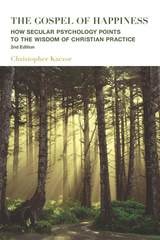
The Gospel of Happiness
How Secular Psychology Points to the Wisdom of Christian PracticeChristopher Kaczor
St. Augustine's Press, 2019
Just as Aristotelian metaphysics provided a new basis for the natural theology of Aquinas’s time, so too, positive psychology provides a basis for a natural moral theology in our own time. this book marshals the empirically verifiable findings of positive psychology that show the wisdom of the Christian tradition. Christian warnings about the dangers of greed, coveting a neighbor’s goods (social comparison), and pride find an empirical verification. Likewise, positive psychology vindicates the wisdom of Christian teaching on the importance of forgiveness, of gratitude, of humility, and of serving one’s neighbor. moreover, positive psychology also can be a service to Christian believers by helping them in their struggles with willpower, by providing new motivations for prayer, and by helping them identify their signature strengths. Finally, this book argues, in a variety of ways, that it is folly to think that even the best of psychology can serve as a replacement for Christianity.
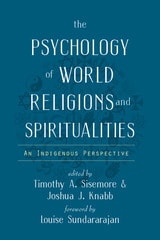
The Psychology of World Religions and Spiritualities
An Indigenous PerspectiveTimothy A. Sisemore
Templeton Press, 2020
With this goal in mind, editors Timothy Sisemore and Joshua Knabb have made one of the world’s major religions the subject of a separate chapter. In addition, they have arranged for each chapter to be written by a psychologist who practices—or is culturally connected with—that religion. This marks the book’s unique contribution to the field: it is the product of people who have lived the world’s religions, not merely studied them. By taking such a respectful approach, the book promotes an appreciation for the ways that religious belief animates, inspires, and instructs its adherents. Moreover, the indigenous point-of-view of these essays will help scholars identify their own biases when researching religious groups, allowing them to produce more accurate and holistic analyses.
Psychologists understand that religion and spirituality provide meaning and purpose to billions of people around the globe. But the actual experience of these beliefs eludes the grasp of the reductionistic methods of science. With this resource at their side, psychologists in academic and clinical settings will be equipped to understand religious experience from the bottom-up, and honor the beliefs and practices of the people they are trying to help.
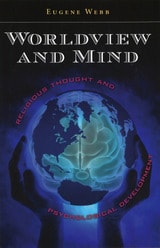
Worldview and Mind
Religious Thought and Psychological DevelopmentEugene Webb
University of Missouri Press, 2009