Results by title
43 books match the query 'Radio broadcasting'
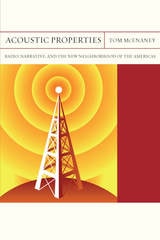
Acoustic Properties
Radio, Narrative, and the New Neighborhood of the AmericasTom McEnaney
Northwestern University Press, 2017
Based on original archival research in Buenos Aires, Havana, Paris, and the United States, the book develops a literary media theory that understands sound as a transmedial phenomenon and radio as a transnational medium. Analyzing the construction of new social and political relations in the wake of the United States’ 1930s Good Neighbor Policy, Acoustic Properties challenges standard narratives of hemispheric influence through new readings of Richard Wright’s cinematic work in Argentina, Severo Sarduy’s radio plays in France, and novels by John Dos Passos, Manuel Puig, Raymond Chandler, and Carson McCullers. Alongside these writers, the book also explores Che Guevara and Fidel Castro’s Radio Rebelde, FDR’s fireside chats, Félix Caignet’s invention of the radionovela in Cuba, Evita Perón’s populist melodramas in Argentina, Orson Welles’s experimental New Deal radio, Cuban and U.S. “radio wars,” and the 1960s African American activist Robert F. Williams’s proto–black power Radio Free Dixie.
From the doldrums of the Great Depression to the tumult of the Cuban Revolution, Acoustic Properties illuminates how novelists in the radio age converted writing into a practice of listening, transforming realism as they struggled to channel and shape popular power.
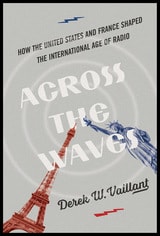
Across the Waves
How the United States and France Shaped the International Age of RadioDerek Vaillant
University of Illinois Press, 2017
Drawing on a broad range of American and French archives, Derek Vaillant joins textual and aural materials with original data analytics and maps to illuminate U.S.-French broadcasting's political and cultural development. Vaillant focuses on the period from 1931 until France dismantled its state media system in 1974. His analysis examines mobile actors, circulating programs, and shifting institutions that shaped international radio's use in times of war and peace. He explores the extraordinary achievements, the miscommunications and failures, and the limits of cooperation between America and France as they shaped a new media environment. Throughout, Vaillant explains how radio's power as an instantaneous mass communications tool produced, legitimized, and circulated various notions of states, cultures, ideologies, and peoples as superior or inferior.
A first comparative history of its subject, Across the Waves provocatively examines how different strategic agendas, aesthetic aims and technical systems shaped U.S.-French broadcasting and the cultural politics linking the United States and France.
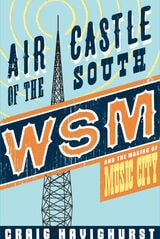
Air Castle of the South
WSM and the Making of Music CityCraig Havighurst
University of Illinois Press, 2013
Started by the National Life and Accident Insurance Company in 1925, WSM became one of the most influential and exceptional radio stations in the history of broadcasting and country music. WSM gave Nashville the moniker “Music City USA” as well as a rich tradition of music, news, and broad-based entertainment. With the rise of country music broadcasting and recording between the 1920s and ‘50s, WSM, Nashville, and country music became inseparable, stemming from WSM’s launch of the Grand Ole Opry, popular daily shows like Noontime Neighbors, and early morning artist-driven shows such as Hank Williams on Mother’s Best Flour.
Sparked by public outcry following a proposal to pull country music and the Opry from WSM-AM in 2002, Craig Havighurst scoured new and existing sources to document the station’s profound effect on the character and self-image of Nashville. Introducing the reader to colorful artists and businessmen from the station’s history, including Owen Bradley, Minnie Pearl, Jim Denny, Edwin Craig, and Dinah Shore, the volume invites the reader to reflect on the status of Nashville, radio, and country music in American culture.
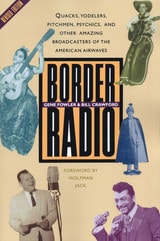
Border Radio
Quacks, Yodelers, Pitchmen, Psychics, and Other Amazing Broadcasters of the American Airwaves, Revised EditionBy Gene Fowler and Bill Crawford
University of Texas Press, 2002
Before the Internet brought the world together, there was border radio. These mega-watt "border blaster" stations, set up just across the Mexican border to evade U.S. regulations, beamed programming across the United States and as far away as South America, Japan, and Western Europe.
This book traces the eventful history of border radio from its founding in the 1930s by "goat-gland doctor" J. R. Brinkley to the glory days of Wolfman Jack in the 1960s. Along the way, it shows how border broadcasters pioneered direct sales advertising, helped prove the power of electronic media as a political tool, aided in spreading the popularity of country music, rhythm and blues, and rock, and laid the foundations for today's electronic church. The authors have revised the text to include even more first-hand information and a larger selection of photographs.
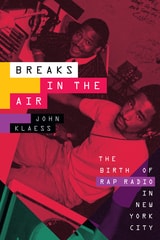
Breaks in the Air
The Birth of Rap Radio in New York CityJohn Klaess
Duke University Press, 2022
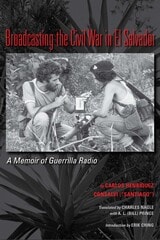
Broadcasting the Civil War in El Salvador
A Memoir of Guerrilla RadioBy Carlos Henriquez Consalvi ("Santiago")
University of Texas Press, 2010
During the 1980s war in El Salvador, Radio Venceremos was the main news outlet for the Frente Farabundo Martí para la Liberación Nacional (FMLN), the guerrilla organization that challenged the government. The broadcast provided a vital link between combatants in the mountains and the outside world, as well as an alternative to mainstream media reporting. In this first-person account, "Santiago," the legend behind Radio Venceremos, tells the story of the early years of that conflict, a rebellion of poor peasants against the Salvadoran government and its benefactor, the United States.
Originally published as La Terquedad del Izote, this memoir also addresses the broader story of a nationwide rebellion and its international context, particularly the intensifying Cold War and heavy U.S. involvement in it under President Reagan. By the war's end in 1992, more than 75,000 were dead and 350,000 wounded—in a country the size of Massachusetts. Although outnumbered and outfinanced, the rebels fought the Salvadoran Army to a draw and brought enough bargaining power to the negotiating table to achieve some of their key objectives, including democratic reforms and an overhaul of the security forces.
Broadcasting the Civil War in El Salvador is a riveting account from the rebels' point of view that lends immediacy to the Salvadoran conflict. It should appeal to all who are interested in historic memory and human rights, U.S. policy toward Central America, and the role the media can play in wartime.

Calling All Cars
Radio Dragnets and the Technology of PolicingKathleen Battles
University of Minnesota Press, 2010
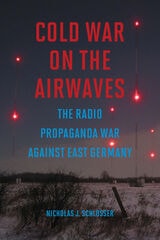
Cold War on the Airwaves
The Radio Propaganda War against East GermanyNicholas J. Schlosser
University of Illinois Press, 2015
Nicholas J. Schlosser draws on broadcast transcripts, internal memoranda, listener letters, and surveys by the U.S. Information Agency to profile RIAS. Its mission: to undermine the German Democratic Republic with propaganda that, ironically, gained in potency by obeying the rules of objective journalism. Throughout, Schlosser examines the friction inherent in such a contradictory project and propaganda's role in shaping political culture. He also portrays how RIAS's primarily German staff influenced its outlook and how the organization both competed against its rivals in the GDR and pushed communist officials to alter their methods in order to keep listeners.
From the occupation of Berlin through the airlift to the construction of the Berlin Wall, Cold War on the Airwaves offers an absorbing view of how public diplomacy played out at a flashpoint of East-West tension.

Colonialism and Christianity in Mandate Palestine
By Laura Robson
University of Texas Press, 2011
Drawing on a rich base of British archival materials, Arabic periodicals, and secondary sources, Colonialism and Christianity in Mandate Palestine brings to light the ways in which the British colonial state in Palestine exacerbated sectarianism. By transforming Muslim, Christian, and Jewish religious identities into legal categories, Laura Robson argues, the British ultimately marginalized Christian communities in Palestine. Robson explores the turning points that developed as a result of such policies, many of which led to permanent changes in the region's political landscapes. Cases include the British refusal to support Arab Christian leadership within Greek-controlled Orthodox churches, attempts to avert involvement from French or Vatican-related groups by sidelining Latin and Eastern Rite Catholics, and interfering with Arab Christians' efforts to cooperate with Muslims in objecting to Zionist expansion. Challenging the widespread but mistaken notion that violent sectarianism was endemic to Palestine, Colonialism and Christianity in Mandate Palestine shows that it was intentionally stoked in the wake of British rule beginning in 1917, with catastrophic effects well into the twenty-first century.
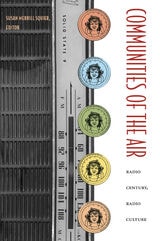
Communities of the Air
Radio Century, Radio CultureSusan Merrill Squier, ed.
Duke University Press, 2003
Drawing on the perspectives of literary and cultural studies, science studies and feminist theory, radio history, and the new field of radio studies, these essays consider the development of radio as technology: how it was modeled on the telephone, early conflicts between for-profit and public uses of radio, and amateur radio (HAMS), local programming, and low-power radio. Some pieces discuss how radio gives voice to different cultural groups, focusing on the BBC and poetry programming in the West Indies, black radio, the history of alternative radio since the 1970s, and science and contemporary arts programming. Others look at radio’s influence on gender (and gender’s influence on radio) through examinations of Queen Elizabeth’s broadcasts, Gracie Allen’s comedy, and programming geared toward women. Together the contributors demonstrate how attention to the variety of ways radio is used and understood reveals the dynamic emergence and transformation of communities within the larger society.
Contributors. Laurence A. Breiner, Bruce B. Campbell, Mary Desjardins, Lauren M. E. Goodlad, Nina Hunteman, Leah Lowe, Adrienne Munich, Kathleen Newman, Martin Spinelli, Susan Merrill Squier, Donald Ulin, Mark Williams, Steve Wurzler
Contested Airwaves
American Radio at Home and Abroad, 1914-1946Michael A. Krysko
University of Illinois Press, 2025
Controversial American-led radio initiatives sparked a kaleidoscope of conflicts and rivalries from the medium’s earliest days through the end of World War II. Michael A. Krysko explores how the medium engaged the knowledge, assumptions, and prejudices that fueled listeners’ and policymakers’ objections to foreign and unwelcome radio content.
Krysko considers Americans’ antagonism toward non-English language broadcasting; issues of identity, geography, and sovereignty that propelled opposition to Mexico’s “border blaster” stations; how a project aimed at helping Cajun-speaking listeners became a French-only celebration of Acadian culture; a failed initiative to teach English to Latin Americans via shortwave broadcasting; enduring US-Panamanian conflicts over the control of radio in and around the Panama Canal; and how farmers from across the Southwest protested a radio treaty’s perceived preferential treatment of Cuba. Paying particular attention to the act of listening, Krysko shows how these initiatives illuminated and solidified divisions rooted in identity, nationalism, and prejudice.
Clear and wide-ranging, Contested Airwaves reveals early radio’s place at the nexus of public programming, transnational relations, and its own evolution as a communication medium.
Culture of Class
Radio and Cinema in the Making of a Divided Argentina, 1920-1946Matthew B. Karush
Duke University Press, 2012
Emergency Broadcasting & 1930'S Am Radio
Edward Miller
Temple University Press, 2002
Feminine Frequencies
Gender, German Radio, and the Public Sphere 1923-1945Kate Lacey
University of Michigan Press, 1996
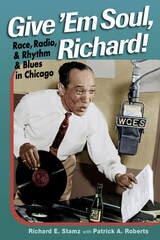
Give 'Em Soul, Richard!
Race, Radio, and Rhythm and Blues in ChicagoRichard E. Stamz with Patrick A. Roberts, Foreword by Robert Pruter
University of Illinois Press, 2010
As either observer or participant, radio deejay and political activist Richard E. Stamz witnessed every significant period in the history of blues and jazz in the last century. From performing first-hand as a minstrel in the 1920s to broadcasting Negro League baseball games in a converted 1934 Chrysler to breaking into Chicago radio and activist politics and hosting his own television variety show, the remarkable story of his life also is a window into milestones of African American history throughout the twentieth century.
Dominating the airwaves with his radio show "Open the Door, Richard" on WGES in Chicago, Stamz cultivated friendships with countless music legends, including Willie Dixon, Sonny Boy Williamson, Little Walter, Howlin' Wolf, Memphis Slim, and Leonard Chess. The pioneering Chicago broadcaster and activist known as "The Crown Prince of Soul" died in 2007 at the age of 101, but not before he related the details of his life and career to college professor Patrick A. Roberts. Give 'Em Soul, Richard! surrounds Stamz's memories of race records, juke joints, and political action in Chicago's Englewood neighborhood with insights on the larger historical trends that were unfolding around him in radio and American history.
Narrated by Stamz, this entertaining and insightful chronicle includes commentary by Roberts as well as reflections on the unlikely friendship and collaboration between a black radio legend and a white academic that resulted in one of the few existing first-hand accounts of Chicago's post-war radio scene.
Gogo Breeze
Zambia’s Radio Elder and the Voices of Free SpeechHarri Englund
University of Chicago Press, 2018
Harri Englund provides a masterfully detailed study of this popular radio personality that addresses broad questions of free speech in Zambia and beyond. By drawing on ethnographic insights into political communication, Englund presents multivocal morality as an alternative to dominant Euro-American perspectives, displacing the simplistic notion of voice as individual personal property—an idea common in both policy and activist rhetoric. Instead, Englund focuses on the creativity and polyphony of Zambian radio while raising important questions about hierarchy, elderhood, and ethics in the public sphere.
A lively, engaging portrait of an extraordinary personality, Gogo Breeze will interest Africanists, scholars of radio and mass media, and anyone interested in the history and future of free speech.
I Hid It under the Sheets
Growing Up with RadioGerald Eskenazi
University of Missouri Press, 2005
Imagine that there was a time in America when a child sat next to a radio and simply listened. But didn’t just listen, was enthralled and knew that this time was his alone, that he was part of the vortex of drama unfolding inside the radio’s innards. . . . I never saw a punch thrown, or a glass shatter, or a blood-smeared shirt as I listened to the radio. Nor did I know Barbara Stanwyck’s hairstyle as she overacted in Sorry, Wrong Number on the Lux Radio Theatre. And I had no idea how corpulent Happy Felton was as he dropped ten silver dollars that jangled into a Sheffield’s Milk bottle on Guess Who. (Yes, ten bucks was what you won on that show.) Instead, I imagined it all.
I Hid It under the Sheets captures a bygone era—the late 1930s, 1940s, and early 1950s—through the reminiscences of award-winning New York Times reporter Gerald Eskenazi. This first-person recollection shows radio’s broad impact on his generation and explains how and why it became such a major factor in shaping America and Americans.
Mexican Waves
Radio Broadcasting Along Mexico's Northern Border, 1930–1950Sonia Robles
University of Arizona Press, 2019
Historian Sonia Robles examines the transnational business practices of Mexican radio entrepreneurs between the Golden Age of radio and the early years of television history. Intersecting Mexican history and diaspora studies with communications studies, this book explains how Mexican radio entrepreneurs targeted the Mexican population in the United States decades before U.S. advertising agencies realized the value of the Spanish-language market.
Robles’s robust transnational research weaves together histories of technology, performance, entrepreneurship, and business into a single story. Examining the programming of northern Mexican commercial radio stations, the book shows how radio stations from Tijuana to Matamoros courted Spanish-language listeners in the U.S. Southwest and local Mexican audiences between 1930 and 1950. Robles deftly demonstrates Mexico’s role in creating the borderlands, adding texture and depth to the story.
Scholars and students of radio, Spanish-language media in the United States, communication studies, Mexican history, and border studies will see how Mexican radio shaped the region’s development and how transnational listening communities used broadcast media’s unique programming to carve out a place for themselves as consumers and citizens of Mexico and the United States.
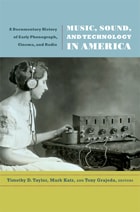
Music, Sound, and Technology in America
A Documentary History of Early Phonograph, Cinema, and RadioTimothy D. Taylor, Mark Katz, and Tony Grajeda, eds.
Duke University Press, 2012
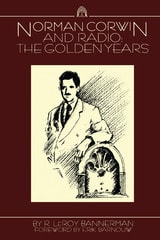
Norman Corwin and Radio
The Golden YearsR. Leroy Bannerman
University of Alabama Press, 1986
Norman Corwin is regarded as the most acclaimed creative artist of radio’s Golden Age (mid 1930s to late 1940s). Corwin worked as a producer for CBS at a time when radio was the centerpiece of American family life. His programs brought high moments to the medium during a period when exceptional creativity and world crisis shaped its character and conviction. Bannerman’s book is more than biography: it is also social history—the story of network radio, its great achievements and ultimate decline. Many of Corwin’s programs are considered radio classics. During World War II his programs energized the people and marshaled morale. We Hold These Truths, commemorating the 150th anniversary of the American Bill of Rights, was broadcast eight days after the attack on Pearl Harbor, and On a Note of Triumph, a VE-Day special for CBS, marked the historic culmination of a momentous conflict. Bannerman’s work is a portrayal of a remarkable man, who led an influential fight for the art and integrity of broadcasting, who endured unfounded accusations during the blacklisting period of the McCarthy era, and who by his dedication accomplished significant programs of historic dimensions.
Pieces of Sound
German Experimental RadioDaniel Gilfillan
University of Minnesota Press, 2009
A cultural history of German radio broadcasting from the 1920s to today
Since the rise of film and television, radio has continued to evolve, with satellite radio and podcasts as its latest incarnations. Any understanding of the development of radio, like its visual counterparts, depends on closely examining the artistic ventures that preceded commercial acceptance.
In Pieces of Sound, Daniel Gilfillan offers a cultural history that explores these major aspects of the medium by focusing on German radio broadcasting, providing a context that sees beyond programming to consider regulations, cultural politics, and social standardization. Gilfillan showcases the work of radio pioneers and artists over the past century, including Brecht’s work with the form, and how radio was employed before and after World War II. He traces how German radio broadcasters experimented with networked media not only to expand the artistic and communicative possibilities of radio, but also to inform perceptions about the advantages and direction of newer telecommunications media like Internet broadcasting and pirate radio, which artists are using today to engage with a medium that is increasingly under corporate control. Gilfillan astutely observes how claims made for the Internet today echo those made for radio in its infancy and puts forth a broad and incisive historical analysis of German cultural broadcasting.
Points on the Dial
Golden Age Radio beyond the NetworksAlexander Russo
Duke University Press, 2010
Radio Nation
Communication, Popular Culture, and Nationalism in Mexico, 1920-1950Joy Elizabeth Hayes
University of Arizona Press, 2000
The role of mass communication in nation building has often been underestimated, particularly in the case of Mexico. Following the Revolution, the Mexican government used the new medium of radio to promote national identity and build support for the new regime. Joy Hayes now tells how an emerging country became a radio nation.
This groundbreaking book investigates the intersection of radio broadcasting and nation building. Hayes tells how both government-controlled and private radio stations produced programs of distinctly Mexican folk and popular music as a means of drawing the country's regions together and countering the influence of U.S. broadcasts.
Hayes describes how, both during and after the period of cultural revolution, Mexican radio broadcasting was shaped by the clash and collaboration of different social forces--including U.S. interests, Mexican media entrepreneurs, state institutions, and radio audiences. She traces the evolution of Mexican radio in case studies that focus on such subjects as early government broadcasting activities, the role of Mexico City media elites, the "paternal voice" of presidential addresses, and U.S. propaganda during World War II.
More than narrative history, Hayes's study provides an analytical framework for understanding the role of radio in building Mexican nationalism at a critical time in that nation's history. Radio Nation expands our appreciation of an overlooked medium that changed the course of an entire country.
Radio Utopia
Postwar Audio Documentary in the Public InterestMatthew Ehrlich
University of Illinois Press, 2017
Radio Voices
American Broadcasting, 1922-1952Michele Hilmes
University of Minnesota Press, 1997
Radio's America
The Great Depression and the Rise of Modern Mass CultureBruce Lenthall
University of Chicago Press, 2007
Orson Welles’s greatest breakthrough into the popular consciousness occurred in 1938, three years before Citizen Kane, when his War of the Worlds radio broadcast succeeded so spectacularly that terrified listeners believed they were hearing a genuine report of an alien invasion—a landmark in the history of radio’s powerful relationship with its audience. In Radio’s America, Bruce Lenthall documents the enormous impact radio had on the lives of Depression-era Americans and charts the formative years of our modern mass culture.
Many Americans became alienated from their government and economy in the twentieth century, and Lenthall explains that radio’s appeal came from its capability to personalize an increasingly impersonal public arena. His depictions of such figures as proto-Fascist Charles Coughlin and medical quack John Brinkley offer penetrating insight into radio’s use as a persuasive tool, and Lenthall’s book is unique in its exploration of how ordinary Americans made radio a part of their lives. Television inherited radio’s cultural role, and as the voting tallies for American Idol attest, broadcasting continues to occupy a powerfully intimate place in American life. Radio’s America reveals how the connections between power and mass media began.
Radio's Second Century
Past, Present, and Future PerspectivesJohn Allen Hendricks
Rutgers University Press, 2020
One of the first books to examine the status of broadcasting on its one hundredth anniversary, Radio’s Second Century investigates both vanguard and perennial topics relevant to radio’s past, present, and future. As the radio industry enters its second century of existence, it continues to be a dominant mass medium with almost total listenership saturation despite rapid technological advancements that provide alternatives for consumers. Lasting influences such as on-air personalities, audience behavior, fan relationships, and localism are analyzed as well as contemporary issues including social and digital media. Other essays examine the regulatory concerns that continue to exist for public radio, commercial radio, and community radio, and discuss the hindrances and challenges posed by government regulation with an emphasis on both American and international perspectives. Radio’s impact on cultural hegemony through creative programming content in the areas of religion, ethnic inclusivity, and gender parity is also explored. Taken together, this volume compromises a meaningful insight into the broadcast industry’s continuing power to inform and entertain listeners around the world via its oldest mass medium--radio.
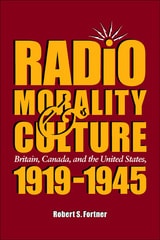
Radio, Morality, & Culture
Britain, Canada, and the United States, 1919 - 1945Robert S. Fortner
Southern Illinois University Press, 2005
Radio, Morality, and Culture: Britain, Canada, and the United States, 1919–1945 examines the moral controversies surrounding radio’s development during its formative years. In comparing the fledgling medium in Great Britain, Canada, and the United States, Robert S. Fortner documents how the church failed to participate in radio’s moral development and instead engaged in internecine warfare over issues of legitimacy and orthodoxy.
The church was arguing about theological turf and dealing with internal disputes while radio policy was being developed and communications history was being written. Fortner reveals how the church, doomed to play little more than a bit part in the future of radio, eventually lost its voice altogether in the continuing development of electronic media. Fortner effectively synthesizes cultural history and theory, communication studies, and the role religious organizations played in shaping the content and character of early radio. Geared to scholars of history, communications, and theology, Radio, Morality, and Culture provides a useful resource for research, scholarship, and public policy.
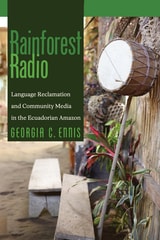
Rainforest Radio
Language Reclamation and Community Media in the Ecuadorian AmazonGeorgia C. Ennis
University of Arizona Press, 2025
Napo Kichwa communities in the Upper Ecuadorian Amazon find themselves doubly marginalized by settler colonialism and well-intentioned language revitalization projects.
In Rainforest Radio Georgia C. Ennis provides a comprehensive ethnographic exploration of Amazonian Kichwa community media, offering a unique look at how Indigenous broadcast and performance media facilitate linguistic and cultural reclamation in the Ecuadorian Amazon.
This work offers a critical analysis of how standardized language revitalization efforts, like the imposition of Unified Kichwa, can inadvertently perpetuate linguistic oppression. Ennis follows producers, performers, and consumers to understand the role of media in language reclamation. Through extensive fieldwork, she provides vivid portrayals of community efforts to sustain the language and cultural practices of their elders amid environmental and social upheaval.
Meticulously researched and beautifully written, Rainforest Radio is an essential work for anthropologists, linguists, and social scientists interested in language revitalization, Indigenous media, and environmental justice. This book showcases the transformative potential of community-driven media initiatives, highlighting the innovative responses of Napo Kichwa activists to the unique challenges they face. It serves as a powerful model for those working on similar issues worldwide, demonstrating the critical role of community media in language reclamation and cultural sustainability.
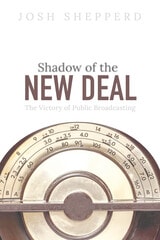
Shadow of the New Deal
The Victory of Public BroadcastingJosh Shepperd
University of Illinois Press, 2023
- Winner of the 2024 BEA Book Award
- Runner-up in the History Division of the Association for Education in Journalism and Mass Communication (AEJMC)
- Runner-up for the AJHA Book of the Year (American Journalism Historians Association).
Despite uncertain beginnings, public broadcasting emerged as a noncommercial media industry that transformed American culture. Josh Shepperd looks at the people, institutions, and influences behind the media reform movement and clearinghouse the National Association of Educational Broadcasters (NAEB) in the drive to create what became the Public Broadcasting Service and National Public Radio.
Founded in 1934, the NAEB began as a disorganized collection of undersupported university broadcasters. Shepperd traces the setbacks, small victories, and trial and error experiments that took place as thousands of advocates built a media coalition premised on the belief that technology could ease social inequality through equal access to education and information. The bottom-up, decentralized network they created implemented a different economy of scale and a vision of a mass media divorced from commercial concerns. At the same time, they transformed advice, criticism, and methods adopted from other sectors into an infrastructure that supported public broadcasting in the 1960s and beyond.
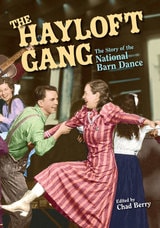
The Hayloft Gang
The Story of the National Barn DanceEdited by Chad Berry
University of Illinois Press, 2007
The Hayloft Gang draws on the colorful commentary of performers and former listeners to analyze the National Barn Dance, its audience, and its impact. Contributors trace the history of barn dance radio, explore the paradox of a foundational country music program broadcast from a major city, investigate notions of authenticity in the presentation of country music and entertainment, and delve into provocative issues raised by the barn dance phenomenon.
Contributors: Chad Berry, Michael T. Bertrand, Lisa Krissoff Boehm, Don Cusic, Wayne W. Daniel, Loyal Jones, Kristine M. McCusker, Stephen Parry, Susan Smulyan, Paul L. Tyler, and Michael Ann Williams.
The Mighty WMMR
An Oral History of Philadelphia's Rock Radio RevolutionErin Riley
Temple University Press, 2026
In the early 1980s, the scrappy radio station 93.3 WMMR was on the verge of a major takeover of the Philadelphia airwaves. Erin Riley, who had her finger on the pulse of new artists like Bon Jovi, whose music would define a generation, was hired as the station’s Music Director in 1983.
The Mighty WMMR is Riley’s affectionate and nostalgic oral history of the station’s early years, especially its 1980s heyday, covering everything from the pioneering influence of The Marconi Experiment and the success of The Morning Zoo to how WMMR broke artists like Bruce Springsteen, Billy Joel, and local favorites The Hooters onto the national scene. Featuring anecdotes and memories by beloved on-air personalities including John DeBella, Pierre Robert, and Michael Tearson, Riley chronicles the memorable songs and musicians; concerts, contests, and clubs; and the live broadcasts that marked the height of an unforgettable era in Philadelphia radio.
Riley breezily captures the station’s impact on listeners, which made WMMR a perfect storm of the times, the culture, and the counterculture. The Mighty WMMR is a captivating look back at Philadelphia’s rock history and the station that shaped a city and a generation.
The NBC Advisory Council and Radio Programming, 1926-1945
Louise M. Benjamin
Southern Illinois University Press, 2009
In 1926, the new NBC networks established an advisory board of prominent citizens to help it make program decisions as well as to deflect concerns over NBC’s dominance over radio. The council, which advised NBC on program development—especially cultural broadcasts and those aimed at rural audiences—influenced not only NBC’s policies but also decisions other radio organizations made, decisions that resonate in today’s electronic media
The council’s rulings had wide-ranging impact on society and the radio industry, addressing such issues as radio’s operation in the public interest; access of religious groups to the airwaves; personal attacks on individuals, especially the clergy; and coverage of controversial issues of public importance. Principles adopted in these decrees kept undesirable shows off the air, and other networks, stations, and professional broadcast groups used the council’s decisions in establishing their own organizational guidelines.
Benjamin documents how these decrees had influence well after the council’s demise. Beginning in the early 1930s, the council denied use of NBC to birth control advocates. This refusal revealed a pointed clash between traditional and modernistic elements in American society and laid down principles for broadcasting controversial issues. This policy resonated throughout the next five decades with the implementation of the Fairness Doctrine.
The NBC Advisory Council and Radio Programming, 1926–1945 offers the first in-depth examination of the council, which reflected and shaped American society during the interwar period. Author Louise M. Benjamin tracks the council from its inception until it was quietly disbanded in 1945, insightfully critiquing the council’s influence on broadcast policies, analyzing early attempts at using the medium of radio to achieve political goals, and illustrating the council’s role in the development of program genres, including news, sitcoms, crime drama, soap operas, quiz shows, and variety programs.
The Portable Radio in American Life
Michael Brian Schiffer
University of Arizona Press, 1991
The Quieted Voice
Robert L. Hilliard and Michael C. Keith. Foreword by Robert W. McChesney
Southern Illinois University Press, 2005
How has American radio—once a grassroots, community-based medium—become a generic service that primarily benefits owners and shareholders and prohibits its listeners from receiving diversity of opinions, ideas, and entertainment through local programming? In The Quieted Voice: The Rise and Demise of Localism in American Radio, Robert L. Hilliard and Michael C. Keith blame the government’s continual deregulation of radio and the corporate obsession with the bottom line in the wake of the far-reaching and controversial Telecommunications Act of 1996. Fighting for greater democratization of the airwaves, Hilliard and Keith call for a return to localism to save radio from rampant media conglomeration and ever-narrowing music playlists—and to save Americans from corporate and government control of public information.
The Quieted Voice details radio’s obligation to broadcast in the public’s interest. Hilliard and Keith trace the origins of the public trusteeship behind the medium and argue that local programming is essential to the fulfillment of this responsibility. From historical and critical perspectives, they examine the decline of community-centered programming and outline the efforts of media watchdog and special interest groups that have vigorously opposed the decline of democracy and diversity in American radio. They also evaluate the implications of continuing delocalization of the radio medium and survey the perspectives of leading media scholars and experts.
The Sound of Mormonism
A Media History of Latter-day SaintsJared Farmer
Utah State University Press, 2024
The Arrington Lecture series, established in honor of one of the twentieth-century American West’s most distinguished historians, Leonard Arrington, has become a leading forum for prominent scholars to address topics related to Latter-day Saint history. Utah State University hosts the Leonard J. Arrington Mormon History Lecture Series through the Merrill-Cazier Library’s Special Collections and Archives.
Theater of the Mind
Imagination, Aesthetics, and American Radio DramaNeil Verma
University of Chicago Press, 2012
For generations, fans and critics have characterized classic American radio drama as a “theater of the mind.” This book unpacks that characterization by recasting the radio play as an aesthetic object within its unique historical context. In Theater of the Mind, Neil Verma applies an array of critical methods to more than six thousand recordings to produce a vivid new account of radio drama from the Depression to the Cold War.
In this sweeping exploration of dramatic conventions, Verma investigates legendary dramas by the likes of Norman Corwin, Lucille Fletcher, and Wyllis Cooper on key programs ranging from The Columbia Workshop, The Mercury Theater on the Air, and Cavalcade of America to Lights Out!, Suspense, and Dragnet to reveal how these programs promoted and evolved a series of models of the imagination.
With close readings of individual sound effects and charts of broad trends among formats, Verma not only gives us a new account of the most flourishing form of genre fiction in the mid-twentieth century but also presents a powerful case for the central place of the aesthetics of sound in the history of modern experience.
This Is Jerusalem Calling
State Radio in Mandate PalestineBy Andrea L. Stanton
University of Texas Press, 2013
Modeled after the BBC, the Palestine Broadcasting Service was launched in 1936 to serve as the national radio station of Mandate Palestine, playing a pivotal role in shaping the culture of the emerging middle class in the region. Despite its significance, the PBS has become nearly forgotten by scholars of twentieth-century Middle Eastern studies. Drawn extensively from British and Israeli archival sources, “This Is Jerusalem Calling” traces the compelling history of the PBS’s twelve years of operation, illuminating crucial aspects of a period when Jewish and Arab national movements simultaneously took form.
Andrea L. Stanton describes the ways in which the mandate government used broadcasting to cater to varied audiences, including rural Arab listeners, in an attempt to promote a “modern” vision of Arab Palestine as an urbane, politically sophisticated region. In addition to programming designed for the education of the peasantry, religious broadcasting was created to appeal to all three main faith communities in Palestine, which ultimately may have had a disintegrating, separatist effect. Stanton’s research brings to light the manifestation of Britain’s attempts to prepare its mandate state for self-governance while supporting the aims of Zionists. While the PBS did not create the conflict between Arab Palestinians and Zionists, the service reflected, articulated, and magnified such tensions during an era when radio broadcasting was becoming a key communication tool for emerging national identities around the globe.
Transmitting the Past
Historical and Cultural Perspectives on BroadcastingEdited by J. Emmett Winn and Susan L. Brinson
University of Alabama Press, 2005
Original essays exploring important developments in radio and television broadcasting
The essays included in this collection represent some of the best cultural and historical research on broadcasting in the U. S. today. Each one concentrates on a particular event in broadcast history—beginning with Marconi’s introduction of wireless technology in 1899.
Michael Brown examines newspaper reporting in America of Marconi's belief in Martians, stories that effectively rendered Marconi inconsequential to the further development of radio. The widespread installation of radios in automobiles in the 1950s, Matthew Killmeier argues, paralleled the development of television and ubiquitous middle-class suburbia in America. Heather Hundley analyzes depictions of male and female promiscuity as presented in the sitcom Cheers at a time concurrent with media coverage of the AIDS crisis. Fritz Messere examines the Federal Radio Act of 1927 and the clash of competing ideas about what role radio should play in American life. Chad Dell recounts the high-brow programming strategy NBC adopted in 1945 to distinguish itself from other networks. And George Plasketes studies the critical reactions to Cop Rock, an ill-fated combination of police drama and musical, as an example of society's resistance to genre-mixing or departures from formulaic programming.
The result is a collection that represents some of the most recent and innovative scholarship, cultural and historical, on the intersections of broadcasting and American cultural, political, and economic life.
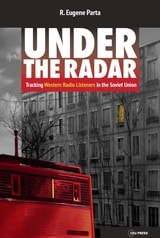
Under the Radar
Tracking Western Radio Listeners in the Soviet UnionR. Eugene Parta
Central European University Press, 2022
Western democracy is currently under attack by a resurgent Russia, weaponizing new technologies and social media. How to respond? During the Cold War, the West fought off similar Soviet propaganda assaults with shortwave radio broadcasts. Founded in 1949, the US-funded Radio Free Europe/Radio Liberty broadcast uncensored information to the Soviet republics in their own languages. About one-third of Soviet urban adults listened to Western radio. The broadcasts played a key role in ending the Cold War and eroding the communist empire.
R. Eugene Parta was for many years the director of Soviet Area Audience Research at RFE/RL, charged among others with gathering listener feedback. In this book he relates a remarkable Cold War operation to assess the impact of Western radio broadcasts on Soviet listeners by using a novel survey research approach. Given the impossibility of interviewing Soviet citizens in their own country, it pioneered audacious interview methods in order to fly under the radar and talk to Soviets traveling abroad, ultimately creating a database of 51,000 interviews which offered unparalleled insights into the media habits and mindset of the Soviet public. By recounting how the “impossible” mission was carried out, Under the Radar also shows how the lessons of the past can help counter the threat from a once and current adversary.
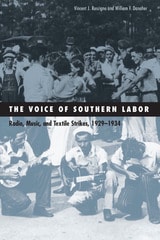
Voice Of Southern Labor
Radio, Music, And Textile Strikes, 1929-1934Vincent J. Roscigno
University of Minnesota Press, 2004
Vividly shows how music united striking workers
The 1934 strike of southern textile workers, involving nearly 400,000 mill hands, remains perhaps the largest collective mobilization of workers in U.S. history. How these workers came together in the face of the powerful and coercive opposition of management and the state is the remarkable story at the center of this book.
The Voice of Southern Labor chronicles the lives and experiences of southern textile workers and provides a unique perspective on the social, cultural, and historical forces that came into play when the group struck, first in 1929, and then on a massive scale in 1934. The workers’s grievances, solidarity, and native radicalism of the time were often reflected in the music they listened to and sang, and Vincent J. Roscigno and William F. Danaher offer an in-depth context for understanding this intersection of labor, politics, and culture. The authors show how the message of the southern mill hands spread throughout the region with the advent of radio and the rise of ex–mill worker musicians, and how their sense of opportunity was further bolstered by Franklin D. Roosevelt’s radio speeches and policies.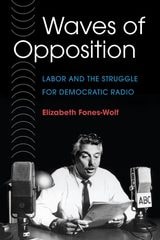
Waves of Opposition
Labor and the Struggle for Democratic RadioElizabeth Fones-Wolf
University of Illinois Press, 2006
Radio sparked the massive upsurge of organized labor during the Great Depression. The powerful new medium became an important weapon in the ideological war between labor and business. Corporations used radio to sing the praises of individualism and consumerism, while unions emphasized equal rights, industrial democracy, and social justice.
Elizabeth Fones-Wolf analyzes the battle to utilize, and control, the airwaves in radio's early era. Working chronologically, she explores the advent of local labor radio stations such as WCFL and WEVD, labor's campaigns against corporate censorship, and union experiments with early FM broadcasting. Using union archives and broadcast industry records, Fones-Wolf demonstrates radio's key role in organized labor's efforts to fight business's domination of political discourse throughout the 1930s, 1940s, and 1950s. She concludes with a look at how labor's virtual disappearance from today's media helps explain why unions have become so marginalized, and offers important historical lessons for revitalizing organized labor.

Wireless
The Crucial Decade: History of the British wireless industry 1924-34Gordon Bussey
The Institution of Engineering and Technology, 1990