Results by title
43 books match the query 'Responsibility'

American Girls and Global Responsibility
A New Relation to the World during the Early Cold WarHelgren, Jennifer
Rutgers University Press, 2017
Jennifer Helgren argues that a new internationalist girl citizenship took root in the country in the years following World War II in youth organizations such as Camp Fire Girls, Girl Scouts, YWCA Y-Teens, schools, and even magazines like Seventeen. She shows the particular ways that girls’ identities and roles were configured, and reveals the links between internationalist youth culture, mainstream U.S. educational goals, and the U.S. government in creating and marketing that internationalist girl, thus shaping the girls’ sense of responsibilities as citizens.

Bad Souls
Madness and Responsibility in Modern GreeceElizabeth Anne Davis
Duke University Press, 2012

Command on Trial
Japanese Officers, War Crimes, and Command ResponsibilityPaul Taucher
Hong Kong University Press, 2026
An examination of how the legal doctrine of command responsibility was applied during military tribunals for Japanese war criminals, often inconsistently and ineffectively.
Between 1945 and 1951, the Allied powers prosecuted over 5,700 suspected Japanese war criminals across the Asia-Pacific region before one international and many national tribunals using a new legal doctrine known as command responsibility. Command responsibility holds officers criminally liable for the crimes of their subordinates even if they did not order the crimes to occur. Allied authorities believed that the structure of the Japanese military had allowed the crimes to occur and that pursuing guilt for war crimes should extend beyond enlisted soldiers who were the direct perpetrators of war crimes to those who had been in a position of command.
Command on Trial shows that the application of command responsibility in the courtroom was highly unstable and open to manipulation, especially in the trials of lower-ranking officers, resulting in outcomes that were legally, morally, and philosophically inconsistent. A clear illustration of the pitfalls of command responsibility, this book shows that the trials—and command responsibility—did not achieve comprehensive justice and left unanswered the question of who was actually responsible for many of the war crimes that were perpetrated.
Compassion and Responsibility
Readings in the History of Social Welfare Policy in the United StatesFrank R. Breul and Steven J. Diner
University of Chicago Press, 1985
Competing Responsibilities
The Ethics and Politics of Contemporary LifeSusanna Trnka and Catherine Trundle, editors
Duke University Press, 2017
Contributors
Barry D. Adam, Elizabeth Anne Davis, Filippa Lentzos, Jessica Robbins-Ruszkowski, Nikolas Rose, Rosalind Shaw, Cris Shore, Jessica M. Smith, Susanna Trnka, Catherine Trundle, Jarrett Zigon
Confounded Expectations
The Law's Struggle with Personal ResponsibilityGeorge W. Jarecke and Nancy K. Plant
Southern Illinois University Press, 2000
George W. Jarecke and Nancy K. Plant present a selection of cases across a broad spectrum of American law to demonstrate that our society relies inappropriately on the legal system to cure ills the system was not designed to address.
Jarecke and Plant note that while we in the United States worry considerably about the problem of individual assumption of responsibility—whether for personal mistakes, financial setbacks, or pure bad luck—we appear uneasy about the concept and unclear about what it means on a daily basis. Not only are we incapable of accepting personal responsibility; we barely know what it means to do so.
Mistakenly, we turn to the legal system to solve this dilemma. Yet our laws as our legislators write them, as judges interpret them, as lawyers argue them, and as juries apply them send mixed messages about whether and how we should exercise personal responsibility.
Each chapter of Confounded Expectations features one main case to explain one legal theory, with other cases noted as examples of facets of each theory. To demonstrate the law that requires merchants to guarantee the quality of their products, for example, Jarecke and Plant discuss the case of the band mothers whose fund-raising luncheon menu included turkey salad contaminated by salmonella. Peripheral cases include a horse falsely sold as a gelding, a riding mower that tipped over when used as instructed, makeup that was guaranteed to be safe but caused a rash, and pigs sick with hog cholera.
Cosmopolitan Parables
Trauma and Responsibility in Contemporary GermanyDavid D. Kim
Northwestern University Press, 2017
To exemplify this global challenge, Kim examines three internationally acclaimed writers of German origin—Hans Christoph Buch, Michael Krüger, and W. G. Sebald—joined by their own harrowing experiences and stunning entanglements with Holocaust memory, postcolonial responsibility, and communist legacy. This bold new study is the first of its kind, interrogating transnational memories of trauma alongside globally shared responsibilities for justice. More important, it addresses the question of remembrance—whether the colonial past or the postwar legacy serves as a proper foundation upon which cosmopolitanism is to be pursued in today's era of globalization.
Dialogic Confession
Bonhoeffer's Rhetoric of ResponsibilityRonald C. Arnett. Foreword by Clifford Christians
Southern Illinois University Press, 2005
In this landmark volume of contemporary communication theory, Ronald C. Arnett applies the metaphor of dialogic confession—which enables historical moments to be addressed from a confessed standpoint and through a communicative lens—to the works of German theologian Dietrich Bonhoeffer, who pointed to an era of postmodern difference with his notion of "a world come of age." Arnett’s interpretations of Bonhoeffer’s life and scholarship in contention with Nazi dominance offer implications for a dialogic confession that engages the complexity of postmodern narrative contention.
Rooted in classical theory, the field of communication ethics is abstract and arguably outmoded. In Dialogic Confession: Bonhoeffer’s Rhetoric of Responsibility, Arnett locates cross-cultural and comparative anchors that not only bring legitimacy and relevance to the field but also develop a conceptual framework that will advance and inspire future scholarship.

Elites and the Politics of Accountability in Africa
Wale Adebanwi and Rogers Orock, Editors
University of Michigan Press, 2021
Elites and the Politics of Accountability in Africa examines the ways that accountability offers an effective interpretive lens to the social, cultural, and institutional struggles of both the elites and ordinary citizens in Africa. Each chapter investigates questions of power, its public deliberation, and its negotiation in Africa by studying elites through the framework of accountability. The book enters conversations about political subjectivity and agency, especially from ongoing struggles around identities and belonging, as well as representation and legitimacy. Who speaks to whom? And on whose behalf do they speak? The contributors to this volume offer careful analyses of how such concerns are embedded in wider forms of cultural, social, and institutional discussions about transparency, collective responsibility, community, and public decision-making processes. These concerns affect prospects for democratic oversight, as well as questions of alienation, exclusivity, privilege and democratic deficit. The book situates our understanding of the emergence, meaning, and conceptual relevance of elite accountability, to study political practices in Africa. It then juxtaposes this contextualization of accountability in relation to the practices of African elites. Elites and the Politics of Accountability in Africa offers fresh, dynamic, and multifarious accounts of elites and their practices of accountability and locally plausible self-legitimation, as well as illuminating accounts of contemporary African elites in relation to their socially and historicallysituated outcomes of contingency, composition, negotiation, and compromise.
Embracing Risk
The Changing Culture of Insurance and ResponsibilityEdited by Tom Baker and Jonathan Simon
University of Chicago Press, 2001
Embracing Risk explores this new approach from a variety of perspectives. The first part of the book focuses on the interplay between risk and insurance in various historical and social contexts. The second part examines how risk is used to govern fields outside the realm of insurance, from extreme sports to policing, mental health institutions, and international law. Offering an original approach to risk, insurance, and responsibility, the provocative and wide-ranging essays in Embracing Risk demonstrate that risk has moved well beyond its origins in the insurance trade to become a central organizing principle of social and cultural life.

Foreign Intervention in Africa after the Cold War
Sovereignty, Responsibility, and the War on TerrorElizabeth Schmidt
Ohio University Press, 2018
In Foreign Intervention in Africa after the Cold War—interdisciplinary in approach and intended for nonspecialists—Elizabeth Schmidt provides a new framework for thinking about foreign political and military intervention in Africa, its purposes, and its consequences. She focuses on the quarter century following the Cold War (1991–2017), when neighboring states and subregional, regional, and global organizations and networks joined extracontinental powers in support of diverse forces in the war-making and peace-building processes. During this period, two rationales were used to justify intervention: a response to instability, with the corollary of responsibility to protect, and the war on terror.
Often overlooked in discussions of poverty and violence in Africa is the fact that many of the challenges facing the continent today are rooted in colonial political and economic practices, in Cold War alliances, and in attempts by outsiders to influence African political and economic systems during the decolonization and postindependence periods. Although conflicts in Africa emerged from local issues, external political and military interventions altered their dynamics and rendered them more lethal. Foreign Intervention in Africa after the Cold War counters oversimplification and distortions and offers a new continentwide perspective, illuminated by trenchant case studies.

Freedom Without Responsibility
Bruce Waller
Temple University Press, 1990

Freedom and Responsibility in Russian Literature
Essays in Honor of Robert Louis JacksonElizabeth Cheresh Allen and Gary Saul Morson
Northwestern University Press, 1994

Individual and Social Responsibility
Child Care, Education, Medical Care, and Long-Term Care in AmericaEdited by Victor R. Fuchs
University of Chicago Press, 1995
Four in-depth studies of human-service sectors—child care, education, medical care, and long-term care for the elderly—are followed by six cross-sector studies that stimulate new ways of thinking about human services through the application of economic theory, institutional analysis, and the history of social policy.
The contributors include Kenneth J. Arrow, Martin Feldstein, Victor Fuchs, Alan M. Garber, Eric A. Hanushek, Christopher Jencks, Seymour Martin Lipset, Glenn Loury, Roger G. Noll, Paul M. Romer, Amartya Sen, and Theda Skocpol.
This timely study sheds important light on the tension between individual and social responsibility, and will appeal to economists and other social scientists and policymakers concerned with social policy issues.

Inventing the Ties That Bind
Imagined Relationships in Moral and Political LifeFrancesca Polletta
University of Chicago Press, 2020
Moral Responsibility and Persons
Eugene Schlossberger
Temple University Press, 1992
Challenging traditional philosophical views of moral responsibility, Eugene Schlossberger argues that we are responsible not so much for what we do as for who we are. He explores what it means to be a person, concluding that personhood is the sum of beliefs and values—which are by no means entirely within our control. Consequently, the voluntariness of our acts—or even whether we act at all—is irrelevant to the moral evaluation of us as persons. Schlossberger contends that we are to be judged morally on the basis of what we are, our "world-view," rather than what we do.
In Moral Responsibility and Persons Schlossberger disputes various received philosophical positions. His challenging and entertaining account also examines psychology and its view of the nature of personhood, as well as insanity and the "personality" of animals, children, and computers. He explores the validity of emotions we may feel in response to others—especially gratitude and resentment. And finally, Schlossberger tackles the inevitable implications of his position in the area of crime and punishment.
Moral Responsibility and the Boundaries of Community
Power and Accountability from a Pragmatic Point of ViewMarion Smiley
University of Chicago Press, 1992
In an argument both compelling and provocative, Marion Smiley demonstrates how attributions of blame—far from being based on an objective process of factual discovery—are instead judgments that we ourselves make on the basis of our own political and social points of view. She argues that our conception of responsibility is a singularly modern one that locates the source of blameworthiness in an individual's free will. After exploring the flaws inherent in this conception, she shows how our judgments of blame evolve out of our configuration of social roles, our conception of communal boundaries, and the distribution of power upon which both are based.
The great strength of Smiley's study lies in the way in which it brings together both rigorous philosophical analysis and an appreciation of the dynamics of social and political practice. By developing a pragmatic conception of moral responsibility, this work illustrates both how moral philosophy can enhance our understanding of social and political practices and why reflection on these practices is necessary to the reconstruction of our moral concepts.

Morality, Responsibility, and the University
Studies in Academic Ethicsedited by Steven M. Cahn
Temple University Press, 1992

Passing and Pedagogy
THE DYNAMICS OF RESPONSIBILITYPamela L. Caughie
University of Illinois Press, 1999
Caughie's discussion of passing illuminates a recent phenomenon in academic writing and popular culture that revolves around identities and the ways in which they are deployed, both in the arts and in lived experience. Through a wide variety of texts—novels, memoirs, film, drama, theory, museum exhibits, legal cases—she demonstrates the dynamics of passing, presenting it not as the assumption of a fraudulent identity but as the recognition that the assumption of any identity, including for the purposes of teaching, is a form of passing.
Astutely addressing the relevance of passing for pedagogy, Caughie presents the possibility of a dynamic ethics responsive to the often polarizing difficulties inherent in today's culture. Challenging and thought-provoking, Passing and Pedagogy offers insight and inspiration for teachers and scholars as they seek to be responsible and effective in a complex, rapidly changing intellectual and cultural environment.
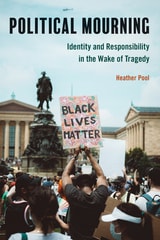
Political Mourning
Identity and Responsibility in the Wake of TragedyHeather Pool
Temple University Press, 2021
What leads us to respond politically to the deaths of some citizens and not others? This is one of the critical questions Heather Pool asks in Political Mourning. Born out of her personal experiences with the trauma of 9/11, Pool’s astute book looks at how death becomes political, and how it can mobilize everyday citizens to argue for political change.
Pool examines four tragedies in American history—the Triangle Shirtwaist Factory Fire, the lynching of Emmett Till, the September 11 attacks, and the Black Lives Matter movement—that offered opportunities to tilt toward justice and democratic inclusion. Some of these opportunities were taken, some were not. However, these watershed moments show, historically, how political identity and political responsibility intersect and how racial identity shapes who is mourned. Political Mourning helps explain why Americans recognize the names of Trayvon Martin and Sandra Bland; activists took those cases public while many similar victims have been ignored by the news media.
Concluding with an afterword on the coronavirus, Pool emphasizes the importance of collective responsibility for justice and why we ought to respond to tragedy in ways that are more politically inclusive.
Protecting the Vulnerable
A Re-Analysis of our Social ResponsibilitiesRobert E. Goodin
University of Chicago Press, 1985

Responsibility of Intellectuals
Reflections by Noam Chomsky and Others after 50 yearsEdited by Nicholas Allott, Chris Knight, and Neil Smith
University College London, 2019
This book revisits “The Responsibility of Intellectuals” half a century later. It includes six new essays written to celebrate Chomsky’s famous intervention and explore its relevance in today’s world. Nicholas Allott, Chris Knight, Milan Rai, and Neil Smith have studied and written about Chomsky’s thought for many years, while Craig Murray and Jackie Walker describe the personal price they have paid for speaking out. The book concludes with Chomsky’s recollections of the background to the original publication of his essay, followed by extensive commentary from him on its fiftieth anniversary.

Secrets of Responsibility
Jacques Derrida
University of Chicago Press, 2027
Jacques Derrida on the problem of secrecy, the first in a ten-seminar series on questions of responsibility.
Delivered at the École des hautes études en sciences sociales in Paris during the 1991–92 academic year, Secrets of Responsibility is the first of ten seminars given by Jacques Derrida under the umbrella “Questions of Responsibility,” a cycle that includes Hospitality, Perjury and Pardon, Death Penalty, and The Beast and the Sovereign—each also published by the University of Chicago Press.
In this seminar, Derrida asks a basic question—what is a secret?—which he then explores across scientific, technical, social, political, and religious domains. Over twelve sessions, we are treated to analyses of industrial, state, military, professional, and religious secrets as well as secret societies and secret police. Derrida also tackles secrecy in literary fiction (especially in Melville, James, Poe, and Baudelaire) and philosophical texts (including Freud, Kant, Heidegger, Kierkegaard, Patočka, Nietzsche, Levinas, and others). The result is a set of profound and surprising insights delivered as only Derrida can.

Sharing Responsibility
Larry May
University of Chicago Press, 1992

Sovereignty and the Responsibility to Protect
A New HistoryLuke Glanville
University of Chicago Press, 2013
In Sovereignty and the Responsibility to Protect, Luke Glanville argues that this responsibility extends back to the sixteenth and seventeenth centuries, and that states have since been accountable for this responsibility to God, the people, and the international community. Over time, the right to national self-governance came to take priority over the protection of individual liberties, but the noninterventionist understanding of sovereignty was only firmly established in the twentieth century, and it remained for only a few decades before it was challenged by renewed claims that sovereigns are responsible for protection.
Glanville traces the relationship between sovereignty and responsibility from the early modern period to the present day, and offers a new history with profound implications for the present.

The Beast and the Sovereign, Volume I
Jacques Derrida
University of Chicago Press, 2009
When he died in 2004, Jacques Derrida left behind a vast legacy of unpublished material, much of it in the form of written lectures. With The Beast and the Sovereign, Volume 1, the University of Chicago Press inaugurates an ambitious series, edited by Geoffrey Bennington and Peggy Kamuf, translating these important works into English.
The Beast and the Sovereign, Volume 1 launches the series with Derrida’s exploration of the persistent association of bestiality or animality with sovereignty. In this seminar from 2001–2002, Derrida continues his deconstruction of the traditional determinations of the human. The beast and the sovereign are connected, he contends, because neither animals nor kings are subject to the law—the sovereign stands above it, while the beast falls outside the law from below. He then traces this association through an astonishing array of texts, including La Fontaine’s fable “The Wolf and the Lamb,” Hobbes’s biblical sea monster in Leviathan, D. H. Lawrence’s poem “Snake,” Machiavelli’s Prince with its elaborate comparison of princes and foxes, a historical account of Louis XIV attending an elephant autopsy, and Rousseau’s evocation of werewolves in The Social Contract.
Deleuze, Lacan, and Agamben also come into critical play as Derrida focuses in on questions of force, right, justice, and philosophical interpretations of the limits between man and animal.

The Beast and the Sovereign, Volume II
Jacques Derrida
University of Chicago Press, 2011

The Borders of Responsibility
Migration Control in the Mediterranean SeaKiri Olivia Santer
Duke University Press, 2026

The Burden of Responsibility
Blum, Camus, Aron, and the French Twentieth CenturyTony Judt
University of Chicago Press, 1998
Through the prism of the lives of Leon Blum, Albert Camus, and Raymond Aron, Judt examines pivotal issues in the history of contemporary French society—antisemitism and the dilemma of Jewish identity, political and moral idealism in public life, the Marxist moment in French thought, the traumas of decolonization, the disaffection of the intelligentsia, and the insidious quarrels rending Right and Left. Judt focuses particularly on Blum's leadership of the Popular Front and his stern defiance of the Vichy governments, on Camus's part in the Resistance and Algerian War, and on Aron's cultural commentary and opposition to the facile acceptance by many French intellectuals of communism's utopian promise. Severely maligned by powerful critics and rivals, each of these exemplary figures stood fast in their principles and eventually won some measure of personal and public redemption.
Judt constructs a compelling portrait of modern French intellectual life and politics. He challenges the conventional account of the role of intellectuals precisely because they mattered in France, because they could shape public opinion and influence policy. In Blum, Camus, and Aron, Judt finds three very different men who did not simply play the role, but evinced a courage and a responsibility in public life that far outshone their contemporaries.
"An eloquent and instructive study of intellectual courage in the face of what the author persuasively describes as intellectual irresponsibility."—Richard Bernstein, New York Times

The Company Doctor
Risk, Responsibility, and Corporate ProfessionalismElaine Draper
Russell Sage Foundation, 2003

The Five to Seven Year Shift
The Age of Reason and ResponsibilityEdited by Arnold J. Sameroff and Marshall M. Haith
University of Chicago Press, 1996
Leading researchers in neurology, sociology, anthropology, education, and psychology assess what is now commonly known as the five to seven year shift. They consider how development is influenced by changes in neurobiological subsystems; cognition, emotion, and self-concept; concerns with peers and families; and school and cultural practices. They find that important transitions in behavior and environment do take place in this period, and are best described in terms of the qualitative increase in complexity due to interactions among ecological systems.
This volume increases our understanding of both child development and the study and treatment of children at home and at school. It will interest researchers, clinicians, and students of psychology and education.

The Gift of Death
Jacques Derrida
University of Chicago Press, 1995
A major work, The Gift of Death resonates with much of Derrida's earlier writing and will be of interest to scholars in anthropology, philosophy, and literary criticism, along with scholars of ethics and religion.
"The Gift of Death is Derrida's long-awaited deconstruction of the foundations of the project of a philosophical ethics, and it will long be regarded as one of the most significant of his many writings."—Choice
"An important contribution to the critical study of ethics that commends itself to philosophers, social scientists, scholars of relgion . . . [and those] made curious by the controversy that so often attends Derrida."—Booklist
"Derrida stares death in the face in this dense but rewarding inquiry. . . . Provocative."—Publishers Weekly

The Gift of Death, Second Edition & Literature in Secret
Jacques Derrida
University of Chicago Press, 2008

The Gift of Death, Second Edition & Literature in Secret
Jacques Derrida
University of Chicago Press, 2008

The Imperative of Responsibility
In Search of an Ethics for the Technological AgeHans Jonas
University of Chicago Press, 1984
Hans Jonas here rethinks the foundations of ethics in light of the awesome transformations wrought by modern technology: the threat of nuclear war, ecological ravage, genetic engineering, and the like. Though informed by a deep reverence for human life, Jonas's ethics is grounded not in religion but in metaphysics, in a secular doctrine that makes explicit man's duties toward himself, his posterity, and the environment. Jonas offers an assessment of practical goals under present circumstances, ending with a critique of modern utopianism.

The Moral Conflict of Law and Neuroscience
Peter A. Alces
University of Chicago Press, 2018
Peter A. Alces considers where and how the law currently fails to appreciate the neuroscientific revelation that humans may in key ways lack normative free will—and therefore moral responsibility. The most accessible setting in which to consider the potential impact of neuroscience is criminal law, as certain aspects of criminal law already reveal the naiveté of most normative reasoning, such as the inconsistent treatment of people with equally disadvantageous cognitive deficits, whether congenital or acquired. But tort and contract law also assume a flawed conception of human agency and responsibility. Alces reveals the internal contradictions of extant legal doctrine and concludes by considering what would be involved in constructing novel legal regimes based on emerging neuroscientific insights.
The Politics of Responsibility
Chad Lavin
University of Illinois Press, 2007
Politics cannot function without responsibility, but there have been serious disagreements about how responsibility is to be understood and huge controversies about how it is to be distributed, rewarded, legislated, and enforced. The liberal notions of personal responsibility that have dominated political thinking in the West for more than a century are rooted in the familiar territory of individual will and causal blame, but these theories have been assailed as no longer adequate to explain or address the political demands of a global social structure. Informed by Marx, Foucault, and Butler, Chad Lavin argues for a "postliberal" theory of responsibility, formulating responsibility as a process that is anchored in a persistent ability to respond, not reproach. Lavin works this formulation through discussions of contemporary political issues such as globalization, police brutality, and abortion.
Rather than assigning individual blame, postliberal responsibility challenges the supposed autonomy of individual subjects by taking structural arguments into account. Lavin concludes that a liberal concept of responsibility gives rise to a moralistic and oppressive approach to social problems, while a postliberal approach highlights a shared responsibility for developing collective solutions to systemic problems. Postliberal responsibility not only suggests more generous and democratic responses to social ills, it also allows us to theorize a greater range of issues that demand political response.
The Punitive Imagination
Law, Justice, and ResponsibilityAustin Sarat
University of Alabama Press, 2014
From the Gospel of Matthew to numerous US Supreme Court justices, many literary and legal sources have observed that how a society metes out punishment reveals core truths about its character. The Punitive Imagination is a collection of essays that engages and contributes to debates about the purposes and meanings of punishment in the United States.
The Punitive Imagination examines some of the critical assumptions that frame America's approach to punishment. It explores questions such as:
· What is the place of concern for human dignity in our prevailing ideologies of punishment?
· Can we justly punish the socially disadvantaged?
· What assumptions about persons, social institutions, and the ordering of social space provide the basis for American punitiveness?
· Who, if anyone, can be held responsible for excessively punitive criminal sentences?
· How does punishment depend on prevailing views of free will, responsibility, desert, blameworthiness?
· Where/how are those views subject to challenge in our punitive practices?
As Sarat posits in his introduction, the way a society punishes demonstrates its commitment to standards of judgment and justice, its distinctive views of blame and responsibility, its understandings of mercy and forgiveness, and its particular ways of responding to evil. He goes on to discuss the history of punishment in the United States and what it reveals about assumptions made about persons that “undergird” the American system of punishment.
The five additional contributors to The Punitive Imagination seek to illuminate what American practices of punishment tell us about who we are as a nation. Synthesizing cultural, sociological, philosophical, and legal perspectives, they offer a distinctive take on the meaning of punishment in America.

The Roman Stoics
Self, Responsibility, and AffectionGretchen Reydams-Schils
University of Chicago Press, 2005
The Roman Stoics reexamines the philosophical basis that instructed social practice in friendship, marriage, parenting, and community. From this analysis emerge Stoics who were neither cold nor detached, as the stereotype has it, but all too aware of their human weaknesses. In a valuable contribution to current discussions in the humanities on identity, autonomy, and altruism, Reydams-Schils ultimately conveys the wisdom of Stoics to the citizens of modern society.
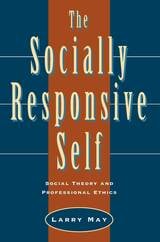
The Socially Responsive Self
Social Theory and Professional EthicsLarry May
University of Chicago Press, 1996
Applying his theory of responsibility to professional ethics, May contends that current methods of professional socialization should be changed so that professionals are not expected to ignore considerations of personal well-being, family, or community. For instance, lawyers should not place client loyalty above concerns for the common good; doctors should not place the physical well-being of patients above their mental and spiritual well-being; scientists and engineers should not feel obliged to blow the whistle on fraud and corruption unless their professional groups protect them from retaliation.
This book should prove provocative reading for philosophers, political scientists, social theorists, professionals of many stripes, and ethicists.

Who Should Pay?
Higher Education, Responsibility, and the PublicNatasha Quadlin
Russell Sage Foundation, 2022
Who Should Pay? draws on a decade’s worth of public opinion surveys analyzing public attitudes about whether parents, students, or the government should be primarily responsible for funding higher education. Quadlin and Powell find that between 2010 and 2019, public opinion has shifted dramatically in favor of more government funding. In 2010, Americans overwhelming believed that parents and students were responsible for the costs of higher education. Less than a decade later, the percentage of Americans who believed that federal or state/local government should be the primary financial contributor has more than doubled. The authors contend that the rapidity of this change may be due to the effects of the 2008 financial crisis and the growing awareness of the social and economic costs of high levels of student debt. Quadlin and Powell also find increased public endorsement of shared responsibility between individuals and the government in paying for higher education. The authors additionally examine attitudes on the accessibility of college for all, whether higher education at public universities should be free, and whether college is worth the costs.
Quadlin and Powell also explore why Americans hold these beliefs. They identify individualistic and collectivist world views that shape public perspectives on the questions of funding, accessibility, and worthiness of college. Those with more individualistic orientations believed parents and students should pay for college, and that if students want to attend college, then they should work hard and find ways to achieve their goals. Those with collectivist orientations believed in a model of shared responsibility – one in which the government takes a greater level of responsibility for funding education while acknowledging the social and economic barriers to obtaining a college degree for many students. The authors find that these belief systems differ among socio-demographic groups and that bias – sometimes unconscious and sometimes deliberate – regarding race and class affects responses from both individualistic and collectivist-oriented participants.
Public opinion is typically very slow to change. Yet Who Should Pay? provides an illuminating account of just how quickly public opinion has shifted regarding the responsibility of paying for a college education and its implications for future generations of students.
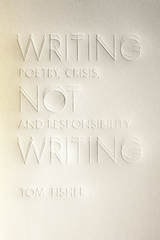
Writing Not Writing
Poetry, Crisis, and ResponsibilityTom Fisher
University of Iowa Press, 2017
Writing Not Writing both confirms this question into which crisis puts poetry and explores alternative modes of “response” and “responsibility” that poetry makes possible. Reading the silences of Oppen, Carl Rakosi, and Bob Kaufman, the renunciation of Laura Riding, and other more contemporary instances of poetic abnegation, Tom Fisher explores silence, refusal, and disavowal as political and ethical modes of response in a time of continuous crisis. Through a turn away from writing, these poets offer strategies of refusal and departure that leave anagrammatical hollows behind, activating the negational capacities of writing and aesthetics to disrupt the empire of sense, speech, and agency.
Fisher’s work is both an engaging and detailed analysis of four individual poets who left poetry behind and a theoretically provocative exploration of the political and ethical possibilities of silence, not-doing, and disavowal. In lucid but nuanced terms, Fisher makes the case that, from at least modernism forward, poetry is marked by refusals of speech and sense in order to open possibilities of response outside conventional forms of responsibility.

You've Been Had!
How the Media and Environmentalists Turned America into a Nation of HypochondriacsBenarde, Melvin A
Rutgers University Press, 2002
With all of the negative media about environmental threats over the last four decades, is it any wonder that most people believe disaster is just around the corner? But despite what the media would lead us to believe, annual reports from the Surgeons General show that Americans are the healthiest they have ever been, are becoming healthier and are, in fact, the healthiest people on the planet.
In You’ve Been Had!, Melvin Benarde aims to set the record straight and counteract the culture of complaint and worry with an unbiased account of the scientific facts — facts which suggest we are worried and frightened about the wrong things. Contrary to what the media would have us believe, he argues that the environmental factors that most adversely affect our health are those that are within our power to alter, such as smoking, diet, drugs, stress, guns speed, exercise, and basic safety precautions. Topics covered include: carcinogens and anti- carcinogens; dietary supplements and neutraceuticals; food safety, pasteurization and irradiation; genetically modified foods; microbial threats to health; hazardous and toxic waste; radiation and skin cancer; global warming; risk-taking; obesity, asthma, violence and longevity. Benarde also looks at the ways the media reports science and evidence-based medicine.