Results by title
43 books match the query 'Role'
After Strange Texts
The Role of Theory in the Study of LiteratureGregory S. Jay and David L. Miller
University of Alabama Press, 1985
In this collection of essays by seven outstanding American scholars, interests as diverse as feminism, Marxism, deconstruction, and cultural poetics are brought together around a central question: how does the choice of a particular theory alter the practice of reading and do altered practices of reading in turn call forth more theory?

An African Voice
The Role of the Humanities in African IndependenceRobert W. July
Duke University Press, 1987

Beyond the Ring
The Role of Boxing in American SocietyJeffrey T. Sammons
University of Illinois Press, 1988
Primitive, dangerous, low-paying, crooked, exploitive--boxing, in all but a few cases, offered its athletes very little while taking everything. Why does boxing exist? What accounted for its decades-long popularity? What does its presence on the sport history landscape say about America?
Jeffrey T. Sammons looks at how boxing reflected the society that fostered it at different points in history. In the time of John L. Sullivan, the sport provided an arena for testing law, order, and social growth. Jack Johnson's career reflected the racism, nationalism, and xenophobia of the Progressive era. At its popular peak in the 1920s, boxing expressed tensions as disparate as the tug-of-war between modernism and tradition and the women's rights movement. From there, Sammons traces how the sport intertwined with Nazi antisemitism, reflected the hopes of the New Deal, produced the seminal figure Joe Louis, and stood at the nexus of the union of organized crime with business and television. Finally, he shows how Muhammad Ali and reactions to him exposed the shifting tides of racial issues and American involvement in Vietnam.
Cash, Crisis, and Corporate Governance
The Role of National Financial Systems in Industrial RestructuringVictoria Marklew
University of Michigan Press, 1995
Constitutional Revolutions
Pragmatism and the Role of Judicial Review in American ConstitutionalismRobert Justin Lipkin
Duke University Press, 2000
Drawing on ethical theory, philosophy of science, and constitutional theory, Lipkin provides a progressive, postmodern, and pragmatic theory of constitutional law that justifies the critical role played by the judiciary in American democracy. Judicial review, he claims, operates as a mechanism to allow “second thought,” or principled reflection, on the values of the wider culture. Without this revolutionary function, American democracy would be left without an effective institutional means to formulate the community’s considered judgments about good government and individual rights. Although judicial review is not the only forum for protecting this dimension of constitutional democracy, Lipkin maintains that we would be wise not to abandon judicial review unless a viable alternative emerges.
Judges, lawyers, law professors, and constitutional scholars will find this book a valuable resource.

Creating Smart and Safe Manufacturing Environments
The role of innovation and safety managementWai Yie Leong
The Institution of Engineering and Technology, 2025
Debating Moral Education
Rethinking the Role of the Modern UniversityElizabeth Kiss and J. Peter Euben, eds.
Duke University Press, 2009
Editors Elizabeth Kiss and J. Peter Euben survey the history of ethics in higher education, then engage with provocative recent writings by Stanley Fish in which he argues that universities should not be involved in moral education. Stanley Hauerwas responds, offering a theological perspective on the university’s purpose. Contributors look at the place of politics in moral education; suggest that increasingly diverse, multicultural student bodies are resources for the teaching of ethics; and show how the debate over civic education in public grade-schools provides valuable lessons for higher education. Others reflect on the virtues and character traits that a moral education should foster in students—such as honesty, tolerance, and integrity—and the ways that ethical training formally and informally happens on campuses today, from the classroom to the basketball court. Debating Moral Education is a critical contribution to the ongoing discussion of the role and evolution of ethics education in the modern liberal arts university.
Contributors. Lawrence Blum, Romand Coles, J. Peter Euben, Stanley Fish, Michael Allen Gillespie, Ruth W. Grant, Stanley Hauerwas, David A. Hoekema, Elizabeth Kiss, Patchen Markell, Susan Jane McWilliams, Wilson Carey McWilliams, J. Donald Moon, James Bernard Murphy, Noah Pickus, Julie A. Reuben, George Shulman, Elizabeth V. Spelman
Defining Student Success
The Role of School and CultureLisa M. Nunn
Rutgers University Press, 2014
The key to success, our culture tells us, is a combination of talent and hard work. Why then, do high schools that supposedly subscribe to this view send students to college at such dramatically different rates? Why do students from one school succeed while students from another struggle? To the usual answer—an imbalance in resources—this book adds a far more subtle and complicated explanation. Defining Student Success shows how different schools foster dissimilar and sometimes conflicting ideas about what it takes to succeed—ideas that do more to preserve the status quo than to promote upward mobility.
Lisa Nunn’s study of three public high schools reveals how students’ beliefs about their own success are shaped by their particular school environment and reinforced by curriculum and teaching practices. While American culture broadly defines success as a product of hard work or talent (at school, intelligence is the talent that matters most), Nunn shows that each school refines and adapts this American cultural wisdom in its own distinct way—reflecting the sensibilities and concerns of the people who inhabit each school. While one school fosters the belief that effort is all it takes to succeed, another fosters the belief that hard work will only get you so far because you have to be smart enough to master course concepts. Ultimately, Nunn argues that these school-level adaptations of cultural ideas about success become invisible advantages and disadvantages for students’ college-going futures. Some schools’ definitions of success match seamlessly with elite college admissions’ definition of the ideal college applicant, while others more closely align with the expectations of middle or low-tier institutions of higher education.
With its insights into the transmission of ideas of success from society to school to student, this provocative work should prompt a reevaluation of the culture of secondary education. Only with a thorough understanding of this process will we ever find more consistent means of inculcating success, by any measure.
Developing a Sense of Place
The Role of the Arts in Regenerating CommunitiesEdited by Tamara Ashley and Alexis Weedon
University College London, 2020
Developing a Sense of Place offers a range of viewpoints, including those of the arts strategist, the academic, the practice-researcher, and the artist. Through its innovative models, from performing arts to architectural design, the book serves diverse interests, such as the arts and cultural policy managers, master planners, and arts workers, as well as students of human geography, cultural planning, business and the creative industries, and arts administration, at the undergraduate and postgraduate levels.
Erotic Morality
The Role of Touch in Moral AgencyLinda Holler
Rutgers University Press, 2002
Ethnic Cues
The Role of Shared Ethnicity in Latino Political ParticipationMatt A. Barreto
University of Michigan Press, 2010
Faith In The Future
Healthcare, Aging and the Role of ReligionHarold Koenig
Templeton Press, 2012
After an interview in Newsweek about his book Spirituality in Patient Care and his research in religion and health, Dr. Harold Koenig became the international voice on spirituality, health, and aging. In this book, Faith in the Future, he is joined by two other experts on aging and human development. They present a compelling look at one of the most severe issues in today’s society: health care in America.
How will we provide quality healthcare to older adults needing it during the next thirty to fifty years? Who will provide this care? How will it be funded? How can we establish systems of care now to be in place as demographic and health-related economic pressures mount?
Alongside the sobering reality of our country’s challenges, there are reasons for optimism. Innovative programs created and maintained by volunteers and religious congregations are emerging as pivotal factors in meeting healthcare needs. Summarizing decades of scientific research and providing numerous inspirational examples and role models, the authors present practical steps that individuals and institutions may emulate for putting faith into action.
<
Grain Storage
The Role of Fungi in Quality LossClyde M. Christensen and Henry H. Kaufmann
University of Minnesota Press, 1969
Grain Storage was first published in 1969. Minnesota Archive Editions uses digital technology to make long-unavailable books once again accessible, and are published unaltered from the original University of Minnesota Press editions.
The deterioration or spoilage of stored grain is a problem of serious dimension, both from the standpoint of the financial balance sheet of those engaged in commercial grain enterprises and as a formidable factor in the worldwide fight against hunger. In this useful book the authors present practical information, in non-technical language, about the causes and methods of preventing the deterioration of stored grains and seeds.
The emphasis is on the role of fungi but material also is included on problems with insects, mites, and rodents in connection with grain storage. The fungi are of prime importance since not until recently have they been recognized as a major cause of loss of quality in grains and seeds. Even today many of those who deal with grains, from warehouses to management personnel, fail to realize that fungi may play a decisive role in their operations.
The book will be of special interest and value to grain merchants and processors, grain elevator managers and operators, grain inspectors, agronomists and agricultural economists concerned with crop production, and many others in agricultural or food processing fields.

Imaging the Role
Makeup as a Stage in CharacterizationJenny Egan
Southern Illinois University Press, 1992
Concerned as much with acting as it is with makeup, this work illuminates every actor’s quest for character—starting with a search for clues concealed in the script. Yet few actors fully understand the bond between a character’s psyche and physical appearance, and makeup classes seldom give the subject the attention it deserves.
Jenny Egan draws on her extensive experience to provide detailed instructions supported by clear illustrations for sculpting the face with paint, putty, and prostheses. She enlivens her instruction with personal anecdotes from her work on Broadway, television, and films with notables George C. Scott, Rip Torn, Maureen Stapleton, and Joseph Papp.

Imperfection and Defeat
The Role of Aesthetic Imagination in Human SocietyVirgil Nemoianu
Central European University Press, 2006

Justice And School Systems
The Role of the Courts in Education Litigationedited by Barbara Flicker
Temple University Press, 1990
Kant and the Role of Pleasure in Moral Action
Iain P. D. Morrisson
Ohio University Press, 2008
Kant scholars since the early nineteenth century have disaxadgreed about how to interpret his theory of moral motivation. Kant tells us that the feeling of respect is the incentive to moral action, but he is notoriously ambiguous on the question of what exactly this means. In Kant and the Role of Pleasure in Moral Action, Iain Morrisson offers a new view on Kant’s theory of moral action.
In a clear, straightforward style, Morrisson responds to the ongoing interpretive stalemate by taking an original approach to the problem. Whereas previous commentators have attempted to understand Kant’s feeling of respect by studying the relevant textual evidence in isolation, Morrisson illuminates this evidence by determining what Kant’s more general theory of action commits him to regarding moral action. After looking at how Kant’s treatment of desire and feeling can be reconciled with his famous account of free maxim-based action, Morrisson argues that respect moves us to moral action in a way that is structurally parallel to the way in which nonmoral pleasure motivates nonmoral action.
In reconstructing a unified theory of action in Kant, Morrisson integrates a number of distinct elements in his practical philosophy. Kant and the Role of Pleasure in Moral Action is part of a new wave of interest in Kant’s anthropological (that is, psychological) works.

Language Wars
The Role of Media and Culture in Global Terror and Political ViolenceJeff Lewis
Pluto Press, 2005

Many Gods and Many Voices
The Role of the Prophet in English and American ModernismLouis L. Martz
University of Missouri Press, 1998
In Many Gods and Many Voices distinguished scholar Louis L. Martz addresses works by Ezra Pound, T. S. Eliot, William Carlos Williams, H. D., and D. H. Lawrence, with brief treatment of the relation of Pound's Cantos to Joyce's Ulysses. In a graceful, lucid style, Martz argues that a prophetic tradition is represented in the Cantos, The Waste Land, Paterson, and H. D.'s Trilogy and Helen in Egypt, along with Lawrence's Plumed Serpent and the second version of Lady Chatterley's Lover. Pound's often- cited view that an epic is a poem that "includes history" does not define epic alone, for the books of biblical prophecy also contain history: the history of Israel's misdeeds and continuous redemption.
On the other hand, Martz suggests that the term prophecy should not be limited to works that foretell the future, arguing that the biblical prophet is concerned primarily with the present. The prophet is a reformer, a denouncer of evil, as well as a seer of possible redemption. He hears "voices" and transmits the message of those voices to his people, in the hope of moving them away from wickedness and toward the ways of truth. According to Martz, such was the mission that inspired Walt Whitman and that Whitman passed on to Pound, Eliot, Williams, and Lawrence. (H. D. found her own sources of inspiration in Greek and Egyptian lore.)
Martz's premise is that biblical prophecy, with its mingling of poetry and prose, its abrupt shifts from violent denunciation to exalted poetry, provides a precedent for the texture of these modernist works that will help readers to appreciate the mingling of "voices" and the complex mixture of elements. Examining their interrelationships and their common themes, Many Gods and Many Voices offers fresh insights into these modern writers.

New People in Old Neighborhoods
The Role of Immigrants in Rejuvenating New York's CommunitiesLouis Winnick
Russell Sage Foundation, 1990

Osiris, Volume 24
National Identity: The Role of Science and TechnologyEdited by Carol E. Harrison and Ann Johnson
University of Chicago Press, 2009
Politics and Partnerships
The Role of Voluntary Associations in America's Political Past and PresentEdited by Elisabeth S. Clemens and Doug Guthrie
University of Chicago Press, 2011
But despite the ubiquity of the idea of volunteerism in public policy debates, analysis of its role in American governance has been fragmented. Bringing together a diverse set of disciplinary approaches, Politics and Partnerships is a thorough examination of the place of voluntary associations in political history and an astute investigation into contemporary experiments in reshaping that role. The essays here reveal the key role nonprofits have played in the evolution of both the workplace and welfare and illuminate the way that government’s retreat from welfare has radically altered the relationship between nonprofits and corporations.
Propositional Attitudes
The Role of Content in Logic, Language, and MindEdited by C. Anthony Anderson and Joseph Owens
CSLI, 1990
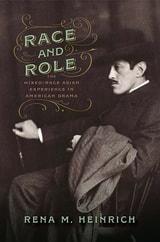
Race and Role
The Mixed-Race Asian Experience in American DramaRena M. Heinrich
Rutgers University Press, 2023
Race and Role: The Mixed-Race Experience in American Drama traces the shifting identities of multiracial Asian figures in theater from the late-nineteenth century to the present day and explores the ways that mixed-race Asian identity transforms our understanding of race. Mixed-Asian playwrights harness theater’s generative power to enact performances of “double liminality” and expose the absurd tenacity with which society clings to a tenuous racial scaffolding.

Remaining Relevant after Communism
The Role of the Writer in Eastern EuropeAndrew Baruch Wachtel
University of Chicago Press, 2005
According to Andrew Baruch Wachtel, the fall of the Berlin Wall and the creation of fledgling societies in Eastern Europe brought an end to the conditions that put the region's writers on a pedestal. In the euphoria that accompanied democracy and free markets, writers were liberated from the burden of grandiose political expectations. But no group is happy to lose its influence: despite recognizing that their exalted social position was related to their reputation for challenging political oppression, such writers have worked hard to retain their status, inventing a series of new strategies for this purpose. Remaining Relevant after Communism considers these strategies—from pulp fiction to public service—documenting what has happened on the East European scene since 1989.
Rolling Transition and the Role of Intellectuals
The Case of HungaryAndrás Bozóki
Central European University Press, 2022
Utilizing a new and original framework for examining the role of intellectuals in countries transitioning to democracy, Bozóki analyses the rise and fall of dissident intellectuals in Hungary in the late 20th century. He shows how that framework is applicable to other countries too as he forensically examines their activities.
Bozóki argues that the Hungarian intellectuals did not become a ‘New Class’. By rolling transition, he means an incremental, non-violent, elite driven political transformation which is based on the rotation of agency, and it results in a new regime. This is led mainly by different groups of intellectuals who do not construct a vanguard movement but create an open network which might transform itself into different political parties. Their roles changed from dissidents to reformers, to movement organizers and negotiators through the periods of dissidence, open network building, roundtable negotiations, parliamentary activities, and new movement politics.
Through the prism of political sociology, the author focuses on the following questions: Who were the dissident intellectuals and what did they want? Under what conditions do intellectuals rebel and what are the patterns of their protest? This book will be of interest to students, researchers, and public intellectuals around the world aiming to promote human rights and democracy.
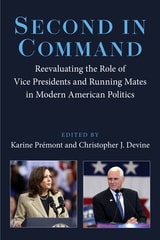
Second in Command
Reevaluating the Role of Vice Presidents and Running Mates in Modern American PoliticsEdited by Karine Prémont and Christopher J. Devine
University of Michigan Press, 2026
In recent years, the office of the vice president has become a focal point of presidential politics and governance. From the emergence of the modern vice presidency under Walter Mondale to Mike Pence’s and Kamala Harris’s dramatic influence on the outcome of the 2020 election, Second in Command explores how vice presidents and vice-presidential candidates have shaped the direction of the country and changed American politics. The frenzy of speculation surrounding the “veepstakes” every four years and extensive media coverage of the vice-presidential debate may seem odd, given the vice presidency’s limited constitutional powers and dismal public reputation.
Dispelling the myth that the vice presidency is a powerless or merely ceremonial role, Second in Command draws on the multidisciplinary expertise of more than a dozen leading vice-presidential scholars to reveal the complex, consequential, and often misunderstood nature of the office. With accessible language and vivid examples, it traces the transformation of vice-presidential power over the past half-century, reveals the evolving electoral significance of vice-presidential running mates, and highlights the need for a deeper public understanding of these pivotal figures. Chapters employ a range of qualitative and quantitative methodologies, including elite interviews, archival research, case studies, and advanced statistical modeling to cover topics such as gender and media effects in running mate selection and the representation of vice presidents in popular culture. This book offers a fresh, engaging, and essential perspective on a vital institution at the heart of American democracy.

Selling War
The Role of the Mass Media in Hostile Conflicts from World War I to the "War on Terror"Edited by Josef Seethaler, Matthias Karmasin, Gabriele Melischek, and Romy Wöhlert
Intellect Books, 2013
Shaping Language Policy in the U.S.
The Role of Composition StudiesScott Wible
Southern Illinois University Press, 2013
In Shaping Language Policy in the U.S.: The Role of Composition Studies, author Scott Wible explores the significance and application of two of the Conference on College Composition and Communication’s key language policy statements: the 1974 Students’ Right to Their Own Language resolution and the 1988 National Language Policy. Wible draws from a wealth of previously unavailable archived material and professional literature to offer for the first time a comprehensive examination of these policies and their legacies that continue to shape the worlds of rhetoric, politics, and composition.
Wible demonstrates the continued relevance of the CCCC’s policies, particularly their role in influencing the recent, post-9/11 emergence of a national security language policy. He discusses in depth the role the CCCC’s language policy statements can play in shaping the U.S. government’s growing awareness of the importance of foreign language education, and he offers practical discussions of the policies’ pedagogical, professional, and political implications for rhetoric and composition scholars who engage contemporary debates about the politics of linguistic diversity and language arts education in the United States. Shaping Language Policy in the U.S. reveals the numerous ways in which the CCCC language policies have usefully informed educators’ professional practices and public service and investigates how these policies can continue to guide scholars and teachers in the future.
Supreme Court and Judicial Choice
The Role of Provisional Review in a DemocracyPaul R. Dimond
University of Michigan Press, 1989
Supreme Court and Judicial Choice
The Role of Provisional Review in a DemocracyPaul R. Dimond
University of Michigan Press, 1989
Sustainable Food Systems
The Role of the CityRobert Biel
University College London, 2016
The Holy Spirit in Luke-Acts
The Role of the ReaderMarco Wittenberg
Central European University Press, 2026

The Role of 6G and Beyond on the Road to Net-Zero Carbon
Muhammad Ali Imran
The Institution of Engineering and Technology, 2023
The Role of Foreign Direct Investment in East Asian Economic Development
Edited by Takatoshi Ito and Anne O. Krueger
University of Chicago Press, 2000
The Role of Government in the History of Economic Thought
2005 Supplement, Volume 37Steven G. Medema and Peter Boettke
Duke University Press, 0
The Role of Innovation and Entrepreneurship in Economic Growth
Edited by Michael J. Andrews, Aaron Chatterji, Josh Lerner, and Scott Stern
University of Chicago Press, 2022
We live in an era in which innovation and entrepreneurship seem ubiquitous, particularly in regions like Silicon Valley, Boston, and the Research Triangle Park. But many metrics of economic growth, such as productivity growth and business dynamism, have been at best modest in recent years. The resolution of this apparent paradox is dramatic heterogeneity across sectors, with some industries seeing robust innovation and entrepreneurship and others seeing stagnation. By construction, the impact of innovation and entrepreneurship on overall economic performance is the cumulative impact of their effects on individual sectors. Understanding the potential for growth in the aggregate economy depends, therefore, on understanding the sector-by-sector potential for growth. This insight motivates the twelve studies of different sectors that are presented in this volume. Each study identifies specific productivity improvements enabled by innovation and entrepreneurship, for example as a result of new production technologies, increased competition, or new organizational forms. These twelve studies, along with three synthetic chapters, provide new insights on the sectoral patterns and concentration of the contributions of innovation and entrepreneurship to economic growth.
The Role of the Educational Interpreter
Perceptions of Administrators and TeachersStephen B. Fitzmaurice
Gallaudet University Press, 2021
Through a series of qualitative interviews and quantitative questionnaires with district administrators, school administrators, general education teachers, and teachers of the deaf, Fitzmaurice documents their perceptions of educational interpreters. Findings from the data reveal the perceptions of administrators and teachers set the stage for role ambiguity, role conflicts, and subsequent role overload for educational interpreters. Fitzmaurice elaborates on the implications of the research, and also provides concrete recommendations for researchers and practitioners, including an emphasis on the importance of involving the Deaf community in this work. This volume aims to offer clarity on the role of the educational interpreter, and dispel the confusion and conflicts created by divergent perspectives. A shared understanding of the role of the educational interpreter will allow administrators, teachers, and interpreters to work collaboratively to improve educational outcomes for deaf students.
The Role of the Judge in International Trade Regulation
Experience and Lessons for the WTOThomas Cottier and Petros C. Mavroidis, Editors
University of Michigan Press, 2003
The book develops along three lines: the first a search for cases submitted to the WTO where the judge exceeded its authority; the second a comparison of the WTO with the operations of national judicial systems having different levels of integration, specifically the United States (federal level) and the EC (quasi-federal level); and the third an exploration of directions for the future of dispute settlement in the WTO.
Reflecting the diversity of its contributors, this book addresses questions of economics, political science, and law, bringing an unusual level of multidisciplinarity to this topic and context. It is designed for both academic readers and practitioners, who will find it full of practical insights as well as rich and detailed analysis.
Thomas Cottier is Professor of European and International Economic Law, University of Bern, and Managing Director, World Trade Institute, University of Bern.
Petros C. Mavroidis is Professor of Law, University of Neuchâtel. He formerly worked in the Legal Affairs Division of the World Trade Organization.
Patrick Blatter is Mavroidiss scientific collaborator.
The Turn to Transcendence
The Role of Religion in the Twenty-First CenturyGlenn Olsen
Catholic University of America Press, 2010
U.S. Foreign Policy in the Middle East
The Role of Lobbies and Special Interest GroupsJanice J. Terry
Pluto Press, 2005
Israel is America's key ally in the Middle East, and helps maintain U.S. dominance in the region. This book shows how pro-Israeli lobbyists and domestic interest groups have been hugely successful in creating government and financial support for Israel. By contrast, Arab-American groups and Arab governments have had less success putting forward their agencies.
Janice J. Terry shows how special interest groups work, and why certain lobbying techniques are more effective than others. She sets this within the wider cultural context, showing how the U.S. media -- and the general public -- view the Middle East.
To explain how lobbies work, Terry draws on case studies including the Sinai accords and Camp David under Presidents Ford and Carter, the Conflict between Green and Turkish lobbies over Cyprus, and the major campaign against the Arab boycott.
Making use of primary sources, and unpublished material from various presidential libraries, this is a fascinating exposé of the role that lobby groups really play in determining U.S. foreign policy in the Middle East. It will be of interest to students of American politics and Middle East studies.
Whispers in the Echo Chamber
Folklore and the Role of Conspiracy Theory in Contemporary SocietyEdited by Jesse A. Fivecoate and Andrea Kitta
University of Wisconsin Press, 2025
This timely volume complements studies from political science, sociology, psychology, history, and more, while also crucially calling for the field of folklore studies to engage more assertively with conspiracy theories as a genre. Focusing on modern iterations of sometimes quite ancient conspiracy motifs and themes, the editors and contributors forcibly illustrate the crucial relevance of this prevalent and influential form of folklore in today’s interconnected world.
Contributors: Matthew D. Atkinson, John Bodner, Ian Brodie, Darin DeWitt, Bill Ellis, Jesse A. Fivecoate, Sandra Grady, David Guignion, Pavan Holur, Andrea Kitta, Afsane Rezaei, Vwani Roychowdhury, Lisa M. Ruch, Shadi Shahsavari, Timothy R. Tangherlini, Jeannie Banks Thomas, Anika Wilson

Whitman in Poland
The Reception and Role of the American Poet in Polish National CultureMarta A. Skwara
University of Iowa Press, 2020
Poland; how and why the mid-1950s saw the greatest flourish of interest in Whitman as he was read in terms of “socialist realism” in accordance with the political indoctrination of the era; how Whitman’s image in Poland evolved from his first Polish translators and enthusiasts on through modernist poets’ responses; and how reading multiple Polish translations of the same Whitman poem by different translators allows us to see changing cultural and comparative contexts. Readers will get a full picture of how Whitman has functioned as a presence in Polish prose and poetry, and even in cinema and television.