Results by title
15 books match the query 'Rural poor'
Broken Heartland
The Rise of America's Rural GhettoOsha Gray Davidson
University of Iowa Press, 1996
Between 1940 and the mid 1980s, farm production expenses in America's Heartland tripled, capital purchases quadrupled, interest payments jumped tenfold, profits fell by 10 percent, the number of farmers decreased by two-thirds, and nearly every farming community lost population, businesses, and economic stability. Growth for these desperate communities has come to mean low-paying part-time jobs, expensive tax concessions, waste dumps, and industrial hog farming, all of which come with environmental and psychological price tags. In Broken Heartland, Osha Gray Davidson chronicles the decline of the Heartland and its transformation into a bitterly divided and isolated regional ghetto. Through interviews with more than two hundred farmers, social workers, government officials, and scholars, he puts a human face on the farm crisis of the 1980s.
In this expanded edition Davidson emphasizes the tenacious power of far-right-wing groups; his chapter on these burgeoning rural organizations in the original edition of Broken Heartland was the first in-depth look—six years before of the Oklahoma City bombing—at the politics of hate they nurture. He also spotlights NAFTA, hog lots, sustainable agriculture, and the other battles and changes over the past six years in rural America.
Constructing Citizenship
Transnational Workers and Revolution on the Mexico-Guatemala Border, 1880--1950Catherine A. Nolan-Ferrell
University of Arizona Press, 2012
Governing the Excluded
Rural Livelihoods Beyond Coca in Colombia's Peace LaboratoryAlex Diamond
University of Chicago Press, 2026
The Colombian village of Briceño might, at first glimpse, look like many communities in the rural Global South. Many of the people living there rely on small-scale farming, even as a newly constructed hydroelectric dam threatens traditional livelihoods. Yet after decades where Briceño suffered from a bloody conflict, the village has more recently become central to the nation’s hopes for peace. In Governing the Excluded, sociologist Alex Diamond shares a closer look at Briceño and offers unique insight not only into the contemporary Colombian state but to how people across the Global South are struggling to maintain rural livelihoods amid economic dispossession.
Governing the Excluded describes a landmark peace process between the Colombian government and the radical FARC guerrillas from the perspective of Colombian farmers, drawing links between economic transformation, drug economies, and armed conflict. Exclusion from global markets for traditional crops like coffee first pushed farmers to grow coca, the raw material for cocaine. This ushered in an era of violent conflict for control of the illicit economy, while farmers continued to be priced out of legal markets. In exchange for peace and state protection, farmers ultimately agreed to sacrifice profitable coca. But with its disappearance, they now find themselves dependent on the state: for machinery to maintain the roads they need to get legal harvests to market, municipal jobs that are the only decent work available, and for public resources to subsidize food crops with razor-thin profit margins. Ongoing economic struggles in the legal sector make the state’s newfound authority tenuous, as some villagers replant coca, abandon the village for uncertain urban futures, or join a rearmed guerrilla group.
Informed by deep ethnographic research and firsthand stories from Briceño residents, Governing the Excluded shows that when it comes to the forces driving dispossession—be they international corporate megaprojects, global food prices, or national initiatives to replace coca cultivation—state authority goes only so far as its ability to sustain local livelihoods.
How The Rural Poor Got Power
Narrative Of A Grass-Roots OrganizerPaul Wellstone
University of Minnesota Press, 2003
The gripping story behind Paul Wellstone’s progressive legacy
Before he was a senator, before he was a nationally known advocate for the disenfranchised and a tireless supporter of public policies to alleviate poverty, Paul Wellstone devoted his time and legendary energy to grassroots organizing. How the Rural Poor Got Power describes Wellstone’s experiences as a political activist in rural Minnesota. Working with senior citizens, struggling farmers, and single mothers, Wellstone created a coalition to address transportation, access to health care, and welfare benefits issues. This narrative features interviews with citizens and shows Wellstone observing and participating in the ideals to which he devoted his life: helping poor people gain a political voice.
Invisible China
How the Urban-Rural Divide Threatens China’s RiseScott Rozelle and Natalie Hell
University of Chicago Press, 2020
As the glittering skyline in Shanghai seemingly attests, China has quickly transformed itself from a place of stark poverty into a modern, urban, technologically savvy economic powerhouse. But as Scott Rozelle and Natalie Hell show in Invisible China, the truth is much more complicated and might be a serious cause for concern.
China’s growth has relied heavily on unskilled labor. Most of the workers who have fueled the country’s rise come from rural villages and have never been to high school. While this national growth strategy has been effective for three decades, the unskilled wage rate is finally rising, inducing companies inside China to automate at an unprecedented rate and triggering an exodus of companies seeking cheaper labor in other countries. Ten years ago, almost every product for sale in an American Walmart was made in China. Today, that is no longer the case. With the changing demand for labor, China seems to have no good back-up plan. For all of its investment in physical infrastructure, for decades China failed to invest enough in its people. Recent progress may come too late. Drawing on extensive surveys on the ground in China, Rozelle and Hell reveal that while China may be the second-largest economy in the world, its labor force has one of the lowest levels of education of any comparable country. Over half of China’s population—as well as a vast majority of its children—are from rural areas. Their low levels of basic education may leave many unable to find work in the formal workplace as China’s economy changes and manufacturing jobs move elsewhere.
In Invisible China, Rozelle and Hell speak not only to an urgent humanitarian concern but also a potential economic crisis that could upend economies and foreign relations around the globe. If too many are left structurally unemployable, the implications both inside and outside of China could be serious. Understanding the situation in China today is essential if we are to avoid a potential crisis of international proportions. This book is an urgent and timely call to action that should be read by economists, policymakers, the business community, and general readers alike.
Lives of Dust and Water
An Anthropology of Change and Resistance in Northwestern MexicoMaría Luz Cruz-Torres
University of Arizona Press, 2004
A political ecology of human survival in one of the most important ecological regions of Mexico, it describes how these communities contest environmental degradation and economic impoverishment arising from political and economic forces beyond their control. María Luz Cruz-Torres evokes the rich and varied experiences of the people who live in the villages of Celaya and El Cerro, showing how they invent and utilize their own social capital to emerge as whole persons in the face of globalization. She traces the histories of the two villages to illustrate the complex variation involved in community formation and to show how people respond to and utilize Mexican law and reform. Surrounded by limited resources, poverty, illness, sudden death, and daily oppression, these men and women create innovative social and cultural forms that mitigate these impacts.
Cruz-Torres reveals not only how they manage to survive in the midst of horrendous circumstances but also how they transcend those impediments with dignity. She details the participation of household members in the subsistence, formal, and informal sectors of the economy, and how women use a variety of resources to guarantee their families’ survival. A sometimes tragic but ultimately vibrant story of human resistance, Lives of Dust and Water offers an important look at a little-studied but dynamically developing region of Mexico. It contributes to a more precise understanding of how rural coastal communities in Mexico emerged and continue to develop and adjust to the uncertainties of the globalizing world.
Not Quite White
White Trash and the Boundaries of WhitenessMatt Wray
Duke University Press, 2006
Of crucial importance are the ideas about poor whites that circulated through early-twentieth-century public health campaigns, such as hookworm eradication and eugenic reforms. In these crusades, impoverished whites, particularly but not exclusively in the American South, were targeted for interventions by sanitarians who viewed them as “filthy, lazy crackers” in need of racial uplift and by eugenicists who viewed them as a “feebleminded menace” to the white race, threats that needed to be confined and involuntarily sterilized.
Part historical inquiry and part sociological investigation, Not Quite White demonstrates the power of social categories and boundaries to shape social relationships and institutions, to invent groups where none exist, and to influence policies and legislation that end up harming the very people they aim to help. It illuminates not only the cultural significance and consequences of poor white stereotypes but also how dominant whites exploited and expanded these stereotypes to bolster and defend their own fragile claims to whiteness.
Poor Whites of the Antebellum South
Tenants and Laborers in Central North Carolina and Northeast MississippiCharles C. Bolton
Duke University Press, 1994
Looking at two specific regions--the "settled" central piedmont of North Carolina and the "frontier" of northeast Mississippi--Bolton describes how poor whites played an important, though circumscribed, role in the local economy. Dependent on temporary employment, they represented a troubling presence in a society based on the principles of white independence and black slavery. Although perceived by southern leaders as a threat, poor whites, Bolton argues, did not form a political alliance with either free or enslaved blacks because of numerous factors including white racism, kinship ties, religion, education, and mobility. A concluding discussion of the crisis of 1860-61 examines the rejection of secession by significant numbers of poor whites, as well as the implications for their future as the Old South turned toward the new.
Poor Whites of the Antebellum South sheds light on a group often neglected in southern history. It is an important contribution that will be of interest to all students and historians of the American South.
Poverty and the Quest for Life
Spiritual and Material Striving in Rural IndiaBhrigupati Singh
University of Chicago Press, 2015
The Indian subdistrict of Shahabad, located in the dwindling forests of the southeastern tip of Rajasthan, is an area of extreme poverty. Beset by droughts and food shortages in recent years, it is the home of the Sahariyas, former bonded laborers, officially classified as Rajasthan’s only “primitive tribe.” From afar, we might consider this the bleakest of the bleak, but in Poverty and the Quest for Life, Bhrigupati Singh asks us to reconsider just what quality of life means. He shows how the Sahariyas conceive of aspiration, advancement, and vitality in both material and spiritual terms, and how such bridging can engender new possibilities of life.
Singh organizes his study around two themes: power and ethics, through which he explores a complex terrain of material and spiritual forces. Authority remains contested, whether in divine or human forms; the state is both despised and desired; high and low castes negotiate new ways of living together, in conflict but also cooperation; new gods move across rival social groups; animals and plants leave their tracks on human subjectivity and religiosity; and the potential for vitality persists even as natural resources steadily disappear. Studying this milieu, Singh offers new ways of thinking beyond the religion-secularism and nature-culture dichotomies, juxtaposing questions about quality of life with political theologies of sovereignty, neighborliness, and ethics, in the process painting a rich portrait of perseverance and fragility in contemporary rural India.

River Life and the Upspring of Nature
Naveeda Khan
Duke University Press, 2023

Seasons of Hunger
Fighting Cycles of Starvation Among the World's Rural PoorStephen Devereux, Samuel Hauenstein Swan, and Bapu Vaitla
Pluto Press, 2008
Every year, millions of the rural poor suffer from predictable and preventable seasonal hunger. This hunger is less dramatic but no less damaging than the starvation associated with famines, wars and natural disasters. Seasons of Hunger explores why the world does not react to a crisis that we know will continue year after year.
Seasonal hunger is caused by annual cycles of shrinking food stocks, rising prices, and lack of income. This hidden hunger pushes millions of children to the brink of starvation every year, permanently stunting their physical and cognitive development, weakening their immune systems and opening the door for killer diseases. Action Against Hunger argue that ending seasonal hunger could save millions of young lives and is key to achieving the Millennium Development Goals. This book documents seasonal hunger in four countries - India, Malawi, Mali and Myanmar - including personal stories and country-wide data which shows the magnitude of the problem.
The authors also find encouraging examples of interventions designed to address seasonality - initiatives led by governments, donors and NGOs, and poor people themselves - and propose a package of advocacy messages that could contribute to the global eradication of seasonal hunger. This book will be a valuable resource for journalists, policy makers, NGO members and students of development studies.
The Fundamental Institution
Poverty, Social Welfare, and Agriculture in American Poor FarmsMegan Birk
University of Illinois Press, 2022
In-depth and innovative, The Fundamental Institution offers an overdue portrait of rural social welfare in the United States.
The Paradox of Agrarian Change
Food Security and the Politics of Social Protection in IndonesiaEdited by John McCarthy, Andrew McWilliam, and Gerben Nooteboom
National University of Singapore Press, 2023
Economic growth in the middle-income countries of Southeast Asia over the past few decades has been widely praised for reducing poverty in both absolute and relative terms. Indonesia is a prime example. But while poverty has declined in Indonesia, patterns of food poverty persist across Indonesia. What explains this troubling paradox? How does it relate to Indonesia’s enthusiastic embrace of the “entitlements revolution,” the use of direct cash transfers as a tool for reducing poverty and building social inclusion?
This book analyzes the nature and social consequences of economic development and agrarian change processes in rural Indonesia in relation to the scope and effectiveness of Indonesia’s social protection programs. The findings are based on a series of extensive ground-up case studies in Indonesian communities in a variety of eco-agrarian settings that seek to understand the drivers of food insecurity and vulnerability at a household level. The results show that while high-value farming, diversification, and migration may offer a means of economic progress for poor households, opportunities for accumulation are limited. This, the authors show, is due to the way class, gender, and power work in remote local contexts, and the fact that much surplus income is used for enhanced consumption and changing lifestyles. There are few signs of the classical structural transformation of the countryside which has historically been considered the most decisive pathway out of rural poverty. The authors conclude that social assistance is unlikely to counter the persistence of rural poverty, food insecurity, and precarity in the absence of other redistributive strategies that shift the structural drivers of inequality.
Those Who Work, Those Who Don't
Poverty, Morality, and Family in Rural AmericaJennifer Sherman
University of Minnesota Press, 2009
When the rural poor prioritize issues such as the right to bear arms, and disapprove of welfare despite their economic concerns, they are often dismissed as uneducated and backward by academics and political analysts. In Those Who Work, Those Who Don't, Jennifer Sherman offers a much-needed sympathetic understanding of poor rural Americans, persuasively arguing that the growing cultural significance of moral values is a reasonable and inevitable response to economic collapse and political powerlessness.
Those Who Work, Those Who Don't is based on the intimate interviews and in-depth research Sherman conducted while spending a year living in "Golden Valley," a remote logging town in Northern California. Economically devastated by the 1990 ruling that listed the northern spotted owl as a threatened species, Golden Valley proved to be a rich case study for Sherman. She looks at how the members of the community coped with downward mobility caused by the loss of timber industry jobs and examines a wide range of reactions. She shows how substance abuse, domestic violence, and gender roles fluctuated under the town's economic strain.
Compellingly written, shot through with honesty and empathy, Those Who Work, Those Who Don't is a rare firsthand account that studies the rural poor. As incomes erode and the American dream becomes more and more inaccessible, Sherman reveals that moral values and practices become a way for the poor to gain status and maintain a sense of dignity in the face of economic ruin.
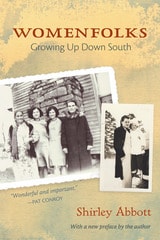
Womenfolks
Growing Up Down SouthShirley Abbott
University of Arkansas Press, 2017