Results by title
41 books match the query 'Sartre, Jean-Paul'
A Commentary on Jean-Paul Sartre's Critique of Dialectical Reason, Volume 1, Theory of Practical Ensembles
Joseph S. Catalano
University of Chicago Press, 1986
Adventures of the Dialectic
Maurice Merleau-Ponty
Northwestern University Press, 1973
Aquinas and Sartre
On Freedom, Personal Identity, and the Possibility of HappinessStephen Wang
Catholic University of America Press, 2009
Authentically Jewish
Identity, Culture, and the Struggle for RecognitionStuart Z. Charmé
Rutgers University Press, 2022
Author Stuart Z. Charmé explores how debates over authenticity and struggles for recognition are a key to understanding a wide range of controversies between Orthodox and liberal Jews, Zionist and diaspora Jews, white Jews and Jews of color, as well as the status of intermarried and messianic Jews, and the impact of Jewish genetics. In addition, it discusses how and when various cultural practices and traditions such as klezmer music, Israeli folk dance, Jewish yoga and meditation, and others are recognized as authentically Jewish, or not.
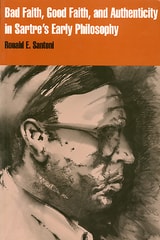
Bad Faith Good Faith
Ronald E. Santoni
Temple University Press, 1995
From the beginning to the end of his philosophizing, Sartre appears to have been concerned with "bad faith"—our "natural" disposition to flee from our freedom and to lie to ourselves. Virtually no aspect of his monumental system has generated more attention. Yet bad faith has been plagued by misinterpretation and misunderstanding. At the same time, Sartre's correlative concepts of "good faith" and "authenticity" have suffered neglect or insufficient attention, or been confused and wrongly identified by Sartre scholars, even by Sartre himself.
Ronald E. Santoni takes on the challenge of distinguishing these concepts, and of showing whether either or both existential "attitudes" afford deliverance from the hell of Sartre's bad faith. He offers the first fill-scale analysis, reconstruction, and differentiation of these ways of existing as they develop in Sartre's early works (1937-1947).
Although he attempts to redeem Sartre's slighted concept of good faith, Santoni warns that it must not be viewed interchangeably with authenticity. Further, in one of the earliest and most sustained studies of Sartre's Notebooks for an Ethics available in English, Santoni shows how Sartre's posthumously published notes for an "ethics of Salvation" confirm his differentiation and argument. The way out of Sartrean hell, Santoni insists, is authenticity—living "with fidelity" to our unjustifiable freedom and assuming responsibility for it.
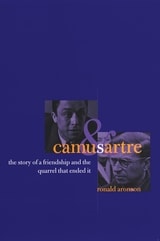
Camus and Sartre
The Story of a Friendship and the Quarrel that Ended ItRonald Aronson
University of Chicago Press, 2003
Albert Camus and Jean-Paul Sartre first met in 1943, during the German occupation of France. The two became fast friends. Intellectual as well as political allies, they grew famous overnight after Paris was liberated. As playwrights, novelists, philosophers, journalists, and editors, the two seemed to be everywhere and in command of every medium in post-war France. East-West tensions would put a strain on their friendship, however, as they evolved in opposing directions and began to disagree over philosophy, the responsibilities of intellectuals, and what sorts of political changes were necessary or possible.
As Camus, then Sartre adopted the mantle of public spokesperson for his side, a historic showdown seemed inevitable. Sartre embraced violence as a path to change and Camus sharply opposed it, leading to a bitter and very public falling out in 1952. They never spoke again, although they continued to disagree, in code, until Camus's death in 1960.
In a remarkably nuanced and balanced account, Aronson chronicles this riveting story while demonstrating how Camus and Sartre developed first in connection with and then against each other, each keeping the other in his sights long after their break. Combining biography and intellectual history, philosophical and political passion, Camus and Sartre will fascinate anyone interested in these great writers or the world-historical issues that tore them apart.
Forms in the Abyss
A Philosophical Bridge Between Sartre and DerridaSteve Martinot
Temple University Press, 2007
Martinot argues that a bridge between these two thinkers can be constructed. He demonstrates that one can use the critical tools provided by Derrida, and the forms of discourse and reasoning developed by Sartre, to set the two in dialogue with each other. In the process, Martinot develops a theory of dialogue that incorporates both ethics and form and contributes a new way of thinking about critical and social theory. More importantly, he adds a new ethical and political imperative to postmodern thought that many dritics have often found missing in the works of thinkers like Derrida.
Hope Now
The 1980 InterviewsJean-Paul Sartre and Benny Lévy
University of Chicago Press, 1996
Shortly before his death, Sartre confirmed the authenticity of the interviews and their puzzling content. Over the past fifteen years, it has become the task of Sartre scholars to unravel and understand them. Presented in this fresh, meticulous translation, the interviews are framed by two provocative essays from Benny Levy himself, accompanied by a comprehensive introduction from noted Sartre authority Ronald Aronson. Placing the interviews in proper biographical and philosophical perspective, Aronson demonstrates that the thought of both Sartre and Levy reveals multiple intentions that taken together nevertheless confirm and add to Sartre's overall philosophy. This absorbing volume at last contextualizes and elucidates the final thoughts of a brilliant and influential mind.
Jean-Paul Sartre (1906-1980) was offered, but declined, the Nobel Prize for literature in 1964. His many works of fiction, drama, and philosophy include the monumental study of Flaubert, The Family Idiot, and The Freud Scenario, both published in translation by the University of Chicago Press.

Jean-Paul Sartre
Hated Conscience of His Century, Volume 1: Protestant or Protester?John Gerassi
University of Chicago Press, 1989
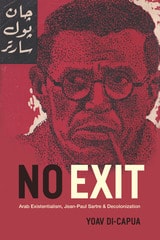
No Exit
Arab Existentialism, Jean-Paul Sartre, and DecolonizationYoav Di-Capua
University of Chicago Press, 2018
By closely following the remarkable career of Arab existentialism, Yoav Di-Capua reconstructs the cosmopolitan milieu of the generation that tried to articulate a political and philosophical vision for an egalitarian postcolonial world. He tells this story by touring a fascinating selection of Arabic and Hebrew archives, including unpublished diaries and interviews. Tragically, the warm and hopeful relationships forged between Arab intellectuals, Sartre, Simone de Beauvoir, and others ended when, on the eve of the 1967 war, Sartre failed to embrace the Palestinian cause. Today, when the prospect of global ethical engagement seems to be slipping ever farther out of reach, No Exit provides a timely, humanistic account of the intellectual hopes, struggles, and victories that shaped the Arab experience of decolonization and a delightfully wide-ranging excavation of existentialism’s non-Western history.
Notebooks for an Ethics
Jean-Paul Sartre
University of Chicago Press, 1992
In the famous conclusion to Being and Nothingness, Sartre announced that he would devote his next philosophical work to moral problems. Although he worked on this project in the late 1940s, Sartre never completed it to his satisfaction, and it remained unpublished until after his death in 1980. Presented here for the first time in English, the Notebooks reveal Sartre at his most productive, crafting a masterpiece of philosophical reflection that can easily stand alongside his other great works.
Sartre grapples anew here with such central issues as "authenticity" and the relation of alienation and freedom to moral values. Exploring fundamental modes of relating to the Other—among them violence, entreaty, demand, appeal, refusal, and revolt—he articulates the necessary transition from individualism to historical consciousness. This work thus forms an important bridge between the early existentialist Sartre and the later Marxist social thinker of the Critique of Dialectical Reason. The Notebooks themselves are complemented here by two additional essays, one on "the good and subjectivity," the other on the oppression of blacks in the United States.
With publication of David Pellauer's lucid translation, English-speaking readers will be able to appreciate this important contribution to moral philosophy and the history of ethics.
Jean-Paul Sartre (1906-1980) was offered, but declined, the Nobel Prize for literature in 1964. His many works of fiction, drama, and philosophy include the monumental study of Flaubert, The Family Idiot, and The Freud Scenario, both published in translation by the University of Chicago Press.
Occasional Philosophical Writings
Jean-Paul Sartre
Seagull Books, 2021
Iconic French novelist, playwright, and essayist Jean-Paul Sartre is widely recognized as one of the most important philosophers of the twentieth century, and his work has remained relevant and thought-provoking through the decades. The Seagull Sartre Library now presents some of his most incisive philosophical, cultural, and literary critical essays in twelve newly designed and affordable editions.
The four essays of varying length assembled in this volume bear witness to Sartre’s preoccupation with philosophers and their work. In these pages he examines Descartes’s concept of freedom; comments on a fundamental idea in Husserl’s phenomenology: intentionality; writes a mixed review of Denis de Rougemont’s monumental Love in the Western World; and provides an extensive critical analysis of the work of Brice Parain, one of France’s leading philosophers of language.
On American Fiction
Jean-Paul Sartre
Seagull Books, 2021
Iconic French novelist, playwright, and essayist Jean-Paul Sartre is widely recognized as one of the most important philosophers of the twentieth century, and his work has remained relevant and thought-provoking through the decades. The Seagull Sartre Library now presents some of his most incisive philosophical, cultural, and literary critical essays in twelve newly designed and affordable editions.
Sartre’s engagement with the literature of his day extended well beyond the works of his French contemporaries. This short volume testifies to his astonishing grasp of the nuances of American fiction, as he analyzes three of the most important twentieth-century writers: John Dos Passos, Vladimir Nabokov, and William Faulkner, whose “humanism,” writes Sartre, “is the only acceptable sort.”
On Bataille and Blanchot
Jean-Paul Sartre
Seagull Books, 2021
Iconic French novelist, playwright, and essayist Jean-Paul Sartre is widely recognized as one of the most important philosophers of the twentieth century, and his work has remained relevant and thought-provoking through the decades. The Seagull Sartre Library now presents some of his most incisive philosophical, cultural, and literary critical essays in twelve newly designed and affordable editions.
“There is a crisis of the essay,” begins Sartre as he ventures into a long analysis of the work of one of his contemporaries who he argues might save this form: Georges Bataille. From there, Sartre moves on in this compact volume to consider Aminadab, the most important work of another hugely influential philosopher, Maurice Blanchot, through whom, writes Sartre, “the literature of the fantastic continues the steady progress that will inevitably unite it, ultimately, with what it has always been.”
On Camus
Jean-Paul Sartre
Seagull Books, 2021
Iconic French novelist, playwright, and essayist Jean-Paul Sartre is widely recognized as one of the most important philosophers of the twentieth century, and his work has remained relevant and thought-provoking through the decades. The Seagull Sartre Library now presents some of his most incisive philosophical, cultural, and literary critical essays in twelve newly designed and affordable editions.
Sartre met Albert Camus in Occupied France in 1943, and from the start, they were an odd pair: one from the upper reaches of French society; the other, a pied-noir born into poverty in Algeria. The love of “freedom,” however, quickly bound them in friendship, while their fight for justice united them politically. But in 1951 the two writers fell out spectacularly over their literary and political views, their split a media sensation in France. This volume holds up a remarkable mirror to that fraught relationship. It features an early review by Sartre of Camus’s The Stranger; his famous 1952 letter to Camus that begins, “Our friendship was not easy, but I shall miss it”; and a moving homage written after Camus’s sudden death in 1960.
On Merleau-Ponty
Jean-Paul Sartre
Seagull Books, 2021
Iconic French novelist, playwright, and essayist Jean-Paul Sartre is widely recognized as one of the most important philosophers of the twentieth century, and his work has remained relevant and thought-provoking through the decades. The Seagull Sartre Library now presents some of his most incisive philosophical, cultural, and literary critical essays in twelve newly designed and affordable editions.
This volume consists of a single long essay that analyzes the work of Maurice Merleau-Ponty (1908–1961), who was the leading phenomenological philosopher in France and the lead editor of the influential leftist journal Les Temps modernes, which he established with Sartre and Simone de Beauvoir in 1945. Written in the wake of Merleau-Ponty’s death, this essay is a moving tribute from one major philosopher to another.
On Modern Art
Jean-Paul Sartre
Seagull Books, 2021
Iconic French novelist, playwright, and essayist Jean-Paul Sartre is widely recognized as one of the most important philosophers of the twentieth century, and his work has remained relevant and thought-provoking through the decades. The Seagull Sartre Library now presents some of his most incisive philosophical, cultural, and literary critical essays in twelve newly designed and affordable editions.
Sartre was a prodigious commentator on contemporary art, as is evident from the short but incisive essays that make up this important volume. Sartre examines here the work of a wide range of artists, including recognized masters such as Alberto Giacometti, Alexander Calder, and André Masson, alongside unacknowledged greats like French painter Robert Lapoujade and German painter-photographer Wols.
On Novels and Novelists
Jean-Paul Sartre
Seagull Books, 2021
Iconic French novelist, playwright, and essayist Jean-Paul Sartre is widely recognized as one of the most important philosophers of the twentieth century, and his work has remained relevant and thought-provoking through the decades. The Seagull Sartre Library now presents some of his most incisive philosophical, cultural, and literary critical essays in twelve newly designed and affordable editions.
In this collection of brief, insightful essays, we find ourselves face to face with Sartre the literary critic, as he carefully examines the works of renowned French writers such as François Mauriac, Nathalie Sarraute, Jean Giraudoux, and Jules Renard. Most moving is an essay on André Gide, written right after his death, in which Sartre writes, “We thought him scared and embalmed; he dies and we discover how alive he was.”
On Poetry
Jean-Paul Sartre
Seagull Books, 2021
Iconic French novelist, playwright, and essayist Jean-Paul Sartre is widely recognized as one of the most important philosophers of the twentieth century, and his work has remained relevant and thought-provoking through the decades. The Seagull Sartre Library now presents some of his most incisive philosophical, cultural, and literary critical essays in twelve newly designed and affordable editions.
On Poetry includes two long essays in this slim volume. The first explores the Négritude poetry movement by analyzing the work of several Black poets of the time. The second is a meditation on the poetry of renowned French author Francis Ponge (1899–1988), who, influenced by surrealism, developed his unique form of prose poetry.
On Revolution
Jean-Paul Sartre
Seagull Books, 2021
Iconic French novelist, playwright, and essayist Jean-Paul Sartre is widely recognized as one of the most important philosophers of the twentieth century, and his work has remained relevant and thought-provoking through the decades. The Seagull Sartre Library now presents some of his most incisive philosophical, cultural, and literary critical essays in twelve newly designed and affordable editions.
On Revolution consists of a long essay in two parts in which Sartre dwells upon the “myth” of revolution and goes on to analyze revolutionary ideas in fascism and, especially, Marxism. In the second essay, Sartre examines the figure of the artist and his conscience, especially in relation to communism.
Political Fictions
Jean-Paul Sartre
Seagull Books, 2021
Iconic French novelist, playwright, and essayist Jean-Paul Sartre is widely recognized as one of the most important philosophers of the twentieth century, and his work has remained relevant and thought-provoking through the decades. The Seagull Sartre Library now presents some of his most incisive philosophical, cultural, and literary critical essays in twelve newly designed and affordable editions.
Political Fictions includes Sartre’s long foreword to André Gorz’s The Traitor, which has often been called the most intimate and profound book to emerge from the existentialist movement. Sartre also presents a detailed portrait of his friend and fellow writer Paul Nizan (1905–1940), once a committed communist, who died fighting the Nazis at the Battle of Dunkirk. Also featured here is Sartre’s famous foreword to Nizan’s novel The Conspiracy, which made the novel famous on its republication in the 1960s, when it was adopted as an iconic text during the events of May ’68.

Post-War Reflections
Jean-Paul Sartre
Seagull Books, 2021
Iconic French novelist, playwright, and essayist Jean-Paul Sartre is widely recognized as one of the most important philosophers of the twentieth century, and his work has remained relevant and thought-provoking through the decades. The Seagull Sartre Library now presents some of his most incisive philosophical, cultural, and literary critical essays in twelve newly designed and affordable editions.
Post-War Reflections collects eight of Sartre’s essays that were written in his most creative period, just after World War II. Sartre’s extraordinary range of engagement is manifest in this collection, which features writings on postwar America, the social impact of war in Europe, contemporary philosophy, race, and avant-garde art.

Practice, Power, and Forms of Life
Sartre’s Appropriation of Hegel and MarxTerry Pinkard
University of Chicago Press, 2022
Jean-Paul Sartre’s Critique of Dialectical Reason, released to great fanfare in 1960, has since then receded in philosophical visibility. As Sartre’s reputation is now making a comeback, it is time for a reappraisal of his later work. In Practice, Power, and Forms of Life, philosopher Terry Pinkard interprets Sartre’s late work as a fundamental reworking of his earlier ideas, especially in terms of his understanding of the possibility of communal action as genuinely free, which the French philosopher had previously argued was impossible.
Pinkard reveals how Sartre was drawn back to Hegel, a move that was itself incited by Sartre’s newfound interest in Marxism. Pinkard argues that Sartre constructed a novel position on freedom that has yet to be adequately taken up and analyzed within philosophy and political theory. Through Sartre, Pinkard advances an argument that contributes to the history of philosophy as well as key debates on action and freedom.
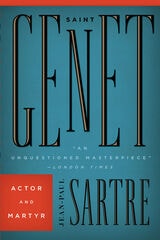
Saint Genet
Actor and MartyrJean-Paul Sartre
University of Minnesota Press, 2012
Saint Genet is Jean-Paul Sartre’s classic biography of Jean Genet—thief, convict, and great artist—a character of almost legendary proportions whose influence grows stronger with time. Bringing together two of the century’s greatest minds and artists, Saint Genet is at once a compelling psychological portrait, masterpiece of literary criticism, and one of Sartre’s most personal and inspired philosophical creations.
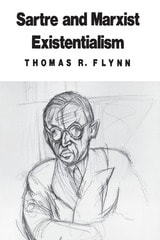
Sartre and Marxist Existentialism
The Test Case of Collective ResponsibilityThomas R. Flynn
University of Chicago Press, 1986
The study begins with an examination of the uses of "responsibility" in Being and Nothingness and in several postwar essays. Flynn then concentrates on the Critique of Dialectical Reason, offering a thorough analysis of the remarkable social theory Sartre constructs there. A masterful contribution to Sartre scholarship, Sartre and Marxist Existentialism will be of great interest to social and political philosophers involved in the debate over collective responsibility.
Sartre, Foucault, and Historical Reason, Volume One
Toward an Existentialist Theory of HistoryThomas R. Flynn
University of Chicago Press, 1997
A history, thought Foucault, should be a kind of map, a comparative charting of structural transformations and displacements. But for Sartre, authentic historical understanding demanded a much more personal and committed narrative, a kind of interpretive diary of moral choices and risks compelled by critical necessity and an exacting reality. Sartre's history, a rational history of individual lives and their intrinsic social worlds, was in essence immersed in biography.
In Volume One of this authoritative two-volume work, Thomas R. Flynn conducts a pivotal and comprehensive reconstruction of Sartrean historical theory, and provocatively anticipates the Foucauldian counterpoint to come in Volume Two.
Sartre, Foucault, and Historical Reason, Volume Two
A Poststructuralist Mapping of HistoryThomas R. Flynn
University of Chicago Press, 2005
A history, theorized Foucault, should be a kind of map, a comprehensive charting of structural transformations and displacements over time. Contrary to other Foucault scholars, Flynn proposes an "axial" rather than a developmental reading of Foucault's work. This allows aspects of Foucault's famous triad of knowledge, power, and the subject to emerge in each of his major works. Flynn maps existentialist categories across Foucault's "quadrilateral," the model that Foucault proposes as defining modernist conceptions of knowledge. At stake is the degree to which Sartre's thought is fully captured by this mapping, whether he was, as Foucault claimed, "a man of the nineteenth century trying to think in the twentieth."
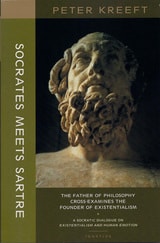
Socrates Meets Sartre
The Father of Philosophy Cross-examines the Founder of ExistentialismPeter Kreeft
St. Augustine's Press, 2005
Kreeft takes the reader through the world of existentialist philosophy, posing questions that challenge the concepts that Sartre proposed. Based on an imagination dialogue between Socrates and Sartre that takes place in the afterlife, this profound and witty book makes an entertaining and informative exploration of modern philosophy
“Peter Kreeft’s work is (1) unfailingly brilliant, (2) intellectually agile, (3) astonishingly perspicacious, (4) gloriously orthodox, (5) Chestertonian aphoristic.” – Thomas Howard, author of On Being Catholic
The Aftermath of War
Jean-Paul Sartre
Seagull Books, 2008
The Debate Between Sartre and Merleau-Ponty
Jon Stewart
Northwestern University Press, 1998
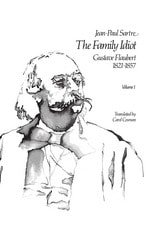
The Family Idiot
Gustave Flaubert, 1821-1857, Volume 1Jean-Paul Sartre
University of Chicago Press, 1981
"A man is never an individual," Sartre writes, "it would be more fitting to call him a universal singular. Summed up and for this reason universalized by his epoch, he in turn resumes it by reproducing himself in it as singularity. Universal by the singular universality of human history, singular by the universalizing singularity of his projects, he requires simultaneous examination from both ends." This is the method by which Sartre examines Flaubert and the society in which he existed.
Now this masterpiece is being made available in an inspired English translation that captures all the variations of Sartre's style—from the jaunty to the ponderous—and all the nuances of even the most difficult ideas. Volume 1 consists of Part One of the original French work, La Constitution, and is primarily concerned with Flaubert's childhood and adolescence.
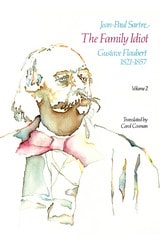
The Family Idiot
Gustave Flaubert, 1821-1857, Volume 2Jean-Paul Sartre
University of Chicago Press, 1987
Volume 2, consisting of the first book of part 2 of the original French work, takes the reader through Flaubert's adolescence well into his evolution as an artist. Sartre's approach to his complex subject, whether jaunty or ponderous, psychoanalytical or political, is captured in all of its rich variety of Carol Cosman's translation.
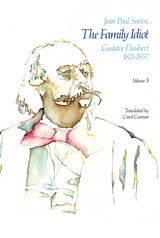
The Family Idiot
Gustave Flaubert, 1821-1857, Volume 3Jean-Paul Sartre
University of Chicago Press, 1989
Volume 3 consists of "School Years" and "Preneurosis," which are the second and third books of part 2 of the original French work. In vivid detail, Sartre renders Flaubert's secondary-school experiences and relationships: his part in a student rebellion against the faculty, his teenage infatuation with Romantic literature, his friendships and rivalries with his classmates, and the ironies inherent in the schoolboys' bourgeois existence. Sartre then discusses Flaubert's years at law school, where he studied at his father's insistence. This volume also contains Sartre's most sustained analysis of Madame Bovary. Sartre's approach to his complex subject, whether jaunty or judicious, psychoanalytical or political, is captured in all of its rich variety in Carol Cosman's translation.
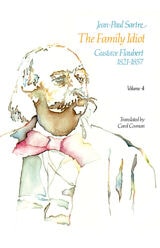
The Family Idiot
Gustave Flaubert, 1821-1857, Volume 4Jean-Paul Sartre
University of Chicago Press, 1991
Volume 4 consists of part three, books one and two, of the original French work. This volume, the fourth in a projected five-volume English-language edition, includes Sartre's discussion of the onset of Flaubert's illness, or neurosis, in 1844, and a significant reading of his L'Education sentimentale.
Sartre's approach to his complex subject, whether jaunty or judicious, psychoanalytic or political, is captured in all of its rich variety in Carol Cosman's translation.
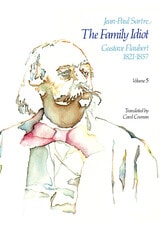
The Family Idiot
Gustave Flaubert, 1821-1857, Volume 5Jean-Paul Sartre
University of Chicago Press, 1993
That Sartre's study of Flaubert, The Family Idiot, is a towering achievement in intellectual history has never been disputed. Yet critics have argued about the precise nature of this novel or biography or "criticism-fiction" which is the summation of Sartre's philosophical, social, and literary thought. In the preface, Sartre writes: "The Family Idiot is the sequel to Search for a Method. The subject: what, at this point in time, can we know about a man? It seemed to me that this question could only be answered by studying a specific case."
Sartre discusses Flaubert's personal development, his relationship to his family, his decision to become a writer, and the psychosomatic crisis or "conversion" from his father's domination to the freedom of his art. Sartre blends psychoanalysis with a sociological study of the ideology of the period, the crisis in literature, and Flaubert's influence on the future of literature.
While Sartre never wrote the final volume he envisioned for this vast project, the existing volumes constitute in themselves a unified work—one that John Sturrock, writing in the Observer, called "a shatteringly fertile, digressive and ruthless interpretation of these few cardinal years in Flaubert's life."
"A virtuoso perfomance. . . . For all that this book does to make one reconsider his life, The Family Idiot is less a case study of Flaubert than it is a final installment of Sartre's mythology. . . . The translator, Carol Cosman, has acquitted herself brilliantly."—Frederick Brown, New York Review of Books
"A splendid translation by Carol Cosman. . . . Sartre called The Family Idiot a 'true novel,' and it does tell a story and eventually reach a shattering climax. The work can be described most simply as a dialectic, which shifts between two seemingly alternative interpretations of Flaubert's destiny: a psychoanalytic one, centered on his family and on his childhood, and a Marxist one, whose guiding themes are the status of the artist in Flaubert's period and the historical and ideological contradictions faced by his social class, the bourgeoisie."—Fredric Jameson, New York Times Book Review
Jean-Paul Sartre (1906-1980) was offered, but declined, the Nobel Prize for literature in 1964. His many works of fiction, drama, and philosophy include the monumental study of Flaubert, The Family Idiot, and The Freud Scenario, both published in translation by the University of Chicago Press.
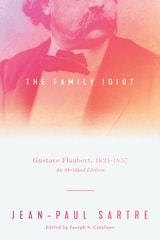
The Family Idiot
Gustave Flaubert, 1821–1857, An Abridged EditionJean-Paul Sartre
University of Chicago Press, 2023
From 1981 to 1994, the University of Chicago Press published a five-volume translation of Jean-Paul Sartre’s The Family Idiot: Gustave Flaubert, 1821-1857, a sprawling masterwork by one of the greatest intellects of the twentieth century. This new volume delivers a compact abridgment of the original by renowned Sartre scholar, Joseph Catalano.
Sartre claimed that his existential approach to psychoanalysis required a new Freud, and in his study of Gustave Flaubert, Sartre becomes that Freud. The work summarizes Sartre’s overarching aim to reveal that human life is a meaningful adventure of freedom. In discussing Flaubert’s work, particularly his classic novel Madame Bovary, Sartre unleashes a fierce critique of modernity as nihilistic and demeaning of human dignity.
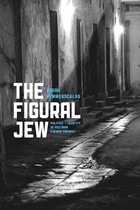
The Figural Jew
Politics and Identity in Postwar French ThoughtSarah Hammerschlag
University of Chicago Press, 2010
The rootless Jew, wandering disconnected from history, homeland, and nature, was often the target of early twentieth-century nationalist rhetoric aimed against modern culture. But following World War II, a number of prominent French philosophers recast this maligned figure in positive terms, and in so doing transformed postwar conceptions of politics and identity.
Sarah Hammerschlag explores this figure of the Jew from its prewar usage to its resuscitation by Jean-Paul Sartre, Emmanuel Levinas, Maurice Blanchot, and Jacques Derrida. Sartre and Levinas idealized the Jew’s rootlessness in order to rethink the foundations of political identity. Blanchot and Derrida, in turn, used the figure of the Jew to call into question the very nature of group identification. By chronicling this evolution in thinking, Hammerschlag ultimately reveals how the figural Jew can function as a critical mechanism that exposes the political dangers of mythic allegiance, whether couched in universalizing or particularizing terms.
Both an intellectual history and a philosophical argument, The Figural Jew will set the agenda for all further consideration of Jewish identity, modern Jewish thought, and continental philosophy.
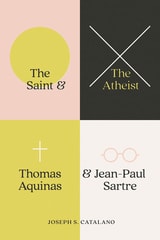
The Saint and the Atheist
Thomas Aquinas and Jean-Paul SartreJoseph S. Catalano
University of Chicago Press, 2021
Compact and open to readers of varying backgrounds, this book represents Catalano’s efforts to bring a lifetime of work on Sartre into an accessible consideration of philosophical questions by placing him in conversation with Aquinas, and it serves as a primer on key ideas of both philosophers. By bringing together these two figures, Catalano offers a fruitful space for thinking through some of the central questions about faith, conscience, freedom, and the meaning of life.
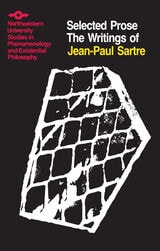
The Writings of Jean-Paul Sartre Volume 2
Selected ProseJean-Paul Sartre
Northwestern University Press, 1974
Truth and Existence
Jean-Paul Sartre
University of Chicago Press, 1992
Truth and Existence is introduced by an extended biographical, historical, and analytical essay by Ronald Aronson.
"Truth and Existence is another important element in the recently published links between Sartre's existentialist ontology and his later ethical, political, and literary concerns. . . . The excellent introduction by Aronson will help readers not experienced in reading Sartre."—Choice
"Accompanied by an excellent introduction, this dense, lucidly translated treatise reveals Sartre as a characteristically 20th-century figure."—Publishers Weekly
Jean-Paul Sartre (1906-1980) was offered, but declined, the Nobel Prize for literature in 1964. His many works of fiction, drama, and philosophy include the monumental study of Flaubert, The Family Idiot, and The Freud Scenario, both published in translation by the University of Chicago Press.
Venice and Rome
Jean-Paul Sartre
Seagull Books, 2021
Iconic French novelist, playwright, and essayist Jean-Paul Sartre is widely recognized as one of the most important philosophers of the twentieth century, and his work has remained relevant and thought-provoking through the decades. The Seagull Sartre Library now presents some of his most incisive philosophical, cultural, and literary critical essays in twelve newly designed and affordable editions.
“Venice speaks to us; this false witness’s voice, shrill at times, whispering at others, broken by silences, is its voice.” In these three moving short pieces, we discover Sartre as a master stylist, lyrically describing his time in two bewitching eternal cities—Venice and Rome. “Antiquity,” Sartre writes, “is alive in Rome, with a hate-filled, magical life.”